Go Into The Story Interview: Matt Altman & Dave Matalon
My conversation with the writing duo behind the 2024 Black List script Three Hitmen and a Baby.
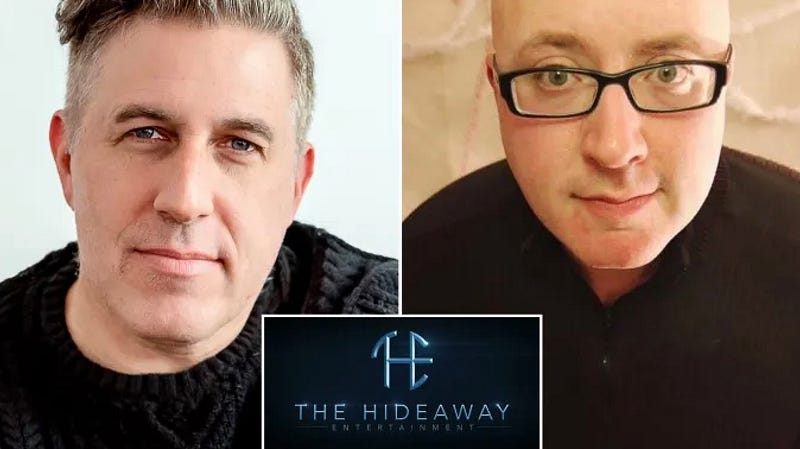
My conversation with the writing duo behind the 2024 Black List script Three Hitmen and a Baby.
Action Comedy is my favorite cross-genre, so I’m always happy to see a script represented on the annual Black List. Thanks to Dave Matalon and Matt Altman, Three Hitmen and a Baby made the 2024 List which led to our hour-long interview.
Scott Myers: Congratulations on being selected to the 2024 Black List.
Matt Altman: It was very exciting.
Dave Matalon: It was fantastic. Thanks, man.
Scott: Let’s talk about your writing partnership. Let’s start with you, Dave. Where’d you grow up and how did you get interested in writing?
Dave: I grew up in Brooklyn. I always joke not from cool mustache Brooklyn, but Saturday Night Fever Brooklyn. I always loved film as a kid. I used to travel a lot with my dad in Europe and I used to go, while he was working, I would go sit in these piazzas and see movies screened on the old stone walls of buildings.
I just fell in love with movies from a very young age. Then I think it was around 16, I wrote my first script on an old typewriter my mom had. In fact, I think when I went to NYU, I didn’t even know they had film schools. Someone had to tell me that those things existed. I think the main reason I managed to get in because I’d written like four screenplays by the time I was 18 years old.
Scott: You discovered screenplays before film school?
Dave: Yeah, I actually discovered them because my dad brought home a script that someone wanted him to pass along to someone he knew in the industry. He said, here, read this, you love movies, and tell me what you think. I was like, I think it’s horrible. He said, well, then you can do better, write your own. I was like, OK, well. That’s kind of how it happened. Here I am.
Scott: I think that’s the inspiration for quite a few writers. As interns, they’re reading all these scripts and going, “Oh, this stuff is crap. I could do better than that.” Matt, how about yourself?
Matt: I grew up in New York City. Dave’s one of my oldest friends. We’ve known each other since when we were kids.
Dave: Been a long time.
Matt: Yes, long time for us, but my dad was the head electrician at the Barrymore Theater, so he was in theater. I grew up doing that as a stagehand. My first job when I was 12 was on Sesame Street doing props as a backup prop kid. Then I worked in comic stores. I was always into comic books, martial arts. I was deeply into martial arts, deeply into reading Sci-fi and fantasy.
I knew I wanted to be a writer of some kind, but I didn’t know I wanted to write movies until after college, actually. I did the honors English program at SUNY Albany and came back, worked in theater. Dave and I were hanging out, and I think I figured out eventually that I wanted to write movies, because I always loved movies too.
“Empire Strikes Back” is one of my favorite movies as a kid growing up. I think movies hit me first and then I was also a huge “Buffy the Vampire Slayer” fan and all that. TV also got to me around that time, I would say.
Scott: You were staying in touch with each other.
Matt: Yeah, he moved out to LA first. I followed years later, but we wrote scripts together from a distance before I moved out. Then he was also writing on his own. I was also writing on my own. I think I started having success in the contest world, I got the top 30 semifinals in the Nicholl Fellowship in 2008 which got me new managers after I had parted with my first managers.
And then I was a finalist in a bunch of other contests including American Zoetrope, which got me my current manager, Jim in, I guess, 2008, 2009. He encouraged me to move out here and I finally moved out in 2011. Dave had already been out here for a couple of years.
Scott: Dave, what were you doing in LA?
Dave: I was working, generally, and I was optioning scripts. I was doing the indie game a lot in those days and always trying to find a way in by hook or by crook. I was doing a bit of teaching tool writing, acting, and directing, stuff like that.
Matt: Yep. Our first, when I came out here pretty early on, we almost had a script get made that we had optioned with some producers who were friends of ours and they paid for a polish and we had a director, we had the cast and financing and then it fell apart a week or two before it was supposed to go.
Dave: One of many.
Matt: Yeah, one of those, but it taught us about the business.
Dave: If I had a WGA minimum for every script that didn’t go.
Matt: Yes. Right.
Scott: People think it’s such a glamorous gig being a Hollywood writer but scratch the surface of any screenwriter and we all have these stories where, this project was greenlit, then crashed, that project was greenlit, then went away.
Matt: My first big sale on my own was to relativity and they declared bankruptcy. I got the announcement on deadline. I was all excited. I was going to join the WGA and then I never got paid. Like a year later, after going back and forth with the lawyers for a year, they declared bankruptcy and we got the script back.
Scott: Let’s talk about something with a more positive spin, your Black List script “Three Hitmen and a Baby” which is High Concept-O-Rama.
[laughter]
Scott: Here’s a logline for the script:
Three of the world’s top hitmen must take on their most challenging assignment yet, babysitting an infant who holds the key to their survival.
Of course, this recalls the title of the “Three Men and a Baby,” the 1987 American movie, which is based on the French comedy.
What was your first connection with “Three Men and a Baby”?
Dave: We were kind of figuring out what our next concept would be. And we were just playing around with different ideas, ways to kind of take ideas and give them fresh twists that had been a very successful formula for us and for me prior. Then I think we just kind of came to it as we started running different ideas and…
Often we’ll pitch back and forth 20, 30 ideas and go, no, no, no, no.
Then you’ll find the one, you’ll go, that’s it.
Even then, even within those pitches, you’ll go, here’s our five that we like. And then you’ll find the one that you’re like, well, this is really the one we think has the most legs and we’re most excited about writing.
Matt: I think we were twisting comedy movie ideas. We were like, what if this was a comedy? What if this was an action movie instead of a comedy?
Dave: Action comedy, yeah.
Matt: Yeah.
Dave: Also interestingly, the first iteration of this is actually the “Three Godfathers,” which was a book, which I believe starred John Wayne, it was an old ‘’40s movie about three cowboys who get this baby. They’re bandits and have to…So, originally, it was an action comedy, funny enough.
Matt: We sort of brought it back to its roots.
Scott: I tell my students all the time, Hollywood has operated for decades on the business principle: similar but different. They like projects that are similar to successful movies, but just different enough to stand on their own.
I was actually talking with Matt a little bit before the call. Action comedy was so popular as a cross-genre back in the 80s and 90s. Then it kind of fell away.
Dave: I think there’s no such thing as a bad genre. Just sometimes genres get saturated, or you’ll have a slew of bad movies in that genre, and so everyone gets gun-shy about them — and I don‘t believe anyone ever sets out to make a bad movie, by the way.
I think everyone sets out with the best of intentions, but they just don’t connect for some reason with audiences.
Then they’re suddenly deemed not bankable or not sellable. Then they sort of fall away.
Then someone comes along and goes makes a great movie in that genre, and suddenly they’re back again, “How about this genre?” We’re seeing that with the romcom in the last year or so.
Matt: Starting to come back a little, yeah.
Dave: It was considered dead for a while — no one wanted romcom. It was like, now it’s the new thing.
Matt: Yeah, new old.
Scott: Netflix did that thing like five summers ago where they dropped a bunch of romantic comedies…
Matt: Yeah.
Scott: All of a sudden… rom-coms are back.
Dave: Well, the crazy thing for a while buyers were saying it was a dead genre. I’m like, but every time my wife sees a romcom trailer , she’s like, I want to see that. So, I’m like, how could it be dead?
Matt: Yeah, and there’s really no genre that’s dead. It’s just…
Dave: Yeah, you make a good movie, any genre can sell anywhere.
Matt: Well, like you said, some do get oversaturated. There’s some that you’re like, OK, I’m tired seeing things that were dead.
Dave: Or, they’ll just be reactions are bad. Like, something does really poorly and loses money is like, suddenly there’s this risk aversion to it. But in my opinion, it’s just that movie, not the whole genre.
Scott: Several years ago, I interviewed a marketing person who worked at 20th Century Fox before Disney devoured the studio. I asked her, “Would you rather be responsible for marketing a movie that had a great story concept or an A-list actor?”
She said story concept because it makes creating a marketing plan so much easier because you’ve got the hook built in. It can cut through all the “noise” consumers confront with commercials, social media, and what-not. Like “Three Men and a Baby,” you get it immediately.
Dave: Our reps said it was the first script they ever pitched that they didn’t have to explain. Just say the title: “Three Hitmen and a Baby”.
Scott: That’s exactly right. Let’s talk about your script, it’s a fun read. Right up front, page one, there’s this scene description:
“Breathtaking interior. If you’re going to Pamplona, definitely visit, but maybe wait until this guy leaves.”
Then there’s this:
“Tom strides down between the time-worn wooden pews, designer shoes scraping the ancient stone — you can smell the notes of frankincense and the brewing action set-pieces in the air.”
You use a convivial narrative voice where you’re winking at the reader, basically saying, “C’mon, join us. This is gonna be a fun ride.” Is this your standard style or is this something you specifically chose for this particular project?
Matt: It’s pretty much our standard style. I mean, you do tone it toward a script. If we’ve done less comedic scripts that have less of that tone, and we won’t do so much, but even that, you want to make it fresh.
Dave: Just to piggyback off of what Matt said, even in that, we like to make sure that the description’s as juicy and fun to read as the dialogue, because it is a visual medium, but until you get there, people have to enjoy, and there’s a lot of other things they can be doing than reading your script.
You want to find ways to engage with the reader, to let them know, to get them in the mood, and find ways to get them to engage with the script.
Matt: I think both Dave and I are weird in our screenwriting careers, in that we actually have had the most success selling specs, not like doing jobs. I had one job adapting a YA novel for Lionsgate, but other than that, I’ve just sold specs.
Dave: Yeah, me too.
Matt: That’s what Dave’s done, and thankfully, so lately, we’ve been selling a bunch together, which has been a lot of fun.
Scott: Reminds me of that quote from William Goldman: “Screenplays don’t have to read like an instruction manual for a refrigerator. You can write them as a pleasurable read.”
Matt: He’s one of the first who had that kind of cool tone.
Dave: I remember being 16 and getting “Adventures in the Screen Trade [written by William Goldman]. I remember he had one of line in his script that stayed with me all these years was — “in the most amazing slow motion shot ever” (or something along those lines).
Matt: He did. He was great that way, and also Shane Black, of course.
Dave: Shane Black is phenomenal at that.
Matt: Had a huge deal with that.
Scott: God, I wish the “Nice Guys” had been a hit. Such a fun movie.
Matt: Yeah, It’s a great movie.
Dave: For me, at least, when I read scripts that have that kind of evocative description, it gets me in the headspace of the scene. It’s not just a trick to get you to like the script. It’s like it gets you in the frame of mind …You kind of start to really imagine what I’m imagining.
That’s I think the biggest challenge as a writer; I have all my references, and Matt and I, because we’re friends for so long, share all those references. But if you don’t, how do I get you in my headspace and help you see what I see efficiently without a long paragraph, which has been disengaged from anyway.
Scott: Let’s talk about these three characters, the Three Hitmen. You’ve got Tom and Charlie and Holland. Break them down for us. Like, if you had to describe Tom in a thumbnail sketch at the beginning of the story, what’s Tom’s deal?
Matt: He’s sort of the suave like James Bond kind of professional hitman. Oh, he’s also the more charming slick of the three.
Dave: Basically, we broke them each down to archetypes because we want to really have them separate. Tom’s the professional who basically he’s got problems with his Peter pancreas, so we say he can’t grow up. That’s his major flaw. He’s afraid of commitment.
Charlie is the brute. Charlie, his past is sort of he doesn’t think he’s fit to be a dad. He doesn’t think he should…and so he just has this hard, rocky exterior, doesn’t let anyone in.
Matt: Yeah, he’s very much a loner and very much isolated.
Dave: He’s the loner, there’s no one. He is the island, and no one shall sail to him until Millie comes along, and she just melts all that. Then Holland is our GenZ socially inexperienced guy.
Dave: He’s savvy, but not people savvy. We really wanted them to have very distinct flavors.
Scott: Was Tom the first one to come pop up?
Matt: I think we sort of came up with all of them together. We knew that we wanted them to each be sort of a different archetype so we can separate them. We knew Holland would be the youngest.
Dave: Yeah, we also knew that they were going to be like kind of each 10 years apart. Just separate them a bit.
Scott: What about the bad guy here, Volkov? How did that guy emerge?
Dave: He is interesting.
Matt: He’s changed a lot. We had a bunch of versions of Volkov.
Dave: We liked his latest version the most. Right?
Matt: Yeah. Our original view of him was sort of this thuggish Russian gangster. Right? That was the first?
Dave: Yeah, he was sort of like the Russian version of The Rock. He was big and muscular.
Matt: Scary and scarred. And then he’s evolved a lot since then. He’s no longer scarred. I don’t know if the draft you read is this, but now he’s much more of a guy who wants to be a father while these guys don’t want to be a father. His only problem is he’s a FSB colonel and he doesn’t have a family.
And, he’s like, “I’ve got a steady job. I’ve got health insurance. I’ve got tickets to the Bolshoi.” But he’s also homicidal, psychotic, and he wants the baby more for his own promotion and ego because he loves the baby.
Dave: The joke with Volkov is of all of them, he is probably the most qualified and fit to be a father… except for the psycho part.
Matt: Murderous psycho.
[laughter]
Scott: Let’s talk about that because I don’t know how and when you were revising this character in that direction, but it feels contemporary with the whole tech-bro plutocracy phenomenon.
Dave: We can’t say too much, but a lot of that plot that was in the original script that was on the Black List has been pulled out, and it’s really been retooled to be…
Matt: More focused on the baby.
Dave: A lot of the tech stuff is no longer part of the movie. It was fun stuff, but when you start to rewrite, you have to suit the needs of what the production wants it to be.
Matt: The original reason for putting that in was, first of all, to give him a plot, a big strong plot hook, and maybe make it a little bigger than just with the baby. But, honestly, we always like focusing on the…that is the core issue because it’s all about characters. That’s the thing that’s personal to everyone. The other thing is basically a MacGuffin.
Scott: It’s like without that emotional connection, it’s just a bunch of noise.
Matt: Yeah.
Scott: I was really impressed with your first act. You’ve got to introduce all these characters and set the plot into motion, but it’s both entertaining and efficient. I imagine you slaved over that first act a lot.
Matt: We did. We worked that one a lot.
Dave: We tend to really make those first 25 pages really as tight as we can to get you in, get you hooked, and set you up for the ride. It’s probably the most important part.
Matt: Luckily, Dave and I are pretty good, are pretty fast as writers. When we’re doing a rewrite, we’re actually even faster. We can do many passes through in a week or two.
Dave: We’re also pretty good at not holding onto things. There’s stuff that we’re like, yes, that’s a definite, but we’re also pretty good at killing our darlings and going back and going okay — let’s cut that. Once you see it, especially, you start to understand what’s essential and what’s not to the story.
Scott: How do you write? Do you get together, or do you write separately?
Matt: We do everything. We sometimes get together.
Dave: Sometimes we’re on the phone one of us typing. Sometimes we’ll just pass it back and forth. Sometimes, especially when we’re starting a script, we’ll outline since we have to be on the same page, and we’re figuring out what the script is.
Then once we’re at that stage one of us will take the first few pages, pass it to the other, the other person will go over that, and then push on a bit. Then usually at a certain point, we’ll start getting on the phone and one of us will be typing and the other will talk and then pass it back and forth and go over it. We just go over everything.
The reason I think we’re so fast is because we’re always going over our stuff and pushing on. Like Matt might take an action beat, and I might take the emotional beat. Stuff like that happens all the time, and then we’ll go back and forth.
Scott: Sounds like you’ve gotten to the point where you recognize each of your respective strengths.
Matt: I mean, honestly, we do everything. it’s just sometimes one of us will be more interested in doing an action scene, or one of us will be more interested in doing this different thing.
Dave: Yeah. Or, you’re just like, “Hey, why don’t you jump start this? I’m not really sure what to do here.” Then it just helps sometimes to just put something on the page. Even if it never even makes the script, just go, wait. Wait. Not that, but this instead.
Matt: Yeah. One of us might have a great idea for one section that the other person just doesn’t either get when we’re talking about it or it’s like you start that and I’ll…
Dave: Or sometimes, he’ll write something and I’ll go, well…
Matt: That’s not right, but I’ll…
Dave: I like taking it this way instead of that way, and then make changes.
Matt: But, again, we’re not married to anything.
Dave: For sure. But it is so much easier when there’s something on the page to stimulate other thoughts than when you’re staring at a blank screen.
Scott: Were there any movie comps you were thinking about? Because several come to my mind “Raising Arizona,” “Austin Powers.” There’s a little bit of that. “Killing Eve.” Were there any movie comps?
Matt: I don’t think we were thinking movie comps for this one. I think we were just trying to make it…
Dave: I mean, there were elements of “Mission Impossible” and “John Wick” here and there early on. But it became its own thing.
I think one of the hardest things early on, at least for me, is that’s just the way I write is I have to hear it and see it in my head, and so literally, it’ll start to play out here.
Until we get those first few pages where we start to get the tone and the characters, it can be a bit of a struggle.
And once we find that, then it’s like a fire. It just starts going, but keep moving..
Getting those, establishing, really figure out what your tone is because it’s different every movie. Even if it’s action comedy, it’s a different tone of action comedy from script.
Matt: Yeah, this is a much different tone than “Level Up” that we did. We had another script we did, which is a romance. It had a very different tone as well. Even though they’re all action comedies, they’re just tonally slightly different.
Scott: So these three guys get the baby Millie. The first half of act two is largely about dealing with the baby, like just being fish out of water. Did you brainstorm? Dave, I think you’ve got kids. I don’t know about Matt, but knowing…
Dave: They’re taking a bath in the bathroom right now.
[laughter]
Scott: OK. Because there are those scenes, like, shopping for diapers and stuff like that. Did you brainstorm a list of parent-baby activities you could possibly exploit in the script?
Matt: We brainstormed. Dave had a lot of stories.
Dave: Set pieces first. We started, we were like we know this is going to be a good bit. You know, that’s a good bit. We’ll do have list of different bits.
There was at the point, especially during this rewrite, where my daughter was nine months old now, so I’d be like “Hey — she just headbutted me in the face — we’re putting that in.”
Matt: He took a lot of anecdotes from real life.
Dave: That scene where Tom goes shopping for the baby stuff —
Matt: Yeah.
Dave: We thought that’d be a lot of fun. We love the idea of how do you weaponize baby stuff because it’s also so not designed to be weaponized
Matt: And yet, you’re like, but it could be.
Dave: You get pureed beets in your eyes, that’s going to sting.
Matt: That’s not going to be fun.
[laughter]
Scott: Oh, yeah. You literally have a pram in danger moment.
Matt: Yeah.
Dave: Yes.
Scott: Baby in the pram in danger, I was remembering that scene in “Battleship Potemkin,” the 1925 movie.
Dave: That was part of our inspiration.
Scott: Oh, wow. OK. True cinephile.
Dave: That’s film school.
[laughter]
Scott: These hitmen, what they’re good at, they’re good at killing people.
Matt: Right.
Scott: But as fathers, it’s exact opposite. It’s about protecting people. And so it’s very simple and clean and works beautifully when you’re talking about the respective transformations of these characters.
Matt: Thank you. Yeah, that’s what we’re shooting for.
Dave: I would say that’s always the biggest thing that we harp on is once we set it up, what is the arc and how do we make it as clean as possible, but also the old “Why them, why now” is one of our big first questions we always ask and then, how do we make sure that that plays through the whole thing?
Matt: That was another way we picked these characters too is why are these the ones?
Dave: What do they each need to learn from? What is the baby going to teach each of them?
Matt: Right.
Scott: Yeah. The baby’s a change agent.
Matt: Yep.
Dave: The catalyst. Yeah. Exactly.
Scott: Awright, I’m saving the most important question for last. Why use bolded slug lines? I mean the audacity!
Matt: The controversy all over Twitter.
[laughter]
Matt: It just makes it easier to read for me, at least.
Dave: I think anything you can do as a writer to make it easier on the reader, the more you do in my experience in this business, the more you find not everyone wants to read a long script, not everyone wants to read it all. If you can find ways to get people to look at the page and engage with the page, that’s a great challenge.
Matt: Again, there’s no rule. You do what you whatever works for you.
Scott: Well, particularly if they’re reading scripts on their phones or iPad.
Dave: Have you ever seen that script for “Nightcrawler?”
Scott: Oh, yeah. Dan Gilroy.
Dave: I love what he did on that. Genius.
Scott: Oh, I use that all the time with my students. I said one of the rules, you can’t [inaudible] .
Dave: And, really, going back to Goldman, he broke the rules also. He used caps for emphasis all the time.
Scott: I show my students, he has a 293word sentence. It’s just action, action, action, action, action, action, action when they’re at the shootout thing in Bolivia. 293word sentence.
Dave: Yeah. Love that.
Scott: Well, so you write the script. How long did that take, do you think, between the concept and then getting it to the point where you’re sending it out on the town?
Matt: By the time we sent it out, I don’t know, 9 weeks, 12, 10 weeks. I’m talking about getting it out to town because we did some rewrites of rest of it.
Dave: We did a couple of notes passes for them. So, yeah, I think that’s about right.
Scott: Yeah. About nine weeks. That’s pretty tight.
Matt: We’re fast.
Dave: Our first draft was four to five weeks.
Scott: Wow.
Dave: Here’s the thing. I often run into this. I was talking to Matt about this. There was a podcast about this one where they were saying how Tom Stoppard was hired to rewrite “Shakespeare in Love.” He did it in 10 weeks and she [podcast host] was sort of joking how he kind of phoned it in.
I’m like, why? Why would it take you that much longer to do a dialogue pass on a script? Because if you put in six, seven hours of work a day and you generate 10, 12 pages a day, then you should get to 100 page script in about 10 days. Really, the hardest thing for us is just the story is the outline, the structure building. Once you have that…
Matt: And it’s just putting it down.
Dave: Seems doable, and that’s just how it’s been for us.
Matt: We’ll write for hours and hours.
Dave: Exactly.
Scott: Well, that didn’t seem to bother John Hughes who would knock out scripts in a week or two, even a long weekend.
Dave: Exactly. Exactly.
Scott: Well, congratulations again on making the Black List. Let’s get into some craft questions. It seems like a natural segue when you talk about outlining. What is that process like?
Dave: Once we have concept, we generally just start doing structure beats. Like, cold open, whatever the opening scene is, inciting incident. Then we talk about acts, where act turns are, midpoints, and they’re always character driven. They’re never plot driven.
Matt: And then basically, we’ll usually beat out the first act very detailed, and we’ll try to get the big beats for the second act. And we know where our ending that we’re shooting for.
Dave: We always know our ending before that.
Matt: But we don’t always get the second act detailed until we’re done actually writing the first act. And then we might get into it more.
Dave: I would say generally though, act two, we do 2A and 2B with a midpoint twist. We break down sequences. We try to do 10 to 12page sequences with turns at the end of each sequence. Like ya do.
Matt: But I’d say usually these days, we write the first act before we’ve got like all the details of the sequence.
Dave: We go, “OK. We got this. Now where are they going?” But, again, we always know where we’re ending.
Matt: And we know the big beats usually for the second act at that point.
Dave: But they usually evolve. They evolve.
Scott: Do you use cards or no?
Matt: No.
Dave: We do a beat list.
Matt: There’s no problem with cards. It’s just I generally do everything on the draft, which drives him nuts.
Dave: And I go and I organize it. Basically, I find I’ll do cards when we go back through if we’re analyzing something. Like, if we finish and we’re not happy with something or if we get before we start a rewrite, I’ll do cards or a list just to kind of go, “So here’s our script.
“He walks in the door, we learn this. She walks in the door, we learn that.” Then we’ll go, “Oh, look. There’s three scenes of them walking in the door, learning the same thing. Let’s pull that out.”
Matt: Yeah. It’s definitely more useful for the rewrites for us.
Dave: Yeah, as an analytical tool for sure.
Scott: Dave mentions “character driven.” So for “Three Hitmen and a Baby,” you said, “Well, we have three types.” But then to go from type to the level of specificity of each character having a distinctive voice, a distinctive personality, what does that look like where you go from type to the characters really have come alive?
Dave: You conceptualize these guys, you start to imagine them in your mind. Maybe we’ll have you talk, like, who are you thinking for this? And who do you think will you cast it in our heads?
Matt: Yeah, which we don’t always do, but this one, I think we did for sure.
Dave: Also, that usually happens 20 pages in — We’ll kind of check in. We start to have conversations, like, “I don’t think Tom would say this. I don’t think Charlie would do that.” And in that, those choices, it becomes clear as you write who’s going to do what and say what, if that makes sense.
Matt: And some of it is also finding the character’s voice while you’re writing, which we talked about earlier. Just writing it, writing scenes, seeing how they talk, and trying to find it with within the scene and then going and then pass it to the other person, them saying, well, I don’t think that person would say it like that. That would be a Holland line, not a Tom.
Dave: There’s a lot of that. There’s a lot of dialogue rewriting refinement. We’ll find better things. Entire scenes will get reworked. Especially once you start to know who they are, you’ll kind of go back and go, Tom would never say that. That’s not something Tom would do. And you start to know them in a way as you rework it.
Matt: Especially the longer you work on the script, you get to know the characters more.
Dave: I think one thing I really learned from Matt, because I used to be much more precious, is just write. He was really great at sorting out a draft and of going back and reworking and reworking, and I was more meticulous. In a way, it stopped me from writing as quickly, but in just the doing, you find that you learn more about it.
Also, you allow mistakes to happen, which can be good or bad, but you don’t stop yourself from writing. And I’ll tell you one of our biggest things, and I share this with every writer I know, is sometimes I’ll just write or we’ll just write, something really funny happens here It says something genius here, like the greatest one in the world here.
Matt: You come back to it.
Dave: And then you come back to it later.
Scott: Just to keep that momentum going, that energy?
Dave: Just so you don’t sit there for 30 minutes…
Matt: Because you can. You can sit on a line. That that could be the thing that takes your entire day. You’re like, I don’t know what to do.
Dave: And the irony is some of the greatest lines in movie history have happened on set anyway.
Matt: Or you come up with it in the shower because you’re subconsciously thinking that. Dave has a lot of shower thoughts. I’m like, “Go take a shower. Go take a walk. Go walk the dog.”
Scott: Oh, that’s like Sorkin. Takes 8 to 10 showers a day, supposedly.
Dave: That’s funny.
Matt: It works. It works.
Scott: He’s probably single-handedly responsible for the water shortage in Southern California.
Matt: Probably true.
Scott: When you’re writing a scene, what are your goals?
Matt: That’s a good question.
Dave: I think we want the scenes have an arc.
Matt: Yeah, it has a beginning, middle, end. Usually, you want to convey more than just plots. You want character, plot, plot to move every…You want to move the story forward in some in some tangible ways. Usually, at least a combination of character and plot and then maybe theme and stuff as well.
Dave: The best thing I ever heard is a great scene either advances character or plot, and the greatest scenes do both.
Scott: You mentioned theme. Where does it come into the process?
Dave: At the end.
Matt: At the end, yeah. For us, I think it’s telling a good story with characters who arc and change and characters that are entertaining you, and a theme will come usually through that. If you start writing toward a theme and that’s where you start with, for me, it’s a little stealthy. It limits you in a lot of ways.
Dave: I agree with that.
Scott: Well, with something like “Three Hitmen and a Baby,” it’s like baked into the concept. I mean, the central theme is just right there.
Matt: That was the easy one.
Scott: OK. I got one last question. What single piece of advice would you have for someone who’s out there wanting to write a great screenplay and break into Hollywood?
Matt: It’s very much a marathon. My advice is people get lucky. It’s great and it’s exciting when that happens.
But if you don’t get lucky, or if it’s not a matter of luck, it’s very much a marathon and you have to stick to it and keep working and refining your craft and be ready for any opportunities that come your way, because a lot of luck is being at the right place and being ready for that opportunity, and having the right material or whatever available. If you don’t love doing this, it’s not the best career.
That’s my personal feeling. I love it, thankfully. I don’t think I’d do anything else and be happy, but if you can, you might want to try something else. What do you think, Dave?
Dave: I had someone when I was 18 who said to me “If you can do anything else, do that.” It’s not bad advice…
Matt: Not bad, but…
Dave: Look. I think if your goal is fame and money (or just money), I’d say there are a lot of easier ways to get that than this job.
Matt: Yeah.
Dave: But if you love movies or TV and you love telling stories… When I taught college or writing seminars, I would always say to my students — you can write whatever you want. You can. You could write a story about the old man who collects shells on the beach, and maybe George Clooney will pick that up and start and direct it. Maybe.
But for me writing scripts that sell is also about understanding your marketplace, understanding what producers want. I believe you can write things that fulfill you creatively, while also having an appeal to the market you’re selling to.
If you can write scripts that look at the marketplace and go, “Here’s a movie I know people want. How do I create an opportunity for myself in that world?” I think that’s smart writing.
For my interviews with dozens of other Black List writers, go here.