Go Into The Story Interview: Lori Evans Taylor
My conversation with the co-writer of the smash hit movie Final Destination: Bloodlines.
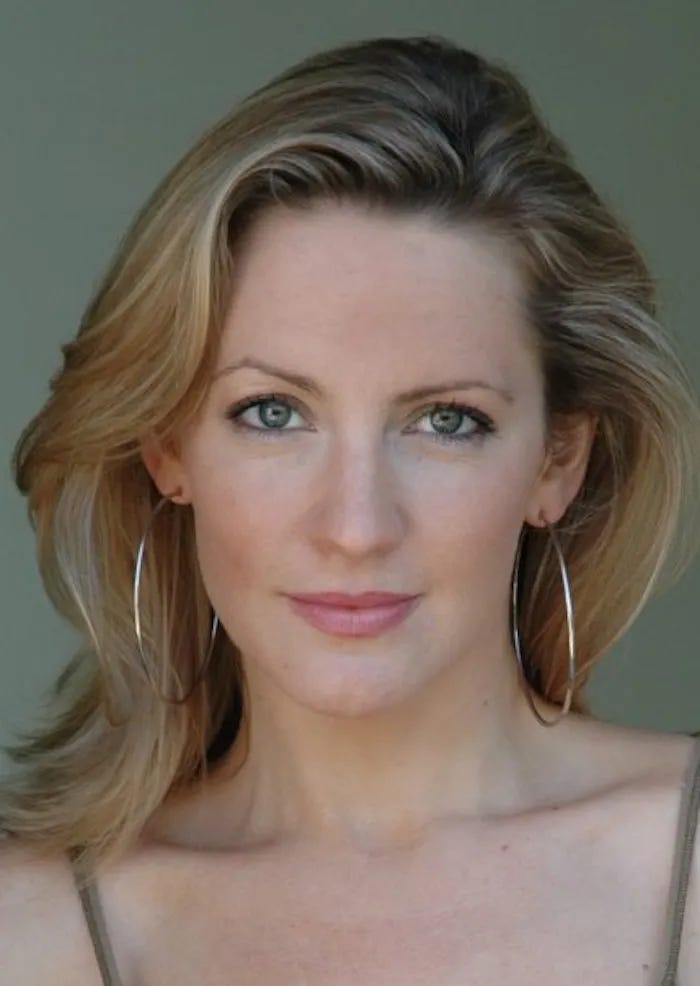
My conversation with the co-writer of the smash hit movie Final Destination: Bloodlines.
With the notable box office success of the latest film in the Final Destination series — currently at $187 million dollars in worldwide box office revenues — I thought it would be a good idea to feature a 2015 interview I did with Lori Evans Taylor who received a co-story and co-screenplay credit for Final Destination: Bloodlines.
The occasion for the interview: Lori had recently sold the spec Bed Rest to MGM. A quote from the original article:
“Spec is a Hitchcockian thriller in the vein of Rear Window and What Lies Beneath, centering on a pregnant woman who is isolated and confined to bed rest.”
Here is my interview with Lori Evans Taylor.
Scott: Let’s go back to the beginning. You were born in New York.
Lori: Yes, I was born in Upstate New York, Fredonia, which is around Buffalo.
Scott: Fredonia, isn’t that from a Marx Brothers movie?
Lori: I believe it is, although I don’t recall the exact reference. Sadly I am woefully behind on my Marx Brothers trivia.
My father was a chemistry professor at SUNY — Fredonia, but we only lived there a few years. I’m not sure how much you know about upstate New York, but it snows all the time. Like nine months out of the year. Apparently when I was four-years-old I pointed to the sun and asked my mom, “What’s that?” I think it horrified my mother to think her four-year-old daughter had no idea what the sun was, so she put her foot down and said, “We’re moving.” Then we moved down to North Carolina. That’s where I lived most of my life.
Scott: Were movies and TV much of a presence in your life as a youth?
Lori: Absolutely, I grew up a film nut. I loved horror. I was the weird girl who would always record horror movies and bring stacks of them to slumber parties. Movies were a really important thing in my life.
Scott: Do you remember some of the more influential horror movies that you liked?
Lori: Jaws. Jaws is absolutely my favorite movie of all time. It’s the perfect fusion of a high concept idea, great storytelling and character. It was interesting, when I met my husband on our first date we both realized that Jaws was our favorite movie. When we got married we ended up actually playing the Jaws theme as I went down the aisle.
Scott: You mean the duh-duh-duh-duh…
Lori: Our organist played the theme and then segued into “Gabriel’s Oboe,” which is from the movie The Mission. But yeah, it’s a very important thing for both of us, so we incorporated it.
Scott: I have to think of all the millions of impressions that went through Steven Spielberg’s mind about Jaws, he never once imagined that it would be used as a wedding processional.
Lori: [laughs] Exactly. I felt like I was the Great White. I had my big white dress on, so it made sense.
Scott: You and I have something in common. You attended the University of North Carolina at Chapel Hill, right?
Lori: Yes. Did you?
Scott: No, but I teach here.
Lori: Oh, my gosh. I had no idea. That is so cool. It’s such an amazing place. I just love Chapel Hill. I loved my time there. I don’t get back enough, but I love it.
Scott: What was your major?
Lori: I was a theater major. I was really involved with plays and the black box theater there, the Lab theater. I was a theater junkie the entire time I was there.
Scott: As an actor?
Lori: As an actor, yes. I directed a little bit, produced a little bit. I just loved theater. I loved performance.
Scott: What did you do after you graduated? Did you go to New York?
Lori: You would think that would have been the logical choice, but no, I ended up coming out to Los Angeles. I love New York and I actually did the Circle in the Square program there one summer, but I didn’t think it was a place that I could live for a long time. I felt a little bit claustrophobic there. I needed space. I needed a yard with grass. Grass is oddly important to me. It’s a psychological thing. So I opted for Los Angeles.
And even though I was involved with theater, I thought I would probably find my way into film and television.
And, ultimately, that’s what happened. I never really considered writing, but I started doing it on the side to explore character and story ideas.
I grew to really love it. I thought, “I should actually finish something and show some people.” I ended up writing a TV sample. It was around the time that Fox was staffing those telenovellas. I happened to know somebody involved, so I got my sample in there, not thinking anything would really happen. Then, a week later, I had a job. I was staffed on this show called “Desire.”
There were 65 episodes. Nine of us were on the staff. Then, a few of us were kept on to do rewrites. From there I moved to another telenovella, “Wicked, Wicked Games,” starring Tatum O’Neill. That was another 65 episodes.
It was like being shot out of a cannon. It was like writer’s boot camp. You really learned to outline quickly and work with a group of other writers, track stories, hit your deadlines, do production rewrites. It was a really great experience.
But then, I came out the other side with no representation because I had been so busy. I didn’t even have my own original material. So I started writing some pilots.
One of the pilots I wrote was called “Fever,” it was basically “Boogie Nights” meets “Six Feet Under.” It was set in 1981 in the adult entertainment business here in the San Fernando Valley. The concept is the owner of an adult entertainment empire dies and his estranged son, who is an NYU film graduate, has to come back and take over the family business, which he has no interest in. I love history, so it was fun to explore something set during the Reagan years. During the rise of AIDS, sex, drugs, rock and roll, and the end of the golden age of adult entertainment.
I was part of a writer’s group at the time and some of the people in the group really liked the script and championed it. They passed it out to people in the industry that they knew, managers and producers, and suddenly, it took off. That’s how I ended up getting repped by Kapan/Perrone.
That was actually a funny story. KPE was in the midst of a move at the time, so when my script got sent over, it got lost in the shuffle. Once they got settled a couple of weeks later, Sean Perrone was trying to find a writer for a talking animal movie.
He loaded up his Kindle with samples and somehow, my little adult entertainment script ended up in the mix. As he’s reading these samples, he suddenly gets to my pilot, and is like, “Well, this is an odd sample for a talking animal movie!” He ended up flipping for the script, and trying to figure out who I was and how he got the script.
I got a call and ended up signing with them. Then, Josh Goldenberg came on at KPE and I very quickly started working with him as well. They’ve been kicking ass for me ever since.
After that, I started getting some staffing heat from my pilots. Then, I got pregnant.
That basically killed all my momentum. But instead of sitting around for nine months, I decided, “OK, well, I need to work on something else. What am I going to do?” I decided to write a feature. I ended up writing a thriller, which Temple Hill got involved with.
After that, I went back to the TV side. Tried to get the staffing wheels moving again. Started getting a little bit more heat. And what do I do…I get pregnant again. [laughs] I was having these wonderful personal wins in my life, but professionally everything just came to a standstill.
So again, it was back to square one. I thought, “OK, let’s take another stab at a feature.” That’s when I wrote “Bed Rest”. That’s been my chutes and ladders career.
Scott: Looking at your IMDb credits, you’ve got just a ton of credits as a TV producer on the non-scripted side of things. How did you evolve into that?
Lori: When you’re first starting out as a writer you usually need a survival job. I started doing transcription jobs to make a little money and I ended up stumbling upon a wonderful production company called Cheri Sundae Productions. I came onboard and started working my way up the producer ladder. They were so generous, because they kept hiring me over and over and over. It gave me the opportunity to make a living and grow my expertise in another side of the business, while still writing my own scripts.
For the last three years I’ve been working on a show called “Lucky Dog”, which is a sweet little dog training show that airs on CBS Saturday mornings. It’s a great show and it feeds my soul.
Scott: I’m gathering you didn’t have any formal training in screenwriting. How did you go about learning the craft?
Lori: I am a proud graduate of Video Store University! When I was in college I worked at a local video store, and having access to all kinds of movies, anytime I wanted, really helped cement my foundation in film and TV.
Then when I moved to LA, I started reading scripts. As many scripts as I could get my hands on, honestly. Whether they were great scripts, bad scripts or classics.
To be honest, I feel like the bad scripts teach you more, because you have to dig in and figure out why didn’t I respond to this? Was it something from a plot point of view? Was it something from a character standpoint? Was there something structurally that wasn’t working?
I found that that was very helpful. And being part of a writer’s group was also immensely helpful. It let’s you see how other writers’ minds work.
Scott: Let’s talk about your spec script, “Bed Rest” which recently sold to MGM. Here’s how it’s described in the press:
“Hitchcockian thriller in the vein of ‘Rear Window’ and ‘What Lies Beneath,’ centering on a pregnant woman who is isolated and confined to bed rest.”
We know that you’ve had at least two children. Have there been any more than that, or just the two?
Lori: Two children.
Scott: I’m suspecting that part of the inspiration for “Bed Rest” came from that. Do you remember how the original idea for this developed in your mind?
Lori: Oh, yeah. Well, I was never on bed rest, although I have had friends and acquaintances on bed rest for one reason or another. Some in the hospital, some at home.
The idea came to me right after the birth of my daughter. In the first few weeks after giving birth, as a mother, you’re at home, you’re with the child, you’re breastfeeding. And well, being stuck in the house, I started getting a little cabin fever.
Suddenly my mind went to bed rest and what women on bed rest must feel. At least I could get up and move around my house, imagine not being able to move at all? That must be so psychologically challenging.
Of course, my twisted mind went straight to, “Ooh. This is a great setting for a thriller.” I just logged it away in the back of my mind. Then from there I started playing around with execution.
At first I considered a Misery approach. Maybe it was about a woman who was being taken care of by a doula, who had nefarious intentions toward her. I also considered a home invasion movie, ala’ Panic Room. But neither felt right.
Then, one day I thought, “OK, well, what if we try a supernatural approach? What if it’s a woman on bed rest in a haunted house?” That just sparked the idea. It was so simple and so clean. I talked to my managers about it. They said, “Yeah. That sounds good. Let’s go for it.” So, I went off and wrote it.
Scott: Were there any movies in particular that inspired you or helped shape the way you took the story?
Lori: Growing up a horror fan, I was exposed to a lot of different kinds of horror movies. But I feel like the horror movies that really speak to me are the movies that are a bit more elevated, something like The Others, something like The Exorcist or The Orphanage or The Sixth Sense.
Obviously, Hitchcock was an influence. That sort of Rear Window, Rebecca kind of approach.

But I also I knew I didn’t want it to be entirely psychological. I wanted to make sure there was a satisfying physical ending.
Something like The Shining is very psychological and very atmospheric, but it also packs a punch in that last 20, 30 minutes. I knew that whatever I did, I wanted to have the psychological slow burn, but also a physical payoff.
Scott: You mention Rear Window and this idea of bed rest. It has a contained thriller kind of a feel. What advantages did you find, working with the contained thriller type of approach?
Lori: Interesting. It’s fun when your heroine can’t get up. It makes you get creative about how she accomplishes things and how she hears and sees things going on around her.
By limiting yourself, you’re also opening up a new world of possibilities. I got to have a lot of fun with devices like Roombas and baby cams. So many fun ways to embrace the claustrophobic feel but get creative in the process.
Scott: Let’s talk about your heroine in “Bed Rest”. The protagonist is a young woman named Julie. How would you describe her as a character and what she’s having to deal with, psychologically?
Lori: Julie is a woman who’s getting a second chance. She and her husband suffered an unthinkable tragedy, but after three years, life is finally getting back on track. They’re pregnant. They’ve moved into a new house. But shortly after the move, Julie suffers a fall and gets put on strict bed rest. That’s when her old psychological demons come back to haunt her. She can’t escape her own mind.
It’s interesting because I wanted her to feel all-American, somebody that we root for. I considered her like an icicle. The movie is set in winter. There’s storms coming through. There’s sleet, there’s snow. And you’ve got these icicles dangling from the house. They look delicate, but they’re also quite strong. Quite solid. And icicles, when you look at them, you can kind of see your reflection, but it’s distorted, too.
That’s how I pictured her. Seemingly delicate and psychologically fragmented, but ultimately strong at her core.
Scott: That’s a really interesting insight. You’re providing a single image or touchstone in terms of developing her character, one that does describe her arc. She has a tragedy in her past. How early on did you hit on that, in terms of her character development, where you knew you wanted to deal with significant event in her past?
Lori: That came on a little bit later. I knew that she was going to have to have some sort of tragedy, I just wasn’t sure what the tragedy was and how it was going to play into the larger plot.
Ultimately, in any haunted house movie, you always have to answer that question, “Why don’t they just leave?” If you’re on bed rest you’re not supposed to physically move, but if your circumstances get frightening enough, you’re gonna find a way to get out of dodge. So why doesn’t Julie leave?
I realized the answer to that question had to be in Julie’s past. I created a past for her that actually keeps her emotionally and psychologically invested in the house. It became a psychological and an emotional anchor within the movie.
Incorporating that past actually posed an interesting challenge for me as a writer. The truth of the situation is that my husband and I suffered a similar tragedy. We lost our first child during labor.
Needless to say, it was an emotionally shattering experience. For nine months I had bonded with this child in my belly and in a New York minute, all those dreams and aspirations I had for this child and our future was taken away. It was devastating. I find that couples that go through tragedies either grow stronger or are unable to cope and go their separate ways. Luckily, my husband and I came out stronger because of it.
A couple of years later, as I was in the midst of developing this script, I begin to realize that the strongest choice for Julie’s backstory was the loss of a baby. That put me in an interesting, yet gut-wrenching, position as a writer. Internally I wasn’t sure I wanted to go there. I know that a lot of writers approach their work from an autobiographical perspective, but I always found that the more I included my own life, the more I lost objectivity about the story and the characters.
But the more I thought about it, the more I knew it was the right story choice. My own life experience gave me a unique perspective into this character and instead of backing away from the choice I knew I needed to embrace it. However, before I fully committed to the storyline, I needed my husband’s endorsement. It wasn’t just my experience. It was our experience. So I had him read some scenes and we had a discussion and he said, “Yes, you absolutely have to do this. You’re uniquely qualified to tell this story. So go tell it.”
Scott: One of the classic tropes of horror movies and psychological thrillers are feints, fake scares. How conscious were you about that, and did you approach that in a conscious fashion, or did you just sort of feel your way through?
Lori: A lot of producers and studios like to throw in scares for the sake of it, but it was very important to me that all the scares be firmly anchored in the truth of the story, the characters, or the mythology.
I didn’t want there to be any kind of scare that you could point to and say, “Why is that there? There’s no reason for it.” For every single scare, there had to be an element of truth.
Scott: Also, you play around with the dynamic, which is, “Is she imagining this or is this real?” That plays out on several levels, personally with her wondering about her own mental state, and also other people thinking, “She’s under stress. The pregnancy, the bed rest, that’s what’s led to her fantasies.” How much did you pay attention to that particular dynamic as you were writing the script?
Lori: A lot, actually, because that’s part of the fun, “Is it all in her head, or is it real?” You want to always keep the audience guessing. So ultimately, yes, that was absolutely part of the crafting of the story — is it actually happening or is her prior psychosis kicking back in?
Scott: It grows from her becoming convinced she is right — this is happening — but then there’s the husband, then the doula. You expand that out, and it gets wider and wider, in terms of this question, is it real or is it not? A kind of “the boy who cried wolf” type of thing.
Lori: Certainly, as her husband and the doula are seeing her behavior unravel their first thought is, “Obviously, she’s relapsing.” That gave me a lot of emotional meat to play with.
Scott: You mentioned how this is a haunted house movie. That was a key for you, when you said, “If we match up bed rest and haunted house,” and then your manager said, “Yeah, that’s the movie.” So let’s talk about the house a bit. I don’t want to get too specific, but it has its own back story. How did you go about developing the house as a character?
Lori: I knew whatever the backstory was, it needed to mirror Julie’s personal journey. Her pregnancy needed to be an important element, not only on a bed rest level, but also on a psychological and thematic level.
So whatever the mythology was, it had to be a parallel to her own experience, so we could take full advantage of Julie’s psychology.
Scott: I don’t want to give away the ending, but you’ve got some really interesting surprises there at work. How many endings did you come up and work with?
Lori: I feel like endings in horror movies are really hard to nail. It’s hard to stick the landing. I find myself loving a lot of horror movies up until the last twenty minutes and then, for some reason or another, I end up walking away disappointed.
For “Bed Rest”, first and foremost, I knew I wanted to serve the story. I played around with a few endings, but nothing seemed right. Getting her out of the house wasn’t enough for me. I wanted her to win. I wanted her to actually defeat the villain. Then I had an epiphany and wrote the ending.
The ending is something I don’t think a lot of people see coming. It packs a punch as well, so I felt it worked on a bunch of different levels.
Scott: How did you intersect with producers Chris Sparling and Karen Rosenfelt?
Lori: We actually finished a version of “Bed Rest” last fall. It was similar to the current draft, with the exception of a few key changes. We went out to a few production companies and one company wanted to develop it, so I worked with them for a while. It just became a different movie. The development slowed down.
Then in May, my managers and I, we decided to step away from the situation and rethink how we wanted to approach “Bed Rest”. When we did that, two things happened.
One is I went back to my original script and I made a few key story changes.
Then, at the same time, Chris Sparling, who is also a client of Kaplan/Perrone contacted them about getting involved with more projects as a producer. So they said, “Hey, we have this contained thriller right now. Maybe you want to give it a read and jump on as a producer.” Chris is actually a master at the contained thriller. He wrote Buried and ATM, so it seemed like a perfect fit.
He ended up reading the draft that got developed with the production company, and right after that we started talking. I told him, “I’d love to go back to my original draft, and here’s what I want to do.” Bless his heart he actually ended up reading a few different drafts right out of the gate.
So I incorporated my changes and then we started working through the script. He was really instrumental. Being a contained thriller guy, he had great instincts about when to milk or double down on certain moments, and when to go for a slow burn. He was a great collaborator.
That script is the version we took out in July. We took it out to producers first who then took it to studios. Karen Rosenfelt read it and loved it. She’s the one who championed it at MGM, and MGM purchased it.
It was actually a really cool experience, because my managers went out with the script the day I left for vacation.
I knew we were going out but I didn’t know the scope of it. I also didn’t want to get my hopes up too much. I always felt Bed Rest was a very producible movie, but specs are really hard to sell these days, especially without attachments.
But as the week rolled on, I started getting some really promising calls from my managers saying, “We’re getting some interesting bites. Some really big producers, they’re loving the script. People are attaching themselves. We’re going into studios.”
It was catching on like wildfire, but it didn’t feel real to me since I was on the East Coast. Sporadically throughout the week I would check online to see if I could find anything, but I never did. Then on Friday afternoon I happened to Google “Bed Rest, Lori Evans Taylor” just to see if anything would come up, and suddenly an article popped up on TrackingBoard.com, “Smoldering Spec Bed Rest Scorching Through Town.” Suddenly, it all became very real.
As I was reading the article, that’s when my manager called and said, “Hey, we have a bite. MGM just made an offer.” So it happened very quickly, and it was really exciting.
Scott: It’s so funny when they go out with the news item about the deal that MGM acquired it, they say, “The first script deal for Lori Evans Taylor.” You read that, and you’re like, “Oh, she’s a rookie scribe,” but as it turns out, you’ve worked in the business for several years, and the script itself went out in the fall. It’s not like an overnight success story, you write the script, send it out, boom. It has this long history to it.
Lori: It does. I laughed when the headlines came out, tyro and rookie. I’ve been hustling for a while now so I’m not exactly an overnight success. But I am certainly a newcomer in the eyes of a lot of people in the industry.
I equate Hollywood to a private party. It’s a hot ticket. Everybody wants an invitation. By selling Bed Rest I finally got my invitation. I finally got to stroll into the party. But the fact is I’ve been waiting outside for a long time, behind the velvet ropes, freezing my butt off, waiting for the bouncer to call my name.
Scott: What’s happened since you sold the script?
Lori: We immediately jumped in and met with MGM and Karen Rosenfelt and Chris Sparling. MGM is really excited about it. They’re very passionate about the project. They have some thoughts so we’re moving forward with a rewrite. Now I just need to go do my job and get it made.
Scott: The bottle water tour I assume. You getting meetings off this?
Lori: Yes.
Scott: How’s that been?
Lori: It’s been amazing. It really has. It’s nice to finally get a piece of work out in the feature space. I’ve met a lot of people on the TV side but to break open on the feature side has been really gratifying.
Scott: Let’s do some craft questions. I always like to ask writers, how do you come up with story ideas?
Lori: That’s a good question. I always carry a notebook with me, just a little notebook I put in my purse, so anytime I’m out and about and a thought occurs to me, whether it’s about a character, whether it’s a story idea, I always jot it down so I don’t forget it. I have another notebook here at home, and I just constantly keep a list of thoughts and ideas I’m interested in so I don’t forget them.
Honestly, most of the ideas just come from living, just going out and experiencing life, traveling, having adventures, having lunches with friends and having conversations. Experiences beget ideas and if you want to reflect life you gotta go out and live it.
So that’s how it usually starts. Then I then start honing in on one idea in particular where I feel momentum. I start a notebook, and I start brainstorming character ideas and plot ideas and thematic ideas. Then, when that starts to catch fire, I usually go to my trusty notecards and put them up on my tack board and start outlining
Scott: Do you put your producer’s cap on at any point? I remember when you said that you called up Kaplan/Perrone and said, “What about Bed Rest meets Haunted House?” That seems like a very strong story concept. Do you ever find yourself thinking, “What’s the universal appeal here? What’s the commercial viability of the idea?”
Lori: Every single time. Absolutely.
I love going to the movies. But having two kids, I don’t get to the movies much. If I’m going to go see a movie in a theater it has to pass the babysitter test… “Is this movie worth not only the price of admission, but worth the price of three hours of babysitting?” So, whenever I start to write, I think about, “Would I go see this? Does it pass my babysitter test?” If not, I’m not going to write the movie.
From there, I put on not only a producer hat but also an actor and a director hat. I ask myself, “Are my characters juicy enough for an actor? Is the story and the world compelling enough for a director?”
Something like “Bed Rest”, for me, it was a one-woman show. It gave an actress her own movie, so I got to check that box. As far as directors, I feel like what I wrote is very atmospheric. The Shining was something that very much influenced me. I felt like a director would have a lot of fun with the mood of the piece.
Then, from the producer’s standpoint, it’s a contained thriller. It’s a very producible movie. It could be done at a price.
I felt like “Bed Rest” hit on of all these things. It’s a high concept, contained thriller, great role for an actress, a really a cool world for a director, and totally producible. This one hit all of those boxes that you want to hit.
Scott: You mentioned index cards. It’s so funny that with all the technology we have nowadays, writers love those little notecards to help break a story. How much time do you spend on prep writing and what do you focus on?
Lori: Honestly, it’s a lot of brainstorming. I try not to nail anything down until I’ve done a lot of research and played with different ways into the story. Once I hook in on a way in, then I jump into structure.
I’m a very structurally minded person, so it’s really trying to figure out what that inciting incident is or what the break into act two is, what our midpoint is, or the break into act three and really finding these solid guideposts that I can string the rest of the story around.
Ultimately, I feel like I get maybe 80 percent of the notecards up, and then I get so impatient, I feel like I have to go write. That’s when I usually just dive in. My board still has a bunch of holes but I can’t help myself, I just have to go and do it. That’s usually my process.
Scott: How about the characters? How do you go about developing them? Do you have any specific tools or techniques that you use?
Lori: No, I just try to dive into the character as much as I can. I just ask questions about what is this person’s backstory, what drives them, what are their strengths, what are their weaknesses.
Ultimately, when it comes down to the page, that’s when I put the actor cap on and say, “If I was an actor approaching this role, are there any holes here? Are there things that don’t sense?” I always try to come at it from an actor point of view and then objectively as a writer as well.
Scott: What about dialogue? How do you go about finding your characters’ voices?
Lori: It depends. Sometimes I have a person in mind, whether it’s somebody I know personally, or whether it’s a certain actor. Sometimes I don’t, but I find that it helps. If you can really picture the character, it’s easier to find their voice and their rhythm. And if you’re lucky, your characters will start speaking for themselves.
Scott: What about theme? How important is that to you? Are you one of those writers who starts with theme or themes of the story or do you they arise in the context of you writing it?
Lori: It depends on the project. Sometimes that’s what I have to begin with. That’s the first thing I have. Other times I get into a story, and then I work backwards and say, “Wait a second. What am I trying to say?”
But ultimately, thematically, I like to know where I’m going before I get too far. I want to know what kind of movie I’m making and how I should feel about it. That’s really important to me in terms of the writing process.
Scott: What do you think about when you’re writing a scene? Do you have any specific goals in mind?
Lori: I hope this doesn’t suck when I read it later. [laughter] I don’t know. If you’ve used notecards, you have a good idea of what things you need to hit on in a scene. Just try to hit the plot points but also make sure you’re coming at it from the lens of the character.
From there I go back and reanalyze. “This is kind of boring. How can I jazz this up? Is there a more interesting setting for this? Can something else be going on in this scene?” Having the courage to get it on the page is half the battle. Once you have that then you can go back in and rework.
Scott: So you finish a first draft and you’re faced with rewriting. How do you go about that process?
Lori: I don’t mind rewriting, to be quite honest. Whenever I get into a project, I want to make sure it’s going to be the strongest version of that project.
And the fact is, rewriting is one of the most important steps in the process. Very few projects go out exactly how they began. You just have to embrace the rewriting process and learn to put your ego aside and look at a script objectively and be open to other people’s notes.
Not all notes are great notes, but a lot of them are very, very good, and if you can just step back and see somebody else’s point of view, it will most likely help your project get to a new level. And learning how to incorporate notes also helps you navigate the development process.
I’m fortunate because my husband’s a talented screenwriter. We pass our work back and forth. I can show him something and say, “Here you go. What do you think?” We’re honest with each other. Brutally honest, at times.
It’s nice to have that first set of eyes. Then I know I’m on the right track before showing anyone else.
Scott: What’s your actual writing process? Do you write every day, or do you go sporadic bursts? Do you work in private or coffee shops? Do you listen to music? Do you need to have a quiet…? How do you write?
Lori: I’m a nine-to-fiver. I have an office. It’s a detached office, off of our garage. I have a dedicated space to work that is separate from my house. Every single day, I come out here and I work. Then at night I go in and hang with my family. Certainly sometimes I have to work at night or on the weekends, but I find that I’m more productive if I put myself on a very specific schedule.
I also find that music is really inspirational. When I start a project I usually form a playlist with songs that get me in the mood for the project, that inspire me.
Scott: Here’s a question I like to ask. It’s a fun question. What’s your single best excuse not to write?
Lori: Oh. Single best excuse.
Scott: What’s your default excuse, like, “I don’t want to write today”?
Lori: What would that be? Sadly, you know what? I don’t really have one. Having two kids, I don’t have time for excuses. I find that I’m the best mother I can be when I have a creative outlet. Knowing that my nine-to-five time is just about me and getting those creative ya-yas out, I don’t look for an excuse.
I look forward to going out to my office, and even if it’s brainstorming, even if I don’t write one single word in Final Draft, it’s OK, as long as I’m at least creating something.
Scott: How about this? This is the opposite question. What do you love most about writing?
Lori: There’s something voyeuristic about it. I love the idea of stepping into another world and another person’s experience.
Also, just knowing that something I write could end up on the big screen, or the small screen, is inspiring. Movies were so important to me when I was a kid, so the idea that I could write something that influences someone else, someone else’s Jaws, that keeps me going.
Scott: You mentioned that you have done work in TV. Five, ten years down the road, are you doing TV, movies, both?
Lori: I like the option of bouncing back and forth. Because of my life and having a family, I love the idea of working in features so I can work out of my home office and be independent. But I also do miss being in a room with writers. I love the camaraderie of the writers’ room in television. I’d certainly like to go back to that, at some point. But, ultimately, taking of advantage of this momentum on the feature side is my first priority.
Scott: Then, one last question for you, one I’m sure you’ll probably be getting more and more, here. What advice can you offer to aspiring screenwriters and TV writers about learning the craft or breaking into Hollywood?
Lori: A few things. I would say, first of all, read as much as you can and write as much as you can. As far as reading scripts, read the good ones and the bad ones. Like I said earlier, the more you can digest and learn about structure and what makes a script work and not work, those are really important skills to have, as a writer. That’s the foundation.
Then, I’d also say help other people out. Build good karma. A lot of times, your friends will come up and ask, “Would you read my script and give me notes?” It’s easy to find an excuse not to do it. But I would always urge writers absolutely do it. You may read it and give that person some really good notes that end up getting that movie sold. Or maybe you like it and pass it on to a producer who wants to do it, and suddenly you’re a producer on the project as well. At the very least, you’re keeping your critical skills sharp and you’re building a reciprocal relationship, which is important because you never know when you’ll have to go back to the same person and ask for notes yourself.
So writers really should support each other. And I find the more that you help other people, the more opportunities present themselves to you, as well.
The last thing would be to try to create fans for yourself. That’s really important in Hollywood. I worked for a manager named Jay Bernstein. He was one of the very first managers in the business. He represented Susan Summers, and Farrah Fawcett. One of the things he said was that…having someone say one nice thing about you is worth you saying 100 nice things about yourself.
You can go out, and ask people, “Hey, read my script,” but if you have somebody who’s a fan of yours, and who champions you, if that person sends it to one other person, it’s probably going to get read.
That’s what this business is about, doing good work, and ultimately if you do good work, you’re going to develop fans. And building those relationships will eventually help you get to a place where you can, hopefully, get movies made. That’s my advice.
I sent a few questions to one of the producers on the project Chris Sparling. Here are his responses:
Scott: Putting on your producer’s hat, what elements of the “Bed Rest” script resonated with you when you first read it?
Chris: My first reaction was to Lori’s really smart solution for the haunted-house-movie conundrum: why doesn’t the protagonist just leave? By putting the main character on bed rest, physically unable to escape the specific danger, the problem cannot simply be solved with common sense. But then, the more times i read the script, the more i started to connect with the dramatic elements of the material. It’s a survival story, in the supernatural sense, but it’s also a story of survival set in the natural world. the main character, hindered by her circumstance, must overcome insurmountable odds to protect her unborn child. That premise would make for a great drama all on its own, but, to be honest, it would have been a difficult movie to get made — especially at a studio. So, by marrying that dramatic premise with a genre conceit, Lori made both of our jobs much easier in that regard.
Scott: You’ve got a strong track record as a screenwriter with contained stories. Given your experience, were there any particular points of focus you worked on with Lori in the script polish phase?
Chris: Contained stories, I’ve come to learn, undergo a unique sense of scrutiny because viewers are given ample time to dissect what they’re watching. In more open stories, because you’re quickly bouncing from one location to the next and watching interactions between a wide variety of characters, there’s very little time, scene-by-scene, to fully digest what you just saw before you’re already onto the next scene. Contained stories, by contrast, allow viewers to focus quite sharply on a single environment and the small number of people who occupy it. In working with Lori in polishing her script for “Bed Rest,” this was always on my mind. We set out to make the film bulletproof to logic criticism (well, at least as close to bulletproof as possible). Streamlining and clarifying the supernatural mythology, for example, was something we spent time on getting right. It couldn’t be convoluted and/or not make sense; it had to be clear. Not boring or unworthy of deeper thought, but still clear. otherwise, the audience would have time — for the aforementioned reasons — to pick it apart.
Scott: As a producer on the project, what’s next?
Chris: What’s next for the project, or what’s next for me? If you’re asking about the former, it’s helping Lori create a new draft that addresses the studio’s notes. I’ve partnered with some great producers on this project, and we’ll be doing all we can to get her movie made (eg., getting the script to filmmakers we like for it, trying to attach talent, etc.). If you’re asking about the latter, I’m excited to continue producing other people’s material, in addition to writing and directing my own. I’m currently producing a project with a really talented writer/director, based on an idea I brought him. I’ll be seeing a first draft of the script soon, which hopefully begins a process similar to the one I experienced with Lori on “Bed Rest”.
Here is a trailer for the movie Bed Rest which came out in 2022.
Here is a trailer for Final Destination: Bloodlines.
For more Go Into The Story interviews with screenwriters, filmmakers, TV producers, and industry insiders, go here.