Go Into The Story Interview: Laura Stoltz
My interview with 2023 Black List writer for her script Last Resort.
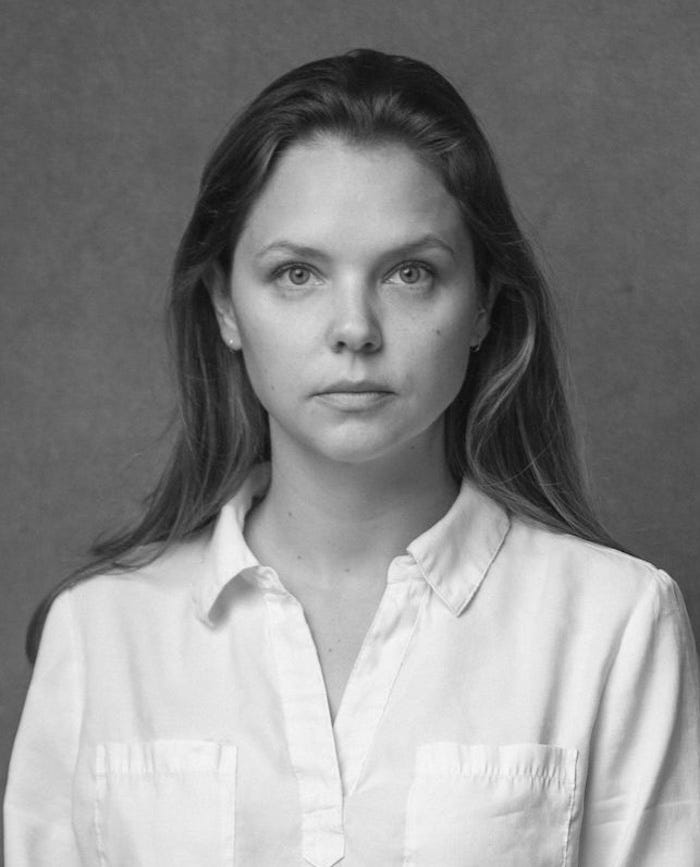
My interview with 2023 Black List writer for her script Last Resort.
This is a special interview for me: Laura Stoltz is one of my former students. She wrote a complex, compelling screenplay “Last Resort” which was named to the 2023 Black List. Recently, I had the opportunity to chat with Laura about her creative background, the craft of screenwriting, and the challenges of writing a script with such dark subject matter while infusing it with considerable humor.
Here is the complete interview with Laura.
Scott Myers: Congratulations on making the 2023 Black List.
Laura Stoltz: Thanks.
Scott: Let’s start at the beginning. How early on in your life did you exhibit an interest in creative writing?
Laura: My parents weren’t big readers, weren’t even big movie watchers. But my aunt was a librarian at a middle school, so she would just send me boxes and boxes of books. That was where I got my sense of story from, from devouring all these books that she had sent me.
So naturally I wanted to be a novelist first. But then when I got to Carolina (UNC) I had this epiphany that people write movies. You know you always see the gag reel at the end of comedy movies and it seems like they’re just making stuff up as they go, I guess I always just thought it was like a director and actors just riffing.
So anyway, when I learned that people wrote movies, I was like, “Wow, this seems easier than writing novels.” [laughter]
I tricked myself into thinking it must be the easier storytelling path. Spoiler alert, it’s not.
Scott: I remember interviewing a writer some years ago. A novelist. When he discovered that a screenplay is only about a hundred pages or so, he was like, “That seems easy.” He learned otherwise, although eventually he did get a script on the annual Black List. He found he prefers writing novels.
Laura: It seems like a luxury to have all that room to do what you need to do!
Scott: You were a creative writing major, weren’t you at UNC?
Laura: My major was Communications, Film & TV Production. Then I had a double minor in Creative Writing and Writing for the Screen and Stage.
Scott: This is how you and I crossed paths. I was teaching as an adjunct at the University of North Carolina‑Chapel Hill, and you were in the WSS program, Writing for Screen and Stage. What do you remember about that experience?
Laura: College seemed so compressed to me, it doesn’t feel like it was four years long. I know I took tons of credits but I could not tell you a single thing from my Poli Sci classes or my ancient history classes. Screenwriting, though, I just devoured all the knowledge I could. I loved it so much.
I had you, Dana Coen, and Stephen Neigher as my three screenwriting professors, and I took most of my classes from you and Dana. I generally have a terrible memory but I can remember where I sat in each of those classrooms.
That’s where I fell in love with the craft. And it is a craft, it’s a very specific kind of skill set that you have to learn.
Your class in particular, I remember you would have guest speakers, working writers, Skype in to talk to us. I have a very vivid memory of one particular speaker.
John Swetnam. He had just sold a tornado movie, “F5” I think it was called, and we were all just in awe of that, and someone asked him what he was going to buy with the very large paycheck he just got and he talked about how excited he was to buy a new ergonomic computer chair to write in. For whatever reason, that stuck with me for a decade, because you dream about selling a script, and what you’ll do with the money, but the reality is that you just have to sit your butt back down in your new chair and write another one.
Nothing has been more true than that over the years. And I just want to thank you because I learned so much from you, especially, and just…If I hadn’t had you as a professor, I don’t know that I would love the craft as much.
Scott: Well, you were one of my top students ever and I love your writing. We’ve stayed in touch over the years, so I’ve been tracking your career. Could you give us an overview of how and what you’ve done in the film and TV business.
Laura: I was accepted into the Hollywood Internship program at UNC. They send out a group of interns every summer and you’re paired with a production company or an acting studio or a camera shop, depending on what your focus is.
That summer, 2012, I was lucky enough to be placed at Scott Free with Ridley and Tony Scott for three days of the week and the other two days I had another internship with the writers and showrunners, Bill Martin and Mike Schiff, who did In Living Color, 3rd Rock from the Sun, and Grounded for Life.
The summer I worked for them they were doing a Nickelodeon show called “How to Rock.” When that ended I went with to work on this pilot they had picked up called Brothers in Law.
Both the development internship at Scott Free and the production internship with Bill and Mike were amazing. Because of those being on my resume, I quickly got a paying job at the end of the summer with a small, brand new production/ lit management company called Haven Entertainment.
Scott: Haven, right. I remember.
Laura: I worked on the lit management side for about nine months and then moved over to the production side because I knew that was where I wanted to be. Then not long after that, my boss on the production side started his own new production company, Bow and Arrow Entertainment, and I followed him there.
At the time we were doing lower budget, one to two‑million‑dollar features and documentaries and 30 for 30 shorts. They’re still doing great stuff now.
Shortly after that, I got a call from a friend of mine who I had worked with at Haven and he had gotten the Disney Writing Fellowship and he had to leave his job, so he was calling to see if I would be interested in replacing him as Peyton Reed’s assistant on Ant‑Man in Atlanta.
At the time, I had just moved into a brand‑new apartment. Everything was freshly unpacked. I had been there less than a week, but I interviewed and I got the gig and had to move to Atlanta two days later. [laughs] I was like, “All right, let’s pack it all back up.”
I moved out to Atlanta Labor Day weekend 2014, and then I worked with Peyton for about eight and a half years. We did all three Ant‑Man movies, a couple episodes in season two of The Mandalorian, and The Unicorn, which ran for two seasons on CBS.
Every career trajectory in Hollywood is weird, and that’s how mine unfolded.
Scott: You were associate producer on one Ant-Man movie, and a co‑producer on others, so you were intimately involved in those projects.
Laura: Definitely. Yeah, from the get‑go.
Scott: We met up a few times over the years and emails. And every time, I’d hit you up with the inevitable, “I hope you’re still writing.” So, were you writing during those years or was it something you circled back to?
Laura: I was not writing. Just the way the cards started falling, I starting thinking, “You know what? Maybe I’m just a better creative producer.” I had found this interesting career where you’re a producer, but you’re intimately involved in story.
It was, “OK, I know story structure from all my screenwriting classes. I love character. If I get to sit here in the writer’s room and pitch and try to make this thing better, even though I don’t get to be the one that actually types the words on the page, it’s okay. If I can be an active participant in that part of it, I could see myself being creatively fulfilled enough to make that a solid career choice.” I also love the business side of things, so I had convinced myself, “This is a good intersection of my two skills,” I guess.
Scott: Creative producing?
Laura: Exactly. Maybe I was lying to myself a little bit. I didn’t write on my own things because on these big, gigantic movies, even when you go home at night, you’re still thinking about that movie. If I was writing on the side or something, it just felt like I wasn’t doing my day job correctly. Maybe that’s just me and my southern guilt.
So yeah, I was not writing other than just a couple little…I mean my notes app is full to the brim.
Scott: When did you start re‑engaging with your writing?
Laura: Yeah. I quit just over a year ago and to completely devote my time to writing. It came about, I had one kid in 2021, I was pregnant with a second at the time, and I was exhausted from making this big movie.
I thought, “I don’t love LA enough to keep kicking this pebble down the stairs. I would rather really try and do what I came out here to do, especially because I have kids now. If I don’t do it now, once their roots start growing here, we’re probably not going to go anywhere.
“Let me just try, if it doesn’t work out, maybe we’ll move further out into the suburbs or to wherever, back to the East Coast, who knows.” Luckily, I have an incredibly supportive husband who also took many of the same courses at UNC. He understood. I just had to try.
I had to take some time to get that creative juice flowing again. I read some books on writing, listened to a lot of podcasts. I started a writer’s group, kicked around some ideas, and then hit the ground running with “Last Resort”.
Scott: Do you remember the script you wrote at UNC for the Master Screenwriting class you took with me … called “Utopos”?
Laura: Oh, that is what it was called. Ah, I couldn’t remember what I ended up calling it!
Scott: Was that the last script you wrote before “Last Resort”?
Laura: Yes, the last feature. When I was living in London shooting “Quantumania,” I did write and direct a short film. I had written a couple of short films, but yes, as far as features go, that was the last one.
Scott: Life is so strange, isn’t it? The twists and turns, at the time when you experience them, it can be like, “What is going on?” But then when you look back at them later, they can start to make sense.
I could look at your creative journey … you’ve been an intern, an assistant, a producer, worked on the production side, worked with the creative producing side … that’s got to benefit you as a writer because you understand so much more of the business than if you hadn’t gone through those experiences.
Laura: 1,000 percent. A year ago, I went through a time where I thought, “Man, did I waste my last 12 years out here just being part of the machine, and not feeding my creative spirit or writing or whatever?” The answer is no, because every single experience you have is going to inform your writing.
If you sit in a dark room 24/7, even if you’re churning out 30, 40 pages a day, you have to live to be able to gather those experiences to put on the paper. So yes, you’re totally right.
Scott: That’s a great segue into the script, “Last Resort” which, as we’ve discussed, was named to the 2023 Black List. Here’s a logline:
“When a grieving woman takes a trip to a posh, Icelandic resort designed to assist its guests with ending their lives, she meets people who finally force her to accept the things she cannot explain.”
What was the inspiration for this story?
Laura: Obviously, trigger warning, this is going to talk about suicide and depression. When I was younger, I had several friends end their lives, and I was too young, middle school, high school, college.
I just didn’t understand. As I got older, life stuff happens. I’ve dealt with bouts of depression and a bit of suicidal ideation in high school. I remember going to my doctor and he put me on medicine. We would check in.
I was like, “OK, other than medicine, what can be done? Obviously, it could be a chemical imbalance, it could be circumstances. Do you have any tips on how to deal with depression, especially in high school students?” He said, adrenaline. I thought that was so interesting.
He said, if you ever think that you might not want to be here anymore, go take up hang gliding, go skydiving, try these things that you might otherwise find too dangerous. If you’re going to kick the bucket anyway, just go for it and see if it changes your perspective on things and on living a little bit.
That was probably 15 years ago. It has always stuck with me. I even thought about writing this at Carolina. This is a terrible title, but it was more of a “Suicide Camp” for young adults who might feel the need to leave the world.
Instead, their parents or whoever send them to this camp where they can do drugs, they can go skydiving. Basically, just trying to find a different way of looking at things at this specialized place.
Fast forward 10 or 15 years, and now I’m looking at this idea from the perspective of somebody in their mid‑30s. That’s where “Last Resort” came from. There’s still that initial kernel but with a little bit more of a mature look at it.
Scott: It sounds like you had a personal connection to this, but the seeds of that have been gestating for quite some time.
Laura: Exactly.
Scott: Are there places like this? I know that there are right‑to‑die countries and right‑to‑die states, but are there like these posh resorts?
Laura: No. The closest you would get is, I think it’s called Dignitas or something, in Switzerland. I think it’s more of a doctor’s office. You just walk in, you sign the papers, and then you inject yourself and you die. You don’t actually stay there. No, there’s not anywhere quite like this.
Scott: The script, interestingly, has a lot of gallows humor to it. It’s very funny. So I guess it’s okay for me to say that sounds like a promising business model.
[laughter]
Scott: Particularly with Baby Boomers wanting to go out in style.
Laura: You may be onto something there.
Scott: Let’s talk about the key characters in your story. In particular, the Protagonist, Georgia. We meet her on a private plane and she’s having an unwanted conversation with another passenger named Jared.
Jared says, “Sorry, I know you’re busy. It just helps my flight anxiety if I tell someone I’m a nervous flyer, so I’m a nervous flyer.”
Georgia says, “I mean, we die in two weeks by choice, and you’re still scared of flying.” I’m, “OK, there you go.”
We talked about this at UNC, that you need to do something immediately in the script that provides a hook to get the reader connected to the story. That airplane conversation happens on the top of Page Three. I’m assuming that was an intentional thing on your part, “I’m going to reveal death theme right up front.”
Laura: Definitely. Absolutely. I can’t tell you how many scripts I read over the past 12 years out here just for work, for fun. Sometimes you just want to be excited to turn the page, and so I tried my hardest to get that up‑front without it being too expositionally apparent.
Scott: That’s another thing I want to talk to you because you do such a good job handling exposition and backstory. We’ll get to that in a bit. How would you describe Georgia’s character, her personality, her psychological state, at the beginning of the story?
Laura: She is, I think, confused, a bit depressed. The only thing fueling her is a thirst for wanting an answer to why her fiancé killed herself at this place she’s traveling to. She’s, basically, holding on to life with a question, and has very little patience for anybody who might sideline her finding that answer.
Scott: That language Want and Need, that’s her Want. She wants the answer to this question, why her fiancé Ruby had come to this very same place and, without any forewarning, had decided to commit suicide. That becomes a throughline for Georgia. There’s some variations on that along the way, but essentially, she’s trying to answer that question.
What about Jared, because he’s the other key character in the story, how would you describe him? Quite different than Georgia in many respects.
Laura: He’s somebody that probably was never really predisposed to depression or any suicidal ideation until these things in his life happened to him. Georgia maybe had some of this in her past where she grew up with some depressive tendencies and things like that, but Jared, it’s a product of circumstance.
He’s a gay man who grew up in the South and never felt accepted, and finally had gotten to a point where he felt accepted a little bit in San Francisco. Then he is basically racked with guilt because he accidentally hit a kid with his car after he’d had a couple of drinks.
His wanting to end his life just comes from not being able to alleviate himself of the guilt of this one thing, and then also coming to terms with this other stuff that he never really accepted about himself or his world either.
Scott: He’s also struggles with fear, as he says right off the bat. There’s a deeper fear of actually going through with suicide, so he has his own arc.
You mentioned exposition. This is one of those things, I’m sure you know because you read so many scripts. That’s a sign of a writer who knows what they’re doing. If they dole it out, tease the reader, give them a little snippet here or snippet there, that creates curiosity. Don’t give them the answer right away. Hold back the information and create a question. In the case of your script in Act One, you’re creating a mystery.
I went through and I tracked these little interchanges that you had about every six pages or so. The first time we hear about Ruby is when Georgia says, “Ruby loved Paris. I asked her to marry me there three times.” And that’s it. Nothing more, just that. Leave the reader wanting to know more.
Jared says, “And she kept saying no.” Then Georgia says, “No. She said yes each time. She just liked being proposed to.” Ruby’s like this ghost. We never see her. We don’t hear from her, but she’s obviously this…Not literally a ghost, I’m just talking about metaphorically.
That’s the first thing. You’re, “OK, so she’s there because her fiancé ended her life.” That’s how you reveal that, but that’s it. You create this mystery.
Then she’s in this room where she’s going to be staying. Now she’s saying to Ruby, “Why did you have to pick a place with no fucking television?” Now we know even more concretely that Ruby was here in this location.
Then, there’s another scene later on, very soon, where Georgia says, “Do you remember a guest called Ruby, by chance? She was here a couple of months ago.” Now we’re getting yet more information, “Oh, it was pretty recent.”
I’m imagining that this was intentional. When you were working through the story, you were, “I’m not going to do an info dump upfront. I want to tease this out.” Maybe you talk a little bit about that, your intentionality behind that?
Laura: Absolutely. I guess I watch the movie in my mind. I guess it’s not a movie, but I watch these interactions in my mind. I always think, “Would they say that? Would a person actually say that here?” If the answer is no, but I still need to get the information out there, it’s like, “OK, how can I wrap this in a something that feels natural?” It’s tough.
Basically, my first pass of a draft, I write the worst dialogue that I possibly can because I’m like, “This needs to come out here, and this needs to come out here.” Then on each subsequent pass, it’s like, “OK. How do we make this more fun? Does somebody else say it? Do we learn it visually?”
I make the scene do what it needs to do and then try to…I don’t know how to describe exactly how I make it happen.
Scott: What I’m hearing you say is, and I tell my students this all the time, I say, “Any scene you come into, you’ve got to be thinking of two things.” One, where are the characters emotionally? What emotional state are they bringing into the scene?
Two, in particular with the Protagonist, where are they in terms of their arc, and how is the scene going to facilitate that process? Just like those three instances we had, the first thing where she’s just mentioning the Paris and Ruby thing, that’s really her caught up in her own reverie.
It spills out, it’s not intentional. She’s almost speaking out loud to herself without even thinking about Jared being there. The second one, she’s pissed off. “Why no fucking television?”
You can understand that and she’s had some frustrating experiences, but then that third one where she says, “Do you remember a guest called Ruby?” She’s being intentional. She’s trying to get information. In each of those cases, there’s an internal logic why the character would do that.
Laura: Thank you.
[laughter]
Scott: You deserve the compliment, it’s a sign of good writing. Let’s talk about Margaret. She is a counselor there. There’s like a two‑week period for clients who come to this place. The first week basically is their free time, they can go to any of these fancy restaurants, all of them are like Paris, and United States, India, whatnot. There’s a spa. It’s all very luxurious and feel good.
But they have to meet with Margaret every other day to basically touch base and explore where they are psychologically. Could you talk a bit about that character? I mean, you’re making this place up. Why did you decide to have a Margaret character in there?
Laura: I tried to not have a Margaret character. It makes sense in this kind of…They’re dealing with lots of feelings and also you have to think the Resort’s got to be responsible to some board or something.
What if some family comes and tries to threaten a lawsuit and they’re like, “My family member didn’t want to die,” and they’re like, “Yes, they did, here’s the transcripts, here’s the video.”
Just more of a protection thing, asking the right questions and that kind of stuff. You can understand why a Margaret is there. I tend to get frustrated with therapy scenes and therapists in things because it feels like a bit of a cheat — but I went for it because I think I can get away with it in this circumstance, but I usually try not to.
Scott: I actually was in Geneva in the fall, and one of my wife’s cousins is a doctor there. She told me that Switzerland does have right-to-die facilities, and they have therapists, counselors. You have to meet with them several times because they want to make sure that the person is decidedly determined to do this.
Just from a logical standpoint, a realistic standpoint, you’re on target there with your script, but from a screenwriting standpoint, what to do about it is I think you’ve got four sessions, if I’m not mistaken.
That gives you these little flag poles, these little points that you can go to where you can hear the inner life, the inner feelings, the inner thoughts of Georgia in these conversations with Margaret…
Laura: Exactly.
Scott: Georgia wants to know why Ruby committed suicide, but there are deeper psychological reflected in her actions. First, she’s trying to find this place called the Orchard, where she believes that that’s where Ruby is buried. That’s the first goal, but then she discovers that the Orchard doesn’t yet exist and that point of fact, there is no gravesite.
That’s like, her body is been composted and it’s all over. Could you talk a bit about that evolving conscious goal that she has and how that evolves in your story‑crafting process?
Laura: I wanted her to have that question. Maybe just from a personal standpoint, if somebody close to you passes away by their own hand, you want to know why.
It’s a natural question to ask, and I was following her, letting her lead on the page a little bit like, “How is she going to find out why?” Ruby didn’t leave a note, but maybe that’s what she’s looking for.
Maybe she thinks that if she goes to where she is, something will come to her or maybe she will have left her a trinket or something. I was putting myself in her shoes, asking myself the question, saying, “What would I do if I was faced with this thing?”
It just so happens that normally when you ask that question, in real life, it leads to dead ends and it’s very frustrating. It was just how many dead ends and obstacles can I put in this person’s path who’s on a quest for this answer that may not even be able to be answerable? It was all about obstacles.
Scott: It’s a little bit of a clue‑gathering thing, and it gives you that narrative engine. You could have told the story without the Ruby background and what do you do with that? Because of the mystery of what Ruby was and then, for example, she discovers that, “Oh, they taped all these interviews,” that gives your Protagonist a goal which drives the plot.
“If I could find those tapes,” so that gives you, again, something you can have the character do so that they’re being proactive.
I want to talk to you about the gallows humor. I call it gallows humor because literally you’re talking about death and suicide.
The moments of humor, I thought they would have been fun to write. Here’s a conversation. Jared on Page 31. “Do you think cremators charge by the pound?”
He says, “I set aside some extra money just in case, but it might make the difference between five or six pieces of bread per meal.” That’s an example of that kind of gallows humor.
Another example. There’s a woman named Anna, who we think may have been in contact with Ruby. Georgia seeks her out and Anna is in the middle of one of those ayahuasca trips. You said in the scene description, “The puking stage of an ayahuasca trip.”
Georgia is like, “Is the orchard real?” Anna is like, “No, nothing’s real. You’re not real. Oh God, I’m not real.” She pukes.”
So the script has got a lot of humor in it which seems counterintuitive given the morbid subject matter, suicide and death. Again, conscious decision or more sort of a gut instinct thing on your part?
Laura: A little bit of both. I don’t consciously try to write comedically, which is a weird thing to say when it’s coming out. Throughout my life, that’s how I deal with my own trauma. Through humor. As the famous saying goes, a spoonful of sugar makes the medicine go down.
It’s like, how do I make something dark but enjoyable to read? Because I’ve read so many…just heartbreaking, dark scripts over the years that I…why not try to make it fun, I guess? It’s a weird thing. I wish in the log line at the very end in parentheses, I could say, “It’s a comedy,” [laughs] just so that people understand. It’s so hard to get tone across in a log line.
It was half-conscious and half-that’s how I tell stories. When my grandfather passed away, we were all in the hospital room in Winston‑Salem and they unplugged him from his life support and we were all around him. It was a nice, peaceful moment.
This poor orderly who was probably 18 years old, came in to change the trash and just looked at him and looked at the plug and looked at us and was like, “Did you guys know that he’s unplugged? We have to get somebody to plug this back in.” She started freaking out. We were like, “No, no, no, don’t plug it back in.”
The color drained from her face. I felt so bad for her but it was very, very funny. My Uncle and I giggles for probably two hours. The rest of the family wasn’t pleased with us, but that made it funnier. I absolutely adored my grandfather, by the way. I always gravitate towards the funniest thing in a traumatic moment just to help get through it, I guess. That tends to be in my writing as well.
Scott: You’re dealing with death and not just death, you’re dealing with suicide. It could very have easily drifted way off into melodrama had you not had two very lively, vibrant personalities in Georgia and Jared. I just thought you hit … it’s pitch‑perfect. There are times where it’s very dramatic and then there are times where it’s very funny. I was so impressed with that.
Here’s another thing I want to talk to you about that I thought you did really well. Plot twists and there’s several of them.
I’m not going to give away the ending at all, but Jared, who we think is this dude traveling to this suicide spa for the first time, then on Page 34, we find out he’s been here before.
That’s a ticking clock because at some point that secret is going to come out and there’s some other stuff about his background there, too. Again, was that a conscious thing, or did that emerge in your story‑crafting process if you knew you wanted to put some twists in the story?
Laura: I did not know about that particular twist at first. That was, and I have to give full credit to my writing group for that one because I wrote the thing and then one of them just said…She’s another UNC alum. She said, “What if he’s been there before?”
It’s like when somebody says something and it’s a light‑bulb moment, you’re like, “Of course,” and you can’t see it because you’re so deep into the script.
You actually did that with my script, “Utopos” years ago. I remember we had office hours to discuss the script and you said something to the effect of, “You’ve thought about the obvious twist, right?” I was blank like, “What’s the obvious twist?” You came out with it and I was like, “Duh, obviously.”
[laughter]
Laura: Sometimes you need somebody else to look at it and go, “You’ve built this thing. And this is also fun thing that could happen within the thing you’ve built.”
So yeah, I give credit to my writing group for that one. The other ones, it just iterations upon iterations. This was more of a thriller when it first started, just because I was…
I didn’t know whether I wanted to write it to try to get it made, or whether it was just going to be more of a voice sample. I was, “OK, the more commercial version of it is that it’s a mystery, right?” She turns up at this place, and she ends up at the midpoint wanting to leave.
She’s gotten what she needed. She wants to leave. The twist is she can’t. It could be a sci‑fi thing where they’re harvesting, whatever, organs and that you can’t leave once you’re there…I went down that route for a long time.
The idea that they couldn’t leave was just stuck in my brain like handprints in concrete. When somebody said, “Well, what if he’s been there before?” I went, “No, no, no. He couldn’t have been there before because they can only go once. What are you talking about…?”
Once you get rid of that initial gut punch to your ego, sometimes these suggestions other people make are really helpful. Sometimes.
Scott: It works for Jared’s character beautifully because it does speak to the fact he is afraid. He’s afraid of making a final commitment. We see that arc in play.
What I want to talk to you next about is when Georgia does find out that this happened. She’s having these conversations with Jared. This is before she discovers that he’s been there before.
There’s a vestige of your thriller script in there because Georgia sees a deadly skydiving incident — when I read that scene, I gasped, then laughed, it was so surprising — and she thinks one of victims was this Anna person who said she was going home. She even says, “They could be harvesting bodies or something like that.” There is a vestige of that still in the script, right?
Laura: Definitely. With her being this NPR investigative journalist person, it’s only natural for her brain to go there. Also, she’s looking for any reason that her fiancé might have not done this to herself. She just wants so badly for the answer to be, “It was against her will. She didn’t choose to leave me.” That’s the things that she’s latching onto at that point, for sure.
Scott: She has an interesting arc. The Want is to try and figure this out. There’s a deeper Need, which is basically to discover that part of herself that wants to continue to live.
That desire to figure this out is like…Joseph Campbell has that quote. He says that the events in the outer world are really incidental. That fundamentally, the hero’s story is an inner journey.
It feels like all these little twists, like “I need to find this videotape. I need to talk to this person. I need to find the location. I need to find the orchard.” She’s trying to busy herself in some respects to avoid doing that inner work. Does that feel correct?
Laura: Absolutely.
Scott: Then Jared has these moments of insight. He says at one point, “I don’t think finding out why is going to make you feel any better. She’s still going to be gone when you wake up.”
You even have a quote in there at one point. I think, if I’m not mistaken, that Georgia says it. There’s a quote from, I sourced it, Jamie Anderson, “Grief is love with nowhere to go.” When did you hit on that, because that seems like a pretty important theme in the story?
Laura: I’m a big Redditor. I lost my father in 2020. I latched on to a couple of these grief subreddits that were incredibly helpful. That’s a quote that pops up on there all the time.
Scott: All the time.
Laura: It just stuck with me.
Scott: I want to talk to you about your process. I’m not going to give away the ending because it’s terrific. Did you always have that ending in mind? For both Georgia and Jared, or no?
Laura: No. For better or worse, I had to let the characters tell me where they wanted to end up, and that’s where they led me. That’s what they told me they wanted to do.
Listen, at one point I had her lighting the whole place on fire. [laughs] I could not force it. She did not want to do that at the end. It’s…
Scott: Wow. Sounds like you should be familiar with a book called “The Protagonist’s Journey: An Introduction to Character-Driven Screenwriting and Storytelling.” [laughs]
Laura: I am! It is dog‑eared to hell right over there on my nightstand.
Scott: Let’s talk about your process a bit more. How’d you go about structuring this story? Are you a fan of sequence theories, and do you work with cards? How do you do the prep work?
Laura: No. We did cards in the Marvel world. When we’re crafting story, it’s all cards. I think that that’s really helpful when you’re writing with other people, at least to me, so that you can all see it, point to things, talk about it, move things around, and everyone’s on the same page. I’m so in my own head that I can’t do cards. I’ll literally lose the plot if I do that.
If there are “pantsers” and “plotters” then I’m generally a “pantser.” I sit down. I write. I try to see what the characters want to do, how they’re talking, what they are saying before I do a full outline.
So I’ll have an idea. I do the five main points. I know what I want in my inciting incident, and my break into two, and my midpoint, and then the break into three and the ending. Those five things I have roughly in my head, and then I just go for it. I write a rough draft, beginning to end. I don’t let myself stop.
Then after that, I take that and I go back and do an outline from there. I basically just go back and forth from pages to outline every time I discover new, big plot elements. If I find something in the writing of the pages, I’ll go back to the outline. But I always start with that vomit draft to find the character first.
Scott: Your writer’s group, how many drafts do you think you went through before…I know there’s drafts, and then there’s drafts. How long ‑‑ you started writing, I think you said, in March or April ‑‑ to the point where you’re giving it to your manager’s management company and saying, “Here it is.”
Laura: Good question. My manager is very involved, and likes to be involved from the get‑go. I try not to inundate him with too many drafts, but if I have a new big‑take on something, I’ll run it by him. I’m very grateful for that.
In the writer’s group, we submit every two weeks. There’s only four of us, so we two‑on, two‑off.
I’m trying to look up and see if I actually have how many drafts I wrote of this thing. This one was not that many. I’m writing something now that, I think, I’m on draft 15 already. It’s a little more complicated.
The “Last Resort”, it was… when I went from the thriller to this version, I would say maybe four or five total just page‑one rewrites, but I probably have 15 actual draft documents, which is not that many.
Scott: Your manager’s quite involved in this process. Heroes and Villains, that’s who your management company is?
Laura: Yeah.
Scott: Did they did they go wide with the script? Did they just slip it to a few people? Clearly, it got out to somebody because it made the Black List.
Laura: This one, we made the decision right at the end of October. It was a conversation of, “I don’t know how many hands we can get this in before the Black List comes out. We’re a little late on this.” He sent it around, and people seemed to respond to it.
He sent it to all of the people he knows that he thought would like it. I don’t know how many that ended up maybe 30 or something. I guess that’s pretty wide. I don’t know. I don’t really have anything to compare it to. It went out. It was late October, so we had no idea what…
Scott: That is cutting it close because the Black List is announced the second Monday in December. You got 11 recommends, if I’m not mistaken. That was substantial. What was the Black List experience like? Did that impact you at all? Did it generate more meetings?
Laura: It did. I don’t know how to quantify how many. At that point, I was both taking meetings because the script had just gone out and people seemed to be responding to it and then I got more meetings because it was also on the Black List. I think that kicked some people in the butt to read the script. [laughs] I’ve had many, many meetings.
We had a lovely Black List dinner at some point in December with all the people who had been on the List this year and some previous years. It was amazing to meet writers I never thought I would meet. Kiwi [Smith] who wrote “Legally Blonde” was there. I was, “Oh, my God.”
It’s been great. I’m so grateful. I read for them when the Black List site first launched more than 10 years ago, I think I was one of the first readers they had. So this is a weird full circle moment.
Scott: That must have been very gratifying to Franklin Leonard [Black List founder]…
Laura: I hope so. [laughs]
Scott: What’s the status of the project? I hope somebody’s going to make this thing.
Laura: It’s very interesting. As is, it’s not incredibly filmable on a budget. It’s in that weird no‑man’s‑land that people are scared to touch right now. There’s no existing IP. It’s not a 100 million‑plus thing. It’s not a one million super indie thing, so it’s disheartening.
I did end up writing it as a voice sample, like, “This is who I am. This is the kind of thing I like to write. I like dark humor. If you like this, maybe we’ll get along and can do a different project together.”
That’s been the impetus for a lot of these meetings. It’s less about trying to get this thing sold and made. There’s been a bit of interest, but it’s like, “I don’t know how we would make this.” If we can attach talent and they want to make it, great. Fantastic.
It’s mostly been about generating meetings, finding like‑minded creators, and then moving on to the next. Maybe someday it’ll see the screen, but for now, it’s doing good work on the ground.
Scott: I’m glad it’s serving you well. Hopefully, at some point, we’d see it because it has the potential to be a compelling and entertaining film.
I’d like to ask you a few craft questions before we jump off this call. You mentioned you have notes in your notes app or whatever. How do you come up with story ideas?
Laura: What a question. It can be a silly thing that my kid says or a funny image. God, even I’ll watch a movie and I’ll be, “Oh, I know where this is going.” It doesn’t go there, and I’m, “Well, then I’ll do it.”
I don’t know, where do these ideas come from? Dreams? I don’t know, you tell me.
Scott: Everybody’s different. You mentioned the kid thing. I remember James Hart had this story about his family was having a meal and one of the kids said, “What if Peter Pan grew up?” That became “Hook,” so it was a little kid came up with it.
Laura: I hope that that kid is getting some residuals. [laughs]
Scott: Speaking of kids. You had your first child, 2020, is that right?
Laura: 2021.
Scott: Then the second one in, when?
Laura: 2023, just this last summer.
Scott: You managed to knock out this script. I’m sure readers are going to say, “All right, where does she find the time to do this with two young children?” How do you structure your life so that you’re able to write?
Laura: Daycare. Highly recommend. When my second was a newborn, my first was in daycare. Newborns sleep a lot. Usually not independently, but she slept a lot on me. There’s only so much I could do when I’m nap‑trapped all day. That’s when I wrote the final draft of this script, because I was just on the couch with a baby sleeping on me, just typing away.
Now that she’s older and actually needs some kind of entertainment, it is harder to write this next one, for sure. Maybe that newborn-phase sleep deprivation was good for “Last Resort”. I don’t know. Maybe that lent itself to some crazy ideas.
Scott: Are your circadian rhythms such that you have creative energy at night, when the kids are down, that you can write then, or you feel most alert in the morning or during the day?
Laura: It’s usually in the morning, during the day. My husband is the complete opposite. When the kids go to bed, I’ll try to stay up for half an hour and then I’m like, “Nope, I’m going to go to bed.” So I get most of my writing done during the day. With coffee.
Luckily, they’re both now in daycare which is great because I mean, it takes a village honestly. I couldn’t write if two kids were here. On the weekends, I get absolutely nothing done.
Scott: The dialogue in the script is so good. How do you find your characters’ voices?
Laura: Usually in the script, it’s easier if someone is kind of me a little bit. I try not to get too close to the character to let them do their own thing, but as a starting point, I always think, how would I react in this situation? What are the things that I would say?
That’s usually a protagonist or somebody or a main relationship person. I start there and then usually my next question is, who would be the funniest person in this situation or who would be the most entertaining to watch?
I usually try to pick an actor or pick somebody that I know and write how I think they would react in a certain situation, or it’s an amalgamation of a couple of different people that I know.
I really do try to picture people I that know or actors in a situation and then go from there. Then as the drafts go on, they become their own person, but definitely as a starting off point, I have to have something, some person to riff off of.
Scott: Two more questions for you. One is about what I call “narrative voice.” That William Goldman quote: We’re not writing a refrigerator manual, a screenplay is supposed to be an entertaining read. Much of that is about how the writer approaches scene description.
In your script, there’s a specific personality that comes across in your scene description. There’s a comfortability to it, a kind of chatty tone with the reader. That’s an example of narrative voice. How did you find that tone because it’s consistent throughout the script.
Laura: It’s harder for me to not do it, honestly, and sometimes you hear people saying, “Oh, don’t ever write anything in the scene description that you can’t see on screen,” but having read hundreds and hundreds of scripts, I tend to get bored and you want to enjoy reading something like I just…
Because I grew up reading so many novels and I do like those more conversational novels, I want people to enjoy their experience and feel how they would feel if they were watching the movie because I can’t put pictures in a script, I can’t.
That’s the only way I know how to convey tone, so I do take a little leeway with some of that more conversational action‑line stuff. It’s more of, I cannot NOT do it. I do have to reign myself in a little bit voice‑wise. I don’t intentionally think, “Oh, I need to put something snarky here,” it’s just what comes out when I’m telling a story.
Scott: You’re exactly right. It’s a selling script, not a production draft. You’re supposed to get people to enjoy the experience.
All right. Last question for you. What single piece of advice would you have for someone who’s outside the business, wants to be a screenwriter, what is a single piece of advice you would give to them in terms of how they can develop their knowledge of the craft and themselves as a writer?
Laura: There’s a book called “The Protagonist’s Journey.”
[laughter]
Scott: OK, I’ll give you the 20 bucks later.
[laughter]
Laura: Other than that, it’s read scripts, just read scripts. I don’t regret all the jobs I’ve had in Hollywood leading up to this point because most of them required me to consume, like an animal, scripts and scripts and scripts, bad ones, good ones.
Don’t just read the good scripts of movies that got made, go on the Black List and read unproduced scripts. I’m not getting paid for this, but go on there, download scripts if you can. Read your friends’ scripts. I’m sure the lovely people of r/screenwriting on Reddit would be happy to share theirs. Figure out what’s working, what’s not working.
If you come across something that isn’t great, figure out why. Honestly reading bad scripts is just as valuable as reading good ones. Read them all. Pick them apart. Take that knowledge and write a better one.
For my interviews with dozens of other Black List writers, go here.