Go Into The Story Interview: Laura Kosann
My interview with the writer who not only was named a 2021 Nicholl Fellowships in Screenwriting recipient, but also had two scripts make…
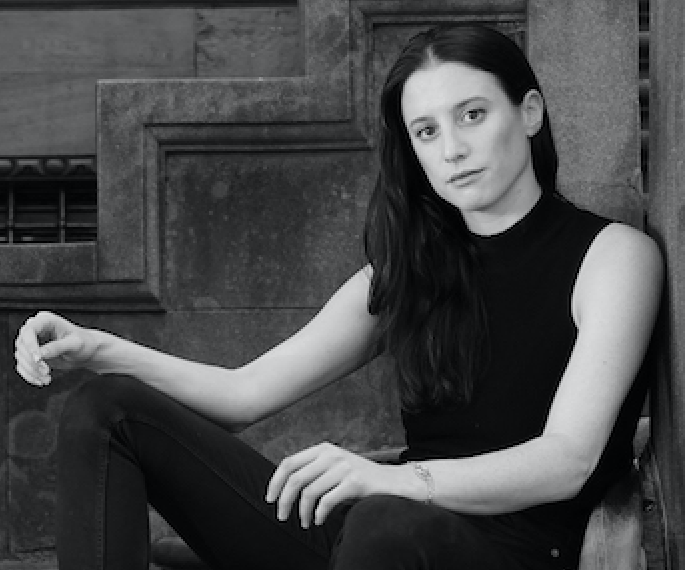
My interview with the writer who not only was named a 2021 Nicholl Fellowships in Screenwriting recipient, but also had two scripts make the 2021 annual Black List.
Laura Kosann made quite a splash in Hollywood in 2021. In November, she was named a Nicholl Fellowship in Screenwriting winner for her original screenplay An Ideal Woman. Then in December, that script plus another screenplay Laura wrote (From Little Acorns Grow) were named to the annual Black List. If that weren’t enough, the good news continued when in April 2022, it was announced that Laura had been hired to adapt the female-driven comic book Mercy Sparx for MGM.
Laura was kind enough to carve out some time for us to talk about her background, the craft of screenwriting, and her screenplay An Ideal Woman.
Scott Myers: Where and when did you start to develop an interest in storytelling and writing?
Laura Kosann: I always grew up watching old movies. I was always playing movies in my head growing up, creating them from scratch and I always loved to write. In whatever medium that meant. I just always knew I wanted to build stories and worlds.
And then in high school, I got an internship working at The Public Theater’s Delacorte Theater in Central Park, for their Shakespeare in the Park program. That’s where I got really into plays. I would read them by the metric ton. I lived at the Drama Bookshop; I’d spend hours there reading. At night before bed I wasn’t reading magazines I was reading Tom Stoppard and Edward Albee and Paula Vogel. And during that internship, I would also sit in and watch the rehearsals. I absolutely loved watching the directors work with actors. Just…the process. And these were incredible actors — Lauren Ambrose and Oscar Isaac as Romeo and Juliet. Michael Stuhlbarg as Hamlet. Jonathan Groff as Claude in Hair. That was a magical experience to be blessed to have.
So in general, theater and playwriting was just a big part of my foundation as a writer. It still is. And I think it’s one of the reasons my stories are very character-driven. It wasn’t the traditional screenwriting background. I was an English major in college and I think that’s also why I always bring something a little literary to the table in my screenplays! The same way that I love plays, I love books. All of that culminated into who I am as a storyteller.
Scott: I think playwriting is a terrific grounding for writers. I remember interviewing a writer who had a background of playwriting, and he said, “If I was given a scene with two people in a room, and I could make that scene interesting, I felt like I could do pretty much anything.”
Laura: It’s so true. Theater is this living, breathing thing. I remember when I first saw August: Osage County on Broadway, it took my breath away. I read that play so many times. And everything else Tracy Letts’ wrote. I am that person that would go see The Ferryman ten times if I could. With theater, you’re sitting in the audience and you cannot escape what’s in front of you. You are part of it with the actors. It’s this constant ever-changing, living and breathing thing.
In high school, I wrote a play called “The Sellout” that I submitted to this drama competition in our high school. I got third place, and it meant that I got to direct my play, and it got to be shown to the school. I remember watching the performance and seeing my words being read by two actors. Hearing the audience laugh. It was this feeling of, “Wow, I can bring stories and characters to life that are inside of my head. This is all I want to do.”
Scott: My first agent is a manager now. He’s out of LA, but he opened an office in New York over 10 years ago with the idea that he was going to look for young playwrights.
As the so-called Second Golden Era of TV emerged, he figured playwrights would be valuable because they know how to write characters and they know how to write dialogue, both staples of traditional television storytelling. It really worked out well for him. He brought a lot of playwrights to LA to work in TV.
Laura: Yes I feel like even when I have meetings, producers have said, “We love playwrights, because they bring this different thing to the table. We’re looking for playwrights.”
I love that The Black List expanded into theater. When I look back on a lot of my journals growing up, they have pages and pages of dialogue that goes absolutely nowhere. [laughter] I didn’t know how to stop myself at that age. I was young. I was obsessed with dialogue and characters. That was always where I started and where I think I still start from a bit.
Scott: I tell my students, I say, “Dialogue is conversation with a purpose.” Sounds like your journals were more just conversation.
[laughs]
Laura: Conversations that would never end. They would just go. They might have sounded snippy and good…but you’ve got to have a purpose at some point.
Scott: You mentioned your sister, Danielle. You two started something called The New Potato. Is that still an ongoing thing?
Laura: It’s not, when Covid hit we both made the decision to do the stuff we have just always wanted to do. And it ended up being a great thing. We love working together, but Danielle is an incredible artist. She’s an amazing illustrator, painter, photographer. She started being able to do that full time. And I got to do now what I want to do full time. Danielle knows better than anyone that all I’ve ever said is “All I want to do is write and direct movies and tv.”
We started The New Potato when I was at Showtime Network at the time in New York City as a production assistant. Danielle and I had this idea for a website that was basically the world through the lens of food. It was supposed to be just for fun, centered around the New York food scene. But it ended up taking off!
The reason that experience was so wonderful is it allowed me to write and direct these comedic videos that got real wonderful exposure. They were short video sketches that were on the zeitgeist.
And then at some point I had this idea for a Christopher Guest-esque mockumentary about social media influencers. Because that was very much the world we were in. And I wrote and directed that movie.
Scott: The Social Ones.
Laura: Yes. That was the culmination of that whole experience I’d say.
Scott: The one little piece of the puzzle here I want to figure out is the screenwriting part of it. You did the playwriting. I’m assuming you wrote short stories, you wrote essays, you did the videos. Where did the screenwriting thing come into play and how did you actually learn to write screenplays?
Laura: I hate to say I’m self-taught because I really can’t stand how that sounds (laughter)…but I am I guess? I never went to school for it. The same way that I was living at the drama book shop reading plays, I started to buy every single screenplay that I could find. Now, it’s more readily available online to find scripts. When I was younger, it wasn’t. In my bookshelf, I still have the book that has all the Coen Brothers screenplays in it. A big book of Paddy Chayefsky screenplays. To find those gems felt like such a big deal at the time.
What’s amazing now is you can go online, and find everything from Jojo Rabbit to the pilot episode of “Killing Eve.” And the way I learned is I’d read scripts while watching what I was reading onscreen. I’d watch how it all would translate onscreen. And somehow that taught me. It’s an incredible exercise I’d suggest to any screenwriter. And that’s also why early scripts are my favorite. I don’t like when what’s on the screen matches exactly what’s on the page. I like to see what changes were made. Because then I like to think about why, and how those changes and those decisions can inform what decisions I make as a screenwriter.
Scott: Let’s talk about your script which not only made the 2021 Black List, but also won you a Nicholl screenwriting fellowship. Here is a plot summary for your script titled An Ideal Woman:
“Set in American suburbia during the Cuban Missile Crisis, a 1960s ex-actress and housewife finds her house of cards world, begins to tumble as she continues to be pitted against two identities.”
What was the inspiration for the story? Cuban Missile Crisis? The Protagonist? Where did you start?
Laura: I started at the first scene, actually. I’ve said this so many times, but it’s true. When COVID first started, I moved out of the city with my husband, my sister, and her husband. I was helping her with her nephew. It was this rental house on this suburban street I found a little eerie.
And this was when Covid was at its worst. I just felt like it was so odd how everything seemed so perfect and groomed in this suburban world we were in, when the world outside was falling apart. Then one day for some reason, I just had this image of this housewife in the 1960s, standing at this oven about to burn her house down. I have no idea why. I just saw her. I’ve always loved period. I’ve always loved that time period. I don’t know why I just had this image. I didn’t really write anything down, she just literally started to move through the house with me.
I kept conjuring this woman and thinking about who she was and why she was. I found it fascinating that all the feelings that COVID was evoking — the claustrophobia, the screaming silence — reminded me of her.
That’s when I started reading everything from John Cheever to “The Feminine Mystique.” I just started really getting into that time period. And in terms of Covid, I felt like the Cuban Missile Crisis was another time in history when people thought the world was going to end and there was nothing they could do about it. At the beginning of covid, before the vaccines and the cocktails, people couldn’t necessarily buy their way out of it the same way they could not buy their way out of the bomb. It was just this hovering, unavoidable threat.
And in general, I thought it was interesting how socially, politically, and culturally, a lot of what was going on then actually really mirrored a lot of what was going on now. And that thought process got me thinking a lot about this idea of the commercialization of fear, I wanted that to drive so much of what was going on in the screenplay.
Scott: It’s like you had all these influences. You got COVID, you got the claustrophobia, You’ve got that fear. I always tell my students, there’s this weird way in which we’re wrangling magic as writers. You got to believe these characters exist. This character Ann came to you, and you talk about that opening scene. This is how you describe it in the script:
“Ann Weston, 41, stands over her gas stove. It’s searing hot and it started to melt the wall behind it. She watches, clearly contented with the first stages of her home going up in flames.”
Then you do a little bit of commentary here:
“Our heroine spots a few crumbs on the laminate countertop. She sweeps them away with care. This is muscle memory. Muscle memory and being torn between two identities as 1960s housewives so often were. Today, it’s homemaker versus pyromaniac.”
As a screenwriter, you always look to hook the reader right off the bat. With the opening of the script, you stand in a great cinematic tradition beginning with a powerful visual.
There are a lot of movies that begin with this thing that’s essentially in the present, and then we go back in time. You plant the seed like, “How the hell did we get there?” Like Double Indemnity or Sunset Boulevard. Or American Beauty, “A year from now I’ll be dead.”
You’ve got this image with Ann in the kitchen. Where was it along the way you said, “That’s how I’m going to start the script?”
Laura: I’m telling you, that was always my opening scene.
Scott: That was going to be it.
Laura: That was always the opening scene. And that’s many times how it starts with me. Not with this full story. But just an opening scene that suddenly gets me asking questions. Who is she? Why is she there? etc.
Scott: Let’s talk about some of the other characters beginning with the rest of the Weston family. Here’s how you introduce Ann’s husband:
“Stan Weston 40s, stands at the oven making fried eggs. The act of cooking makes him a modern man, and Stan likes to think he’s just that.”
How would you describe Stan as the husband and father in the family?
Laura: What I find interesting about Stan is that he’s not supposed to be this bad character. He’s a product of his time. And there was something that I liked about him thinking he was more progressive or modern as a man than he actually was. It fed his ego.
It’s like when someone says, “Oh, we’re living in the suburbs, but we’re not suburbs people.” I liked the idea that Stan was that kind of father and that kind of husband. In his mind, he’s not like the other husbands…but really he is.
The same way that he thinks that he wants what’s best for Ann and he wants her to fulfill her dreams. That he wants her to be a modern woman. He doesn’t, actually. He takes pride in the fact that he thinks he does. So I really started with how that quality feeds his ego. That was the seed of Stan.
And I love the idea that they really fell in love at a time when they were two completely different people at different points in their life. Then, I feel like life happened. A next stage of adulthood happened. And when that happened, I wanted to explore the drastic difference between what that meant for Stan and Ann separately. He could pivot and be whatever he wanted. Ann could only be a housewife and Mother.
Scott: Ann started off as an actress, a successful Hollywood actress. In some respects, quite a catch for Stan, this beautiful woman, and people probably thinking, “Wow, he kind of lured her away.” Later on he has a line of dialogue like, “I was OK with you thinking this or that.”
He’s lying but once she starts to go out her own trajectory, you begin to see, just like you were saying, that he’s less really about her than more about him. Is that a fair assessment?
Laura: For Stan it’s like — “you can be what my definition of modern is. But if it’s not my definition, if it’s not in my control, it doesn’t work.”
Scott: There are two daughters, “Jackie 15, a willful introvert, sharp and intense. Terry 13, trailing behind her older sister as always.” Jackie’s an interesting character because while the family lives in a suburban neighborhood, where conformity goes with the address, she’s something of a dissident, isn’t she?
Laura: I love her. I just love that character so much. I don’t even know that she’s a dissident. I think that at that time she’s seen as one. But really she is just this free spirit. She’s curious, and she doesn’t listen to an answer from her elders and take that immediately as fact.
I think that she’s just a smart, curious, independent girl who is in a society where everybody — in the face of communism — is being put into these boxes, and everything is so polarized. There’s no gray area. It’s this thing of just not expecting kids to ask questions or decide for themselves. And I think that she wants to.
Not to mention being a woman then, and what was expected of you as a girl growing up in the 1960’s. Jackie has her own compass that makes her seem weird. That’s why I absolutely love that scene where she’s watching The Twilight Zone. She was not like the other girls in her class. She wasn’t girly. She’s a free spirit. She wants to learn. She wants to ask questions.
Scott: Ann’s got these female characters around her, including her daughter, who is seeing things with a kind of clarity, like how the Cuban missile crisis, it’s that big of a deal. There are two other important female characters.
One is Jackie’s teacher, Susan Geller, who has an interesting story, and then there’s this other character Cindy, who is more like the suburban housewife, but starting to exhibit some feelings that she’s trapped in a way, trying to break out of that.
I’m just wondering, the characters, did they just emerge naturally? Were you thinking functionally, “I want to have a character who represents someone like Susan, who sees things in a very stark way, ‘This is the reality of where we’re at,’” and Cindy who’s really struggling and represents that Ghost of Christmas Future, “If you don’t change, Ann, you could go down that path?” How did these characters evolve in your writing process?
Laura: In many of my scripts, I often have two women that should be aligned and be great friends, but because of the circumstances of their society, they’re pitted against one another. Both Susan and Ann have to put on a show for the world. There’s an entire part of them they can’t reveal. They have common ground. But they never find it. Which to me is a sort of Romeo and Juliet tragic, platonic love story in this script, in a sense!
Being gay in the 1960’s, Susan’s circumstances are just so, so much harder. Ann has so many opportunities that Susan does not. But the two still, both, have this melody of themselves that is left to be unsung. And Susan especially, has this whole side of herself that she just couldn’t be public about, and just couldn’t live out. And when I started developing both characters, I always felt like they would be great friends. It was always my instinct.
With Cindy, she is a character I came to really feel for. That scene, honestly, is my favorite scene in the whole movie, when she says, when she’s in Ann’s clothes, “We can’t be anybody else but each other.” It is my favorite part.
At first, when I wrote Cindy, I just wrote her as more of this very sad, lost character. She’s OK with where she is and who she is, but at first, there wasn’t much there. I didn’t realize I was falling into that trap of creating a cliche. The cliche 1960’s neighbor who’s smallish. I realized I wanted to go further when I started to feel just so, incredibly sorry for her.
I remember one day this notion came to me where I was like…”These women are so trapped…why aren’t you including Cindy in that category?” I knew Cindy was trapped, but it was as if I felt that because she was playing the game so well, she was OK.
And that’s when it hit me that if Cindy wanted to be anybody else, all she could be was another wife. Another Mother. There was no other role anyone would let her play. That’s what’s beautiful about creating characters. They sort of take on their own life at some point.
That’s why sometimes I can tend to bump up against having an exact outline. For my specs that’s never how it is. It’s always changing. It’s always evolving. You have to let some magic happen when you’re working through it.
Scott: To me, it feels like Ann’s journey involve getting stimuli, feedback from others, particularly women, and that’s all about a question of self-identity: “Who am I?” She even says at one point, she’s just having sex with her husband, and she pushes back. She looks at him, and she says, “Do you still see me?” Self-perception.
It’s like a hero’s journey, she’s trying to find her authentic nature.
Laura: It’s very much a hero’s journey. With Ann also, when I try to internalize it I think of it this way: I love to write and that’s what I have a passion for. If tomorrow someone said, “You can never write again. You can only be a wife and a mother,” I would be having an identity crisis. So much of my self-worth comes from what I love to do, and the privilege and ability to be able to do that.
Ann loved to act. Then she was blacklisted, became a Mother and acting was taken away from her. She had children and then suddenly woke up years later and wondered — where did my life go?
And that’s why you’re following this family through this week. Through this sort of existential crisis that causes the cracks in the veneer of Ann’s house-of-cards world to just give way completely. And then it becomes an identity crisis. Everyone was playing along. What happens when someone stops playing? That’s why the song “Paper Moon,” is such a huge part of the screenplay as well. That line, “But it wouldn’t be make believe if you believe in me.”
Stan and Ann were playing make believe together. But when someone stops, what does it mean?
Scott: Joseph Campbell talks about the reluctant hero where they reject the call. Susan has said this thing in class, this whole duck and cover is bullshit. Basically, you’ve got fifteen minutes to live, that’s it.
Her daughter brings this information home to Ann. Ann, at first, is pissed off at Susan. She confronts Susan and says, “Why are you staying there?” That’s almost like saying Susan represents someone who is really struggling to forge her own identity.
Ann, at the beginning of the story, set aside the opening image, she’s not fully engaged in that. It’s like she’s rejecting that. Then, by the end, she has that thing, where like you said, she says to Susan, “We should have been best friends.” She’s gone through this process where she’s embraced that.
Does that ring true? That Susan, in some respects, represents, “Ann, you need to start telling the truth about yourself. You need to go on this journey and embrace who you really are.” Does that feel like something that’s going on there in that relationship?
Laura: I think Susan sees through the bullshit. She does. As I even said about Jackie, Susan asked questions that nobody else asks. Also, Susan is more liberal at a time when being more liberal was construed with communism. It’s why she’s fired.
And Ann probably would agree with everything Susan does, but Ann is playing along with society for a while. Whereas Susan doesn’t play along.
I think, in a way, they’re reflections of each other. But sadly, there’s not a moment Susan challenges Ann to break out of what’s she in. That’s the tragedy really — that they don’t have that. Sadly neither really knows what the other is going through. But we as the audience are aware…and it’s heartbreaking in a sense.
Susan just sees Ann as some housewife, and, Ann sees Susan as this teacher that’s being hard on the kids, who Ann also thinks is judgmental of her. Ann is projecting her own insecurities in a lot of ways. All in all both women are human, and they just make assumptions about each other.
Scott: That’s why I thought that you could tell the story without the Cuban Missile Crisis, but it wouldn’t have that same thing that the threat of death, basically, forces us to look at things at a deeper level. What happens to Susan, I think is a contributing factor for Ann, in a deepening self-reflection.
Another thing: You’ve got an interesting little subplot with a deer. It reminds me of the ducks in The Sopranos.
Laura: I love The Sopranos.
Scott: Let’s talk the deer subplot and how that folded into the story.
Laura: In that rental house, that I’m telling you about, the backyard was this square, manicured plot. It was all enclosed and fenced in. I was standing in the kitchen. I swear, sometimes when you’re writing, stuff happens, that’s extremely kismet. You’re like, “Whoa, that happened because that was meant to occur.”
Anyway, this deer came barreling up behind the house, from the front. I don’t even know where he came from. He was huge, and seeing him in this fenced in plot was very odd and unsettling. And I watched him and suddenly was like… “That’s Ann.”
He was running in these little circles and looking back and forth. I was saying “just go out the same way. Go out the way you came.” At some point he did. But that’s when I realized Ann couldn’t do that. She couldn’t go out the way she came. And that’s why she says it to the deer. “Go out the way you came.” That’s why it’s a scene.
And my dog in that house too, he’d always go to the corner of the yard and try to find a way out of the bottom of the fence. That’s why there’s Charlie, in the screenplay, the little dog trying to constantly dig his way out. Everyone wants to get out but they can’t.
Scott: I’m a big Carl Jung fan. He talks about synchronicity. I think that’s true. If you’re a writer, things like that, potentially anything that happens, you can use it in your writing.
Laura: It’s true, things really start to fall into place. Sometimes at 40 pages in I am still saying to myself, “Am I crazy with this story?” But usually something happens, that little spark of magic every now and then that keeps you going. Points you in those right directions.
Scott: You’re in sync.
Laura: Yes!
Scott: That’s the whole point of the hero’s journeys. It’s to follow it to find your bliss, follow your bliss, find that thing. If you align yourself with that then, it may not be the easiest life, but at least it’s an authentic one.
I want to mention this. You’ve got this song, Paper Moon by Ella Fitzgerald. There’s a line of lyrics in there:
“It’s a Barnum and Bailey world, just as phony as it could be, but it wouldn’t be make-believe if you believed in me.”
Had you heard that song? I mean, it’s so perfect for your story, right?
Laura: I had heard that song. And I’m a really immersive writer. That’s part of my process. If I’m writing something about, this time, for example, it’s everything I listen to, consume. I buy so many old newspapers and magazines. I bought all the Life magazines from 1962 and 1963. I don’t remember exactly, but I’m sure I was just listening to a lot of music like that.
I’ve always loved that song. I just remember I was walking down the street, and that song came on. I just thought it was so perfect. I never realized how tragic those lyrics are. They’re very sad lyrics. They were perfect for this because — like I said before — it made me think of Ann and Stan. “It wouldn’t be make believe if you believe in me.”
Stan stopped playing make believe with her. She stopped playing make believe with Stan. Both people have to be fully committed to playing make believe for the house of cards world to stay standing. There was just something very poignant about that.
Scott: What about that twist at the end? I don’t want to give it away. Could you talk more generically about that? Was that always there or did that emerge in the process?
Laura: That emerged in the process. I’d just had this epiphany while I was walking. The first part of the twist came to me and I was like, “Oh, of course.” I always knew that there was more to that beginning. I never just wanted it to be, she’s really upset about everything at the end, and she’s burning her house down.
It was the second part of the twist, which is obviously so tragic, that was my favorite part. The first part, I was like, “OK, there’s something there, but I’m not there yet.”
Scott: What I love about this, Laura, is that it is character-driven storytelling. You’re following the characters. Ray Bradbury’s got that quote: “I just follow their footsteps in the snow.”
Laura: I haven’t heard that. I love that.
Scott: I do want to make note of this, your script, From Little Acorns Grow, which is another 2021 Black List script. You really hit the trifecta here, Nicholl and the Black List twice. Both of them are period pieces. Is that a thing with you, or is it just these two stories just happened to be period pieces?
Laura: They were just back to back. I was just in that general time period, and I stayed in that realm. Not that it’s exactly the same time because Acorn is the ‘50s.
During Covid I read a lot of classic books. One was The Great Gatsby. Acorns came about because I felt like there was not a Great Gatsby that was from the female gaze. I was like, “Well, I’m already here, so let me just stay here for a while.” It was just a coincidence.
Scott: Let’s talk about the Nicholl experience. As part of winning it, you got to talk with Olivia Wilde. What was that like?
Laura: Oh. That was amazing. I love what she does so much. I loved the platonic love story between women in Booksmart. And I have been waiting for Don’t Worry Darling to come out for what seems like an eternity. She’s such a champion of women writers, women directors. It was inspiring to talk to her because I look up to her. She also is a Mom and I had just had my baby five minutes ago, so that part was really wonderful as well.
Scott: I’m teaching two classes at DePaul Film School this quarter for my undergraduates, the 101 intro class. We read scripts every week and do table reads. We’re doing Booksmart this week, because I think that’s such an awesome script. Next week, for my thesis students, they’re reading the script called The Ideal Woman.
Laura: That’s amazing! I hope they like it. [laughs]
Scott: I’m sure they will. Let’s talk about December 13th, 2021, which may not have a lot of meaning for people in the world, but for screenwriters, it’s a big deal. The second Monday of every December, that’s when the annual Black List comes out. Were you paying attention to that at all? Are you just hanging out with your kid? What was going on that day?
Laura: Of course, as a screenwriter, the Black List is always on your radar, but you’re always like, “Pie in the Sky, that would be amazing.” I wasn’t expecting it. I couldn’t believe it. The screenwriters that have been on The Black List are the people we all look up to. Emerald Fennell, Taika Waititi…I mean it’s just way too long of a list to even go through. So to actually be on there with two scripts was unbelievable. It was a good day.
Scott: It’s great. I don’t know if you saw the Oscar announcements. I guess it was yesterday. For the five sets of writers, from adapted screenplays, most of them were female.
Laura: Oh yes, I did see that.
Scott: It’s exciting.
Laura: It’s very exciting and incredibly inspiring. When Emerald won last year for a Promising Young Woman, I mean, nobody had won since Diablo Cody in… what?
Scott: Diablo won Best Original Screenplay in 2008.
Laura: Anyone who knows my writing knows that the stories I always tell are centered around the many dimensions of women that we don’t see enough on screen. And more women being behind and in front of the camera, continuing that progress, I want to be part of that. In whatever shape or form that means.
Scott: You even talked about this with Olivia that you do want to move into directing, writing and directing?
Laura: Very much so. I directed The Social Ones and it was an amazing experience. Incredible actors like Richard Kind, Stephanie March, Colton Ryan, Nicole Kang and Jackie Hoffman were in it. We won the Audience Award for Best Comedy at Cinequest Film Festival. And we sold the feature to Comedy Dynamics. I definitely want to keep directing.
Scott: Let me ask you a few craft questions here before we go. You talk about the process of immersing yourself in a story. Beyond buying all the Life magazines and listening to music, what does that mean? For The Ideal Woman, what were you doing to immerse yourself in there?
Laura: It’s all I consume. I read everything from that time. I listen to music from that time. Photography is also huge for me. I look at photographs. Honestly, I’ve thought of a whole movie because of one photograph. From Little Acorns Grow started with a photograph.
Scott: You’re not like Val Kilmer on the set of The Doors where he’s telling everybody to refer to him as the Lizard King all the time?
Laura: No, but I will say, I have to tell you that’s so funny, because the other thing I love when I had that interview with Olivia Wilde, was when I described this part of my process to her. She said, “It’s like method writing,” like method acting. Where someone lives their character. Because I do live there, while I’m writing it, in a way. And it was such a cool observation on her part.
Scott: I was going to say, I doubt your dressed up like Laura Petrie from The Dick Van Dyke Show, serving up casseroles. Okay, next question: How do you come up with story ideas?
Laura: I really draw inspiration from everywhere. Observation. Photography. All different mediums of art. Books. Articles. Music is really big for me. The second I have an idea for a screenplay, I make a soundtrack for it. That’s huge for me. I’ll then take walks and listen to that soundtrack and I’m imagining scenes. Letting the plot unfold. It’s just inspiration from a lot of different places…as you see from the deer thing. [laughs]
Scott: It sounds like that receptive writing thing where you’re allowing that stimuli to filter into your conscious and subconscious nature. Okay, so you’ve got a story idea you want to pursue. Let’s talk about your prep writing process. It doesn’t sound like you’re necessarily one of those people that has cards and lines them all up, super organized. How do you break your story?
Laura: I have a few weeks where I’m immersing myself in the world it’s in. Consuming everything concerning that world. I’m starting to write scenes. I won’t go into FinalDraft until I am totally ready. Sometimes I’ve literally written 40 pages of script in journals or on my iPhone notes app before I even start writing the script.
I definitely have a process where whatever I can map out, I do, in terms of the acts. I’ll put something down on paper in terms of a progression. But it’s very loose. I don’t like to be married to it. I like to give myself the ability to freely let it evolve as I’m writing it.
And then at some point, I have this epiphany where I know I’m ready. And it’s going to pour out of me. Usually, at that point, when I go to the script, I write it very quickly.
Scott: I resist the whole screenwriting guru thing where they got these paradigms, this needs to happen on that page and all that sort of thing. In my view, that’s actually a disservice to what we do. Stories are organic. The characters are malleable. They’ve got their own intentions and free will.
Even when you do outline, I tell my students, too, “OK, you got the outline? Great. Now, set it aside. When you write the draft, go from a feeling place. Sit there and be with the characters. Let them dictate what goes on in each scene.” That receptive writing thing.
It does remind me, though. It’s pretty funny. I remember reading an interview with one of the most prominent contemporary screenwriters Steve Zaillian and he said — I’m paraphrasing — “Whenever I go into a bookstore and I pass by the screenwriting section, and I see all those ‘how to’ books, I immediately turn the other way. I don’t want to know any of that stuff. I don’t want any of that information to get in the way of my process.” As I said, every writer is different. There’s no one right way to do it.
Laura: I was talking to a screenwriter who said that. When I was being self-effacing about having not gone to school for this. They were like, “Oh, I wish I could unlearn all of that.” It was interesting. I was like…”OK, well, that’s good to know.”
Scott: How about characters? How do you go about developing them? Is it more that receptive writing, where they emerge, you’re immersing yourself in their lives, and they start to come alive? How does that work?
Laura: As I’m immersing myself in them in those first few weeks, I really get to know them in my head. They take on this life of their own. I’m not necessarily sitting there writing character descriptions. I just come to know them through thinking about them. Asking questions about them. Questions are big.
Then I’ll find I’ll start to read certain articles or listen to certain music that reminds me of them. And as I write a script I am constantly going through it and re-writing and polishing over and over. And by doing that I am getting to know the characters also. Reading their lines and thinking about whether what they’re saying is authentic to them. Does it sound like them? You start to get to know your story so well that when a character says something out of character, it jumps out at you immediately. Sticks out like a sore thumb.
Reading aloud is something I’ll do as well. I’ll say a lot of lines to myself before I put them in the script.
Scott: Again, that’s sort of magical thing where it’s like the characters exist. They know the story better than we do, because it is their story, right?
Laura: Yes. Completely.
Scott: You’re thinking about rewriting, reminding me, there’s a quote from Diablo Cody. We mentioned it earlier with her script Juno. She said, “I’m like a cat. I’m constantly grooming and regrooming.” She goes through the material over and over and over and over again.
Laura: Yes. I think when people ask, “how many drafts?” It’s tough to say. It’s not that I have one draft, it’s just that every day I am “grooming and re-grooming” as Diablo Cody says. That is so spot on, on her part. Also, not in a boastful way but in an immersive way — I really do fall in love with these stories. So I just love re-reading them and polishing them. My warm-up in the morning many times is reading the script through, getting into that world, before I start on the new pages.
Scott: One final question: What advice can you offer aspiring screenwriters in terms of how to learn the craft and break into the business?
Laura: Ah — I should have figured you’re going to ask me that. I guess in my experience, I would still say that for your first thing, really try to come from a very real, raw, emotional place. Do not think about what’s in the market, what gets made, what needs to get made.
I have found that what gets people’s attention is the script where you are truly laying your heart out on the table. Those are the ones that, for me, always get the most attention, because people just know when it’s a deeply personal. And I don’t mean personal in the sense that this story happened to you. I just mean that — for whatever reason — you know this story inside and out and it is the one you want to tell. It’s the story that, if you do not tell it, you will not sleep at night. I honestly think that should be peoples’ first story.
This doesn’t mean it’s the one that’s going to get made right away, get bought right away. It means it’s the one that will grab the attention of representation. Or of a producer who you should work with on something else, etc.
And to that end, I think it’s frustrating for new writers sometimes when people tell them “write what you know, write what happened to you.” I do not think that is accurate at all, personally. Because I think you can fall in love with a topic, or a book, or a period of time that you don’t know that much about. But for some, personal reason, it resonates with you so much that you ache. And then you dig. And then you find a story that’s true and real and raw for you that you have to put on paper. Suddenly, it’s become personal. People will feel that.
So, in my opinion it shouldn’t feel like you can only write from experience. Or what you know, literally. If something is moving you, keeping you up at night, figure out why and go with it. Ask questions.
I don’t know if that’s good advice, but that would probably be my two biggest pieces of advice.
For my interviews with dozens of other Black List writers, go here.