Go Into The Story Interview: Kristen Gray-Rockmaker
Kristen Gray-Rockmaker wrote the original screenplay “Last Days of Winter” which won a 2017 Nicholl Fellowship in Screenwriting. I had the…
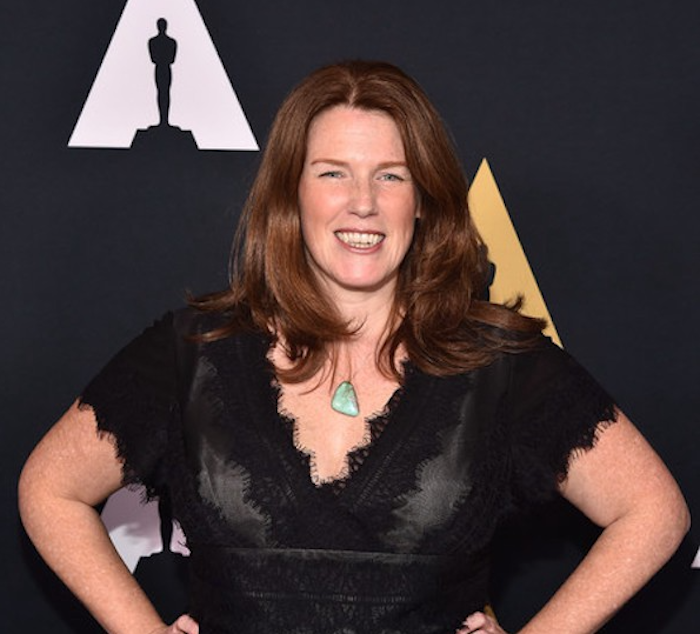
Kristen Gray-Rockmaker wrote the original screenplay “Last Days of Winter” which won a 2017 Nicholl Fellowship in Screenwriting. I had the opportunity to chat with Kristen about about her background, her award-winning script, the craft of screenwriting, and what winning the Nicholl has meant to her.
Scott Myers: You live in New Jersey, is that right?
Kristen Rockmaker: Yes.
Scott: Is that where you grew up?
Kristen: No. I actually grew up in Rhode Island, but I was living and working in New York City for many years. I just recently moved out to Jersey about three years ago because I had kids.
Scott: Three kids, right?
Kristen: Yeah, I have three kids. Once I had the third, there was no way I could stay in the city any longer. [laughs] We moved out to New Jersey.
Scott: How old are your kids?
Kristen: I have twins who are six, and I have a four‑year‑old.
Scott: Wow! I look forward to asking you later on how you find time to write, but we’ll get to that in a little bit. How did you wind your way into an interest as a writer?
Kristen: I’ve always been interested in writing. I’ve known I wanted to write since I was a kid, since I was, literally, 9 or 10 years old. I won a short‑story contest when I was in fourth grade, and I got published in the newspaper. I think I won $10 and I knew right then, I was like, “Oh, this is for me,” because I love making up stories.
That was the first time I think I realized, “Oh, you can get paid for doing this. That’s pretty wild.” I started writing right out of college. I actually had an agent. The first thing I wrote I co‑wrote with a friend of mine when I got out of school. It got shopped around a bit but, ultimately, did not get produced.
Scott: Was that a script or a novel?
Kristen: It was a script. It was a screenplay. It was being shopped around as a TV movie, actually. It didn’t wind up going anywhere. My agent was in Los Angeles and I was in New York. Then I started working in television just to pay the bills, unscripted television. The more that my career grew in unscripted television, the less I was writing.
I just went back to writing in the last three years, maybe. I made a decision that I wanted to go back to writing and give it another shot.
Scott: You say you came out of college with a script. Where’d you go to college?
Kristen: Syracuse University. I was at the Newhouse School. It was a great place to go.
Scott: I see the Tribeca Film Institute in your background…
Kristen: Yeah, that was another script I had co‑written with a friend of mine. It got accepted into the All Access program, but, again, it’s another project where there was some interest, but it never really went anywhere.
Scott: You found yourself with this burgeoning career. You’ve written and produced things for PBS, Discovery, Health, A&E, TLC, Outdoor Life Network. Could you talk about what’s involved as you’re producing that kind of content?
Kristen: I’ve worked on a variety of documentary programs and reality TV shows. I’ve done a lot of different jobs. I’ve gone out in the field. I directed shoots. I come back, and I put the show together with an editor, and make all the creative decisions.
Most recently I’ve been post‑producing a verite true crime show. Field producers film in different cities with the police department and the footage comes back to us in New York where we go through it and turn it into episodes.
Scott: “The First 48”?
Kristen: That’s The First 48, yeah. Generally, I get hired by production companies to produce shows. Somebody else is creating the idea and they’re pitching it. I come in and they’re like, “OK, we have an order now for a series and we want you to produce” however many episodes of the show. That’s where I function.
Scott: You continue to do that as your day job.
Kristen: I do, yes. I’m hoping to switch over.
Scott: If I got the math right, I think you said you have children six and four and about three years ago you got the bug to go back and get into writing, which means that you’re talking about kids who were three and one, something like that.
Kristen: Yes.
Scott: Now we can get to this thing. How do you find time for writing, keeping up the work that you do with the unscripted stuff, and be a mom and a wife?
Kristen: It’s really difficult. [laughs] It’s very difficult. I do a lot of writing… now I have this train commute and I’m able to write on the train. It’s a solid block of time on the way in and on the way out of the city every day. That’s when I do most of my writing.
Most of my brainstorming is on the train. I was never really able to do that on the subway because the subway’s so chaotic, but a New Jersey transit is much more calm, and it’s really very conducive to just letting your mind wander and being able to come up with stories. For me, most of the work is done in just outlining and just knowing where your story’s going to go.
The train has been really great for that. That’s where I do the bulk of my writing. Then, sometimes on my lunch break I’ll take my laptop to a café or something and I’ll write for a while. Occasionally, I’ll come home at night and write, but not too often.
I have to be in a groove to do that because usually by the time I get home and I get the kids to bed and everything, I’m super tired, so not much is done then.
Scott: How long of a commute is it?
Kristen: It’s a good solid 35‑ to 40‑minute ride, so there and then back. It’s just whatever, a few pages at a time.
Scott: I was a house dad for about a year‑and‑a‑half and found that you could get a lot done in a half‑hour.
Kristen: Yeah. Yeah, if you’re focused, you totally can.
Scott: Let’s jump to your script, “Last Days of Winter,” which won the Nicholl, 2017 Nicholl. Plot summary:
“When a notorious hit woman from Detroit’s gritty east side takes on one last job before having a baby, she becomes entangled with a crooked homicide detective who wants her to take out his wife.”
What was the inspiration for this story?
Kristen: There were a few things. I really like antiheroes and I was interested in writing one. There have been a lot of, I think, male antihero roles and not so many female ones. I was interested in creating a female antihero. I set it in this world of the crime story because this is the world that I’ve come to know through my job.
We follow homicide investigators, so… I felt like I could credibly write a homicide investigation. We’ve filmed in many cities, and Detroit is one of the cities that we filmed in. I was very moved by the stories that we would see coming out of Detroit while we were there. That served as a large inspiration for the story. I knew I wanted January to be from there and have that be a big part of her character.
Scott: That’s helpful because it’s like, I’m thinking, “Well, here she is, a white woman living in New Jersey.” The protagonist is a black woman in Detroit. “The First 48” bridged that gap.
Kristen: Yeah.
Scott: Apart from “The First 48”, were there any movies or other TV series which influenced you in terms of tone, plot, or atmosphere?
Kristen: “The Wire” is one of my. It’s one of my favorite series of all time ever. I would say that that’s kind of a bit of an inspiration and a little bit…It’s going to seem incongruous, but Thelma and Louise was actually an inspiration, although that’s a very, very different story.
I really thought that they broke the mold with the way that they depicted those female characters, and I was interested in doing something like that also. I wanted my main character to be bold and badass.
Scott: I don’t want to jump to the script’s ending, but over time, it does become this connection between two and then, ultimately, three women.
Kristen: Right. Yeah. A lot of my scripts lately have taken on some pretty serious feminism undertones, and it’s something that’s important to me, writing unique, strong female characters.
Scott: There does seem to be a kind of energy right now in Hollywood, either a combination of more women writers, or maybe even male writers, featuring female protagonists in feature scripts. Also, a willingness on the part of the studios and production companies, or even an eagerness, to engage this type of material.
Kristen: Even on some of the meetings that I went on when I was out there, I was hearing that a lot, that they’re looking for new female voices, and they’re looking for different kinds of characters, female characters. I think there has been an eye‑opening moment in terms of diversity in Hollywood.
It’s nice to slide in there while this is happening. It’s a good time to be trying to break in, I guess, if you’re a woman.
Scott: Before we get to the characters, which I want to talk about in depth, you made a choice in your script to use voiceover narration. Was that an early creative decision?
Kristen: That opening sequence was one of the first things that I had imagined. Then, the way I tied it in later, that idea came later on, but I knew…I could really picture how I wanted to do the open, with the scenery of Detroit and her talking about the decline of that city.
Scott: It’s sort of like the inverse of Woody Allen in the beginning of Manhattan.
Kristen: Yeah.
Scott: Let’s talk about January, who is the protagonist of the story. She is a hit women. How would you describe her personality and psychological profile at the beginning of the story?
Kristen: She’s very strong. She’s very guarded. I think she’s doing what she feels like she needs to do to get by and take care of her family. I think she views what she does as a job. It’s just a job. If she doesn’t do it, somebody else is going to do it, so she does it. She does struggle with that a bit, internally, but also, in a strange kind of way, she takes pride in her job.
Not in the thought that she’s killing people, but in the fact that she is successful. She’s very successful in a man’s world. I think she takes a little bit of pride in the respect that she gets from that. And this story is her journey to come to grips with all of that.
It’s really hitting home for her as she’s got this life growing inside her, what it is she’s doing for a living. I think she’s coming to grips with that.
Scott: She’s extremely thorough in her job and how she approaches each case.
Kristen: Yes, She does research, yes. That’s all stuff I’ve seen before in these investigations, contract killers doing homework, and following the people, and taking notes on the people. Yes.
Scott: She’s also got a code of conduct. There are certain things she won’t do.
Kristen: That goes back to her viewing it as a job. To her, the job is that she gets hired to take someone out. The reason that somebody’s being taken out is because they’ve broken a rule. There are these unspoken rules in the drug world. If you rip someone off, or if you take out somebody, or you take over their territory then you know what’s coming.
She’s OK with that kind of stuff, but she doesn’t want to take out anybody that she views as outside of that world,.
Scott: She’s in the same philosophical terrain as “Dexter”, the Showtime series.
Kristen: Oh, yeah, yeah.
Scott: She’s OK with taking out bad guys.
Kristen: Yes, yes. Right, exactly. I think that she kind of has this justification to herself that, yes, that they’re in this world where the normal rules don’t apply and, so, therefore, it’s OK. They did something to deserve what they are getting.
Scott: Then, counter to January, the other lead character is Nick, a homicide detective.
Kristen: Nick, he’s a veteran of the homicide unit, which is pretty grueling in Detroit. I think he’s pretty weary and worn down by his job. He’s been following her cases for quite a while and not being able to figure out who she is, which has been frustrating. He’s also developed a drug addiction because he had been shot before, while on the job.
In the process of recovering from that he developed this drug addiction which progresses throughout the story. He’s becoming more and more unhinged, I would say, as the story goes on. He’s in this marriage that’s not doing well. His wife is cheating on him, so he’s just very, very angry. He’s got a lot of anger and a lot of bitterness.
He’s becoming increasingly erratic and desperate, I think, because of the drugs.
Scott: You have a moment in the script where he walks into the police station after, I think, visiting a homicide crime scene and there’s that board with the names of the open and closed cases. That actually reminded me of “Homicide” the NBC series.
Kristen: Oh, yeah, sure.
Scott: They had that whiteboard where they would mark open and closed cases…I think it was red and black, if I’m not mistaken. In your script, Nick sees all these open cases and he sags.
Kristen: In a way, he’s just giving up. He’s just defeated by it.
Scott: Nick and January have something in common. January, she’s under the gun to raise money to safe the family house. She lives with her mom. The house, the ticking clock, there’s a foreclosure thing coming down on that. She’s under some financial pressure, but Nick is under some financial pressure, too. Isn’t there a bit of a parallel relatability between these two?
Kristen: Nick’s financial pressure is related to his drug addiction — it’s a self-made financial crisis. Nick is pretty biased in his views. I think you can tell. He really views these murderers that he deals with as vermin.
But, in reality, he is doing the same thing she is doing — he is killing by proxy. He is lashing out at his wife and hoping to gain financially from her death. So I wanted to pose the question, who is the bad guy here? He of course doesn’t see himself that way though. He can’t see that.
Scott: You make some intriguing, even surprising plot choices. Let’s talk about January. She has this boyfriend, Sheff, and he’s a white guy, right?
Kristen: He’s white, yup.
Scott: He’s from a fairly affluent or well‑to‑do background.
Kristen: Yeah, he’s upper middle class.
Scott: He’s the one who got January pregnant.
Kristen: Yes.
Scott: To me, once she decides that she’s going to have this child, which is what he wants, he buys this house out in the suburbs. Doesn’t that in a way represent symbolically “January, you have an opportunity to live a ‘normal life.’” Is that what you were going for there?
Kristen: It’s presenting this opposite world, of where she lives and where she grew up. I was interested in seeing the two worlds intersect with each other and how she would do moving into that world, which she does briefly. It’s representing this other side that she finds kind of interesting and appealing in some ways, but she doesn’t quite trust. Yeah, I was interested in exploring that.
Scott: Yeah, she has that one very awkward scene where she’s hanging out with some women from the neighborhood, and it’s…
Kristen: Yeah.
Scott: It’s like they’re from two different worlds, right?
Kristen: Right, they are. The women are very “progressive” and they’re welcoming her, but at the same time, they hold their views. They hold their views of where January comes from. They can’t help it.
January, she senses that. She’s smart, so she kind of digs them a little bit. [laughs] She kind of tweaks them a little bit.
Scott: The idea of presenting January with this opportunity to go and live in this entirely different environment, which is in effect almost a different world, a different life, similarly, in parallel with Nick, now having the opportunity to really embrace criminality in order to accomplish what he wants, vis-à-vis what he asked January to do to his wife, it’s like both of them are dealing with a fundamental question: “Who am I?” What’s their core identity?
Kristen: They’re both dealing with that, especially January. I think she’s really at a crossroads in terms of where she’s going to go with her life and she’s trying to figure it out, for sure.
Scott: There’s some lines of dialogue I highlighted. One line, January says, “I’ve been handling things myself my whole life. That’s all I know.” You get a real sense of her capability of doing that, but also her sense of emotional and psychological solitude.
She has this conversation with him. She says, “Sheff, there’s really no way for you to understand.” This is talking about what she does. Sheff says, “Understand what?” She says, “Who I am.”
Later on, Sheff says, about a conversation, he says, “Does he know you?” She says, “A version of me.” She’s got several masks she wears.
Kristen: Yes, her brother knows what she does, but her mom does not really know. She’s different with different people. What she presents is different with different people. She’s very, very guarded, so people don’t really know her.
Sheff, in particular, just coming from the background that he comes from, there’s just no way for him to ever understand why she does what she does. He could never comprehend it. In her mind, she thinks he could never possibly comprehend who she is because he’s never had that experience that she’s had with her life.
Scott: In fact, they do eventually have a breaking point…It’s mostly because she won’t really talk to him about what she does.
Kristen: She really feels he will just want nothing to do with her and that he’s just going to really be disappointed in her and I think that she worries about that, so she doesn’t really let him in. There was a version that I wrote early on. I was trying to keep them together. I wanted to see them work out in the end and it just was not working. It felt really forced.
Just no, these two people, the way that they’ve been created, it just didn’t seem like they would ever…They just have really different outlooks on life and I didn’t really think that they would work out in the end.
I wound up breaking them up and I think it felt more like what would happen.
Scott: Was it like you were writing scenes, the dialogue, their actions just didn’t feel authentic?
Kristen: Yes, I was trying to still have her not really tell him what she did and have him somehow be OK with it and they make up at the end and get married anyway, but it felt very forced and not real. It felt much, much more real once I decided that…It felt more in her character to be like, “You know what? We just can’t move forward with this.”
Scott: Eventually, she moves back out of the suburbs back home. They’re on speaking terms at the end and you leave the door open, but it seems a more nuanced resolution.
Kristen: To me, it felt much better to have them not be together. They’re still friendly, which is good.
Scott: There’s several big plot twists. I thought they were great because it kept me wondering where the story was going. One of the biggest ones is Nick finally…First of all, they think it’s a guy, right, this Whitter character?
Kristen: Yeah.
Scott: Everybody thinks it’s a guy, so that’s how good January is at doing her job. Of course, that also speaks to the prejudices people have about who would be a hitman. What’s a hit-man? Hit. Man.
Nick figures out that it’s January behind many of these several murders on his open case list, but instead of busting her, he negotiates with her to kill his wife. He basically is using that power that he could bring her in any point.
Do you remember when you hit on that idea?
Kristen: That was from the very beginning. It was going to be about her getting involved with this crooked detective who blackmails her into killing his wife.
I had known about a case where a police officer hired a hitman to kill his wife. And he did kill her. That idea had always been really interesting to me, this idea of the cop who’s supposed to be the good guy taking on the bad guy role and blackmailing this hitwoman who kills people for a living.
I was really interested in playing with this idea of the bad guy and who is bad guy in this story because she gets paid to kill people, but really, he’s more of the bad guy. I was interested in that role reversal, especially given where it takes place and everything.
Scott: You show January approaching a hit early on, while she studies the person for a period of time to understand their patterns and behavior and where they’re going to be all that sort of thing, there’s a distance from them.
It’s not like she really enters into their life and really gets to know them that well. She wants to keep to an arm’s length there and that’s intentional.
Kristen: Yeah, definitely. Again, she views it as professional, a job.
Scott: But then — and this is another big plot twist — the woman who is the wife of Nick happens to be the same woman who works at the OB/GYN office and has actually seen and interfaced with January. Now, it’s a whole different game.
Kristen: That gets into her moral code that she has of she doesn’t kill people like this, number one. Number two, yeah, she knows her in a very intimate level in that she’s been there to examine her baby and everything.
Scott: Was that a conscious thing? “I want to up the stakes on January in terms of her emotional life by making this a personal thing. She actually knows this person, so that’s going to really create some complications for her.”
Kristen: Yup, that was. That was actually something I talked a lot to my husband about when he was reading it. Because early on, the character of Debra was slightly different, it was somebody that she had gotten to know a little bit so there was always a personal connection, but it wasn’t as strong as it is now. He had suggested making it even more personal.
That’s when I came up with the idea of making her the ultrasound technician, which I think was a really good decision because it just makes it so personal.
Scott: Also, you’ve got the contrast of death and life. There’s some really good plot twists and I don’t want to give them away. But, by the end, it’s quite surprising that Nick’s partner, who is a female cop, and January, who’s female, and this woman, who was the object of the hit, that they all have these disparate backgrounds.
Yet, fate brings them together in a large part because of what Nick has said in emotion. There’s this really interesting resolution where again, it’s very mature in nuanced. It’s not like it’s all tied up with ribbons and bows and strawberries and cream.
That ending, how difficult was that for you to come to that ending to where it is, that sort of adult nuanced approach?
Kristen: It was an ongoing process. I rewrote this many times. I went through some major rewrites. It took a while to get to that. I always knew what I wanted to do with the very end, that very last scene where she says “a version of me” and everything. Where she’s getting respect from the neighborhood dealers.
That scene I had early on, but how to get there was something that I wrote and rewrote and rewrote. [laughs] It took a long time to get it to where it is now. Yeah, it was a struggle.
Scott: Were you getting feedback from other people, or were you just reading it and interpreting it and analyzing it on your own?
Kristen: I was. I did get feedback from people. My husband is usually my first reader, and he’s pretty critical. He’s really good with suggestions. Then, I’ll usually do a rewrite based on that, and then I give it to a handful of friends who I trust, and I’ll get feedback from them too. They would tell me if something wasn’t making sense or wasn’t ringing true, or whatever.
I did do a lot of rewrites based on people’s notes, but then there were times when I would just read something, and I’d say, “Uh.” This doesn’t make any sense, [laughs] and then I myself would rewrite it just to do it.
Scott: Were these people writers that you were giving the script to?
Kristen: Yeah. I work in television, and so I’m around a lot of creative people. There are a lot of people in unscripted who would love to move over to scripted, of course. So I tried to pick out my friends who are interested in writing or are interested in scripted. I definitely have a handful of them that I turn to.
Scott: I don’t know if you ever thought about this, but by the end of the script, January is quite pregnant. It brings to mind like she’s the first cousin of Marge Gunderson in Fargo.
Kristen: Oh, yeah.
Scott: It’s two pregnant women. Opposite sides of the law but both of them…really stalwart and they do what needs to be done in order to get what they need to be done. Was there any point of connection there ever for you or was that just my own crazy…
Kristen: I did think about that, because she was the only other character I could think of who was so pregnant in a crime movie. It wasn’t intentional, but I did definitely think about that.
In fact, I’ve had some people respond to the logline in unintended ways. I think people think it’s going to be funny, kind of the way Fargo was, and I realize, “Oh, maybe I should rewrite that logline.” [laughs]
Scott: You mean as soon as they see the pregnant thing, they think it’s going to be a comedy.
Kristen: Yeah. I feel like maybe they’re thinking she’s super‑pregnant the whole way through, which would make it totally different. It might be because of Fargo, because of that character.
Scott: What were your expectations for the script when you submitted it to the Nicholl?
Kristen: I knew that it could be controversial, given where it takes place and the fact that I am a white woman writing this story. I wasn’t sure if anybody would really want to make it, honestly. It’s a dark story and she’s a dark, complicated character. I wasn’t sure if people were really ready for a female antihero who does something like this.
I think people are more accepting of male characters who do that kind of thing. I wasn’t sure if they would accept a female character who does that. I just kept writing it, because once I got to a certain point, I was like, “I may as well just finish this. I was shocked, shocked that I won the Nicholl..
Scott: Let’s rewind that history a little bit. You finish the script. You had always intended to submit it to the Nicholl.
Kristen: I usually will submit to a few different screenwriting contests, just to see what will happen. The Nicholl, actually, I hadn’t really entered it before. I don’t know why I decided to do it this time. I think I just saw the deadline and I was like, “Yeah, let me try it,” really having not really any expectations going into it at all.
Scott: You’re getting these expectations saying you made it to the quarterfinals, the semifinals, and so on. Describe that process.
Kristen: It was crazy. It’s the quarterfinals. I’m like, “OK,” and then the semifinals, I was like, “Oh, interesting.” Then once I hit the top 10 I was like, “What?” That was a big moment of just being like, “Oh my. Oh wow.” It just felt real, suddenly, out of nowhere.
Yeah. It’s pretty crazy. I think I had clicked on some blog post earlier on, and it was something like “The Top 12 Screenwriting Contests That You Should Enter.” I had read them and of course, the number one was Nicholl. I had entered a few of them, including the Nicholl.
I had Googled, what’s the process, because I hadn’t even really read that much about what happens if you win a Nicholl or what the process is as you advance, because I just was thinking I probably wouldn’t. Then suddenly I’m googling, “What happens when you reach the top 10 or the final?” I’m reading about other former winners and stuff. It was crazy and exciting.
Scott: Then you’re in LA.
Kristen: Then I’m suddenly in LA. Yeah.
Scott: That was quite a week?
Kristen: Yes. It was amazing. They really treat you really well, and you feel like a star for a week. It’s an interesting adjustment, because I think as a writer, a lot of writers are more introverted by nature. I know I am. To be the center of attention for a week…It’s definitely a new feeling. [laughs]
But it was really cool. It was great. It was a whirlwind.
Scott: You bonded with your cohorts, your fellow winners?
Kristen: Yes. Yep. They're a very great group of people. Super‑talented and yeah, it's a unique bond you have with somebody else who won the Nicholl, because it's such a unique experience to talk to somebody who gets it.
Scott: What's the status on the script now?
Kristen: While I was out there my goal was to get representation, which I did. I was doing some notes of theirs and we're going to be going out with it at the beginning of January. I am going to be coming back out to LA at the end of January to do some meetings.
Scott: Would you consider moving to LA?
Kristen: I wouldn't rule it out. I would never say never. It wouldn't be my top choice, just because we are so rooted here right now, especially with the kids. But if an amazing opportunity came along, I would definitely be open to it, for sure.
Scott: There are screenwriters who don't live in LA who do quite fine.
Kristen: Yeah. That's cool. I've heard mixed things. Some people told me, "No, you really need to be out here." Other people said, "As long as you're willing to come out a few times a year, you can make it work." For now I'm going to try to make it work and we'll see what happens.
Scott: If you want to write TV, I think that it is the case. You do need to relocate to LA. But if you're a feature film writer, while it's probably advantageous to be out there, it's certainly possible to carve out a career while not living in LA.
Congratulations on that. Terrific script. Really enjoyed reading it. Let's move to some craft questions if you wouldn't mind here.
Kristen: Sure.
Scott: How do you come up with story ideas?
Kristen: Going back to that train ride and even before the train when I was on the subway, there's something about moving. There's something about that where I'm able to zone out and think of different ideas. That's really where I get most of my ideas.
Scott: Are they concepts? Characters? Both?
Kristen: It'll usually be a scene. I'll come up with a scene. A lot of it can be music‑driven too. I'll listen to music in the car or on the train. It'll invoke a feeling that I'm able to create a scene around. If I get really attached to this scene, then I expand from there into a fuller story.
Scott: I'm sure you're familiar with the idea of high‑concept. How important do you think your experience of having a strong story concept ‑‑ how important is it to have a strong story concept in terms of a script's viability? Like, “female hit woman”.
Kristen: I think it's definitely very helpful if you have a strong one. Because I've had scripts that are more nuanced and harder to explain. They're definitely harder to sell people on. This one I think the logline grabbed a lot of people. I had a lot of interest. I think that makes a big difference.
Scott: How about prep writing? You said you like to do a lot of your outlining when you're on that commuter train ride?
Kristen: To me outlining is big. It's big, because once I get to the writing process, if I'm having trouble for some reason or another, if I'm not feeling particularly creative that day, I have my outline to kick me in the butt and keep me going.
Because I'll just move from scene to scene. Even if what I'm writing is not that great, I'll just be like, "OK, well, what's next," and I'll write it anyway. Then I'll come back, and I'll rewrite it and make it better. It's the thing that keeps me going.
Scott: You have a scene‑by‑scene outline by the time you commit to Fade In?
Kristen: Pretty much, yeah.
Scott: How do you develop characters?
Kristen: Definitely the main character and maybe one other character will come to me at the beginning. I'll have an idea of who I want them to be. But some of the other characters will start off just being serviceable, like I need somebody to fill a certain role in the movie.
Then I'll have to come back, and I actively am trying to be like, "How can I make this character interesting, or different? What's a different take I can do on this character that's different than what you've seen before?" I do try to work that in to my characters.
Scott: Do you do biographies or interviews with the characters? How do you crack into them?
Kristen: I'll write little back stories of them, yes. Usually I'll just jot it in my notebook. I'll write their name and just who they are, their personality traits, where they grew up, who their parents are.
Some of the characters obviously are more detailed than others, but my main character, I could probably write a novella about them, [laughs] their back story, that doesn't really even go into the script, really. But it just informs who they are.
Scott: Yeah, but even in your script, the I guess you'd call them secondary character, the mom, January's mom, she's got that one great speech, that monologue about she and her husbands, how they stayed together. You obviously give attention to that old adage, "There are no unimportant characters."
Kristen: It's tough in a script like this, because there are so many characters. It's hard to make them all really stand out, but I try my best to make them authentic and different. I try to make them different.
Scott: Dialogue, I think maybe this would, working on a show like “The First 48 Hours”, you've got all that content that you've got to craft together and weave into a narrative. But you're probably hearing all this great dialogue from people in different environments. Does that help you in terms of writing dialogue yourself?
Kristen: Yes, definitely. Again, especially in the interrogation scenes and things like that. The banter between detective and...that's definitely stuff that I picked up watching...You just listen when you're a writer and you just try to write that dialogue as best as you can.
Scott: How about theme? Are you one of those people who wants to start off with a central theme or themes, or important themes in the story, or do you find them along the way as you're writing your story?
Kristen: Yes, themes are pretty big and those usually come early on too. It can evolve as I'm writing it and added things might come in. But for this one, the feminist aspect of the women coming together at the end, I knew that I wanted that early on. This whole bad guy theme I wanted that early on, so yeah, I do think about themes early on.
Scott: When you're writing a scene, do you have any specific goals in mind?
Kristen: Scenes? I try to always be moving the story forward. When I come back to edit, if there's a scene that's not really doing that, then I try to get rid of it. I always try to really end on a strong note too. I think ending a scene can be tricky, [laughs] so I pay particular attention to how you end it, whether it's a line of dialogue or an action or whatever. I think about that a lot.
Scott: Story structure, do you have a paradigm that you use, or you just intuit your way through it?
Kristen: I think loosely about the three‑act structure. But I tend to be a little more loose with it than some other people. But I know about that 30‑page mark. I try to be in that range. I try to hit the benchmark.
Scott: I like to ask people, "What's your single best excuse not to write?" You just really don't feel like writing. Do you have a great excuse for that?
Kristen: Oh. Yeah, my kids. [laughs]
Scott: Three young kids. That's a good one.
Kristen: Yeah, "I'm tired. My kids were...Didn't sleep last night." [laughs] Yeah, I have lots of excuses to not write. Actually, leading up to this Nicholl win, I really took my time in writing, because I had no pressure.
But now that I've won, I do feel like I need to capitalize on the moment. It creates a little more pressure, because I feel like I really should be moving on to the next thing and creating more content. Now it's a little bit more like my excuses...I just have to beat them back. [laughs] I can't let it take over.
Scott: Eventually, you'll be moving into that whole territory, hopefully, where you're stacking projects...
Kristen: Yeah.
Scott: ...where you're cracking a story, you're writing one, you're rewriting another.
Kristen: Exactly.
Scott: What do you love most about writing?
Kristen: Oh. I don't know. For me it's almost like daydreaming, and I love daydreaming. I love going into this other world. You kind of become the character as you're thinking about it. A character like January, who's so confident and strong ‑‑ to feel that way momentarily while you're imagining her...It's just really cool.
Scott: 5 or 10 years, ideal world, the whole thing just lays out for you in terms of the screenwriting and whatnot, what does it look like for you?
Kristen: Ideally, I will be writing full‑time. I'd like to do some TV. I have some TV ideas, scripted TV ideas, and some feature film scripts. A mix of both, hopefully this, "Last Days of Winter," will be on its way to being made.
Scott: Finally, what advice can you offer to aspiring screenwriters about learning the craft and breaking into the business?
Kristen: My advice would be to just keep doing it. Just keep writing and don't get fixated in any one project for too long. Write your project. Get your feedback, rewrite it, and then send it out.
If you're not getting a lot of interest, move on and write your next thing. Just keep doing it until you get something that hits, because the practice is everything. Practicing and learning the storytelling as you go is everything.
Scott: It's more like, "Write more stories rather than just spending 12 months on one script."
Kristen: Oh, yes, definitely. Yes, because you're going to wind up getting really frustrated. Even if you have something that people are interested in, the next question is always, "What else do you have?"
They always want to know what you have. It's only to your benefit. The more stuff that you can write, it'll just work out for you, better. That's really the way that you improve, is by continuing to do it. Like in anything else, practice makes perfect.
For my interviews with every Nicholl Fellowships in Screenwriting winners since 2012, go here.