Go Into The Story Interview: Kevin Sheridan
My interview with 2022 Black List writer for his script Colors of Authority.
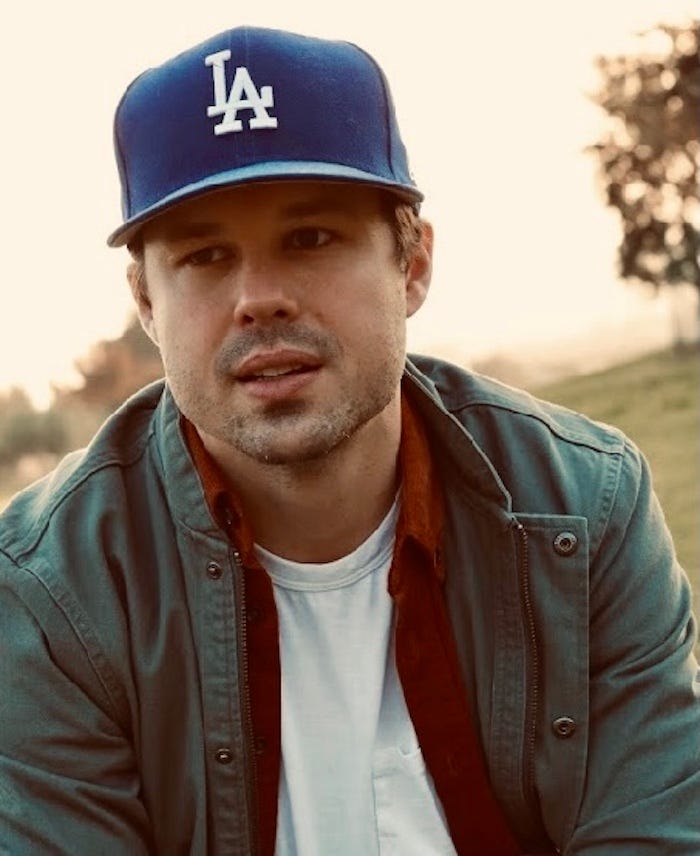
My interview with 2022 Black List writer for his script Colors of Authority.
Kevin Sheridan wrote the screenplay Colors of Authority which landed on the 2022 Black List. I had the opportunity to chat with Kevin about his creative background, writing a Black List script, and the craft of screenwriting.
Scott Myers: Congratulations, Kevin. This is the second time for you on the Black List, right?
Kevin Sheridan: Yeah, feeling pretty grateful. Two in a row.
Scott: Consecutive years, that’s right.
Your script “Colors of Authority” made the annual Black List in 2022. Now you’ve got this original screenplay, “Backcountry,” which made the 2023 Black List. How was it different the second time around versus the first time?
Kevin: That’s a great question. Backcountry is more personal. There’s a lot of me in the main protagonist. More than I anticipated, to be perfectly honest. It’ll probably be the most self‑revealing screenplay I will ever do.
The protagonist in the script, Brooks, was heralded to be the next great extreme skier / downhill racer. He suffers this horrific accident early in his career and things don’t play out for him. For me, the way that I emotionally built that out was through my own life experiences. I had some success as an actor at a young age.
I remember hearing people say, “You’re going to do X, Y, and Z. You’re gonna have this long, illustrious career.” And it simply wasn’t the case. All of that I was able to use in this screenplay.
In the screenplay, Brooks doesn’t “want to be seen” so to speak. That was very much me when I was acting, and that’s even true today to a certain degree. The very, very few times I would get recognized, I would just freeze. Totally freeze inside. I hated it. So, I used that in a scene with Brooks early on in the script.
In that respect, that’s probably where the greatest differences lie between Backcountry and Colors of Authority. But there are a lot of similarities too. I worked on it with the same fantastic company I think the world of — Star Thrower. Both scripts I really bled for. Both scripts were really research heavy.
With both scripts I really wanted them to feel hyper authentic. The more authenticity I could bring, the more the reader would empathize with the characters…. because they feel real. Human. Like people we know. These aren’t super heroes. So their plight becomes that much more harrowing.
Scott: That’s an interesting insight because, when you read both scripts: “Colors of Authority,” based on a true story. “Backcountry,” inspired by true events.
With “Backcountry,” there’s a personal connection you have with the Protagonist character, Brooks.
Kevin: Yeah, it’s a pretty deep personal connection. I was a 15-year-old kid on a TV show. Everyone was saying, “Buckle up, your career is gonna take off.” And that didn’t happen.
Same thing for Brooks in Backcountry, but in a much bigger way. He was destined to be the next great thing in the skiing industry, and he has this fall… and everything changes for him.
I really put my own experiences into the screenplay in that regard. Hopefully, it translates. Hopefully, it adds some dimension to the story.
Scott: I’d like to really dive into the story and Brook’s character, but at first I want to ask you something.
Are you drawn to inspired by true events or based on stories? Is this something that’s an intentional thing on your part because you recognize that the business, everything’s seemingly going to be based on preexisting content, or is it just more of an instinctive thing on your part?
Kevin: I think I’m drawn to writing about really fascinating subcultures. Also, it’s Trevor White and Tim White and the people at Star Thrower. They came to me with the idea and I just love working with them. They wanted to do a true story about an avalanche.
I looked into it and just thought the idea was incredible. The grit of these people who live and breathe skiing. There’s a lot of cowboy spirit there. But as I dug in, I realized that these skiers caught in this avalanche were still processing a lot of heavy trauma. Their friends died…
So, I reached out to Dawn Wilson at the Colorado Alpine Rescue Team, and I started working closely with her. She was so gracious with her time. So many people in the skiing community helped me along the way. What I did was I took four real avalanches and just combined them into one.
I love diving into subcultures. The research. Getting to know who these people really are underneath the surface. I wanted to explore what the skiing community really is like beyond what has already been portrayed. And then — how do these avalanches really happen? What’s the protocol when things go bad?
With all that said, I was just drawn to work with Star Thrower again. I thought this could be a really cool movie that portrays the skiing community in a way that I haven’t seen done yet.
Scott: That really is a community, the skiing community. Even those rescue people.
Kevin: Oh, yeah. They’re insanely courageous.
Scott: I remember when I lived in Aspen, at night, you could hear them shooting off the…
Kevin: Cannons. Yeah, the cannons. The howitzers.
Scott: [laughs] Howitzers.
Kevin: They’re shooting off howitzers. Tossing dynamite…
Scott: Let’s talk about the script “Backcountry.” It’s a terrific read. Here’s a plot summary.
“What’s the future of extreme skiing? Brooks Provence is approached to ski the mountain that nearly ended his life two decades ago, this time alongside a young skier on the brink of stardom. When disaster falls, Brooks must overcome his past and accomplish the impossible in order to save the lives of those he loves the most.”
Star Thrower brought this idea to you. What elements did they bring? Was it just, “We want to do an avalanche movie,” or what was it that they brought to you?
Kevin: They had come across this actual event about an avalanche that happened, and I was instantly drawn in. But in terms of access, the people involved really suffered. So, I didn’t think it was appropriate to use them specifically. But I kept researching. Talking to Dawn Wilson and Dale Atkins — an avalanche expert — And I was able to zero in on four avalanches that would be the basis for this movie. A lot of it was just tons of research, then me extrapolating a story from that research.
Scott: This Brooks character, you mentioned you feel a personal connection to him. It does seem like we have these stories…Not to put skiing necessarily like a sports‑type thing, but I was thinking about it. You’ve got stories where there are these protagonists who are dealing with failures, essentially, in their athletic performance, like “The Natural,” or “Moneyball,” or “Tin Cup”. Where did that narrative dynamic come from with regard to your Brooks character?
Kevin: I was trying to think about… who would need to be caught in an avalanche? Who would need that moment of redemption? Of seeing himself in a different light. And I slowly started forming this character of Brooks — who thinks he’s worthless to a certain degree. A failure…
In the screenplay, he initially gets his shot at redemption by skiing Alder Creek again. This beast that upended his life. But after he skis it, after he slays this dragon — — there’s not that hit. He doesn’t find what he’s looking for. It’s like he’s still the same person he was. But when the avalanche happens, that’s when he gets his moment of redemption. That’s when he heals in a way. There’s magic in this mountain and what it can do.
Scott: That’s a really interesting because the structure of the story … It’s like that Robert Towne quote: “The single most important question one must ask oneself about a character is what are they really afraid of?”
With “Backcountry,” it seems pretty clean.” This guy who had this trauma experience … I mean, he was in a coma for a month and couldn’t walk for six months after his fateful Alder Creek run.
As a reader, I’m going, “OK, so that’s going to be the pinnacle of the story.” It’s not the pinnacle of the story. There is that, as you said, slaying the dragon. You think it’s going to be reliving that Alder Creek run, but no, it’s something much bigger. Did you always have that in mind or did that evolve where it’s going to be not just the run, it’s going to be the avalanche?
Kevin: Yeah. I always had that in mind. I mean, I like the idea of someone trying to do something great and thinking that that’s “going to fix them” — and it doesn’t. To me, that was really interesting. God, you just referenced some great movies, too. Moneyball, and The Natural.
Sorry, it just got me thinking… No, that was always part of the game plan with Backcountry. I wanted to see him not get what he was hoping for after skiing it. Then realizing what really is of value in his life. He doesn’t get what he wants, but he gets what he needs. The mountain gives him what he needs. The mountain forces him to change.
Scott: Yeah, there’s a side from Teddy, he says, “I think a part of you has been stuck up on that mountain ever since you crashed.” So again, I’m thinking, “Oh, OK. He going to do the run and everything can be fixed.”
That’s not the case. It’s much more about surviving the avalanche and the community experience of these people he cares about, rescuing them.
Kevin: Yeah, very much so. He realizes what’s really important, what’s at stake and life is so short. When I was researching this, avalanches are such a traumatic event. There were so many reports I read on avalanches that just made my jaw drop. The power of these things. The devastation they can cause. And when you get caught in one — it’s like a frozen river of concrete traveling like a freight train downhill.
Scott: Was Brooks the first character who came to mind?
Kevin: Yeah. Brooks was the first.
Scott: The Protagonist?
Kevin: Yeah.
Scott: He was an expert skier, really dangerous type of skiing, had this terrible event happen. Now, he’s working at a Costco and married with a kid. Let’s talk about that family situation at the beginning of the story.
Kevin: I think it’s the first scene in the movie that really sums up everything for him. He’s sitting in his garage, with this old laptop out, and he’s watching old footage of that crash that upended his life.
He’s rewatching it and rewatching it. And it’s almost like he’s trying to find out what happened. Where did it all go wrong? Then his daughter comes in. She’s like, “What are you doing?” And he lies. He can’t tell her the truth. It’s a white lie, but it foreshadows a later lie that he tells.
Then he says, “One day, you and me are going to throw all this junk out.” And this is in regards to all his trophies, all his memorabilia from when he was a skier. Immediately, we get who Brooks is. Like, here’s a guy who’s still secretly caught up in his past. He’s still trying to figure out what happened. And then we understand his POV in regards to his past… That it’s all trash.
Also, he’s hiding who he is from his daughter who loves him so much. As you read in the script, she’s trying to understand her dad. Why he is the way he is. And she does it in a secretive way that that ends up helping in them all in the end.
Scott: There’s obviously an honest and authentic love that he has for his wife, Kara. Then his daughter, Lily. You do have a sense that he’s stuck in this job at Costco. I mean, there’s a moment there where he is asking for a raise. Then the guy says, “Well, I don’t know.” He’s stuck. That opening scene where he’s looking backward at the video of that terrible skiing incident in the past…
Kevin: There’s this thing. Trevor White and Tim White both who were so instrumental in putting this together. We had a long, long conversation about what happens to these athletes. What happens to these great extreme skiers, professional surfers, and snowboarders… What happens to them when they retire?
It’s such a short window. What does their life look like afterwards? Are they constantly looking in the rear‑view mirror and questioning the choices they made or are living in the past? How hard is it for them to embrace their new life?
What job opportunities are available to them? What skills do they have once they have to hang up the skis? What’s in store for them? Can someone go from racing in the Olympics to teaching ski school?
What we came up with was Brooks is — he can’t do it. He can’t put his face out there anymore. He can’t teach the kids. He really doesn’t want to be involved in the community, so to speak, because he views himself as a failure.
Scott: You’ve had this experience, I would imagine, as an actor. There’s a certain kind of adrenaline rush. How do you then replicate that like Brooks’ case working at Costco?
Kevin: Brooks still skies though. He skis when no is watching. When there are no cameras around. Personally, I don’t need that rush you get from acting anymore. I think I find it more staring at the page now and having the onus on me to deliver meaningful material. In a way, that’s a rush for me. Being alone in the arena.
Scott: You’ve got several other characters who are involved in this ad hoc community once they get up on the mountain. There’s Teddy, who’s Brooks’ brother‑in‑law. He’s going to be filming this thing. Then there’s Annie, his sister. There’s a personal connection there.
Then I thought it was quite clever. As a writer, you’ve got to figure out, “OK, what’s going to compel Brooks to recreate this skiing experience that was so traumatizing?” Enter Rick.
It’s not a nemesis character, but someone who provides a challenge to Brooks to revisit the past. Rick’s son, Zack, and Rick, for whatever reason, has got in his mind because Zach is so consumed with his feelings about what Brooks’ extreme skiing that Zach wants to replicate that run. Rick is very wealthy and willing to pay a lot of money, and by the way, Brooks is broke.
I thought that was quite interesting how you orchestrated that. Could you maybe unpack how you came up with that Rick / Zack story element?
Kevin: I thought it was really cool, the idea of this kid who’s going to be the next Brooks. It added value to the portrayal of how great Brooks really was at skiing. That here’s this young kid who is gonna be the next Michael Jordan of skiing, and who does he idolize — Brooks. And here is Brooks, working on the loading docks.
It was just a great way to get Brooks back on that mountain. Of course, they need the money and all that, but I think deep down — Brooks was always going to ski it again. It was just a matter of when, and what the circumstances would be.
The idea of Rick, you’re absolutely right — it brought back Brooks’ past. And there’s an adversarial thing where Rick is a few years older than Brooks. One of my favorite things I wrote in the screenplay is when they first reconnect, and Rick apologizes.
He’s like, “I was a dick to you, but I was a dick to you because you were three years my younger, and you were kicking my ass.” I think we’ve all felt that. I can remember being an actor, and seeing some actor or actress and just thinking — “they got it.” That inherit, undefinable thing. And Rick also believes that his son has that undefinable thing that makes an athlete truly great.
Here’s Rick, doing everything he can to make his son’s dream come true. You could argue that he’s pushing his son too hard. You could go down that road and painting Rick that way, but it was really important for me to paint just how much he loved his kid.
Scott: It would have been very easy to paint Rick as a jerk, repressive guy.
Kevin: Rick is a complicated character. His wife passed away when his son was very young. He had no idea how to raise his kid by himself, so they just skied together. And that became how they communicated with each other.
There’s a lot of friends that I have who talk with their fathers and their language is football. They can’t talk about anything else, but football, with their dad. That’s how they express their love to each other. Skiing is how Rick expresses his love for his son.
Scott: Let’s talk about Zach because he’s a really important character. On one hand, you can see why. Brooks being offered hundreds of thousands of dollars to do this thing, and he needs that financial security. That’s surface. But Brooks connects with Zach. He sees something in him. It’s almost like Zach is a younger version of Brooks in a way.
Kevin: A thousand percent. Brooks sees the talent. We have a super talented director on board for Backcountry — Ben Younger. One of his notes early on was he wanted to live in the relationship between Zack and Brooks a bit more. To make Zack earn the chance to ski Alder Creek with Brooks.
Some wonderful scenes came from Ben’s note. We developed Zack in a way that he’s skiing very clinically, like a scalpel. Brooks isn’t like that all — skiing is more an expression of the soul. He takes Zack on this mini journey of — “losing the scalpel and having fun.” That’s the mantra shared between them.
Once Brooks sees Zack finally lose his scalpel and discover something deeper in himself… Brooks knows that Zack is ready. Brooks can take Zack up that mountain now because his skiing has deepened.
Scott: That’s Zach’s arc. He has his own arc. You could look at it and say what Zach learned from his father, because they did not have a dramatically deep relationship, he learned how to ski, but not in the spiritual sense.
Kevin: When I was talking with Ben Younger, a surfer came up in our discussion named Tom Curran. He’s a soul as it gets. Tom would be the guy that would paddle a hundred yards away from where the waves were breaking, and everyone would be like “Why the hell is Tom over there?” And then, all of a sudden this freak wave would come right where Tom was sitting, and it would be the wave of the day. That’s who Brooks is. He’s got this innate thing in him that either you have or you don’t. I think Brooks helps unlock that in Zach. And it’s just a small shift in perspective.
Scott: You didn’t use the word, but it’s almost inevitable that Brooks is going to have to go back and face this thing. As a teacher, I’m always looking for language to try and convey things to my students.
I talk to them about, I call it, the Narrative Imperative. The journey the Protagonist takes is the journey they need to take. That’s what it feels like with Brooks. What’s so interesting is, again, it’s not the infamous run. He does that with Zach and it’s like, “OK, great.” But no, he doesn’t feel any emotional release or sense of resolution.
Kevin: How many times have we done something in our lives that we think is going to fix us in some way, or give us that thing that propels us over the edge in terms of our career? “Once I do this, my life will be changed.” But you’re still the same person. You’re still dealing with the same issues.
There’s so many stories about people saying, “Well, once I get famous, everything will be different.” Then they go into major depressions because fame, the thing they worked so hard for, didn’t solve their problems. It’s in line with that.
Scott: Contemporary audiences seem to want things to happen quickly. “Let’s get this thing going!” But the key event in your script — the avalanche — literally doesn’t happen until midway through the story.
Perhaps conventional wisdom would be, “We’ve got to have that avalanche by the end of Act One.” But you spend a lot of time with the characters, so when the avalanche does happen, we’ve spent enough time with and learned enough about the story’s key characters, we care about them.
Kevin: Of course, you could say that audiences want that avalanche to happen on page 25 or page 15. That’s the big event. I wanted to make this more about the people, the community… and then this avalanche happens. And hopefully there’s enough thrills, enough juicy moments to sustain audiences who are expecting to see the avalanche. Star Thrower never put the pressure on me to tell that type of in your face disaster story. They wanted me to tell the best story possible, and were supportive the entire way.
Scott: I think it’s very skillful how you approached it because there is this building tension on the script, plus, there’s a prologue. “During the winter of 2021, the United States recorded 37 avalanche fatalities, the highest number ever on record.” Assuming that goes as a title page, you’re planting that seed.
Kevin: Then comes the quote from Doug Coombs? It’s one of my favorite things in the script and I didn’t even write it.
Scott: I’ve got it right here. “You know, the mountains are full of dangers, and they swallow you up, but mostly they give.”
Kevin: Yeah.
Scott: Great quote.
Kevin: Doug Coombs is really an inspiration for Brooks too. How he skis, his passion for the mountains. Mountains are so incredibly dangerous. But what they can also give us can’t be measured. At the end of the movie — both Brooks and Zack receive something powerful from Alder Creek.
Scott: Being a member of the elder set, I’m familiar with the whole Irwin Allen disaster movie phenomenon, Poseidon Adventure…
Kevin: Oh, yeah.
Scott: Towering Inferno. There was a Rock Hudson movie called Avalanche…
Kevin: I never watched it. I didn’t watch anything in the realm of skiing just because I didn’t want anything to be planted in my head.
Scott: You were aware of it?
Kevin: I was aware of it, yeah.
Scott: From a standpoint, putting producers hat on, you go: Avalanche! That’s just like, “Boom.” you could market that, right? It takes on so much more meaning. Well, first of all, your description of this thing, it’s like the snow becomes this nemesis character, the way you describe it. In fact, there’s a line here: “It sounds like a hundred thousand lost souls calling out from beyond the grave.” It takes on a personality, and the description you have of what the damage it does in that sequence. How did you get into that mindset where you were just like inhabiting this character, the avalanche as a character in the story.
Kevin: I dug in as hard as I could. I got Avalanche certified level one…
The last time we chatted we talked about how important community is… and the myth of the writer going away in this cave and coming back with this screenplay four months later that’s perfect and “Ah, isn’t he or she such a genius?” Like, that’s not me. I had so much help with this.
Don Wilson from the Colorado Alpine Rescue Team was the first person I called. I am this writer that nobody knows, and I’m calling her, and she’s like, “Who are you?” And I’m like, “I’m going to write this movie about skiing. It’s going to be meaningful and and help the world understand the dangers of avalanches.”
Then I called Dale Atkins, who is a guru of avalanches at the National Avalanche Foundation. KC Dean, who is an extreme skier I got to know really well, just a wonderful human being, he helped immensely.
All these people informed how I wrote every single line. Listening to them tell me about what an avalanche really is, that’s what went on the page. Hearing their stories, the violence of these slides is hard to fathom. And it happens just like that. A split second. All of a sudden, here’s this whole mountain face that’s just coming down at 80 miles per hour. Making the mountain its own character really was a goal from the beginning. And we set it up in the first page of the script.
I wanted to make Alder Creek this godlike thing. Not so much a monster, but like a Tibetan goddess.
Scott: The way you describe it, as I said, I lived in Colorado for two years. You lived in the shadow of Ajax Mountain every day when I was in Aspen. Your description brought to mind the effect of like an atom bomb. That propulsive destructive power, the way you describe it.
Kevin: It really is. And all these experts who donated their time, they helped me flush it out. Andy Nassetta is another guy who helped. He works at the Utah Avalanche Center. They sent me so many just incredible documents and reports to help portray it as accurately as possible.
I got to sit in these Zooms with all of these heavy‑hitters in the avalanche community. Here I am, this screenwriter nobody knows about, and they were all so generous.
Scott: There’s a whole metaphorical level, right? Buried feelings. Danger, obviously.
Kevin: Yeah, a thousand percent.
Scott: The main thing is that you’ve got this…again, if you’re planting this idea that, “Oh, OK, he’s going to do the run, and that’ll be that.” That’s not, that’s like a preamble. It really is about this rescue mission in the last 60 pages of the script.
It’s in Brooks efforts to save the lives of these people he cares about, Teddy, and Annie, and Zach is involved in that, too, Rick. There is that ad hoc family on the mountain … then, of course, his wife and his daughter.
You got all these cross‑cut storylines, helicopters, snowmobiles, and whatnot. It takes on its own action thing, but that the avalanche awakens these deeper, submerged feelings and his need.
You mentioned this earlier, this is what he needs to have happen in order to go through the transformation process he needs to go through. That’s metaphorical, yes?
Kevin: Just talking about it, Brooks is a character that would never ask for help. He would never ask for anyone to do anything for him. He lives this very solitary, quiet life. He has his family.
Th real change that happens for him is that he gets help. He comes to understand how much he is valued by his community. That’s what saves him. It’s the act of love that’s really profound.
Not to spoil the ending, but when he gets rescued and he gets a sense of how many people contributed to his rescue — it’s an incredibly powerful moment for him. It’s shows that his life has value and meaning. It destroys his prior belief structure. Does that make sense?
Scott: Yeah, absolutely.
Kevin: Everyone banded together to save him, and in the end — that’s what really changes him.
Scott: I think that’s a great analysis because it starts off like, “OK, if I can just do this. If I can go and do this right, then…”
Kevin: Then I will fix myself, and I will fix my life. And that changes, the goal post now becomes, “If I can just get all these people out of here alive…” And then that goal post changes. Ultimately, he gets saved in the end. Brooks does a lot of incredibly heroic things to get that moment, but in the end, if the community didn’t come for him, he would have never made it off that mountain.
Scott: Never would have.
Kevin: That moment changes the fabric of who he is. Then, at the end of the movie, you see him doing the thing that you would never expect him to do — teach ski school.
Scott: Yeah, he’s giving of himself to others. There’s a song you featured “Feelin’ Alright,” the Joe Cocker version. There’s a line in there, a line of lyrics. I think even Zach is singing at some point: “Seems I’ve got to have a change of scene. Every night I have the strangest dream.”
Kevin: Yeah. I remember thinking who are those singers that just have soul, that are singing from some place that is so fucking spiritual? Joe Cocker popped in my head. Then I was looking through his songs, and I’m like, “That’s the lyric.” That fits for the movie.
It was one of those serendipitous things. The song, it’s the spirit of Joe Cocker that I think reflects how Brooks skis. He’s not thinking about how he skis, he’s skiing from his gut and soul.
Scott: You write this script, a terrific read. How long was that process from inception to sending the script out into the world?
Kevin: It was about a year. I probably spent three months just researching. I really just dug my heels in, and I’m like, “If I’m going to do this story, I want to show the ski community as they really are. I really want to show this avalanche as it really is.” Again, I think the more real I made everything feel, the more audiences will empathize and care about the characters who were in this predicament — because they feel tangible and like people we know.
Scott: That’s reminds me of that “TEDTalk” Andrew Stanton did. He basically said the golden rule of screenwriting, the number one thing, “Make me care, make the audience care.” That’s the characters, and I thought that that’s one of the wonderful things about your script is that by the time we hit the avalanche, we’re all in with these characters.
Kevin: I really appreciate you saying that. And I hope there are some thrills and the heart‑pumping moments before we get to the avalanche.
Scott: Well, you got a second avalanche. [laughs] You got that plant that seed there too, like, “OK.”
Kevin: When I was interviewing Dale Atkins, he was the one who told me about second avalanches that can happen. When he told me that I was like, “Bingo. We got a movie.”
Scott: Like an aftershock.
Kevin: Absolutely.
Scott: Yeah. That’s great.
Kevin: It was a specific incident. Rescuers had come to a certain location, I think it was in Utah. They were digging out people, and then a second avalanche hit, and then they all got buried.
Scott: The project is with Star Thrower Entertainment. Where are you in this process? Do you have a director attached?
Kevin: Yeah, Ben Younger. I was such a fan of his films, Boiler Room and Bleed for This. He’s an extreme snowboard himself. He goes out into the backcountry. I think he read it as he was flying a plane. He’s just one of those unique individuals, and he read it and really resonated with it.
What Ben does so great, especially with Boiler Room and Bleed for This, is that he can really dive into subcultures and specific communities. I have no doubt that he’s going to do the same with Backcountry. Star Thrower, I can’t say enough amazing things about how incredible they are and the value that they added in the story.
Laena Caroll, Allen Mandelbaum, Trevor, and Tim, Ella Yehros — I wake up every day lucky to be in cahoots with them because it really is a foxhole. I can’t think of anything harder for me to do with my life than to sit down alone and try to write a story that is meaningful and worthy of the money that it takes to be made. They’re all so great on every facet.
This is such a collaborative medium. I have these pillars that I work with to find out who I want to collaborate with. Are they smart? Do they have good taste? Are they hardworking? Are they good people?
Then there’s the unknown thing — do you speak the same creative language? When you’re talking stories, are you riding on that same current? It’s really important to find the people that you speak the same creative language with. For me, they’ve really been that.
Scott: Yeah, you could just as easily have heard producers, like, “Oh no, by 25, we’ve got to have the avalanche.
Kevin: A thousand percent. They’d be like, “It’s page 13 already… where’s the fucking avalanche?”
Scott: Make me care. Care about the characters. Well, congratulations on that. I got a couple of craft questions for you that arose from reading the script. You can just tell that you love language and you really worked with the words you chose.
I’m sure you’re aware there’s these so‑called screenwriting rules. One of them: Avoid flashbacks. You’ve got some. What was your thinking about that and why you chose to feature those moments?
Kevin: Growing up as a kid, we had surf VHS tapes and DVDS. And they were all super meaningful to me and my friends. I wanted to incorporate that and use it in Brooks’ backstory. And the way that the flashbacks played out, just came together in a really organic way and I can’t really take credit for it. It just happened that way. It’s almost like the muse taps you on the shoulder — really, really softly. It’s so soft that if you’re not paying attention, you’ll miss it. I never get that big aha moment in life. It’s always a nearly silent whisper. And if I’m not doing the work, I’ll miss it.
The good thing, I have a great mentor, Kay Foster. She’s always so honest in pointing out what works and what’s not working for me. When she read the script, and dug the flashbacks, I knew I had something.
Scott: I cringe when people say, “You can’t do this and you can’t do that,” when particularly some of the greatest movies of all time feature flashbacks.
Kevin: If it works, it works. And it works in the progression of Backcountry. It’s some of my favorite moments in the script. Especially the hallucination he has at the end. These tapes Lily discovers in the garage, she’s just trying to understand who her father really is… and it’s these tapes, Brooks’ backstory, that is what leads to their rescue. I can’t really take credit for it. It all just fell into place in a really cool way that has meaning.
Scott: That’s right, Lily is the one who says he’s on Alder Mountain. Isn’t she the one?
Kevin: Yeah, she’s the one. We cut back to the flashbacks of Brooks after his crash as he’s trying to reclaim his career he lost and he is just not the same skier. He’s broken. And its Lily who is watching the tapes, and she’s getting a glimpse of why her father is the way he is.
Scott: It’s also visual storytelling.
Kevin: Yeah, I was trying…
Scott: How about the so‑called unfilmables rule: “Oh, you can’t write anything that the audience can’t see or hear in the movie.” Yet in your script, you’ve got wonderful moments where you comment about a characters’ emotional or psychological state, even dipping into their inner life just a bit to give the reader that insight. You’re judicious about it, a screenplay is not a novel, but you do occasionally engage in that type of editorializing. What are your thoughts about the so-called unfilmables rule?
Kevin: My manager John Zaozirny is a brilliant guy. He always says just make the reader turn the page. I don’t care what you do. If it’s captivating, if I’m turning the page, that’s all that matters.
For me, I wish I could have more white space. I’m always envious of these writers who can have all this white space, but I’m trying to paint the portrait of the movie I see in my head. The style, the tone, and the feel, and the substance of it… so I probably have much less white space than normal.
Scott: I was in Austin for the Film Festival Writers Conference this year, and moderated a panel with namager who said, “I look for scripts with Yes Pages.” I was like, “OK, what does that mean?” When I get to the bottom of the page, I go, “Yes, I want to go on to the next page.”
Kevin: I don’t think any of the unfilmables matter. I think that as long as you’re getting people to turn the page and you’re making people feel something, that’s all that matters.
Scott: Concur. I’ve got one last question for you. Nowadays, you know how hard it is to get original stories set up, let alone get made, in Hollywood. They’re so addicted to pre‑existing content, prequels, sequels, and remakes, and reboots. They’re so fear‑driven, like, “It needs to be based on something.”
What’s your advice to screenwriters who are drawn to writing original stories?
Kevin: I think if someone has an original story and they are hyper passionate about it, they should to write it. Obviously, be smart and calculated about what you write.
If you’re passionate about a story that’s already been done before ad nauseam, maybe you shouldn’t write it right now because that’s been done four times already in the past three years.
For me, obviously I try to look for true stories, but I also try to look for subcultures that I think haven’t been properly portrayed. With Backcountry I couldn’t think of a movie that really honestly depicted the skiing community — not the glitz and glam of Aspen — the other side of the coin. I wanted to see the real mountaineers. The people who work nine to fives but skiing is their passion.
And that was something that I felt that people would want to see. I still do. I think this is a movie that, when this thing does gets made, knock on wood, that people will be excited to see it. And more importantly, when they watch it, it will make them feel something along the way.
Scott: Look for interesting subcultures that haven’t been explored already?
Kevin: That’s just one of the things I look for. Ultimately, follow your passion. Follow what gets you excited. That excitement is so important. It translate into every word that’s typed. Circling back to skiing and the skiing community — these people are doing just that. They’re pursuing their passion every chance they get, despite the dangers that may be lurking.
Scott: Maybe we should end with that advice for writers: “Follow your passion.”
Kevin: Yep. Follow your passion. Follow the energy. Follow what gets you excited.
For my interviews with dozens of other Black List writers, go here.