Go Into The Story Interview: Kate Marks
My conversation with the 2020 Nicholl Fellowships in Screenwriting winner.
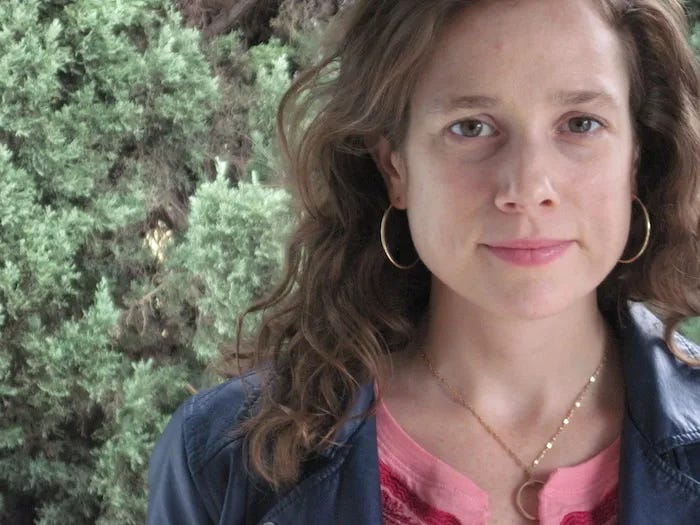
My conversation with the 2020 Nicholl Fellowships in Screenwriting winner.
Kate Marks wrote the original screenplay “The Cow of Queens” which won a 2020 Nicholl Fellowship in Screenwriting. I had the opportunity to chat with Kate about her creative background, her award-winning script, the craft of screenwriting, and what winning the Nicholl Award has meant to her.
Scott Myers: In a bio I read that, “You come from a long line of tricksters and grew up listening to tall tales.” Who was telling the tall tales and what do you mean by trickster?
Kate Marks: Well, specifically my dad. My dad was always telling tall tales, and I was never really sure what was true and what was an exaggeration. And my grandfather was notorious for his pranks. One time, when he was taking a train from NY to Chicago, he brought a pet white mouse on a leash and walked it up and down the aisles, just to shock people. He also built his own makeshift electric chair that he would drag out at parties and trick people into sitting in, so they’d get a little shock. He was always doing really bizarre, funny things like that.
Scott: Do you think your own trickster mentality comes by way of DNA, or is it more of a nurturing thing via your grandfather and your father?
Kate: My dad definitely taught me to find moments of comedy and levity in hard times. Whenever I would have a problem he would say, “Cheer up. If it’s the worst thing that happens to you, you will live a long life.” He was always trying to find the bright side. I don’t know if that’s a DNA thing or if it’s just something I learned. It’s a good question.
Scott: It’s certainly exhibited in your Nicholl script, “The Cow of Queens,” which we’re going to get to in just a bit. I want to talk more about your background. I watched a short film you made as writer and director, a wonderful eight-minute movie called “Pearl Was Here.” I just checked this morning. Almost 64 million views on YouTube.
The logline on that: “Answering the call of plush animals and seeing an opportunity to escape a troubled family, a scraggly girl slips away from her mother and climbs into the safe and sealed environment of the claw booth. Mommy doesn’t take this too well.”
Pearl is a little girl. She’s a terrific actress, by the way, I mean, the performance. She’s a protagonist. She’s a trickster, isn’t she? She’s getting into trouble.
Kate: Definitely.
Scott: Might we go further and…I’m looking at her, maybe I’m seeing a view when you were that age.
Kate: Well, I did eat a piece of gum off the ground. [laughs] But I don’t know if I was ever as bold or audacious.
Scott: You mentioned that you’re a stilt-walker. Do you still do that?
Kate: Yeah.
Scott: I’d say that’s pretty audacious.
[laughter]
Scott: Let’s get a little bit more into your formal background. You went to Brown University. What was your major there?
Kate: English, with honors in creative writing.
Scott: Does that speak to your longtime interest in reading, movies, and TV?
Kate: Yeah, when I was at Brown, I studied with some ground-breaking playwrights who were really formative for me. Nilo Cruz, Aishah Rahman, Paula Vogel…
Scott: Your interest in the theater, that’s why you segued to New York pretty much after Brown?
Kate: Right. I always loved movies, but it never occurred to me that I could make them. It seemed like a very different skill set and the tools intimidated me. So after Brown, I continued doing theatre in New York City. I loved writing, directing, and performing but theatre wasn’t the perfect fit for me. Theater thrives with stories that are dialogue-based and I wanted to write more from imagery. So I took a screenwriting class and as soon as I started writing in that medium I felt much more at home. I love the internal space that film offers you. You can really get inside a character’s head.
And then I just started experimenting, making small videos on a Handycam, which I used for my application to CalArts where I went to grad school.
Scott: That was for directing, right?
Kate: Yes, but at the time, you didn’t have to choose a track so I was able to write and direct all my shorts. This was a fabulous way to learn screenwriting because right away, I was writing to shoot and I could see how things translated from the page to the screen. I had great relationships with all my teachers. They really listened to what I wanted to do, but at the same time, they challenged me to explore new angles. I loved telling stories that were fantastical but the program at CalArts really values cinéma vérité and the teachers pushed me to find that kind of emotional realism in my work.
Scott: I read an interview with you and it seems like you continued on that track. You’re quoted as saying, “I’m a disgruntled child of fairy tales. I love their magical worlds but hate their thin stories which often serve as cautionary tales for disobedient girls and women. Filmmaking gives me the chance to remake them. I like to fill the fairytale frame with complicated characters who have deeper things to do than slay the dragon or find the treasure.
Making feminist films is not just about having complex female characters at the center of the story. It’s also about exploring new narratives, visual styles, and genres. In other words, you can’t just change the gender of the protagonist, you also have to send her on a different kind of journey, and put her in a world or a genre we don’t quite have the words for.”
We see that in the “The Cow of Queens.” It starts off very much like a hero’s journey. I mean, there’s a call to adventure, and the protagonist has a specific goal, and yet you do turn it into, as you say, something different.
Was that intentional, do you think, or is that just an outgrowth of your experience of growing as a writer? “The Cow of Queens” is set in a very specific urban environment yet it’s also fantastical. Maybe you could unpack your take on storytelling.
Kate: Yes, there’s two journeys. There’s the outward journey of Sonya and Del on a quest to save this cow. And then there’s the inner journey. For Sonya, it’s arriving at a place of acceptance. She has to accept that her dad is dying. And for Del, he has to feel like his daughter’s going to be OK without him.
Scott: It’s like Campbell has that quote, where the outer journey is really an inner journey?
Kate: Right.
Scott: The logline I found says: “ ‘The Cow of Queens’ features a father-daughter duo, Del and Sonya, as they embark on one last adventure, saving an escaped slaughterhouse cow rampaging through Queens, New York. Their frenzied race against the clock occurs against the backdrop of Del’s cancer diagnosis.”
As I understand it, this is inspired in part by your experience of your father’s death. Could you maybe talk a bit about that and how you found the genesis of the story?
Kate: When I was in my last year of film school, my dad got diagnosed with cancer. After I graduated, I stayed with my parents to help take care of him while he was dying. Being with him to the end was something that changed me on a very deep level, and I knew that I wanted to write about it. But I like to make movies that are funny or offbeat or, as you said, fairy tales, and it took me a long time to figure out how to frame this story in a way that felt like a movie I would make. So I ended up just writing a lot of sad poetry.
Then, when I was living in Queens, I heard some neighbors talking about a cow that had escaped from a local slaughterhouse, and had a field day evading the police. There was something about the image of the cow running for its life that collided with my own experience of fighting to keep my dad alive and suddenly I could see the movie.
One of the things that always haunted me about my dad’s death was, “Did we fight too hard? Should we have given up sooner? And if we had done that, would we have spared him some pain?” We spent our final moments fighting cancer instead of just enjoying the time we had left. We never really said goodbye because that seemed like giving up. So when I heard about the cow, I began to see my dad and I as Don Quixote and Sancho Panza, AKA Del and Sonya. They go on a ridiculous quest to save this cow but really they are searching for a way to say goodbye.
Scott: It really is an interesting symmetry in a way between them trying to save this cow’s life, meanwhile there’s this metaphorical thing going on between them trying to save the father’s life when there’s an inevitability about his death looming in the horizon.
Kate: Thank you.
Scott: Let’s talk about these two central characters, Sonya and Del. This is essentially an adaptation. It’s fantastical in nature, but you’re adapting an aspect of your own life. How challenging was that for you to fictionalize these characters and give them over to their own story universe, and yet at the same time, draw upon your own personal experiences with your father?
Kate: Writing Del’s character was really fun for me because it felt like I got to reincarnate my dad. But writing Sonya’s character was incredibly difficult because I had to step back from my own experience and get enough perspective to track the lessons she needed to learn.
Scott: How would you describe Del and his personality? How would you describe Sonya?
Kate: For Del, I would say he’s a jokester. He’s larger than life. He’s a dreamer who never really got to live out his dreams. He has a lot of regrets but if there’s one thing he’s proud of it’s being a dad.
For Sonya, she’s awkward and nerdy. She has lived as her dad’s sidekick for most of her life and she hasn’t ever had to step out on her own because her dad has always been there to help her.
Scott: Circling back to what you said earlier, both of them have a need. For her, to be able to accept the fact that her father’s dying. For him, to feel like she’s going to be okay when he’s gone.
Let’s talk about the opening scene. You drop us into the story where Sonya is literally attempting to insert a catheter needle into Del’s penis. Very awkward, very strange, and very funny. Was that always there as your opening scene?
Kate: No, originally it was a scene where Sonya was making her dad green juice. But I wanted to show their closeness and I also wanted to capture the ridiculous extremes of cancer. There is a lot of comedy in the human body falling apart.
Scott: I don’t know if you saw that movie 50/50. It was originally called “I’m with Cancer.” It’s funny, but also about someone dealing with cancer. Your script does the same thing and right from the beginning. The catheter penis thing. Then you cut outside to see there’s a cow on a city street peering up at Del’s bathroom window.
So from page one line one, we know the story is dealing with someone who’s got cancer. Death looming there. Yet it’s humorous because of this awkward catheter business. And also fantastical because of the cow on the street. Three, four pages, boom. This is what the story is about, this is the tone of the story. I thought it was a really effective opening.
Kate: Thank you.
Scott: Sonya and Del go on a short wheelchair-bound trek to the hospital to get the test results from the latest chemotherapy round. Del’s resistant about going into the hospital. Along the way, they see this cow. There’s your call to adventure, your inciting incident. Del is enamored of this cow.
When they get to the hospital, that’s when you’re talking about earlier, there’s a line of scene description where he’s like, “Let’s go find the cow. Let’s go find the cow.” In the script, it says, “Sonya stares at her dad. He’s been waiting his whole life for an adventure like this, and he’s pumped.” That really speaks to this idea that he wanted to do something Don Quixote-like. Is that right?
Kate: Right.
Scott: Again, you’ve got a classic hero’s journey structure there. By the end of Act 1, there’s a clear goal: find the cow, save the cow. Did you always have that story structure in mind? By the end of act one, the duo would have this in mind — to find the cow and save it?
Kate: Pretty much. In the very beginning of the writing process, it was more of an ensemble film. I was thinking the movie would be about all these different people that the cow touches. But then I had to peel all that away because I knew that was just me dancing around the meat of the story, which was going to be harder to tackle because it’s more personal.
Scott: Maybe it was a benefit to you because the family of characters, if you will, that exists in the story around Del and Sonya are all very colorful and specific, and feel like they have their own protagonist experience. For example, there’s this wild renegade taxi driver named Wormhole. How would you describe her and how did she emerge in your creative process?
Kate: Wormhole is an encouraging voice for the sacredness of the cow. She started off as South-Asian and was inspired by the band “Bloodywood” which is this amazing metal band from New Delhi. But I didn’t want her to be a stereotype, so I made her a straight-edge vegan Hindu wannabe.
Scott: She plays an important role, you said the word “encourager,” in that she encourages Del and Sonya to think more broadly about what the cow means.
There is also a nemesis character Ralph, who’s the butcher. How would you describe his character?
Kate: He’s living life by rote, doing everything that’s expected of him. He’s following in his dad’s footsteps. He’s taking over the family business. Then he has this major screw-up, which is the cow gets loose under his watch. He’s got to get it back to restore his reputation with his family.
He’s still living in the basement of his family home, surrounded by all his childhood toys. Like Sonya, he’s stunted. The runaway cow gives both of them the opportunity to break out of their box.
Scott: I had that same thought, that both Ralph and Sonya are, as you say, stunted. When the cow escapes, you give Ralph a specific goal, a plus from a pragmatic screenwriting perspective. It’s akin to a cop losing their gun. That’s the worst thing a cop can have happened to them, right? They lose their gun. That’s shameful. He loses the cow…
Kate: Yes, exactly. [laughs] That is so great.
Scott: At first, the way the script treats Ralph feels like in the vein of Pink Panther movies where you mess with the bad guy. Ralph breaks a copying machine, so now he has to buy it. He gets multiple tickets from a cop. So at first, we may think, “Oh, the writer is having fun messing with the guy, that’s funny.” But I think what you’re doing is humanizing him, we start to feel sorry for him. And that lays the groundwork for an inversion of his character where by the end, he becomes an ally to Sonya.
Did you always have that in mind that this character was going to have that arc, or was that something that evolved in writing the character as well?
Kate: I always imagined that at the beginning of the film, Sonya and Del have this cloud over them and that when the cow gets loose, that cloud blows onto Ralph, and he gets their bad luck, but I love what you said that it humanizes him.
I think that’s so beautiful. I’d never thought of it like that, but I think the revision process was finding him as a real character and finding the depth in his plight.
As I was writing it, I was like, “What are they going to do with the cow? How are they going to save the cow?” I tried out a bunch of different solutions, but I knew that ultimately the answer was going to be with Ralph because, thematically, Sonya has to face death, and that’s the butcher.
Scott: I want to talk about the cow. I’ve written a bunch of animal projects and one thing I’ve learned is that you need to look at the world through their eyes to write them effectively and with empathy. I’m curious how you brought about your understanding of Moo Moo, the cow, how that evolved in your writing.
Kate: I always saw the cow as the trickster, the one that shakes things up and helps the characters do what they need to do. It has its eyes on Del and Sonya from the beginning, as you pointed out.
I just watched “The Muppets’ Christmas Carol” and the cow reminds me of the ghosts who help Scrooge. It’s like, “I’m going to take you on a journey that’s going to help you see what you’ve been trying to avoid.” Facing death is one of the hardest things we have to do in life and the cow is that helping hand for Sonya and Del. It takes them on a journey that leads right to the heart of what they ultimately need to do, which is accept death.
Scott: One of the notable things about the script is that it could so easily lapse into melodrama the daughter and the father dying of cancer.
The fact you’ve got this fantastical journey through Queens chasing a cow, trying to figure out what to do with it… it’s like you’ve got this built-in, pretty ridiculous narrative device which helps keep the story from falling into melodrama.
Kate: The cow is the thing that freed me from the sad hospital setting. Del and Sonya are on their way to the hospital for PET scan results when they see the cow and decide to scrap their plans for the doctor and save the cow instead. So chasing the cow literally keeps them out of the hospital and away from the melodrama. But death is part of the equation, so ultimately I can’t completely avoid the hospital.
When Sonya has that last conversation with Ralph, I’m trying to normalize death and make it less scary. Ralph deals with death every day. It’s just a normal part of his life.
Scott: You mentioned that exchange that Sonya has with Ralph, and again, these characters all do some shape-shifting. For example, Wormhole says, “I’ll take care of the cow, just bring the cow to me.” Then says, “Well, I can’t take care of the cow.”
Sonya’s mother, Becky, Sonya has a difficult relationship with the mother, because she hasn’t been there to help with the father’s health, but then at the end, Becky actually comes through not only in helping move the cow, but also in a pivotal point in terms of Del in the hospital.
Then you’ve got Ralph, the butcher, this guy who ostensibly is the antagonist of the story. He’s got what I think is the most impactful side of dialogue, actually a monologue. I’d like to read it.
Kate: Sure.
Scott: He’s talking to Sonya. “Look, I don’t like killing cows. They’re big, and they’re hard to control when they freak out, and yeah, they freak out just like you would if there was a knife pressed to your throat.
Life wants to live right up until the very end life fights to live, so it’s never simple, it’s never easy. Sometimes I get a clean slice, but sometimes it’s a hack job, and if I thought about it, I’d cry like a baby.
But you know what? I don’t think about it because at the same time, it’s normal. Those cows are going to die one way or another, with or without me, just like you and me and everything else that’s alive.”
That’s the moment where Sonya, who has been dealing with a level of anger about her father’s failing health and by extension her uncertain future, she’s expressed some anger a few times. She in that moment with Ralph, she goes to a deeper need where she starts to cry. This is where she needs to be. It’s like Ralph is a conduit…He’s like a mentor at that moment, right?
Kate: Absolutely.
Scott: Can you maybe talk about that scene and writing that dialogue?
Kate: Yes, I love that he’s a mentor. That’s such a great way of putting it because he knows death. That’s his job. Dealing with death is his job. Still it’s not easy for him. He doesn’t like it. It’s rough, and it’s messy.
I remember having this conversation with my dad before he got sick, and he always hated it when people would say, “Oh, they were ready to go.” He’s like, “Nobody wants to die. Nobody really wants to die.”’
We say all these things to make death easier but it’s hard, you can’t underestimate how hard and messy and gruesome death is, on one hand, but on the other hand, it couldn’t be more normal. It happens all the time. It happens every day. It happens to every one of us.
Ralph understands this dichotomy and he can clearly articulate it for Sonya.
He doesn’t gloss it over. He’s not trying to say, “Oh, your dad’s going to be in a better place,” or “he will be at peace.” He knows how hard it is and he validates what she’s going through, but he also offers the other side of it. Death is normal.
Scott: One of the things that’s notable about this script is that you’ve got this specter of death looming over, and it plays out, sometimes it’s up top on scenes, where your characters are literally talking about it. Then, even when they’re not, it’s playing underneath, and yet you’ve just got some really funny moments. I always look at these set pieces, and this is not a spectacle-driven movie, but per the size and scope of the story.
That cow at the pharmacy sequence, it’s like one complication after another, like a classic farce in a way, but again because you’ve got this ridiculous Don Quixote type of…I don’t mean that in a bad way… just this sort of fanciful thing, you’re able to do that. Did you ever find yourself saying there’s just too much humor or too little or the tone of it? Was that a struggle for you to find that balance point?
Kate: I think cancer is so ridiculous. There’s just something funny about the human body falling apart. It’s the comedy of failure. It’s the comedy of embarrassment. There are so many accidents with cancer and dying and losing control of your functions and it’s just my natural tendency to play into those. But definitely, as I’m writing my first drafts, things will be too much or too loud or too cluttered. There’s a lot of stuff that I end up pulling out and stripping away in the revision process in order to balance the tone.
Scott: At least you give yourself the opportunity to explore that stuff, you don’t pre-edit.
Kate: Yeah, I like to have it be kind of wild at first.
Scott: I don’t want to spoil the ending because I think it’s perfect. It’s actually an interesting bookend to the very opening where we talked about how you drop us right into the middle of something. That raises a screenwriting question we face with every scene: “When do you enter and when do you exit?”
The ending of your script does the thing in inverse. It ends it before the ending, right? It’s intimate. It intimates the ending of Del and Sonya’s storyline, but we’re not going to see it. Did you always have that ending in mind?
Kate: Do you mean how we don’t see the dad die?
Scott: Yeah, right. That and we don’t see the cow. It’s basically you’re choosing to end it before. You let the audience infer the ending. Do you know what I mean?
Kate: I always knew I was going to do that because the journey is, how do they accept the reality of death, as opposed to the actual moment of dying. The dramatic moment for me is when Del and Sonya say goodbye.
The acknowledgment of death was more important to me than the actual death, and I think with the cow, I like the idea that you can imagine for yourself that moment when the cow roams free in the free woods. It’s a fun thing for the audience to be able to fill in.
Scott: Let’s talk about winning the Nicholl. Because of the pandemic, I know you didn’t get to do the whole LA trip thing, but still, the experience must have been an exciting one.
Kate: Yes, it was.
Scott: You’ve won other awards, you’ve got short films that have played all around the United States and in Europe, but I’m going to imagine this would be a particularly validating type of thing.
Kate: Yes, definitely, especially to be validated as a writer.
Scott: What’s the status of the script at this point?
Kate: Well, I’m going to direct it, and I’ve recently started working with Krista Parris who is a brilliant NY indie producer. So now, we are on that mysterious and murky path towards making the movie. [laughs]
Scott: I’m really glad to hear that you’re directing it because I can’t imagine anybody else doing it as well as you could, so congratulations again. I’d like to ask you a few craft questions if we can?
Kate: Sure.
Scott: Apart from overhearing people talking about cows on the loose in Queens, how do you come up with story ideas?
Kate: There are a couple of ways. Sometimes I start with a single image that excites me and the writing process feels like solving the mystery of that image. Sometimes, I find an untold story from history. Sometimes, I think about an issue that I’ve dealt with and want to explore. Sometimes, I start with a character that fascinates me or makes me laugh.
But the idea doesn’t become a movie until I find an unusual container or vehicle to tell that story with. I look for something that sparks my imagination and makes me feel a little bit of magic. With “Pearl Was Here,” I knew I wanted to write about a wild child in an abusive home but I didn’t want the film to be melodramatic. Then I heard about a kid who climbed into a claw machine and I thought, “Oh, that’s how a kid might create a safe space for themselves.” The comedy of a kid stuck in a claw machine became a funny and disarming way to talk about child abuse.
Scott: I want to ask you about how you go about developing your characters. I read an interview with you, and you said something I thought was interesting, “I love to stare at people. I want to peek in their ears, study the stains on their shirts, scrutinize their split ends, and examine the texture of their hands.” That visual acuity there — stains on their shirts, textures of their hands — that’s going to start telling the story of the character, isn’t it?
Kate: Yes, definitely.
Scott: How do you go about developing characters, then?
Kate: It’s a lot of people watching. I’ve actually gotten called out and yelled at a couple times for staring at people on the train. With “The Cow of Queens” I would always go to the same coffee shop and write looking out the same window onto Queens Boulevard where I would watch a constant stream of people going by.
I love seeing real people, the details and the quirks that they have. I pay really close attention to them. Sometimes, I write in the character’s voice and I journal as the character.
I find when I can run on the page for a little bit, the character will take on a life of its own. After I find the character’s voice, then I go in and shape the character’s journey with more of a critical eye towards things like wound, flaw, want, and need.
But I have to identify those after I’ve listened to the character for a little bit. If I start from that place, then I feel like I’m just filling in the boxes, almost like I’m Frankensteining it. I prefer to let the character emerge from the page.
Scott: I remember interviewing Robin Swicord. She said that there is this little dance she does. Her answer was specifically about writing dialogue. She said, there’s receptive writing and there’s executive writing.
The receptive writing is where you’re allowing the words, the flow, the characters into your consciousness to play around with them, allow them the freedom to emerge on the page, but then there’s the executive thing like, “What you were just saying? Where you just kind of step out of the story universe and you tweak this and shape this?”
Is that a pretty accurate appraisal of what your process is like in terms of character development and finding your voice?
Kate: Yeah, I love that. I love separating those into two different steps. Because I think that the executive writing does help you craft the character and track their journey as they move through the arc of the script, but if I start with executive writing, then my character’s just kind of flat.
Scott: Perfect world, ten years from now, what are you doing?
Kate: I’ve written and directed three features, and I’m working on the next one. I’m growing and stretching myself to find new ideas and ways of impacting audiences.
Scott: Hopefully this project goes forward and gets made. It’ll be a great double feature with First Cow, the Kelly Reichardt movie.
Kate: [laughs] Yeah.
Scott: That would be an awesome double feature.
Kate: Yeah. It could be a whole festival.
Scott: MooFest.
Kate: Yeah. [laughs]
Scott: Final question: What advice can you offer an aspiring filmmaker?
Kate: I would offer them two different sides of something. One is to be very disciplined in your writing process and to try to make that process as systematic as possible — when you write, where you write, for how long you write without any interruptions. It’s important to be very rigid about the time and space of when and where you’re writing. And you must do it every day.
But the other side is that, you must keep finding the joy and the pleasure and the fun in your work. Hold onto what delights you within your writing process, especially when you are writing about something hard. Don’t buy into those tropes that say writing should be torture. Let your writing process be delightful and it will liberate your voice.
For my interviews with every Nicholl Fellowships in Screenwriting winner since 2012, go here.