Go Into The Story Interview: Karen McDermott
Karen McDermott wrote the original screenplay “Lullabies of La Jaula” which won a 2019 Nicholl Fellowship in Screenwriting. I had the…
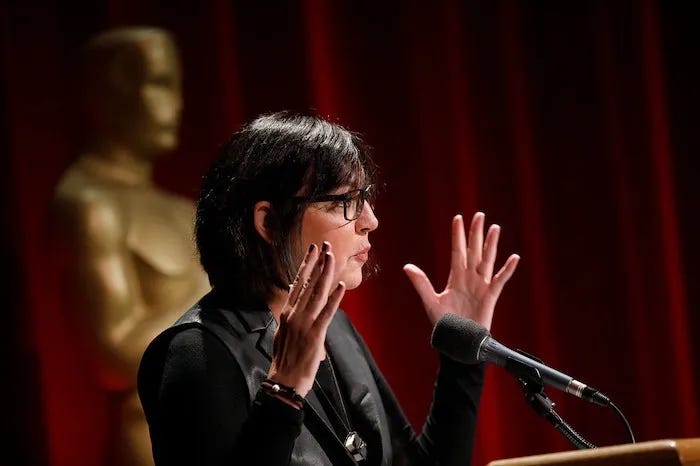
Karen McDermott wrote the original screenplay “Lullabies of La Jaula” which won a 2019 Nicholl Fellowship in Screenwriting. I had the opportunity to chat with Karen about her background as a screenwriter, her award-winning script, the craft of screenwriting, and what winning the Nicholl has meant to her.
Scott Myers: Where did you grow up and when did you start to become interested in writing?
Karen McDermott: I grew up in New Jersey, Central Jersey, just outside of Princeton. Jersey gets a bad rap, but I’m from the good part. [laughs] There’s a good part.
Scott: The central part of New Jersey.
Karen: That’s why they call it the Garden State.
I was interested in writing as far back as I can remember. I came by it naturally. My dad was an English professor, and my parents would read after dinner. That’s what we did in my house for fun. On weekends, we went to the library. My mom let me use her library card so I could take out more books than the children’s card allowed. So for me, writing came from reading; it was automatic.
Scott: I am imagining that part of your character in the script your wrote Lullabies, which we’ll talk about just a bit, Dahlia, the main character, her interest in reading, maybe echoes your own.
Karen: Yeah, I didn’t realize that when I wrote it. My sister said, when she read the rough draft, “You know Dahlia’s you, don’t you?” [laughter] When we meet her, Dahlia’s sitting in a bathtub, reading a book. That was me. I’d hide away anywhere I could and read. I read everywhere, all the time.
By the time I was in grade school, I had internalized the voice of an author. I wasn’t trying; it just happened. But because I wrote like an adult, my teachers were constantly accusing me of plagiarism. At the start of every school year, I had to break in a new teacher. Every time there was writing homework, I’d be accused of copying out of a book, or having my parents do it for me — until the first in-class writing assignment. I couldn’t wait for that day. Finally, the teacher would see me write, and after that, the accusations of plagiarism stopped — until the next year, when a new teacher had to be broken in.
Scott: How about movies and TV? Did they ever come into play much as a child?
Karen: I always liked movies, and I took a film class at Rutgers that I loved, but I never really thought of a career in film until I moved to California, at 26. Growing up, I was going to be a YA writer, even before Harry Potter made being a YA writer popular. That was always the plan. But then, stupidly, I went to law school. So that derailed the whole I’m‑gonna‑be‑a‑writer thing for at least 15 years.
Scott: You moved to LA at 26. I’m assuming that was for law or a job or something?
Karen: I moved to San Diego at 26 for law school. A huge mistake — you know, the thing you’d change if you could do your life over… Basically, I’m a cautionary tale.
I knew on my first day of law school that it wasn’t for me. But I had moved 3000 miles for it, and I didn’t want to be a “quitter.” I had just graduated from Rutgers, where I was an English major, which came easy to me, reading literature, writing about it. I graduated with high honors — falling off a log.
Then in law school, suddenly, I was dumb. I was struggling just to pass. I went for learning disability testing. It turned out that I wasn’t learning disabled; I was bored. Oh my God, those legal cases. Mind numbing.
But I stayed with it. Eventually, I passed the bar. Then I figured, “Well, I might as well practice law.” I became a legal aid attorney specializing in trauma law. I got restraining orders for battered women. I represented children in abuse and neglect cases and parents in emergency custody cases. It was devastating.
So I decided to take a break from the law — which I’m still on, over a decade later.
I went back to school, got my master’s in English Literature — and suddenly, I was smart again. [laughs]. I was doing what came easy, again: analyzing and writing about literature.
I started teaching English, and I had summers off, so I decided to write a screenplay. I had no idea how to even begin, so I bought a book: The Screenwriter’s Bible. I wrote a historical drama based on one of the few legal cases that had actually interested me in law school — about cannibalism at sea. And when I was done, I sent it three places. One of them was Marty Katz Productions — and they said they loved it.
I thought, “Oh, wow. This screenwriting thing is easy.”
[laughter]
Marty Katz said it wasn’t for him, hard to believe, but cannibalism isn’t for everyone, but he and his wife gave me a list of places to send it. So I did. Then when nothing came of it, I put the script away and got back to teaching. A year later, a woman called me: “You don’t know me, but I used to work for Marty Katz Productions. Now I work for an agent, and I always remembered your script. Can I give it to the agents here?” I said, “Sure, go ahead.”
She did, and the agency called me in for a meeting. Then they sent the script to Playtone [Tom Hanks’ production company]. A few days later, Playtone called me in for a meeting. They told me they loved it, but it wasn’t for them… but I should keep writing…
And again, I thought, “Wow. This screenwriting thing is easy. You write a screenplay, and Tom Hanks’ people call you up.”
The agent who had set up that meeting sent it around town. It was a period piece on the ocean and a courtroom drama. The most ridiculous thing to write as a first screenplay: the most expensive, hard‑to‑sell thing. But I didn’t know. I just thought it would be a riveting movie. He said, “You’re either going to sell this thing and pay off all your law school loans, or never sell it.” So, it won some contests but… Steven Spielberg: call me.
At that point I decided to get serious about learning the craft of screenwriting.
Scott: That sounds like quite a heroine’s journey in the vein of Joseph Campbell, in that the law thing was not the path you were supposed to be on.
Karen: Not the path.
Scott: As soon as you got on the path you were supposed to be on, things started lining up for you.
Karen: They started to click, yeah. In college, I thought, “Why isn’t everybody graduating with high honors? It’s so easy.” But that was only because I was doing the thing I’m good at, which is I came to learn a very narrow thing, this thing I’m good at.
Scott: You’re also passionate about it.
Karen: Yes.
Scott: That’s one of the key aspects of “follow your bliss.” It’s something that enlivens you. You said you read this one book before you wrote the script, the period piece on the ocean, which is, as you said, a really tough sell. After that, you said you learned more about the screenwriting. How did you go about doing that?
Karen: One of the first things I did was take a terrible seminar by some screenwriting guru. He opened with something like, “If anybody in this room doesn’t want to make a million bucks writing a blockbuster and is more interested in writing some intellectual indie exploring the meaning of life, then you should leave right now.”
I was like, “Oh, no. That’s me. [laughs] I should leave!” That guy went on talking about how to write a formulaic blockbuster, then he went around the room, tearing everyone’s loglines apart. I only had the cannibalism at sea script, which was about a murder trial and a judge making a decision. He was like, “An elderly judge CANNOT be your protagonist. Nobody cares about an old man making a decision. He has to be young! He has to be good‑looking! He has to be fighting a tangible threat!”
In retrospect, it was a good experience. Because now, as a screenwriting teacher, I have that as a reminder of how NOT to be. So that’s valuable.
Then, I had a couple of scripts second round at the AFF, so I started going to the Austin Film Festival. I went for five years in a row. I loved, still love those seminars. I was especially interested in anything taught by women. I figured they’d be less likely to tell me my protagonist had to be a 25-year-old male.
When I went to my first seminar by Robin Swicord, I thought, “This really resonates with me.” She was talking about theme, which I related to because of my study of literature. I understood theme. I watched her movies and studied them. I went to Lindsay Doran’s seminar about the psychology of storytelling.
I bought an entire library of books about screenwriting — the Syd Field and Save the Cat books. I read hundreds of scripts. I practiced. I submitted to the Nicholl, quarter-finaled, semi‑finaled, was selected for the Writers Lab.
Scott: This is the Meryl Streep program?
Karen: The Meryl Streep Writers Lab, yeah. In 2017.
Scott: Was this Lullabies?
Karen: No, it was the historical drama, The Custom of the Sea. My first script.
After that, I wrote a Dan Brown-type mystery, revisionist religious history, which quarter-finaled in the Nicholl, and a horror script, which I haven’t submitted anywhere — still tweaking. Then, I wrote Lullabies last year.
Scott: That sounds like that’s your fifth script.
Karen: Yeah, my fifth if you count a horrible rom-com.
Scott: During all this, you’re teaching at Cal State University Los Angeles, yes?
Karen: Right. I went there for my master’s, and as soon as I graduated in 2011, I started teaching composition there. And now I also teach screenwriting.
Scott: Let me ask you a question, because I’ve been teaching now first as an avocation, now as a vocation. I’m currently an assistant professor at De Paul University School of Cinematic Arts. I found that when I transitioned into doing teaching that I learned more about writing in some respects by doing that, because you have to formulate your thoughts.
Karen: Yes.
Scott: You have to actually think about your craft.
Karen: Yes.
Scott: Did you experience that as well?
Karen: Yes, totally. You don’t realize what you don’t know about a subject — the gaps in your knowledge — until you have to teach it.
Scott: And how to articulate it in a way that they can grasp what you’re saying.
Karen: Yes.
Scott: You’re still teaching at Cal State?
Karen: Still teaching. I have, right in front of me, three piles of final exams that I’m grading tonight after we’re done.
Scott: Well, let’s take your mind off that for at least a few minutes and talk about this very powerful Nicholl‑winning script, Lullabies of La Jaula. The logline: “Separated from her family during a desperate border crossing and held in a cage for migrant children, 14‑year‑old Dahlia Ramirez draws strength from the poetry of a Spanish revolutionary as she struggles to survive.”
I watched the video of the Nicholl ceremony when Eva‑Marie Saint and Peter presented you. Eva‑Marie Saint quoted you as saying, “I felt compelled to tell the story because I’m outraged that children are being caged in America,” and then you said, in your actual speech, “I wanted to put a face to the policy of family separation. I wanted us to see it through the eyes of the child.”
Karen: The eyes of the child, yes.
Scott: Was there a particular moment or incident in following this horrific thing that we’ve had with this regime in Washington that triggered your desire to write Lullabies, or did the impetus grow over time?
Karen: The desire to write about that topic was sort of always in the background. I felt like: how can you live as a writer during the time of an atrocity and NOT write about it?
But yes. There was a definitive moment when I decided “I’m going to write about this.” It was when I saw a YouTube video.
You might know this video. It showed a little boy, a toddler, who had been caged at the border. He was hysterical. He had been separated from his mother for so long that when she came to pick him up, he didn’t recognize her. So in this video, he’s crying hysterically as his mother — a stranger to him — is trying to embrace him. It was gut‑wrenching. Have you seen it?
Scott: Yes, yes.
Karen: That was the moment, and that little boy became a character in my screenplay (I made him a bit older, so he could talk): Hector. And that was the first scene I wrote. I didn’t know what else I was going to write, but the first scene was a boy in a cage who’s hysterical because strangers have come to get him — his parents, but he doesn’t recognize them.
Scott: I definitely want to talk to you about that because there’s so many different layers to the experience of these characters when they’re in these cages that it impacts them. That one is basically the evisceration of memory, which is, when you think about it, unbelievable.
When I heard those quotes, I was immediately reminded, if you hang around Hollywood long enough, you hear all these anecdotes. There’s one that’s pretty famous, Samuel Goldwyn, who commented to screenwriters back in the ’30s. Of course, many of them were Communists, or very left‑leaning, who kept trying to put their message into these movies.
He said, famously, “If you wanna send a message, use Western Union.”
Karen: You should just entertain, yeah.
Scott: Were you at all worried about the fact that you knew going in this was going to be a message‑heavy script, that somehow might strangle the story?
Karen: Yes. I knew the risk. It could become didactic. And I hate preachy movies, myself. So I looked to literature and asked myself: how does message-heavy literature remain readable, entertaining? One way, I noticed, is through the use of a child protagonist. Children aren’t aware of the politics of their situation. They’re dealing with the results, the fallout. So the story can implicate the politics without referring to them overtly.
I remembered what I loved about The Diary of Anne Frank: Anne’s relationship with the boy in hiding with her — her crush on Peter. So I gave my protagonist a crush. I thought: if she has something that lifts her, figuratively, out of the cage, then the reader/viewer will be lifted, too. And that will make it more watchable, less didactic and message laden.
Scott: When you organize, I don’t want to drill down so much into the technicalities of it, but… Index cards? How did you organize things?
Karen: Index cards, yeah. But not at first. The first thing I do is write long‑hand, in cursive, in notebooks. I just write in flow, not worrying about the delineation between dialogue and action and description. I write what I see, in whatever form it comes.
Then I put those pages in piles like, “Okay, “Maybe these pages go together.” I get to the note card stage once I get a sense of, “How does this break down into scenes?” Then I put the scenes onto note cards.
Scott: It’s like you have to immerse yourself in the characters in that story world first.
Karen: Right. And then I can organize it. Sometimes, I’ll write many iterations of a paragraph of description or a line of dialogue. When I finally get to my computer, I try to choose the best version.
Scott: By the time you get to the actual ‑‑ you’re using Fade In, Final Draft, or whatever…
Karen: Final Draft, yeah.
Scott: You’ve got that content. Do you actually reference that or are you going from memory at this point?
Karen: Sometimes memory, sometimes I reference my note cards and notebook pages when I’m in Final Draft. But I’m always wary of touching my computer too soon. I mean, it’s called Final Draft.
[laughter]
Scott: It sounds like you would resonate with Ray Bradbury where he says, “When you sit down to write, don’t think… feel.”
Karen: Yes, exactly.
Scott: Let’s talk about the characters in your script, Lullabies. Hector was your first character. When did Dahlia come along. The protagonist in this story, the 14‑year‑old Mexican girl. When did she emerge?
Karen: I knew I wanted to see this atrocity through a child’s eyes so as not to get bogged down in politics…
Scott: Sure, that’s what we were just talking about. The message could swallow up the story.
Karen: Right. So through the eyes of a child, and, because of Anne Frank, one old enough to have a first crush.
Scott: Hector was the first character to come based off this video you say, but it seems like you had an instinct that you knew it was going to be a female lead.
Karen: Maybe because, as my sister said, I was (unconsciously) writing about myself. Another factor was that I wanted to use the poetry of a Spanish revolutionary, Miguel Hernandez, in voice over. I didn’t know who was going to recite these poems, but I thought it was more likely that a girl would be reading poetry in the cage than a boy. That helped me choose the protagonist’s gender.
Scott: One of my best friends was a poet. He turned me on to it about 15 years ago, and I read a poem every morning. I was very struck by this because you weren’t just playing around. These poems, excerpts that you have, there are numerous ones. It’s fascinating how thematically they’re tied in to the scenes. Obviously, as a writer, you wouldn’t do it if that didn’t work. I’m curious, did the poem…
Karen: Which came first?
Scott: Yeah, which came first, the plot or the poems?
Karen: The poetry dictated a lot of the plot, actually. Miguel Hernandez had a son who died, and there were some gorgeous, gut-wrenching poems about missing him, so I thought, “Okay, I need a little boy. And he either dies or leaves.” Some of the poems were about violence, described as a kind of horrific dance, so: “Okay, I need a fight to break out in the cage.” It was fun to try to fit a plot around the poems.
Scott: The fact that they’re the “prison poems,” I’m assuming he spent a lot of time in prison. That’s a perfect parallel because, in effect, that’s what your protagonist ends up…
Karen: All of those poems were written while he was in prison. He died in prison.
Scott: Let’s get the alignment of the key characters. Dahlia’s family, there’s Mami.
Karen: Yes. Her arc mirrors the story of La Llorona. Like Maria of the folktale, Mami is married to a man who betrays her, leaves her for another woman — and as a result, she loses her children.
Scott: Felipe is Dahlia’s brother, and Abuela is her grandmother. Is that right?
Karen: Yes.
Scott: Could you describe the situation that exists whereby, the midpoint of Act One, they decide they’ve got to go to the United States?
Karen: I knew I wanted them to cross the border, but I wanted to avoid the cliché: they have to cross to escape the cartel. We’ve seen that so many times; I didn’t want that to be the reason. So since this is a story about family separation, I started with a family already partially separated.
The husband, Vicente, has “gone ahead” to the U.S. and has promised to send for his family. But they’ve been waiting for years. Felipe, who is 16, misses his dad so much that he creates this ruse: he pretends that the cartel has threatened him — to force his family to cross the border. He just wants to reunite with his dad.
Scott: Vicente?
Karen: Yeah, Vicente.
Scott: So the family crosses in order to try and reunite with the father figure.
Karen: Yes. Mami arranges this dangerous border crossing because she thinks the cartel is after her son. (It’s not.)
Another thing I’m trying to get at here, with the idea of the cartel not being the bad guys, is the theme of misperception. Misperception of danger occurs throughout the screenplay. Characters think something is dangerous that’s harmless. Or they think something is harmless that’s dangerous.
Misperception is at the heart of America’s problem with immigration, I think. We misperceive. We see danger where it doesn’t exist. And we don’t see it where it does.
Scott: Is it fair to say this misperception thing, that there are people out there who support this policy. They think that these kids are being taken care of.
Karen: Right. These kids are fine… Caging them is fine, placing them with American families is fine. But Dahlia is NOT fine.
Scott: How early on in the process were you hitting on that theme?
Karen: When I decided I wanted to avoid the cliché of a Mexican family fleeing some drug cartel, I thought, “What if they think the cartel’s after them but it’s not?” Then I thought, “Okay, maybe that can be a recurring theme.”
Then I tried to build it into other scenes. In one instance of misperception, Dahlia is warned about a boy in the cage, JuanAlberto. She’s told that he’s a gangster. But he’s not. He’s a hero, a protector.
Another misperception is by Dahlia’s American foster mother. She buys an abstract Azteca painting because she likes its pretty colors. She can’t see what it depicts: a coyote tearing apart its prey. She misperceives. She can’t see the danger right in front of her.
Scott: I know in your Nicholl speech you talked about how, I’m assuming many of your students, from your speech, at Cal State are Spanish‑speaking primarily. I mean, is their background Hispanic?
Karen: Yeah. Most aren’t first generation but they’re second, third‑generation Mexican.
Scott: You used them, in a way, as a development team.
Karen: Yes. [laughs] I did.
Scott: How much of what their stories are about, their writing or their discussions with you influenced your…?
Karen: The story that JuanAlberto tells Dahlia about how he lost his foot was based on a conversation I had with a student. He came to see me during my office hours to talk about his essay, and we started talking about his border crossing.
He was from El Salvador, and he talked about the “street bosses” there. One particular boss liked to show off his fancy car by cruising through the streets. Kids playing soccer (football) in the street annoyed him. So he put out the word: the next kid caught playing in the street is going to lose a foot. And so… I remember, he said, “After that, no more kids in the street.” And I thought that was such a powerful story. So that became JuanAlberto’s story.
Scott: How much research did you do into the coyotes and all that?
Karen: Talking to my students about it gave me more detail than I needed. Really awful stuff. I didn’t use a lot of it because I thought it would make for an unwatchable movie.
I asked them things like, “What would a 14-year-old girl carry when crossing the border?” They said, “A backpack. But in Mexico it’s not like here, where you get a new backpack every year. She’s probably still going to have the one she had when she was six.” So I gave Dahlia a Dora the Explorer backpack.
I’d be working on the script at night, then come in with questions the next day. Originally, I wrote a scene where the coyote tries to negotiate a deal with Dahlia’s mother. He says, “If you give me 15 minutes with your daughter behind that rock, I’ll take you the rest of the way.” But when I ran that by my students, they said, “No. No. He wouldn’t ask. He would tell her he’s going to take her daughter behind the rock. They never ask.” So I rewrote.
Scott: One of those things a scriptwriter needs to hit is that sense of verisimilitude, that it feels authentic. The script feels completely authentic. It had a major benefit from your students. I really like this idea of a mantra I heard years ago about screenwriting, which is, simple plot, complex characters.
Dahlia being separated from her mother, that’s a very simple plot in that respect. She’s just trying to find her mother but there’s so much other stuff that goes on.
Karen: Yes, a lot of other stuff going on. I knew I wanted to incorporate the prison poetry. I knew I wanted to incorporate the folktale of La Llorona; I wanted the Mexican ghost who steals children as a metaphor for U.S. Border Patrol.
In fact, the original title was “The Cage of La Llorona.” It’s a better title. But when a horror movie called “The Curse of La Llorona” came out, I knew I had to change it, to avoid confusion.
Scott: There’s a couple of sides of dialogue I paired together. They’re separated in time. One of them is, “They call us criminals then they make it so that’s the only thing we can be.”
Then, later on, Nurse Teresa says to Dahlia, “Honey, it’s fine to hate them. Just be careful you don’t become them.” Could you maybe unpack that a little bit about the insidious nature of being in these cages in confinement?
Karen: That line, “They call us criminals, but they make it so that’s the only thing we can be”… I feel like my students have been saying that to me for years. I’ve been reading that idea over and over in their essays.
It’s a vicious cycle: Racism leads to poverty, which leads to desperation, which leads to crime, which leads to racism…
Scott: I’d like to talk about a couple of other characters that Dahlia meets in confinement. One is Nurse Teresa.
Karen: Yes. In the cage, Dahlia is traumatized. She experiences losses. At one point, she wants to take revenge, to kill a guard who has raped her friend. But Nurse Teresa pulls her back from the brink. She says, “Don’t become them.” (the guards) So ultimately, Dahlia avoids the cycle. (“They call us criminals then they make it so that’s the only thing we can be.”)
Scott: She’s a mentor figure, Nurse Teresa?
Karen: Yes. I wanted to have at least one compassionate adult in the cage. I thought if I didn’t, it would seem like an unrealistically evil world. (I think Mister Rogers said this: you’ll always find good people, even in the worst of situations.) But they may be outnumbered, as Teresa is. All she can do is mumble her little sarcastic jabs.
Scott: There’s also another character who’s being held in the cage, Estefani.
Karen: Yes.
Scott: She strikes me as a mentor figure in a way too but in a different fashion. She’s been there before. She knows things about life there. She’s got that knowledge that she passes along to Dahlia. Then she’s assaulted and she changes. Could you talk about her storyline?
Karen: I wanted a shortcut way of having Dahlia learn the rules of survival in the cage, so I decided to give her an older sister figure. Estefani is a version of my sister, Stephanie, who sort of protected and nurtured me as a child.
But I also wanted to show the reality of life for children in border detention, the reality of sexual assault. So Estefani is a kind of sacrificial lamb, to show that horrendous reality. I didn’t want that to happen to Dahlia; I wanted a happy(ish) ending for her, and I didn’t think she’d be able to come back from that.
Scott: Did you ever at any point think about parallels to the The Shawshank Redemption?
Karen: No, I didn’t.
Scott: Do you remember the Brooks character who goes and commits suicide when he’s freed?
Karen: Oh, yes. I do remember that now that you mention it.
Scott: There’s “get busy living or get busy dying.” Brooks is the guy who represents ‘get busy dying.’ That’s the path that Red could have gone on. I’m thinking that in a way, Estefani creates that path. Your script starts with Dahlia basically loading these rocks in this backpack. She’s going to try and commit suicide.
Karen: Going to kill herself, yes.
Scott: There’s that. Then also, too, I was struck by the fact that poetry absolutely helps keep her alive, psychologically and emotionally.
Karen: Yes. It’s the beauty in the ugliness. And her connection to her mother.
Scott: Yeah. Andy with music, Mozart.
Karen: Yes!
Scott: Of course, the prison thing. I throw that out there for you as something to think about.
Karen: I didn’t think of that, but you’re right. I’ll have to watch that again.
Scott: One of the more fascinating aspects of this is once she’s out, this well‑intentioned couple from Los Angeles, Michelle and Clark, who bring her out and bring her to their wonderful home that has a view of the ocean and whatnot.
Then, in some respects, the story gets even more challenging for her. What was your thinking on that as you’re approaching moving toward Act Three and the life that she has post the cage detention thing?
Karen: I wanted a new setting for Act Three. We had spent enough time in a cage. And I was always trying to build in the La Llorona folktale (the ghost who lurks at the edge of the water, looking for children to steal), so that’s how the American couple ended up in a beach house. They had to be near a body of water. They had to remind us of the child-stealing ghost.
I also wanted their privileged lifestyle to make the point that no amount of luxury can compensate. Dahlia doesn’t need nice stuff. She needs her mother, her family, her own culture. I wanted to answer the question, “What’s wrong with placing them with very nice families and giving them luxuries they wouldn’t have in their own countries?” What’s wrong is that we don’t get to steal children, then justify it with ethnocentrism.
Also, in that third act, I wanted to show Dahlia’s PTSD. Her time in the cage damaged her. At an “upscale” restaurant, photos of indigenous (exploited) farmers on the wall trigger her, and she makes a public scene. Her foster parents don’t understand why she acts out, why she can’t appreciate what they have to offer. But she’s angry. She’s devastated. She’s lost important people in her life. And she’s carrying that darkness with her.
Scott: There’s a crushing moment where she reunites with her father. He tries to justify it. He says, “All men are weak.” She returns to her father and she says, with contained rage, “I knew a man who walked across a desert to find water for his mother. I knew a man who risked his freedom to protect a little boy he hardly knew.”
Karen: She’s talking about her brother, Felipe, and the boy she loved in the cage, Juan Alberto.
Scott: “And, I knew a philosopher…”
Karen: The little boy from the cage, Hector.
Scott: Yeah. “…who thought everyone was beautiful even when they treated him like an animal that belonged in a zoo. So, no, not all men are weak.” What’s your reaction when you hear those words now?
Karen: I love that scene — if I say so myself. It’s part of the “los muertos” theme. In that scene, Dahlia pays tribute to three of the people she lost and who inspired her. The screenplay is filled with the influence of the dead. The words of a dead poet comfort Dahlia, her family crosses the border on The Day of the Dead. In her “all is lost” moment, Dahlia’s vision of her dead grandmother inspires her to keep going. And in the folktale of La Llorona, Maria comes back as a ghost.
Scott: I don’t want to give away the ending. It’s emotionally charged. It’s both uplifting but also, given everything Dahlia’s experienced, it’s also quite bittersweet. Did you always have that ending in mind?
Karen: Always. After I wrote the Hector scene, the next scene I wrote was the ending.
Scott: The final poem excerpt, “They shall not bind me, no. This world of chains for me is naught. Who will confine a smile? Who will wall in a voice? I am tall, buoyant, free, tall, buoyant, free. Free.” Why is that the last poem?
Karen: That was her mother’s favorite poem, the one she read to Dahlia just before they set out to cross the border. Hopefully, the reader/viewer will remember it.
Scott: Call back.
Karen: Yes. Setups and payoffs. In that poem, Miguel Hernandez is claiming his emotional freedom, even from within a prison cell. So, it’s uplifting. But there’s another reason I end with it. The word “buoyant” which is repeated, is a bookend, or a mirror, using Blake Snyder’s term, of the opening image in which Dahlia tries to drown herself. In the beginning, she’s drowning; at the end she’s buoyant (afloat.) And so, we see her arc.
Scott: I mentioned this quote with another one of your 2019 Nicholl fellows. In their script, the protagonist went through hell and back just like yours. It’s from Janet Fitch, a novelist. She said, ‑‑ I’d like to get your reaction to this ‑‑ “The writer is both a sadist and a masochist. We create people we love, then we torture them.”
Karen: [laughs] Yeah.
Scott: “The more we love them and the more cleverly we torture them along the lines of their greatest vulnerability and fear, the better the story.” What are your thoughts on that?
Karen: That’s so true. We’re always creating ourselves and the people close to us — and torturing them. Estefani, like I said, is based on my sister, whose beauty was always a kind of burden. It made her… susceptible, a target. Estefani is described as having a curvaceous body, and she uses her long hair to cover it “like camouflage.” Her beauty is her vulnerability — she’s afraid of it. And this foreshadows her later rape.
Scott: What’s the status of the script?
Karen: Two producers are shopping it to potential directors now, so we’ll see…
Scott: Oh, good. Let’s talk about the Nicholl experience. What was that like?
Karen: Of course the whole thing is an honor. And, overwhelming — and being introduced by Eva Marie Saint was surreal. She was so sweet.
But honestly, the speech was terrifying. Renee [Pillai] (the other female Fellow) and I have become friends since this experience, and we have a plan we want to pitch to the Committee — to replace the speech‑giving requirement in the future.
Here’s our idea…You’re the first to hear it:
Instead of having writers give a speech, we propose a question‑and‑answer session. Have a member of the Nicholl Committee ask questions, so the Fellow isn’t up on the stage all alone. This would also help to keep the time under control and the subject matter on point. Sort of like the Miss America pageant. Or “Inside the Actor’s Studio.” [laughter]
I talk in front of people for a living, but I still dreaded that speech. And I kept thinking, “If it’s like this for me, what is it like for writers who don’t talk in front of people every day?”
Scott: Let’s jump into some craft questions and let’s start with a basic one: How do you come up with story ideas?
Karen: I usually start with theme. There’s something I want to say, and I use story and character to say it. I know; it’s sacrilegious. Most writers say they start with character. But for me, you can have the most fascinating person in the world, but I don’t want to watch unless he’s doing/facing something fascinating — and there’s something going on (thematically) underneath.
For me, theme is the playground. That’s where the fun is.
I wanted to show the effects of family separation, of putting kids in cages. But I also wanted the folktale of La Llorona running beneath. I don’t think I would have started writing if I wasn’t so interested in comparing Border Control to a Mexican ghost that steals children.
Scott: I’ve interviewed probably 200 writers, and I’ve read thousands of interviews with writers. It’s an obsession of mine to study the creative processes of screenwriters. Theme seems to be the one area that is the most nebulous. It’s not like people really have a specific sort of definition for it. For my students, I’d say theme equals meaning. You’ve got to really understand what the meaning of the story is, and you can have all this stuff happening, but if it doesn’t mean anything, what’s the point?
Karen: Yes. My favorite movie is Waking Ned Devine — if you know that movie…
Scott: Oh yeah, sure.
Karen: The Irish movie.
Scott: That’s your favorite movie?
Karen: One of my favorites, yeah. The Year of Living Dangerously might be a close second. (I know: there couldn’t be two more different movies…) What I love about Waking Ned Devine is that on the surface, it’s a story about a town where a man has won the lottery. He dies, and the town pretends he’s alive so they can claim his winnings.
One of the themes being explored is: when is it okay to lie? Can a lie be beneficial?
In the first scene, if you remember, the protagonist is sitting in his comfy lounge chair, watching TV, and he asks his wife to bring him a piece of pie. She tells him to get up and get it himself.
His excuse for not getting up is that he has to watch the lotto. He pretends he’s got the winning numbers as an excuse to stay in his chair. So his wife brings him a piece of pie. It works. It’s a harmless white lie. This introduces the thematic question, gets us ready for the BIG lie to come.
In one of her AFF seminars, Robin Swicord said that “every scene should be a microcosm of the theme.” Tracking that is fun for me. (But then, I was the kid whose big thrill was going to the library.) [laughs]
Scott: These journal‑writing things you talk about ‑‑ that’s dialogue. That dialogue is an expression of a character. Is it fair to say that after theme ‑‑ that you pretty quickly move into character?
Karen: Once I have a basic concept in mind, character becomes important, and I’m always looking for ways that plot can shape or reveal character — to force a revelation of strength or weakness.
Scott: What about writing a scene? Do you have goals when you’re sitting down to write a scene?
Karen: I always want conflict and/or forward momentum. But I try not to force a clash between characters — just for the sake of it. I’ve read a lot of scenes where it feels like, “Oh, somebody told you that characters always have to be arguing.”
Some sort of change or revelation should occur within a scene, I think. And I think of each scene as a mini‑movie within itself.
Scott: Beginning, middle, end.
Karen: Beginning, middle, and end within every scene.
Scott: One thing I was struck with in your writing, and maybe it’s because you’re a poet is…I tell my students ‑‑ I say, “You should think about scene description less as prose and more as poetry. Visual writing, strong, active verbs, vivid descriptors, we don’t even need you to write complete sentences depending on what your narrative voice is.”
I was struck because your script is quite lyrical and lovely in a screenwriterly way, just looking at the screen description. There’s a moment where Dahlia in your script, this blunt statement. “She’s in a cage ‑‑ a cage filled with children.”
I just thought, “God, the effect of that, given the lyricism of your writing ‑‑ it was like a sledgehammer.” Was that intentional on your part, do you think?
Karen: Very intentional. [laughs] A lot of writers I know write to music, but it doesn’t work for me because I’m always very aware of the rhythm of the words.
I want the rhythm to match the subject matter of the scene. The rhythm of a fight scene will be different than the rhythm of a grief scene. But I always want lyricism to add a layer of interest, to make the reader’s job less tedious.
Scott: That’s the dirty little secret of Hollywood, is that most of the script, depending upon the type of script it is, is scene descriptions, but people who work in development basically hate scene description, because they’ll scan through the dialogue. They’ll just skip the scenery.
You have to work really hard to make that stuff entertaining.
Karen: To make it worth reading, yeah. I don’t write a lot of description, because I know I skip it, myself. Who said, “Don’t write the parts nobody reads”? Somebody. [laughs]
Scott: Before I get to the last question, given the fact that you’re a poet, who are some of your favorite poets?
Karen: Billy Collins, Wanda Coleman, Lawrence Ferlinghetti, Juan Felipe Herrera, Miguel Hernandez, Sharon Olds, Lucille Clifton.
Scott: The reason I ask… I just love reading it, and there’s something about it spotlighting, oftentimes, a moment.
Karen: Yes. It gets to the heart of things.
Scott: Yeah. That’s another reason why I think that screenwriting, particularly because we’re writing in the present tense, that there’s more applicability with being a poet and screenwriting than perhaps anything else.
Karen: I always say this. If you want to be a better screenwriter, read and write poetry. Poetry is about economy of words, using the most appropriate, powerful words — which is what screenwriting is about.
Scott: Last question, which I’m sure you’ll be asked now as you move forward, which is the one that inevitably any person who’s actually worked in the business as a screenwriter gets asked ‑‑ what advice can you offer to aspiring screenwriters about learning the craft and breaking into Hollywood?
Karen: Besides “Read and write poetry?” Think about theme. Think about what you want going on underneath.
I’m hell to go to the movies with. I really am. That’s why I usually go alone. I dread walking out with people and having to talk about the literal stuff, the stuff that happened. “Yup, that car sure did crash.” If something isn’t going on other than the literal, I’m bored. I want to be able to trace themes, symbols, motifs. So I try to give readers/potential viewers those kinds of opportunities in my scripts.
Scott: The advice would be, look for the emotional subtexts…?
Karen: Yes. Look for what you can do thematically. Ways to symbolize the emotional journey. Opportunities to incorporate symbols and visual motifs.
Scott: Yeah, I talk about in my classes and in the blog this idea of talismans, where there’s a physical object with a symbolic, emotional, or psychological meaning. Of course, that idea of a picture’s worth a thousand words. Why not —
Karen: Yes. Whether you call them talismans or visual motifs or metaphors… Why not use them?
For my interviews with every Nicholl Fellowships in Screenwriting winner since 2012, go here.