Go Into The Story Interview: Justin Piasecki
My conversation with the 2016 Nicholl Fellowships in Screenwriting winner.
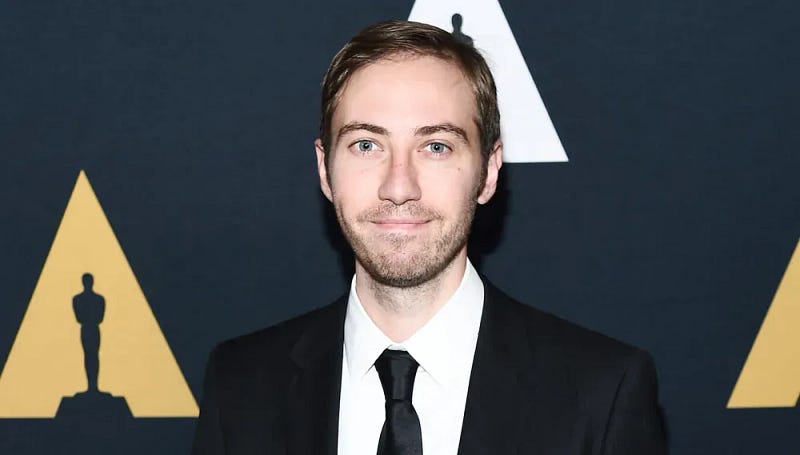
My conversation with the 2016 Nicholl Fellowships in Screenwriting winner.
Justin Piasecki wrote the original screenplay “Death of an Ortolan” which won a 2016 Nicholl Fellowship in Screenwriting. I had the opportunity to chat with Justin about his background, his award-winning script, and what winning the Nicholl has meant to him.
Scott Myers: You grew up in Iowa, your father works for John Deere, your first job was detasseling corn. That’s an obvious starting point for a Hollywood screenwriter.
[laughs]
Justin Piasecki: Yeah, clearly that’s the genesis. One of the few jobs that they’re willing to hire 13‑year‑olds for. I went to University of Iowa for two years, did their film program, ultimately transferred to NYU. But I’ve been writing probably since that corn detasseling job.
Scott: What was the role of movies and TV and books in your life when you were younger?
Justin: I worked in the town library. That’s a great place to be exposed to material that wouldn’t otherwise be on your radar.
Scott: What types of stories were you most interested in?
Justin: Just by assignment, the first section I was assigned to rebook was the Large Print Western section. It was a lot of Louis L’Amour. That’s where I first found “Lonesome Dove”
But I would say eventually, I’d settled into history. A lot of nonfiction stuff.
Scott: “Lonesome Dove”. One of those books where you get done and you say, “I just don’t want it to end.”
Justin: I absorbed the last 180 pages in a sitting, and I’m a really, really slow reader. [laughs] So I sat up until something like 3 in the morning to find out if Gus lives or not.
Scott: At NYU, what did you major in there?
Justin: Film. They do a great job at exposing you to everything, and you can kind of start to specialize in your later years.
Scott: So you’re living in New York, you said for like a decade, and I think you worked for people like Wes Anderson in MTV and Nickelodeon. Those gigs, what did they consist of?
Justin: I started with feature films, TV sets, internships and a lot of production assistant, then personal assistant stuff. Eventually got a day job in the advertising world.
My wife, who I met at NYU’s film program, she gravitated toward the camera department, she was an AC on “Boardwalk Empire” so I’m watching her do film while I’m going to an office every day. I just got out of the stream of things.
Scott: During that time in New York, were you writing scripts at all, or were you not writing at that point?
Justin: I was writing but for not seriously enough at the time.
I got a few scripts done. I did a few jobs on commission. But I wasn’t really satisfied with myself in terms of the work being put in.
Scott: The idea of going to LA, that was an all-in commitment type of thing.
Justin: Yeah. I quit my job when she came home one day and said she wanted to be a dentist. We put in our two weeks, and we moved a couple of months later. That was it. We worked for 10 years or so. We saved up.
Now, we’re going to take our savings and pay ourselves to take a year off to do what we want to do. The script that you read was the result of that.
Scott: When did you move to LA, what year?
Justin: We got settled early 2015 in Pasadena, LA proper…for about 90 days.
Scott: Apart from whatever academic training you had related to screenwriting, how have you gone about learning the craft?
Justin: Read as many screenplays as you can. That is a total education in itself. Read what is getting made. Any time you see a scene in a movie or on a television show, and you feel something as a result of that scene, figure out how they did that. Figure how they accomplished that visual emotion, linguistically.
Type in any movie, and then the letters PDF. You’ll find a huge library out there.
Scott: I’m glad to hear you say that because I don’t know how familiar you are with my blog or not. I harp on that all the time that there’s just a kind of learning that you can get by reading scripts that you can’t get in any other way.
Justin: Definitely. You get different styles, too. If you read the first page of “Days of Thunder,” it’s prose. It’s an entire book. Then, you read ‑‑ oh gosh, I don’t know ‑‑ Capote or something. It’s these little three, four word sentence scene directions. You’ll develop your own style.
Scott: This time of year is great for screenwriters. The Black List comes out, the Nicholl winning scripts announced, so they have a chance to read some of these scripts. The people who are responding to it in the here and now gives you a really good sense of what the contemporary sensibilities are.
Justin: You’re right. Different voices, different styles, and the more you’re exposed to them, the more opportunity you have to explore your own voice and land on your own style, so, again, I concur with you a hundred percent on that, read the scripts.
Scott: Speaking of scripts, let’s talk about the, “Death of an Ortolan,” which won the 2016 Nicholl Fellowship in Screenwriting. Here’s a story summary.
“A disgraced White House chef is discovered decades later preparing meals for prisoners on death row, but he risks a chance at redemption when he befriends an inmate whose guilt appears doubtful.”
The script, which as I said, is excellent, has these echoes, positive associations with movies. When I’m reading it, films like Dead Man Walking or The Green Mile come to mind, or these resurrection type stories where someone has lost touch with their creativity, but they get back in touch with it. Then, of course, there’s food and culinary arts, and the closest thing I could think of there was Babette’s Feast. Were there movies that inspired you in writing this script?
Justin: There are movies that, once I knew the story, that I looked at for form. Dead Man Walking certainly was one. In fact, that is a great script to read. There is a published bound version of it, and what’s cool is it has Tim Robbins’s directorial notes throughout so you can see: “This scene we ended up cutting for this reason,” it’s a great post writing exercise.
I really like Frank Darabont, I love the The Conversation…I like Steve Zissou’s arc in Life Aquatic. I am attracted to those characters that are not necessarily has‑beens, but could‑be‑agains.
Scott: That hits on that universal theme of regret which everybody has something that they’ve regretted in their life, and so you can tap into that to help create that connection with the reader or an audience. I’d like to unpack in terms of what inspired you to write this story. Where did you start?
Did you start with White House chef? Did you start with prison? Did you start with that idea of preparing a death row prisoner’s last meal? I mean, as soon as the story went that way, I was like, “Wow. I never would have thought of that.” What an incredible sort of thing. Where did you start? What was your inspiration for the story?
Justin I always thought last meals were inherently conflicting: “Here’s a refined symbol of our humanity on a plate before a blunt, unrefined inhumanity.” Whether you support the death penalty or not, those ideologies butt heads.
Separately I was reading about how White House chefs really do end up in these non‑visible places. If I asked you to name a White House chef, and if you asked me to name a White House chef a year‑and‑a‑half ago, I wouldn’t have been able to name one. Why? Because historically they’ve gone on to sell cooking utensils in malls, and teaching Home Ec in community colleges, and I thought, “That’s insane. They’re at the top of their game. If they could end up there, then where else?”
Those two worlds together I just realized were kind of meant for each other in a lot of ways. They had a lot to say about each other.
Scott: So that’s the root of the protagonist character, Walter Karrat? Have I pronounced that right, “Karrat?”
Justin: If you buy really cheap coffee, ‘Karat’ is the plastic lid manufacturer of crap coffee cups. That was one of the days where I decided not to procrastinate on “Maybe thematically his name could have German roots or…what if it’s an anagram of ‘Justice” or something and instead just saw the lid and added an R.
Scott: How would you describe Walter, his personality, his station in life when we first meet him in the story’s first act?
Justin: He’s a guy that we’ve seen just a real flash in pan — wunderkind Executive Chef of the White House. And then we jump to two decades later where he is working as the chief kitchen officer in a medium security prison.
Scott: You’ve been to the mountaintop.
Justin: Right.
Scott: You had this idea of Walter’s fall from grace if you will, but did you not have the specifics of the whole ortalon dining thing until later?
Justin: I didn’t have the dish when I started the script. I always imagined it’d be some -Kobayashi Maru of dishes. What’s something that’s impossible to make? I’ll just say he got screwed over by that.
Then I found that dish, the ortolan bird. The parallels to the steps in preparing that bird, and preparing an inmate for executions were too serendipitous to deny.
Scott: It’s perfect for your story. For people who don’t know about it, I had to Google it. I thought you’d made it up.
Justin: Most people did.
Scott: Some of the descriptors if you Google “Ortolan dining,” these are some of the descriptors in articles: “sadistic, cruel, repulsive, disgusting.” Walter makes a choice to not do a few key things in preparation for this White House meal that in effect shows a bit of empathy for these birds.
Now this is a guy, I’m assuming he deals with meat in food preparation, but in this particular case, something struck him as just being pretty savage in nature. Is that a fair assessment of how he responded to that particular request to make that meal?
Justin: Sure. There was a choice put on the table in front of him that says this is what it takes to be where you’re at. On page one he makes the choice not to. And then we cut to the fallout of that.
Scott: We’re going to jump ahead to one of the inmates that he befriends, Reed. We’ll talk about him in just a second. That the same sort of empathy he has for the bird he projects onto Reed. It’s a similar sort of thing. It’s like the bird and Reed both are the death penalty. There’s a kind of savagery or brutality I think is the word you used earlier. Is there some sort of connectivity do you think between those two?
Justin: Sure. There’s certainly thematic parallels. Everything that’s done to the bird, describe that meal here, someone else will say savage. If you go to some places in France, they would say it’s delicious.
If you ask some people here, “What do you think of the death penalty?” They’ll say it’s savage. You go to another person next door that maybe has had somebody taken from them and they may say it’s just, or necessary. I try to respectfully acknowledge each of those.
Then there are the physical parallels. The recipe’s steps to prepare the bird: caught, caged, blinded, force fed, and ultimately killed. Those are all mirrored by the prisoner, and plausibly so, those steps all happen in our system, either through fate of prison life or actual policy.
In both cases, the challenge isn’t complication, the original Kobayashi Maru approach. The meal is not difficult in the same way it’s difficult to safely prepare a poison blowfish. It’s a challenging meal to make because it takes a certain turn off switch of consciousness to finish it.
Scott: It does. Let’s talk about this other primary character in this script, Reed, who’s one of four death row inmates who are transferred to this prison.
The way that Walter’s got this chief kitchen officer gig at this prison that’s pretty white collar crime type…but then there’s an incident that happens at another prison which requires them to transfer four death row inmates there, which is really almost like a call to adventure. How would you describe Reed and his circumstances at the beginning of the movie?
Justin: Jeffrey Reed is a death row prisoner who was partially blinded in prison, a bit of a psych case, and when he’s transferred to Walter’s facility the chef discovers he’s refusing to eat.
Scott: I really like the way that you track that arc. Reed is a character who is the one that’s most tied to Walter’s emotional and psychological transformation. They start off in this conflictual manner where basically Reed is complaining about or critiquing Walter’s cooking, which he really gets upset about, Walter does.
But we find out that’s a ruse, that essentially why he’s saying that he’s not going to eat this food is because he’s going on a hunger strike. The reason he’s going on a hunger strike is to try and elevate his situation, get somebody’s attention, because he contends that he’s innocent of the crime that he was convicted and sentenced to death. Then that sets into this central mystery once Walter gets into that sphere of influence. Is Reed guilty of murder or not?
How soon along in the process did you come up with that idea, that you wanted Walter to get involved with a prisoner who may or may not be guilty and in effect put Walter on this path of I guess it’s almost like an investigation, a clue gathering thing? How soon in the process of crafting the story did you come up with that idea?
Justin: I always knew he’d be looking into the case, but I wanted to stick with his expertise. I wanted to keep his battle in the culinary arena. What’s the most challenging thing for somebody that makes food and not just for the love cooking but hunger issues seeded in his own backstory. A hunger strike was truly the antithesis of everything he knew, and would make for a very great, but also very personal challenge.
Scott: Because he himself, Walter, as a youth because of this condition, circumstance in his life, he knows what hunger is like, like really powerful hunger.
Justin: Right.
Scott: Walter has this powerful arc. He starts off very isolated in his life and living…In many ways, this is going to be a strange association, but he reminds me of Rick in Casablanca. He’s become this kind of closed off guy. He doesn’t want to do anything with anybody else. He’s gotten out of touch with his original…For Rick, it was more of a political idealism. For your guy, it was the joy of cooking.
I’m reminded of Joseph Campbell who says that the point of the hero’s journey, it’s not a journey of attainment, it’s a journey or re‑attainment, that Walter becomes in a sense revivified through this experience of getting to know Reed, of his exploration and investigation. He’s kind of drawn back and pulled into life. Isn’t that a fair assessment of his arc?
Justin: Yeah. The challenge was how to reintroduce food to him. That was a rotating door of first act tries. I needed to figure out how do you put this guy in front of death row meals as a new experience for him. This is something that reignites him.
Scott: You have an interesting set of ticking clocks going on in the story because there are these four prisoner and some of them get executed. So Walter does have to do these last meals for them. Each one of them is almost like a chapter heading in his progression of becoming more and more connected to what’s going on here, potentially particularly for Reed. It’s quite a fascinating arc that he goes through and very nicely done and handled there.
There’s a couple of other relationships I want to talk about real quickly. One is the young black inmate Vince who himself aspires to be a great chef. That actually reminded me a bit of the Andy Tommy relationship in “Shawshank Redemption” where Andy was teaching Tommy so he could get the high equivalency. This is like that father son type of a relationship in a way.
Justin: Yeah. This kind of a begrudging father dynamic, like, “Oh shit, I have a kid.” He doesn’t want to help Vince at the beginning of it, probably because that enthusiasm for food reminds him of himself at one point which is the last thing he wants to be reminded of.
That was actually a spin-off from that rotating 1st Act door, spin one if you will, which was to make the inmate that he really forms a relationship also be a surrogate foodie. I decided that they’re just two separate relationships that he’s going to have.
Scott: You started thinking maybe I’ll do this Vince-Walter relationship will be the key one, but then eventually you moved more toward the Reed character as being the focal point of Walter’s emotional change.
Justin: I just realized that Vince was a really good vehicle for personifying Walter’s younger self. I think that because that haunts him so much, that was an important thing to be present in there.
Scott: There’s a “Charlotte Observer” reporter Corddry. What was her function in the story?
Justin: That goes back to the rotating first acts. Walter’s first reincarnation after being fired was a food critic, essentially another version of an antithesis of his former self, somebody that snobs on food. And death row was for a column. I realized, like with Vince, that needed to be a separate relationship as well.
She’s the perfect sidekick too. A food critic Robin to his Batman.
Scott: Also someone that he can talk to. You can get him to convey whatever’s going on, also provide just some information, like facts and stuff like that.
Justin: Right, Like you said, he is not a social guy. He’s not a friendly guy. He’s definitely a shut‑in. I needed him to rebloom and rebud with someone.
Scott: I’ve got a metaphor for you because I’m sitting here listening to you. It’s fascinating to hear you say, “I started off with this character being over here, but then thought this.” You’re like a chef. You’re changing ingredients around. This is a screenwriter as chef.
Justin: Yeah. I started off making a frittata, and then I ended with something way more dramatic, which is good. It just took a while to figure those out, but that’s what outlining and notecards on the wall are for.
Scott: Great chefs do. They experiment.
Justin: Absolutely.
Scott: I wanted to talk to you because you have a series of shots in this script. Normally, I tell my students, “Really just try to avoid this,” because there’s hardly any way that you can make this approximate what’s going to be on the screen.
Most readers, their eyes glaze over when they see these things, but your series of shots were actually really I thought quite compelling because I think you have the benefit of, A, you’re watching these ingredients go together. It’s series of shots of a cooking preparation type of thing. Then there’s this mini‑story, a beginning, middle, end as the food goes from ingredients to final product.
Then a couple of times you did that the last step involves serving the food to a death row inmate. It’s like they’re really a compelling little mini‑stories whereas I think oftentimes in scripts these series of shots sort of lay flat. So I compliment you on that. Thoughts on the series of shots at all?
Justin: To start, I totally agree with you. Typically when I read it in other scripts, I’m like, “Did that need to be there or not?” You’re telling your students the right thing in my opinion for sure. In this case, I think that there were a few expositional things that I knew were important to see. I wasn’t going to get it through dialogue.
The main example for that is the inmate head count. Again, it’s a really small medium security prison. They have about 200 inmates. This is a real thing that they do every morning just to figure out the logistics of prison meals and how much to make, but I think it was important to see…He’s used to this static number. If you go in every day and it’s…
Scott: 199, I think was the number.
Justin: Yeah, it’s 199. Then they get four.
Scott: So it’s 203.
Justin: For the first time ever, he sees this number change. It’s almost like “Truman Show” when the sun comes up three minutes late or something. It’s just like, “In 30 years I’ve never seen that change.” Then you saw them ticking down.
That was a stab at saying, “Listen, to a lot of people, to a lot of state budgets, these are numbers on a page.” We’re going to see those numbers on a page, but we’re also going to get to know those numbers intimately.
There are some really hard cuts after executions where you see that number and you see it’s changed, you’re like, “Geez, that’s…”
Scott: Somebody’s just died.
Justin: Yeah, that’s a cold wake up. That’s why I made the exception for some of these things was…
The other example is a blue book that the White House chef has. It’s basically a chronological history of ever meal ever made in the White House. That’s a real thing too, though I took some liberties. A lot of this stuff I discovered while researching and was like, “Gotta have that. Gotta have that.” At one point you could buy Linden B. Johnson’s chef’s blue book. In fact, if you have an extra 7,000 lying around of something and Christmas is coming up, I’ll give you my address. That would be so cool.
There’s a montage later in the script where it’s famous meals throughout history. JFK’s birthday. Reagan’s assassination attempt, etc. I used that book to portray that mystique without a weird picture thing or archive footage.
Scott: That third act is quite powerful, and I would imagine took quite a bit of effort and rewriting to get to the point where you got it where you got a lot of cross‑fitting going on between parallel stories. How about that ending? Now that you think about it, what were some of the bigger challenges that you had in writing that third act?
Justin: That was a product of massive outlining ahead of time, but it was also a product of letting go of what you thought the ending was going to be the entire time. You’re really bitching and moaning when you’re just like, “Ah, it’s not going to work.”
I always knew that I wanted to bookend with that opening monologue, that opening voiceover. That is probably the biggest piece of advice if I’m ever at a point where someone would want to know advice from me, is I went into this having 15 things that I thought would either be cool or interesting or that would need to be in there because it’s this type of script or whatever. At the end, there’s maybe three of them. They were three things that I just loved. They were why I was working on the story.
So tent poles are important, but you can only have a few of them.
Scott: At the Nicholl ceremony, Peter Samuelson introduced you. He described Walter, the protagonist’s situation as being “an ordinary man with an extraordinary moral challenge.” What do you think about that?
Justin: I thought Peter did a wonderful job of presenting the moral conflict. I was incredibly proud of it being read that way.
This is a moral decision. Capital punishment is a moral decision. This is a system, but these are people.
I didn’t want to take a high ground of saying, “This is right, and this is wrong,” but I did want to take a strong stance in saying, “This is happening. Are you OK with it? What do you think?” I wanted to write something that mattered to people. So that was wonderful to hear from him.
Scott: Let’s talk about the journey of the script to where it is now. You write the script, and then what?
Justin: When I moved out here, I really had no connections by any means. I made a Google calendar of a bunch of screenplay contests and fellowships that I thought this would be a good fit for.
I just applied to as many early birds, deadlines as I could get to in time. But when you apply that early, you don’t hear anything for six to eight months. I applied and then the next day, I started working on my next script because nothing is promised, nothing is guaranteed. I wrote a pilot immediately after that.
Then I started working on another pilot when the first competition I entered, came back. I was at the top eight or something like that. I read somewhere that “Apply at three competitions and see how you do.”
I said, “OK. That’s a good science.” I’m going to send it to my next one. The next one, it was top five.
I sent to another one, and it was a finalist. I was like, “I’m going to keep sending this one out. It seems like it’s resonating with people.” It certainly didn’t place in all of them but it placed in something like the first four that I sent to. Off of the second one or third one, I signed with the manager and through that I signed with an agent. That’s where things went from there.
Scott: So it was before the Nicholl?
Justin: Yeah. I was fortunate enough to have found reps before Nicholl, but they were very happy about Nicholl.
Scott: How did you hear about the Nicholl? What was that like?
Justin: Honestly, Nicholl was the pipe dream. There are other ones that I really held out for, that I think I have a tangible, feasible shot at this.
Nicholl was never that. The first time they reach out to you in person, they do it over the phone. I didn’t understand [laughs] what was going on. I don’t know. I never thought I would get that far. Also, it was my first year ever applying to Nicholl.
I’d heard and read these stories of, “On my 12th try or something, I got this far” or whatever. For it to be the first year and it to do as well as it had done that far, it really did take me by surprise.
Scott: And your week‑long experience, of course, you didn’t have to travel anywhere. You were in Los Angeles but how was that pulling over the Beverly Hills and hanging out with all the people in there.
Justin: It’s wonderful. It’s a cram session of, “Hey, we think that you’re going to get to do this.” That alone is like, “Oh, great.” That’s a huge education in itself and here if we have five days, we’re going to try to get you as ready as possible. It’s really wonderful. They do a great job. They teach you about…you meet with reps. You meet with lawyers.
You enjoy yourself just by talking with other writers. Then of course, there’s the Nicholl committee you get to learn from. That’s an incredible opportunity in itself. There’s a just a continual mentorship with a lot of people. Now, I’m able to reach out to Peter. I was actually telling him about the next script that I want to work on.
He’s like, “You know, I know someone so you can meet with…” This is the script that I’ve been trying to research forever. In a 40‑minute lunch I’m suddenly able to meet the two heads of that industry and I was like, “This is something I could not get anywhere else. It’s hope, that you’re going to actually get to do this, no longer as your second night job but as your day job.” That’s incredible.
Scott: Let’s jump to a few craft questions here. You mentioned earlier massive outlining. That phrase jumped out at me. And research, and by the way, the research you did ‑‑ you speak with complete authority in that script. It completely feels authentic ‑‑ the cooking, the prison, all that stuff. What are the things you spent most of the time doing in prep writing? Outlining, research? Anything else that you do?
Justin: I try to read everything I can. Final Draft, which I write in, certainly has its tools, but for outlining there’s…. It’s called SuperNotecard Mindola, it’s from 2010 or something. It’s a digital notecard program and it’s got a really old draft of some Coen brothers movie as the tutorial.
Anyway, it’s a grid of notecards and you’re able to move them around and. not to make this a commercial, but honestly, this almost decade‑old [laughs] software thing, super‑simple, but also really helpful in terms of outlining.
Scott: What about characters? If you’re developing characters how do you go about doing that?
Justin: I’ll read three or four scripts that I think are kind of the pace of what I’d like to see things go at for my own thing.
I’ll make a timeline across my giant dry‑erase board thing. For characters, I can literally see on the left side of the room, “OK, at this point this is where his or her mind is. If he was forced to make this decision on page 12, this is what he would decide.”
Then at page 37 or something and ask “Now he wouldn’t be sure because the things in the seven inches before that on this big ruler of story that I’ve made, those things would happen.” By the end you’re looking at the right corner of the room and you’re saying, “Now if he was asked the same thing as he was on 13 he would make a totally different decision.”
I’ll color‑code, too. Like you said, there’s a lot of plots that need to wrap up in the third act. One part is orange dry‑erase marker and that’s his relationship with Vince, the protege prison cook. I’ll say, “God, we haven’t hit all the steps we need to hit for that because I’ve got a little bit of orange down here, and then we never hear from him again.” For me, that sort of crayon system works. If I was color‑blind, I’d be screwed.
Scott: [laughs] It fits. They say movies are a visual medium, so why not write from a place where you’re organizing them in a visual way. How about dialogue? Your dialogue in the script is great. How do you go about finding your characters’ voices?
Justin: Super annoyingly to anyone around me. I’ll read everything out loud as I’m writing it which means a ton of bad Southern accents or what I think a prisoner is going to sound like or a bureau chief or a cop or a little girl. I’ll do them all, because if they sound stupid in a room read from me, then I think they’re going to read stupid on a page.
If I’m embarrassed to say it out loud in front of no one in my house, then I should be embarrassed to write it down. That goes a long way. That’s the rule, for actual voice, for dialogue.
Look up interviews, too. I read cook books, I read chef’s bios, I read Anthony Bourdain for how food is described.
I read Nancy Mullane’s book Life After Murder. Those are four or five in‑depth stories of prisoners, and they’re interviewed. You really do get a dialect from that, I would have never been able to come up with.
The guy that wrote “Lincoln” read an entire dictionary of 19th century English in order to make the dialogue absolutely authentic. That was a little inspirational or at least made me feel a little bad for not doing homework. That guy did his work.
Scott: Tony Kushner.
Justin: Right.
Scott: How about theme? Do you start with theme? Do you find it along the way? How do you surface central themes, sub‑themes?
Justin: Along the way. I’ll start with the character. I think if you stick with your arc and your three tent poles there’s only so many themes that will work. I didn’t want to force anything in there, and staying true to your character and his journey will determine the themes.
Scott: How about writing a scene? Do you have any specific goals in mind, top of mind, when you’re writing a scene?
Justin: People do vomit drafts. I don’t do that. But I’ll do vomit scenes, then I’ll go back through and I’ll cut it halfway. “
Scott: Basically give yourself the freedom to explore long, write long, but then go back and trim and tighten so that it’s efficient.
Justin: Yeah.
You look at your scene and you say, “What is the goal of that scene?” If you realize that you have 30 lines of dialogue, but you actually reach that goal by line seven, stop at line seven. That keeps your best stuff in there. As much as you like that joke that you came up with for line 15, as much as you’re proud of yourself for making the scene directions on line 26 only three lines instead of four because you hyphenated something…
I just found myself doing that a lot. Probably originally came from that Blake Sneider school of I’d like to be here by 12 and here by 18 and here by 25. Page real estate was something I really had my eye on. I think you need to try to ignore that if you can the first time.
Scott: Have you moved away from that now? You said ignore that. Do you mean just allow yourself the story, the freedom to exist wherever the page count need to be?
Justin: It’ll naturally happen. If you look at the three or four guide scripts that you map out on your dry erase, those moments are happening within plus or minus four of the Blake Sneider page rules anyway. Whether it’s his rule or just the good pacing or the pacing of a good story, I think they’ll happen no matter what, but the first time you’re writing, I would just write dialogue freely.
Scott: I like your approach that you mentioned earlier. You find three or four scripts that have that kind of tone and feel and pace that you’re looking for. Go through there. Read those scripts. Analyze them. Track their timeline of plot points and just see, generally, what that is and let that be more informative of your process than say some strict adherence to these rigid so‑called rules.
Justin: Right. I’ll do it watching the movie too if I can’t find the script, then you sort of have the input of an editor.
Scott: Let me ask you a couple more questions then we’ll let you get back to your holiday festivities. Five or ten years down the road, Justin, perfect world, what are you doing?
Justin: I’m doing what I’m doing right now, which is waking up and writing for my day and then doing family at night. But I can only do that right now because I saved up a lot. [laughs] I would love to be working in features. I’ve got a few assignments in front of me now that I might jump on.
Scott: Finally what advice can you offer to aspiring screenwriters trying to learn the craft and break into Hollywood.
Justin: From the perspective of someone that had no connections and is getting on in years, I’d say this:
With no connections, the route I found luck in was competitions and fellowships. Do your research, because there’s a million of them, some more professional than others. I’ve placed in a few, and how high you place matters of course, but personally I’ve had good results with Bluecat, TrackingB, Script Pipeline and Tracking Board (and of course, Nicholl). Some come with money, but they all came with exposure, that was my first pipeline to getting representation.
The fees can add up though. Film festivals usually host one, and there may be some niche places that could fit your script really well. So, like with anything, do your research.
And in terms of age, I was about to turn, I think it was 29. Lots of people go the assistant route for connections, I sort of found myself priced out at that age though. So for writing, there’s no rules on what age this can all happen, but I realized that if I didn’t take this seriously right now, then I was screwing myself. So, go work. It’s a full time job.
Check out my 2024 interview with Justin to talk about his 2019, 2020, and 2023 Black List scripts.
For my interviews with every Nicholl Fellowships in Screenwriting winners since 2012, go here.