Go Into The Story Interview: Joey Clarke, Jr.
Joey Clarke Jr. wrote the original screenplay “Miles” which won a 2018 Nicholl Fellowship in Screenwriting. I had the opportunity to chat…
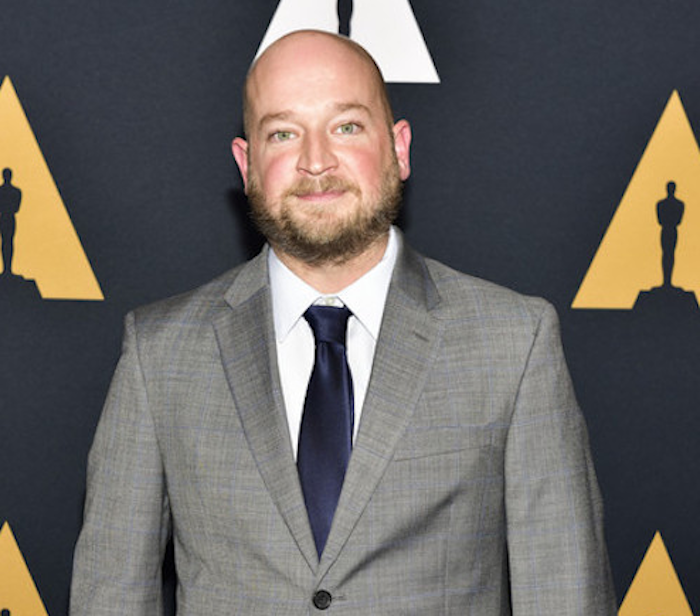
Joey Clarke Jr. wrote the original screenplay “Miles” which won a 2018 Nicholl Fellowship in Screenwriting. I had the opportunity to chat with Joey about his background, his award-winning script, the craft of screenwriting, and what winning the Nicholl has meant to him.
Scott Myers: You grew up in Missouri, then did a bit of wandering, and ended up back in Missouri.
Joey Clarke: That is correct. Yes, I grew up in St. Louis, went to school here in St. Louis, moved out to LA to try to write and pursue the entertainment industry after college. I was out there for about six years, doing smaller entry level jobs and then writing on the side. I honestly did not take writing that seriously, and then I didn’t give it…I was in my 20’s. I wasn’t taking it as seriously as I needed to be. I had to get out of my 20’s.
Then I started dating a girl who I knew from high school, who lived in Colorado. I was getting pretty sick of my job, so I moved out there to see if it would work. If it did work, we were going to move back to LA after a year.
We ended up staying for two and then found out we were going to have a baby, so we moved back to St. Louis, just much more affordable and to have grandparents around. We’ve been back here about two years.
Scott: Where did you live in Colorado?
Joey: A town called Carbondale, which is outside of Aspen.
Scott: Oh, I know it well. I lived in Aspen from ’78 through ’80. I played music there.
Joey: Oh, you did? Awesome. That’s probably around when Hunter S. Thompson was running around.
Scott: Oh yeah. I met him one time. He ran for mayor just before I got there. He actually won in Aspen, because it was just a bunch of hippies and ski bums living there, but he lost the vote in Pitkin Valley.
Joey: That’s hilarious.
Scott: When did you start to develop an interest in movies, TV, and writing?
Joey: I’d say, movies, I was interested in watching movies from very early. I started trying to make my own movies when I was probably about 12. I don’t know. I liked being in front of the camera when I was a kid, but I realized that wasn’t where my talent was pretty quickly.
When I went to college I was thinking I was going to be a photography major, coupled with my interest in film, I thought about cinematography at that point, but I ended up taking a couple fiction writing classes and then screenwriting classes, so that’s where I started transitioning in the writing side. When I moved out to LA that was the intention, but, like I said, I didn’t give it the effort I needed to be giving it.
Scott: In college, were those screenwriting courses or creative writing classes?
Joey: It started with fiction, and then I was a film major, which is mostly film theory at that school, but I did take screenwriting. I’d probably taken three fiction classes before I took my first screenwriting class. I took either two or three screenwriting classes.
Scott: When you were in Los Angeles, I imagine you were trying to augment your education about screenwriting. Were you reading books?
Joey: I’ve only ever read two screenwriting books. I read a lot of scripts. I read a lot through your site. I read a lot of interviews that writers give. I follow people’s careers, whose careers I’d want to have. I try to figure out how they got there. I watch a lot of movies. I try to go to the theatre once a week.
I’m an advocate of reading actual books, as well, so story and prose. Action lines are a bit of prose, so I’m an advocate of reading books, also.
Scott: As you know, I have that mantra that I repeat quite frequently, which is, “Watch movies, read scripts, write pages.” That’s the key.
Joey: Yeah. Tarantino once said, “I didn’t go to film school. I went to films.” Just go study the actual product and figure it out. More fun that way anyway.
Scott: In your Nicholl speech at the Academy, you thanked many people who had served as script readers over the years. I thought that was interesting. How important is it to you, in the process of you growing as a screenwriter, to have people read and critique your material?
Joey: It’s definitely important. One, because you get so close to it, you start to see what’s in your mind, rather than whats always on the page…I’ve gotten better at this, where I can see where my scripts aren’t good, where scenes need work, and whatnot.
There’s still parts where you think you’re getting the point across, or you think you’re getting something across, and then someone else’s eyes just looking at it will catch it really quickly. They’ll point it out to you, and you’ll go, “Oh yeah, right.”
It’s important to have a trusted group of friends who are also writers, or at least interested in film, to be able to read your stuff, give you feedback, and figure out where your script needs work.
Scott: Speaking of friends, you had another comment in your acceptance speech where you said, “I wanted to quit and have quit a number of times, but a friend kept pulling me back in.” What’s the backstory there?
Joey: That’s a friend of mine. His name’s Howie Kremer. He was actually one of my sister’s best friends growing up. He had moved out there after me. He’s a couple years older than me. We wrote a Web series together back probably eight or nine years ago. We stopped writing together soon after that, partially because I didn’t want to take it as seriously as he did.
He’s in TV comedy. He’s starting to do a little bit of movies. I would just stop writing and he’d always just be like, “Why are you out here if you’re not writing? You got to write things. You can’t just keep coming up with ideas and talking about writing if you’re not going to actually write.”
When I moved to Colorado, he kept sending me scripts to keep me in the loop. He kept asking what I’m working on. And, once I was in Colorado is when I finally started writing every day. He’s always the first person to read anything I do. Either me or his wife is the first person to read everything he does. We still trade stuff back. We talk all the time.
Scott: Is he in Los Angeles, in the business there?
Joey: He’s in LA. He’s been a writer’s assistant for various shows. He’s had a couple episodes of stuff. He had a couple cartoons he wrote. Now he’s a script coordinator on a show and been working on his first feature spec.
Scott: That’s good to have friends like that.
Joey: Yeah, for sure. I guess knowing that at least one person who knows what they’re talking about believed in me was enough to never entirely give up, even after I moved away. Just having it in the back of my mind that someone believes in me other than my mom and my dogs.
Scott: You just got to keep going. Speaking of which, you bore some fruit out of your creative efforts with this wonderful script, “Miles,” which did win the Nicholl Fellowship in Screenwriting. It’s a story set in contemporary Arkansas.
At its core, it’s got a sister and a brother, 12 year-old sister and a six year-old brother. I’ve read where you said that the relationship you have with your own sister was an inspiration for the script. How so?
Joey: My sister’s a couple years older than me. She’s four years older than me, and the script is six. We grew up in joint custody. We had good parents. It wasn’t like our parents were out doing opioids like they are in the in the story. It was the 80s when I would have been Nolan’s age, so I guess it would have been crack, but they weren’t doing that either. We had good parents.
But, because we were going back and forth every week, they weren’t always there. There wasn’t always a parent around. My sister, when she was pretty young, she became somewhat of a parental figure for me — not in an authoritative way at all, but in a guidance sort of way.
There was always a lot of drama behind the scenes that I never really knew about that my sister did know about. I was just kept blissfully ignorant. She carried everything on her shoulders. I put that into Riley, where she’s forced to grow up a bit too early and is aware of what’s going on. Nolan, he’s too young to grasp it all. Riley just takes the weight of stuff while Nolan’s in the background trying to figure out exactly what’s going on.
Scott: That dynamic is definitely in play, and that she is the surrogate parental figure. Evidently, she’s got a bit more edge than your sister. Let’s talk about these two characters, Riley, 12, Nolan, 6. How would you describe Riley’s personality?
Joey: She’s on edge constantly. She’s mad. She’s been cheated out of her childhood with what’s happened. She’s somewhat manipulative. She’s a little bit wise beyond her age and very independent for her age, because she had to be.
Under her anger, she still cares and loves people, and loves her brother, and still has love for her aunt and her parents. That’s, ultimately, where we try to get it at the end, is where you can see that she still just wishes things were different, ultimately.
Scott: I often times look at the stories as being journeys of key characters discovering some deeper aspects of their self, journeys of selfidentity. Whereas that anger, that frustration, that edge Riley’s got that’s right up top and very consistent, and she defaults to that, you just feel like there’s something else underneath there. Sadness. Loss.
In many ways, her journey is about allowing that stuff to come up. Do you think that’s a fair assessment?
Joey: Yeah. In an actual physical world in which she’s trying to get her dog back, emotionally, she’s trying to get something else back and trying to find innocence that she had before all this happened. Trying to find that happy time in her life when she was Nolan’s age.
Scott: Nolan, in a way, is the physical representation of innocence, because he’s right at the edge of…I think it’s six years old, is what psychologists say, is when children can fully grasp the concept of permanence. There are times where he knows his father’s dead, but then there’s other times where he talks about him in the present tense as if he’s going to be around.
Joey: At times, I felt like Nolan might come across as a little too mature, for six, how I wrote him. But, it works, I think. Throughout the script, he’s trying to grasp what’s going on. He does know his dad’s gone, but the idea that how permanent that is in reality, I don’t think he really understands.
How I wrote him, I have an almost twoyearold. He’s just learning to talk or whatnot. I pictured what my kid, what I imagined he’s going to be like personalitywise when he’s around that age. I don’t know if he will end up like that, but, I just projected what I think his personality is like into that character.
Scott: In some respects, he does have that innocence. He’s picked up at least something of his sister’s conniving ways with the whole candy thing and all that.
Joey: Yeah, you tend to take after your older sibling. I definitely did as a kid in some ways.
Scott: The children’s parents are both addicted to opioids, yet they’re presented not as the stereotype we might have in the media. They’re really caring parents who, through circumstances, have fallen prey to the power of drugs.
For example, the father’s a former football player. I believe he played on the Arkansas football team. University of Arkansas, is that right?
Joey: Yeah.
Scott: He got injured. I imagine that’s how he ended up getting hooked onto the pain killers.
Joey: That is correct, yeah.
Scott: Let’s talk about them, the parents, who they are. How did they come to life for you? Did you start with the kids and then extrapolate the parents off that? How did the characters emerge in your process?
Joey: The kids were the first characters. They came from that. The opioid part came later. I was trying to figure out why these kids would be going to get to their dog. That was the concept. I got to they’re foster kids and need to get their dog back. So, I’m thinking, why are they foster kids? Something that it’s relevant and current. Something relevant that I know a bit about and can project emotion into is the opioid crisis, so I went with that and there came the parental characters.
Like you said, I didn’t want to make stereotypical heroin addicts that are junkies. I wasn’t interested in that. I was interested in more showing these people who’ve lost their way, which I think is true in reality. A junkie is a person. An addict is a person. They could have been successful in the past and maybe still can be in the future. These are just people who are struggling.
And, a lot of people that I see get addicted to opioids — heroin or otherwise — start with a prescription. I wanted to make that point. That’s how the Dad would get it into it. That’s when I decided he should be a football player. It was just his life just deteriorated since getting hurt.
It was important to me to not villainize the parents and try to show that they are humans who care about their kids.
Scott: The Call to Adventure in your story, which starts the process whereby Riley and Nolan’s old world transitions into a new world, experiences this sudden death of their father. It happens right about the midpoint of Act One.
It’s interesting to hear you say you did this reverse engineering. You said, “Well, I know I want these kids to go get this dog, so then there’s this foster parents.” Now, you have to work on the parents. That’s a startling event to happen, where a father, through page 15 or so, is dead. How soon in the process did that emerge in your story crafting?
Joey: Everything was in the outline. That was even before I went to the outline, I knew he was going to die right away. It’s because I knew I wanted to write a story about a brother and a sister on an adventure, like a throwback to ’80s movies, films like Stand by Me or Goonies or whatnot. Then, obviously, it got a lot darker than those. But, I wanted to get on that adventure as quickly as possible.
I guess I knew he’d die right away. I started plotting out the beats. That was inciting action. Show Riley’s world and then rip it away very quickly through her Dad dying.
Scott: You had mentioned the foster parents who are Courtney and Samuel Cole. Completely different types of people. He was a faculty member at Yale and relocated to Fayetteville and the University of Arkansas.
How would you describe their personalities and how did those particular characters emerge in storycrafting process?
Joey: I’m currently rewriting those characters a little bit. I wanted them, again, to be not villainous. I didn’t want them to be the stereotypical evil fosters who are just in it for money or turn them into fur coats or something. I was trying to do it where you see them through Riley’s eyes at first, where Riley doesn’t really like them.
I wanted come across that way at first — not likable — but then you grow to see they’re just people trying to do their best as well. I’m still working on those characters, honestly. But, from the get go I wanted them to be the complete opposite of the world that Riley and Nolan knew. That was having successful parents who have built a home and a nice life for themselves.
They have money and they have a life that they’re working on. They just don’t have kids, because she can’t have children.
Scott: That’s very helpful for you from a writing standpoint, to have that dog, Miles, because the father’s dead, the mother’s in the hospital recuperating from an overdose, and the kids are with the foster parents to have that dog as what Riley’s goal is.
You’ve got a very clean through-line. The kids’ goal, particularly Riley’s, to retrieve the family dog. Miles is being held in an animal shelter back in Paris, Arkansas. You even throw in a ticking clock. They’ve got 24 hours before the dog gets let up for adoption.
The logline, as it was described during the introduction to the stage reading that they did at the Academy “After losing their parents to the opioid crisis, a 12 year-old girl and her little brother run away from their foster parents to get back to their dog, Miles.”
I read that description and I remember calling a description once that someone said I don’t know where I read it or heard it about what defines a screen play, “Simple plot, complex characters.” It seems to apply so aptly to your story. What’s your reaction to that idea a simple plot, complex characters?
Joey: Thank you for that. That is a great way to go about it. I don’t think it’s the only way to go about it, but it’s a great way to go about it. With the script, Miles, part of why the script works so well is because of it’s simplicity. It’s very point A to point B with a lot of depth to it.
Scott: That’s for sure.
Joey: For me, in my experience so far, that quote works a lot, but there are obviously very complex movies that work really well, too.
Scott: They go on a harrowing journey. As I was reading. I was reminded of movies like Stand by Me, or even some of the old Disney films. Obviously, this has got a much darker edge to it than that. You’ve got them traveling through the woods. They’re forging a river. They’re trying to catch a moving train, which they finally manage to do.
That’s the classic rule of three. I think it was the third time when they finally get on board. They lose their food. They find an abandoned car with a thunderstorm, all these really dramatic events. I know you’ve got the topography of Arkansas, you know what that’s about. How did you brainstorm and come up with these specific narrative elements?
Joey: It’s all just outlining, more and more detailed outlining. The process I use is from one of the two screenwriting books I’ve read. Start with just three lines of an outline, then one page of an outline. Then I go to notecarding every scene, then laying those notecards back in a scene and just going longer and longer into depth.
I end up outlining six different times. Each pass of an outline, I think of more things to add. By the time I get to writing the script, I’ve worked through the movie six times.
Scott: It’s like what Pixar does.
Joey: Really?
Scott: They have this process where they do these realtime reels. They do it eight times. This is after they’ve already done some of the scripting and whatnot.
Joey: Yeah, so I’ve got to go back and do it two more times.
Scott: [laughs] At times, Riley can say some really awfully biting things to Nolan. At one point, when they failed getting into the train, she says, “We’re going to starve to death and freeze to death because of you. You’re worthless. You ruin everything.”
Was it hard for you to write lines like that, especially given that your own relationship with your sister was a good one?
Joey: No. She says them, but I don’t think she’s generally…She doesn’t genuinely want him to go away, get lost, or anything. That’s how kids act. That’s something that kids do say. If that’s an adult saying that to somebody, it’s a lot meaner and a lot… [laughs] Then that person probably needs to go talk to somebody about their anger issues.
But, kids are mean. Within an hour, the same kids who says stuff like that can be totally reunited and back together.
Scott: Right. You balance it out with one of the more lyrically poignant moments in the script. There’s a song you set up, “What a Wonderful World,” which is important to the boy, Nolan. Riley seems to have very little empathy toward that, and actually tells him to turn off the song at times at night because it’s waking her up.
You’ve got this lovely little subplot where at one point she’s been…It’s a real down time for them. She starts to sing that song to bring him out of a funk. Could you describe the…Do you remember that song? Was there another song that you ever thought about, or was it that song that popped to your mind originally, and stuck with you?
Joey: In the Nicholl draft it was “Three Little Birds,” and I changed it to “What a Wonderful World.” Then my producers now that are working on it, they wanted me to change it back to “Three Little Birds,” [laughs] so it’s back to “Three Little Birds.”
There are several other songs I had thought. I had used “Blackbird” in a draft, but then I have a twoyearold, so I had Baby Boss..No, “Boss Baby.” I had that on. They actually used that, so I changed it. I’d thought about “Forever Young,” the Dylan song, not the Rod Stewart…There’s a couple other songs I’d thought about. “This Must Be The Place.”
“Three Little Birds,” how I originally chose that, and that was the one that was in the Nicholl draft, is a personal reason that my wife…We have a children’s book version of “Three Little Birds.” My wife sings it to our kid.
Scott: That’ll have some nice emotional resonance for you personally. I thought the “What a Wonderful World” was good, because as you’re trafficking in that moment where she’s singing it and we’re touching basically all the key characters, you’re using that song to thread that together. The irony of that, the juxtaposition, right?
Joey: Yeah, I like the irony of “What a Wonderful World” as well. They said “What a Wonderful World” is just used too much. But, I like “ Three Little Birds,” too. Choose your battles.
Scott: You’ve got several setups and payoffs. There’s a bit with the Chevy Chevelle. There’s a really wonderful bit with the purple ducks. In fact, that’s one of my favorite scenes, just visually. I saw that in my head, where the ducks are flying. Again, you use that image to touch base with the characters, thread that through.
Let’s talk about that a little bit in terms of the importance of those setups, payoffs, callbacks, and whatnot. How important is that to you in your writing? Why do you think that’s so valuable in a screenplay, to have those elements in play?
Joey: It creates a sense that the whole thing is one, the whole movie is…I don’t know. I don’t know a good answer, really, why it’s important. I just know inherently that it is. [laughs] Everything that you put in there needs to be in there for a reason.
There’s these small, little things that I put in in the beginning, like Nolan drawing. It starts with Nolan drawing just because I’m building Nolan’s character. Then, what is he drawing? I’m later taken to get to the point where I have that duck scene. While I’m writing the duck scene, I realize I can set that up a lot earlier and make that for a lot bigger moment by having him draw a duck.
Scott: See, that’s the beauty of writing. You love that when you’re moving along and you hit on something, like, “OK, so I’m going to have this purple duck in this train full of ducks. Oh, wait, I can go back and set that up.”
Joey: I do that a lot. There’s a lot where something comes to me on page 63 or whatever, and I think, “That can double in page 17.” I’ll jump back and figure out how to work it back into this. I do that a lot.
Scott: That’s awesome. When it works, it’s just a really, really rewarding thing.
There’s a scene that you had where Courtney and Samuel, who are the foster parents, visit Emma, who is actually Riley’s and Nolan’s aunt who’s been struggling with her own thing because she’s culpable, in some respects, for the situation that happened with the father and legally even.
That meeting of those people when Courtney and Samuel are out trying to find the kids and they meet in Emma’s apartment in two different worlds. There’s conflict borne out of their individual and collective frustration and fear about the kids.
That conversation, as I was reading that scene, struck me as it would be a really hard scene to write because you’re talking about…They’re on each other about drug addiction and Courtney survived cancer. That could have so easily slipped into melodrama, but it doesn’t.
I was wondering whether you struggled with that, “How far can I go with this in terms of its emotionality?”
Joey: Thank you, I appreciate it. I’ve written that scene probably more than any other scene in the script. Yeah, I did struggle with it. I’m sure at some point it did read as melodramatic and then I’ve just cut the fat down to where it’s a pretty slim scene, still or it is, at this point.
It’s definitely hard because they’re both…Emma is obviously aware that she’s not in [laughs] the greatest shape of her life. She doesn’t want to admit that to these people who just showed up at her door, so she’s trying to protect herself and stand up for herself.
The foster parents have messed up, too. The kids slipped away. They’re both trying not to admit their faults and blame the other one, but they’re aware that they have messed up.
Scott: That’s what I thought was so interesting about it. There’s a lot of I guess you’d call it psychology psychological projection. They’re projecting their own sense of culpability as anger toward the other person. Then, by the end, they hit a point of being honest enough, with each other and the whole scene reads that way. I thought it was very well written.
I imagine that what you said was how it was for you. You wrote it a lot, and then kept cutting it back, scaling it back and tightening it up.
Joey: Yeah.
Scott: There’s a nifty twist, too, at the end of the story regarding who ends up with whom. In terms of Miles, I’m reminded of that old saying in Hollywood about their movie endings, which is, “Give the audience what they expect,” which has set them up for defeat. Then “give them what they want,” which is, we want the kids with the dog.
They end up with the dog. That makes the surprise that much more dramatic and emotionally satisfying. Did you always know that they were going to end up with the dog, or did you, at some point, think, “Nah, I think maybe not”?
Joey: No, I always knew they’d get the dog. [laughter] There has to be… There are movies that are completely depressing and don’t have redemption at the end, but I wanted to end on a hopeful note. That was always going to be where it ended.
If the timeline continued, you don’t know exactly if it would stay hopeful. I wanted to end right there where there’s several possibilities of what could happen and you can choose who they go with or who you want them to go with if you have a preference, and keep the dog. That’s the goal, right?
Scott: I thought that part was very mature, that ending. It spawns those water cooler conversations. “Do they end up with Emma?” “Do they go back to the foster parents?” “Does the mom become better?”
Really, it is a hero’s journey, a heroine’s journey. Campbell talks about how the hero goes on a journey and then returns home a transformed individual. The whole point, really, of the hero’s journey is that transformation process.
You’ve got this lovely story where Riley, along with Nolan and Miles, ends up in the exact same spot where the story begins, which is the fishing hole. You’ve got that circle all the way back.
How would you say that, after her heroine’s journey, she’s changed, her transformation?
Joey: At least, I hope it comes across that she has accepted her role of Nolan’s parental figure, if you will. She’s grown up a little bit more. At some point, she stops calling him names, and she starts… I very subtly put it in. She starts calling him “Buddy,” which is what her dad had called him. I hope it comes across that she is now accepting him as more her brother rather than just a responsibility that she has to have with him. She steps forward in that. I hope she comes to terms with her mom’s not a terrible person. That’s what the tree is supposed to be there for.
Scott: The tree, that’s a nice touch.
Joey: She’s not going incredibly far in her hero’s journey. It’s very small steps forward.
Scott: She does, thankfully, have an opportunity to cry, because you just feel that she deserves that.
Joey: Yeah.
Scott: Let’s talk about the Nicholl experience.
Joey: Yeah.
Scott: What was that like hearing from the committee that you’d won the Nicholl Fellowship?
Joey: It was surreal. We got the call that we were finalists in late August. Then it was three weeks before we found out who won. Those three weeks were the longest three weeks ever. [laughs] Actually, I said I’ve quit several times. I quit in between in those three weeks. “I’m not going to win. Nobody’s been reaching out like they’re supposed to. I’ll quit.” I told my wife that. It was probably three hours, just throwing a tantrum.
Then they set it up so there’s going to…You need to be available for a twohour window for a Skype call. We knew that was going to be the day when we found out. That was end of September, September 17th. It was two hours, which in Central Time was 1:00 to 3:00 we had to be available.
I originally thought it was going to be alphabetical order, which I was going to be second. I thought it’d be right at 1:20, and that didn’t happen. It just went longer, and longer, and longer. Then I was like, “Well, there’s no way they’re going to make you sit this long to tell you, ‘You lost.’” Then I got to the point where I thought they forgot about me. Finally, at 2:55 the thing calls. It was a video chat. There was fifteen to twenty people, most of the committee in the video. I was like, “All right, I won.” Then I cried a little bit right there. I didn’t know what to say. I was just sitting there stumbling over words for five minutes. [laughs]
I said this on stage. “The whole time you’re writing and pursuing this, you have no idea if it’s ever going to lead to anything.” In that moment, it’s like, “All right, there’s validation for why I’ve been doing this.” It’s a giant door being opened and I can get there.
Scott: You are living proof of what we just talked about. Give the audience what they expect. Then give them what they want. You’re like, “Oh my gosh, maybe this is not going to happen.” Then, boom, it does.
Joey: The whole thing’s great. There’s the Nicholl Week. We go out there. They have all these seminars set up. Alumni dinner, you meet a lot of the people. I’ve read a lot of their scripts. I’ve seen several of their movies. And, they welcome you in.
I didn’t really understand what fellowship meant, but it’s a lot of people are available to help and want everybody to succeed. It’s like this little community of writers helping each other out and offering advice. I’ve already talked to a few on the phone when I’m in need of help. It’s pretty awesome.
Scott: You mentioned that there are some producers involved in the script project.
Joey: Yeah. I haven’t signed anything, so I don’t know how much I can talk about it. I have producers who are pretty great — both professionally and as people. They’re helping a lot. They actually passed my script along to who ended up being my managers. My manager and them are working together to get Miles going. And, I’ve done a couple rewrites on their notes.
Scott: You can tell me who your manager is.
Joey: A newish company called Fourward. Jon Levin, he’s the head of the Feature Department. Then Sean Woods and Theo Vieljeux are his younger guys. I work with those three. They’re all good people. A lot of good ideas so far.
Scott: You can say hello to Jon. He was my agent at CAA for 10 years.
Joey: Was he really?
Scott: Yeah.
Joey: That’s awesome.
Scott: You’ve been rewriting this. You got to do a rewrite on this or write another project for the Nicholl…
Joey: Yes, I’m working on…The rewrite doesn’t count for this. Since I finished that rewrite, I’ve started the next project for the Nicholl. You got to turn in pages every quarter to keep getting the checks.
You can do more. They said people have turned in one new script each quarter in the past. I can write more than one script in a year at the pace I usually go, if the script goes well and I don’t run into a bunch of problems. I’m probably going to try to do two.
Scott: That’s a nice segue into some craft questions here. First up, a simple question, but it’s one that people stumble over because they don’t think about it so much. How do you come up with story ideas?
Joey: I don’t know. I can tell you when they do hit me, I have a file on my computer that I write down ideas. I just keep a list of what I consider good ideas going. Probably most of them I’m never going to get to, because I have new ones come before I can finish ones I’m working on.
Sometimes, there’s just a seed of an idea that resonates in my head for a while. For Miles, I wanted to write two kids on a journey in an ’80s throwbacktype thing. It was in my head for a long time, different pieces you pick up here and there.
You might get those pieces just walking around. I have a lot of ideas when I’m walking the dogs or driving, for some reason. I have a lot of ideas in the shower even. Obviously, watching movies, you get ideas. You’re not going to plagiarize the movie, but you can draw from things, the emotions those movies project. Just being out in the world, you come across ideas.
I don’t think anybody…I’m sure nobody really tells you they sit down and start writing and ideas come to them.
Scott: That said, when you come up with an idea, are you the kind of person that thinks, “OK, is this a strong story concept in terms of marketability, presumably,” or are you just someone who’s like, “OK, this is a story idea that I feel like I’m really passionate about writing, and I’m just going to go with it, no matter how marketable or viable I think it is?”
Joey: I’m a lot more on the passionate side. I do try to think if people would watch it. It’s changing now, but I’m not ever that concerned about if there’s other people out there that are looking to see it.
There’s a Taylor Sheridan quote. He said something along the lines of, “I write the movies I want to see and just assume I’m not that different from other people.” I think that is incredibly true, even though I like to think I’m unique, I’m not. If I really feel passionate about something and about an idea, there’s a decent chance there is at least some people out there that would also like that idea and like that movie.
Miles, in particular, I thought it was an idea that would do well in the Nicholl. That’s why I wrote it. I didn’t even pitch it at anybody, just because I didn’t want to get talked out of it.
Scott: See? You were doing a little bit of market research there. You’re thinking, “Oh, OK, so this could be a Nicholl script.” It does read like a script that would slot in with their sensibilities.
You talked about your prep writing process in terms of starting off with three lines and going to a page. Then going to notecards and working it out six times and whatnot.
Let me ask you a question. How do you go about developing your characters? Are there any specific things you lean into or rely on to have them come to life?
Joey: Yes. A couple of years ago I just Googled “character template,” and I just found what I liked. I filled out this template. It’s probably five pages of just general information about the character and background, what they like, books they like, and things like that. I go in and start doing that. I’ve been using that template for awhile.
That doesn’t always stay true to who they end up being when I go and actually start writing it. I start with that to get a general idea of ’em. With the last couple scripts I started to do, I’ll write a couple scenes with those characters that would take place before the movie. It helps me develop their voice.
Then I also just use those scenes as something that happened in their life, even if it has nothing to do with the movie. This is just something that happened in their life that I know. That’ll help me get an idea of who they are.
Scott: That’s one way you go about finding the dialogue is by writing a scene that may or may not end up in the movie.
Joey: Yeah.
Scott: Are there other things? The dialogue in the script is great. Are there other things that you do to help find the dialogue?
Joey: Not really. I write fat at first and then cut it back. I try to keep it as slim as possible. I still get some parts where I have bigger chunks of dialogue than I’d like to have, like telling a story or what not.
For the most part, I try to keep the dialogue as slim as possible and just stay true to their voice. I don’t specifically try to have…I don’t know. I don’t have this person has this in their vocabulary. This person has this.
I am aware that this character might have an elevated vocabulary or whatnot, but it comes more naturally when I’m just writing it out and then go back and edit it. Then I’m actually putting a lot of thought into exactly how this person would talk. I try to write like people talk.
Scott: That’s especially true with dialogue is that you’ve got to come from a feeling place, really immerse yourself, get into the characters’ heads, and just put the whole rational thing out the window. You can always edit it, but you need to come from a feeling place, right?
Joey: Yeah, absolutely. I believe strongly in writing it as it plays out in your head and then going back and trimming the fat and shortening it.
Scott: Do you think in terms of theme at all? If so, do the themes start to emerge in the process of the writing, or are you have it more upfront in your process?
Joey: When I set it out, when I start outlining and stuff, I have a theme in mind. Then, by the time I’m writing, I’ve completely forgotten what the theme was supposed to be. I’m just writing what the story is supposed to be about. If I’ve done the earlier work correctly, then the theme and the emotions that I wanted to get across are going to be in there, regardless if I’m conscious of it.
Scott: How about when you’re writing a scene? Do you have some specific goals in mind?
Joey: Yeah. Every scene, I’m aware of how it’s supposed to move forward, or what it’s doing to the story, which scenes are character building, etc.. I’m aware what exactly is supposed to set up. Then I just try to do it as quickly as possible in the scene.
I do have scenes that’ll run five and six pages sometimes, but I’d like to keep them one or two.
Scott: You finish a first draft, and now you got to go through the rewrite process. What’s that like?
Joey: Once I’m confident and I feel like it’s not wasting somebody else’s time, I’ll reach out for notes. If I agree with the notes, I’ll go address those parts of the script that need addressing. I don’t always have a set way to do it.
Sometimes, I will just go start on…I know I need to work on page 45. Sometimes, I’ll just go straight to that scene and start working on it. Some other times, if I’m trying to get working on page 45, I might start on page 40 to get back into it, and then do it. Sometimes I’ll start back on page one. I really don’t [laughs] have a set way of going about it.
Scott: Just like I say, there’s no right way to write, there’s also no right way to rewrite. Everybody’s got to figure it out, what works for them.
What’s your actual process like? You said you started to write every day when you moved to Colorado. Is that a thing you still do, or do you work in sporadic bursts? Do you go to coffee shops? Do you work in private? Do you listen to music? Does it have to be quiet? How do you approach the writing?
Joey: I write almost every day. I might miss a day here and there, but almost every day. Sometimes that means outlining or whatnot, rather than actual script work. Then I do go to coffee shops a lot. Sometimes, I write at home, but that’s usually when the kid and the wife are asleep because that makes it’s easier to write at home.
I almost always listen to music with headphones. I can’t stand quiet, so I almost always have music on. Also, a lot of times I don’t want any words in the music. I’ll just do stuff that’s all music without any lyrics.
Scott: Instrumental, yeah. What do you love most about writing?
Joey: I like that it takes me away in something else. I’ve had tons of jobs. When those real jobs or any job, you’re there every day doing the exact same, you fall into a routine. The act of writing is a routine, but mentally you get to leave your life’s routine and go into these different stories and imagine these other worlds.
While you’re writing it, it’s a world that is very real to you, but nobody else knows anything about it. Some of these characters are alive for me for a long time before anybody else has any idea they exist. Then I send it to somebody and they’re telling me that this line is out of character for the person that I created. I like that. It means I made this person so real for someone else, they can tell me what’s out of character for them. I don’t know. I like that you’re able to go glimpse into a different life, I guess.
Scott: Gives you a chance to live in multiple worlds as opposed to just one.
Joey: Yeah.
Scott: Finally, what advice can you offer to aspiring screenwriters and filmmakers about learning the craft and breaking into the business?
Joey: Learning the craft, like you always say, read scripts, watch movies. Then I also add on read books, even though it’s not the actual screenwriting craft to tell stories. Another thing, I’m pretty sure I read this on your site, but it’s John Green, “The Fault in Our Stars.” He said he allows himself to suck.
Scott: Yeah, I have that.
Joey: When I read that, it just opened this different world of writing to me. I just thought there was this mythical place where you get to where every single time you sit down you create gold. When I read that, I was like, I don’t have to put this pressure on myself every single time I write to be great.
Half the time, I’m going to write something and I’m going to delete the entire thing the next day or change the entire thing the next day. That was freeing to me. It just allowed me to keep writing and keep getting better.
And, you have to sacrifice. Everyone, or at least most people, have to have a day job while they pursue writing. Not to mention other responsibilities. Time is limited. No one is going to magically add five hours to the day or a third day to the weekend. So, if writing is important to you, in order to make a proper effort, you have to sacrifice other facets of life — be it going out with friends, or happy hours, or watching sports or english baking shows, or sleeping. Otherwise, it’s always just going to be something you wished you had time for or are planning to do at some point and all the sudden you’re five years older than you were when you had that new idea you were so excited about. And, eventually, you’re going to be dead. If you want to write, you have to do it before that. Writing careers usually don’t work out for dead people.
Scott: I’m glad that you’ve discovered the blog at some point. I guess it was several years ago. That’s been a little bit of inspiration for you.
Joey: Absolutely. No. I still go to the site all the time, read it a lot. I appreciate that you do it.
Scott: And I appreciate you taking the time for this conversation.
Joey: Likewise.
For my interviews with every Nicholl Fellowships in Screenwriting winners since 2012, go here.