Go Into The Story Interview: Jess King
My Q&A with indie filmmaker, educator, and author of the new book Inclusive Screenwriting for Film and Television.
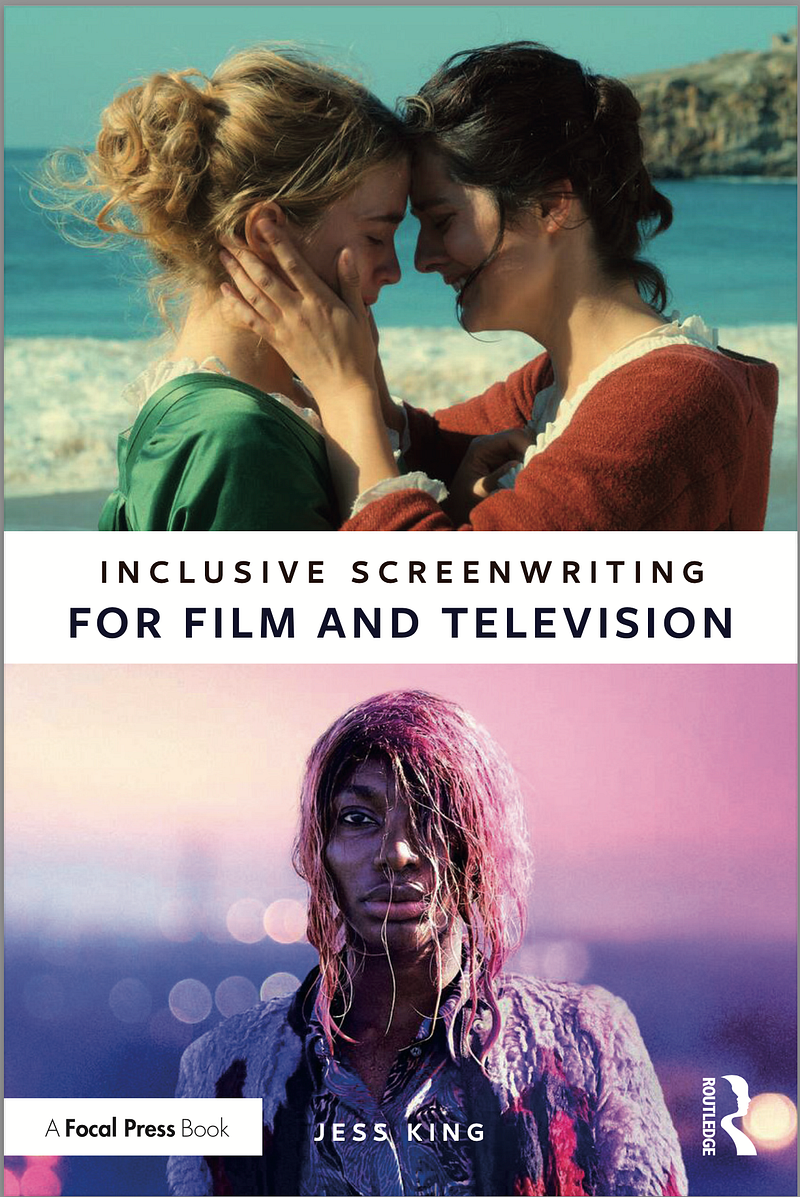
My Q&A with indie filmmaker, educator, and author of the new book Inclusive Screenwriting for Film and Television.
One of my faculty colleagues at the DePaul University School of Cinematic Arts is Jess King. Jess has written a book called Inclusive Screenwriting for Film and Television which was recently released by Focal Press (Routledge). It promises to become an authoritative text on important concerns for everyone involved in the field of cinematic storytelling— inclusion and intersectionality. I reached out to Jess for an interview to discuss their book. Here it is in its entirety.
Scott: Your book Inclusive Screenwriting for Film and Television is divided into two parts. The first is titled “Towards a Critique of Screenwriting.” The second is titled “Towards an Inclusive and Intersectional Practice in Screenwriting.” What was your thought process in structuring the book that way?
Jess: As a whole, the book calls for a radical shift away from storytelling designed around the universal towards screen stories crafted toward the unique and culturally-specific. And the two parts allow for me to divide the book between theory and practice in equal measure.
The first part, “Towards a Critique of Screenwriting,” explores the development and codification of contemporary screenwriting norms and fleshes out how the foundational principles of character and narrative design are rooted in the particular perspective of cis, white males disguised as universal storytelling norms. This part of the book is a critical exercise, applying queer, feminist, and critical race theory to screenwriting as a craft, which I know is rather unconventional. To do this, it was important that I take the time to clearly describe and analyze contemporary screenwriting rules to show how things like whiteness, maleness, heteronormativity, and the like are baked into the ways we now conceive of what a character is (or isn’t) and what comprises a ‘legitimate’ narrative. This allowed me to start asking questions about how we can reimagine character design, the role of conflict, narrative structure, and world-building in ways that honor the specific, lived experiences and perspectives of characters with marginalized and/or intersectional identities.
Because the first half of the book is largely an exploration of craft, I use the second half of the book, “Towards an Inclusive and Intersectional Practice in Screenwriting,” to provide four case studies from contemporary television that demonstrate how the rules of screenwriting can effectively be challenged, reworked, and re-imagined based on the theoretical observations of part one. With the exception of the chapter focused on Killing Eve — which operates as a cautionary tale — the case studies are meant to provide generative, concrete examples of ways to reimagine character design, world-building, and narrative towards equitable and inclusive ends.
Scott: In Chapter One, you discuss the “homogenization of imagination.” What do you mean by that?
Jess: Our imaginations are shaped by our experiences, relationships, and perspectives, all of which are shaped by our unique place in the world. Despite illusions to the contrary, our imaginations do not live outside of us, and are, in fact, shaped by our experiences, our upbringing, as well as by the historical, political, social, and familial context we live within. Additionally, the larger cultural imaginary is shaped by the media created, which is the media we all consume. When that media is created by a small group of people who hold most of the same identities, this means the cultural imaginary is at the mercy of that small group. Unless you’re part of that group, this is a problem.
It is well-documented that Hollywood is an industry dominated by white men at all levels of production. This isn’t an opinion: all one needs to do is read the annual Annenberg or WGA reports on diversity and inclusion for a reminder of where we stand on racial and gender parity in the industry. So once we acknowledge that this is a fact, which is the first step toward considering change, we can move in deeper to learn that the actual rules of screenwriting, which dictate everything from how long a screenplay should be to who is considered a compelling or worthy character, have largely been codified to represent a white male perspective. (And this is true despite the fact that some early screenwriting manuals were penned by white women.) This is an extremely limited, uniform, and homogenous perspective, despite claims to the ‘universal.’
When you identify a problem, the only way forward is through, right? And it’s my goal with this book is to simply recognize the facts about the genesis of the rules around screen storytelling, the impact the identities and perspectives the screenwriting gurus had on the effect of those rules, and then imagine new ways to consider using screenwriting as a tool for presenting an abundance of identities and unique experiences, rather than ones that only reflect the image of the men who wrote the rules. This is not about blaming or complaining: this is about recognizing fact and then creating a new way forward, together.
Scott: My primary critique of common rhetoric in the screenwriting “universe” is that the desire to simplify how to write a screenplay results in reducing story structure to plot. As a result, there is minimal discussion about the role of characters in the story-crafting process. Your book suggests there is a way to “reimagine character” which naturally arouses my curiosity. What do you mean by that?
Jess: I wholeheartedly agree that the desire to simplify how to write a screenplay results in reducing story structure to plot. Because of this, the standard methods of character design reduce character to a fundamental essence that results from the tension between an external desire and an internal need. This process essentially turns the protagonist into a narrative engine as opposed to a complex representation of a human being. Part of this issue stems from how screenwriting differentiates character and characterization. In screenwriting, characterization refers to what Robert McKee calls the ‘observable qualities’ of a character, namely things like race, gender, class, religion, education, etc. These ‘observable qualities’ are considered secondary to character, or a character’s essence. This makes cultural specificity secondary to some sort of universal truth, which, frankly, doesn’t actually exist and harms us all as we absorb it, compare ourselves to it, and try to attain it.
In my book I put forth that characterization — which is essentially cultural specificity — is the key to more robust, complex, and inclusive representation. What screenwriters need to grapple with is the fact that being a woman, or queer, or Indigenous, or disabled (or any intersectional combination of marginalized identities) shapes not only who you are, but how the world responds to you in turn. Think about a woman vs. a man preparing to walk home from a bar at night, what each contemplates prior to exiting that door. Think about being a white person vs. a Black or Brown person seeing flashing police lights in the car behind them. Yes, we exist in the world, but then the world exists right back at us in very different ways. It’s essential for writers to recognize the relationship between a specific character with a specific identity and the social, political, economic, geographic, and historical context in which they live. Examining the unique relationship between character and context is immensely generative of story. Particularly of stories that have yet to be told.
In re-imagining the role that characterization plays in character design, we also have to grapple with notions of agency, which I talk about a lot in this book. Within the current paradigms, agency is thought of in a very limited way, as the ability to act on the world. Over and over, screenwriting manuals talk about how the protagonist must be active. But the idea of what ‘active’ means — how agency manifests — is limited to the ability to act upon and reshape others or the world, which is a very masculist way of seeing the world and other people.
If you’re writing characters who live on the margins, agency looks different. I can’t tell you how many times throughout my life I’ve smiled and nodded to try to minimize the negative attention I’ve received from cis men. On the surface, with our limited capacity for understanding agency, that might appear weak or passive. However, I can tell you from experience that those acquiescent smiles have saved me from harm on many occasions. Me choosing to respond to unwanted attention or threatening behavior by smiling or softening doesn’t make me passive: it makes me someone who was able to survive that interaction and move on to the next one.
I think about different forms of agency a lot when considering stories about women facing domestic violence. In Hollywood, those stories are almost always told as revenge narratives. In films like Enough, starring Jennifer Lopez, the protagonist reaches a breaking point in the abuse, learns martial arts, and conquers her abuser. But in real life, most survivors of domestic violence cannot and do not seek to dominate their abusers. Additionally, they often do not have the resources to remove themselves from the situation, which is why the victim-blaming question ‘why didn’t they just leave’ is so infuriating. People in abusive households do what they need to do to survive, which, in some cases, means being quiet, not fighting back, and staying put. Just because this might not appear outwardly as significant action doesn’t take into the account the enormous energy it takes. If someone has not had the experience of knowing you might not survive if you ask someone to stop or if you attempt to leave, you might not understand the power and agency it takes to do that. What you have to swallow to do that. Thus, it’s worth considering what we’re losing when we don’t tell the stories of quiet, seemingly inactive survivors with as much depth as we tell the stories of the dominators. It is and will continue to be stories of surviving domestic abuse, told by people who have experienced it, that will help the rest of us understand what that is really like and, perhaps, how to address it in meaningful and healing ways.
As I write in the book:
Hollywood’s attachment to autonomous and exceptional heroes obscures alternate forms of agency in which a character might act upon the world as frequently as they are acted upon, or whose actions are not legible as agential. To write screenplays about characters with non-dominant identities requires an attention to how agency expresses itself outside of exerting dominance. Characters who quietly resist, acquiesce, endure, collaborate with others, or choose acts of subtle subversion can carry a narrative. This requires attention to drawing out how non-heroic acts impact not only the emotional, intellectual, and physical development of the character, but how they impact the world around them. Screenwriters can reorient the logic upon which characters are constructed based on their own unique experiences of self, agency, and relationality. A new imaginary needs an infusion of nuanced observation about how different people from all walks of life express agency and experience subjectivity. (135–136)
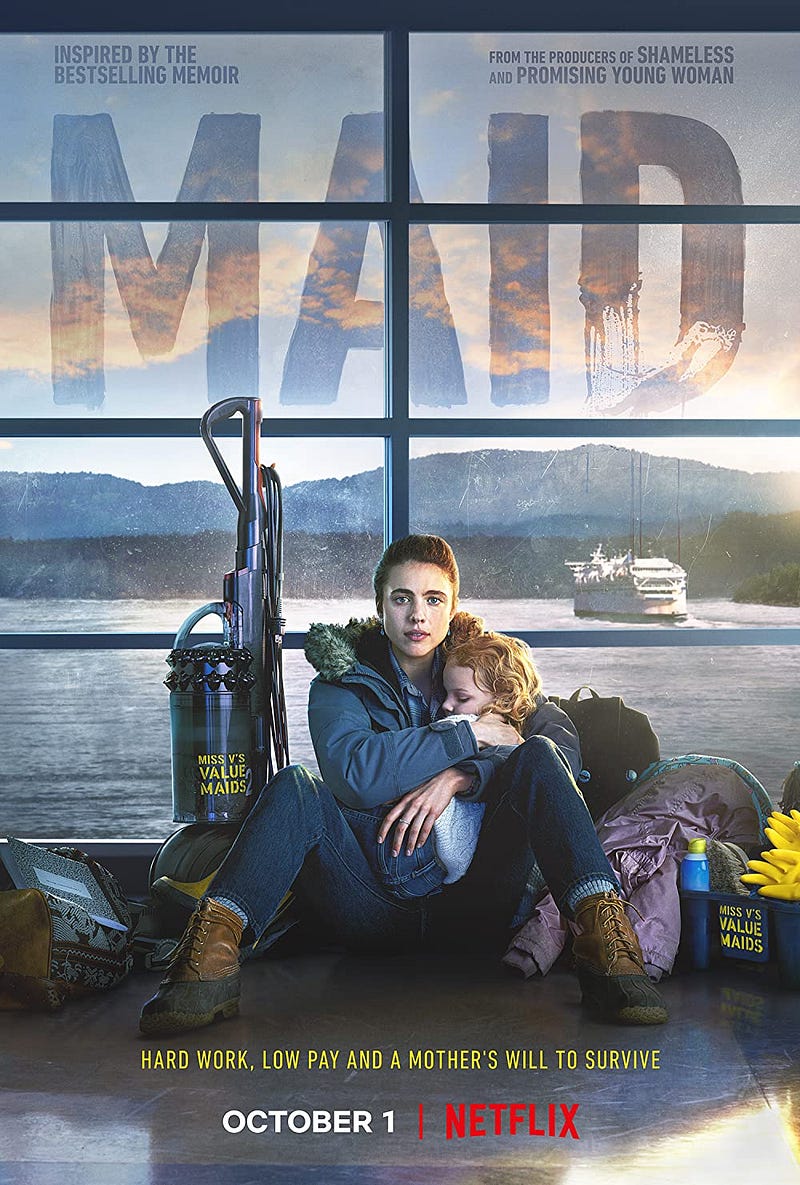
If you’re curious about how to capture this kind of complex agency, the recent Netflix series Maid is a great example. If it’d been available as I was writing this book, I absolutely would have included it.
Scott: For decades, Hollywood screenwriting has been dominated by three structural theories: Three-Act Structure, The Hero’s Journey, and Sequence Theory. Chapter Four of your book is titled “Changing the Narrative (Structure).” Could you elaborate on what that focus is and does that involve critiquing these any or all of these three theories?
Jess: At its root Three-Act Structure is simply a beginning, middle, and end, which is rather benign. I do, however, critique Three-Act Structure because of the ways that Vogler (via Campbell), Field, and Snyder, among others, have codified what happens in each act. Essentially, I argue that the Hero’s Journey — as an organizational logic — has become conceptually fused into Three-Act Structure. Specifically, I examine what I call the ‘transformation imperative,’ which organizes the narrative around the metamorphosis of the central character, or, short of that, the resolution of the problem introduced in Act One. The ‘transformation imperative’ dictates what happens in each act, requiring that we introduce a flawed character or problem in Act One, put that flawed character through the ringer in Act Two through increasing the obstacles/exacerbating the problem, and let them solve the problem as a way to emerge in a newer, ‘truer’ form in Act Three.
While this formula has produced many compelling stories, it cannot account for many lives. In this chapter, I begin to ask questions around how Three-Act Structure could embody other organizational logics. For example, what does a narrative organized around healing, friendship, or pleasure look like? What are the structures of those feelings? I go on to answer these questions in more depth in the second part of the book through my case studies.
The case study on Vida is particularly instructive on this front. I had the pleasure of interviewing Vida showrunner, Tanya Saracho, for the book, and she talks in great depth about the ways that the sibling relationship at the heart of Vida operates as a lode star, guiding the narrative at every turn, rather that prioritizing a need for either or both sisters to transform over the course of the series, emerging as a different person on the other side. The idea that we as humans have one core flaw or goal, that we solve for that flaw over the course of our lives or a certain time period, and then emerge completely different — either better or worse — on the other side of it isn’t only an inaccurate reflection of our robust lives, but it’s too simple. I think we can do better.
Scott: In Part II of your book, you analyze four TV series: Killing Eve, Sense8, I May Destroy You, and Vida. Why these four, both individually and collectively?
Jess: One of my main goals with the book was to cite strong examples of culturally specific screenwriting that has achieved significant success in the mainstream marketplace, whether through awards or cultural traction. While the first part of the book explores feature film examples like Nomadland, Portrait of a Lady on Fire, and Sorry to Bother You, television is way ahead of the game in terms of culturally specific representation. Thus, for my case studies, television offered more opportunities for study. Out of the four case-studies, Killing Eve is a bit of an outlier. It operates as a cautionary tale, by which I mean that on the surface it seems to be progressive in its representation by way of casting two female leads (a Korean-American spy and a white bisexual assassin) in the typically white and masculine spy thriller. However, the strict adherence to generic and narrative constraints, along with a color-blind casting process that ignored the cultural specificity of Eve’s (Sandra Oh) character disciplines what could have been a series that challenges the status quo into one that supports it.
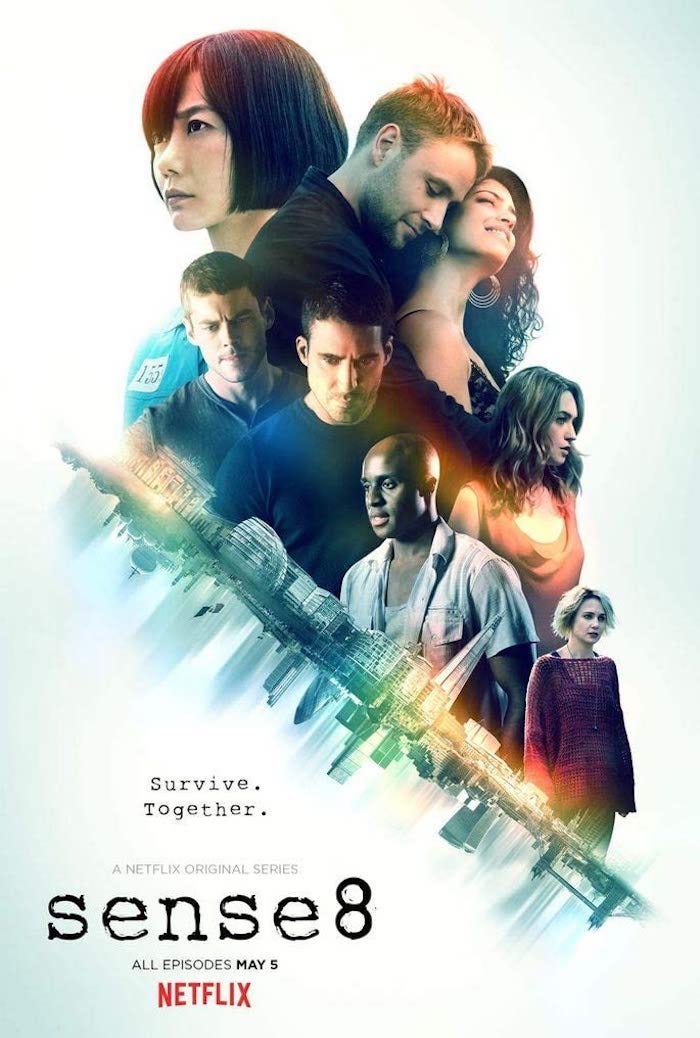
As for Sense8, I May Destroy You, and Vida, these are all series made by intersectional creators, and each defies and redefines common narrative, generic, and character design techniques in exciting and inspiring ways. With Sense8, I explore how the Wachowskis play with well-known genres in exciting and very queer ways, challenging the structural violence of the police procedural by meshing it with the maternal melodrama, for example. In the chapter on I May Destroy You, among other things I focus on the way that the three co-protagonists, all of whom have intersectional identities, are written to embrace and grapple with all the ways we are simultaneously the agential subject in our own lives while being objects for others. And in the chapter on Vida, which was the hardest chapter to write because of the complex layers of identity for all the characters, I explore how to write intersectional characters in ways that embrace contradiction and messiness. As a matter of fact, one of the things Tanya Saracho discussed in the interview was how she doesn’t like archetypes: she likes mess. I remember thinking, “and this is why I had to talk with you,” because parsing out what goes into writing characters like Emma Hernandez, who is the queer, Latina (but white-passing) daughter of immigrants with honor and grace is as hard as it is essential if we want to expand our screenwriting practices to be more inclusive as a way to foster belonging.
It was important to me that I offer a way out of our current conundrum. So much media criticism is just that: criticism. Just as Hollywood endlessly repeats the same tired tropes and narrative arcs, media criticism endlessly articulates its dissatisfaction with those same tropes and arcs. We know what’s wrong, at least superficially. I wanted to get under the hood and diagnose the conceptual roots of the problem and then provide real, existing examples of possible ways out of the fray. We need generative examples of screen stories created within the Hollywood system that defy convention and engage audiences. We need to see new ways of thinking about character, world, narrative, and genre that screenwriters can learn from. I offer my book as one way to start doing that, and I look forward to the conversation deepening and broadening as other scholars and practitioners contribute their valuable insights and ideas.
Scott: Your book addresses some weighty questions, including these two: What is our ethical responsibility as screenwriters, and what does inclusivity mean in relation to screenwriting? Could you give us some sense of what the book has to say about these critical questions?
Jess: I think a great deal about our ethical responsibility as screenwriters. This book is rooted in an ethic of care, relationality, and belonging, The media we consume is integral to how we understand and treat ourselves and one another. Growing up as a queer kid in the 80s, I didn’t see queer or trans characters on screen unless they were the butt of the joke or the villain. This was mirrored in the world outside, where the kids in my neighborhood liked to play ‘smear the queer,’ a game where players throw a ball up in the air and then proceed to brutalize the ‘queer’ who catches it, among other forms of social violence. This kind of correlation between media representation and the obstacles encountered in the world isn’t unique to queer identity; it encompasses the representation of Black, Brown, female, disabled, Indigenous, poor people, and others, as well.
If stories are about creating a sense of culture, belonging, and finding new ways to connect to one another, we have a long way to go to reverse the legacies of harm that have been established through a Hollywood storytelling machine that largely replicates the normative violence of the status quo.
Screenwriters are in a unique position to change the narratives we tell, to design characters that are specific and unique, to craft stories that heal instead of harm. Of course, there is still a studio system full of executives inured to the traditional paradigms. But the success of writers like Michaela Coel (Chewing Gum and I May Destroy You), Tanya Saracho (Vida and Lovesong), Katori Hall (P-Valley), the Wachowskis (The Matrix and Sense8), Issa Rae (Insecure), Sterlin Harjo (Reservation Dogs), Phoebe Waller-Bridge (Fleabag), Joey Soloway (Transparent), Steven Canals (Pose), and others is a testament to the fact that we can write, think, and imagine otherwise. We can create stories rooted in and for particular communities without reducing those communities to mere demographics.
And this gets at what inclusivity looks like in screenwriting. The people I named above are all writing from and for communities that they are a part of. And when you’re a part of a community, trying to honor the stories of that community, you’re essentially accountable to that community. We can’t have an ethic of care without accountability.

Scott: One of the most important subjects your book addresses is POV, specifically writing in-depth characters outside one’s held identity. As a teacher, I’m sure this is an issue which arises for you all the time in the classroom. What does your book offer in the way of guidance for writers exploring stories featuring characters outside the boundaries of their specific life experience and for teachers working with writers telling such stories?
Jess: Indeed, this comes up all the time in classes, as well as in discussion with working screenwriters. There’s currently a strong awareness of Hollywood’s diversity and inclusion problem, and so lots of screenwriters are looking to tell stories that feature characters outside of their lived experience. The problem with this is that it reflects a quest for diversity, but without the requisite inclusion. Inclusion is not surface difference: it is about creating a sense of belonging through honoring the unique and culturally specific experiences of all the different people and places and species we share the planet with. And it is also about inviting people who’ve been excluded from media making into Hollywood to tell their own stories while providing the supports and environment for them to do it well.
I recently came across a quote by Tony Kushner, who wrote Angels in America and more recently wrote the screenplay for Steven Spielberg’s remake of West Side Story. In what I presume is a response to the backlash around the latter, Kushner said, “I refuse to accept this notion that I am causing harm to another community by writing in their voice because one of the things that art can offer us in this day and age is empathic flights into somebody else’s life.” At the core of the criticism around the West Side Story remake (as well as previous screen and stage adaptations) is that despite the presences of Puerto Rican characters in the story and on the screen, because those characters were not penned or directed by Puerto Ricans, the representation is full of stereotypes, harmful tropes, and actively centers whiteness through both the villainization of the Sharks and the central love story. The idea that Kushner or any of the rest of us can imagine and write the interiority of characters whose identities and unique histories we don’t share, in my mind, is not only arrogant, but deeply harmful.
Thus, my general take on writing outside your demographic is: don’t. This is what the predominantly white and male screenwriters have been doing since the beginning of film, and over and over again, we see how the white, male perspective distorts and harms female/queer/of color characters. I am very aware that this is not what anyone wants to hear. And to those screenwriters who feel that such a suggestion is an affront, I ask: why do you want to write characters/stories that fall outside of your lived, material experience? Further: have you ever considered the harm you might be perpetuating by writing characters who seem to hold one identity on the outside (signified by skin color, sexuality, gender, etc.) but reflect no experience of holding those identities as expressed through action, subjectivity, relationships, or dialogue? I struggle to imagine that any one of us can accurately guess or depict anything in another person’s brain, however, the closer we are to that experience, the better equipped we are to depict it. Kushner’s Angels in America resonated not only because of its compassionate contemplation of male homosexuality and Jewishness in the era of AIDS, and Kushner, holding both of this identities, was able to write from a place of knowledge and experience, which surely led to depictions on the screen that rang as authentic to others holding those identities. On the flip side, when you write characters outside of your identities, you risk not only alienating the people who actually resemble your characters and then misinforming those who do not.
So how do we escape the disaster of writing and misrepresenting characters whose identities are different from our own? We either don’t write the story, seek out a co-writer who brings that knowledge and direct experience, or, if we must, we consider the unique relationship between character, world, conflict, and narrative design, which is what I do in great detail throughout the book.
Scott: Finally, I don’t think anyone could argue about the importance of representation of varying ethnicities and gender identifications on screen. What is your hope for your book in contributing to this important conversation in contemporary cinematic storytelling?
Jess: My hope is that book opens space for screenwriters of all different cultures and backgrounds to begin to heal the world through generous, accountable, and caring storytelling practices. I’ve provided a path forward on how to analyze, understand, and actively reshape screenwriting paradigms to accommodate cultural specificity. I demonstrate how in order to tell inclusive stories, screenwriters must engage deeply with the complexity of intersectional identities, the organizational logics that dictate narrative design, and world-building practices.
For a lot of writers holding majoritarian identities (for example, white, straight, cis-male, upper middle class) the concepts in the book might feel like a flashing NO sign, which would feel bad to anyone. However, for these folks in particular, the book is actually an invitation to look inward and assess your own identities and the stories you have to offer that reflect them. What is it about your life that you’ve never seen on a screen? What can you say about what it’s like to be you that other people might be surprised by?
When one becomes a writer, we take on not only a creative challenge but a social responsibility, because what we write will influence and affect those who encounter our work. If you’re not considering the effect of your work on the larger culture, I highly recommend taking a step back and reorienting yourself to the incredible impact of what we do. Then, understanding that, dive back in and blow us away.
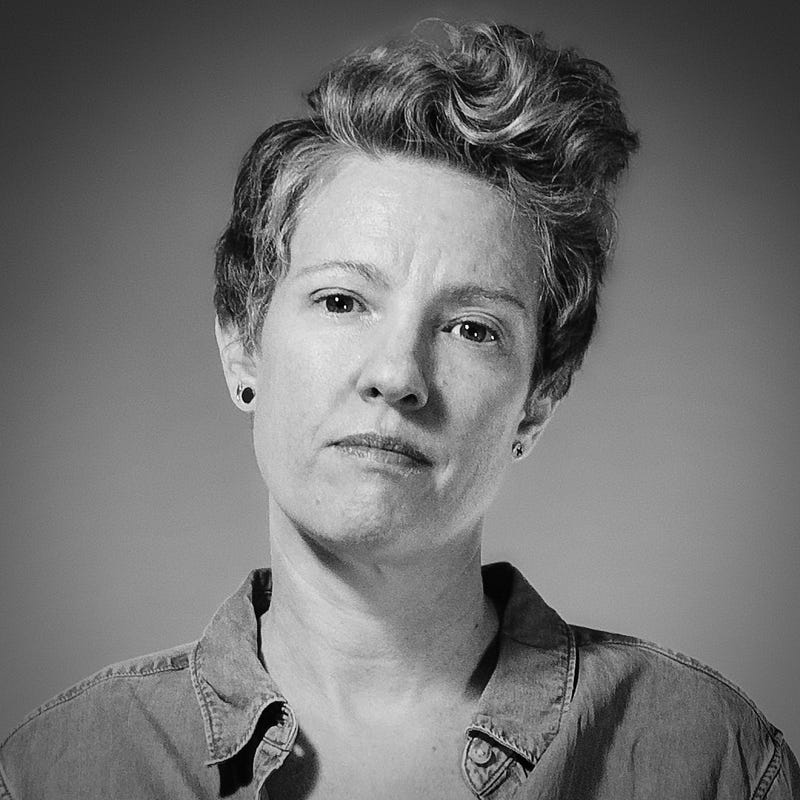
Jess King is an educator, scholar, and award-winning interdisciplinary filmmaker who has written, directed, and produced two feature films, numerous shorts, and over a dozen independent television series. Their most recent work is F*ck Yes, a modern sex ed series focused on improving communication (and sex) between consenting adults. Episodes spanning two seasons of the highly-lauded series can be found on OTV, a Chicago-based platform for independent, intersectional television.
As an instructor at DePaul University’s School of Cinematic Arts, Jess teaches courses in screenwriting, independent television, and film analysis. Their current creative scholarship revolves around frameworks for reimagining screenwriting for radical equality, inclusion, and social justice, as evidenced by original course offerings like “Queer(ing) Narratives” and “The Female Gaze.”
Jess holds a Master’s Degree in Interdisciplinary Studies, with a focus on media, ethical pedagogy, and critical theory, from DePaul University, as well as B.A. in English from Augustana College. In addition to teaching screenwriting, King speaks around the country on topics related to social media, crowdfunding, and running safe, inclusive film sets.
You may buy Inclusive Screenwriting for Film and Television at Amazon, Routledge, Barnes & Noble, and other book outlets.
Twitter: @kingisafink.
For 100s more Go Into The Story interviews, go here.