Go Into The Story Interview: Jen Bailey and Max Lance
My conversation with the writing duo who won the 2017 Nicholl Fellowships in Screenwriting.
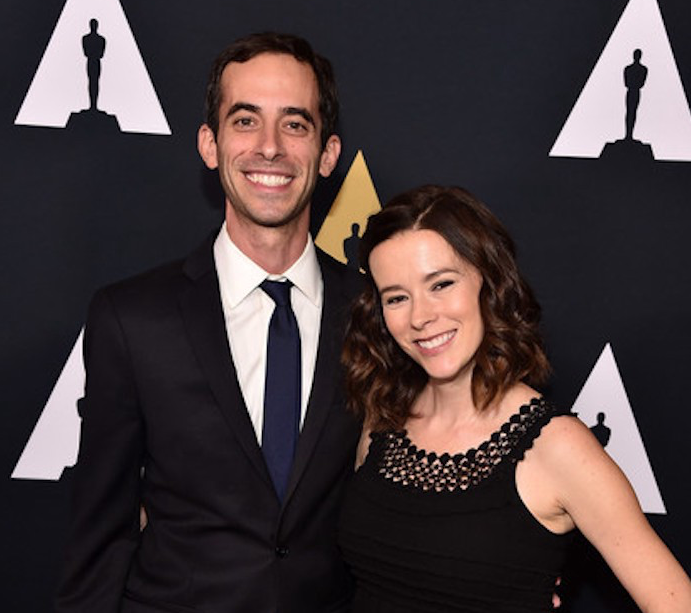
My conversation with the writing duo who won the 2017 Nicholl Fellowships in Screenwriting.
Jen Bailey and Max Lance wrote the original screenplay “The Queen of Sleaze” which won a 2017 Nicholl Fellowship in Screenwriting. I had the opportunity to chat with Jen and Max about about their background, their award-winning script, the craft of screenwriting, and what winning the Nicholl has meant to them.
Scott Myers: It’s always interesting to learn how two people find each other and become writing partners. In your case, it’s both writing and life partners. Let’s see if we can track your parallel lives a bit and how you eventually intersected. Jen, let’s begin with you. You’re from Victoria, British Columbia. Is that right?
Jen Bailey: Yeah, I am. I grew up in Seattle and then Victoria. Then my family completed the move and went all the way up to Canada for high school.
Scott: Are you dual citizen?
Jen: I am, yes.
Scott: You’ve got a background on ballet and acting. Is that right?
Jen: Yeah, that’s right. I started in ballet as a kid, and then found acting in high school, and then came down to Loyola Marymount University to study theater, and then ended up realizing that if you’ve had ballet in your life for as long as I had it’s hard to quit, so I ended up double majoring in both.
Scott: In the Dance and Theater Arts Program?
Jen: Yes.
Scott: How did you end up at Loyola Marymount? That’s quite a jump from Seattle or Victoria.
Jen: Actually, I went down and I did a UCLA Summer Program when I was in high school. There was a cute boy there I thought had said he was applying to Loyola Marymount. When my dad and I came down to do the usual college tour, I saw the sign when I left, leaving LAX and drove through it.
It was a beautiful school. I fell completely in love with it. It ended up being one of the best accidental choices that I’ve ever made.
Scott: A combination of a cute boy you found out that was applying to Loyola Marymount and driving toward LAX and seeing the school there on the hill, overlooking the ocean?
Jen: Pretty much. It sounds silly. I love that it was set up in a circle. The part of campus just felt very…I was so close to LA, and yet it just felt like its own little world in a way.
Scott: Yeah. They have quite a writing program there. Did you do any writing?
Jen: I did not find writing until I had done a play. The writer of that play, he suggested I look into Young Storytellers to go in and be an actor for the volunteer program for the kid shows. I fell in love with that program and ended up being a mentor.
The whole point of that program is the kids get to write a five‑page screenplay. I learned the structure of a screenplay along with the fifth graders, literally.
[laughter]
Scott: That’s great. Young Storytellers is an incredible outfit.
Jen: Yeah, I know. It’s a really special program. It was through that ‑‑ Max and I were both mentors ‑‑ that we ended up meeting each other.
Scott: Ah, you’re jumping ahead of me now, Jen. [laughs]
Jen: I mean, it’s all connected, so how can I not?
Scott: No, that’s all right. It’s a little flash forward, if you will. So, we’ve got you located in Los Angeles, Jen, pursuing acting, and writing, and ballet, Young Storytellers. Let’s switch over to Max. You’re from Connecticut originally?
Max Lance: I grew up in New York City until I was 10, then Connecticut. Then I went to NYU for two years with a bunch of people who are super famous now. Then I dropped out, did not get super famous. I was doing stand‑up comedy. I wasn’t very funny, so that didn’t work out. I’ve talked a lot about that was a little bit of a blessing that I failed at something that I was very passionate about as a teenager and in my 20s.
I bummed around for a couple of years. I would temp until I had enough money to go travel somewhere, but I was writing movies this whole time. I’d thought of USC, figuring, if I got in, I would go. I did, but I found out my first week of USC, their screenwriting program, that I’d have to start all four years from the beginning because they didn’t accept any of my NYU credits.
I had to do four years of screenwriting in USC’s order. It took me nine years from beginning to end, six years of college with a three‑year gap in between, to get a very expensive bachelor’s degree. I was always writing dumber comedies because I came out of stand‑up.
The rights to my thesis script, “Eskimo a Go Go,” about a bunch of Alaskan strippers are still available at the moment. I was just writing these dumb comedies, and then a combination of wanting to write something that had a little more heart, and was a little more grounded.
I had an idea for a movie about a friend of mine ‑‑ it’s a real story ‑‑ who passed away, and he wanted to go to his own funeral, like a living wake. That script was called “Best Funeral Ever.” That one, Jen and I…Oh, yeah. Again, I’m getting ahead of myself too much, but that one was the first thing that Jen and I wrote together.
That one finaled the Nicholl two years ago, and then we’ve been writing partners ever since.
Scott: I think there’s probably morality tale here that, evidently, in order to learn screenwriting, one only needs to mentor at Young Storytellers as opposed to go to NYU it would seem.
Max: Yeah, or just ask your talented girlfriend at the time to be your writing partner because, clearly, that was what was missing for me for the 15 years that I was trying to succeed at something creative.
Scott: You always had an interest in movies, TV, and writing?
Max: Yeah. I was pursuing writing in a lot of different forms, and was plugging away at it, and still am. I wrote an Amazon Kindle single when I graduated USC that did pretty well. I wrote a “New York Times” essay contest that was finaled and published in the magazine.
I don’t know, I’ve always considered myself a writer, but nothing really broke through screenwriting‑wise until Jen and I became a team.
Scott: You were attracted to Young Storytellers.
Max: I was trying to get a staff writing job because I heard that’s a good way to do that, and it backfired because now I have a wife and a baby.
Jen was so inspired to move to LA because of a cute boy that she encountered when she was in high school. The person who I was dating before I met Jen was like, “Oh yeah, I got my writer’s assistant job through meeting the right people at Young Storytellers,” and I was like, “I got to get in this.” I completely failed at working my way to a writer’s assistant job, but it was…
Jen: I have a writing assistant.
[laughter]
Scott: You know what? If this were a romantic comedy, that cute boy Jen liked and that person who told Max to go to the Young Storytellers, they’re together now.
Max: Yeah.
Scott: I did a bit of Google stalking, and I found out the first person thing that you wrote, Max, where you described your creative journey. You wrote this, “I realized I lack the natural talent for writing that a lot of my classmates had. If I wanted to make anything of my life and career, I would have to substitute extremely hard work, perseverance and stubbornness.”
So hard work, perseverance, stubbornness. Let me ask both of you with this question. How important do you think those three things are for screenwriting in comparison to talent?
Jen: It depends if you’re looking for a one‑off thing or if you’re trying to create a whole career out of it. I would say that there’s nobody that works harder than Max. I wish that I had his ability to get up and write every single day. It’s quite impressive.
I would say that that ability to just keep doing that, year after year, day after day, whatever it is, is going to…I personally think he’s talented, but you build that muscle and the work ethic to just keep working.
Max: I pulled Cesar aside, who was one of the other Nicholl winners, after I read his script. I was like, “I would kill to just be as good and natural of a writer as he is.” I feel that way whenever I read something amazing.
I don’t know if they have to spend six months’ worth of rewrites and work through every single word like Jen and I do. I never felt like I had that thing where poetry just flows out on a first draft.
Scott: In fact, during these years that you were writing all of the stuff at USC and beyond, I believe you said you submitted eight different scripts 10 different times or something like that to the Nicholl.
Max: Yeah. I submitted 10 different times to the Nicholl and got every stage that it’s possible to reach in that competition. Jen submitted twice and finaled once and won once.
Scott: Well, there you go. I guess the math speaks for itself.
Max: The moral of the story is that I should be an actor.
[laughter]
Scott: Seriously, Jen had had this experience of working with Young Storytellers and learned something about screenplay structure from that. What was it that you thought, “Well, you know what? I really want to ask Jen to be part of this project,” I guess it was “Best Funeral Ever”. Was that the first one you worked together?
Max: Yeah, but she was reading everything that I was writing and telling me how to make it better, long before then. It’s not Young Storytellers. It’s all of Jen’s experience acting and the many, many classes, and workshops, and auditions, and that character work, which she could speak to better than I can, which informed all the characters, which then made everything click.
Scott: Let’s talk about that, Jen. How important has it been in terms of your skill sets as a writer, your background as an actor with those workshops, and the auditions, and all that?
Jen: I think that’s what I really bring to the table. My favorite part of any script to work on is when I get to go in and create the character bios, and go through and…There’s absolutely zero typecasting when I get to cast myself in the role of everything I write.
I can play absolutely any character. It’s in my own living room. However, being able to go through and get into the head, and really imagine what they would be saying in the scenes, I think that’s what I bring to the table in our writing combo. Max is great with the structure.
Whenever I’m arguing about a line with him, I’m always telling him, and it sounds so bizarre…I’m like, “It just doesn’t feel right in my mouth.” Saying it out loud and trying to actually imagine these people is very, very different than how it sounds and having it be well‑written.
Scott: That leads into the question I wanted to ask you all, which is that, obviously…You’ve been married how long now?
Jen: We’ve been married for almost two‑and‑a‑half years.
Scott: You’ve been together for, presumably, some time before that?
Jen: Yeah, we’ve been together for about seven years.
Scott: Seven years, all right. What was that shift like where you became more than just life partners, but you became writing partners? How does that play out? I guess what I’m hearing is that, Jen, you’re more character‑oriented, Max is more structurally or plot‑oriented. How did you work out the dynamic of actually putting words on page and getting from fade‑in to fade‑out?
Jen: This is, I think, going to answer your question. The very first thing, when we started working on the “Best Funeral Ever” together, Max needed…It was a female‑driven script. As much as he’ll tell you he knows women, he does not actually know women…
Max: That’s not true.
[laughter]
Jen: …nor can he write from that perspective. The whole reason I wanted to work on something with him was not because I necessarily wanted to transition into writing, as much as I was sick of auditioning, and I wanted to create a juicy role that I’d want to play. From there, I found that I really enjoyed the work.
The way that we tend to work is, usually, Max’ll have some crazy idea. We’ll talk through it. We’ll argue around it a little bit. From there, he’ll attack the first draft. Then I’ll rewrite what he wrote. Then he’ll rewrite what I wrote. Then we’ll both make notes on the same version. We’ll come together, and we’ll argue our way out. Then we’ll have what I would consider our first draft.
Max: I’m a big believer in the terrible first draft. We have the most inefficient writing process you can imagine, in that we outline…
Jen: After we’ve done the draft.
Max: Yeah, we outline after we’ve done the bad first draft in a way. We don’t tell anyone in our writers group or show it to anyone. I don’t know. I have this weird need that I need to sit down and write 5 to 10 pages every single day of something, no matter how awful it might be. I just need to do that every day on something. Then we divide and conquer.
I’ve talked to many writing teams. They tend to sit down together, and put their script on a projector, and work on every single line dialogue, and do that as a first draft together. We are exactly the opposite. We will just go off into our own separate spaces and work on something individually. We won’t really sit down together until close to the end of the process.
Scott: You mentioned a writers group and I think Scott Miles and Alisha Brophy…
Max: Yes.
Scott: Are they part of your writers group?
Max: Yeah. We like to say that we have the best writers group in LA. We had six people in our group, and five of them were Nicholl winners, and the sixth person gives the best notes.
We’ve basically, in one form or another, been meeting every single Tuesday night since I moved to LA, so over a decade, I think.
Scott: Do you have people reading pages and giving notes?
Max: Yeah. It starts with a log line. It starts with like, “Hey, what do you guys…? Gut shot reaction. Is this a good idea or bad idea?” Then it starts with the conversation. Then it goes to the log line. We treat it like a production company’s development division.
Scott: Who else is in the group other than Scott and…?
Max: There’s Scott, Alicia and, then, Nick Scown, who I hope you will be interviewing this year for his own success.
Scott: That’s great. Jen, you’ve been taking part in that group, too?
Jen: It’s a very hard to get into group. I, in fact, had to marry in order to get into it.
Max: Jen married into the group. It’s her Canadian citizenship.
Jen: I started two‑and‑a‑half years ago, once “Best Funeral Ever”…when it became obvious that our careers were intertwined. You were asking earlier, and I totally didn’t answer, but I don’t think the question you’d ask about within our relationship, how it changed?
Scott: Yeah.
Jen: We finished and then it didn’t happen this way on purpose, but we finished our first major draft of “Best Funeral Ever” three‑and‑a‑half years ago or something like that. The morning that we finished that, we were on a vacation in Tahoe, and that afternoon Max ended up proposing. We basically went all in ‑‑ career, and life, and now we have a baby. We haven’t left much that isn’t intertwined.
Max: That’s true. We divide and conquer everything. Jen is really good with the responsible parent stuff with the baby, and I’m really good at the fun parts.
Scott: The male/female divide. They’re stereotypical in some respects.
Jen: Yeah.
Max: Yeah. I change my fair share of diapers, but we like…
Jen: Yeah, it is pretty…For as untraditional as Max and I are, we are pretty traditional.
Scott: You write the script, the Best Funeral Ever, and that got you representation. Actually, did that get set up?
Max: Yeah. That is in development. It’s moving forward and we like everyone involved in it.
I also took a development job before we finaled “Best Funeral Ever”. I had taken my first job in development because I wanted a crash course in what it’s like working for production company, and what it’s like on the other side of who’s reading your script and stuff, and how that all works.
It took us a little while to stop trying to recreate the funeral success, or guess the market, or appease people who were very excited to read what we had next. In some ways “Queen of Sleaze” happened because no one really cared what we were writing. I know that’s not a very diplomatic way to say it, but, up until then, we didn’t care what we were writing.
We just said, “Screw it. We are very excited about this story. We’re really passionate about it.” It took a little while between Funeral and Sleaze.
Jen: Also, because “Best Funeral Ever” was the first thing that we had written together and it was such an organic experience, there was no method to the way we worked. We had no idea how we worked, so then we were given this amazing opportunity where people actually wanted to read what we had next.
I equate it to we had this take apart the toaster and then try to put it back together to see how it worked. It took a little while for us to actually do it opposed to just theoretically talk about how we did it, if that makes sense.
Scott: Max, you’re working on this development gig. Did that have a tendency to steer you more toward, “Well, I’m gonna put my producers hat on, and try and read the tea leaves, and see what the market might want”? Did you find yourself going that direction?
Max: That was a very valuable job I had, and I’m thankful for it. I don’t think that it was the best place from a creative standpoint as a writer to be working while pursuing writing. It’s an excellent crash course for my time in this industry.
I’m learning how it all works and what happens when you’re script is received, or purchased, or bought, or set up, or being filmed, but from a creative writing the best script possible, I don’t think it’s the best place to be.
Scott: It sounds to me like, reading through the subtext here a bit, that your choice to do “Queen of Sleaze” was more of like, “Screw it. Let’s just do this. This seems really interesting to us,” and you were more passionate about that story. Is that right?
Jen: Yeah.
Max: Yeah. Actually, the origins were that we were trying [laughs] to come up with an original entry for the television fellowships. About a year ago right now, actually, we had the idea while we’re watching the Golden Globes.
We really didn’t want to sit around and write another “Big Bang Theory” spec or whatever. We thought it would be original to write the missing episode of “American Crime Story: The People v. O.J. Simpson,” which we really loved. This all started as a TV spec.
Scott: That’s crazy, too, because the person who presented to you the award at the Nicholl was Larry Karaszewski.
Max: That’s who created that show.
Scott: He created the show with Scott Alexander. He had a funny story about it. He pulls the script out and had a kind of Twilight Zone experience. He’s like, “Wait a minute,” [laughs] “is this…?”
Max: Yeah.
Scott: The angle you took in your script…Can’t get too much into the plot of it, but the way it’s described via the Nicholl people is, “When the most notorious woman in publishing history decides to legitimize her reputation, Judith Regan, aka the Queen of Sleaze must get O.J. Simpson to confess to murdering his wife in a book deal and TV interview.”
Again, can’t get much into the detail on script itself, but could you talk about the genesis of the project? It was the Golden Globes, but what about that? You’d think, with everything that’s been done about O.J. and that series ‑‑ it was very, very highly publicized ‑‑ why did you think this is a particular angle on it or a fresh take that could be worthy of being a film project?
Jen: I think we stopped thinking about what would be a worthy film project and just wrote something that we really wanted to write.
Scott: How old were you when the whole O.J. circus was going on, the trial and all that? How old were you?
Jen: I believe I was in sixth grade.
Scott: How about you Max?
Max: We were somewhere in middle school.
Jen: I can remember watching the verdict on the TVs they had in the locker room.
Scott: You were tracking it a bit, at least, then.
Max: What we loved about “The People v. O.J. Simpson” was that it explained all the things that we kind of picked up when we were in middle school. We hadn’t really seen something that just explained it from start to finish. Also, there was the ESPN documentary as well. Definitely, two years ago, whenever all that stuff was coming out, it was very much in the zeitgeist.
We never really set out to win the Nicholl.
Scott: How much research did you end up doing on the project?
Max: We did a lot of research. I don’t actually know if it was the case that interested us so much as the… It’s tough because we love writing about strong powerful women who, if they were men, would be seen as admired and complemented, but as a woman, their adjectives are more disparaging.
We wanted to write about that, and that was what interested us a lot more than the case, or O.J., or any of that stuff. That was what really drew us into this story.
Scott: Larry mentioned at the Nicholl ceremony…
Max: Network, I forgot to mention as well. That’s not where you were going, but that was…
Scott: Network, yeah. Was that an influence on you?
Max: Yeah, subconsciously. I didn’t even think about that until after the script was written. I’ve always been a fan of insider‑y… Everything we write is serious, but we’ll attempt to make you laugh here and there as well. I’m a big fan of Barry Sonnenfeld who wrote Wag the Dog and Men in Black.
Scott: You mentioned the female lead aspect of this story. Is that something that you think will become a thing for you, that you’ll be looking to write stories with strong female leads?
Max: Oh yeah. We only write stuff with female leads.
Jen: Thus far.
Max: Thus far, yeah — “Best Funeral Ever”, we just finished up a pilot, “Queen of Sleaze”. We have a daughter. Women are more interesting than men are. I don’t know. There’s enough stories about dudes out there.
Scott: Yeah, I concur with you. I think women are much more interesting than men. It seems like, right now, the tide is turning in Hollywood, finally, after all the years of not really grokking the fact that 52 percent of the population are women and that women actually are more likely to go to movies that they’re interested in than men. It does seem like we’re getting…
There’s a trend line, even in the Black List. For four years in a row now, it’s gone up in terms of the number of women writers and stories featuring female leads. It does seem like maybe now is a really good time to be focusing on female leads.
Max: Yeah, it might be. To be honest with you, if I learned anything from my year in development, it’s if that happens and if it helps us, great, but it is not, by any means, our intention. We just want to write good stuff if we can. If good things happen with it, that’s excellent. If not, we had fun writing something and it’s on to the next.
Scott: Jen, you became pregnant. Were you writing the script when you became pregnant? What was the timing on that?
Jen: Yeah, the entire script was…I guess from writing the idea, to writing the script, to the actual date of finding out we won was pretty much exactly nine months.
Scott: That’s a little bit of symbiosis, isn’t it? You’re waiting for the baby to come, and then waiting for the various hurdles that you’re crossing with the Nicholl, right?
Jen: Pretty much. [laughs] I hadn’t actually totally thought about it like that. I just know that we found we won the same week that our daughter was born.
Max: Jen was also giving notes to writers group via Skype after she had been induced for labor the night before giving birth. She was in the hospital bed giving notes on someone else’s script. If that’s not commitment, I really don’t know what is.
Scott: Yeah, I think, let’s see. Is that hard work, perseverance, stubbornness, or something? It’s commitment, I guess, that there. Let’s talk about the Nicholl experience. It’s rather much of a dream come true, I guess.
You find out about it, you have the baby in one week. What was that week like, the whole Nicholl week?
Jen: The Nicholl week, it was honestly like a dream. It was pretty much exactly one month after our daughter was born. It was definitely a dream come true. Yet, it was also…I know, for me personally, I was in a very dream‑like state considering I just hadn’t slept in a month.
I tried to take as many pictures as I possibly could so that now, as I’m starting to get a little bit of my brainpower back, I’m able to look back and reflect more than I was able to be in the moment. For example, here’s a funny little…definitely unique to my experience. They gave us this great little Academy bag, a little swag and this and that.
The next day, I brought my bag back. Everybody else had a notebook and all that inside theirs. I definitely had my pump because I was running off of the fancy luncheon so that I could nab into the bathroom and feed my child. [laughs]
Scott: What’s the process like for writing, having a newborn? Have you circumnavigated that?
Jen: The same as it’s always been, a bit of divide and conquer. I’ve definitely taken the brunt of the feeding and a lot of the baby stuff, and then Max comes in. He is super helpful and helps with that. He’s taken the brunt of the writing currently. Then I’ll come in and get to play with the script.
Max: While I play with the baby.
Jen: While he plays with the baby. It’s still passing back and forth, and divide and conquer.
Scott: Let’s move into some craft questions, if we can. I think that this probably would go to Max. The first question I always ask people is, “How do you come up with story ideas?”
Max: It’s funny. We have a lot of ideas, but very few…I’d say the ones that have actually become things have really just…I don’t know. I’m the least mystical, [laughs] ethereal person you’ll meet. Yet, Queen of Sleaze, it just appeared. [laughs] Sometimes you’re in the shower or you’re watching something, and the idea will just show up, and it’s our job to…
Man, this sounds so New Age‑y, right? The idea that there are these ideas out there and it’s your job to, as the writer, be the conduit to make that idea which is out there in the world, and bring it into reality, I think, is more true than saying, “I have this great idea, and I wrote it.” It’s almost like our job is the messenger more than…
That said, I’ve spent, or we both have, we’ve spent many, many hours sitting down with notebooks, trying to think of an idea, write out ideas, and make them happen by logic. I would say a majority of them have just appeared and we listened correctly.
Jen: There’s certain ones that one of us will be like, “What do you think of this?” Then you can always tell if it’s an idea that we’re going to take to. Max will throw out an idea, and I’ll either fight him immediately on it, which usually means that I’ve had some emotional reaction to it, or we’ll both start talking about it right away and it’ll snowball from there.
“Queen of Sleaze” was one of the shortest because it just was the right idea at the right time.
Max: It’s easy to give this book a lot of flack because it’s such a giant, worldwide, Oprah Book Club, Midwestern book club kind of discussion thing. I really did enjoy Elizabeth Gilbert’s “Big Magic” on the history of creativity and ideas.
It’s weird to say that I’m the least, a very non‑ethereal, non‑religious, non‑spiritual person who buys into this idea that the ideas are out there and it’s your job to dip your pen into the river of ideas or something. It’s so stupid even saying it out loud. Yet, I kind of believe it.
Scott: You might enjoy reading some Carl Jung at some point, if you haven’t already, because the idea of the collective unconscious, whether it’s scientific or not… I think that many creatives would resonate with what you’re talking about.
Also, too, Linus Pauling was the only person who won two Nobel Prizes. He was a scientist. He said something I always thought was true. He said, “The best way to come up with a good idea is to come up with a lot of ideas.”
A lot of those ideas would be bad ideas, but you wouldn’t necessarily…You’re tilling the ground, the soil, to churn up that one great idea, all that work you did before. Do you think about commercial viability at this point, when you come up with a concept, or no?
Max: No.
Scott: Not at all.
Max: Not anymore.
Jen: Yeah, that’s always been our downfall…If we do, it stops the creativity.
Max: It’s a recipe for writing a mediocre script.
Scott: Then the opposite would probably be true. If you’re passionate about it, that’s a sign that you should be…something you want to be doing.
Jen: Yes.
Scott: How much time do you spend in prep writing? I know you say you got this interesting process whereby Max goes off and he’s just going to pound out 5 to 10 pages ‑‑ a muscle draft, a vomit draft, a zero draft ‑‑ but then you outline.
In that part of the process, I guess it’s post‑prep. I don’t know exactly what you would call it, but brainstorming. You said character bios, character development, plotting. What do you tend to do after Max writes that initial draft? What does that prep process look like?
Jen: Just a lot of discussion, just a lot of talking about it. Like I said, I guess I don’t know how clock it because a lot of times it’ll happen when we’re in the car or just eating dinner.
Max: Feeding the baby at 3:00 in the morning.
Jen: [laughs] Middle‑of‑the‑night feedings. It really depends on the project. Some projects, we have done tons, and tons, and tons of writing out the character bios and all of that and it’s gone nowhere. Other times, we’ve done very little and yet known exactly who these people were immediately. It really has varied from project to project, I’d say.
One of the most important things and steps for us is when we’re able to call up favors from a lot of my actor friends and hear the words out loud.
Max: Yeah, we…
Scott: You send them over lines or scenes?
Max: No, we invite everyone over and we cast. We just do a reading in our apartment.
Scott: Let’s jump to characters. I have a mantra for my students. I say, “Begin with characters, end with characters, and find the story in between.” Maybe let’s jump to you, Jen, because of your acting background. It sounds like maybe you do more of the character development work.
Are there any techniques other than, say, you mentioned character bio? Are there other ways in which you go about developing characters so you start to hear their voices?
Jen: I’ll monologue as the character in the shower or the car when I’m by myself. I guess, now, while the baby’s listening. It’s something that I do when I approach sides as well. I’ll just start talking and force myself to talk for three minutes or something. I’ve found that that can really inform me.
Max: You just have moments of inspiration striking as well.
Jen: Yeah, I always…
Max: Your character bios, you sit down and write.
Jen: I do. I sit down and I write those, or I’ll journal as a character. The other thing is sometimes Max will give me a problem to solve, or I’ll have a problem to solve. I joke that it’s always running in the back, even if it seems like I haven’t been working on something for a little while.
Then, out of nowhere, like 3:00 AM feeding, I’ll be like, “The cat was really in the microwave,” or whatever.
Max: Whoa, where was the cat?
Jen: I don’t know. First thing that popped into my head. Yeah, the answers will just pop out at the weirdest times.
Max: Like a cat in the microwave.
Scott: What I hear you saying, Jen, is that there’s not only these typical, not to demean them, but just the character bios or character questionnaires.
There’s a direct engagement that you do where you’re almost trying to get into the head space of the character, doing monologues, or you’re doing interviews and stuff like that?
Jen: Yeah, pretty much. It’s more fun that way.
Scott: That’s where the dialogue starts to come in?
Jen: Yeah, or sometimes that’s how we can then reread a scene and see if it sounds like the character or not.
Max: It’s funny. It’s weird. I’m sure you’ve had this, as I’ve read a lot of your interviews, and you’ve spoken with so many people and stuff where just the process of trying to describe the process, it’s very difficult to do.
[laughter]
Max: I’m like, “I don’t know what we…” We just sit down and we do it. We’ve never really thought…We just treat it like a job. When I’ve gone and worked as an assistant somewhere, and someone’s like, “What’s your process?” It’s like, “Well, I go to work, and I do my job.”
It’s difficult to sit down and try and describe it. I don’t know if that’s unique to us, or if you have found that with a lot of…I’m more curious about hearing what other writers say by interviewing you now.
Scott: Actually, I think that most of them really enjoy talking about it. It’s such a private, lonely gig. Now, I have read… Steve Zaillian, for example, said that whenever he goes into a bookstore, if ever he catches out of the side of his eyesight the screenwriting book section, he immediately races away because he doesn’t want to even think about his process.
Max: That’s funny.
Scott: Everybody’s different in that regard.
Max: Every screenwriting book that I ever read started with saying, “The best thing you can do for your writing is to go write.” The best advice I got at USC was a teacher who said, “If you want to succeed, then write every day for 10 years, and you’ll stop sucking.” That has always been my process, personally. That said, that process was never successful until Jen.
Jen: Until you had somebody talking to themselves to create the character voices. [laughs]
Max: Yeah.
Jen: Until you met the loony one.
Max: Until Jen was running around pretending to be other characters in our apartment. The key is to get a mentally unstable, pregnant lady in your apartment. That’s how you win the Nicholl Fellowship.
Scott: If I were to ask you, “OK, so theme, that’s important. What do you guys think about that?” You would say, “I have no iea.”
Jen: Sometimes we pick a theme. I don’t know.
Max: I would say that…
Jen: We like to make sure that our script says something.
Max: Yeah, because that’s the Young Storytellers’ rule. If it holds true for Young Storytellers, it has to hold true for one of our scripts.
Jen: Where’s the lesson?
Max: The last thing and at the beginning of Young Storytellers, all the kids have to hold signs. One sign says, “Beginning.” One sign says…
Jen: Character.
Max: …”Characters” and “Setting.” The kids have to stand in order of where the story goes. The last one is always like, “Lesson.” Even though I’m begrudging to say, and it’s my cynical, literal side who’s like, “No, we write a story, and people can find the theme if they want.” I’d say the honest, ethereal side of me is like, “Yeah, every script has to exist for a reason.”
Jen: Whether the character learns a lesson or not, there is generally some lesson in there.
Scott: That’s great. The Young Storytellers thing seems like it’s paying interest to…
Max: Yeah.
Scott: What about ‑‑ this is a very technical craft question, but ‑‑ when you’re writing a scene, do you have specific goals in mind?
Jen: I guess the goal is, “What is the character’s goal and what are they doing? How is that scene helping them or hindering their achievement of that?”
Max: I think it was…Why am I blanking on the famous writer’s name who had this thing? I’ll try Googling it, but there’s a very famous writer who, at the top of the page of every single scene, says, “What does each character in the scene want? Does every line of dialogue be a subtext to help them achieve or get closer to that goal compared to the opposition in that scene?”
If the scene is working, it’s because it has that. If it’s not, it’s because it doesn’t.
Scott: That’s a great way to mine conflict, is if you’ve got characters with different goals in a scene. What’s your rewriting process like? We’ve heard about that first draft, and then the prep thing. Now you’ve got a draft, and you’ve got to go through subsequent drafts. Can you describe that?
Max: I hate rewriting.
Jen: I love rewriting.
[laughter]
Jen: I usually then take Max’s first draft, which I’m learning over the years to be a nicer person. I go in and either write on top of it or cross things out, or, much to Max’s chagrin, ask 500 questions…just write down question after question after question.
Max: Jen will be like, “So what does this character want?” I was like, “I don’t know. That’s why the scene doesn’t work. You figure it out.”
Jen: [laughs] Then we talk about it.
Scott: Where do you see yourself in, perfect world, 5, 10 years? What are you doing?
Max: I want to be spending the months of June through November in British Columbia and December through May in Los Angeles and, then, selling projects that we can then go write in different parts of the world.
Scott: That sounds like feature film, right?
Max: I don’t know, or we go write a…
Jen: Yeah.
Max: Yeah, I guess. You just asked me best case scenario‑wise. Honestly, we’ll probably still be in our crummy one‑bedroom apartment…
[laughter]
Max: …slaving away as…
Jen: No.
Max: …staff writers on a TV show, but you got to have dreams, right?
Scott: Right.
Scott: How about you Jen?
Max: She probably wants another kid.
[laughter]
Jen: This one’s pretty young so let’s give it a little while before we discuss that, but yeah. I don’t know. I hope that we’re still getting to write the things that we’re excited to write. Moving forward with our career, I’d like to see some of the things that we write get put into production and I’ll be acting in them as well.
Scott: Finally, what advice can you offer to aspiring screenwriters about learning the craft and breaking into Hollywood? I know, Max, you just said something about just write for 10 years. Is there anything else beyond that that you would advise people to do?
Jen: I’d say volunteer at Young Storytellers because you will learn how to tell a story very succinctly and clearly.
Max: Our writers group deserves a tremendous amount of credit as well.
Jen: Oh, yeah.
Mas: We probably would not be here without our writers’ group.
Jen: Surround yourself with very talented people, too.
Max: Very talented people who know how to give notes in a way that moves your story towards the best version possible. Our writers group has had a lot of really good scripts out of it, but the process to get there is ugly and painful, and I wouldn’t subject that on any friends, or family members, or reps even.
The fact that we’re all in this together and that we have this compromise of, “All right, we’re gonna get in the trenches on your script because you’re going to do it for ours,” has been enormous.
For my interviews with every Nicholl Fellowships in Screenwriting winners since 2012, go here.