Go Into The Story Interview: Jeff Maysh
My conversation with the author of long-form narrative non-fiction articles of which nearly 20 have been optioned or sold for their movie…
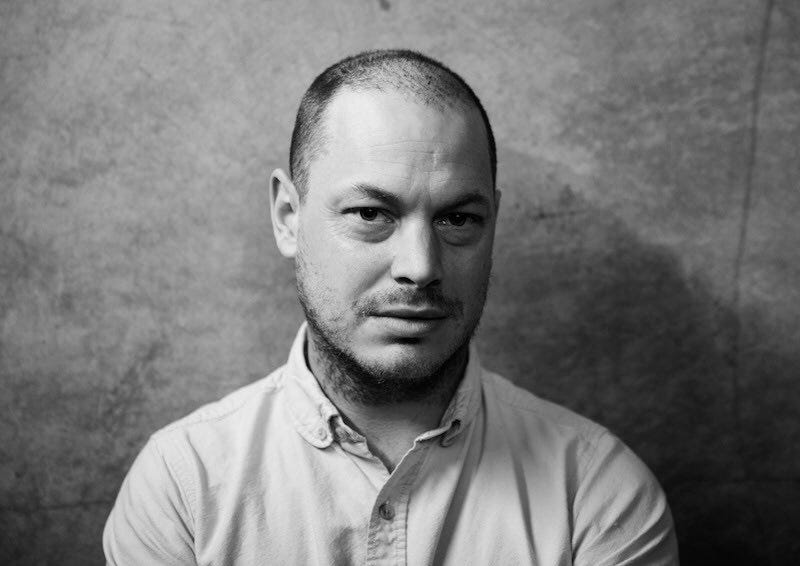
My conversation with the author of long-form narrative non-fiction articles of which nearly 20 have been optioned or sold for their movie rights.
Last January, I taught my Pixar and the Craft of Storytelling class through ScreenWritingMasterclass.com. One of the enrollees was Jeff Maysh. When I found out he wrote “long-form narrative non-fiction” articles for magazines such as The Atlantic, Playboy, and The Daily Beast, I reached out to him and thus began a series of emails. It turns out, Jeff’s area of focus is crime writing.
As he continued to publish articles which Hollywood snatched up for their movie rights, I figured it would be a good idea to interview him to learn more about what he does and how it is he has been so successful. In fact, his latest article “The Dine and Dash Dater,” a culinary caper about an online dating bandit and the romance-novelist-slash-cop who caught him, was just published yesterday. Like many of his stories, it feels like a perfect fit for Hollywood.
Here is my interview with Jeff Maysh.
Scott Myers: Jeff, I’ve wanted to talk to you for a long time because someone who writes long form, narrative non-fiction, I think there’s some recurring themes in your stories. One of which catches my eyes, as a screenwriter, is that they’re high concept.
They’re stories with a strong hook, such as perhaps your most famous one, “How an Ex-Cop Rigged McDonald’s Monopoly Game and Stole Millions.” The rights to that story, which appeared in “The Daily Beast,” sold for a reported $350,000 against a million dollars with Ben Affleck attached to direct and Matt Damon to star.
Obviously, I want to talk about that story and several others you’ve written, but first, some background from your website.
It says, “Jeff Maysh is a British-American non-fiction writer based in Los Angeles. He writes about unbelievable true crimes for publications, including The Atlantic, BBC News Magazine, Los Angeles, Playboy, Smithsonian, and The Daily Beast. Jeff’s subjects have included bank robbers, spies, wrestlers, undercover cops, fake cheerleaders, pornographers, and candy smugglers.”
Let me do a bit of sleuthing here. Let’s figure out how you wound your way into this type of writing. You were born in Nassau, Bahamas, is that right?
Jeff Maysh: Correct, yes.
Scott: What was your family doing there?
Jeff: The casino industry. My dad was a croupier in the casinos.
Scott: Really.
Jeff: I was born down there in Nassau. Both parents are British. I moved back to England when I was about six. I grew up in South London.
Scott: How early did you develop an interest in writing?
Jeff: I was really young. It was the moment that my dad gave me a VHS copy of Superman. I would have been about six. I was born in ’82, just to clear that up. I was obsessed with the film. It was my earliest memory of storytelling.
I know it’s a comedy, but I think it might be one of the greatest films of all time. We only had two videos in the house. I had Superman and my sister had Annie. They were both hammered. We watched them back-to-back.
I still refer to the narrative structure of Superman every day when I’m writing.
Scott: The narrative structure of Superman really had an imprint on you.
Jeff: It’s the ultimate example of the hero’s journey, but I wouldn’t know what the hero’s journey was for many years.
Scott: How did you end up gravitating toward writing true crime stories?
Jeff: I came to America in 2010 as a foreign correspondent. I was covering major breaking news from the West Coast. I think they call the beat ‘West of the Rockies.’ At that time, 2010, it was basically the massacre beat. I covered the Aurora, Colorado, Batman massacre. I was also in Sandy Hook.
The big stories of the day were always crime. It chose me, although I had done plenty of crime reporting back in England. I’d written a book about a bank robber. I think I wanted to come to America because your criminals are so cool. Your crimes are so much more unbelievable in America. I was drawn to it.
Scott: I wonder, too, whether it was a little bit of that Superman who wanted to catch the bad guys kind of thing going on there.
Jeff: Absolutely. It’s no surprise that I watched Superman and end up becoming a reporter like Clark Kent. When you’re that age, your formative years…you’re so impressionable.
Scott: Are you a freelance writer?
Jeff: Yeah. I’ve been freelancing since 2013. I mainly write for The Atlantic.
Scott: I think many people would be curious to know, what’s a day in the life of a freelance non-fiction true crime writer.
Jeff: Cripes. It varies. The other thing that I’m kind of known for, is that I’m not a full-time journalist. I’ve had a day job for five or six years. I work in the tech industry. Actually, nine to five, I’m a technical copywriter. Most of my reporting and researching is done outside of office hours. I guess that’s a little unusual.
Scott: Do you do that at night, in the morning, weekends?
Jeff: Being on the West Coast is great. I do my calls in the morning before I go to the office. If I have to, I’ll set up an interview at lunchtime. The hardest part is the travel…I said this year, I was only going to do US stories. So far I’m looking at the Philippines, Germany, and Manchester, England!
Scott: I don’t want you to give away any trade secrets, but could you tell us generally about, how do you go about discovering these stories you write?
Jeff: I do work with a producer, David Klawans, who produced Argo and Nacho Libre. He often tips me off to fantastic stories that he thinks would make brilliant magazine articles. He has a killer eye for a story.
It’s also luck. It really is a mixture of luck and being in the right place at the right time.
I’ve found amazing stories at the Fairfax Thrift Market in Hollywood. On a Sunday morning, they’ve got a vintage magazine stall there. I flipped through a magazine one day, found a story about a female wrestler in a vintage wrestling magazine that then became a story called “The Legend of Panther Girl” that is being developed by Channing Tatum.
Scott: What elements are you looking for in a potential written-by-Jeff-Maysh story?
Jeff: It’s got to have this ‘wow’ factor. There are so many bank robberies out there. Not every bank robbery can be a longform story. I’m looking for the “holy shit” element. You talk about the McDonald’s story. It’s got to set your hair on fire. I remember early reporting of the McDonald’s story, when I spoke to one of my sources, and she said to me: “McDonald’s didn’t want anyone to know that the mafia was involved.” My hair was standing up on my arms. You get this feeling, this spidey sense of, “Oh boy. Yikes.”
I’m sure you get it too. You teach this stuff. I get pitched a lot of stories and people send me a lot of ideas. 99 percent of them don’t have the special sauce.
Scott: In a way it’s almost like you’re a development executive, because that’s the same thing in Hollywood. They’re looking for that wow factor, the “holy shit” thing.
Jeff: Yeah. It’s funny, because I live and work in Hollywood. I can speak both languages. Earlier, I can’t remember what you said. It was Hollywood-speak.
Scott: High-concept?
Jeff: Yeah, high-concept. That’s what my stories are in Hollywood-speak, but I wouldn’t have ever called them that in the world of journalism. And yeah, I’m looking to be surprised. I only really write two or three stories a year, so I pick the ones that are going to be blockbusters, if you like.
Scott: What about research? What are keys to your process?
Jeff: Just never giving up. I’m quite tenacious. It’s getting people to talk that don’t want to talk. The luxury that I have in writing in such a slow way is that I can wait for months to get someone to talk. I’ll write a letter by hand and I’ll send it out. I’ll let them keep the letter for three weeks and I’ll call back.
Sometimes it takes six months to get someone to talk, and a journalist turning over a story every day is never going to get the access that I get. The McDonald’s story had been written about hundreds of times. No one had got the main characters. No one had got the organized crime element to it.
It’s patience, really, I think, is the short answer to that.
Scott: I’m friends with several documentary filmmakers, and in fact, here at the DePaul University School of Cinematic Arts, some of my colleagues are doc filmmakers. They generally describe their process as one where they may go into a project with a preconceived notion about what the story is. As they go through production and even the post process, the story almost invariably changes.
Do you have that experience? Are there stories you’ve written which are just laid out for straight from the get-go?
Jeff: I’m a ferocious planner and storyboarder. I very rarely get surprised. It’s an organic process. In the process of reporting, you’ll find new sources and maybe bring new avenues of reporting and storytelling. I would say I spend at least 80 percent of my time structuring and storyboarding, because I think all writing really is structure.
Scott: How about the business side? I bet people are curious about that. Someone who writes longform narrative non-fiction, do you pitch projects to publications? Do magazines pitch projects to you? Do you have an agent who is helpful in that or acts as an intermediary? Are you doing one-on-one with the publications? How does the business side of things work for you?
Jeff: It’s different every time. My brilliant agent Joel Gotler does the film and television stuff. I have an attorney. He handles the contracts. I’m pitching magazines directly. You may have heard the magazine industry is not the healthiest it’s ever been. I certainly couldn’t make a living on magazine writing alone. I sometimes don’t break even on a magazine story.
Every time, it’s different. I’m normally the one formulating the idea when I go to the magazine. Things have changed a little bit since the McDonald’s story. I’m now able financially to fund my own reporting. I’m now reporting stories in full before I go to magazines. It’s a preferable way of doing it.
Scott: You’ve won at least five awards at the Southern California Journalism Organization including Best Crime Writing twice. You just told me before we started chatting that you have now up to 16 stories currently optioned for film including “The Wedding Sting” at Paramount.
You have an Amazon best-selling e-book called the “The Spy with No Name” that’s got a development deal with Fox Searchlight, and of course the aforementioned McDonald’s article which spawned a bidding war for the film rights in what the Hollywood Reporter said was, “One of the most lucrative rights deals for a single article.”
I’d like to go through some of your previous stories, if you don’t mind, and see if you’d share with us what caught your eye. Maybe some of the twists and turns you had in researching and writing the story.
Let’s start with a story I read before we may have met or maybe it was in the Pixar class you mentioned it. I can’t remember exactly. Back in October 2015, there was a piece on Medium called “The Murder House,” which I found incredibly compelling.
It’s described as: “There is a mysterious mansion, a murder-suicide, paranormal activity. This is the true story of 2475 Glendower Place.” What was the wow factor there for you? Were there any things that surprised you researching and writing that?
Jeff: The main thing that surprised me was that not a single writer in Los Angeles had told the story. It took a guy from London to turn up and realize that you have one of the most fascinating haunted houses right here in the middle of Tinseltown. It’s one of the things everyone knew about, but no one knew about.
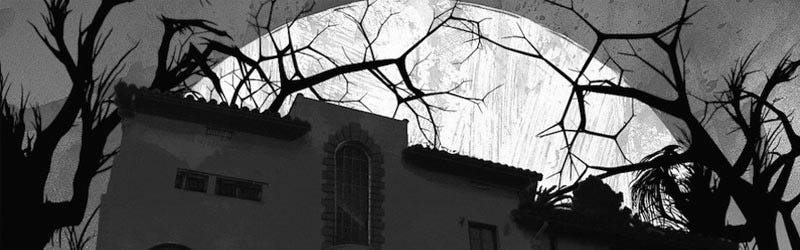
I think I was the first person to really dig into it to go into the story as an investigative journalist, to pull the coroner’s reports from the 1950s. No one had ever gone for the coroner’s reports to find out how the people died in that house.
It was just a fascinating story. I pitched that to plenty of magazines in Los Angeles and no one took it. That’s how it ended up on Medium. It then went on to become one of the most read stories of that year, and again, a movie deal for that.
Scott: Where is that set up?
Jeff: It’s at a production company called Coalition.
Scott: I know you’re a football fan. By football, English, we call it soccer. I think you’re a Tottenham supporter, is that right?
Jeff: Yes.
Scott: How about “Swan Song”? An article which appeared in Howler and ESPN.com on March 2017?
That’s described as, “Beginning in the late ’90s, Swansea City’s mascot was accused of all manner of foul play from inciting riots, head-butting a referee, to attacking other mascots, even a rival coach, all while saving the club’s financial fortunes. Then the nine-foot tall bird became the prime suspect in a serious assault.”
How did you stumble on this story? What do you remember most of researching and doing that one?
Jeff: I’d known about the story for years from when I lived in London. I was aware of the story. I’m really fascinated about disguise. It’s a theme in a lot of my stories where I’m obsessed with people who are leading double lives. I knew that Cyril the Swan had been arrested. I knew he’d appeared in court in the uniform.
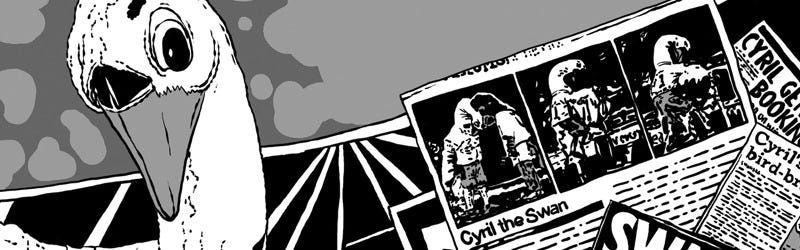
It had always bugged me. Who was the guy in the costume? One day I looked into it, it was the groundskeeper. I don’t know what you call that in America. The guy that looks after the field.
Scott: Yes, groundskeeper.
Jeff: Groundsman, I think you call it. I called him. I flew over to Swansea in Wales. I spent a few days with him. I wrote it really straight. I wrote it like a true-crime caper, interrogations, a conviction, all set against this…Swansea’s like the Detroit of Wales, a post-industrial city. Weirdly, that is one of three stories that I’ve written that wasn’t optioned for film or television.
Scott: You mentioned double lives. You’re obsessed with them. You’re living a double life. You work a tech job and you’re an investigative journalist.
Jeff: Yes. I guess so. Take me back to Clark Kent and Superman. If you were going to be an amateur psychiatrist, that movie did have such a deep impact on me.
Scott: A lot of your stories, because they’re about crime, people get busted, or die, or whatnot. This is an interesting one. It’s got an upbeat ending.
“A Catfishing with a Happy Ending,” a story which appeared in The Atlantic in October 2017. “Emma Perrier was deceived by an old man on the Internet, a hoax that turned into an unbelievable love story.” That was the winner of the 60th Annual Southern California Journalism Award. What’s the backstory on that story?
Jeff: I love that story. This is a story that was huge in England. It was in all the tabloid newspapers in England. It didn’t really get picked up here in America. As the subheading says, a woman is catfished by an older man in the Internet and tracks down the real man who appears in the fake photos. Spoiler alert: They eventually fall in love.
It’s Shakespearean, which is odd because some of it takes place in Stratford-upon-Avon, the birthplace of Shakespeare. I spoke to the catfisher, the bad guy. I told it over 6,000 words. That was a seriously viral story that was quite overwhelming when that went around. A lot of people were reading that. It was on the television.
Netflix is developing it as a kind of elevated romantic comedy, I think.

Scott: Netflix is single-handedly bringing back romantic comedies.
Jeff: Good on them. I love romantic comedy. I’ve just published my latest true crime story, which is also a romantic comedy, it’s called “The Dine and Dash Dater,” for The Daily Beast. It’s about a bizarre police investigation into an online dating bandit in LA who conned women into paying for dinner. I love unusual cops, and this story features an investigator who leads a double life as a romance novelist, whose nickname is “Detective Casanova.” You couldn’t make it up! It’s very me.
In a weird way, I’m a dating correspondent. “The Wedding Sting,” is also a romance. And the catfishing thing. I like to think I write at the intersection of love and crime, where those two things combine.
Scott: We got to talk about the McDonald’s tale, which caused an incredible flurry in Hollywood. I remember reading about it all over the trades. You knew about this story and everybody had written about this story, but as you said earlier, you wanted to dig down a little more deeply into it.
How did that process go about that it ended up with Daily Beast and becoming such a phenomenon?
Jeff: Where do you want me to start?
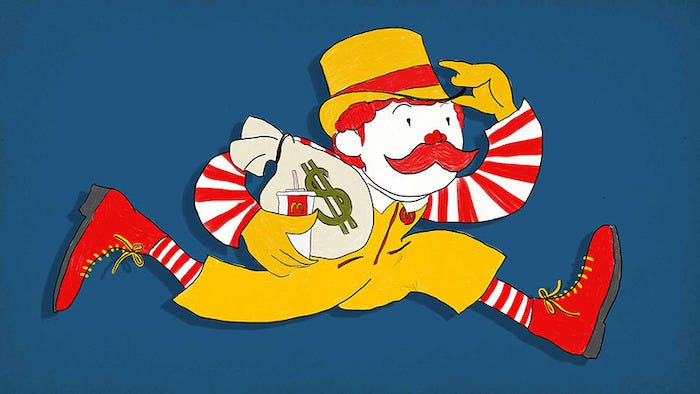
Scott: You brought us up to date, where you knew that the story had been written about, but you knew there was this angle into it that you saw that hadn’t been explored.
Jeff: Yeah. A few people had done shorter articles about it, but I went and got the court documents in Jacksonville. I knew there were 50 defendants. I knew there was more to it. I could sense that there was more to the story than had been reported.
It’s just one of those things where in magazine-land today, it’s hard to get a commission for anything historical. A lot of editors, they think “Oh, the story happened in the ’90s. No one’s going to be interested.”
There are so many untold American crime stories out there that will actually create news like the McDonald’s story did — they broke into Fox News to talk about it — and hopefully the success of that article has allowed more writers to work on more historical crime stories.
Scott: You do have a lot of stories that are historical in nature.
Jeff: Yeah. I don’t like doing current stuff, because then there’s ten other journalists on it. When I was on the McDonald’s story, it was just me. I was quite lucky and I could just work in isolation, whereas if I was working on a Donald Trump story, I’m not going to be alone.
Scott: Can we talk about the bidding war? As I recall, the article went live and the deal happened within a matter of days.
Jeff: Yeah. It was. It was quite exciting. It was also quite stressful, but yeah, I think the best team won. I’m assisting the screenwriters right now, who are two very talented guys, Rhett Reese and Paul Wernick, who wrote the Deadpool movie.
I was on a call where they pitched their take. I don’t know if I can say this. I probably can’t. I was absolutely blown away. The way they told the story, I felt like I’d experienced the story all over again. I was that blown away. It was that kind of movie…I’d rush to the cinema to see this.
Scott: That’s good to hear. You’ve optioned 16 stories as movie deals. Have you ever tried your hand at screenwriting?
Jeff: No. I get asked this all the time. I’ve got so much respect for screenwriters, but it’s a muscle that I’ve never used. I want to say I’m going to try. I think I’m just waiting for the right story that I feel such a personal connection to that I wouldn’t be able to hand it over to a screenwriter.
I think practically speaking, the studios that pay such a gross amount of money for my work, I think part of that agreement is that they get to pick the screenwriter that they’d like to use. I know studios don’t like to take a risk on either a) journalists and b) first-time screenwriters when they’ve invested a lot of money into a project. I’m cool with that.
Scott: That’s the one nice thing about screenwriting, is you can always just write a spec script and if it’s there on the page, then there you are… you’re a screenwriter.
You talked earlier about how you’re heavily structured. You’re really focused on storyboarding and breaking the story down. That’s an obvious translatable instinct to screenwriting, because screenplays are so structured. Are there other skill sets or instincts you think that you have or maybe nonfiction writers may have that would be translatable over into screenwriting?
Jeff: Yeah, I think it’s like the psychology of storytelling that I’m into. How do I put this? How to affect the emotions of the reader.
I recently gave a talk in England at Goldsmiths, the journalism college in London. I spoke about the hero’s journey. Absolutely no one in the room had ever heard of Joseph Campbell or the hero’s journey.
Scott: Seriously. Wow. That’s shocking.
Jeff: Not a single hand went up. It was like I was performing witchcraft up there. They were digging it. Anyway, one gentleman in the front row had heard of it, Barry Newman of “The Wall Street Journal,” another American, a narrative guru. After I laid out the hero’s journey, he put his hand up and asked, “But how does it affect the reader?”
I’d always thought of the hero’s journey and the three-act structure as a cheat sheet, a painting-by-numbers way of structuring the perfect story. Actually, when we look at each individual component, they’re designed to instill a different emotion in the reader, the point of no return, into the belly of the beast, the return. It’s opportunity, sacrifice, fear.
We all identify…we’ve all gone through feelings like that, of entering a brave new world. Suddenly, I think about coming to America for the first time. Being mentored. We’ve all had a mentor.
What you forget when you spend so much time creating stories is that you lose touch with your story-reading ability or your story-watching ability, and you forget how when you were six years old and you watched Superman, and how you felt when he had to sacrifice his powers for love, and he chose Lois Lane over being a superhero. You forget how you experience the world.
That really refreshed how I look at storytelling. Now when I’m storyboarding, I’m thinking more about the reader.
Scott: That’s actually some really great advice for any aspiring writer.
Jeff: Never forget the reader.
“It’s got to have a wow factor.” One of many takeaways for screenwriters, but perhaps the most critical one. Jeff considers dozens of potential story ideas every year, but only writes two or three which he feels like has the potential to be a Hollywood movie. Screenwriters writing on spec need to have that same mindset. What is the story’s hook? Its high concept? Its wow factor?
For 100s more Go Into The Story interviews, go here.