Go Into The Story Interview: Jake Disch
My interview with 2023 Black List writer for his script The Adults in the Room.
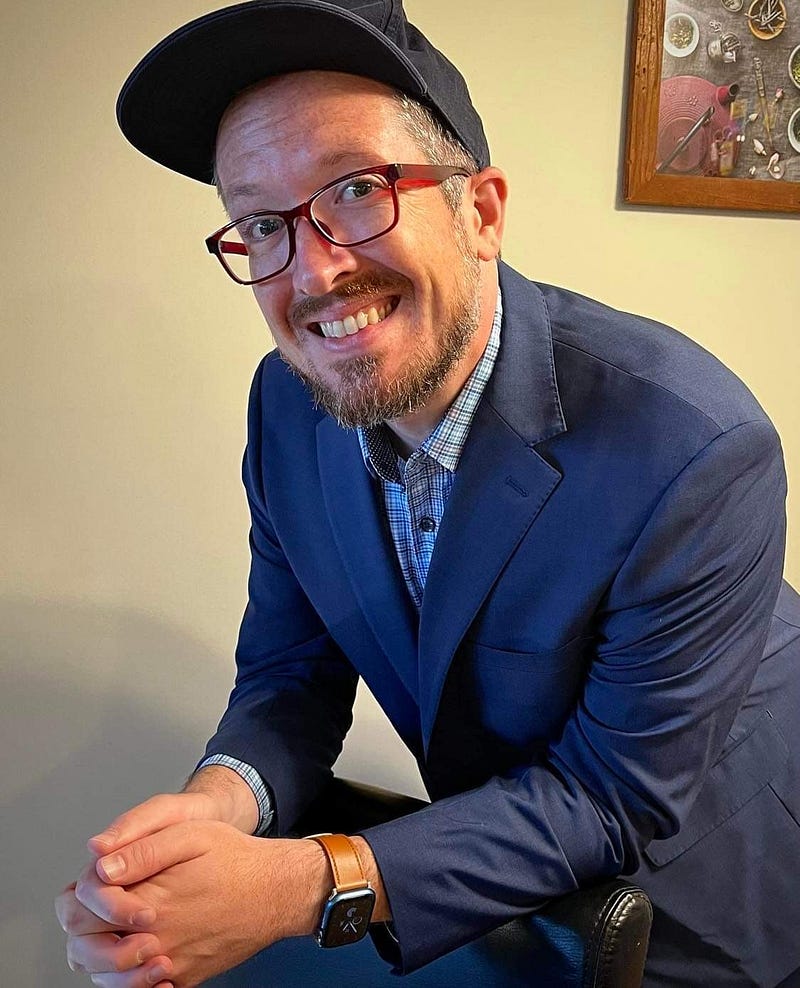
My interview with 2023 Black List writer for his script The Adults in the Room.
Jake Disch has made the annual Black List two times: In 2018 for his script Gunfight, then in 2023 with The Adults in the Room. Recently, I had the opportunity to chat with Jake about his creative background, the craft of screenwriting, and the challenges associated with writing a story based on actual historical events.
Here is the complete interview with Jake.
Scott Myers: Jake, congratulations on making the 2023 Black List. That must have been exciting.
Jake Disch: Yeah, it’s exciting, and it’s a huge honor. Just knowing people are reading my stuff, much less enjoying it enough to remember it months later.
Scott: This was the second time for you.
Jake: Yeah, I was on it in 2018 as well.
Scott: Was it any different this time around as compared to the first time?
Jake: The first time, there was a bigger party. [laughs] They’ve scaled the party back after COVID.
The first time, I was more naive about what exactly it means to be on the Black List, what it can do for you, and what it can’t do for you. I was like, “Aha, I’ve arrived.” Nobody pays you to be on the Black List.
This time around, the main difference for me was I was ready to maximize the opportunities it gives me instead of just being happy to be there.
Scott: Let’s jump back in time before all this Hollywood stuff. You’re from the Midwest. Milwaukee, I think.
Jake: I’m from central Wisconsin, a little town called Beaver Dam, about an hour and a half from Milwaukee.
Scott: Wait, I remember now. You went to the same high school as…what’s his name, Ric…?
Jake: Ric Flair. The most notable alumnus from my high school is Nature Boy.
Scott: That’s pretty wild. Growing up in Wisconsin, how did you become interested in screenwriting?
Jake: My dad was always a huge reader. He read three or four books a week. He always had a stack from the library. I grew up reading a lot, and my town had a really cool, or still does have a really cool community theater program. People come from all over the county and even a little bit farther than that to participate.
When I was a kid, I was in these children’s productions. I was acting from a young age. Between reading and acting, I got really interested in writing for actors.
By the time I got to middle school and high school, I was writing plays. I had always been a huge fan of film. It never really crossed my mind that that could be something to pursue until I was probably in college.
I majored in theater as an actor and realized I am middling at best in that, but that people seem to really respond to things I wrote. So I pursued that. I wound up going to Northwestern to get an MFA. I went in as a playwright and I came out as a feature writer.
Scott: I got a couple of points of connection there. My nephew went to Macalester. I think that’s where you went to college, right?
Jake: Yeah, it was. Awesome. It’s a great school, I loved it.
Scott: Of course, Northwestern, I’m here in Chicago. I’m quite familiar with Northwestern’s program. You went in as a playwright and came out a screenwriter?
Jake: Yeah. I know I didn’t submit any material for the screen for my application. It was all plays, and I fell in love with screenwriting while I was there. Again, I’d always loved movies and I was always interested in screenwriting, but I never knew how to start until I had a few classes and figured out how it worked.
Scott: The first script you had that made the Black List, “Gunfight,” here’s how it’s summarized: “This is a satirical take on the unbelievable but true story of how the NRA changed overnight from an apolitical gun safety and marksmanship club into the most powerful and unhinged lobbying group in Washington, DC.”
Could you talk a little bit about the genesis of that project?
Jake: That was the first script I wrote that was based on a true story. I had heard the story of the Cincinnati revolt, which is when a few hardliners inside from the NRA went to the annual meeting of the NRA members in Cincinnati in 1977.
They basically used parliamentary procedure at the meeting to stretch the whole thing to nine hours long and vote themselves into power and kick out the old guard who wanted to keep the NRA as it was, an outdoor sports, marksmanship, and gun safety club. There was even talk of changing it to the National Outdoor Association and keeping rifle out of the name.
These guys took it over and went on to endorse Ronald Reagan as the first presidential candidate the NRA ever endorsed, and the rest is obviously history there.
I knew about the story. To me, the thing that was so interesting about it is, you could trace so much of our national gun debate back to that moment. It’s a real linchpin for how we talk about the Second Amendment.
I thought it just seemed like such an important story, and I couldn’t believe that nobody had made a movie out of it before, not to say that I’m the first to try. In fact, I know there was at least one other script the same year “Gunfight” went out that was about the same thing.
But when I first heard the story, I thought, “Oh, I don’t write true stories. I’ve never done that before, I’m not that guy.” I was sitting on it for about eight months, and then the Parkland shooting happened. That kind of thing, my reaction to it every time is just this anger and frustration because it’s like the solution seems pretty clear and nobody does anything.
I thought about the story again and how nobody’s telling it, and I thought, “I guess I’ll just have to do it myself.” A lot of research and a lot of rage typing.
I saw it very much as these guys who basically pulled a heist and what they stole was the entire interpretation of the Second Amendment for the next 50-plus years.
Scott: Let’s talk about the script that made the 2023 Black List, “The Adults in the Room,” which is another “based on a true story” project. Here’s a plot summary.
“On November 1st, 2022, FTX was valued at $32 billion. On November 11th, 2022, 10 days later, it filed for bankruptcy. This is the incredible true story of the meteoric rise and catastrophic fall of FTX and its enigmatic founder, Sam Bankman-Fried.”
Obviously, this was a huge news item. Was there a specific moment in tracking this where you started to think, “You know what? That sounds like a great movie?”
Jake: Honestly, I had just signed with new representation, and we were looking for the first thing we wanted to work on together. They sent me an article about Sam Bankman-Fried. I knew a little bit about crypto. I knew almost nothing about Sam Bankman-Fried.
They sent this to me right as the crash was happening. It was still in progress. I read about it, and my attraction to the material was not really about crypto. It was this guy, Sam Bankman-Fried, and how people just bought in so hard to everything he was selling. A lot of that was because of his philosophy of effective altruism.
I went down the rabbit hole of effective altruism first, thinking like, “This sounds like a good, noble thing. Commit your life to making the kind of money that can help you create positive change.” I think that when you put it into practice, it becomes troublesome, obviously, as we saw with SBF.
Whether or not you believe he was entirely genuine with it, I guess, is another question. That’s where I came in. Even though the guy who invented it is Scottish, I saw this philosophy of making as much money as you can to make the world a better place, it’s a very uniquely American idea of doing good. It’s all about how much money you can have.
That was my way in. What is this idea? Why is it so attractive? What happened here that made it all fall apart?
Scott: Yeah, the movie, a couple of comps come to mind when you read the script, obviously “The Big Short,” the way that they explain complex financial things, but then the “The Social Network,” because Zuckerberg and then this SBF character. I remember that moment in “The Social Network” where he says, “You think a million’s sexy? No, billions.” Your guy’s like “a trillion.”
So your reps at Bellevue, they sent you an article?
Jake: Yeah, they sent me a couple of articles about SBF and FTX as it was collapsing and said, “This feels like your kind of world.” I said, “I hate crypto, but I’ll take a look at it.”
SBF has a…there’s a reason we all keep talking about it. You can’t take your eyes off him.
Scott: When they said your world is already…you had done “Gunfight,” which was based on a true story. Had you done other things like that based on true stories? Was it just based off the fact that you’ve done “Gunfight” that they said, “Hey, you may be interested in doing this?”
Jake: Yeah. I had also written a true crime, comedy thriller that is set up over at XYZ currently. They had read that as well. All three of these scripts have in common this kind of big, brash, very ambitious, let’s say just weird white guy with a lot of hubris attached to him.
SBF lined up right in that sweet spot of the other two main characters in those two projects.
Scott: Let’s, let’s talk about this enigmatic character, your story’s central character, Sam Bankman-Fried. This is how you introduce him in the script. “Sam Bankman-Fried, 30, aka SBF, with hair like he stuck his finger in an electrical socket and a nervous livewire energy to match.”
Jake: It’s so easy to look at the story, and I feel like a lot of people leapt to this judgment, that he was entirely a fraud, that the effective altruism from the ground up was a front for him to be able to take this money and pull off this scam.
But the great thing about most of these people from a writer’s perspective is they all love to talk. They’re on podcasts, they’re doing interviews, even after this, obviously, SBF was all over the news, doing every interview. Anyone who wanted to talk to him, he talked to.
There’s tons of content out there to pull from, and I never got even the smallest hint that this was a scam from the start, including from people I talked to who knew him. He really seemed to live and breathe this stuff.
That was really interesting to me, that the immediate reaction of the public was, “Oh, this guy is a fraud. He lied about trying to help people and stuff.” What he really is, is a gambler. He will keep flipping a coin over and over and over until you take the coin away from him.
His reasoning is that, “If you take enough risks, often enough, you’re going to have enough that pay off and you will win in the end,” which we saw didn’t work out. He looks at everything analytically, mathematically.
I found him, as I was reading about him and listening to him, he’s honestly not that mysterious, I don’t think, when you really start trying to dig into who he is.
He’s an absolute math whiz. He’s the guy who doesn’t seem to know how to show he cares about people so he found a quantitative way to become a good person. He wanted to feel like a good guy. He said, like, “I can objectively be a good person using this effective altruism angle and the money that I can make from it.”
That’s who I think he was. I do think there are plenty of stories about him being not a nice guy, if you went against him and things like that. I do show those in the script.
I think that anytime you go from living in an apartment with six people in Berkeley to a penthouse in the Bahamas, and naming the Miami Heat Arena after your company and all this other stuff, you’re not going to be the same person. I think there’s a lot of ego, there’s probably some narcissism involved. I’m not a psychiatrist, so I shouldn’t go too far down that road [laughs].
I think, earnestly, he wanted to do good. His own sense of risk versus reward led him down this path. I found him really interesting because of that and his openness to talk about this stuff.
Scott: Let’s talk about this other character, Nishad Singh. The story is told through his perspective. This is how you introduce him, “Nearby, Nishad Singh, 27, paces, phone to his ear. Lanky with messy black hair and glasses, Nishad’s a nerd’s nerd: fast-talking, smart, and conflict-averse. Usually.”
There’s a wonderful bit of business where his glasses are broken and he’s got a chopstick, right?
Jake: Yeah.
Scott: Then there’s a sign of his own journey. At some point he gets a new set of glasses, and it’s like, “OK, so…slippery slope.”
Jake: The chopstick thing is real. Even when he was a millionaire, he never replaced his glasses.
Scott: He was the director of engineering at FTX. Was he another podcast guy?
Jake: Not nearly as many as with SBF, but yeah, he was around…I haven’t checked to see if they’ve pulled it down yet, but FTX had its own company podcast. SBF was on it multiple times. Nishad was on it. Caroline Ellison was on it. Shaquille O’Neal was on it. Steph Curry was on it. Incredible stuff.
Nishad, the reason I picked him as the eyes of the story is that he, by all accounts, according to everything I’ve read, everything I’ve heard, during and after the trial even… I wrote the script before the trial, but Nishad seemed to be the most caught off guard, the most blinkered. His glasses were the most rose-colored about this stuff.
He was genuinely crushed and felt betrayed by everything that happened, whereas everyone else seems to have, somewhat at least, known the danger that they were wading into as they were doing it. Not to absolve him because it’s certainly not impossible that he knew more than anyone’s let on, but he seemed like the most relatable of the group.
I knew it couldn’t be through SBF. You can’t make him the central guy and be with him in every scene because he’s frankly exhausting to be around. [laughs] That’s how I landed on Nishad.
Scott: In a way, it’s its own version of another movie that comes up, “The Wolf of Wall Street”, where you got that Donnie Azoff character (Jonah Hill) in relation to Jordan Belfort (Leonardo DiCaprio), the story’s central character.
That was an interesting choice that you made, because you’re not only telling the story through the perspective of Nishad, but he’s being interviewed by these two US lawyers.
Jake: Yeah.
Scott: That was great because it allowed you to jump back and forth between the present and the past and really highlight those key excerpts, chapters from the past.
Jake: The story needed a framing device. You needed a way to be able to explain all this complex stuff without just pumping the brakes on the whole movie.
Yeah, it’s somewhat convenient, you have these US attorneys talking to him, but also that lets us have the US attorney stand in for the audience and ask the questions the audience would be asking in a scene where these guys are talking fluently about crypto.
It’s totally serendipitous, but Gary and Caroline both flipped pretty quickly.
Nishad didn’t flip, but I had already decided we needed to use him…The first draft of the script actually had three points of view, and it’s Caroline, Gary, and Nishad. We were doing a little bit of a Rashomon thing, but that complicated an already complicated story.
I settled on Nishad, who hadn’t flipped and talked to the attorneys yet. I thought, “It’s probably only a matter of time. He’s going to do this.” If you look, the last date in the script is somewhere on March 23, 2023, or something. The script went out the first week of April.
He flipped as we were finalizing the last draft of the script. I was like, “Oh, thank God, I don’t have to just pretend it’s true anymore.”
[laughter]
Scott: That was a little bit of a gamble on your part.
Jake: You’ve got to gamble. The whole script is a gamble because the journalism’s still coming out. I’m putting the car together, and it’s already on the road. I was reading breaking news and changing my outline day by day as things were coming out.
At a certain point, you just think…You read the same things over and over and different takes on the same thing, then you start thinking, “It feels like we’re circling the truth here.” I have enough, based on all the journalism aggregated and the people I’ve spoken to, to take a crack at this.
Trial happens. I got some things wrong. I’m not afraid to admit it. But I’d say I got like 70 percent of it right.
Scott: Well, yeah. This is an ongoing concern that screenwriters have. First of all, this is like a really hard thing to do, adaptations, period, but adapting real life and, in your case, adapting it as it’s unfolding in some respects, right? It’s like, you’re not doing a documentary.
Jake: The whole time I was writing this, my managers, John and Zach, would remind me often that Mark Zuckerberg was already dating his now wife when he launched Facebook, and that iconic brilliant opening scene in “The Social Network” is made up out of whole cloth, and his entire motivation for starting the company in that movie is made up.
Is the movie accurate? No. Does the movie feel any less emotionally real and resonant because it’s not accurate? Also, no. Yeah, something to keep in the back of my mind anytime I tackle a true story.
Scott: Sorkin, wanted to tell the story of a guy who creates the greatest social network. He himself is antisocial. That’s why he went that route.
Let’s talk about some of these other characters because you got Nishad, who really buys into this, this whole thing on effective altruism. Caroline and Gary, could you maybe talk about these two characters and what their roles were, their personalities?
Jake: Caroline is a very interesting character. Somebody found her Tumblr blog immediately after the whole company fell apart. There’s a lot of really interesting, strange stuff in there.
There’s a bit in the script where she and Sam get coffee in San Francisco, and she’s already dressed to go to a live action roleplay. She’s dressed like a wizard or something. That’s real.
You listen to her talk, and she has this cadence. A lot of these people talk really, really, really fast because they are used to working really fast. She’s notable in that she talks a little slower. And she and Sam were dating for a lot of the time. By all accounts, she was really, really into Sam. You have Nishad, the acolyte who buys into the effect of altruism of it. Then, Caroline, who was not a natural born trader like Sam was. She was into effective altruism and she was into Sam. You have that other angle of the romantic eyes on Sam. So in a few ways she almost feels like a little bit of an outsider.
Then, Gary is just like an old high school math camp friend of Sam’s. He’s the one who never, that I could find, did any kind of public speaking, podcast, anything.
I did read Michael Lewis’s book well after I’d finished the script. In the book, Michael Lewis says that he could never get Gary to say anything more than one word in response to any question. I was very happy to read that because I made him very quiet and deadpan in the script because I had no idea who this guy was.
Reading that book and finding out he’s a very quiet and deadpan guy made me pretty happy. It also felt like everybody else talks so much in the script. To have one guy who can give a one word answer is really helpful just for dialogue pacing purposes sometimes.
[laughter]
Scott: This Sam character, it’s almost like if it hadn’t been crypto, it could have been easily some sort of pseudo-religion, like a cult, because he’s got that kind of personality.
He says, “Because we’re helping people, and you can’t fix the world with a screwdriver. It’s all about taking big risks, breaking systems, and rebuilding. Fuck a billion dollars, fuck a screwdriver, we need a sledgehammer.” He dreams big. People got caught up in that dream, right?
Jake: Yeah, and I think it’s easy to. It happens over and over.
Scott: There’s this dynamic with Nishad, where he’s in the present and the lawyers are asking him questions. Then, you go back into the past, and you see the next sequence. Then, you come back to Nishad, the lawyers say something to him like, “So you didn’t realize this was…?”
[laughter]
He says something like, “Well, in crypto, there’s lots of stuff that seems illegal but isn’t.” It’s starting to dawn on him, like, “What was I thinking?” Even in the course of that conversation he has with the lawyers, there’s an arc going on there where he’s realizing, “Yeah, I really did buy into the…sip the KoolAid here.”
Jake: The way they sent money back and forth between the two companies, I think it’s been proven now that they weren’t the only crypto trading company to be doing that kind of thing. There’s certain things that just never fly in traditional finance that are like norms in the crypto space.
I am a crypto skeptic, I didn’t know much about it going into the script. All the research I did, did not make me less of a skeptic.
I wanted to make sure over the course of the script that I at least got my own voice in there. That line in particular is definitely part of my thoughts, like, “Maybe things that seem illegal but aren’t are still bad to do.”
Scott: It’s a roller coaster ride. You track in the story, they get that initial big funding from the guy who was a Skype dude, and then at some point they decide, “Well, we need to go to another country.” They end up in Hong Kong, and then eventually they go to the Bahamas.
The rationalizations of these people is amazing. Sam saying, “We need to have this penthouse, we need to have this stuff to show the people, potential investors, that we’re serious, we’re not like six guys in an apartment in Berkeley.” The allure of it all, you really get a sense of how powerful the allure of money is in this story.
I’m reminded there’s a biblical verse, 1 Timothy 6:10, which says, “The root of all evil is the love of money.” I thought, “Man, that’s the motto for this story.” Maybe talk about that slippery slope that Nishad goes down and the allure of wealth as you’re writing this thing.
Jake: I think that’s the whole story, is the allure of wealth. These people don’t think they want money for themselves. They think they want to help, but when you become wealthy enough, all of a sudden, you are surrounded by more and more money. People want to give you more money when you have that much money.
People also want to take your money, obviously when you have that much money, but like, Tom Brady, Giselle, Steph Curry, and Larry David don’t come knocking on your door because you have one million dollars. They come because you are somebody they can profit from.
It’s all about the money. I think a lot of the first half of the script is this power fantasy of, “Wouldn’t it be awesome if you could just spin money out of thin air? Wouldn’t it be awesome if you and your friends could go anywhere in the world and people would welcome you and love you, and want to do business with you?”
But a big part of my operating thesis for this script is that no one goes from living in an apartment in Berkeley in 2017 to being one of the richest people on the planet in 2022 without hurting a lot of people.
I don’t care if you say you’re doing good. You can’t make that much money without hurting people. Jeff Bezos isn’t a billionaire just because he had a great idea on Amazon. He’s also a billionaire because his drivers piss in bottles.
I think to me, it’s the allure of the money, but the money is also the trap. You’re setting it for yourself. You’re going to hurt people.
Scott: I don’t know if you would call them subplots, but there are a couple of times where you drop into like normal people, I guess you would say. Then, the denouement at the end, where you’re cutting back to them and just seeing how their lives were, in some ways, destroyed by their faith in this guy.
Jake: That was important to me, in large part because anyone I talked to who is in this world said that, if you’re going to write this, you have to make sure you include the victims.
I think that it’s easy to have fun watching a guy get what’s his or whatever, but you have to remind yourself always that real people got hurt. A lot of those people are his own employees who kept all their money on FTX. Then, a lot of them were stuck in the Bahamas with no way out of there because all their money was gone.
Scott: Yeah. You have a moment with Nishad where he calls up his parents. He’s on the verge of tears, saying, “I don’t have any money. I just want to come home.” He starts crying.
Jake: He’s in a multi-million dollar penthouse crying to his parents about how he has no money.
Scott: That’s a metaphor for the whole crypto thing, isn’t it?
Jake: Ha, absolutely.
Scott: One thing that I thought that Sam did, apart from just the fact that he is extremely adept at moving and figuring out the angle, is that he kept insisting, “We need to move a lot faster,” right?
Jake: Yeah.
Scott: I think that that makes it even harder to disconnect from it. If you’re just frantically doing stuff 24/7 to support this thing, you don’t even have a chance to think. That was an interesting dynamic that he kept pressing them to go faster and faster.
Jake: Yeah, and I think that there’s two elements to that. It’s definitely based in fact, this company grew astonishingly fast. A lot of that was the crypto bull market. They really took off during COVID when Bitcoin was going gangbusters.
It’s also this philosophy of effective altruism. You’re not just trying to make some money, you’re trying to make all the money. If you stop and think about what you’re doing, that goes against Sam’s whole ethos. You’re not taking the risks, so you’re not trying to grow which means you’re not trying hard enough to save the world.
There’s that aspect to it, and there’s also creating urgency in the story. That’s a craft thing, in that once they have all the money and they’re on top of the world and Tom Brady makes a cameo or whatever, where are your stakes?
Your stakes are the Sam character is going to keep pushing and pushing and pushing until he pushes you off a cliff.
Scott: Let’s talk about these, because it’s true, all these celebrities. Let’s see. There’s this guy Nathaniel, I guess he’s a marketing guru or something like that. He says “You need to find faces, everyone you can trust” and boom, you brought Tom Brady. Nathaniel says this thing, he says, “The eccentric billionaire genius is a hot item right now. Just look at Elon.”
Jake: This whole story of Sam Bankman-Fried is also a great cautionary tale for why we shouldn’t lionize billionaires. Again, you’re not a billionaire unless you’ve stepped on a lot of people who aren’t billionaires on your way up, and you have to keep standing on them in order to keep your money.
There is a weird culture around of people who don’t stand to profit from billionaires, and in many cases, aren’t taking advantage of billionaires, and yet love billionaires. This is a huge cautionary tale around creating that cult of personality around someone just because they have money. It’s hard not to throw an Elon reference in there because of that.
Scott: Sam stepped in it because he pissed off a billionaire, this guy CZ, who in effect is a nemesis character and was key to bringing the company down. That’s all based on historical truth.
Jake: I may have taken maybe the most liberties with the CZ character just because what he did is really pretty simple. His motivations were maybe more complex than what I present, which is like, “Screw this kid. I’m going to toss him out the window,” or whatever.
I don’t think he knew when he announced that he was not going to buy FTX just how bad it would get. It winds up hurting him too. Crypto crashes really hard. He ends up under investigation. He’s being charged with the crimes now. There was some reckless action on his part too.
I thought including someone who’s a real crypto guy was important, because Sam was never even a real crypto guy. He got into crypto through effective altruism. He was not a crypto native, but I have this crypto native in CZ who’s pulling the strings and doesn’t like the way the new guy is doing business, who felt like a very natural kind of antagonist.
Scott: Here’s a moment, it’s right at the very end, where SBF is in voiceover doing this thing. This is what I was talking about, over the normal people and then we’re going through Nishad, Caroline, and whatnot.
He says, it’s his final line of dialogue, “My goal, my one goal is to do right by my customers. Again, I’m sorry.”
That moment ends with this scene description: “SBF takes in a deep, self-satisfied breath. He smiles a tiny, private smile.” It reminded me of the ending of “Psycho” where she says, “I wouldn’t even hurt a fly.”
[laughter]
Jake: That dialogue is verbatim his tweets. His own tweets that I think are still up. It felt so natural. He knows what he did, he knew what he’d been doing. When you read those tweets back, it feels sinister.
He’s trying to hold it together. He’s trying to keep people from entirely bailing. He’s hoping to get investors to come and save him. At that moment on the beach, to me, it was really him being like, in his head, I really think the only thought in there is, “Let’s try again.”
Scott: Yeah, even when he sees Nishad at some point, he’s still in a state of denial. That’s part of the gambling thing. It’s an addiction, too.
Jake: Absolutely. Yeah. Even at his own trial, the guy’s saying, “I don’t think we did anything wrong.” He took the stand in his own defense with absolutely no plan. He bombed on the stand, but he really thought, and really still thinks that everything he did was an honest mistake.
Scott: Yeah, that his one big mistake was declaring bankruptcy.
Jake: Yeah, that he’s smart enough, and that he’s the only one good enough that could have pulled the company out of the hole they were in. By declaring bankruptcy, he thinks he doomed himself and everyone else.
Scott: It’s a terrific script. What’s the status of the script now?
Jake: We have producers attached. We’re out to talent. I finished the script right before the strike.
Scott: At the very least, I’m sure it’s getting you a lot of meetings as well as it should. I’d like to ask some craft questions. I’m going to start by asking some questions about the script because you do some interesting things.
The Page One. I’ve had so many conversations with writers about this, and how they obsess with that first page, and particularly want to land on that last line as a kind of cliffhanger to get people to turn to the next page and you do that.
I don’t know whether it’s intentional or not. You have this wonderful sort of action. Page One and the last line is SBF going, “Something’s really fucking wrong.” So, I want to know what’s really fucking wrong. Did you plan that? Was that just serendipity?
Jake: The only pages in this entire script whose beginnings and endings I planned were the one where that’s the whole page of his tweets on page four. That’s the only place where I actually planned a page break. That page one thing was serendipitous. I mean… it was totally on purpose.
Scott: There’s another thing you did, and not a lot, but in scene description at some point early on, you say, “The group all crowds around SBF, peering at his phone. Don’t worry, we’ll meet a lot of these faces soon enough.”
You’re kind of breaking the fourth wall a little bit, acknowledging the reader. That’s an interesting choice to make. It’s trying to create a sense of connection, I guess with…You have any thoughts about that? Because some people would say, “Oh, you’re breaking the fourth wall, you shouldn’t do that in scene description.”
Jake: I think it’s perfectly OK to do that in the scene description if it makes the script better. You can do anything you want if it makes the script better. Right there, I had the option of introducing five named characters on page one or two named characters.
The answer is always when you’re right up front, don’t overwhelm your reader with names and description, get to the action, get it flowing. It’s also the experience of watching the movie.
You’re not going to know who those faces are when you watch the movie, but you will meet them later, and you’re probably assuming we’re going to meet these people later as you’re watching the movie.
It’s simulating the experience of watching the movie and not overwhelming your reader with information they simply don’t need. I don’t know. If it makes a script better, do it. That’s always my philosophy.
Scott: There you go. That’s my man. I tell my students that all these people who say there are these screenwriting rules, I say, “If there were rules, they’d have a rule book.” You don’t have a rule book. As long as it serves the story and your story is clear….
Jake: I read a script a couple weeks ago, and the first line the script had “We see…” in it, and I sent it back to the writer. I was like, “I’m sorry, I can’t read this.”
[laughter]
I saw the first line and it says, “We see you’re clearly an amateur.” This guy’s successful and all that. I was obviously joking, but yeah. It’s so silly.
Scott: I’m still on Twitter and these flame wars that arise every, I don’t know, month or so over bolded slug lines. You stepped right in it with your bolded slug lines.
Jake: Man, I put image files in my scripts, almost all my scripts. I do texting by going to a fake text generator app, typing the words and then doing a screen grab. Why? I don’t know. I think it looks cool, man.
Scott: That page you were talking about, it’s page four, right? Where you’re doing these tweets from SBF what? And then he goes, HAPPENED. That’s the page.
Jake: That’s the day after he’d filed for bankruptcy, those were his first tweets. [laughs] When I knew I was writing the script, I was like, “I got to go screenshot all those before he deletes them. That’s incredible.”
Scott: You include images. I thought too, it was interesting because you’ve got these. Now, this is not untypical, these supers and chapter titles in a way, or sequence titles, I guess you would say if you’re a screenwriter, but you include the FTT valuation, which I thought was a very clever way of like, “OK, so we’re in the upswing here.” Do you remember what the thought process was on that?
Jake: It just felt like another way to give the audience information on what’s going on. I feel like I’m also a teacher and I feel like everyone’s brain works differently, and some people are going to understand all the crypto stuff and all the finance speak, and some people just need to see number go up and number go down, and that’s enough for them.
It’s serving the audience, and also I just think it’s a fun device, especially later on when Caroline accidentally comes out and names the floor of FTT that’ll wreck the company, and then you watch that number hover really close to it, and then you get to use it as a tool for suspense too.
Scott: One last little bit of business. There have been stories, just like “Social Network,” where they used those dual depositions in the present in order to jump back and forth between the present and the past. That conceit the narrative of a frame that you’ve got is not unconventional.
What is interesting is that you’ll have these moments in the past where these two lawyers, one or the other, or both, Michelle and William, just show up, [laughs] they’re there, in these moments. There’s even freeze frame things. Where did that come from?
You’re having fun, or it was an interesting way of plugging them in, or not having to go back to the present? I’m curious what your thought process was, because it’s a lot of fun.
Jake: It’s all of those things. To me, the more fun you can have in a script that has this much pure dry exposition to get through, the better. Those tricks can be fun and funny, they can be little jokes. Some of them were just me venting my own frustration at the stuff I had to write, like the number of times I had to type “shitcoin” in the script.
They’re also a way to expedite things. Like, why cut back to a gray conference room when you can have a US attorney sitting in a hot tub in a full suit interrogating your character who’s trying to make out with somebody? That’s way more fun and interesting.
I’m fully aware we’ve seen the deposition before. I watched the Social Network like five times while I was writing the script. How do you do that differently? How do you spin it around in a way the audience hasn’t quite seen?
Scott: I thought that was a terrific little bit of inspiration on your part. Let me ask a few other craft questions. How do you come up with story ideas? Is it looking at the news or do you proactively try to generate story concepts? How do you do that?
Jake: I do it all. Yeah, I read a lot of news. I trawl through longform journalism websites a lot looking for inspiration, and I’m always listening to podcasts, historical podcasts, and current news, and anything deep-divey.
I do also write original stuff, and sometimes that’s a conversation with a producer that generates a story idea that we work on together, or sometimes it’s me getting mad about a thing or sad about a thing [laughs] and designing a story around that.
I think part of my job is just to always have my eyes open, and my ears open. You never know when the thing is going to fall out of the sky and land in your lap.
There are a lot of things that look like a thing and then aren’t. What I’ve really learned is that when I really latch on to something like I did with the NRA script, “Gunfight,” or with this, is to trust my gut.
I’m going to tell you maybe the saddest anecdote that I have about being a writer. This is my previous reps.
I was with my wife in Hawaii, now wife, then girlfriend. She’s from Hawaii, so we go visit every once in a while. She, in the morning, sends me this article on “Daily Beast.” She’s like, “You need to read this. This is a movie.”
I read the article in, it must have been 2019. It was about a guy in Oklahoma who owned a private zoo and had taken out a hit on a woman in Florida. I was like, “This is amazing. What an incredible story.” I sent it to my manager. I sent it to my agent. Their response was, “Animals are hard. No one will care.”
About eight months after that, Joe Exotic was the biggest television event of the early pandemic. Boy, I could have been out with a script right at the same time. That’s how you learn. It’s things like that that teach you to trust your gut when you really feel it.
Scott: I could put myself in the place of your agent and manager because there was that Cameron Crowe movie, “We Bought a Zoo” or whatever, that came out that just flopped, right?
Jake: Yeah.
Scott: They were probably thinking like that.
Jake: Animals are hard, man. No one wants to deal with tigers on a set. No one wants to spend money on a CGI tiger show starring a guy in a mullet, at least not until the Netflix documentary is a huge hit. I get it. But also, a great story is a great story. If you think it’s great, it’s probably worth tackling.
Scott: Let me ask you this. It’s interesting to say that you also write original material. It’s not just the historical things. Hollywood brands you. They tend to see you by what you’ve done. You go up for writing assignments, or that’s how they perceive you.
Have you experienced that as being stifling? Or do you feel like you’re so free to do material that isn’t just historically based content?
Jake: I haven’t found it stifling yet, I’d say. I do see people being put in that box, or whatever. What marks me, and hopefully what people remember isn’t just, “Oh, here’s a cool take on a true story,” but the tone of it as well.
I want to be light on my feet. I want it to be fun. I want it to feel like a party. That doesn’t have to be a true story. I will say that almost all of my work does also have some angle of social or political satire to it as well.
I can draw a line from “Gunfight” and “Adults in the Room” to a pilot I wrote last year that takes direct inspiration from various LA City Council scandals, but is otherwise entirely fictional.
I’m always drawing from the real world, even if I’m not basing things on real world stories. That also helps cover me a little bit. I don’t feel limited, but who knows what the future holds there.
If I ever want to write a high fantasy, three hour long epic, no one would probably be very interested in that from me.
Scott: Let’s talk about your prep writing part of the process, breaking story. Do you use cards, you outline treatments? How do you go about breaking your story?
Jake: Mostly crying.
[laughter]
Jake: It’s different project by project. The one piece of advice I want to give any new writer is don’t panic when you start a new script. We all feel the same imposter syndrome. It’s not because you’re a bad writer, it’s because you’re bad at writing that particular thing because you don’t know how to do it yet.
Every script you write, you’re going to have to access new tools, different tools than you did on your last project. You’re coming to it with the same set of tools that you had for your last script. Then you’re like, “Why aren’t these tools working?” Meanwhile, you just built a bench and now you’re painting a portrait, but you still have a hammer and nails in your hands.
You have to learn what each script wants to be in order to become good at writing it. For example, the first draft of this script was 88 pages long because I got 40 pages in and I was like, this isn’t working, but I knew why it was working. It was important to finish it, so I rushed to the end.
The second draft of the script was 140 pages long because I figured out what it needed, but not quite what it didn’t need yet. Each revision you do and each crack at the egg makes you better at writing that project until you get to draft six, seven, eight, and you’re an expert at writing that thing. Someone gives you a note, and you say, “Yep, exact, I know exactly what to do.”
You can go in and in five minutes, change like two or three lines and two or three scenes, and know that you’ve addressed the note because you know how this script works now.
I think the way into every script is completely different. If it’s a true story, it depends on how complex, how much I need to teach myself.
If it’s completely made up, sometimes I start with the idea, and I’m like, OK, let’s get pure plot and then figure out who the person is at the center of this. Sometimes it starts with a character. Then it’s what’s the worst thing, the worst or most difficult situation I can put this character in, and you build from that.
I’d say, materially, I always start with a 3 or 4 page synopsis, and gradually that balloons until it’s a 20-page thing that no one in their right mind would ever want to read.
Then, I do my first draft, following the outline super closely, and realize that my outline, no matter how long and exhaustive it is, is woefully inadequate. [laughs] Inevitably, my first draft ends up acting more like my outline for my first real draft, which is my second draft.
Scott: What about writing a scene? When you’re writing a scene, what are you thinking about? What are your goals when you’re writing a scene?
Jake: For this script, a lot of my thought process for where to start and exit scenes was, “How do I surprise the audience at the top of the scene and at the bottom of the scene?”
When you can leap around in time a lot, there’s a lot that you can do to, not throw your audience off, but surprise them in a delightful way, hopefully, or an emotional way.
I try to always come in at the moment in the scene that’s going to be best for the audience and leave on a button, on a cliffhanger, or some question that the next thing you read is going to answer.
I also overwrite the hell out of my scenes, especially with people that talk this much. They’ll just talk and talk, and I’ll have one scene that’s four pages with no action lines. It’s just dialogue.
Then it’s, “OK, what are we actually saying here? Let’s go back and put a pace to this,” and give them some business and make it a real scene, and it’ll go from four pages to one and a half.
To me, it’s all about just giving the audience rewards as often as you can.
Scott: Well, I tell my students the same thing. I say, “If you write a scene, it’s great if you can answer a question that had been posed earlier, but create a question that leads them forward.” Sounds similar to your approach there.
Let’s end with this. Given the nature of the business now, because the film and TV business is in a weird place right now, it’s not conventional and where it’s been in over 30, 40 years or whatever, what advice would you give to people who are aspiring screenwriters in terms of learning the craft and trying to break in?
Jake: Just learning the craft or staying alive long enough to build a career? [laughs] The only answer to learning the craft and becoming skilled enough to break in is to write, and surround yourself with people whose taste you trust and whose feedback you trust, which is a lot easier said than done. It can take a long time to find those people.
I would say — and I caution anybody against taking out thousands upon thousands of dollars in loans to go to an MFA program — but one of the chief benefits of it is you have built-in readers who are going to be your friends, who you’re going to grow to trust, who I still send my scripts to now 10 years later.
You need that community because you’re going to fail a lot. You’re going to write bad stuff at the beginning. You’re going to write stuff you think is great that’s only good. You’re going to write great stuff that isn’t what the market wants.
It’s so much about knowing and trusting your own ability, and building a team around you, and relationships and community that support you and also believe in you and champion your work.
I think that’s really it. I do think no one is born a great screenwriter. It takes a lot of practice; a lot of practice. I look at my time at Northwestern as a blessing, in part because I got two straight years to do nothing but write all my worst scripts. Then I got out to LA and I wrote a few more bad scripts.
Gradually, I figured out who I wanted to be on the page. The first script I wrote where I really felt this is what I care about and this is what I’m passionate about was “Gunfight,” and it made the Black List. I wouldn’t have made it that far without community. It’s a marathon, and you need friends. That’s really my best advice.
Jake is repped by Bellevue Productions.
@jake_disch
@jakedisch.bsky.social
For my interviews with dozens of other Black List writers, go here.