Go Into The Story Interview: Isaac Adamson
My interview with 2015 Black List writer for his script Bubbles.
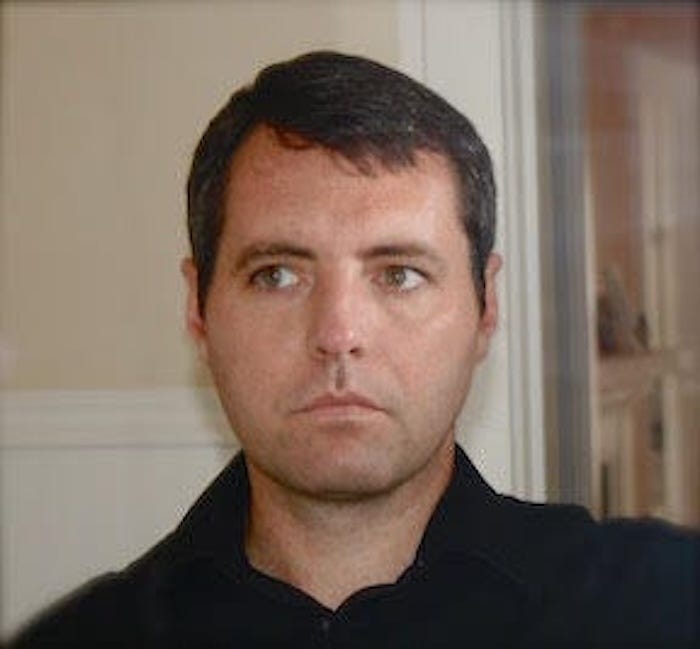
My interview with 2015 Black List writer for his script Bubbles.
The top rated screenplay on the 2015 Black List was “Bubbles.” Written by Isaac Adamson, it’s one of the most unique ways to approach writing a biopic I have ever seen: The story is a snapshot of Michael Jackson’s life told from the perspective of his pet chimpanzee Bubbles. I would have been interested in interviewing Isaac simply based on the creative inspiration of that idea — I mean, who thinks like that — but when it hit #1 on the Black List charts, it was a no-brainer.
Here is my interview with Issac.
Scott Myers: You’re originally from Colorado, is that right?
Isaac Adamson: Yeah, that’s true. I was born in Fort Collins, Colorado, and grew up there. I went to college in Boulder. Shortly after college, I moved to Chicago. I lived there for about 15 years before moving here to Portland, Oregon.
Scott: What were you doing in Chicago?
Isaac: Various writing‑related jobs. I went there after college because I had friends who lived there that actually found work, unlike my friends that were in San Francisco or LA, and ended up moving home pretty quickly. I went out there on a whim, and I worked in coffee shops initially, and then advertising jobs, and fundraising stuff, all kinds of different things.
Scott: Evidently, the writing thing has been a part of your life for quite some time?
Isaac: Yeah, for quite a while, various kinds whether it’s writing blog posts or copy for fliers, all kinds of stuff.
Scott: You did film studies at Colorado?
Isaac: Yeah, that’s correct.
Scott: Then you either had a pre‑existing interest in movies coming into the university or discovered it there.
Isaac: I’ve always been interested in movies. I really went to the school with the goal of becoming a film maker. But the realities when I actually tried to make little 16‑millimeter productions were overwhelming for me.
It was a lot harder then because you had to use film. It cost a lot more. You had to book all kinds of time to edit using these big, clunky…Now it seemed really clunky compared to digitally editing devices. I was a terrible cinematographer. Everything I shot was either under exposed or over exposed.
I just discovered that through writing, you didn’t have to worry about any of that. You didn’t have to worry about budget. You could have the biggest explosion in world if it just happens on the page. I guess it’s why I ended up gravitating toward writing more.
Scott: You’re a novelist with, I believe, five novels published to this point?
Isaac: Yeah.
Scott: Let’s talk about those first four part of a series.
Isaac: Sure.
Scott: Set in Japan, the protagonist is a character named Billy Chaka, who’s a journalist and an amateur sleuth. What’s the backstory on those four novels?
Isaac: It’s funny, when I started what eventually became “Tokyo Suckerpunch,” the first novel, I didn’t really intent to write a novel. I was writing, just little sketches and short story things. Then I wrote about this guy in Japan who’s suddenly attacked by these Yakuza in this strange bar and it just went from there.
I was really influenced at that point by stuff like John Woo and Quentin Tarantino, but also Raymond Chandler, and a lot of the ’40s noir guys. I just learned to somehow combine those elements.
Scott: One of them got adapted into a movie?
Isaac: It never actually made it to the movie stage. It was in development forever. Tobey Maguire’s production company optioned it. Then Sony got involved. At one point, Gary Ross was set to direct. Then the writer’s strike happened and shortly after that, things fell apart.
Scott: Development hell.
Isaac: Yes.
Scott: Your latest novel, “Complication,” was set in Prague and was nominated for the 2013 Edgar Award. How did that come about?
Isaac: I got the idea when I visited Prague for my honeymoon. I just loved the city and wanted to find at a way to write about it. It had just such an amazing, interesting, multi‑layered history that there were so many different stories you could tell.
It took me a really long time to figure out which ones I was going to tell. I was in some stage of writing that book for about six years. It took forever. The manuscript that came out of that was almost twice as long as the actual version that got published. I really went down the rabbit hole.
Scott: You’ve also written some short stories.
Isaac: Yeah, that’s true. I haven’t lately, but it was something that I liked to do whenever I finish a novel. Just that the idea of getting something done in a week or two was really attracted after slogging away for a year on something.
Scott: Is there a webcomic called “StakeOut” that you’re involved with?
Isaac: [laughs] Yeah. It’s not really available anymore. I’m surprised you were able to uncover that. It was something I did for fun. Maybe I’ll revive it at some point. Again, it was just something I liked because it was a daily exercise and trying to come up with something every single day.
Scott: Novels, short stories, webcomics. How did you wind your way into screenwriting?
Isaac: Because I was interested in film, it’s something that I’ve always been interested in. For whatever reason, I found the process mystifying. It got a little bit demystified for me seeing the various screenplays that came out of “Tokyo Sucker Punch” while it was in development for so long.
It was the kind of thing where I read them and I thought, “This isn’t rocket science. I know how to write a little bit. I could probably do something like this.” Then I just got more interested in reading all kinds of scripts, anything I could get my hands on after that, whether it was scripts on the Black List, or something that was in the theaters that I really liked.
I just started gravitating toward that more. The one thing I really like about it is — especially after going down the rabbit hole for years on “Complication” — screenwriting is a kind of format where you spend six weeks or eight weeks or however long you spend, and you can have something that’s actually done. Something complete. It’s not perfect. It’ll need more drafts. But it’s ready to show to people. With novels ‑‑ I find it’s more of a marathon. You might not be ready to share anything for years.
Scott: Is it fair to say the primary way you’ve gone about learning the ins and outs of screenwriting is through reading scripts?
Isaac: Yeah. Yeah, I never took any classes or anything like that. Even in college I had never been any writers’ groups or that sort of thing. It really was just reading scripts and watching movies.
Scott: I coined this mantra years ago on the blog ‑‑ “Watch movies, read scripts, write pages.”
Isaac: Yeah, definitely. That’s the magic formula.
Scott: Reading “Bubbles,” first of all it’s wildly entertaining and it’s obviously professional quality writing, so you stand as a testament to being able to do that… learn the craft just from involvement with the primary sources — movies and scripts.
Isaac: Yeah, I think that’s where you learn it. Particularly, reading scripts because it is a much different way of writing than when you’re doing novels. You just have to be so much more succinct and so much more disciplined and really make solid choices about what’s the one thing you want the reader to get out of this scene or this character description? Whatever it may be. You can write an 800‑page novel, whereas with screenplays it’s pretty much 90 to 120 pages. It really forces you to be a lot more economical.
Scott: Let’s talk about your screenplay, “Bubbles,” which as I mentioned, topped the 2015 Black List. Here’s a plot summary:
“A baby chimp is adopted by pop star Michael Jackson. Narrating his own story, Bubbles the chimp details his life within the King of Pop’s inner circle through the scandals that later rocked Jackson’s life and eventually led to Bubbles’ release.”
I’m sure you get asked this every time someone asks you the premise of the story. What was your inspiration for it?
Isaac: It’s kind of a three‑pronged thing. When Michael Jackson died, along with all the other articles that came out I remember there was something in “People” or “US Weekly” or one of those kind of magazines you pick up at the dentist’s. They said, “Where’s Bubbles now? What happened to Bubbles?” It talked about how he was living in this ape sanctuary in Florida. I filed that away and thought, “Oh, that’s kind of interesting.”
Then there is a book that was shortlisted for the Man‑Booker prize in the UK called “Me Cheetah,” which was basically the story of Tarzan, but told through Cheetah’s perspective. I never read the book but I thought, “That’s a cool idea.”
I’ve actually since heard that [laughs] that’s not really what the book is. It’s more about the chimpanzee that played Cheetah and his life in Hollywood. I still have to check it out someday.
Those are the two primary things that got me thinking about it. At that point I was thinking of it as a novel but I just didn’t think I could sustain the voice of a chimpanzee for the hundreds of pages that it would take. The other concern was just music being such a visceral thing. I think it’s really hard to write about music well. That kept me from doing it.
The thing that put everything into place was seeing Dawn of the Planet of the Apes and the Shakespearean relationship between some of the characters. It got me thinking about chimp hierarchies but also what if Bubbles had this pseudo‑Shakespearean way of talking. Once I had that, I knew I had the voice. It was just a matter of figuring out where in Michael Jackson’s life Bubbles actually fits in to try to make it reasonably historically accurate.
Scott: Well, that answers the question because I was going to ask you, the voiceover narration is really quite entertaining. First of all he’s quite smart, very intelligent. But he does have a rather sophisticated worldview that comes through in his voice.
You’re suggesting that having watched The Planet of the Apes and perhaps that sort of Shakespearean feel, that’s what led to the voice for Bubbles?
Isaac: Yeah. I think that was definitely an influence on it. Plus it’s just inherently funny to have a chimpanzee, who are normally looked at as goofy, clownish animals, to have this really elevated way of speaking.
Scott: You mentioned funny, but it’s actually poignant, too. The tone, the balance between those two, did you know that right up front as you started the project, or is that something that evolved in the writing?
Isaac: Both in a way. I think it evolved, but it also close to was what I was initially aiming for. I didn’t want to write something that was just a total farce. Whether it was some kind of celebrity take down about Michael Jackson or something like that.
I really wanted it to be more about Bubbles than it was about Michael Jackson because it is a sad story. It’s about this animal whose in this lab and then he goes on this great adventure. Eventually, he winds up in a cage. I didn’t think pumping up the laughs would really serve that story well.
Scott: Just right there you mentioned three acts, right? He’s in a lab, on a great adventure then ends up in a cage.
Isaac: Yeah. It had that structure built in.
Scott: How much research did you do on Michael Jackson?
Isaac: I did a lot but it was all second source variety. I read some biographies. I read all kinds of magazine articles, watched the ton of stuff on YouTube. It was like drinking from a fire hose because there’s so much information out there about Michael Jackson.
What helped me to be able to accomplish it in the time I did was just that I knew that I wanted to narrow my focus mostly to the years surrounding when he was making and touring the “Bad” album.
Scott: How about researching chimpanzees?
Isaac: I didn’t do a great deal of research into chimpanzees. I had some primate anthropology classes in college that I remembered. I did do a fair amount of research about actual Wauchula Ape Sanctuary in Florida, where Bubbles lives and the other animals that are there with him. It’s kind of funny because so many of them were showbiz animals.
Scott: One thing that I was really struck by is much of the humor in the story derives from Bubbles’ interpretation of Michael’s behavior. For example, on Page 13, the draft I read, he is watching Michael Jackson practicing his dance moves and he says, “As he loose his war cry, I understood these sessions were not simply a matter of exercise. He was building strength and stamina before venturing forth to the battlefield. He would don war paint and turned his face spectral fantastic shade meant to strike fear into the heart of the enemy.”
To write that, I imagine you really had to inhabit Bubbles’ worldview.
Isaac: Yeah. I did. I wanted to force myself to really try to keep everything through his perspective and know that his perspective would be colored by this hierarchical way of thinking for one, but also a fundamental misunderstanding of what all these humans around him were up to.
Scott: That hierarchical thing is a big point of connection. Of course, Michael Jackson the King of Pop and the way that Bubbles sees the world was really like that, right? There’s this, who’s at the top of the food chain in terms of the animal realm, that parallel going on.
Isaac: Yeah, definitely. It’s another one of those things where I just lucked out that Michael Jackson’s known as the King of Pop, and showbiz itself tends be pretty hierarchical, too. You get that a little bit in the scene where Prince and Michael are kind of sizing each other up during the meeting about the proposed “Bad” duet.
But I think It’s also coming of age story about a character trying to find their place in this world and figuring out that they’re not really suited for it, which also worked, because I think that was largely true of Michael Jackson as well.
Scott: Yeah. I picked up on that. I don’t know if this was intentional or not, on Page 6 Bubbles says, “So much of our lives are read in our youth. A time largely, beyond our control, a time when events unfold without our consent. Perhaps, all of life is ever thus.”
I made the connection this not only pertains to Bubbles, but to Michael Jackson, who grew up with his father, Joe, very much a domineering type of a figure. With regard to The Jackson Five, Michael didn’t really have a choice in that matter.
Many of the choices and actions by Michael Jackson we see in the script are taken in response to this authoritarian type of dynamic he experienced as a child.
Isaac: Yeah, very much.
Scott: Also, I thought it was funny the script has a little bit of that Shakespearean in Love dynamic where there are things happening in the life of Will Shakespeare he incorporates into his plays. In your script, there’s a moment where very early on, Michael Jackson’s dealing with Bubbles saying, “I’m bad. No, you’re bad. Let’s try again. Who’s bad, who’s bad.”
[laughter]
Isaac: Right. I just thought that scene would be fun. I always wondered where Michael Jackson got the lyrics for “Bad”. I’ve always wondered that with songs in general. That one, the lyrics are so goofy when you can actually see them printed on page, but when you listen to the song, it sounds great. A lot of songs are that way I guess. But yeah, having Bubbles be partly responsible for the origins of “Bad” just struck me as a funny idea.
Scott: You mentioned this pecking order like that scene where Prince comes and Bubbles gets little worried. There’s several times where he’s like that, he gets anxious about his place in Michael Jackson’s kingdom.
In fact on Page 23, he says, “I knew only then that they had usurped the King’s attention. I was determined to find some way to win it back.” That brought to mind the Woody and Buzz relationship in Toy Story, how Woody is concerned about being relegated to a secondary position behind Andy. Does that parallel register to you at all?
Isaac: I hadn’t thought of that, but now you say it, it’s definitely accurate.
Scott: You say you’ve got all this material you accumulated about Michael Jackson. There’s a very funny scene in Japan where Bubbles spends the night partying with Bon Jovi. First of all, is that fact or fiction?
Isaac: That is fact. I read Bon Jovi’s account of that in one of the books I was reading about Michael Jackson’s business acumen. Bon Jovi was talking about how Michael was all about resting his voice and relaxing the night before a show. They really wanted to party with him but he didn’t want to go. But he did send down Bubbles.
They got in this huge rock and roll party and they trashed their hotel room. [laughs] They basically blamed it all on Bubbles the next day when their manager found out about it.
Scott: That’s terrific, and part of the bridge that leads Michael to essentially turning away from Bubbles. That leads me to a question that, given this wealth of narrative material, how did you decide which things to omit from the script?
Isaac: It’s really done on a case-by-case basis. Does it add to the story, is it too similar to another scene that’s probably better? I’ll give you one example, of a scene which I liked but I left out. During this time he was recording “Bad,” Michael was obsessed with the idea of doing duets with all these different famous performers.
He invited Freddy Mercury of Queen to come and record a track with him. Freddie Mercury got freaked out by Bubbles’ presence, and specifically that Michael, whether jokingly or not, was consulting Bubbles on various takes of the tracks to see which one Bubbles liked. [laughter] The story is that Michael excused himself to go to the rest room or something, and then Freddie Mercury got on the phone to his manager and he was like, “You’ve got to get me out of this. Come pick me up.” And he just walked out of the studio.
It’s a scene I liked, but I felt that it was just a little bit too close to the Prince scene because it’s the same kind of thing, a performer with this royal name. That’s an example of one that I would have loved to keep if I had infinite space, but it’s a scene that’s almost a double beat, so I left it out.
Scott: That’s interesting because you’ve got King of Pop, you’ve got Prince, you would have had a lead singer from Queen. It’s a whole monarchical theme.
Isaac: Who knows maybe Freddie Mercury will wriggle his way back in there someday.
Scott: The script is certainly not lacking for real‑life human beings with people such as Corey Feldman and Elizabeth Taylor, a panoply of talent there.
Isaac: For sure. It’s funny, since the script came out I’ve been going to meetings and talking with various people in Los Angeles that had interactions with him. I’ve probably collected enough anecdotes for a whole another Michael Jackson movie, although it would be a much different one.
Scott: I’d like to talk about some of the themes. We’ve already discussed, one, the hierarchical dynamic: Who’s the King? There’s another one, too, that’s played pretty strongly throughout, and that’s this idea of being in a cage.
There’s obviously the cage that Bubbles is in at the beginning in the prologue and then eventually winds back up in, but Michael Jackson himself essentially being in a cage as a kind of trapped public figure. Is that something you were going for?
Isaac: Absolutely. That was a theme that I wanted to run through the whole thing. This idea that Michael Jackson was caged by his own celebrity. Even in Neverland, he’s constructed what amounted to a cage for himself. He thought he was building a thing that would set him free, but that turned out not to be the case.
Scott: Kind of like Xanadu in Citizen Kane.
Isaac: Yeah.
Scott: Another thing, I think it’s Frank, one of Michael Jackson’s cadre of people who says on Page 83, this long and touching observant bit of business talking about Michael Jackson as a pop star in relation to the rest of the world.
He says, “You find the beast is bigger than you, stronger than you ever imagined. You discover the beast never sleeps, and the beast will trample you underfoot without a second thought.”
He’s literally talking about the public, and obviously it has some double meaning going on there.
Isaac: Yeah. It does. He is talking about the public but…I’m not sure how to answer that one.
Scott: Here’s a take on it that I had. Obviously, Bubbles is a beast, he’s an animal. He, through his actions to Michael Jackson later on in a horrifically violent way, exhibits that behavior. It’s almost a metaphor for what the public has done to Michael Jackson, whether he realizes it or not, through his own aberrant behavior.
Isaac: Totally. That speech is also there to kind of presage Bubbles’ later attack on Michael.
Scott: You have that ticking clock, too, which the trainer says that as they get older, these chimpanzees become more in touch with their animalistic nature and you have to watch out for that. We see this instinct on Bubbles’ part, to become more and more in touch with his inner warrior.
Isaac: It’s just a natural part of, I would say human adolescence too, but chimp adolescence is that they get more aggressive. They get stronger, they get more unruly. They don’t like to wear clothes. [laughs] I don’t know if that’s true of adolescents humans, though maybe they wear less clothes.
Beyond a certain age, they’re too dangerous to handle and throughout the script, we see Bubbles fighting against this but ultimately being unable to stop his natural evolution into an adult chimpanzee. That was one of the central themes I was going for too, that ultimately Bubbles is punished for doing the one thing Michael Jackson can’t do, which is grow up.
Scott: I can totally see that. That leads right into this whole Jordan Chandler thing, the young boy that essentially led to the downfall of Michael Jackson in the public perception. There were the lawsuits and all that stuff where you get the sense that Michael Jackson’s trying to, setting aside whatever criminal activity may or may not have happened, trying to cling to his youth.
Isaac: It was definitely that. He was completely enamored of Peter Pan. If you look at the photographs of Neverland, there are Peter Pan statues and pictures and stuff like that everywhere. I know he was working with, I forget what director it was, but for a long time he was trying to get a film version of Peter Pan made where he would star as Peter Pan.
Even if you look at the shape of his nose as it evolves, he was going for that upturned classic Peter Pan nose at one point in his life.
Scott: The point you made that Bubbles does grow up and Michael Jackson resists that, and Bubbles of course in growing up is getting in touch with that inner animalistic side which exhibits itself in that assault on Michael Jackson, that’s an interesting point I hadn’t quite grabbed it, it makes a lot of sense.
I’ve read conflicting accounts on this: Did Michael Jackson ever go visit Bubbles again in Florida, or did he not?
Isaac: He never visited him in Florida that I’m aware of, but I read an interview with Bob Dunn, who was Bubbles’ trainer, that said that Michael would come visit Bubbles in Sylmar at this facility that Bob Dunn had. He visited there a few times with his kids, so that’s what that scene is based on. But once Bubbles went to Florida in 2005, Michael never came to visit him that I know of.
Scott: How soon in the process did you know that that end scene, where Michael does come for a visit and he brings the three kids, and there’s a touching moment there, how soon in the process did you know that that was going to be, essentially, the denouement of the story?
Isaac: That came pretty late. In my original thinking about it, there was going to be the attack and then the next thing we knew, there’s Bubbles in the ape sanctuary, thinking about Michael, still wondering about when he’ll return. But I realized that I needed something a little softer, and a little more emotional — a lot more emotional, actually — and also show some kind of healing that time has done.
I didn’t want to end with…have his last action with Michael be attacking him, because they had had this great friendship together and gone through this adventure together.
I just felt it needed a kind of grace note.
Scott: You have a great callback, that little finger‑to‑finger thing.
Isaac: That came pretty late, too. That was after the first draft, but before I’d shown it to anybody. I wanted them to have some kind of secret handshake that they could do, some kind of nonverbal way of communicating with each other.
I came up with the fingers touching, and I liked that a lot.
Scott: Then you went back to set it up?
Isaac: Exactly.
Scott: The final lines in the script, “And so I await the return of the once and future King, the greatest King the world has ever known. This time, nothing shall come between us. This time no cage shall be strong enough to hold us back. This time, together, we shall conquer all.” Can you talk a bit about what you were going for there?
Isaac: Yeah. What I was going for was to show that Bubbles is still deeply affected by his time with Jackson. It’s not something that he’s forgotten. Yes, he’s had this relatively decent life at the ape sanctuary, he enjoys this elevated status there among the other chimps, but he’s hoping that one day Michael will come back. He’s completely unaware that Michael has died. I wanted to end on a kind of a sad happy thing.
Scott: Let me ask you, at any point in this process, coming up with the idea, working it out and writing various drafts, did you don a producer’s hat and say, “This is nuts. I’m writing a movie about Michael Jackson from the POV of a chimpanzee.”
Isaac: No. I kept that hat off at all times and just wouldn’t allow myself to even think about it. I tell people all the time, this is the kind of thing where if I’d tried pitching to somebody, it never would have been written. People would’ve likely responded, “That’s funny, but it’s too crazy. It will never work and here’s why.”
If I had put that producer hat on myself, I probably would have talked myself out of it. I did, earlier on before I started writing it, email the log line to my manager and he was like, “Oh my God that’s crazy, but you should totally do it.” That really helped. If he had said, “Meh, I don’t know,” I don’t know if I would have written it, honestly.
Scott: Is that Lee?
Isaac: Yeah.
Scott: Lee Stobby. That’s great. I know he’s a big proponent of wanting to see new, and different, and unusual stories. What was the process of writing the script? How many drafts or passes did you think you did on it?
Isaac: This one, it was really funny, because before I wrote this, I was trying to do this TV pilot spec thing. I was doing draft after draft, and pounding my head against it, and decided to put it away and pursue this crazy “Bubbles” idea.
And it turned out to be the fastest thing I’ve ever written. I wrote it in six or seven weeks. I did two passes before I showed it to Lee. He went crazy over it. He had a couple notes, but I would say it was almost like draft 1.5 that ended up going out into the world, which was great. But I read it a couple months ago and now I’m wondering whether I should’ve changed this, or done that. Just little nitpicky things. But I never had that moment to catch my breath and think about it a lot.
Scott: Didn’t seem to hurt the reception of the script, topping the Black List in 2015. Can you describe what were you doing when you found out that you made the Black List and was number one?
Isaac: It was a funny thing. The script came out in April or May ‑‑ maybe late April. It instantly blew up. I was doing all kinds of meetings. Everybody that I was meeting with was like, “This’ll probably never get made, but you’re going to be on the Black List.”
I heard it so many times, I was expecting to be on it. But I wasn’t expecting to be number one. The day the list came out, I had a horrible flu. I slept in. My wife got up and took the kids to school.
I crawled out of bed at nine o’clock, and went on Twitter, and saw the announcements start to come through. They had the Bubbles announcement with Channing Tatum doing the video. I thought, “That’s cool. He’s a pretty big star, right? Maybe this is going to finish high.”
After that, I went to sleep for another two hours. My manager and agent called to tell me, “It’s number one!” I was all excited, but I was also trying not to throw up because I felt so bad physically that day. I heard I was number one and then went back to sleep for another hour or so.
Scott: It sounds very much like the screenwriting life.
[laughter]
Isaac: Yeah, I suppose that’s it in nutshell.
Scott: The good and the bad mixed together. Has being on the Black List had an impact on your career?
Isaac: Definitely. With “Bubbles” specifically, once it landed so high on the Black List, people started looking at it in a different way. It became, “Can we figure out how to do this before someone else figures it out?”
It really breathed life back into the project. We’re looking at a couple different paths to victory. We’ll see what happens. Hopefully things will be settled soon. It definitely amped up interest in that script.
As far as my career in general, definitely getting sent a lot more books for adaptation now. People are considering me for projects they definitely wouldn’t have before.
Scott: You’ve got the adaptation for the novel, “The Ice Twins,” which was just recently announced. Could you share a little bit of backstory about how that happened?
Isaac: Sure. Prior to “Bubbles”, I had written a script called, “Forsaken,” which was more of a thriller set on a deserted island. My manager had sent that to Alcon. They really liked it and I talked with them about it. Then, “Bubbles” started making the rounds and I got back on their radar again. They had this book adaptation that they thought maybe I would be good for.
I don’t think they would’ve considered me had they only read “Bubbles”, because the tone is a lot different. This “Forsaken” script that I’d written, it was a lot darker. They thought that maybe it would be a good fit, so they invited me to come up with a take for it, and went from there.
Scott: You raise an interesting point. When I talk to aspiring screenwriters, this issue comes up about whether they should focus on one particular genre or write different genres. You’ve taken that other approach, which is you’ve written a lot of different stories. If an aspiring writer were to ask your advice, what would you say to them about that?
Isaac: I would say, especially when you’re doing specs ‑‑ essentially writing for yourself ‑‑ write what you want to write. On the more career front, I think it varies by writer. It’s what you want to do. If you’re interested in the Sci‑Fi thing, you think you can do it well, take a shot at it.
That said, I don’t think it’s bad advice to tell somebody to focus on just one genre. It’s very hard to do all genres well, and to do them equally. That’s especially true when it comes to comedy. If you can really write comedy well, I would say do comedy. There’s so few people who can consistently do that well.
For me, as a matter of keeping myself interested in the whole thing, I like to try different kinds of stories.
Scott: That jumps us to some craft questions naturally. Let’s have a few of those. First of all, we’ve already articulated how you came up with the idea for “Bubbles” ‑‑ part of that listening to the news, and tracking things. Are there other ways that you come up with story ideas?
Isaac: It’s usually pretty organic. I don’t know a lot of times where stuff comes from. It can be the strangest thing. I’ll give you an example.
I had a friend who was going to be working at a website that was focused on vintage cars. He said, “We want to have a bunch of original content. If you have any short stories about vintage cars, send it to us and we’ll publish it.” I didn’t have any.
I have no interest in vintage cars whatsoever, but I thought, “If I had to write a story about a vintage car, what would it be?” I came up with this weird thing about this time traveling car where time changes, but not only inside the car. It’s something I never would’ve thought of without that prompt.
That’s one example where it came out of nowhere. But it’s just reading lots of things, paying attention to the news, living your life. Inspiration can come from anywhere.
Scott: It’s interesting when you were talking about those three parts ‑‑ the tri‑part type foundation for “Bubbles” ‑‑ that the thing that unlocked it for you was when you heard the character’s voice. How key is that for you when you’re sifting through story ideas?
Isaac: It’s really key, especially if you have a story where so much is centered on the protagonist like it is with Bubbles. It was the same way with the Billy Chaka books, because they were all written in first person.
I knew that the voice was the most important thing if you want to create a character that people enjoy reading about from their perspective for 300 pages. But it depends on the project. For something like Ice Twins, coming up with the voice wasn’t that important, because the author of novel, S.K. Tremayne, had already done all that hard work. In an adaptation, you’re really just trying to translate someone else’s voice for the screen.
Scott: Say for a screenwriter writing something on spec, how important do you think the story concept is to the overall strength and viability of that? For you, do you think in terms of what they used to call “high concept,” or “strong story concept?”
Isaac: It’s very important. Unfortunately, I don’t think that way very well. I’m not a big high concept guy. I’ll stumble into a good high concept once in a while, but I usually don’t get those ideas that instantly lend themselves to loglines. And it’s hugely important. If you want to sell a spec, concept is really important. Studios already have plenty of their own properties — you have to bring something unique.
That said, if the writing is not up to par, the concept doesn’t matter. They work hand in hand, I’d say. You can have a great concept, but if the writing’s no good, it doesn’t matter. You can also have the most beautifully written script, but if it’s not about anything, or if it lacks real reason to exist, it’s probably not going to get you too far.
Scott: That’s why I always advise writers, “You may come up with a great idea, but you got to have a passion for it. You’ve got to see it and connect with the material.”
Isaac: It’s funny because every writer’s different. Some people are great at coming up with the coolest concepts, but they have a hard time sitting in a chair for however many hours a day and getting it to the page.
Scott: Speaking of that process, how much time do you spend in prep writing? What do you focus on ‑‑ brainstorming, character development, plotting, research?
Isaac: A lot of my time is spent in research and plotting. That dictates sometimes what the characters become. I like to do a lot of research. If it’s a concept that requires lots of research, you can spend your time watching videos on YouTube of space landings, or whatever it might be. I find it’s also a good way to procrastinate, though hopefully it’s all helpful in the end.
Scott: How do you approach plotting? Are you one of those old style writers who busts out those notecards ‑‑ the 3 x 5 inch notecards ‑‑ and sticks them on the wall? How do you go about doing that?
Isaac: I do use the cards. I don’t have the wall. Early on, I had read that David Lynch, when he was writing Blue Velvet, somebody told him, “All you got to do is get a bunch of notecards. If you write 90 of these notecards with a scene on each card, you’ve got a movie.” That’s the way he went about it.
I thought, “That sounds pretty cool. Writing 90 notecards shouldn’t be that hard.” I did start using that method. I don’t do it on every project now, but I do find it’s helpful.
Scott: I’ve actually featured that quote on my blog, from David Lynch.
Isaac: Did you?
Scott: Yeah. There used to be a Bob’s Big Boy on La Cienega. It’s no longer there. He would go and order the really thick chocolate malted milkshake and pour a bunch of sugar in it ‑‑ like six sugars ‑‑ and then drink that. Then, he’d start grabbing the waitress’ napkins, and writing these things down, and transfer them on the cards. 70 or 90 cards, he’d figured he had a movie.
How do you go about developing your characters?
Isaac: One of the keys is to ask: How do they speak? Then, it’s a lot of figuring out their motivations ‑‑ what they want, their weaknesses, what their talents put that in action, achieving this whole…
Scott: What about dialogue? Where does that come from?
Isaac: A lot of that’s character. A lot of it’s situational. I like to try to give characters unique ways of speaking, which is easier to do when they come from different backgrounds. With something like “Bubbles”, obviously the chimpanzee had a really unique way of speaking. I tried to give Frank a unique voice that fit him, and Michael’s voice being really childlike and direct.
I honestly find dialogue to be one of the easier parts of the whole thing, and one of the more enjoyable, too. It’s always fun to write dialogue.
Scott: What about the theme? We talked about at least three themes in Bubbles ‑‑ the king hierarchical thing, and beasts, and cage. Are you one of those people that starts off with a theme, or do they tend to emerge over the course of your writing?
Isaac: Generally, they tend to emerge over the course of working on something. You often don’t know what the thing’s really about until you spent some time locking your horns with this idea. Then, it starts to emerge.
Once you figure that out, then it makes the whole thing so much easier. When you get stuck, you can write the theme. It really shapes how the characters are going to interact with each other. It shapes everything once you’ve figured that out.
I’ve written stuff where I never really figured it out. That stuff doesn’t work. [laughs]
Scott: What do you think about when you’re writing a scene? What are your goals?
Isaac: It’s different for different scenes. You have to be entertaining, first of all. There’s some scenes where you are trying to get across some key piece of information without being too clunky and sledgehammery about it. It really varies.
For me, it’s all depending about what does this scene need in relation to the scene in front of it, the scene that it came out of, and then in relation to the whole film.
Scott: What’s your actual writing process like? Are you one of those everyday writers or do you write in sporadic bursts? Do you work in private or you go out to coffee shops? Do you listen to music or do you need quiet? How do you write?
Isaac: Generally, I write from home. I take the kids to school and by the time I get back, it’s about 8:30. You’ll usually put in some hours in the morning ‑‑ a good three hours ‑‑ and then have lunch. I usually work in the afternoons for another couple hours until they come home.
After lunch, it’s usually going back and editing stuff I’ve already written. I find most of the hard stuff gets done in the morning. I’m moving around commas in the afternoon.
As long as it keeps your mind engaged with the project, it’s good though. It’s weird the way you’re always working on something in your subconscious once you’re really immersed in it. I find that I get a lot of really good ideas in the shower. I don’t write them down on the shower curtain or anything, but it’s odd how many come at times like that, when you’re not really working.
Once you’re engaged in this thing, your brain keeps working on it even if you’re not sitting there in front of the computer. But, you have to sit there in front of the computer, notepad, or typewriter for so many hours a day, or your brain will disengage.
Scott: Aaron Sorkin reportedly takes multiple showers per day precisely because that’s one of the best places he comes up with ideas.
Isaac: So he’s the one that’s responsible for the water shortage you’ve got?
Scott: Exactly. Send him up to Portland where there’s more rain.
Isaac: [laughs] Right.
Scott: Here’s a question I sometimes like to ask people. It’s a fun question. What is your single best excuse not to write?
Isaac: That’s a tough one. I don’t know. There’s so many to choose from. Usually, it’s because there’s a Champions League game on. Especially if Barcelona are playing.
Scott: Great! Another soccer fan!
Isaac: Yeah, I’m a big soccer fan.
Scott: We could talk soccer for ad nauseam. I think it’s the greatest sport. But let’s circle back to one final question, if I may. What advice can you offer to aspiring screenwriters about learning the craft and breaking into Hollywood?
Isaac: If you really do the former, then the latter will happen. You still have to make an effort, whether it be networking, or writing query letters, or polishing your script and posting it on the Black List. That said, you can work that side of the equation as hard as you want and none of it will matter if you don’t develop the writing part of it. That has to come first.
It’s a harder thing to tackle because there are no definite, concrete steps that you can take to make that happen. It’s not measurable in the same way that often the career side is, as far as, “I sent out 20 queries today,” or, “I entered this and this contest.” You can feel like you’re making progress by doing those things. And those things are important, but the focus really needs to be on the page.
For my interviews with dozens of other Black List writers, go here.