Go Into The Story Interview: Haley Bartels
My interview with the 2021 Nicholl Fellowships in Screenwriting winner.
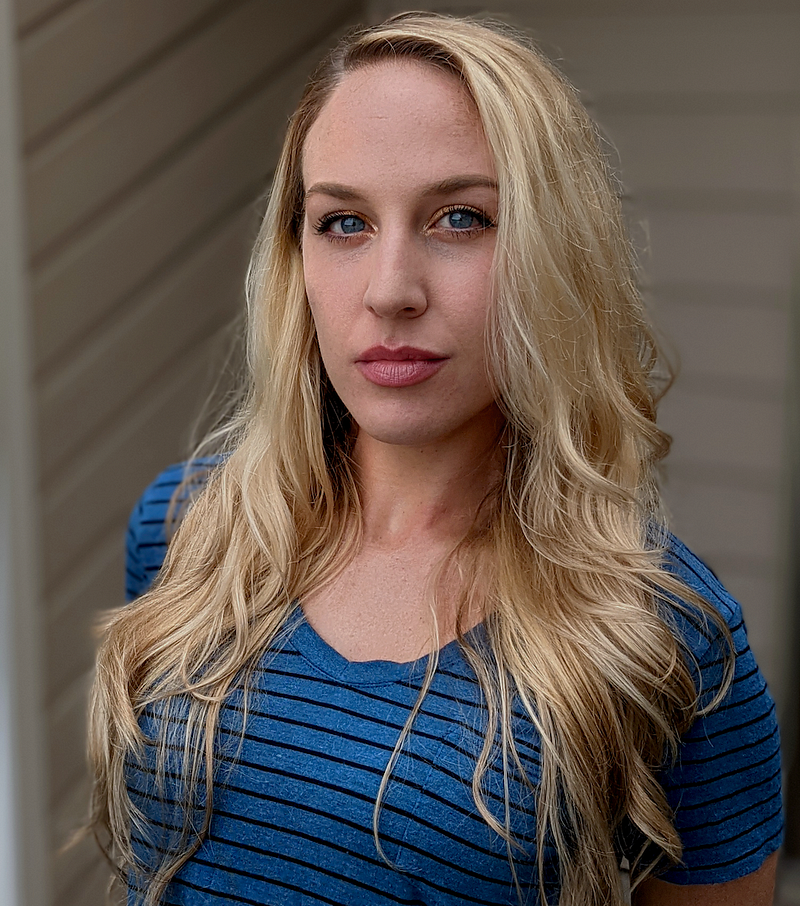
My interview with the 2021 Nicholl Fellowships in Screenwriting winner.
Haley Bartels wrote the original screenplay “Pumping Black” which won a 2021 Nicholl Fellowship in Screenwriting. I had the opportunity to chat with Haley about her creative background, her award-winning script, the craft of screenwriting, and what winning the Nicholl Award has meant to her.
Scott Myers: You grew up in a wonderful part of California, up north in the wine country. Healdsburg, I believe.
Haley Bartels: Yeah.
Scott: What was that like growing up in that kind of environment? Was that where your interest in storytelling emerged?
Haley: Definitely, yeah. Healdsburg is incredible. Healdsburg is beautiful nine months out of the year, when it’s not fire season. Growing up, I never had fire season. That’s a new development. It’s a beautiful place to grow up, beautiful small town, but when you are under the age of 21, there’s really not that much to do because the primary attraction is wine tasting.
My childhood was mostly reading books, just devouring, devouring, devouring books, and going to the movies. They had this little, tiny, local movie theater that played the big releases, but also played some of the smaller indie films. That was definitely where it began.
Scott: I’ve heard where you’re a die‑hard genre fan, like science fiction and magical realism. Some of those movies that probably came through local movie theater, and books too, Harry Potter, Lord of the Rings, Star Wars. Were those some of the things you were attracted to?
Haley: 100 percent. Star Wars is the first movie that I can remember watching as a kid. I’ve written about it in my UCLA admissions essay and my AFI admissions essay. Star Wars definitely made an impression on me, and Harry Potter, oh my God, of course.
I was the kid that waited in line, and read the books in a day when they came out, and then reread them over, and over, and over again obsessively until the next one came out. I think I read “Goblet of Fire” 34 times.
Scott: Wow.
Haley: Yeah. And my favorite movies as a kid, and to this day, are Peter Jackson’s Lord of the Rings trilogy. I watched those over and over as a kid, and I rewatched them probably six or seven times in the pandemic. They’re incredible, and every watch I appreciate them more.
Scott: You went to UCLA, and I believe you were an English major.
Haley: Yeah, B.A. in English.
Scott: Is that creative writing or English lit? What were your focus?
Haley: Just purely English lit. It wasn’t super creative. I did a couple of screenwriting electives. Primarily, it was just reading a ton of books. Actually, my Shakespeare class while I was at UCLA with professor Stephen Dickey made a big impact on my writing. We’ll get into it when we talk about my script, but “Macbeth” is a huge influence. UCLA is where I fell in love with Shakespeare.
Scott: You took a couple of screenwriting classes. That suggested that you had a creative writing interest at that point?
Haley: Definitely. I had been writing creatively prose since high school or maybe probably even before, middle school, grade school. At one point, a teacher assigned a short story as a homework assignment, in maybe seventh grade. I got it back. She was like, “This is really good. You should keep doing this.” That was the first positive affirmation that I got.
Then, I had a friend in high school with whom I would do a short story swap. One of us would come with a prompt one week. We’d each write to that prompt. Then, we would switch the next week. We never did anything with them. It was a fun, little creative muscle to flex.
Scott: It’s interesting how a few words from a teacher could have such an influence. You hear that over and over again. In my interview with writers, it’s like, “Yeah. I remember this grade school teacher, this middle school teacher.”
Haley: In high school, there were two more. There was John Linker who I can’t say enough good things about, and Camille Lehrmann who I also can’t say enough good things about. Both of them encouraged me to keep writing. Teachers are so important.
Scott: In a proper world, we cut our military budget in half and put that right directly to teacher salaries.
Haley: Yeah, oh, my God. Even if we cut it by like 90 percent, I feel like we would still be outspending everybody else. Give it to the teachers, that’d be great.
Scott: You did take some screenwriting classes, but I think that you didn’t go directly to graduate school. You spent a few years kind of doing your own thing.
Haley: Yeah, I graduated from UCLA and thought that I hated Los Angeles. I didn’t, it turns out. I just didn’t really get along with Westwood, and I didn’t like not having a car to go to other places in LA.
I was like, I miss the dirt. “I miss mountains, Gandalf. I want to see mountains again.” So I moved back home, and I worked as a waitress for three years in a fancy pizzeria.
I took a little postgraduate jaunt to Moscow, in Russia, to study at the Moscow Art Theatre, which was very cool, really interesting, strange and intense.
Other than that, yeah, I was just working as a waitress for three years, and always writing on the side. I would get off of my six‑eight hour shift at the restaurant, and I would go to a cafe or a wine bar with my laptop.
I would just bang out a short story. Like before, I wasn’t doing anything with them.
Scott: Not screenwriting at this point. I mean you’re writing short stories.
Haley: Not screenwriting, all prose. Then eventually, I was like, “My soul is corroding with all of this creative energy that I feel like I’m not doing anything with. I’m serving these pizzas to very wealthy people. I don’t know, I just don’t feel fulfilled.”
So I did what any millennial would do. I applied to grad school.
I think I applied to probably eight places, and AFI was the only film program I applied to. They were also the only place that let me in.
Scott: That was fortuitous.
Haley: It was, yeah. It really was. I really thought that I wanted to go to Iowa Writers Workshop, or Columbia, or UT.
Within probably two days of being at AFI, I was like, “Oh, no, this is the thing that I want to do. This is the thing I’m meant to do. These are the people I want to be around. This is the work that I want to be doing.”
Scott: That stint in Moscow, before we get to AFI, were you acting?
Haley: It was a program run through the National Theater Institute in Connecticut. I have a family friend who knows the guy who owns it.
This friend goes, “Hey, you did drama in high school, you like film and theater, you should just go, do this thing.” And I said, “Well, I’m not doing anything else at the moment.” So, I did.
There were some acting classes. There were film classes, Russian language classes. There was ballet, there was movement.
We were going to see the Bolshoi and the opera and all these Russian plays. It was very Russian: six day a week, you’re up at 6:00 AM, so, you can walk to school in the snow and get there by 7:30, so you can practice ballet for half an hour before class starts, so the ballet teacher doesn’t whack you in the back of the knee with a ruler. Very intense.
Scott: Wow.
Haley: Dead of winter too. After that, I was like, “Oh, AFI, piece of cake.”
Scott: I was going to say, that’s quite a contrast of what I’ve heard of AFI, which is rigorous, but it’s more supportive kind of a creative environment. What was your experience like there?
Haley: AFI was a two year program. There are six different disciplines. There’s screenwriting, directing, producing, cinematography, production design, and editing.
In your first year, you pick little groups, and you make three cycle films. You’re actually making films the whole time, which is really cool, but they’re also simultaneously putting you through screenwriter boot camp.
Your first year, you write one feature and two specs, and your second year, you write two features and a pilot.
Scott: I’m assuming that’s where you did the majority of, up to that point, of learning the craft of screenwriting?
Haley: Yes, definitely.
Scott: There’s a lot of scuttlebutt about the value — or not — of film schools. I’m curious what your thoughts are on the subject having attended AFI.
Haley: For me, it was the best thing I’ve ever done in my life. Not just for the education I received, but more so for the network of friends and colleagues that I made along the way. Some of my best friends in Los Angeles went to AFI. My partner, my boyfriend went to AFI.
I’m doing my first indie feature this summer with a director and a cinematographer that I went to AFI with. My first pilot in development, one of my AFI professors helped me land it. One of the agents I’m talking to, another AFI connection. The network is so incredible.
That being said, I’m very privileged in that I was in the position to do that. I know that it’s not an achievable goal for everybody.
I’ve heard so many success stories that have nothing to do with film school, but you have to make your own film school. No matter what you do, whether that’s the Tarantino thing of…I think he worked in a video store where he watched a million movies and has said, “That was my film school.”
There are some fantastic free YouTube programs. “Lessons from the Screenplay” is phenomenal. I learn so much from every single video that he puts out. And of course, there’s your blog, which is great.
There are so many resources for learning how to write. As long as you’re doing that, I don’t think that not being able to go to film school should discourage anyone from pursuing a career in filmmaking.
Scott: But like you were saying, the pilot, the agent, possibly the film you’re going to be making, so those people you went to school with, that community of people, that’s been important for you.
Haley: Absolutely. But I also think a lot of the connections that I’ve made have come through just scrapping for them, knowing a friend of a friend, who has a friend, who is an assistant.
During the pandemic, when I wasn’t represented, when I wasn’t getting meetings, I would be like, “Hey, I’m trying to meet assistants. Will they sit and speak with me? And can we just have a really casual conversation?”
Now those are coming back and paying off. Those assistants move up really quickly. That was a really valuable thing, just trying to network with people who were on my level.
Scott: That’s a really good point because you’re right, assistants become the people that hire you later on. Before we get into your script, in doing my research for this conversation, I found an interview with you in which you talked about going back up north to help with the family. The fires that have been up in the wine country’s horrible, and some other things. I’m aware the world is in a pretty sad state right now. A lot of things going on.
You had this quote, which I thought was terrific. You said this:
“Stories give us hope. There’s a moment in ‘The Two Towers’ where Samwise waxes poetic about the great stories, the stories that stayed with you, folk in those stories had lots of chances of turning back, only they didn’t. They kept going because they were holding onto something.
Frodo: What are we holding on to, Sam?
Sam: There’s some good in the world, Mr. Frodo, and it’s worth fighting for.
“In our stories, and in each other, always there’s hope.”
That’s what you said. I was struck by that. Maybe you can unpack that a little bit. Is that an inspirational thing for you, that storytelling again, can elevate hope in people?
Haley: Absolutely. It was really important for me to reconnect with that during the pandemic because…We’ll talk about this one when we get into the script a little bit more as well, but I was going through something where I felt I was working hard at my career. I had this education. I felt I was just as talented as all of my peers who were getting what seemed like all of this success and nothing was happening for me. Nothing was happening. I was sad and I was frustrated. It took reconnecting with… Well, I went to therapy during the pandemic. I can’t recommend it enough. All writers, all people, should get therapy.
Talking to my therapist, I was able to reconnect with, “Why do I do this thing?” I don’t do this thing because I want to make a million dollars. I don’t do this thing because I want everybody to know my name. In fact, I actively do not want that. Fame seems terrible.
I do it because whenever I have been sad, scared, or feel like I am losing hope, stories have been the things that I have turned to, to make me feel less alone. Once I reconnected with that, everything got so much easier. Making peace with the fact that ever if I never sell a script, even if I never “make it” in Hollywood, I’m still going to keep writing.
I can go to an old folk’s home and stage a play, and make people happy. I can write a little short story and submit it somewhere, and someone can read it and feel less alone. I really do believe in the power of stories, and especially cinema to accomplish that, to make people see the world both as it is and as it can be.
Scott: That’s a wonderful sentiment and I concur one hundred percent. Let’s jump into your Nicholl‑winning script, “Pumping Black,” which is as I mentioned to you in an email, it’s one of the most intense scripts I’ve read in a long time. Plot summary:
“After a desperate cycle takes up a team doctor’s dangerous offer, he seems on course to win the Tour de France, but as the race progresses and jealous teammates, suspicious authorities, and his paranoia close in, he must take increasingly dark measures to protect both his secrets and his lead.”
Quite literally, my stomach was churning when I was reading this script. As soon as I met the Protagonist, Taylor Mace, and his precarious position in life, and his obsession with professional cycling, by the end of the opening, we’re like off to the races and it’s a breathless ride.
So, let’s start at the beginning. What was the inspiration for “Pumping Black?”
Haley: It’s three things all working in concert. The first thing is, I’m a cyclist. I’ll go and I’ll ride my bike in Griffith Park 30 miles by myself, nothing competitive, but I come from a family of very competitive cyclists. My mom, actually both my parents are triathletes. My dad actually took third in the world championship for mountain biking, back in the ’90s. Really intense.
When I was a kid, my dad befriended a professional road cyclist. This rider rode with Lance. He podiumed at the Tour de France, podiumed at the Olympics, won the Tour of California a bunch of times. We got really, really close with him and his family. We visited them in Girona, in Spain, where part of the script takes place because that really is the hallowed training grounds of the tour. He came to Thanksgiving at our house.
I and my family looked up to him as a hero and this proof that if you worked hard and set your mind to something, you could do anything. Then, it all came out that he, along with that whole generation of cyclists, was doping.
As a kid, I don’t think that I really processed it completely, but what I do remember, what I do take away from that time is watching my dad wrestle with it.
My dad is a good Midwestern boy with a strong moral compass, and a love for the sport, and to look at this person that he considered to be not just a friend but a hero and see that he had made this decision to poison the sport that he thought they both loved and respected, that’s something that I took away from that time, and which planted the seeds of the story.
The second part is “Macbeth.” The way that came about, this is like a lightning strike, key writer moment. In Griffith Park, there is a section of the bike route that’s called the Three Bastards. It’s these three horrible, nasty switchbacks. You’re swearing under your breath the whole time because it’s so steep.
For whatever reason, as I was riding up, instead of Three Bastards, I called them in my brain the Three Witches. I got to the top of the hill. I caught my breath. I was like, “Oh, Three Witches, Macbeth, cycling. Maybe there’s something there.” For the rest of the two hours of the ride, I was churning on what that might look like.
That’s the meditative beauty of riding your bike, running, or even sometimes doing something like playing a video game where your brain is focused on one thing, but still free to do the writing work. That’s the thing that I love the most about cycling, actually.
The third piece, as I mentioned before, was writing it in the pandemic and having all those feelings of spinning my wheels, so to speak. I have the same education as all these successful people. I have the same work ethic. I have the same talent. Why isn’t anything happening?
That little nasty voice in your head of perfectionism and obsession, it’s driven by a sense of mortality and a sense fear. Luckily, as I said, I got therapy. My protagonist, Taylor, doesn’t. His perfectionism and obsession consume him. That’s why the story is a tragedy.
Scott: It definitely arcs like that. It doesn’t strike me as a genre film like you said you’re interested in. It is like a horror story in that at the end, there’s some horrible things that happen. Would you consider this a departure from your primary area of focus at all in terms of storytelling?
Haley: I do and I don’t. You’re right. It’s not technically a genre film, but it still scratches all those itches for my writer brain as far as immersive world‑building. That’s something that I always like about the process of writing genre, is crafting a world that is specifically designed for your character, your character’s flaw, and designed to challenge that flaw.
Even though cycling is a very grounded everyday‑world thing, it still felt like writing a genre film. Also, all of the surrealist elements were fun for me to write and definitely were informed by the genre background.
Scott: Typically, the association people make with the Nicholl is most of the scripts that get picked are drama. Were you thinking like that at all? Or were you just, “I’m going to write the story I’m passionate about”?
Haley: No, I don’t think I was thinking in terms of competitions at all. I was just thinking of writing the movie that I wanted to see.
Scott: You got a personal connection from the family side of things. You’ve got the tragedy that I’m assuming your dad and maybe your mom went through too knowing this guy who was part of that whole doping thing, the personal, with the pandemic, and your Three Witches experience in Griffith Park.
Let me ask you a question, one more pragmatic question about this. At some point when we have the script and we write screenplays, they’re in effect pre‑movies. They only exist in a vacuum. It’s not like a poem which could exist on its own. You’re trying to write something that’s going to be made into a movie so you got to be thinking pragmatics.
If I put on my producer’s hat on, I’m going to look at cycling. There’s an audience out there. It’s not huge, but the doping thing, Lance Armstrong, and all that, that’s a big deal. To use a metaphor for cycling, as a producer, I’m thinking you could draft off the tragedy of that whole sort of thing for marketing purposes. People would register that, “Yeah, I remember that guy.”
Were you at all thinking about that? Did that come later on? Has that ever entered your consciousness at all?
Haley: Like thinking about the script from a more producorial standpoint?
Scott: Marketing, putting your producer’s hat on.
Haley: Budget, yes. Up until this point, everything I’ve written has been very, very high budget. The first feature that I ever wrote, and I’m still proud of it, is a true story based on a real female pirate that existed in the 1700s. It’s period. It’s on water. It’s a $200‑million movie on the cheap end. For a first feature, it’s a pretty tough sell.
I have a couple of science fiction pieces. I have a couple other period pieces. For Pumping Black, I was thinking in terms of writing something where the challenge to myself was to have fun, to do all genre things that I love, and to write a character‑driven piece that also could realistically get made as a first feature.
Scott: That’s right. If you have a $200‑million script, I tell my students this all the time, you got five buyers who can make that. You have a $5‑ or $10‑million‑movie, $20‑million movie, there’s dozens of financiers and production companies you can go to.
You did something interesting too. Which is that it’s not a genre piece per se, but the writing in it feels like that. It does have this very visceral sensibility in the action, in the scene description.
Let’s talk about it, you said character‑driven, let’s start with your protagonist, Taylor Mace, 35, when you first meet him. He’s not a young guy. I imagine, the cyclist, that’s tipping out toward the outer edge age-wise, in terms of professional cycling. How would you describe this character at the beginning of the story? Where is he in his station in life?
Haley: He is on the precipice of being cut from his team. What I was trying to set up, in the beginning, for Taylor, is a sense that cycling is his whole identity. It’s all he’s ever known, it’s all he’s ever been good at. He’s put so much stake in that identity, that when it is threatened to be taken away, he’ll do anything to keep it.
Scott: It’s like external validation, in way. If he succeeds as a cyclist, then that means he’s a success.
Haley: Yes. It also goes back to mortality. You’re aging, you’re getting closer to death. Will your life have meaning? Did your identity on this planet matter? Taylor feels like, if he gets cut from this team, his life is over, because he doesn’t have an identity outside cycling.
Scott: I thought that was such a great way to start the script. You jumped us right into, he’s racing, he had a fall, there’s some blood. Blood is a major motif throughout the whole story. Of course, it makes sense when you’re talking about doping, because it does involve messing around with the blood.
Then you follow up that scene, it’s such a great scene, he goes to see his father. Now, you could’ve picked anything in the world, I’d be curious to find out why you chose this, but you could’ve picked up anything in the world. His father’s gig is he’s got a slaughterhouse in Colorado.
He goes to see his father, and it’s like, “This is the other choice for you, Taylor. You could take over.” The father actually literally says, “You know, you could give up the thing and come work here at the slaughterhouse.”
You’ve got a bit of this business where, as they’re walking through the slaughter house having this conversation, you know that thing from Chigurh in No Country for Old Men? I don’t know what that thing is called…
Haley: A bolt stunner.
Scott: Exactly. Taylor and his father are having this conversation, with this zap‑thud thing going on in the background, where it’s like zap, there goes the bolt, then thud, there goes cow, falling over, dead. One after the other. Zap. Thud. There’s this moment in the script:
“Taylor looks around the office. Framed newspaper articles showing Donald’s father as a high school football star, football trophies, a framed degree from UC Boulder, University of Colorado, Boulder.
Taylor: Are you happy, dad? I mean, really happy?
Donald: I have a comfortable life.
Zap. Thud.”
When I read that, I laughed and gasped at the same time, because it’s Coenesque in a way. It’s just like this weird, perverse, darkly comic thing. What you’re saying, if Taylor doesn’t succeed at racing this, then this is his life, basically, he’s dead. He’s going to be a dead cow if he can’t succeed at it.
I’m just curious, what was your thinking around that scene? Because it’s such a great way of driving home how important this is for him.
Haley: It went through a couple of different iterations. The first one, I think that he had a lumber mill, just because I liked the imagery of…It was like a match cut thing, with Taylor being cut up in the first scene, and then going to these buzz saws going through. It was like, “Ah, it’s just not quite visceral enough.”
Then, I just saw something on YouTube about a slaughterhouse, and I thought it was so visual and cinematic. I wrote a version of it. I was like, “I’m not sure about this.” I got a couple of rounds of notes back that were like, “Keep the slaughterhouse.” Then I just leaned into it harder for the next couple of drafts.
Scott: It was inspired. Let’s talk about blood as a motif. How intentional were you about that? Was this more of, you were just feeling your way and the blood coming out, thematically, or is it something you’re thinking about intentionally and weaving it through the story?
Haley: That was one of those more instinctual things, if I’m being honest. I don’t know where that came from. Part of it might be because I associate cycling with blood and body horror, just innately. My parents got a in a couple of really, really bad wrecks, cycling. To this day, it still happens.
My mom is actually an ER doctor. There would be times I would come home from school, and my mom would be still in her cycling kit, but sitting in a bathtub full of hot water. She’s numbed her leg up and she’s just scrubbing out an open wound, and then she stitches herself up. I’ve watched her stitch my dad up at home a million times.
Just the idea of blood in cycling — beyond just the doping thing, which I knew would be part of it — it was something I organically associated with the sport. Then, it was one of those things where it popped up in a few places in the first draft. It was definitely very present.
Then I leaned harder into it. The blood in the faucet, that was a second or third draft thing. The final sequence with the water bottles, that was also a later addition, once I committed to the surrealism. It was just something that started as a spark, and then with each draft, it got polished up a little bit more.
Scott: It is just perfectly in sync with the centerpiece of doping, which is where they mess with the blood. It worked really well, I think.
Let’s talk about some of the other key characters. There’s Duncan, a God‑like cyclist because he’s so strong, a top rider. When you first meet him, it’s like, “OK, so he’s going to be the bad guy,” but he’s actually a decent guy. He’s a rival, but he’s also an ally because he and Taylor ride on the same team. Then over time, he does emerge as a nemesis type figure.
How did Duncan come into being? What were you thinking with that character?
Haley: His origin was definitely from the source text, from Macbeth. There’s the King Duncan, I didn’t even change his name. Maybe that’s lazy writing.
[laughter]
Haley: Actually, he did start as a much more antagonistic figure. There’s a version, and I actually think the version that maybe won the Nicholl, he was a little bit more of a jerk.
But it just wasn’t quite as interesting to watch Taylor descend into doing the horrible things that he does to a person that he didn’t like, as it was to watch him start as friends with Duncan and to see the way ambition corrodes that relationship and drives Taylor to poison that as well.
Scott: I think that was a smart choice. Also too, because it’s kind of counter to what your instincts would be. Again, I was like, “Oh, this guy’s going to be a jerk,” but no, he actually was a nice guy which does make what Taylor does even that much more horrific.
Let’s talk about this Lathe character, Andrea Lathe. I looked up the word “lathe.” That’s a machine for shaping wood. And what she does is basically shape this guy Taylor. Were you intentional about that, or was that just sort of serendipity?
Haley: No. I was intentional with that. I love the significance of character names.
I knew I wanted something that kind of sounded like Lady Macbeth, but still have the LA, and Taylor, his last name is Mace, which is almost the beginning of Macbeth. It’s a little more subtle. And like you said, the meaning behind the word felt so fitting as well.
Scott: She is this person who comes in and takes over. What is her position? I guess she’s like the team…
Haley: The team doctor.
Scott: She’s a piece of work, this character. What a great role this’ll be. Her dialogue. I just picked one out, where she’s saying to Taylor:
“It’s not enough to want. Wanting is for mewling babes, and impotent insurance salesmen who dream of fucking their secretaries, but go home to mash their tiny cocks into fat, nagging wives. Most people want. They ache, they lust, they whine like dogs after a distant moon, incapable of planting a flag on their desire and saying, ‘this is mine.’ Most people die strangled in the mire of their useless wanting.”
What do you think when you hear that side of dialogue, and you wrote it?
Haley: I think that it will probably get cut way down. [laughter] We’ll take a lathe to it.
Scott: Hey, you know in Bull Durham, that whole “I believe in…” monologue, the writer-director Ron Shelton is quoted as saying, “I put that in there strictly to get the actor. I had no intention of it being in the movie.” It was like actor‑bait and evidently it worked because Kevin Costner played that role.
Haley: Actor‑bait, I love it.
Scott: This character Lathe is interesting because if you think about archetypes, character archetypes, she plays the whole gamut. She’s like a Mentor because she’s going to help Taylor with the doping thing so that he gets his performance, actually makes the team because there was some possibility, quite a bit, that he wouldn’t. She’s been there before, she knows all the science, so again, Mentor. But she’s also an Attractor‑type figure because there’s this whole weird sexual dynamic between them. Then she’s also a Trickster because you don’t really know if she’s playing sides, and eventually a Nemesis. She plays the whole gamut.
The complexity of that character, could you maybe talk a little bit about how she emerged in your story‑crafting process?
Haley: Yeah, totally. Again, it started with Macbeth. Lady Macbeth is one of my all‑time favorite characters across the entire spectrum of literature. Also, in crafting her character once I had gotten to maybe the third, or fourth, or fifth draft, I was looking a lot to Black Swan and Whiplash, as sort of lode star for my teacher‑parent relationship.
What those two films do so brilliantly for their Protagonist is, the relationship with the parent really informs the relationship with the teacher. Right? In Whiplash, Andrew looks at his father, and he feels so scared of ending up like his dad, because his dad, Andrew feels, didn’t push himself hard enough or wasn’t pushed by someone else hard enough.
That is really the attraction to the J.K. Simmons character who is only push. Same with Black Swan — the mother in that role, the Barbara Hershey character, is so intent on suppressing Natalie Portman’s Black Swan. She’s intent on infantilizing Natalie Portman in keeping her a little girl, keeping her asexual, whereas the teacher is very interested in bringing out the Black Swan, in getting her to embrace her darkness and her sexuality.
Thinking in terms of the way that those films structured their parent‑teacher relationships with the protagonist really helped in shaping Lathe because I think, for Taylor, in looking at his dad, he sees not only a life that he sees us as a death state, but also, his mom left them. And Taylor sees that as having happened because his dad fell short. His dad didn’t push hard enough to be great.
And along comes Lathe, who feeds off of and weaponizes Taylor’s yearning to not be like his Dad, while simultaneously operating as this proxy mother that Taylor has been missing. She will switch from being an object of desire to mothering instantly based on how she needs to manipulate Taylor in the moment.
That was a long-winded answer, but that’s sort of how I shaped the psychology of that relationship.
Scott: Well, it’s funny you mentioned because I was going to throw out some movie associations, and I had Whiplash and Black Swan in my notes.
You actually cited something that I hadn’t really thought about, which is that in both Whiplash and Black Swan, they’re single parents. It’s the same thing with Donald (Taylor’s father), too. Donald and the father character in Whiplash both settled for a lesser life.
Let’s talk about a Nemesis figure in your script who provides that threat and opposition throughout the story and that’s a character named Banks. He’s in‑charge with testing the cyclist in terms of the whole doping thing. Again, you play off the nose with this character. You think, “Okay, this is going to be one of those sneering, evil bad guys,” but he’s actually this kind of goofy bureaucrat. Really awkward and socially inept. Was that intentional to play against type?
Haley: Yeah, I think with Banks, the first draft was a little bit on the nose and a little bit uninteresting. I think he was kind of a placeholder. I knew I needed him there because I really needed that threat of the UCI to be coming in and testing.
I knew I needed that, but the first draft of him, he didn’t have that kind of Swiss‑German sing‑songy element. He didn’t feel quite as specific. That was the note that I kept getting: Banks needs to be more specific.
I think all screenwriters hate that note sometimes. But it’s also kind of a nice note, because it’s your friends telling you that they know you can do it. You don’t give those vague “be more specific” notes to a writer that you don’t think can execute.
But yeah, I think one of the inspirations was maybe Christoph Waltz from Inglourious Basterds, and also I think just the characters that the Coen brothers come up with. Banks is very much a product of me watching every Coen Brothers movie.
Scott: Yeah, the Coens and their fixation on The Man Behind the Desk, those male authoritarian figures who recur in their movies.
Another reference came to mind when reading your script, the story of Icarus, flying too close to the sun. Every choice he makes takes him closer and closer to the sun. Watching that process unfold contributes to the gut-churning experience reading the script. I’m like, “No, no, don’t,” but then Taylor goes ahead and does it.
In fact, his character arc syncs up with the structure of the plot. It has a conventional feel to it. For example, Lathe shows up at the Act One midpoint. Taylor decides to go for the doping path at the end of Act One.
How did you approach the process of crafting the plot? Were you mostly in receptive mode, following the characters, or did you work it out beforehand?
Haley: I have a giant whiteboard downstairs. I always start with my nine beats. I could not have written this movie if I had not written three other movies beforehand. Because Pumping Black is using structure, but after the midpoint, it’s going in the opposite direction of most other conventionally-structured films.
In most of films, you have a character who starts with a flaw. They want something. They’re going along, going along. Midpoint, they have a glimpse of the life that they could have if they abandon their flaw, and/or they get a sense of how their flaw has impacted their life up till this point, and they begin to make changes.
If the first half of act two is your character using want‑based tactics to get what they want, 2B, they’re using need‑based tactics. They’re starting to learn their lesson. But with Taylor, after the midpoint, every moment that he has an opportunity to back out, to start embracing the lesson, he instead doubles down on his flaw. It’s a descent narrative, a tragedy.
For me, it was very much about putting those beats up. Being very intentional, both in the plot points and in the narrative intention of the film. Making sure each vertebra of the spine felt correct. Then once I was like, “OK, these are the beats,” then I go to an outline. Then I start building it out. I start to get to some more scenes.
Do that a couple of times. Keep building it out, building it out. Then eventually, by the time I get to actually writing the script, it’s just the fun part. It’s just writing the dialogue, hearing how these characters speak, and doing fun action lines. I love the poetry of action lines.
Scott: I’m going to ask you about your approach to scene description later, but let’s jump back to your Protagonist Taylor. It really is a character-driven story in that the plot is pinned to the choices Taylor makes and the actions he takes. This is not a unity arc. His arc is one of descent.
In that regard, Taylor stands in the tradition of characters like Jack Torrance in The Shining, Travis Bickle in Taxi Driver, or Charles Foster Kane in Citizen Kane.” Using the language of Carl Jung, each has a pronounced shadow, an impulse toward the dark side, and eventually their shadow swallows each of them. Does that resonate with you in terms of Taylor’s psychological journey?
Haley: 100 percent. It’s the first movie that I’ve ever written like this. I consider myself a really optimistic, hopeful person. A lot of people might think that that’s antithetical to the script that I’ve written. Even more so than the shadow, I was thinking in terms of the world that we live we live in now, where it feels like so many people who cheat to get ahead, really do get ahead.
We’ve seen this in politics recently. Names will not be named. I don’t want to pollute my interview with that person’s name. There are these people who do unforgivable things, and they’re never punished for it. The optimism of the script that I wrote is this person makes an unforgivable choice, and he is not forgiven. He is not redeemed.
I’ve gotten a few notes that are like, “Oh, can we change it so he wins, but he loses?” Or, “Can we redeem him?” No, we can’t. That would be the cynical ending. That people who cheat will get away with it, or people who cheat will win. The optimistic ending is if you cheat, if you lie, you don’t get to walk away with that trophy.
Scott: That’s why I was saying, a morality tale.
Haley: Exactly.
Scott: This guy has descended into the dark side. Never have the last three words of the script worked better than, “Smash to black.”
[laughter]
Scott: Again, terrific script. What’s the status of the project at this point?
Haley: Taking meetings. I just started working with management. I got a bunch of outreach after the Nicholl. There’s only so much that I can do on my own. I’m so lucky to have Sam (Warren) and Joe (Cavalier) over at LBI Entertainment helping me and guiding me now. And I recently signed with Verve on the agency side as well.
Some hands have been raised for it. Our plan is to hit the ground running in January, see who comes out of the woodwork, and try and get this baby going.
Scott: Do you have aspirations to direct at any point, or no?
Haley: People keep asking me that. It’s not something I would ever say no to. I definitely see it out there, and am intrigued by the prospect, but it’s not something I want to do immediately. The person that I keep citing as my directorial career path inspiration is Aaron Sorkin.
I would like to do what he did. Establish myself as a writer’s writer. Get as good as I can possibly get. Learn as much as I can learn. Then at some point, I’ll probably write something where it’s like, “Oh, this one is my baby. Please don’t take it away from me. I gotta direct this one.”
Maybe I’ll have some shorts or some episodic under my belt by then. That’s off in the distance. I want to get really, really good at writing first.
Scott: What was the Nicholl experience like? I know it was a little different this year because of the pandemic.
Haley: Of course, we wish we could have gone to the live read, had the banquet, et cetera. It was still so lovely. They put together a fantastic program for us during Nicholl week. They had us in Zooms all afternoon.
We met with some WGA people. We met with a bunch of writers and previous Nicholl fellows, people who had had their scripts produced, and people who have been surviving and thriving in the hamster wheel of Hollywood for the past 10 years. It was great.
My main takeaway about why winning the Nicholl is so special is not just the prize money and the recognition, which are great, but the network of people, a network of these…I think there are 171 Nicholl fellows, and we all have each other’s email addresses now. That’s really cool.
Everyone has been so kind and supportive. The previous fellows were like, “I’m so sorry that you had to do this in a pandemic. Please reach out if you need anything, if you need help, because we will help you.”
Scott: Did you have representation before the Nicholl?
Haley: I did not at the time that I won the Nicholl.
Scott: Congratulations again. I know some Hollywood folks who are really into cycling. Maybe one of them can champion this project and help get it made.
Haley: Thank you. Gosh, I would love it. I would love it. Both my parents, especially my dad, would be so happy.
Scott: Yeah, you can get them to have little parts in there in the background riding their bikes or something.
Haley: That would be so cute, actually. Note that. OK. I’m going to put that in my rider.
Scott: Let’s do a few craft questions and begin with this basic one: How do you come up with story ideas?
Haley: The example that I gave for this is a perfect one. Riding my bike, brain did a whoopsie, “Oh, there’s something there.” A lot of it is just sort of the brain soup, the content that’s in the brain soup, like a piece of mythology will collide with a character that I meet at the grocery store.
A lot of it comes from playing video games, reading books, watching movies, going to an art museum, going to a play, walking around in the street, and just trying not to really think too much. Just letting the little thoughts just sort of collide with one another.
Scott: I’m going through Stephen King’s book on writing again for my blog doing this weekly thing. He talks about, ideas are like fish floating past, and you stick your net out every so often, and you catch them. They’re there all the time. It’s just about at some point sort of dipping in there, and finding them.
Haley: I love that. There’s another really beautiful metaphor, I don’t know who said it, but it’s about — and I’m going to butcher it — it’s something like, inspiration is like a butterfly. You can’t force it to land on you, but you can make your brain a beautiful garden, where it would want to land.
Scott: Oh, wow. That’s nice. I like that a lot. You come up with an idea. Now you have to assess it. What are the elements that you do, in terms of saying, this is something I really want to write?
Haley: Oh, gosh, yeah, that’s a great question. I mean I’m going through that now because the Nicholl is…
Scott: You’ve got to write a script.
Haley: I’ve got to write a script. I have my story journal that they make us start at AFI, and it’s now like hundreds of ideas deep, but the one that I think I’m going to go with is the one that I feel like makes me feel something in my guts.
Whether that’s sadness or hope or anger. I think the one that I can sort of feel that kind of visceral fire for is usually the one that I go with.
Scott: Let’s talk about story prep. You’ve got your whiteboard. This is from AFI or is this something you picked up over time like these nine story beats or plot points?
Haley: The whiteboard is a new development since I moved in with my boyfriend, who already had it. I live with four comedians. My boyfriend writes half‑hour television. Jacob does sketch. Adam does improv, and Carl is a stand‑up. We have a big whiteboard that’s always got somebody’s ideas on it for something.
When I moved in, it was like, “Ah, great. This is a tool for me to use.” So that’s where I start with my nine beats. The specific structure I use mostly comes from Stan Chervin, my second‑year feature instructor at AFI.
Scott: I know Stan.
Haley: Stan is the best person in the world. I can’t say enough good things about him. He’s one of my heroes and one of my friends.
Scott: Yeah, I interviewed him for the blog.
Haley: Did you?
Scott: It was years ago. He was the first writer on Moneyball.
Haley: Yeah, first draft.
Scott: Okay, let’s talk about your nine story beats. What else? Do you work your way doing a scene by scene outline? Do you do cards? How do you get from nine to wherever you get to before you write?
Haley: Yeah, the nine beats, I’ll do on the whiteboard, and then I’ll move them to a Word document, write them out, and then I’ll sort of do bullet points under each one, just sort of expand like, “OK, here’s what comes in at this sequence,” because I find it’s so much easier to erase and fix when it’s just like a line.
I really had to get over overwriting at AFI. I was always so tempted to be like, “OK, here’s my 25 page outline.”
Then, people will be like, “Well, this whole sequence doesn’t work. Get rid of it and rewrite it.” It’s so much more work to redo that whole thing than to just fix it in the lines and then slowly expand it with each progressive pass.
Scott: How about character development. How do you go about doing that?
Haley: That really comes about in the beats actually, because I’m never really thinking of the beats in terms of plot. The plot is a byproduct of character, and moving your character along their arc.
I think of story very much in like the Pixar sense. I always use Finding Nemo as an example. Marlin has to move from a place of fear to a place of trust. Every single one of those nine beats, we’re moving him along that journey.
For me, that is where character comes in. Each of those beats is coupled with a choice, and choice is character.
Scott: You mentioned Finding Nemo. I’m a Pixar freak. When you identify where a character starts off, you can often spin things one-hundred-and-eighty degrees, so if it’s a unity arc, that can give you an initial sense of where they end up. Then those key moments which spur the character’s growth along their journey.
Haley: Exactly. God, I could talk about Pixar all day. And then, within each of those beats, there’s vacillation between fear‑trust.
Marlin, he trusts Dory to go to the sharks, and oh, actually, the sharks aren’t that bad, but, oh, no, actually, they are really bad. Go back to the flaw, oh, no, but in order to surpass the next obstacle I have to blindly but my trust in Dory again…
And I’m not saying my script does that anywhere close to as effectively as what Pixar does, but it’s really helpful to have the greats in mind when you’re thinking about crafting story, theme and character.
Scott: Okay, we touched on it before, but let’s talk about scene description, action description. You mentioned you really enjoy writing it. Maybe unpack that a little bit. What are you going for when you’re writing a scene description?
Haley: Well, part of it is that I come from a prose background. I love language. I love finding the perfect verb, the punchiest verb that doesn’t just tell you what’s happening, but gives you the feel of the language, so as to almost have this onomatopoeia effect and be as visceral as possible.
I take a lot of joy in that, in trying to write as viscerally as possible so that the action lines convey feeling. I feel like, at least in my work, so much of the character is in the action.
Maybe people gloss over it sometimes, but I always appreciate those moments, little moments in a script that are just a glance between characters.
We see that they’re picking at their cuticles or doing some little charactery‑something that informs their state without someone saying, “I’m anxious,” right? I mean it’s Show, Don’t Tell‑101.
Scott: Yeah, I tell my students all the time: Movies are primarily a visual medium. I wrote an article on my blog about this, that when you think about scene description, it’s more like poetry than prose. If we’re thinking of those really precise use of language like you talk about verbs.
Verbs are so powerful, right? And vivid descriptors. Use language, like a poet, minimal words, maximum impact. Scene description as poetry.
Haley: I think you’re totally right. I take my thing back, you said it better. It is more like poetry, because I think a poet will do the same thing where they’ll sit there, and they’ll try and find the perfect word that conveys the feeling.
Not just for rhyme, but scansion, for feeling, for texture, for the way that the word feels in your mouth when you say it. Yeah, totally. I think that’s spot on.
Scott: Let me ask you one last question: What advice can you offer to aspiring screenwriters about learning the craft and trying to break into the business?
Haley: One of the things that I always turn back to is William Goldman, “Adventures in the Screen Trade”: “Nobody knows anything.”
Nobody knows what’s going to be a hit. All of us, not just us film people, but humans in general, none of us really know what we’re doing. We’re kind of just fumbling around in the dark, trying to make the best life possible.
Only you really know what you’re good at, and what your script is about.
Sometimes people are right — if someone says your protagonist needs to be active in the scene, probably they’re right. Sometimes, they’re not. Sometimes — rarely, but sometimes — you can pull off a passive protagonist if you’re good enough, or if you’re doing it with intention and purpose.
My second piece of advice is get therapy. Therapy is the best. It really is the best.
Then, I would also say, and it’s the oldest piece of advice in the world, but keep reading, keep writing.
Read as many scripts as possible, and, yeah, just write things, finish them and rewrite them. Oh, my God, you have to rewrite. A first draft is never good. A second draft is probably also never good. My Nicholl draft, I think was like an eighth or a ninth draft. And I have rewritten it more since then.
Just keep rewriting, keep getting notes, but also know which notes are good for the story that you are trying to tell. Because something might be an incredibly enticing note, but it’s not the right note for your story.
And the more that you read and write and the more that you think about your script and know exactly what you’re trying to say, the better you will be at parsing those notes.
My last piece of advice is keep submitting to things. Keep trying. I almost didn’t submit to the Nicholl this year, because I was so burnt out on rejection. But luckily my boyfriend badgered me enough that I took one last swing, and thank goodness for that, because it paid off.
I think be judicious with where you’re spending your money. You know, the Nicholl is obviously a great one. There are a few others that are worthwhile as well.
Just keep trying. I went through so much rejection before I won. It really is just about rolling enough dice to get that lucky combination of readers. Just keep trying.
To learn more about the Nicholl screenwriting competition, go here.
For my interviews with every Nicholl Fellowships in Screenwriting winner since 2012, go here.