Go Into The Story Interview: Grace Sherman
Grace Sherman wrote the original screenplay “Numbers and Words” which won a 2018 Nicholl Fellowship in Screenwriting. I had the opportunity…
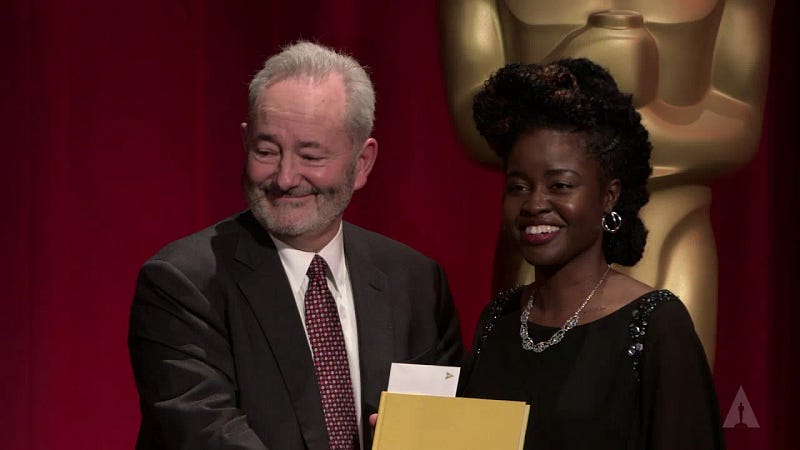
Grace Sherman wrote the original screenplay “Numbers and Words” which won a 2018 Nicholl Fellowship in Screenwriting. I had the opportunity to chat with Grace about her background, her award-winning script, the craft of screenwriting, and what winning the Nicholl has meant to her.
Nicholl Interview: Grace Sherman
Scott Myers: You’re from Texas…
Grace Sherman: Yes. I’m living in Denton, Texas,
Scott: Could you talk about your life growing up there and maybe what role movies and TV played in growing up in Texas?
Grace: Actually, I grew up in San Antonio, Texas, so that’s south Texas. It was a single-parent home and I was an only child so movies and books, were a way of adventure.
I liked reading about new things. Seeing new things in movies — different places, people, characters. Always had an active imagination. Creative, always creating stories in my mind. That’s what it was.
I connected with movies, with dialogue, with experiences, situations. That was an outlet for me. When it’s just you and no siblings around, those pieces, like books, movies, and different things like that, they become a way of how you interact.
Scott: Do you remember some of your favorite movies, books, or TV series from when you were a youth?
Grace: Let me think. What did I like? My mom liked a lot of movies. She liked a lot of different movies. That also help expand my taste and influenced me as a writer. I remember seeing, probably too young, [laughs] but I saw Raiders of the Lost Ark as a child.
Frankly, I just remember the pace of that film, the energy, the excitement, and everything else surrounding it. There’s something about wanting to capture that sense of adventure, that sense of journey and heroism. That’s one that stands out.
Honey, I Shrunk the Kids, that’s another one. Again, an adventure, imagination. That’s the beauty of films. There is no limit in terms of where you can go. Those are just a few. There’s lot more.
Scott: At some point, you must have made the connection that, “Hey, somebody writes these things,” because, as you mentioned in the Nicholl ceremony where they were honoring you, you mentioned that your mother bought you your first screenwriting book, is that right?
Grace: Yes, she did. Up until then, I’d write little stories, like little short stories, things like that. Already, I would see movies differently. It wasn’t just I’d watch it and then go onto something else. There was something about a scene that stayed with me, about a character.
We would watch a lot of movies together. We would talk. “How do you come up with something like that? What is that like?” We didn’t know the exact formula of how it evolves, but we knew somebody wrote it, somebody directed it. She would point out little things.
I remember we went to see…What was it? “Speed,” when that came out. The scene where I think the woman’s going across the street with a stroller and the excitement of that. You think it’s a baby, but it turns out it’s cans or something like that.
She was like, “That’s a way of building intensity. When you write a movie or you direct a movie, you’ve got to think about things like that.” Those little seeds were sown into me, actually speaking into the future as if this is something you could do.
She saw that screenwriting book. She was out somewhere. I don’t know if the library had books for sale. They’ll have books at a discounted price or something, but she got it for me.
It’s a symbol of faith and encouragement, like, “I believe you can do this.” We know nothing about Hollywood. We know nothing about how movies…the nuts and bolts of how they get made, but there was that belief.
Scott: Do you remember what the book was?
Grace: “How to Write…”
All I remember is it was a dark blue book. I don’t have it with me. A lot of the movies they were referencing were black and white, so it was old.
Scott: Pretty old.
Grace: It wasn’t the most updated version., but for the first time I was seeing what a script looked like and things like that.
Scott: That’s a wonderful testament to your mother, who I guess has passed away, that she believed in you so much of the time. It seems like, when I deal with university students, it’s like their parents are saying, “No, no, no. Don’t go into writing. There’s no future in that. Get a job as a banker, or a lawyer, or whatnot.”
Your mom evidently was really attuned to your creative ambitions and interests.
Grace: Yeah. She was an English major. She was a teacher. She liked storytelling. She wrote stories as well, and I took to that. We had different [laughs] tastes, but, still, there was never a limit or a message of, “You can’t do that. Do something more practical,” things like that. That stayed with me. Even after she died, that stayed with me, that encouragement to keep going for it.
Scott: What about your educational background? Did you study writing in college or beyond? How did you go about learning the craft?
Grace: I didn’t formally study it. I am self-taught, watching movies. Again, I was watching them differently — what worked, what didn’t work, reading blogs, going to your site, reading other blogs, other websites, books, and reading a lot of screenplays. That really did help, reading a ton of screenplays.
Scott: I think you mentioned in the Nicholl ceremony you’re a therapist. Is that right?
Grace: Yes. I’m a licensed marriage and family therapist here in Texas. My background, I studied psychology and sociology in undergrad, and then I have a graduate degree in family therapy.
Scott: I always think that’s a great thing to do. I took a couple of psychology courses at the university where I went to school. I always encourage my students to do something like that because so much of what we do as writers is work with characters.
Do you find there’s a translatability there for you in terms of the work you do as a therapist and your work you do as a writer in dealing with characters in particular?
Grace: Definitely. It does inform character development and dialogue because, in my profession, you come across so many different people. Just a range of experiences, backgrounds, dialect, perspectives.
Themes begin to emerge of what certain experiences are like. What it is like being incarcerated and then being released. What it is like dealing with a crisis, a trauma, grief, or things like that. That definitely has informed the way I go about writing stories and dialogue.
With “Numbers and Words,” I get the question often, “Was it based on a real character? It has to have been based on a real character,” and it wasn’t, but I’ve been informed of that perspective. Of what that journey can look and feel like in terms of being incarcerated and going back into the community. That has definitely helped in character development.
Scott: That’s a natural segue to your Nicholl winning script, “Numbers and Words.” Here’s a plot summary that I found on the Nicholl site. “It’s about a young, black, mathematical genius with the potential to make one of the most important discoveries in the field as he struggles to hold onto his gifts while spending decades of his life in prison.”
You mentioned that you’ve intersected with people who’ve been incarcerated then gone back out. Was that the initial inspiration for “Numbers and Words?”
Grace: Scott, it was a variety of things. That’s one theme of mass incarceration. Also poverty. Also, I had in my head this dialogue with two characters that one liked math, one liked books, and how that would play off of each other.
It initially started there, and then it was, “Well, how would these characters emerge? What would their journey look like?” Then the pieces fit together. Different ways it all came together.
Scott: Did DeMarcus, your protagonist, come first or did Beth, or did they come together when you said you had this dialogue between math and books?
Grace: DeMarcus did come first.. I like characters that have something that is going to set them apart. They’re different. If there’s a gift, a talent, something where they stand out and they have to offer that in some kind of way. Even if there are challenges or obstacles, that gift, in some kind of way, has to emerge.
I was thinking of a character who has this immense talent, who is brilliant, and yet confined in some way where he can’t fully develop and express himself. Then, what will the conflict be? There are a lot of different aspects of conflict. Not only where would the conflict be but also where would his journey take him, and where would the hope lie?
How does he overcome that? That’s where Beth came in, someone who does challenge him. There is conflict, but the relationship is about hope.
Scott: It’s almost like you could track the story for DeMarcus through the title itself as being what if it starts off as numbers versus words to numbers and words that, by the end, he’s able…I remember, as a parent of a young child, use your words to express yourself.
He does, way at the end. He is able to express something of his feelings in an authentic and verbal way. Does that seem like a fair representation of the arc that he goes through?
Grace: Yes. He learns a different way of presenting himself, his feelings, his thoughts, his emotions. Not only the challenging ones, but also the more positive ones. Even if he does feel his back is against a wall, he doesn’t always have to come out swinging and fighting. He does embrace that aspect of himself, his own words, Beth’s words, and everyone else around him.
Scott: Let’s jump back a bit to talk about DeMarcus Daniels, the story’s protagonist. How would you describe his personality and his background at the beginning of the story?
Grace: He’s brilliant. He is determined. He also has a very protective nature. He’s giving. He has a good heart, and he wants to do the best. Not only for himself, but for everyone around him — his mother, his sister, his friend, little Ed, Beth. With that said, there’s also even a fear that something’s always out to get him, to take him out, so he always has to fight.
Every situation, like the conflict and obstacles, it’s always threatening him in some kind of way where he always has to have his guard up. While he does have this other aspect of himself to offer — a softer side, a brilliant side — there’s also the side of, “I still have to keep my fists up.”
Scott: You describe him at one point early on, this is straight from your script. “DeMarcus walks down the street haunted in the crosshairs between boy and manhood, headphones on his ears, eyes dart from left to right. Everything is mathematical. Lamp posts bend into right angles. Cars form into circles.”
That fear that you’re talking about is manifest there before you hit that last paragraph, but then that last paragraph really is quite compelling. Through his worldview, through his eye, he does see the world in a mathematical fashion. Is that right?
Grace: Yes, he does. Everything is mathematical. That’s another characteristic of him. He’s obsessive. He’s obsessed with math and trying to solve this hypothesis.
Scott: Yet, he’s got an interesting relationship to the math. On the one hand that’s how he sees the world, and sometimes when he gets angry or frustrated, which is often, he’ll work on formulas and equations to calm him down.
There’s that component, and yet he’s got this rather ambiguous feeling about it to the point of almost antipathy, in part because of this way that he sees the world. He’s got an ambivalent attitude toward the math, doesn’t he? He feels it. He sees the world that way, and, yet, at the same time, it haunts him.
Grace: Yes, definitely. It consumes him in every single way, every aspect. It can calm him down. It can soothe him. It can infuriate him. It can antagonize him. Yes, that’s part of the haunting besides being haunted where he is developmentally going into manhood, all the other aspects around him, this math problem that he’s trying to solve is haunting him as well.
Scott: Let’s talk about this. Is it the Pythenian Hypothesis? Is that it? Right?
Grace: It’s not real, [laughs] so you can say it however you want. Yes.
Scott: I looked it up, and I was like, “Wait a minute. I’m not finding anything on this.” I thought I either had bad Google references or…You made this up, right?
Grace: I did, I did. I’ve heard other people say they went and looked it up. Yeah, it’s not real.
Scott: I did find Pythia, which is a priestess in the court of Pytho, the sanctuary dedicated to the Greek god Apollo. Pythia was highly regarded, believed that she channeled prophecies from Apollo himself. Is there any reference there, or did you come up with Pythia as a cool sounding name?
Grace: No, but thank you for telling me that. I didn’t know that. It’s a cool-sounding name.
Scott: The legacy of your story, it’s been around for four centuries or so, and it’s confounded people. DeMarcus feels like he’s obsessed with solving this thing? What does that mean to him?
Grace: He just knows he has to do it. The outcome or what it would look like, I think is freedom to him for some reason. He started thinking about it when he experienced the loss of his father. It became fulfillment. Then it became obsession. He knows he has to solve it.
What it’ll bring, he doesn’t exactly know, but he knows he has to do it. It’ll just, in some way, save him and give him freedom. He just knows he has to do it.
Scott: That’s interesting, because I was thinking that the text, him trying to solve this mathematical equation.
Then, if you look at it sub-textually, say, from a psychological standpoint, he may not even understand it from a conscious level, but subconsciously, it feels like what he’s really trying to figure out is another mystery, which is why he is the way he is and, ultimately, discover who he is. Does that seem fair?
Grace: Yes, in a way of, “I look at this environment around me. It’s poverty. There’s sadness. There’s depression. I want to do better than this. How do I get from beyond this? What is it that I need?” For some reason, that problem is the piece of that puzzle, so you’re right. He doesn’t know overtly what it means to him.
Like you said, psychologically or emotionally, it’s just something tells him that this is going to be the key.
Scott: In fact, Beth even asks him, “What are you going to get out of this? What does it mean to you?” Let’s talk about Beth. There are two figures that enter into DeMarcus’s life over a period of two plus decades, nearly three decades, that we follow him in this story, one of whom is Beth, who’s younger than him. When we meet her, she’s 12 years old, but she’s sharp as a tack.
As we used to say in the South, she’s a ‘pistol.’ She’s smart and sassy. She’s also black, like DeMarcus. They are both going to this predominantly white after-school-type program. DeMarcus is only interested in the math and nominally that in the context of that school where she’s voraciously taking on everything. How did that character emerge?
I know you said math, in “Numbers and Words.” She’s the words person. Do you remember how that character evolved in your story-crafting process?
Grace: Actually, she evolved first with meeting him while he’s in prison. I had set it where she would meet him in the second half of the story, and they would start the dialog there. He’s incarcerated. I wanted his relationship with her to offer him hope and inspiration while he is incarcerated.
She would come and visit him. Then they would have that dialog and that conflict. Then, as I was writing it and developing it, I don’t know [laughs] how it came about. Just one day. A spark. Woo. What if he knows her beforehand? What if he meets her in childhood?
Then I toyed with it. Then I was like, “Yes, yes.” In the way I wrote her character, she pushes him. She’s the challenge. She’s the conflict. I needed somebody that, intellectually, was at his level in some way.
Math is his strongpoint, English is hers, but they can challenge and push each other. You have him, who’s [laughs] not a people person. “Let me just focus on my math,” a loner. Then here comes Beth, who is jovial, loves education, wants to be immersed in everything, likes going to school, and she pushes him.
That’s basically how she came about. She started in the middle of the script. Then I decided that they should meet earlier.
Scott: Well, I’m glad you made that decision because their exchanges as kids is quite precious. I mean that in the best way possible. She serves as something of a mentor figure early on, eventually, you could say. As adults, they develop feelings of each other of a more romantic nature.
Early on, I was so [laughs] happy to…I’m a big Joseph Campbell fan. Somehow she discovered this. Maybe she watched “The Power of Myth,” that six-part series with Bill Moyers or something. She’s quoting Joseph Campbell in “The Hero’s Journey.”
Even as a child, she says, early on, “In every journey the ultimate boon is the great reward of the quest, what the hero went on the journey for in the first place.” I think that’s actually in the context of her asking, “Why are you so into this Pythenian Hypothesis thing?”
Then, much later on, she says to him, “The road of trials, the hero will encounter many dragons to slay over and over again, but he must never give up. It’s how he gets stronger.” Let me ask you, personally, when did you discover Joseph Campbell? How did the idea of literally articulating The Hero’s Journey as part of the story, how did that all emerge?
Grace: That is what centers the story. I was at a conference years ago. One of the speakers was talking about that journey.
That was the first time I had thought about it and just how applicable it is to any situation. It just stayed with me. I was like, “Ah, there’s something there. There’s something about that.” I didn’t know where to put it, but it stayed with me. Then, as I was working on this story, and thinking about it and the dialog that was emerging, I was like “OK. That’s where we’ll go with this.”
As I was developing the beginning of the script when they are younger, I was also thinking about the end that they’re going to come back to this and that he’s going on this hero’s journey and that there are going to be challenges in different aspects of the journey that he goes through.
That’s basically what I had in mind. When she asks that question in the beginning and the different seeds that she’s planted, they’re going to revisit that in the end. When I’m thinking about the scene, I can see DeMarcus rolling his eyes at this, this kid spouting, like you said, Joseph Campbell at 12 years old. Like, “Come on, gimme a break,” but it stayed with him.
That’s what I wanted to convey. It’s very important, this relationship, because I like that in movies in general. The importance of relationships and how we influence each other and ultimately change the trajectory of one another’s lives. Their relationship is so important, so significant to each of them.
I wanted something throughout the script, something that held that relationship together. That’s what I wanted to revisit in each of the acts, was coming back to that hero’s journey because he was on that journey. He didn’t see it, but Beth did. From her personal and literary perspective, she saw him as a hero on that journey.
Scott: I tell that to my students because we obviously, in teaching writing, talk about the hero’s journey. I say, “Look, it’s not just a theory about story. This is about life.” Campbell was very specific about that. These myths and stories are reflective of our own experience. You look at DeMarcus at the beginning, his troubled family life.
He’s got a mother who’s problematic to the point where he’s separated from his sister who’s living with a foster parent. He’s got a man, Nate, who is his mother’s lover who is very violent. DeMarcus is living in a state of poverty. It’s a lot of problems going on there at the beginning. Campbell talks about the ordinary world, that the hero is just making do.
Boy, DeMarcus is barely just making due, and, that, he needs to change, that the stories are about transformation. That structure must have really resonated with you in terms of DeMarcus and his journey and applying that hero’s journey to him, I would imagine.
Grace: Yes, it did. It very much did, and that was very significant throughout the story and another way to tie in that literary element with his mathematics. How can I tie these two things together? It was very instrumental.
Scott: There’s another character, too. There’s Beth, who’s quite an influence on him. Then there’s another character, Clint, who is basically a privileged white boy, preppy, who, when we meet him, DeMarcus has been providing some math solutions to him in terms of high school, his education, and whatnot. As a result of this, this kid Clint is a college student, yes?
Grace: Yes, he is in college.
Scott: He’s a conduit for books on math to DeMarcus. Can you talk to me about Clint and how that character emerged in the story?
Grace: Again, Clint was one of those characters that was going to meet him in the second act, and then late into the script — I’m talking whole drafts where I thought I got it — I was like, “Well, why can’t he meet him, as well, in the first act?”
Again, going along with relationships and how we do influence each other. I was thinking, “OK, what would be a way for them to meet?” Clint, who is privileged, who is going to a top notch school, has all the access to education, books, technology, and doesn’t appreciate it. He happens to meet DeMarcus and pays him to complete his very advanced mathematical homework. Even more valuable, he gives DeMarcus these newsletters that his professor writes., DeMarcus is a big fan of this mathematical professor. He wants any work by the professor that he can get his hands on to help him solve the hypothesis.
Scott: DeMarcus, one way of looking at the story, and it’s a powerful dynamic in the story, is this sense of fatalism. He’s in a meeting once, and he says angrily to somebody who’s basically trying to school these young black people about interfacing with the law and whatnot…
DeMarcus says, “You can’t pack a bunch of us into this room and say society is against you, but hold your head up high and reach for the moon. It’s easier to sell dope and reach for $100 sneakers. If you keep telling me that war has been declared on me, that there’s a bounty on my head as soon as I get out of the womb, that I am a statistic upon conception, then that is how I’m going to act.”
He does have an anger to him, almost a rage, and that gets him in trouble. He ends up in prison as a result. His mother dies accidentally because he’s fighting with Nate. He ends up going to a juvenile center, and then his anger there gets him sent into prison as a youth.
This idea of will DeMarcus change or not, will he be able to move beyond anger and cynicism or not, I’m imagining that that was a pretty clear emotional and psychological touchstone for you in the story.
Grace: Yes, it’s almost which message will he listen to, or influence him, or will he embrace. On one hand, he is brilliant. He does have that opportunity at school. His teacher tells him, “We can work with you and get you into college.” There’s an opportunity there, but there’s also that aspect that there’s a violent side to him.
Again, it’s that, “I always have to have my fist up,” aspect. The self-esteem piece. The messages that we send young males of color, “Oh, this many of you are gonna end up in jail, or end up there, or end up this and that.” How do they internalize those messages, and how do those messages influence their behaviors.
If you don’t have that support system continuingly guiding you in a different direction, it’s possible you’re following the path that will not be the best. That’s what it is. Which path will he choose? He’s letting him know you’re telling us this.
We can internalize those messages. Then we’ll go out and act out what you’re telling us we are anyway. Because of his intelligence, he’s able to say it in a way that, while the other young men may feel this, they may not be able to voice it in the way that he did.
Scott: You sustain that tension of whether he’s going to give in to, basically, the question from Shawshank: “Get busy living or get busy dying.” The anger and the rage is more the latter path.
You sustain that throughout the story, all the way into act three and the central conflict with this character. Was that always the way that was? You just knew that you were going to play this thing out all the way to the end, this question about what he was going to do, what choice he was going to make?
Grace: Yes, because I thought that was the internal conflict. That was the struggle. That math, again, was that outlet for him, that therapy. He still had hope that it was somehow going to give him peace, get him out of his situation if he just held on to it. He just saw that everything would work itself out.
Then, on the other hand, he still had things that would trigger him. Yeah, I did want to still present that struggle, that conflict throughout the story.
Scott: He’s got this anger. He’s got this rage. He’s in prison. You do a couple of jump cuts in time, but basically you see him at 23. Clint comes back into his life, and then Beth comes back into his life.
Then she’s contributing, I guess you’d say wisdom, in the way of books like “The Old Man and the Sea,” “One Hundred Years of Solitude,” “Invisible Man.” Let me ask you a question specific to that. How did you go about deciding which books Beth would select for DeMarcus to read?
Grace: What was the process of that? I wanted known books. I wanted books that could have been used. She’s using them to help prep them for a test. Books that, again, are widely-known, so there’s been several conversations about them in terms of positives and negatives, criticisms, whatever. Their dialogue is their perspectives on those books.
I also wanted books that DeMarcus could find a mathematical angle to, because that’s his relationship to the books . “Yeah, thematically, the literature, yeah, that’s all good, but how does it appeal to me?” That’s what he’s thinking. “How do I find mathematics in this?”
Scott: She’s a countervailing influence on him that fans whatever embers of hope that he may have inside to balance out his rage and whatnot. He’s in prison for 26 years before he’s released. Peter Samuelson introduced you at the Nicholl ceremony. I transcribed this from his remarks because I thought they were quite apt given your stories. He said, “In a script, in a hero’s journey, there’s the abyss. It’s the low point. It’s the pit. One of the things that’s delicious and eyebrow-raising is to see a truly great writer take their hero to such a low point that you feel as though they are checkmated.
“There’s nothing to be done to rescue this hero and bring him or her back to the light.” It’s interesting that when I was reading the script, it’s like, “OK. Now, he’s in prison. That’s probably going to be act three, getting out of prison.” He’s only in prison for 20-some odd pages. Then he’s released.
To me, that deep dark checkmated moment is when we learn that he’s given up math. It’s like he’s freed and he meets Beth again. In fact, he says this comment. “Why?”
When he finally explains it, he said, “Because it failed me. It fucking failed me. I gave it everything. Everything I had, and all I got in return was to lose everything I cared about. Even then, even then I still gave when I had nothing, and it still didn’t save me.”
Could you talk about that confession on his part and where he’s at psychologically at that moment?
Grace: He solves the math problem in prison. He’s able to solve it on his wall, chipping into the paint. Yet, he looks around and, “Yeah, I solved the greatest mathematical problem in history, but, I’m still stuck in a prison cell.”
In his mind, when you talk about fatalism and you talk about which path can he take, in his mind at that point, he never had a chance. Things were always going to be against him.
He did give every piece of himself to solving this hypothesis. He was obsessed with it. He finally solved it and, yet, what it did do for him?
For the remaining time he is in prison after that, he stops doing his math. He gets out, and still does not want to any math. He’s telling Beth, when she’s pushing him, he’s saying there was no point.
He’s saying, “I did one of the most brilliant things you can do, and the way society saw me is the way I ended up, so what was the point?” That’s where he’s at.
Scott: That reshapes my thinking a little bit. That, indeed, those years that you basically jump past, in a way, in prison, that really was the abyss. What this side of dialogue to Beth represents a confession in a way, like almost a catharsis.
He needs to express this sense of futility and fatalism in a way to move beyond that, it feels like now. Does that seem like a fair assessment of that moment?
Grace: Yes. He hasn’t told anybody this. Along the way, people are asking in different ways, “Why give this up? Why aren’t you doing it anymore?” He just brushes it off. He doesn’t get into the heart or the depth of what it is until she pushes him to tell her the true reason.
He’s at a point where he has to make a decision. She knows he wants to go after Nate. Again, he’s back at that decision that we talked about. Which path will he choose? Is he going to go back to that rage, violence, or is he going to go a different way? That’s where he’s at, but he hasn’t told anybody his true feelings, until he confessed that to Beth.
Scott: As I was saying earlier, you sustained this central tension. Is he going to go the fatalism path and give in to his anger, which would be he wants revenge against Nate?
Now, Nate has turned his life around and got a young wife and a child, and is willing to acknowledge his mistakes that he made. Or, is DeMarcus going to…He has a relationship with Beth now, a romantic relationship.
One of my favorite scenes is when he writes the math equations on her body after they’ve made love. Then also, too, he is being offered an opportunity. Once it’s discovered that he solved this thing, he’s offered an opportunity to make money, teach, whatever.
He got this path, but he’s still so consumed by his rage that he actually goes and confronts Nate. You push it right to the edge there. Was that always there in your thinking, that you’re going to have that scene with Nate? How soon or how did that moment emerge into your thinking that you’re going to have to push him that far?
Grace: There had to have been something. On my [laughs] journey of teaching myself about story and all that, I came across several things that you do need that…In that final act or whatever, what path is your character going to choose? I knew there had to be something.
Before, I thought, “He’s going to be released, start to rebuild his life, have a relationship with Beth, and just get straight back into society.” I knew there had to be something else that he was struggling against that he was facing.
Nate brought all this into their lives, all this anguish and abuse, and he got away with it. He’s been out free, rebuilt his life, and DeMarcus has been stuck in a prison cell for 20-something years because of that event.
Again, he doesn’t have his math anymore to take him out of that. Yes, he is hyper-focused on revenge and getting back at him and doesn’t care at that point. He’s had the worst, so if he goes back to prison, whatever. He doesn’t care at that point.
Scott: I call it, in my language system, the Final Struggle, which really is in the external world of the plot, the culmination, in some respects, of the narrative. Underneath it, it’s like they’re asking that question or answering that question — Who am I?
He pulls back and actually does not exact revenge on Nate. Later on, he has a scene with some young boys. He’s been cajoled by Clint into doing some sort of work with troubled youths.
This is that thing we go back to, the talking early, where he’s been provided the words now, or he has the words now that he’s willing to say. This is “Numbers and Words.”
Here is the words he says, “We’re taught as boys to respond a certain way in the face of tragedy. Just fight. Never let anyone see our hearts. What I wished I would’ve known or what I wished I could’ve believed is that I didn’t always have to fight, didn’t have to always be on guard, and, if I just put my fists down for one minute, the world may not open up and swallow me whole.”
That speaks in part to that fear you were talking about earlier. That’s a really important moment for him, isn’t it?
Grace: Yes, it was. Again, that’s been the other part of him, that fear to always have your fists up. With the young men that he’s telling this to, they verbally spar back and forth with each other. He’s thinking “You’re somebody else I have to fight.”
Then there’s a moment when DeMarcus says, “OK, we’re not going to do this anymore. Let me approach you a different way.” It goes back to a conversation that he had with Clint when Clint’s pushing him and he’s asked them, “What did you need to know as a young man for you to make different choices?”
At that time, DeMarcus ignored him, doesn’t think much of it. Then it comes back again at that moment when he is speaking to the group. He wants to help these young men do something different.
Scott: Beth contextualizes this is in a very nice way to round out the whole hero’s journey. She says, “And the hero returns from the adventure to share his wisdom with the world. All will be enriched by his experience, but not all will know that while his mind helped him achieve the quest, it was his heart that showed him the way.”
To me, again, it’s that duality you’ve got of Numbers and Words. The numbers in a way, broadly speaking, representing the head. The words, at least in the context of this story, more representing the heart.
By the end, end he is able to meld those two together and move toward some semblance of balance or unity. Does that seem like a fair representation of the arc of his journey?
Grace: Definitely, exactly. He had that need to solve the problem that set him off on the journey. Brilliant with his mind, but he had to get to a place of vulnerability in order to really fulfill his potential.
He’s able to do that with his relationship with Beth, with Clint, with the young men, and even with Nate at the end.
Scott: It’s a powerful script and quite relevant for our age. Let’s jump to [laughs] your Nicholl experience. What was that like?
Grace: [laughs] It was great. I had a great time. I enjoyed it a lot. It’s just interesting. With that type of competition, you never know how it’s going to play out. You hope to win, but when you actually do win, you’re like, “Wow. Really?”
Things moved so very fast, but it’s been great. Everybody’s been encouraging. I’ve had good responses to the script, so it’s been great. I’ve enjoyed it.
Scott: What is the status of the script at this point?
Grace: Right now, I’ve been talking with different producers who like it, are interested in it. We’re just deciding the best place for it.
Scott: You want to find a producer who really gets it and is passionate about it. That would be my unsolicited word of advice. Did you get representation out of this, too?
Grace: I did, a manager, yes. The Gotham Group.
Scott: Congratulations on that. Excellent. Thanks so much for opening up about the script and delving into it. I really enjoyed that conversation. Let’s move to some craft questions for you if you don’t mind. How do you come up with story ideas?
Grace: It’s a variety of places. It could be a news story. It could be a memory, an emotion, I don’t know, a conversation. It’s just a variety of different places that invoke a response in me. Then I think, “What would be the best way to convey this?”
Scott: I ask that question in all these interviews. I say, “How important is theme to you? Do you start with theme, or do they arise in the context of developing writing the story?”
More people tend to answer that it is something that emerges over time, but what I’m hearing from you is that it’s more frontloaded for you, that you want to have those themes bubbling in your thought processes upfront.
Grace: It is. It could be about forgiveness, isolation, loneliness, love, hope, vengeance, whatever it is. Just in general, that’s the therapeutic mind. You go to what’s behind everything, like, “This is what’s being presented on the surface, but what’s behind it?”
That’s naturally where my mind goes. Then I think, “OK, this is what is behind everything. How can this be presented again in a way that would connect with others and then what character? How would this fit with what character? What would the plot look like in the story and what dialogue would emerge?” For me, that’s how it works.
Scott: You’ve got, let’s say, some sort of anonymous story that you’re dealing with. How do you go about prepping it? Do you do brainstorming, or are there character development exercises you use, or plotting, or research and outlining? What’s your prep process like?
Grace: It’s usually a very internal process. It stays in my head for a bit before it gets somewhere on paper. It’ll just stay with me like when I heard about the Hero’s Journey, at that conference.
I was like, “OK. Place that somewhere. Hmm, that’s something cool to do something with.” Then it emerged in Numbers and Words. With me, I’ll think about something, feel something, and I’m like, “Hmm, this should be conveyed in some way.” Sometimes, immediately the characters will come up and the plot and the dialogue, and I can see it in my head.
Then, other times, it’s there but it’s not fully developed. [laughs] Basically, a roundabout answer to your question, it stays in my head a lot. [laughs] I don’t know if that answers your question.
Scott: I call writing a story “wrangling magic.” It’s interesting to hear you talk. It’s like me. I more often see these characters or hear them and follow that. It sounds like you’ve got a bit of an inverse thing, maybe at least in some respects.
For example, you said, “OK, Numbers and Words. I want to have that dialogue. Well, who’s gonna inhabit those two sides of things?” [laughs] The extent of the magic of how DeMarcus and Beth emerged. Do you have any specific things or is it just living with them in terms of developing your characters?
Grace: I just live with them and they emerged. I don’t know. Like that dialogue, like I said, I saw DeMarcus, he’s incarcerated, but what, about him, would present conflict? There has to be something special about him. OK, he likes math. He really likes math. He’s brilliant. Then it just goes from there. It just emerged.
Scott: What about pragmatically? Screenwriting is scene writing, so what do you think about when you are writing a scene? What are your goals when writing a scene?
Grace: Goals, let’s see, often it is to…Especially because I like relationships, often there’s going to be a significant relationship in the script. A scene would be to build on that relationship. Beth and DeMarcus are on the bus talking. I wanted to establish a conflict in the relationship, their perspectives, their passions, and what they are to each other.
Who is the character? Present the character in a way that you get a good sense of, “OK, this is who they are,” as well as advance the plot and maybe sow seeds now that we’ll come back to again in the second or third act. Usually with scenes, when I develop them, I’m thinking, “Well, how is this going all come together in the end?”
Scott: Let’s say you finish your first draft, and you’re faced with the rewrite process. What’s that process like for you? Is it fairly well constructed or do you just go at it? I remember what Diablo Cody says. She’s “like a cat obsessively cleaning herself.” [laughs] That’s how she looks at the rewriting process. What’s your rewriting process like?
Grace: Actually, I enjoy the rewrite much better than the first draft. Usually, with the first draft I know what I have to come back to, and what’s not sounding quite right and just needs to be cleaned up, but get it on paper first. Then I will read it again, go through little things here and there, this, that, clean this up, change this, do this, and then go back again.
Then I’ll get to a point where the mechanics are cleaned up and things like that. Then, how is it flowing? How is it sounding? When you talk about scenes, is this scene advancing the plot? Is it needed? Is this dialogue sharp enough? Is it as creative as it could be? Can I do something different with it?
Part of it, I go, first, just cleaning it up and then scene by scene or act by act as well, first 30 pages, second 30, whatever and really get into the heart of making it even more compelling, even more interesting, even more different, creative. That’s the process. Actually, I enjoy the rewrite.
Scott: Good for you because you’re going to be doing a lot of it.
Grace: Yes, I know!
Scott: What’s your writing process? Do you write every day, or do you write on the weekends or at night? What’s that process like?
Grace: I write, like you said, all of it [laughs] when I can. I have to write every day now that I’ve got a lot more people knowing that I’m writing. There’s something I can do every day, but then I do get those creative bursts where it’s scene after scene, I got it. I have to get it down and write several pages in one sitting. It just emerges. It’s all of that.
I don’t have a certain time of the day that I prefer. I do like writing in different environments, like going outside, going to the park, the library, being able to observe people. Even the non-verbal can help in terms of writing a scene or a character. That’s basically the process.
Scott: You’re a therapist. Do you find writing therapeutic?
Grace: I do. There are things that can’t be expressed in a formal setting, but they can be expressed through different characters. I do find it therapeutic. Not only for me, but there’s so many different stories out there. You come across that with the different people that you encounter. Different experiences to express, to show, and to convey.
Writing movies is a way of sharing those journeys and those stories in different ways..
Scott: Let’s ask one last question, which is a question I’m sure you’re going to be asked more and more frequently now as you move forward with your career, which is, what advice can you offer to aspiring screenwriters and filmmakers about learning the craft and breaking into Hollywood?
Grace: I would say, “Don’t give up. Learn as much as you can. There’s something always to learn about it. There’s screenplays. Read a lot of screenplays. Read books, blogs, but just learn as much as you can about it. Don’t give up. There’s a reason that you’re drawn to it, so hold onto that.
There’s a lot of different audiences out there and, like I said, a lot of different stories that need to be told. If there is a story inside of you that’s burning to get out, we need to hear it. There are audiences out there that need to hear your voice and to hear the stories that you want to tell. That’s what I would say. Don’t give up. No matter where you are, part of the world you are, there’s a way to get your story to where it needs to be.”
Scott: This has been a great conversation here, Grace. I’ve really enjoyed it. I was very pleased to hear that you read some of my Nicholl interviews in the past, and here you are being interviewed. That must be a little bit of the “Twilight Zone,” I imagine.
Grace: It is because I would read those interviews. I would think, “Oh, that’s so great. Oh, that’s how they came up with their script. Wow, what a great writing process.” [laughs] Now, I’m talking to you.
Things that seemed so far off are now front and center and present. Again, those interviews were very inspiring. It was great to read them. I’m glad you’re doing it. I’m grateful to be a part of the process, so thank you for taking the time to talk with me today.
For my interviews with every Nicholl Fellowships in Screenwriting winners since 2012, go here.