Go Into The Story Interview: Filipe Coutinho
My interview with 2023 Black List writer for his script Patsy.
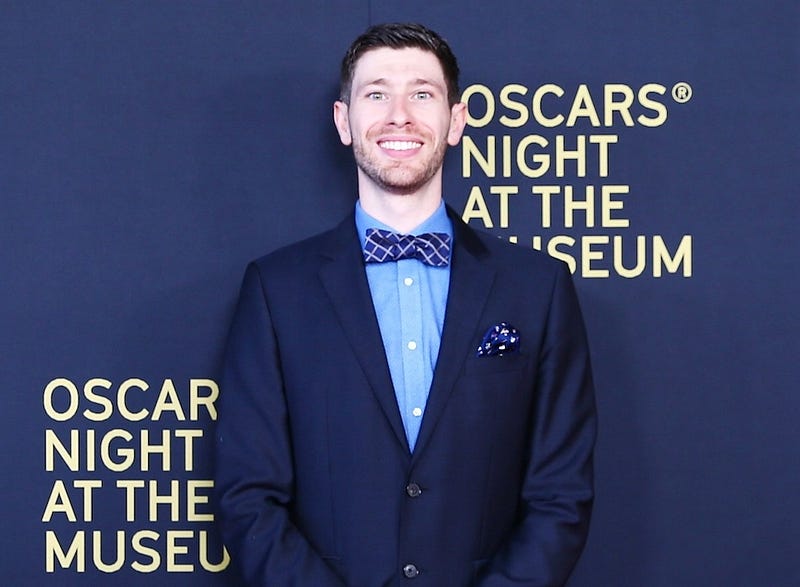
My interview with 2023 Black List writer for his script Patsy.
Here is the complete interview with Filipe.
Scott Myers: Filipe, we did a previous interview when Whittier, a script you co‑wrote with Ben Mehlman, made the annual Black List in 2021. One thing I remember from that conversation was that you were growing up in Portugal and someone, I can’t remember who — maybe one of your family members — took you to a movie and you saw Cate Blanchett and like, boom, it changed your life. Maybe you could walk us through that again.
Filipe Coutinho: The way that it worked was, I had just started business school, but I was also getting very interested in movies and moviemaking in general. I was going to the theater every chance I got. I wanted to watch everything and anything. At some point, there was this movie, Elizabeth: The Golden Age, and I figured that was something my mom and my grandma would enjoy. [laughs] So I convinced them to go with me. It’s not a genre I tend to gravitate towards, but like I said, I wanted to watch everything. So, there I was — watching this sequel about Queen Elizabeth — and I found myself completely transfixed by Cate. That had never happened to me before. Not in that way.
There’s a line in the movie — and I’m paraphrasing here — in which Cate says, “I’m the mother of my people, the queen of my country.” I don’t know what happened, but something sparked inside of me. I felt overwhelmed by emotion, and I felt like I had to do something with it.
It was 2007 so I went home and did what most kids my age did at the time, which was create a blog. [laughs] I did it just so I could write about what her performance made me feel. One thing led to another and that started me writing in the world of movies in some capacity.
I’m fully convinced that I wouldn’t be where I am today without her and that performance in particular.
Scott: It was kind of a Letterboxd experience before Letterboxd.
Filipe: Absolutely. As an obsessive Letterboxd user, I see so many people expressing themselves in similar ways. It makes me so happy that there is another type of outlet that unites film lovers in this way. At the time, it was much harder to create this kind of community.
Scott: I’m always concerned about whether young people are going to maintain a love for movies. There are so many things they can do — video games, TikTok, YouTube, whatever. But the growth of Letterboxd as a social medium platform for movies lovers … it’s exciting.
Filipe: The Letterboxd rise has been exponential over the past, I would say, four years. I started using it six or seven years ago, and I’ve noticed an incredible increase in users and also in users who are young. I’ve thought a lot about what you thought about, and my conclusion is, if you make good movies people will always find them, no matter how old they are.
I think it’s a mistake to think that just because people have grown up with the Internet and have access to all kinds of short content, they won’t make time for something that can be perceived as being a little more challenging.
Scott: We have another previous connection beyond the 2021 “Whittier” conversation we had, and that was the Black List Feature Writers Lab in 2020, right during the middle of the pandemic. We did it on Zoom. What was that experience for you?
Filipe: It was life‑changing. I tell everyone that they should try to apply to these programs because the upside is so huge. For example, after the lab ended, I quickly signed with a manager alongside Ben Mehlman, and that changed everything. I believe that experience shaped a new trajectory in my career, which led me to where I am today.
The experience itself was very dramatic in some ways. One of them was that I was in Portugal at the time, so most of the Zoom sessions started at around 1:00 or 2:00 AM my time.
A lot of it felt like a fever dream. [laughs] I remember one session in particular, a masterclass or a fireside chat or whatever you want to call it, with Lindsay Doran. It only started at 5:00 AM and so, to stay awake and have some sort of energy, I watched Michael Mann’s “Miami Vice”, just to keep going. By the time I got to Lindsey Doran, I felt like I was in a state of elation and manic energy. I was trying to take advantage of this, but I was also completely alone in this house, isolated in a small town during peak pandemic times. That was quite a striking experience and I obviously will never forget it.
But I think that what really helped me — and I think I can speak for Ben on this as well — is that we had written several scripts before Whittier, but that was the first time someone like Beau Willimon spent time talking to us and said, “This is good, guys. You wrote a great script.” We should never live off validation, but at certain points in your life, you just need it. To have someone like him, or Jack Thorne, or even you, Scott, tell us “you guys have written something good, something that I can see having a path forward” was very meaningful.
Beyond that, you learn so much about film and filmmaking in these programs. Writing is an ever‑evolving craft and the program made me such a better writer than I was.
Scott: Let’s talk about your second annual Black List script: “Patsy.” Here’s a logline that was provided by the Black List.
Filipe: Sorry, can I interrupt you for a second?
Scott: Yeah, go ahead.
Filipe: I was actually on the Black List last year as well, with “Jambusters.”
Scott: That’s right. You’re just like hitting it every year.
Filipe: I’ve been very lucky that people have connected with my scripts, which have been very different from each other.
Scott: I talk to a lot of managers and generally, they prefer writers who focus on one genre because it just makes it easier for them to sell that writer. This is an action writer, this is a comedy writer, this is a horror writer. You have written considerably different material, including “Patsy” which is a biopic. Is it just you following your passion, you’re just going to write it regardless of whatever the genre is?
Filipe: Pretty much. I’ve talked quite a bit with my manager about this, because I’m making his life more difficult. I’m also making my life more difficult, but I’ve also tried in the past to write what I thought people would want to read, and it just isn’t as good. I’m someone who’s very driven by passion and an innate need to tell a certain story. If I don’t feel it, I don’t think I’m going to write a good script. I’m often drawn by character and I think that if you look at “Whittier” or “Jambusters” or “Patsy,” I’m sure you’ll find thematic similarities in terms of those three protagonists, and that is true for all my other characters too. For me, genre is just the makeup I put on top of the story. I try to find the best genre to tell the story of a person I’m fascinated with.
Now, in terms of Patsy Cline, it’s different because we’re talking about someone real, someone who had a full life. And, of course, a biopic comes with a certain degree of expectations, which I try to fulfill. But at the end of the day, I try to follow my heart as much as possible.
And part of the reason I do it is that writing a script is an overwhelming lot of work, as everyone knows. If I’m going to spend months, sometimes even years, on something, I’ve got to have the passion, and I have to be able to go back to that well and be re‑inspired. If I’m writing something that I don’t care that much for, that makes things very difficult for me.
Scott: Sometimes the single hardest thing to do in writing is just to get your ass in the chair to do it, and if you’ve got that passion, that’s going to help you get to that point.
Filipe: Yeah. And I also believe that people will connect with the things that you’re passionate about more than anything else.
Scott: Let’s unpack your journey into this script. “Patsy” the logline here:
“The untold of an unfiltered true story of legendary country singer Patsy Cline, from her humble beginnings in Virginia, to her untimely death at the height of her fame.”
First of all, you’re a young fellow growing up in Portugal. Patsy Cline is a woman who became famous in the late ’50s and early ’60s with country music fans before she crossed over into the pop music market. How did you intersect with her as a musician?
Filipe: I can’t tell you the first time that Patsy Cline came into my life, because I feel like she’s always been a part of my life. I had a pretty eclectic music taste since I was a kid, and I always gravitated towards older music.
Patsy Cline was a part of those early playlists that also had The Beatles and The Stones, and Otis Redding, and Aretha Franklin. There was “Walkin’ After Midnight,” and there was “Crazy,” and there was “Sweet Dreams.” All the hits most people know and love. But it wasn’t just about the songs being great, which they are. It was something about her voice that activated a part of my brain that told me, ‘this person means something to you’. I don’t think I knew that at the time, but I can look back and identify it in terms of how my body reacted to hearing her voice. This is beyond the lyrics, beyond the music, this is actually the timbre of her voice, if you will.
About how the writing of the script came to be. I was looking for my next project, I believe two or so years ago, and, well, I love music‑driven projects.
You are looking at me and you can see my background [posters of the Velvet Underground and Bob Dylan]. I was thinking, ‘is there an artist I love that people might connect with? Is there a story that hasn’t been told?’
Patsy came into my mind, and I decided to read a biography to learn more and see if there was something there. As I was reading, I was like, “I understand exactly why this person means so much to me.” It’s something that I understood through her voice all those years ago but now I finally knew why. I didn’t grow up in the south in the ’50s as a woman in a patriarchy, but I felt like I connected very deeply to the way she used her voice as an artistic outlet.
Once I finished the book, I was like, ‘I’m going to reread it immediately because I want to make it’. And that’s what happened.
Scott: On the title page, it mentions two books. Did you secure the rights to those books?
Filipe: The truth is, I did not secure the rights to those books. On the advice of people who know better than me, I decided to go ahead and just write it.
What they told me was, “you don’t have the clout or the money to get these books, that’s just the truth. You can write the script, and when the time comes, the right producers will secure the rights for you. You’ll also need the Patsy estate to be on board, so it’s a long road no matter how you slice it.”
That sounded fair to me and I embarked on the journey with my eyes wide open.
Scott: Let me ask you a question because I’m hearing from you that it really was a passion project. But if you put your producer’s hat on, there have been several successful musician biopics the last few years: Bohemian Rhapsody, Elvis, Rocketman. Did you ever think, “Hollywood’s obsessed with IP, and Patsy Cline is, in effect, IP?”
Filipe: I try to be very aware of the producorial nature of our job as writers so that was on my mind. Yeah, of course. But I also wanted to put that aside because I knew that if I started thinking too much in those terms, then I wasn’t going to focus as much I needed on the actual writing.
If you ask me, “do I think it’s easier to get “Patsy” made, in theory, than “Jambusters” or “Whittier”?” Absolutely. I also think that if I do my job well, this will be an amazing part for an actor. And it will be a great showcase for a director. So those are big pros that were in my head. But what really matters for me is that I think this is a story very much worth telling.
Scott: Had you written a biopic before?
Filipe: I had written a treatment for a biopic, but I hadn’t gone further than that for multiple reasons.
Scott: Did this scare you at all, the prospect of writing a biopic? It’s a real challenge when you’re adapting a person’s life.
Filipe: It didn’t scare me. I was very motivated by it, in fact. Because you know where you’re going with a story. As soon as you decide where the story should start and where it should end, you always have a direction.
Then it all boils down to, “how do I choose the moments that best service the story that I’m trying to tell while being as accurate and as fair as possible to the person being depicted?” My north star was, “if Patsy were alive would she be happy with this movie? Would have she promoted it? Would have she been proud of it?”
I’d like to think so.
Scott: Yeah, it’s like part of the challenge is what you’re saying, what to include, but also what to exclude, what to omit. I remember reading an interview with Akiva Goldsman when he wrote “A Beautiful Mind.” He read the biography and said, “Oh, it’s three-act structure: Genius. Madness. Redemption.” With “Patsy,” you have a three-act structure as well: Her early life. The rise to success. Her tragic death. But let me ask you a question. There are basically two kinds of biopics. There’s the conventional “cradle to grave,” which is the choice you made with “Patsy.” Then there are what is commonly called “snapshot bios.” For example, Lincoln which focused on one chapter in Lincoln’s life, his efforts to get the 13th amendment passed, essentially using that compressed period of time as a lens through which to interpret that historical figure’s life.
What made you decide you want to tell the larger story of Patsy Cline?
Filipe: It’s funny because since I’ve written Patsy, I wrote one other biopic and I’m currently in the midst of working on a third one, and these last two are snapshot biopics.
I was very aware of what you’re asking when I went into the Patsy Cline story. After having read several books and studying her life carefully, I realized that the cradle-to-grave structure was the one that best serviced the story I wanted to tell. I thought that the moments in her childhood were of the utmost important to understand her psychological evolution over the years and her complicated relationship, not only with her father, but with men in general.
And if you didn’t show her childhood, you are going to have to show flashbacks, and that’s something I’m not always the biggest fan of.
I’ve said this to a lot of people and they actually think it’s funny, but my big inspiration in terms of structure was “Goodfellas.” That movie is a biopic, which people tend to forget because it’s so extraordinarily written and directed. But the first 30 or 35 minutes are about how Henry Hill became Henry Hill. How he came of age. It’s the same thing with “Patsy,” but in my story those moments happen a little earlier in terms of how old she was. Those first 35 minutes of “Goodfellas” are also very fast, pacing-wise. They have a montage quality to them. Then it builds and builds, and in the second half, the movie plays like a nightmare. Which is what I also do with Patsy’s life, because it’s true to what it was like.
I also knew I didn’t want to show the plane crash that took her life. For me that was very important. What I wanted to do was show her last moments as a vindication of who she was, and the power she had in people’s lives. The back half of her story is so sad and tragic, and I wanted to give her, at the very least, a bittersweet coda to it. It’s impossible to get around the sadness, but you can still capture her joyful spirit.
Scott: That’s a really interesting comparison, “Goodfellas.” Not only what you described, but you got the voice-over narration.
Filipe: Yeah.
Scott: Why that choice?
Filipe: It was both the voice-over narration and, in my case, breaking the fourth wall.
Scott: The fourth wall.
Filipe: The reason why I did that is because… Early this in the script Patsy says, “If someone’s going to tell the Patsy Cline story, it’s going to be Patsy Cline.”
Obviously, it’s not, but I’m being her surrogate. I do believe that this is how she was. This was part of her personality. She wanted her life to be told, warts and all, and she had no problem telling you if she made a mistake. She was, by all accounts, an open book. To create that directness and that relationship with the audience, I felt like breaking the fourth wall was the best possible way. The voice over is used as a device to perpetuate the fourth wall.
Scott: Also, to stitch together the time jumps.
Filipe: Correct.
Scott: You start the script with her at Carnegie Hall, then jump to that fateful day of the plane crash, March 5th, 1963. Then the narrative shifts back in time. It’s like planting that seed of her meteoric success at Carnegie Hall is like symbolic of, “You don’t get any better than that.” Then there’s looming tragedy of the airplane disaster. What was the thinking behind starting the script that way?
Filipe: I wanted to have some sort of teaser. I hesitate calling it a teaser because it’s not, but I wanted to start with the most powerful thing she had, which was her voice. This movie is all about Patsy Cline’s voice. How she had it, how she lost it, how she recovered it, etc.
Since the story ends in a bad place, I wanted to start in a good place, in a happy place. As you said, “What better way to start than a country singer who at the time wasn’t exactly viewed as the pinnacle of high society, packing Carnegie Hall and delivering one of the best performances that’s ever been given there.”
Scott: I want to talk to you about this idea of Patsy Cline’s voice. Obviously, there’s the singer and she is a phenomenal singer. Also, I’ve lived in the South: Texas, Alabama, Virginia. How did you go about picking up those local patterns of cadence and jargon, because the dialogue comes across as authentic. How did you go about getting that so that the characters, not just Patsy, but a lot of the characters have that southern cadence?
Filipe: That’s the fun part of being a writer, at least for me. And this is also where Ellis Nassour’s book came very handy because he incorporates a lot of snippets of conversations he had with surviving members of the Patsy Cline family, like Charlie and Mrs. Hensley, and also her friends, like Fay and Dottie West. That allowed me to get a feel for how they talk. Having that base, I extrapolated from there, and I did that by doing a lot of research. There are some videos of Patsy Cline out there, but they’re mostly of her singing or giving short interviews, and she’s a different person in those videos. They don’t reflect her personality in her private life.
What I did was use a lot of what people remembered in terms of expressions she used, and things that she liked to say and how she said them. I also drew inspiration from letters she wrote. Then I watched a lot movies and read a lot of books that have the southern vernacular.
I also read a great book for additional depth and texture, I forget the name, but it’s all about the reality that Patsy Cline lived in. It’s not even about Patsy Cline herself, it’s about what Virginia and Winchester specifically was like during the time Patsy Cline lived in. That also includes a lot of information about language and things like that.
Scott: You did a lot of research?
Filipe: Yeah, this was two years in the making.
Scott: You’ve got Patsy Cline’s voice — the singer. You got Patsy Cline’s voice — The Southerner. But there’s a more metaphorical sense of voice, where Patsy found the strength of her own voice as an artist and a woman in a heavily patriarchal environment.
She’s got some complex relationships with men. There’s several of them. There’s Sam, her father. Gerald, her first husband, Charlie, her second husband. Bill McCall, her first manager.
Was this a conscious theme on your part, Patsy discovering her own innate power, her voice to speak out amidst all these male figures in her life?
Filipe: This is where doing the research before diving into the writing helps a lot, because by the time I read two books, one of them thrice, plus the research I did online, I started getting a strong feeling of what her relationships were like.
That second book, especially, “The Life and Times of Patsy Cline” by Margaret Jones, was instrumental in terms of shedding light on Patsy’s relationship with her father. Which consequently unlocked her relationships with other people, especially the men in her life. Then I just looked at the various pieces and started putting the puzzle together.
Scott: I want to zero in on Sam, her father. You do something interesting there. He’s a drunk, he’s mean, he’s there, then he’s not there. There’s a secret that’s revealed over time. Unpack that, what were you thinking? Because that revelation turns out to be a significant part of the story.
Filipe: I would argue that’s the skeleton key to understand who Patsy Cline became and why she had the kind of relationships she had with the men in her life. What happened was, she was sexually assaulted by her father when she was a teen, and later in life she was guilt‑ridden because she admitted to having had some feelings of pleasure.
That created a profound distortion of what a healthy relationship should be, especially at a time we didn’t talk about these issues in the way that we talk about them today.
Her guilt, her eating disorder, her hostility, her sexual dysfunction, her tendency towards re‑victimization, these were all things that were present and inevitably led to an abusive marriage. She definitely loved Charlie with all her heart, but she also felt like she deserved to be abused by him as a response to the guilt that she felt. This is an absolutely horrendous ordeal, but I think it’s one worth telling in an honest and sensitive manner.
But I also knew I couldn’t start the movie with Sam sexually abusing Patsy, because then, practically speaking, I lose the audience. I also believe in the audience’s willingness and ability to put two and two together and connect the dots. By the time we dole out the information that something happened in her past, by the time that she admits what happened, the rest will hopefully fall into place.
The movie also changes quite a bit after that revelation Especially in terms of her relationship with Charlie. I think sharing what happened with Dottie West [represented by Connie in the script] was what she needed in order to recontextualize a lot of what happened in her life. And the proof is that she changed. As much as she could. As much as she was allowed at the time.
She didn’t live in a society that knew how to take care of. It was an enormous act of courage on her part. Not only that, but then Dottie also admits that her father did the same to her, which was indicative of a larger, awful pattern that existed at the time.
In Dottie West’s case, she complained to the police and her father landed in jail. She ended up being the person who helped put the situation in perspective for Patsy. I don’t know if this answers your question. I went on a little bit of a ride there.
Scott: No. It did. Just pragmatically speaking from a writing standpoint, you answered the question. “I don’t want to start with that revelation. I’m going to lose my audience, so I’m going to dole out, and only then the audience is going to understand how it’s critically important to understanding much about who Patsy is.”
For example, I’m thinking some of what’s driving her to be successful, and even that idea of the dream home, is seeking some sort of external validation, that’s going to somehow not wipe away the guilt and shame she may feel about the thing with her father. Is that a fair assessment of at least part of her motivation?
Filipe: Yeah. The dream home is an empty pursuit. It’s when people say, “Oh, if only I had that, then I’d be happy.” She wants what she didn’t have, which is, by and large, a happy childhood. By the time that she gets the house, and this is in the script, at some point she feels very empty.
Scott: I have the quote right here.
Filipe: Please.
Scott: “I started doing some thinking and realized I’d been fighting so hard for the future when all along was the past I was aching for. This was my castle, my blood, sweat, and tears. Now that I had it, I hated it felt so empty.”
Filipe: That is pretty powerful in terms of where she landed. It’s a good lesson for all of us. It definitely made me think about a lot of my things. What am I pursuing? What does it mean? Am I doing this because I’m trying to fill a void, or does this have some real meaning in my life?
Scott: Working in Hollywood, that’s front and center. Get the house up in the Hollywood Hills, the Tesla, the this, the that…
Filipe: To bring it full circle, Scott, this is why I try to write things that I’m passionate about, because those are the things that have meaning to me.
Scott: That’s pure, that’s untainted. It’s you as a creative person finding something you’re passionate about. Nobody can mess with that original instinct.
Filipe: That’s what I hope.
Scott: There is a male figure in her life who appears a couple of times. She has this supernatural experience with Jesus. Was that actually something she expressed, or was this something you came up with?
Filipe: This is something that was in the research. Patsy kept having premonitions of her death throughout her life. In fact, part of the reason why I wanted to cover her childhood is because she was very close to dying from rheumatic fever. During that time, her mother thought that she was a goner. Patsy claimed to have seen a figure that she interpreted as being Jesus, and that Jesus told her that it wasn’t her time yet. When she eventually — almost miraculously — recovered, she had a different voice. The voice we know and love today.
This figure also pops up a couple more times in her life, including after her infamous car accident. Same thing happened. According to Patsy, when she was recovering in the hospital, Jesus came to her and told her “It’s not your time yet.”
And then there was a third time where the opposite happened, where this figure told her to get her affairs in order. It’s hard to say where that came from, but I found it really interesting, and I thought it merited being a part of this story.
Scott: It’s also interesting how three of her biggest hits — “Walking After Midnight,” “Crazy,” and “I Fell to Pieces” — if I’m remembering correctly, she resisted wanting to record those. She either didn’t think the songs were that good or they weren’t her style. It got me wondering … this may be too psychological, Filipe, and I’m sorry if it is, but what if she at first resisted recording those songs because of her guilt and shame, like “I shouldn’t record those because I don’t really deserve those hits songs.”
Filipe: Like you, I can only do a bit of armchair psychology, because we can only deal with the information that is available to us. Part of it is what you’re saying, and another part is what we talked about in terms of the past being what she ached for all along. I think because she grew up with Wally Fowler records and she grew up with her father and his angelical voice singing those types of records, I think she wanted to record them too. Maybe it was a way of getting closer to her father and perhaps healing the relationship the only way that she knew how, which was through her voice.
While she possessed this remarkable power that everyone who knew about music understood intuitively, she was also using her superpower the wrong way for the longest time.
She was stubborn because that’s part of who she was. That was her main character flaw, if you will. In that sense, I think she couldn’t see the forest for the trees. I don’t think she was particularly good at seeing the future. Sometimes you have people like Howard Hughes, who’s someone who always looked at the future. Patsy Cline was the type of person who looked at the past, and that had to do with her own experiences.
It’s interesting that people who took advantage of her, both in terms of career and then also in her personal life, like Charlie or Bill McCall, ended up being the people who elevated her musically. They basically manipulated her into recording the songs that would then become her greatest hits.
Scott: There’s a title page, then there’s a page before you go Fade In where you have this wonderful picture of Patsy Cline in the recording studio, and underneath, a quote: “I don’t do anything halfway, halfway is half‑assed and that ain’t me.” That really does describe her positive power to forge through all these challenges, but also it’s a blind spot for her.
Filipe: It’s funny because she had amazing instincts in the studio, right? Sometimes she would do things with her voice and people would be like, “Wow, this is unbelievable.” I think she understood that. But sometimes she would just be completely off. She would go into these rockabilly tempos and her yodeling and they would drive Paul Cohen from Decca Records insane.
Then there’s a scene in which they’re recording one of her tracks, and she says no and no and no. Eventually, Cohen loses his patience and he’s like, “just do this one take for me,” and she does it, and then she listens to the playback and says, “You know what, Hoss? You’re right. This is my identity.”
Scott: I want to talk about three last points here, all tied to how can you get people to connect with the story. One, you’ve got hot links in the script where the reader can click on the links and listen to each song on Spotify.
Filipe: This is something that I started using with Ben Mehlman on “Whittier.”
Scott: That’s right, I remember that now.
Filipe: I know that this can be a big no‑no in the screenwriting community and, honestly, I’m not too interested in rekindling that debate. I can tell you why we used them then and why I continue using them when I think it’s appropriate.
If someone wants to click on the links, they can. If they don’t want to click on them, the script still works perfectly fine without them. The way I think is, if music can be additive in terms of texture and depth to the reading, then why not? I have never, ever had a meeting with somebody who was like, “you know what, I love your script, but those damn links, man, I can’t do it. So I’m passing.” Sometimes people overthink these things.
As long as the writing is engaging, there’s very little that matters beyond that, in my opinion.
Scott: You know what? Her voice was so distinctive. It’s awesome to be able to have those links and just invite people to hear her sing.
Filipe: Look, when she signed that contract with McCall, which is almost like a death sentence in certain ways, I also put a photo of her actual signature there. Why? Because I thought it would be thought people would like it. Could I not have done it? Sure. But you know what, why not?
Scott: Why not? That’s right. No rules.
Filipe: No rules.
Scott: Next, let’s talk about what I call narrative voice. When we talk about “scene description “ or “stage direction,” the same thing, both terms sound so antiseptic. I’m reminded of that quote from William Goldman: “Screenplays don’t have to read like an instruction manual for a refrigerator. You can write them as a pleasurable read.” You got moments in your script where it’s like you’re saying to the reader, “Hey, we’re having a conversation here.”
For example, this excerpt of scene description:
“In fact, this would be a good time to tell you that Patsy, LOVES SEX, more than that, she loves fucking. She’s very good at it, too.” And so, maybe you could talk about that narrative voice that emerges in your scene description.
Filipe: I think I was trying to keep up with Patsy’s energy. Not overshadow her, but service her energy. I try to bring a distinctive narrative voice to every script, but there are still things that are uniquely mine. I just felt like this was merited, especially being a period piece. It can be the type of script that a lot of people would not be interested in and I was hoping that if the writing feels fresh, and it moves, and it has personality, then maybe it’ll keep people reading. I do think, again, it’s all in the service of who Patsy is in this story.
Scott: Trying to keep up with her energy. It wasn’t just an arbitrary choice on your part. It really was more reflective of her personality. Maybe that also extends to this, the last of these three points.
When you describe her as she’s turned 19, you have her earlier on, you say early 1952:
“Patsy, 19, five foot four, brown hair, sparked with brown eyes is now a woman every man would take a second look at. She wears jeans, dangling earrings, a tight‑fitting sweater with a gaudy color, red lipstick on her lips and lots of makeup. Her drawing card is a smile that’ll hog‑tie any man around.”
My friend, Brad Riddell, screenwriter and teacher, tells his students: “Screenplays are actor bait.” As a writer, you’re trying to attract actors to roles.
Obviously, Patsy Cline’s life is compelling, but even the way you introduce her character in scene description spotlights her appeal to a prospective actor.
Filipe: Yeah, I also want to give credit where credit is due, and that description is a mesh of several things that I read in the books about Patsy Cline and how other people talked about her. For me, the job was also how to best describe this person based on the people who actually knew her and how they thought of her.
Scott: I got two last things. One on the script, and then I have a couple of craft questions for you. You mentioned bittersweet when you talk about the ending and it is bittersweet. Do you think it’s a tragedy or is it something else?
Filipe: I like to say that I think Patsy Cline lived more in 30 years than most of us will live during an entire lifetime. I come from a country, Portugal, that has a poet who used to say that, “It’s not about how long you live. It’s about the intensity with which you live.”
I understand that. We all want to live as long as possible, but we never know when it’s our time to go. We hopefully try to make the most out of it every day. I can say with confidence that Patsy made the most out of her every day. I’m hoping that the script’s final scene shows that. And that’s why I have those flashes as “Sweet Dreams” is playing, as an homage to a life well-lived, despite everything.
I think that Patsy did the best she could with what she had, and she was unapologetically herself. She was an amazing person. I really admire her as a human being. She was the best friend someone could have. She was a great daughter, a great mother. She tried to be the best wife that she could be. I admire her relentlessness and joie de vivre. I’m hoping that those final moments, despite the tragedy that ensues, will get people to take something positive from her life.
Scott: It’s an excellent script and I hope it gets produced. Let’s end with a couple of craft questions. When you were approaching this story, how did you break this story? Did you use cards? Or some other form of higher technology?
Filipe: [laughs] I don’t use cards. I use virtual cards, if you will, but not from any screenwriting software. I use Google Drive a lot, and notes. What I do is, as I’m reading something, I’m taking notes. In this case, I actually went further. I summarized the entire Ellis Nassour book. Then I started building the structure. I would be like, “I want to show her going on the radio for the first time. I want to hit the Arthur Godfrey show. I want to show the accident.” Basically, I started by structuring the big moments, where I want to start and end, and then I slowly filled in the blanks.
My process is very chaotic. It suits how my mind works. It’s very organized, but in a way only I understand [laughs]. If I gave you my notes, you’d be like, “I don’t know what to do with this.”
Scott: You mentioned earlier that you wouldn’t have written this script “Patsy” unless you had a unique angle on it or ‑‑ I’m paraphrasing ‑‑ something that you wanted to say. That conjures up the idea of theme to me. Theme. How do you work with that?
Filipe: I think a lot about it because I think it’s the most elusive thing in screenwriting. It’s the thing that actually tends to change the most. This is a little different because again, it’s an adaptation. I’m looking at someone’s life in its entirety. It’s something that already exists. Something that’s already in front of me. I’m looking at an incomplete puzzle. All the pieces are already there, and it’s my job to figure out how they connect at a thematic level.
By the time that I tackled the actual writing of the script, I knew that my north star was always going to be Patsy’s voice. Every scene in some manner has to do with how either she loses her voice, or superimposes it, or tries to gain it in some way. That was the process.
Scott: I’ve known writers who’ll create a soundtrack for the project. They’ll put together various songs. Given “Patsy” is such a music-heavy project, I’m curious: Did you create a soundtrack to accompany you in your writing?
Filipe: Absolutely. I can’t write without music. I’ll create a new playlist for every new script. It’s just a very easy way for me to get back into the feeling of a project.
I’m someone who needs to have a certain feeling in order to write in a certain tone, and because I tend to write different things, sometimes it’s very helpful to have a specific vibration in my ear. Also, music with lyrics doesn’t bother me and it doesn’t distract me, which I know isn’t the case for a lot of people.
In this case, I have a Patsy Cline playlist, which is mostly comprised of Patsy Cline songs, but it also has a lot of other country tracks. I also have a larger country music playlist, which is comprised mostly of classic country, from the early days all the way up to the late ‘60s.
I would alternate between those two playlists while writing this script. Whenever I have to do a rewrite of that script, which I’m sure will come, I will fire that up. [laughs] I’ll get back into that mood, into that feeling. Anything that can help me transport back into that world.
Scott: All right. here’s the last question. For writers out there, they’ve got a historical figure and they think this character would make for an interesting movie. What advice would you have for them in doing essentially a biopic? Are there any top of mind the things that they should be concerned about or maybe even one piece of advice about how to approach a biopic?
Filipe: I think the number one thing is, which is true to not just biopics but to any story, why do I want to tell this story? I really do think that, more than it being a cool thing to do, more than it being a famous person that you have access to, there has to be some sort of personal connection.
I would just advise people to try to do a little bit of armchair psychology on themselves and to understand why they connect with the person they want to depict? What do they say about you as a person or as an artist? Why do you want to embark on this journey? What do you bring to this story that will help other people see this person in a different light?
For me, it’s all about the personal touch and the personal connection. And to bring it all back, just make sure you’re really passionate about it.
Filipe is repped by Rain Management.
Twitter: https://twitter.com/filipefcoutinho
IG: https://www.instagram.com/filipefcoutinho
Letterboxd: https://letterboxd.com/fifeco/
For my interviews with dozens of other Black List writers, go here.