Go Into The Story Interview: Elizabeth Oyebode
My conversation with the 2016 Nicholl Fellowships in Screenwriting winner.
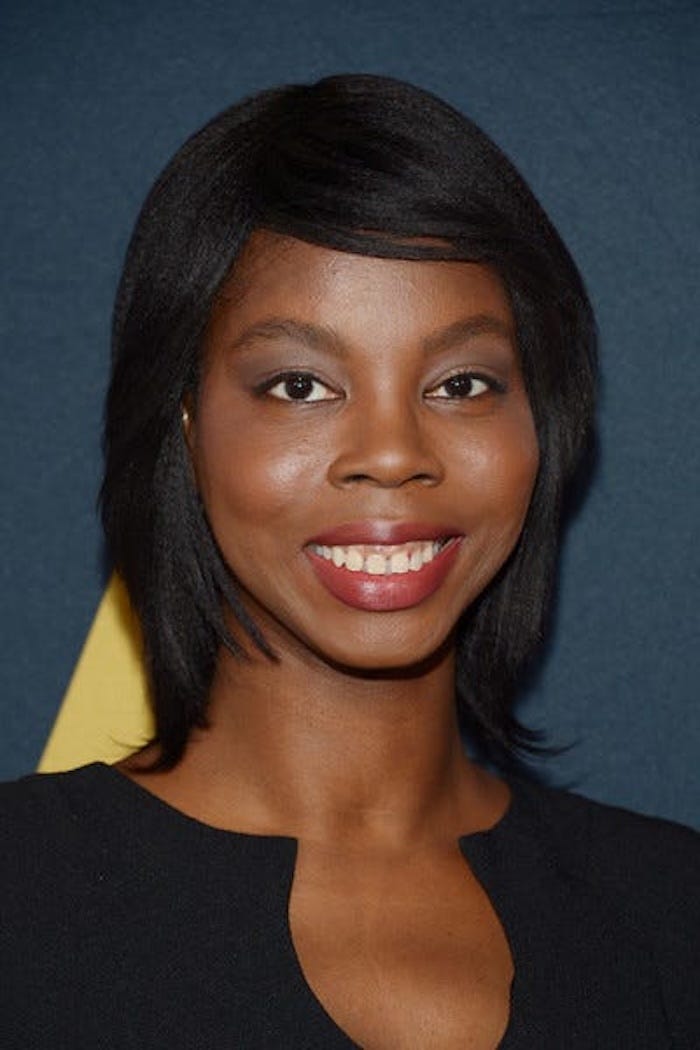
My conversation with the 2016 Nicholl Fellowships in Screenwriting winner.
Elizabeth Oyebode wrote the original screenplay “Tween the Ropes” which won a 2016 Nicholl Fellowship in Screenwriting. I had the opportunity to chat with Elizabeth about her background, her award-winning script, the craft of screenwriting, and what winning the Nicholl has meant to her.
Scott Myers: Elizabeth, I’d like to start toward the end of the journey, for this particular interview. The night you received the 2016 Nicholl Fellowship in Screenwriting Award, in your acceptance speech you said this ‑‑ “We watch films because our curious minds seek connection, higher truths and adventure.”
I was really struck by that, because I think it’s such a great way to describe the draw that movies have for an audience. Connection, higher truth and adventure. I was wondering, could you elaborate on that. How did you come to that way of thinking about it and what does that mean to you?
Elizabeth Oyebode: After I was born in America, my family moved to Nigeria for a few years. When I moved back here as a little kid, I didn’t speak English, so I felt really disconnected from my surroundings.
Watching films re-introduced me to how people here speak and interact, much more so, actually, than how real people interact. [laughs] And they helped open my eyes to what was possible and to what, in the end, matters most in life.
Scott: Do you remember some of those movies from your childhood that were most particularly evocative, ones you remember the most?
Elizabeth: Oh, yes. Usually, the name Spielberg is in the credits.
[laughter]
Elizabeth: “E.T.,” is the first film that I watched. It still gets me because I could relate to the feeling E.T. had of being displaced from his planet. [laughs] I felt that way too.
“The Color Purple” was another one that really resonated with me. “Raiders of the Lost Ark” as well. Each one is epic in its own way. Each is a visual wonderland that lures you into thinking bigger than yourself.
Scott: That reference to “E.T.,” the fact that that’s the first movie you remember seeing. A pretty remarkable film to see as your first film. Julia Chasman, the producer who gave you the award at the Nicholl ceremony said when you came back to the United States, it was almost like you felt like an immigrant in your homeland.
I was wondering if that impacted you in terms of a special affinity or connection to writing characters who are, in a way, outsiders set apart from the others. Of course E.T. is an outsider. He’s like an immigrant on Earth while he’s here, right?
Elizabeth: Yes. I do tend to write about outsiders who are singular in their abilities or misfits who defy expectations. I’m sure that relates to feeling like an outsider at such a young age.
Scott: You mentioned, too, in your comments at the Nicholl ceremony you spent a lot of time daydreaming as a child and that at some point, you discovered you could put those images into words and create things. Is that how you got into writing?
Elizabeth: It is. I got into so much trouble for daydreaming during classes. I didn’t really come to the realization that I could channel my imagination into words and have that be my career until I was into my 20s probably.
Scott: My wife does research on this and has written some articles. They call it mind wandering now, that’s the preferred term to daydreaming. Scientists think it’s incredibly important for the creative process that we allow ourselves that freedom to let our mind wander.
Elizabeth: Absolutely, and I wish I could’ve told that to my teachers back then.
[laughter]
Scott: It wasn’t until your 20s when you made this connection about writing? Where’d you go to college?
Elizabeth: I went to Tufts. There wasn’t a film program, but I did first learn about a number of films while I was there. For instance, Stanley Kubrick films such as “A Clockwork Orange” and “Dr. Strangelove.” That was a kaboom kind of moment for me that you were even allowed to approach film in such a dystopian fashion. It really expanded my thinking.
I actually majored in physics with a minor in history, and part of the reason I loved physics was because there’s an order to how the universe works. A structure. At the time, I found that really compelling and it just gave me comfort.
Scott: That’s an interesting observation that you were drawn to physics initially, in some respects because of its structure, the appeal of structure when, of course, screenwriting, screenplays, is one of the more heavily structured narrative forms. Maybe you had a natural affinity for it.
Elizabeth: Oh, yes. I have this background in science and editing, so when I first started screenwriting I was very exacting, analytical, and rigid. Although there are aspects to screenwriting that require that high degree of structure, there’s this other side to it.
It’s the side that, as a kid, I craved — the creative side, the possibilities. I think it’s one of those careers where you get to utilize both left brain and right brain.
Scott: How did you make that transition into screenwriting?
Elizabeth: After college ‑‑ I think I told you this before ‑‑ I became a stand‑up comedian in the Washington, DC area and I loved it, but a lot of my bits weren’t really bits. They were stories. They were much more expansive. A few people commented that I should perform a one‑woman show just because my sets were almost like an episode of TV.
That’s when I started thinking differently about it. I was trying to write this one‑woman show. Then I just started thinking about plays. Then I saw a book about screenwriting, opened it up, and…
Scott: Here we are.
Elizabeth: Yep.
Scott: Once you discovered the screenwriting, that was it?
Elizabeth: Absolutely it. Then I read as many scripts as possible from the library and online. And I read Syd Field, Chris Vogler, Joseph Campbell. I really loved understanding the psychology behind it.
Scott: Read some books, and then reading scripts and writing pages, that was pretty much your education?
Elizabeth: Yes. I entered the occasional competition for feedback but, for the most part, it was reading and writing. Your blog is such a great repository of information as well.
Scott: Let’s talk about the script “Tween the Ropes,” a compelling drama that won the 2016 Nicholl Fellowship in Screenwriting.
Here’s a plot summary: “A brainy, young double dutcher contends with the hardships of her life in inner-city Baltimore.” The final words in the script, at least the version I’ve read is a card. It says, “For a real Nidi,” the name of the story’s protagonist. Is this story based on an actual person you know or an amalgamation of characters?
Elizabeth: It’s inspired by a person I knew and several I have read about.
Scott: Nidi Toth, a 10‑year‑old girl, how would you describe her as a character?
Elizabeth: She’s intelligent, resourceful, and determined but also wary of external conflict. I think, for her, there’s this pride of being a rock for her family and her brother in particular. But, at the same time, when she’s outside of her home, she becomes much more like a leaf and subject to the whims of her outer environment.
Scott: She’s growing up in an impoverished neighborhood. There’s the threat of violence all around. You have to live with that, literally. In the apartment complex she’s in, I remember there’s a scene where she’s talking early on to someone about how you’ve got to stay away from the windows. It’s that kind of an environment.
There is that dualistic thing where with her family, she applies one mask. That kind of, as you said, rock, but when she’s outside and in the world with the vicissitudes of life out there, it’s interesting you say she’s more like a leaf.
Elizabeth: It’s a tough environment in which to grow up. It’s one that I wanted to explore from the point of view of a character who gets left in the background often in films.
I wanted to have an audience see the world through her eyes and to feel what she feels on a daily basis, see what her highs and lows might be like, rather than just seeing her as this, maybe, cliché ‑‑ a little black girl jumping double dutch. I wanted them to see her as a three‑dimensional, complicated human being with hopes and dreams, but also these realities and worries.
Scott: Let’s look at the family unit, and then we’ll expand out and consider the surrogate family, which she has at school with the double dutch thing. She has a younger brother, Wayne, who’s seven. They have an interesting relationship.
Generally speaking, Nidi acts much like a mother in protecting him and making sure he has something to eat, but there other times where he jumps to her defense. Could you maybe talk a bit about that sibling relationship between the two of them?
Elizabeth: It’s an interesting symbiosis. They have just each other to depend on for much of the script. Even though Nidi is a bit worried about her brother’s intellectual capabilities, she relies on him for emotional support and, to a certain extent, to keep her grounded and focused on getting through the day.
For Wayne, I think she serves more as a mother figure, a stalwart support system where, without her in his existence, I’m not sure that he’d be able to make it on his own. There’s a connection that keeps them wanting to fight for and be there for one another. They’re always thinking of each other.
Scott: They’ve been forced to by virtue of not only their local environment, but specifically the relationship that they have with their mother and father. Mom is 26. She’s known as Mom‑mom. How would you describe her as a character?
Elizabeth: Mom-mom is physically present for them, but she’s also rather neglectful and unwilling to listen to their needs or their interests. I think some of what she brings to the table as a mother is a consequence of her getting pregnant at such an early age. As a result, she often uses humor to mask a feeling of helplessness and uncertainty.
Also, she knows what it looks like to have one’s hopes dashed and she prefers to be the one to shut Nidi and Wayne down almost out of a desire to protect them. So she’s flawed but not a lost cause.
Scott: And she works a lot.
Elizabeth: Yes, very hard‑working. She’s the resident manager and handles all the maintenance for the building. She has another job working at a fast food restaurant. That’s true.
I think that added dimension of her working so much highlights that though she can’t be a wholly positive figure, she can contribute in the way she knows best. In this case, it’s either financially or just by feeling like, “I go to work. I do my job. Therefore, I’m a good mother.” The emotional component doesn’t really factor in.
Scott: I was on the fence about asking you this, but since you’ve been talking about Nidi’s like a rock and then, some other times, she’s more like a leaf. I’m going to throw this out to you. [laughs]
The toolbox and the fact that she is this resident manager or superintendent of the building, and actually Nidi even does some repairs around the thing. The toolbox is actually in the last scene. I’m wondering, were you going for some sort of symbolic or metaphorical thing about repair? The family needs repair or under repair, or was that just an extension of the job and has no deeper meaning?
Elizabeth: Of course, it’s a story about a broken family and whether or not they have the tools to mend themselves on their own. The toolbox entered in because I thought it was very important to highlight externally this idea that all this family really has to do to get itself on the road to repair is to stop turning a blind eye, to look to themselves.
By addressing some family conflicts head on, taking the hammer and banging it into the nail. Instead of the alternative, you know, keeping the box locked, all those family secrets locked away.
Scott: The major complicating factor in the story, I think you would have to say in terms of character, is Frankie. The father who has rejoined the family after several years, he’s been away in prison.
Elizabeth: Yes, for three years.
Scott: He’s a rather loose cannon at times. Present, and then at times not around. There are occasions where you see a paternal side to him, though pretty largely, I’d say, very toward narcissism because it’s all about his own experience, but there are other times where he’s increasingly drawn toward negative impulses born out of his own desperation and drug dependency.
How did that character emerge in this process? Was that early on that you had that father figure, or is that something that evolved over time?
Elizabeth: The father figure was there from the beginning. He was central to the dynamic of the family bond and, of course, to the plot.
Scott: You’ve got a couple of other people. There’s Old Lady Smith, who lives in the same apartment building. She’s got a rather negative view of Nidi.
Elizabeth: She does. I wrote Old Lady Smith in to introduce a generational perspective on self-imposed limits and denial. She strongly disapproves of Nidi’s aspirations. Again, I think that speaks to her own life experience and perhaps not being given opportunities herself.
And, now, to see this next generation of child daring to ask for things really gets under her skin because, of course, no one bothered asking her and she never got the chance to ask. I really wanted to explore the questions of who deserves love and how much of it do they deserve, and who deserves opportunity and how much of it do they deserve.
Scott: Then there’s Mr. Yee, the next door neighbor who opens up love in a very disturbing way for Nidi. I don’t want to get into that terribly much because I don’t want to give away where that goes ‑‑ in sum, that little world inside that building.
If we say that the best way to create an emotional connection with the script reader and audience member is give them a sympathetic protagonist, then you succeed 10 times over in your script because Nidi is all that. Her personality, her potential, her intelligence, her grit, her determination and then, amidst all this other stuff around her, you’re really, really grabbed by this character. And all of ten years old.
Elizabeth: Thank you. Yes, there’s this intellectually unsupportive environment for her at home and, of course, this mixed bag at school, and, in both settings, everyone’s just trying to get by, to get from one day to the next. These are the examples that she’s presented with for what adults are like. Right?
Scott: Right.
Elizabeth: Then, of course, she’s looking at her classmates and just trying to figure out…As you said, she’s an outsider. She’s just trying to figure out how she fits in to all of this, because her needs and wants are being dismissed over and over again.
There’s no real reason given as to why, especially because most of these desires are not particularly complex. The conflicts that lay before her are very challenging given, as you said, she seems to have an internal strength that a lot of the characters she encounters don’t possess.
Scott: There’s that. Then there’s this, as we’ve said earlier, surrogate family, this double dutch jump-roping team led by Miss Harper. Why that particular sport? How’d that come about?
Elizabeth: It’s interesting in that it’s this three‑pronged reliance system. The person that’s center stage is the jumper in the middle and then there’s these two turners who have to mirror each other to help ensure the jumper’s success.
It’s this team dynamic that I think is really unusual in sports. Typically, it’s either a bigger team or one person. In this, there’s three people, occasionally four or five, but three people who really have to work together. I wanted to portray what might happen when one of those people is the bully and the other is the one getting bullied.
Scott: That’s interesting because, again, if we’re going to talk about physical objects with potential symbolic meaning, a rope can be a useful tool. You can climb a rope. You can also get tripped up in the jumping, which is what one of the bullies does to Nidi.
You can also be strangled by a rope. The title of the script is “Tween the Ropes,” so there’s something symbolic going on there, yeah?
Elizabeth: Absolutely. It’s a constant balancing act for Nidi. When she’s jumping between these ropes, there’s this constant wavering, one foot going up and the other going down. I wanted to convey that feeling of swaying back and forth, not really knowing whether the ground beneath you was firm enough to stand on.
There’s a scene as well in which the ropes take on this cocoon shape because they are turning so quickly. I employed that imagery because a cocoon is supposed to be this safe space in which a caterpillar can grow strong enough to transform then break free. But, until that is possible, it has to be encased in this shell.
For Nidi, this sport is the closest thing she has to that shell.
Scott: I think most readers, in reading the script, even reading the logline, they might project onto the story, “Oh, I get it. Nidi’s going to try to escape from her world or have the opportunity for her to escape from this world through the jump roping, the double dutch thing.”
Yet, while it has that layout like a sports movie, it really isn’t very much of a sports movie. There are three sporting events and they’re handled pretty quickly.
It’s actually her intelligence that’s going to ‑‑ and it’s kind of a twist ‑‑ that’s going to present her an opportunity to escape this world. How did that develop? I guess it’s a handoff in a way from the jump roping toward the more academic thing.
Elizabeth: I chose to have the sports portion of the script serve more as a counterbalance for the issues she was contending with in her personal life.
And I opted to have her intelligence be the key that could free her from her situation because it would better expose the baggage at the heart of her family unit’s dysfunction.
Scott: The ending of the story, there’s this wonderful opportunity that she’s going to have to go to a private school where she’ll be supported and allowed…They don’t have jump roping, but they’ve got track and she’s fast, so she could fit in there.
Mr. Teal, one of the educators, takes an interest in her, tells her…This goes back to your line about the butterfly. He says, “Nidi, no matter what anyone else says, always remember that you are a butterfly. Right now you may feel like you’re caught and you can’t stretch your wings, but you’ll get to fly. You were born to fly.”
We really get a feeling that she’s going to have that opportunity, the story goes in another direction. That ending, how early on in the process did you zero in on that?
Elizabeth: That’s what I started with.
Scott: You started with that ending?
Elizabeth: Yes, I worked my way back to justify that ending. The purpose of this story was to get to that ending and to get to it in a way that felt organic and truthful.
Scott: Two things. One, it speaks to the value of knowing your ending. If you know the ending of the story, then you’ve got that goalpost up there and the ending can imply the beginning.
Elizabeth: Yes.
Scott: The other thing that I wanted to mention. It’s pretty apparent, like on page one, you know this environment. There’s an authenticity to the characters ‑‑ the way they talk, the concerns in their lives, the activities that go on, the physical geography, the topography, everything. It just feels completely authentic.
How much research did you do on this, or how much was this based on personal life experience?
Elizabeth: Thank you for that. I spent part of my childhood in an inner‑city in DC. I incorporated some of those memories from that experience into the script.
I also conducted research, read news stories and other works, and watched double dutch teams in action. It really helped me get back into that mindset and into the world.
Scott: Obviously, it’s incredibly important to achieve that sense of authenticity for a story like this, for us to trust that the writer knows what they are talking about in order to really immerse yourself in the story, and you do that very, very well. What’s the status of the script at this point?
Elizabeth: Several producers have reached out to me about turning it into a film, so that’s been great.
Scott: Let’s talk about winning the Nicholl. When did you find out?
Elizabeth: I found out in September. Actually, as you know, I’ve been working on some other scripts…One of those scripts, “Sexton,” was in the Black List Lab, where I worked with you.
I remembered the Nicholl deadline was coming up and I had another script that I had wanted to submit, but it wasn’t ready yet, so I just decided to submit this one. [laughs]
Just sent it in and forgot about it until this summer when the Nicholl team informed me I was a quarterfinalist, then a semifinalist. And then Greg called and said I was a finalist and that was amazing. I was so thrilled.
Scott: And then you won.
Elizabeth: Yes, a couple weeks later, the Nicholl Committee notified the winners. Robin Swicord and everyone else was so welcoming, kind, and encouraging. It was very validating. It’s one of those moments that you long for as a writer.
Scott: You’ve had a lot of things. Let’s see, there was the Black List Lab we did in San Francisco together. Then you said that you got this thing through the WGA. What’s that about?
Elizabeth: Yes, through the WGA in partnership with DreamAgo, I had the opportunity to pitch a screenplay idea vying with other writers. My idea was selected, so now I’ll write that out into script form.
Scott: Let’s jump to some craft question. How do you come up with story ideas?
Elizabeth: News stories, studying visually dynamic situations, people watching. I tend to get ideas from photographs, from imagery a lot of the time. And I tend to gravitate toward stories, like this one, where you feel them in your marrow and you just can’t shake them off.
Scott: This script is obviously a drama. The script that we did at the Black List Lab was a drama, but you’ve got a background doing comedy and improv. Are any of the ideas that you’re coming up with at all comedies, or is everything a drama at this point?
Elizabeth: No, there’s comedies. There’s comedies, Scott.
[laughter]
Scott: I’d like to see some of that.
Elizabeth: One is a script based on my stand‑up routine. That one has been in the background because I’ve been focusing on the dramatic scripts.
I love writing comedy. Drama is the space that I’ve been in, but I’m definitely open to writing comedies and even to writing genre. I’m also working on a sci‑fi script.
Scott: Well then, there you go, because of the background with physics.
Elizabeth: Yes.
Scott: That’s one great thing about being a screenwriter, is that you can always spec something that’s in a completely different genre because if anybody says, “Well I don’t know if she can do a comedy. I don’t know if she could do science fiction.” Boom, you just give them 100 pages and say, “There it is.”
Okay, another craft question. How about the prep‑writing? I’m always interested to see how people approach breaking a story ‑‑ brainstorming, character development, plotting, research, and outlining. What’s your process like in terms of prepping a story?
Elizabeth: I’ll take the deep dive into research then make use of index cards and outlining. Almost always though, I start with a character.
Then after I’ve played around with character dynamics in my head for a while, I’ll come up with some cool scene ideas. After I’ve gotten to a point where I feel comfortable, I will transfer scenes to index cards, and play around with them.
Of course, I’ll fall back on foundational screenplay structure, but I don’t usually allow myself to do that until I’ve given myself permission to play around with the ideas, the scenes, and the characters for long enough to feel like I have given them room to grow in the way that they want.
Scott: I hope everybody reading this will get a transcript of that last part. Start with characters. Immerse yourself in their lives. Let them start to come alive as opposed to jumping immediately to like, “This needs to happen on page whatever.”
Elizabeth: Mm‑hmm, yes.
Scott: So how do you go about developing your characters?
Elizabeth: I will often ask myself questions about the character — What is it they want in life at that moment? What is holding them back internally from getting it? What is it that they fear most? I’ll allow myself to give several answers to those questions until I find one that feels right.
I will often put them in ordinary situations and try to come up with something that they do differently. Or have them complete mundane tasks like dishwashing to see how they perform those and what it says about them. Then I allow that to be a bridge to bigger ideas, and bigger behaviors and actions.
Scott: Hearing you talk about your story ‑‑ the script, “Tween the Ropes” ‑‑ and talking about the tools, and the rope, and the cocoon, it’s clear that you think thematically. How do you go about developing themes? Do they emerge as you’re working with the story or do you tend to start out with them upfront? How does that work for you?
Elizabeth: I think themes are tremendously important. They serve as these signposts as you write because they keep you aware of the big picture. I try not to force myself to think too deeply about message and themes early on because setting those in stone too soon can stifle a story’s full potential.
Going into this script, I knew that there were going to be issues related to legacy, inheritance, family strife, and loss of innocence. So yes, I suppose, theme is always there lurking in the background.
I don’t know that you necessarily have to have only one theme in your script. There’s going to be an overarching one, but there may be a few more, and if each scene and each main character is tied to one of those themes, then I think you’re on the right track.
Scott: Yeah, I’ve always thought that, too. Maybe there’s a central theme, but there are probably multiple themes going on. Why would it be any different than, say, a music composition or something.
Elizabeth: Absolutely.
Scott: Continuing with some craft questions, how about when you’re writing a scene? Do you have any specific goals in mind?
Elizabeth: I’m a big advocate for scene polarity. I like the idea of coming into a scene with one expectation, leaving with a different one, and of scenes with conflicting character goals and motivations.
When I go into a scene, I aim to present it in a way that is unexpected.
Scott: How about rewriting? What’s your process there? You get the first draft done and…
Elizabeth: Hopefully.
Scott: [laughs] That’s the first thing. Right?
Elizabeth: Yep.
Scott: Get the damn thing done! Now you’re faced with rewriting. What’s your process like, or do you have one?
Elizabeth: Yes. Getting through the first draft can be a strangely painful [laughs] experience. The rewrite is awesome because pretty much everything’s there already. And if something happens to be missing, its absence is pronounced enough to encourage discovery.
When I rewrite, I do it iteratively…multiple passes focused on different structural or character-related components. And also passes to ensure that the characters’ actions help move the plot forward and raise the stakes. Part of that involves eliminating extraneous scenes that don’t advance the plot or that don’t add any character dimensionality.
Scott: That’s interesting. I interviewed Ava DuVernay. She said that she would actually do rewrites where she would rewrite it from the perspective of a specific character each time. I think for “Middle of Nowhere” she had seven characters. She did seven drafts, each time from a different perspective of a different character. I thought that was quite interesting.
Elizabeth: I would love to see all of those movies.
Scott: Yeah, exactly. What’s your actual writing process like? Are you an everyday type person, sporadic bursts, or do you go to coffee shops, work in private? Do you listen to music or not? How do you write?
Elizabeth: Music is key for me. I also prefer to be in control of whatever space that I am in when I’m writing. I don’t tend to write in coffee shops. I typically write at home or somewhere quiet.
I tend to research, deal with cards, and outline during the day. But, when it comes to actually writing, for some reason when it’s darker [laughs] out, there’s no traffic, no leaf blowers, no dogs barking, I’m more efficient.
Scott: Maybe left brain during the day and right brain at night?
Elizabeth: Yes, typically, when I’m writing a first draft.
Scott: I’m a night writer, too, so I salute you. I’ve got two questions left. One question is the one that you’re going to undoubtedly be asked along the way as you move along in your career and that is ‑‑ What advice can you offer aspiring screenwriters about learning the craft and breaking into Hollywood?
Elizabeth: Apart from reading screenplays both new and old, it’s important to determine your strengths, so you can play those up and have something that is a throughline for you as a writer early on. Whether it’s figuring out that you’re great at character development, or plotting, or dialogue, or if it’s a certain genre.
Also, even if an idea isn’t commercial, if it’s sticking in your mind, try writing it out for your own critical growth or to help define your voice. Then you’ll have more headspace to get into the next story.
Lastly, I think it’s important to finish your first draft. [laughs]
Give yourself permission to just finish it, errors and all. You’ll be much better off improving it once it’s on the page.
Scott: Yeah, zero draft.
Elizabeth: Zero draft, exactly. Then step back from it, clean it up, and once it’s ready to send out, be open to the feedback you receive.
Scott: We’ve started off the conversation with a quote from your Nicholl Fellowship acceptance speech. I’d like to end it with one. You said, “Movies are one of the few things that unite us all. They remind us about empathy and hope.”
I thought, given where we are culturally and, certainly, politically right now, I can’t think of two more important attributes that we need than empathy and hope. I’m wondering if you could expand on that a little bit.
Elizabeth: Well, in this moment, we’re going to have to get our bearings on what constitutes right and what constitutes wrong. What freedom should look like and what it means to stand up for what we believe. We’re going to have to remember our history. And I think the stories we tell onscreen are a great way to do that, to imbue our present with both history and mythology in a way that embraces empathy and hope for the future.
For my interviews with every Nicholl Fellowships in Screenwriting winners since 2012, go here.