Go Into The Story Interview: Elizabeth Chomko
My interview with the 2015 Nicholl Fellowships in Screenwriting winner.
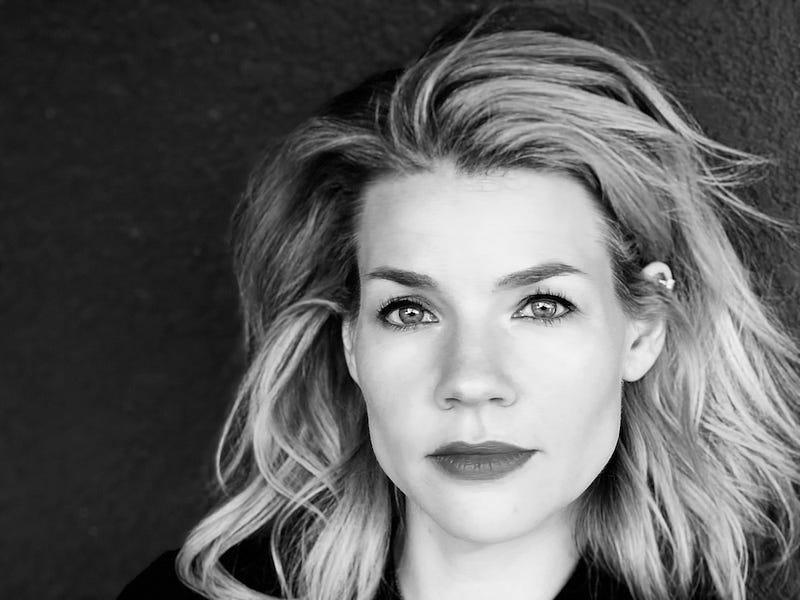
My interview with the 2015 Nicholl Fellowships in Screenwriting winner.
Elizabeth Chomko wrote the original screenplay “What They Had” which won a 2015 Nicholl Fellowship in Screenwriting. I had the opportunity to chat with Elizabeth about her background as a writer and her award-winning screenplay.
Scott Myers: When I was reading your script “What They Had,” which won the 2015 Nicholl Fellowship in Screenwriting, I was struck by how authentic its Midwestern feel is, the sensibilities of the characters, their dialect, their accents. Sure enough, come to find out you grew up in Chicago and Wisconsin. I was wondering if we start off with what was it like growing up into your adolescence in the Midwest?
Elizabeth Chomko: It was terrific, I love the Midwest. I was born in Chicago, then moved to Minnesota briefly, and then back to a suburb of Chicago. When I was about 7, my parents bought a vacation property in rural Wisconsin.
My mother and two sisters and I spent a lot of time in Wisconsin — the weekends, every summer. My dad worked a lot, traveled a lot, so he really only came up on holidays. Our time there became this sort of celebration of womanness — my mom’s female cousin would come with her kids or her friends would come with their daughters. It was always the wives up there, a community of women raising children — lots of girls — together. It was a very special time for me and my sisters. I think that experience had a big influence on my creative sensibility, the stories I’m interested in telling, the characters I’m interested in exploring.
Also, my mom — she denies this now, but she was very picky about the content she exposed us to. We didn’t have a TV up in Wisconsin. We spent the days putting on shows, creating imaginary worlds. And reading. I was an avid reader.
The movies we did watch — they were usually female-protagonistic. Anne of Green Gables, Julie Andrews musicals, The Red Shoes, Judy Garland, Norma Rae… I don’t think this was intentional on my mom’s part, I think she just put us in front of the stuff that she liked, the stories she could relate to. They showed us the women we could someday become. I wanted to be an Anne Shirley, a Norma Rae, a problem like Maria.
Anyway, to answer your original question — yes, the Midwest has a very specific culture and sensibility. I moved from there when I was about 14. We moved around quite a bit after that, so the Midwest still has my heart and feels the most like home.
Scott: You attended American University?
Elizabeth: I did, yes.
Scott: You got degrees in theatre and also philosophy, a specialty in gender studies.
Elizabeth: Yes. The gender studies wasn’t really intentional. It sort of found me. Philosophy is such a broad subject…it’s everything. It’s everything since the beginning of the written word. Every professor with a Philosophy 101 course has to figure out where to start and which thinkers to teach in order to funnel the millennia of philosophy into one semester.
My Philosophy 101 class was taught by a wonderful professor who became my mentor. Her focus was feminist philosophy and race and gender studies, so she threaded her philosophy 101 syllabus through the themes of Love and Desire. She started with Plato’s Symposium — a party where they all sat around and got wasted and talked about love — and we tracked Love and Desire up through Hegel and Rousseau to Simone de Beauvoir and into modern thinkers and morality of the family.
It was a perfect fit for me, as I, like we both said, “grew up in such a female-centric world.” I started to make sense of the dynamics I’d been observing around me since I was a kid, the things I was interested in and related to. I always had an obsession with the why of things. Philosophy gave me answers — but it also opened my mind to a slew of other questions I think I’ll always be trying to answer with my work and with my life.
Scott: It sounds like the acting bug came pretty naturally. If you don’t have a TV and you’re up in Wisconsin…
Elizabeth: Yep.
Scott: …You’re out there making up stories and acting with your friends.
Elizabeth: Definitely. And my mom enrolled us in dance classes early, we were always involved in the show choirs and musical theater stuff in middle school. I was always creative, doing art, playing the piano. I felt called to be a storyteller.
Scott: After you graduated from American University, how did you go about pursuing your interest in acting?
Elizabeth: It’s kind of funny. I started as a theater major, and I went abroad to study acting at a conservatory when I was a sophomore. But I didn’t exactly fit with the actors around me. It never felt like acting was exactly where I belonged. I came back from the acting conservatory thinking I wasn’t an actor at all, that I wanted to go to law school, and that’s why I ended up jumping into philosophy. I read that philosophy majors did well in the LSATs.
But I fell head over heels for philosophy. When I finished undergrad I was considering pursuing a PhD. And while I was deliberating — still living in DC — I found myself involved with this marvelous theatre company. I got a role in one of their plays, and that propelled me into the DC theater scene, which is an awesome community. They have a ton of theaters, union and non-union, doing wonderful stuff. It made me want to stay in the creative world rather than academia.
I spent a couple of years working a lot as an actor there and waiting tables. But I knew that there was a glass ceiling for the arts in DC. So it was either New York or LA.
And, ironically, in getting my theater degree, I had to do all these “Fundamental of Acting” courses, I think there were five or six. One of them was “Acting for the Camera.” I was so convinced that I would never, ever act for the camera. I had this idiot snobbery about actors who made their living doing commercials. So I convinced the department to let me swap it for playwriting.
Then, not two years later, I’m moving to LA to pursue acting for the camera, hoping it would pay the bills so I could write plays. The first victory I celebrated was landing a commercial agent.
God laughs when you make a plan I guess.
Scott: While you are acting, you are writing at the same time, both plays and essays.
Elizabeth: Yes. I’ve been writing since I was really little. My much older cousin gave me a journal for Christmas one year, when I was maybe seven. I was like, “What are you supposed to do with it?” She said, “You just write in it.” I said “Write what?” She said, “Whatever you want. You just write.”
So I wrote. Dear diary stuff, things that happened, my feelings, little stories, little drawings. And when my family started moving around, I journaled constantly. It was a lonely time, we were moving almost every year, I went to four different high schools. My journal became my companion, my best friend. When I was lonely, I would write. When I didn’t understand, I would write. That’s the relationship I think I’ve always had to writing — I write to feel better, to understand, to soothe my obsession with the why of things.
I started writing short plays in college. And when I moved to LA, I started writing creatively all the time — plays, essays, short stories. As an actor in Los Angeles, you have a lot of downtime. There’s a lot of heartbreak. And even when you are working, when you’re first starting out so little of what you’re working on is nurturing your soul or feeding the hunger that called you there to begin with.
I wrote because I needed to. I wrote because I loved it. There was never any agenda with it. It wasn’t about a career, it wasn’t about getting anyone to read it. I wrote because it felt wrong not to.
Scott: When did you start to think about writing movies?
Elizabeth: About a year into LA life. I was in this actors’ workshop where we did both acting and writing. I think all newcomers in Hollywood these days are encouraged to create their own content. It’s the only way you have any modicum of control.
So we wrote scenes in this workshop. I brought in this scene, and the wonderful Mara Casey who ran the workshop said to me, “You know, I like these characters. You could write a whole movie about these people. If you do, we’ll dedicate a whole workshop day to doing a reading of your script and giving you feedback.”
I was like, “wow, great,” very excited and flattered that she saw something in me worth encouraging. I decided to write the best screenplay ever. I didn’t want to let her down.
And then I totally procrastinated, I was freaked out by it, all the pressure I put on it. I wrote it all in the two days before it was due — 100 pages or something, I just threw it together, wrote whatever felt like it would come next. This is really why deadlines are so great — they force you to just get something down. It’s always crappy but you have to start crappy.
I liked writing it, I liked all the possibilities in the medium, how it felt like playwriting but with visual art and music and way more sets. So I kept dabbling in screenwriting in between plays and essays and short stories and a third of a novel. And then I was graced with the idea for the story of What They Had and it had to be a movie.
Scott: Didn’t you do a Sundance Lab at some point?
Elizabeth: I did, yes. In 2015 I did their January lab with What They Had.
Scott: That must have been a terrific experience.
Elizabeth: It was wild and hard and wonderful.
Scott: Let’s talk about your script, “What They Had.” The logline: “When her mother suffering from Alzheimer’s wanders into a blizzard on Christmas Eve, Bridget Ertz flies back to her hometown. Through stepping into her past she finally realizes what’s missing in her present.”
I believe you have a very personal source of inspiration for this story, and that would be your grandmother.
Elizabeth: Yes. I was very close with both sets of grandparents growing up. They lived close; I was very lucky. I’m the eldest grandchild on my mother’s side, so I had a special bond with that side.
My maternal grandmother was magic. She was this ball-busting, feisty working woman, a lady before her time. She had this wonderfully generous spirit. She had a long career as administrator of nursing homes that specialized in Alzheimer’s.
She was diagnosed with it quite young… 67 or 68. I didn’t know what to expect except that she’d forget stuff; I was maybe 20 at the time.
Then The Notebook came out. I saw it with two girlfriends who also had grandparents with Alzheimer’s and we had to carry each other out of the theatre. It was like oh, my god, it’s a death sentence, she’s going to disappear into this zombie, it will be nothing but sorrow and pain and anguish.
As the disease progressed and progressed — she was always still her, she never lost that spirit. She’s still kicking now, 15 years later, still cracking jokes, still endlessly loving. She has that same fire and that same generosity. And those 15 years were filled with heartbreak but there were also incredible joys and surprises. There were times she thought we were schoolgirls together. I got to know her as she must have been when she was a kid.
The most surprising part of her Alzheimer’s — for all of us in the family — was that a lot of it was fucking hilarious. My mom’s side of the family lives in that space where laughter and tears overlap. There were so many times we were all laughing our fool heads off — my grandmother loudest of all. Some of our most beloved family stories are about her Alzheimer’s moments.
And those moments would be sandwiched between moments that took your breath away. It’s such a strange, complicated disease. She’d be bouncing off the walls like a toddler, jumping on beds, and then she’d turn around and say something to you that’d rip your heart out, so earnest it would leave you utterly breathless. I can still see those moments so clearly, like it was yesterday.
Once I discovered how… oh, I don’t even know if there are words to describe the journey of loving someone through this disease. I guess that’s why I wanted to write about it. I wanted to pin down that juxtaposition, that tightrope between hilarity and heartbreak. I was going through old journals recently and this scrap of paper fell out, filled with little notes about her, dated over 10 years ago.
And when my grandfather passed away, the story to do this with almost knocked me over. It was a gift. I wrote the first draft in three sleepless days.
Scott: When you were writing it, were you considering this more of an adaptation or fiction?
Elizabeth: Oh, it’s fiction, for sure. The things that are inspired by my family are dramatized significantly. But my grandparents are there on the page. Their love story was begging to be told.
And I missed them. Writing this script, and all my re-writes, and making the movie — it’s an act of love. It’s my way of being able to spend a little more time with them. I’m desperate to keep them around, for me, for my family, my mother and her brothers, for all those who loved my grandparents, for the next generation of our family’s children. I couldn’t let them go.
Scott: So there are some specific events and characters, your grandmother, your grandfather, which are are in the script, but much of the other content is fictionalized.
Elizabeth: Yes. But like I said, it’s definitely a dramatization. But the scenes with Ruth — some of those really happened. Like at Bert’s wake, when Ruth is looking at the program, trying to figure out who on earth’s wake she’s at — that happened. That was me next to her, my arm around her, sitting there broken-hearted, having no idea what I’m supposed to say to her.
It’s such a strange thing. I remember all of us in the family not knowing how to handle it. Every ten minutes, she’s going “Where’s Cliff? Where’s Cliff?” — what do you do? Do you continue to tell her, to break her heart over and over and say, “he died” — is that what you do? Do you ignore her? Do you lie?
Scott: Into this relationship between these two, this married couple, you introduce the protagonist of the story, Bridget, and you describe this her this way when she’s introduced:
“Bridget, a young looking 53, red apron embroidered with ‘Bridget’ stands at the sink of a cooking class kitchen distractively drying a fruit cake pan that’s completely dry.”
So the reader learns she is distracted. Then the next line, “She doesn’t wear a wedding ring.” That’s a clue there’s probably some relationship issues going on there.
How would you describe Bridget emotionally and psychologically? Where is she at the beginning of the story?
Elizabeth: It’s funny you ask that, because I am, as we speak, in the middle of a re-write. Bridget’s trajectory has always been the toughest for me to crack. On the one hand, I want her to arc as much as possible. On the other hand, I don’t want her decision-making to seem rash or capricious.
Bridget is a giver. She gets her greatest joy out of giving to others. If there was her absolute favorite meal on the table, and she knew she would never have it again, and somebody she loved was there, she’d insist that they have the last bite, even if she knew they liked it a fraction as much.
But that giving instinct has made it difficult for her to speak up for herself — to even identify what it is that she wants out of her life.
She’s somebody who grew up caring for people, caring for her parents, her brother, marrying really young, having children really young, caring for her husband, supporting his career, caring for their children and his parents. She got married because it was the thing to do and because her father really thought that this was the guy. She didn’t really develop the muscle of, “What do I want?” That was a…what’s the word when your muscles…
Scott: Atrophy?
Elizabeth: Yes, an atrophied muscle. Exactly. It is an underdeveloped muscle.
Scott: You put that issue of her choice getting married back then on the table because her grown daughter Emma’s about to get married.
Elizabeth: Yes. The other part of Bridget is the historical element of feminism’s trajectory over the last 100 years.
She grew up in the ’70s, the Second Wave feminist movement, when women were out in the workforce, wearing little ties, acting like men. The women of that era had to work extra hard, extra long hours, to be competitive in these male-dominated fields, to challenge the glass ceilings they were facing. They thought they were doing a service to the generations to come, and they were in many ways. But there was a flaw in the system, because it meant that the kids were at home, fending for themselves, raising themselves, and often the eldest daughter would start to take over the homemaking.
And the fathers were sometimes home more than the mothers were, but they didn’t have the same appreciation for the feminist mission. They didn’t have the understanding of how to raise a modern woman.
That’s Burt. He grew up on a farm in the ’40s. He’s still parenting Bridget like it’s that era, advising her to lose ten pounds and learn how to cook so she can land somebody eligible. Before Second Wave Feminism, that was the American Dream for women. It was next to impossible for women to make a living on their own, even if they had the education and the gumption to try. The jobs that were open to them were phone operator or teacher or flight attendant. None of them paid enough to support a family. If you were a flight attendant, you had to keep your weight down, you had to be unmarried, and you got fired on your 30th birthday. Some of those restrictions didn’t lift until the 1990s.
It’s crazy when you think about that only being one or two generations ago. It’s crazy how far we’ve come. But because we’ve changed so far so fast, we have further to go in terms of re-shaping our perceptions of masculinity and femininity, and the limitations we can’t help attaching to both genders, unconsciously, enlightened as we may be. I think that’s part of Bridget’s issue — she’s looking at her daughter having the kind of choices she never dreamed of, and she’s just bewildered by the difference. So much changed for women in that one generation. Things have changed so much even since I was growing up.
Scott: There’s an aside that Bridget has early on with Emma which sums that up. She says, “It’s about distance and things, you know. It’s a long journey, honey very long for us. Maybe it’s possible that journey might’ve run its course, or maybe it’s the time when you have to feed yourself first for a change, maybe for the first time ever. Which I know is not easy for anybody or for me.”
“Feeding yourself first means people you love are going to go hungry. Don’t think for a second it isn’t very hard for me.”
It seems like into this unsettled state, her mother getting loose, is like a Call To Adventure. It’s almost like the universe is saying, “You need to deal with this stuff.”
Elizabeth: Sure, yeah, I think so. I didn’t have that awareness at the time. I wrote it on instinct. I’ve never thought about writing from a screenwriterly perspective. I still always write what feels right without thinking too hard about it. Especially with a first draft.
But yes, Bridget is confronting the demons of her past, and also witnessing what is possible. That journey inspires her to make the biggest change, the change she could never have imagined making before.
Scott: That comes across very well in the script. She goes home to the Midwest. She’s going to be with her brother, with a guy that had a thing for her back in school. That’s confronting some of those issues there from her past. Then also, her father, Burt and her mom, Ruth.
There’s a family reunion in the hospital after they find Ruth and bring her back. Burt, you get a sense of his character right off the bat because he keeps saying, “She’s fine. She’s fine. She’s fine.”
Later on, as much of a stubborn character, he’s a mentor figure. He says to Bridget, he’s not shy about opinions, he says, “I’ll tell you what your problem is. California, that’s what. Reading the paper, people out there don’t know how to hard earn money to be self-actualized. What the heck is that?”
He says, “You know who you are. I’m a husband, a father, an antiques dealer, a Catholic. I know it. I never once had to think about it.” He’s got this remarkable contrast. Bridget is in this state of coming undone or questioning herself versus this guy who is filled certainty. He’s cocksure. She’s unsure.
Elizabeth: Yes, exactly. Very well said.
Scott: She even has an opportunity to dress up and act a little fanciful with a potential old flame character to explore that aspect of her life. In a way, he said it, that she’s going to go back in time into the past and explore these “demons” in her past.
Elizabeth: Yes. I would say if I had to give this script a type or genre — it’s a coming of age story, coming of age at 50. And it’s a love story. There is certainly a conventional love story in Bert and Ruth, but it’s also Bridget falling in love with herself for the first time.
Scott: That comes across. There’s two asides to this love thing going on her relationship with Ruth and relationship with Burt.
You’ve got so many touching scenes. One is a scene where she and her mother are stripped naked in her shower, Bridget’s helping Ruth wash her hair in the shower. I was wondering, was that fictionalized or was that something that came from one of the family anecdotes? It’s quite moving.
Elizabeth: Thank you. That’s me and my grandmother. I volunteered to give her a shower one day. It’s a precious memory for me. How she came in and out of the past and present — it almost felt like her mind was this record that kept skipping. She had six seconds in each moment. Then her memory would reset.
I took that moment, and gave it to Bridget, and fit it into where I was at in the story. It felt like it had to be in there somewhere. Again, I didn’t write with an outline. I just sat down and told the story.
Scott: Someone said that by the time a person gets college age, they will have read, heard, or seen 10,000 stories in their life.
Elizabeth: That doesn’t surprise me.
Scott: A lot of that stuff is instinctual. We intuit it based upon all that material we’ve ingested. Life doesn’t happen in three act structure, but your story has three acts. She starts off at her home. Then, she travels back to the Midwest, and she comes back.
Elizabeth: Exactly. The stories that move us all have a beginning, middle, and end. Instinctually, we get the rhythm of that. I think everybody has that instinct. We know the rhythm of storytelling without having to read a book, or study it, or even think it over. We’re always telling stories. It’s how we communicate — because it’s effective.
Scott: I want to go back to that scene in the shower. Not to get too highfaluting here or to suggest you weren’t intentional about this, but stories open themselves up to interpretation. There’s a physicality to it that’s obvious that maybe helps ground Bridget from that conceptual world. Being stripped naked, a layer of her life being pulled away. In that moment, a visual way of suggesting that she is deconstructed. She’s going into herself and removing some of those distractions. Is that a fair assessment?
Elizabeth: That’s definitely fair, thank you. I love the fact that you’ve thought about that. It’s so cool to hear how the things we just spit out evoke something in other people.
It’s amazing how little things can touch us. And how the little thing that touches one person maybe only touches that one person, but it touches them tremendously. I am constantly surprised by how many different things people pick out as being the thing in this script that touched them most.
Scott: There’s another small moment which really grabs you as a reader. My father had Alzheimer’s, too. “Ruth’s face searches the memory for more behind her closed eyes. Then suddenly, her face goes slack. Her eyes pop open blank. Her mind has “reset.” She’s lost the memory. Her face tenses. It’s the anxiety of not knowing who she is, where she is, and why the hell she doesn’t know these things.”
It’s rather novelistic, yet it’s very impactful. How important was it for you to go into Ruth’s experience and put the reader inside what she was experiencing with her Alzheimer’s?
Elizabeth: Very. I’ve observed my fair share of people with Alzheimer’s. The way it presents seems to be wide-ranging.
I wanted to be very exact about Ruth. I wanted her to feel authentic; I wanted to capture my grandmother’s spirit. Most of all, though, I wanted to make absolutely certain that she wasn’t this “stock” Alzheimer’s character, that there was more to her than her memory loss. It bugs me when people read the logline and imply that Alzheimer’s has been done already. As though a full, round, complicated human being who has been molded by decades of life experience gets diagnosed with Alzheimer’s and suddenly it’s all they are. There are seven stages of the disease, they all present differently. And the people with Alzheimer’s are as unique and varied as the people who don’t have Alzheimer’s. If you write them that way, their stories are endless. Almost every family has somebody with memory loss.
Scott: There’s a relationship Bridget has with Ruth. That’s one avenue you travel in terms of her journey of discovery about love. Then, there’s Burt, who offers another side of the coin. There’s an aside that he has to her. The central question, what are you going to do with Mom? What are you going to do with Ruth?
You raise that question as soon as she escapes. And Burt of course is resisting doing anything about it. He has a line, aside that’s very powerful.
He says, “Finishing her sentences for her, telling her how she takes her coffee and how many cubes go in her Scotch because she doesn’t remember what she likes and doesn’t, that’s memory care. I was there for her every damn memory she made the last 60 years. If I wasn’t where, I’ve heard about it a half dozen times.”
“I’m the best memory care in Chicago. I bathe her. I feed her. I give her pills. I do it a hell of a lot better than some goddamn aid who doesn’t have the first clue a person has spent the last 70 years becoming.” That commitment that he has to her is a powerful message to Bridget.
Elizabeth: Absolutely. That’s the moment where she goes, “Holy shit. I don’t know that I can die without at least trying to know what that feels like.” On both sides — to be loved like that and to love someone like that.
Scott: There’s a moment later on with Emma and they have a wonderful little arc in their relationship, too. Where Emma says, “That’s what you want, isn’t it?” Bridget says, “What?” Emma says, “What they have.” That’s it. That’s at the essence of the center of the story of Bridget’s journey.
Elizabeth: Well. Yes. And no. It’s complicated. In my years on this planet, limited as they may be, it seems the biggest challenge for men and women is that generally, men live in the black and white, and generally, women live in vast degrees of color and shades of gray and a multitude of dimensions. My husband and I butt heads about it. He want to whittle stuff into it is or it isn’t, it’s this one thing or it’s this other one thing. And I go, no, no, it’s endless things that are fluid and flexible and will change with tomorrow’s variables.
So with Bridget — yes, it’s about what her parents have. I think Emma is eager to pin it down into something she can understand and process so she can make sense of her mother’s choices. But for Bridget — and for me as her puppeteer — it’s also about a dozen other things, it’s fluid and flexible and changes with tomorrow’s variables. And as the puppeteer, I’m okay with that.
But to answer your question — if I was forced at gunpoint to pin it down to one thing, it’s about loneliness.
Scott: She says at one point she feels like a check mark.
Elizabeth: Yes. How lonely.
Scott: I’m going to lay another analysis on you here.
Elizabeth: Go for it.
Scott: My background, I studied theology.
Elizabeth: Not too far from…
Scott: From philosophy, yes. In the church, there are three rituals which mark these key transitions in life. Baptism, wedding, funeral, or as ministers sometimes call it — hatching, matching, and dispatching.
Elizabeth: I’ve never heard that. That’s hilarious.
Scott: Your story has a visible presence of two. There’s a funeral. Then, there’s a wedding. There’s also a baptism, metaphorically speaking, with regard to Bridget, who you could say comes away reborn. You had moments like that shower scene with the water…
Elizabeth: That’s super cool. I always liked that the story involved the precipice of the three pivotal relationship moments. You have one woman about to get married, one woman about to get divorced, and one woman nearing the end of marriage, the end of life.
And certainly there’s a big spiritual element in this script. That’s something I am always exploring with my work, writing to understand.
Scott: I did a little research on the background of the script. It made the Nicholl Top 50 in 2013.
Elizabeth: It did, yes. That was an early draft.
Scott: I’ve interviewed every Nicholl winner since 2012. There were probably about four or five that reentered the script. It placed OK, or well, or Top 50, and then reworked it, and then reentered it.
When Tiger William introduced you at that academy event when they were honoring the Nicholl winners from 2015, that after writing, and rewriting, and workshopping the script, you ended up going back to your first draft. True?
Elizabeth: Well, it wasn’t my very first draft. That was the cracked-out three-day binge-fest. That draft was very sketchy, although there were things that have remained intact. I wrote that and almost immediately started re-writing, using that first draft as kind of an outline. The 2013 top 50 draft was I think that first re-write.
I knew from the very beginning that if What They Had was ever going to exist anywhere other than my computer, I’d be the one making it. So in 2014 I directed a little short film to get my ass behind a camera — I’d never gone to film school and had only directed theatre. And shooting that short made me understand what was possible with filmmaking and inspired me to envision What They Had The Movie in a way I’d never seen it before. It unlocked a lot of storytelling I could accomplish cinematically.
So after shooting the short, while I was waiting for the first assembly, I did a complete overhaul of What They Had. And that draft was the real first draft of “Here we have a movie.” That was the draft that got me repped and invited to the Sundance Lab.
The Sundance Lab was intense. It’s 18 hours of one-on-ones with incredible artists — writers, directors — I mean, these are your heroes, and they’re so invested in you and in your work. You get 18 hours of notes from them in the space of five days. I left with a notebook filled with 30 pages of passionate suggestions. It was overwhelming.
I re-wrote a ton based on their notes, trying everything, doubting everything that had come from me. I hadn’t been intending to reapply for the Nicholl, but we were trying to get producers involved at that point, and I thought, “This is definitely better than the draft that placed in the top 50” so I decided impulsively to submit, thinking maybe it would place again and get a little momentum. But I hadn’t finished the newest draft, the one that I was working on based on those Sundance Lab notes, so I sent the original “movie” draft, the one I’d written right after making the short.
I’d made substantial changes after the Sundance lab, and I kept thinking I was making it better — I had no compass for which changes were right or wrong. And then that pre-Sundance draft won the Nicholl. So I went back and re-read it. It wasn’t perfect, but it was very inspired. And in contrast, the new one was a mess. It was unfocused. Because it hadn’t come from me, from my soul, it had come from a community. I’d packed in everybody’s best ideas, because they all knew way more about moviemaking than I did, and forgone the story in my heart.
It made me understand what can happen when you overthink and overwork, when you trust other people more than yourself, when you value experience over inspiration. It was this lesson of, “Nobody knows the story the way that you do. Nobody knows anything.” I needed to learn that lesson. Winning a Nicholl was a stunning way to learn it.
Scott: When I work with writers as their teacher on a project, I always ask them, “What is your inspiration for the story? What drew you to it? What is your emotional resonance with it?” to remind them of that original inspiration. That can get lost, can’t it?
Elizabeth: Oh my goodness, can it. I’ve also found that once you overwork something, it’s difficult to get back into what originally inspired you. You’ve lost the joy. You’re sick of the world. The characters are not the live wires they were when you were trying to pin them down the first time. It’s hard to get them to surprise you anymore.
I’m now very careful about when I sit down to re-write. I have to feel ready; I have to know exactly what I’m going to work on and why. It can be triggered by somebody’s note, but the inspiration itself has to come from me, from that place in my gut, that place that, for me, is almost spiritual. I’m channelling a power greater than myself.
When I’m working from that place, it’s… amazing. It’s stupid good. Both the experience of writing it and looking back and going, “holy shit, who the hell wrote that?”
When I’ve worked the other way, fighting against my gut, sticking things in don’t feel exactly right, that don’t come from that organic place… it feels like work. And it always shows in the writing. It just doesn’t have the same grace.
Scott: You mention the word “amazing.” I’m pretty sure that’s an adjective you would use to describe to your experience winning the Nicholl, and meeting all your fellow screenwriters.
Elizabeth: Amazing is an understatement. I don’t know if there are words.
It’s such a profound honor. Not just that phone call of “You won a Nicholl,” but the whole community, their outreach; it’s Greg and Joan and all of the people who make the decision, how warmly they embrace you; it’s your fellow Nicholl fellows of that year, then your fellow fellows from the beginning of the time for the Nicholl. There are no words appropriate to describe that tremendous gift or how intensely emotional that kind of affirmation is.
Scott: Are you hoping to direct, “What They Had?”
Elizabeth: Yes.
Scott: What’s the status now?
Elizabeth: We’re in pre-production. We’re casting. We’re hoping to shoot. You know how it is. Everything can push, it can take ten years, it can fall apart. I have an incredible producing team and we’re hoping to make a movie. Sooner than later.
Scott: Are you going to have a role for yourself as an actor or just direct?
Elizabeth: No. I need all my focus to be on the picture, the people, the places, all of that. I’m just wearing the writer and director hats. That’s plenty.
Scott: Again, congratulations and good luck on the movie. I’d like to ask some craft questions of you if you don’t mind. You were mentioning this thing before about story ideas, this 10 ideas a day. Could you go into that a little? I always like to ask writers, “Where do you come up with your story ideas?” How do you do that?
Elizabeth: Oh, that’s a new thing I just started doing in the last few months. I’m a big Quora fan. One of the regular contributors shared this exercise called 10 Ideas A Day. He’s not a writer, he’s an entrepreneur, and he either came up with this exercise or read it somewhere.
It’s just writing down 10 ideas a day. 10 ideas about anything, like what Airbnb can do to up their sales or things your mother could do to solve some problem at work, whatever, just 10 ideas a day. It works the muscle of idea generation and creativity. I try to do it daily. I think it’s probably helping my writing, thinking about what a character could do in this situation or that.
I don’t know if this is true for all writers, but my process is a work in progress. Each story is like a child — they all have their own ways of coming into being and are shaped by the world around them. But I will say that it has historically been impossible for me to know what the story is before I have characters talking to each other.
Maybe that comes from playwriting. I love playwriting because you stick two interesting people in a room and give them a problem, and you’ve got a play. You get to sit there and let them talk to each other, it’s a blast.
Writing movies is like surgery. Every moment needs to be crafted; threads need to be implanted early and woven through out, it needs to be tight and lean and agile and full of diverse authentic bits. It’s tough to hide like you can with a play — the film audience is inches away, sniffing for lies. There are restrictions and yet anything is possible. There’s so much opportunity in the cinematic art form. You can storytell with a camera move, or the way the light is, or juxtaposing two simple images.
In terms of story creation… I get haunted by stuff. I’ll see or hear something and it’ll give me goosebumps. It bats around in my mind for a long time. I always try to write that stuff down now, because it kills me how many things I’ve thought “this is so genius I will never forget it” and then five minutes later it’s vaporized.
Scott: It sounds like your process, it’s important for you early on to get into those characters, engage your characters, and get them talking.
Elizabeth: For sure, yes.
Scott: If you ever do delve into my blog a bit, you’ll notice this is my thing. There are so many formulaic approaches to screenwriting out there. How do you go about doing that? Are there any tricks, or tips, or techniques that you go about getting your characters engaged and talking to you?
Elizabeth: I’ll write short stories about them. Or a monologue, about anything, shoelaces or breakfast or even “I was born in…” — just getting them talking, developing their voice. It’s almost always voice before image. I’ll ask myself questions about the character. What do they wear to work? What would they die for? What are they most afraid of?
Then I’ll just start writing. I’ll open up Final Draft and go, “What’s the first thing I wanna see?” And then I put the character in and just write whatever comes next. A lot of times, I’ll write the first 30 pages six times before I keep going.
And the characters develop as I write. I’ll need some conflict for my protagonist and a great character will come from that. Or I’ll take a nugget from someone from my past, the ponytail swing of this girl I worked with in a restaurant ten years ago, or the car my first boyfriend drove, and stick that into a character.
And sometimes, when I’m very lucky, characters come straight from that channel. They come from that power greater than yourself, and you go, “I don’t know where the hell you came from but welcome and thank you.”
Scott: What about this idea of theme? It seems like it’s an important subject, but there doesn’t seem to be much in the way of unanimity about what it actually is. I tend to think of it as the emotional meaning of the story. Are you one of those people that starts off with a theme up front, or do you discover your themes along the way?
Elizabeth: I think of theme as what the story is about in one word. I think one of the Sydneys, Lumet or Pollack, described it that way. But I have never set out to write something about loyalty or whatever. With What They Had, themes are something I’ve been thinking about a lot lately, but it’s as a director. It’s not something I considered as a writer. I start with who the people are and what the hell their problem is, give them something to deal with and go from there.
Scott: It emerges organically.
Elizabeth: I think so, yes. It’s also dependent upon each story — again, they all have their own way of becoming. I could see being inspired by a theme and going from there, it could be fun. I don’t think anything could surprise me in terms of source of inspiration.
Scott: What about when you’re writing a scene? Do you have specific goals in mind or is it an instinctual thing?
Elizabeth: I would say that it’s instinctual, but I also think every scene has to deliver something. It’s got to deliver some character information, or some story information, and ideally both.
I also try to think about each scene leaving something unresolved that the next scene picks up, and leaving something unresolved that the next scene picks up, and so on. Then, hopefully, with the last scene you have a resolution that is satisfying.
I sit down and write, trying to relax, trying to align myself with that greater power, to relish it, and I always try to stop in a place where I have something I’m looking forward to coming back to. I read that somewhere, some piece of passed down writer wisdom. The next day I’ll reread all that I’ve written so far, tweak, cut, add things, change things, and write a bit more new stuff. And do that the next day. So that by the time I hit the third act, I’ve read the first 60 or 70 pages fifteen times and feel pretty solid about them. I know the rhythm of it and where I am emotionally, I can feel what needs to come next.
Scott: I’m going to take a guess here that of the parts of writing, you enjoy dialogue a lot because your dialogue in the script is terrific. Of course there’s a Midwestern cadence and feel to the characters who live back there.
At some point, right in the middle of the script, Bridget starts to do that “ta” thing, the TA. Was that a conscious thing, or did she start going back into her Midwestern roots?
Elizabeth: I guess it was a conscious thing. It wasn’t calculated, I just heard it that way in my head. It made sense to me that she’d fall back into that twang. I do that when I go back or I’m around my dad or my uncles. And since Bridget has things unresolved from her childhood, when she goes home, it’s almost impossible for her not to step back into that person she was. I think we all do that around our family of origin. I’m always the bossy know-it-all older sister when I’m with my family.
Scott: That was probably pretty easy for you to zero in on some of the dialogue there. The ability to write dialogue, is that something people, that’s a gift they have, or is that something you can develop? If it’s the latter what can you do to develop your ability to write dialogue?
Elizabeth: Oh, I think it’s something you can develop and hone. I look back at my earlier stuff and a lot of my characters talk in the same voice. I suppose having an ear for dialogue is something some of us are gifted with and some of us are not, so perhaps we don’t all start at the same place, but I do think we get stronger as our work improves, as we do with everything.
Being an actor helped tremendously, gave me a big leg up. Working as an actor — or rather, attempting to work — you read screenplay after screenplay, and when you’re an actor who does a lot of attempting to work rather than working, you definitely aren’t getting the good scripts sent to you. But that was great for me as a writer. Reading bad scripts is just as helpful as reading good ones, maybe even more so — you get to see what works and what doesn’t, where the big problems are, what could be done to fix them. You can’t see the mechanics of a great script the same way. And you see how dialogue is a huge part of what works or doesn’t — how great dialogue makes characters jump off the page and stay in your mind like old friends.
And as an actor who worked a lot in the theatre — a lot of period pieces — I was always having to do some dialect. I really got into dialects and how they work. They’re fascinating. It’s much more than changing vowel sounds. It’s placement in the mouth, how your mouth moves, which syllables are stressed, the melody of the language, the cultural attitude. It’s those things that make a dialect sound authentic. I imagine geeking out over that stuff helped.
Scott: You raise a good point. I’ll oftentimes recommend certainly to my university students, I say, “You should take some acting classes.” The questions that actors ask about the characters are oftentimes very similar what writers would be, or almost exactly the same sometimes. Then, just to have the experience of saying dialogue.
Elizabeth: Being an actor helped develop my empathetic muscle. You can’t be judging a character you’re trying to play. You have to search for what makes them human, what’s driving them in every moment. It’s just as important for a writer to be empathetic, to be able to wrap your head around the vulnerabilities of every character in your world, even the ones that are the most despicable.
Scott: Yeah, that great exercise to think of every character of the protagonist in their own story.
Elizabeth: For sure.
Scott: Finally, this question I’m sure you are asked or will be as your career advances. What advice can you offer to aspiring screenwriters or filmmakers about learning the craft and breaking into the business?
Elizabeth: I think the first rule is Nobody Knows Anything. Every creative or exec in this business, every script, every movie has it’s own wild, wacky journey. I don’t know anything either. I can share advice based on my experience, wisdom I’ve heard that rings true for me. I think getting wisdoms from a lot of people is essential. You’ll see what keeps getting repeated — nobody knows anything is a big one — and how vastly different everything else is. It will give you the guidelines and the permission to carve your own way.
What has been true for me is:
Write. Write write write — grocery lists, journal entries, emails, short stories, whatever, it doesn’t matter. Write at every opportunity. Expect it to be awful, it makes it so much easier. That way you develop your writing habit and get to know your voice. Your voice is your best friend, it’s what makes your stories worth reading or watching or whatever. The stronger your relationship with your voice and your writing habit, the more you will love it and need it and get joy from it and be unable to live without it. It’s like learning an instrument. It’s all about getting to a place where you can just sit down and play, where you can get in the pocket and jam like a great jazz musician and marvel at how good you’ve gotten and how goddamn good that feels.
I also think a person starting out might get further working like hell on one great story, spending their time and energy making one script outstanding — rather than writing two or three or four decent scripts thinking the odds are better that somebody will like one. Decent scripts sit on desks, great scripts get passed around. They spread like wildfire. So swing for the fences.
Especially if that person has ambitions to direct it. It’s an uphill battle for a first time director no matter what, but the slope seems less steep if the script is exceptional.
Reading is just as helpful. If you want to be a screenwriter, read screenplays. Bad ones — thinking about what you would do to fix them — and the great ones, the ones that blow your mind. They give you permission to be that great, that ballsy, that original, that confident of a storyteller. Read as many screenplays you can get your hands on and then watch the movie so you can see the execution and what got cut.
Remember that nobody knows your story but you. People will run into oncoming traffic to give you their notes. Again, nobody knows anything. It’s essential to get notes, but it’s just as essential to protect your work. Figure out a barometer for which notes to take and which to ignore. I spent a lot of time spinning my wheels on notes I should have blown off. I’ve also gotten wonderful, wonderful notes that have taught me how to craft a screenplay and unlocked great mysteries and pushed my scripts far beyond what I could ever have done alone. The way I’ve learned to tell the difference is to be an absolute slave to that deep, instinctive gut feeling. It’s the only thing that knows what’s right and what isn’t.
By the way, you can get notes from anyone. Some of my best notes have come from people not in the business. They’re the audience.
Watch movies. Keep a record of the ones that move you to pieces and change you forever — it’s a hint to the stories you are called to tell. Study movies, talk about them, think about them. Forgive yourself for what you have not seen yet, what you do not know yet, what you have not done yet. You are right where you belong.
Work your ass off. And never, ever, ever be afraid.
Elizabeth directed the film version of What They Had which was released in 2018. Here is the trailer.
For my interviews with every Nicholl Fellowships in Screenwriting winners since 2012, go here.