Go Into The Story Interview: Elijah Bynum
My interview with the screenwriter whose scripts Mississippi Mud and Hot Summer Nights both were named to the 2013 Black List.
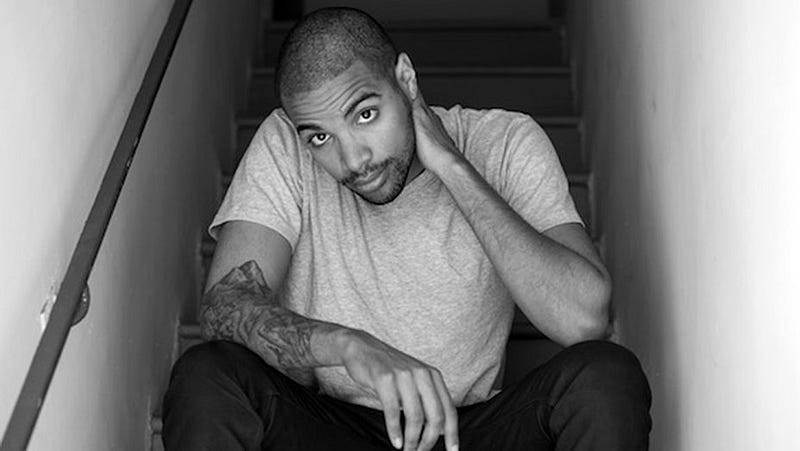
My interview with the screenwriter whose scripts Mississippi Mud and Hot Summer Nights both were named to the 2013 Black List.
It’s a quite an achievement to write a screenplay that is voted onto the annual Black List. To have two scripts make it in one year? That’s a rarity. That’s why I was excited to talk with Elijah in this April 2014 interview.
Here is the interview in its entirety.
Scott Myers: Just curious, do you follow Go into the Story?
Elijah Bynum: I do. I stumbled across it about a year ago and I found a lot of really interesting stuff on there. I’ve applied a lot of it to the writing process. Some of it consciously and some of it subconsciously.
It’s a wonderful tool for anyone, no matter how accomplished you are as a writer. There’s so much on there. Thank you for all the work you’ve put into keeping it and maintaining it.
Scott: I appreciate that. So let’s jump into this. How did you find your way into writing?
Elijah: It was a beautiful accident. I wish I could say I’m some kind of wunderkind and that I’ve been writing since I was four years old but that would be a lie.
I was born and raised in a little town in a little state 3,000 miles away from Hollywood. I figured I had a better chance of striking oil in my backyard than making a career in entertainment.
And then there I was in college. There was about two months left in my senior year. I was a marketing and economics major and although I had no idea what I wanted to do I knew staring at Excel spreadsheets was not it. I got to thinking…I had always had an interest in film and storytelling and I had what I thought was pretty decent taste. I figured, well, I don’t know how to write. I don’t know how to direct. I don’t like cameras stuck in my face, so I’m not going to act. I might as well try to produce (I had no idea what that meant either).
I found an internship at Mandalay Pictures. They sent me a script to cover. It was the first script I had ever read I really had no idea what I was doing but apparently I did a decent enough job that I got the internship. I came out here and that internship led to a position at CAA, where I floated for eight months. Then I was assigned a desk in the nonprofit arm of the agency.
Left and right my friends were landing the lit desks and moving on to work for a producers. My trajectory was looking less and less like it was going to work out that way.
All I could do at that time was educate myself on the writers around town so when the time came that I did finally have an interview with a producer I knew what I was talking about. I wanted to learn what good writing looked like — what it meant to have a “voice”, etc. I read everything I could get my hands on, the good, the bad and the ugly. I found there was a lot of ugly out there.
I think part of it was arrogance and part of it was naiveté, but I figured I could at least write something that ugly. That’s really where the confidence came from to try to write my first script. It was a total “F it, I can do this” moment. So I wrote the script right there on Microsoft Word and emailed myself the pages at the end of every day. I didn’t have Final Draft yet.
I realized after about 20 pages that I had absolutely no idea what I was doing, so I ordered two screenwriting books. The two major takeaways were structure and dialogue. These are two areas that a lot of younger or newer writers struggle with, just because it’s so specific to screenwriting.
Once I got that down, I was able to somehow — by the grace of God — able to finish the rest of the draft. I gave it to the guy who sat next to me, another assistant. I could just imagine what he was thinking “Great, the kid from the nonprofit department who’s always eating bagels wrote a script…”
I followed up with him about once a week. Actually that’s a lie. I followed up with him about four times a week for three months until he finally read it. He came to me one day and said “Hey, man. This isn’t bad. You mind if I show it around?” He called up his old boss — Sean McKittrick at Darko Entertainment, an all around bad ass dude — and sent it over. Darko optioned it and that was that. An interesting thing happened — at first I was so ecstatic I could taste colors but almost immediately after I came crashing down once it hit me that I would probably never write anything that good again. I got a job on a lit desk and got back to being an assistant.
But I couldn’t shake the rush I had while writing. I became nostalgic for it. Like an old flame or something. As painful and soul crushing as it was at times the high from cracking a story line or nailing a piece of dialogue was unlike anything I had ever experienced. I had other stories I wanted to tell. I had other characters I wanted to write. I wanted to keep writing, damn it. I’m happy I followed that intuition.
Scott: When was this that you wrote your first script?
Elijah: I wrote that sometime in 2011. No one really saw it until late 2012, early 2013. It was a dirty little secret of mine for a long time.
Scott: What script was it?
Elijah: “Mississippi Mud”.
Scott: Let’s back up a bit. Where did you go to college?
Elijah: I went to UMass.
Scott: Were you a movie fan when you were a kid? Did you watch a lot of movies?
Elijah: I think there are people out there who would consider themselves cinephiles or film buffs who have a much wider knowledge of film that I had entering this world, absolutely. Coming out here I had — and still do have — this insecurity that I wasn’t ever classically trained. I never went to film school I never went through some writer program. I don’t even have a mentor. I knew I had to take it upon myself to self-educate.
Last year I watched upwards of 300 films and I’m trying to surpass that number this year. It’s certainly a commitment. There are times when all I want to do is sleep or go out with my friends or watch “Breaking Bad,” but I would force myself to watch as many films as I could. And not just watch them but really study them, break them apart, understand them. There was this quote that hung in my high school weight room that read, “Your competition got better today, did you?” Not that I’m Daniel Plainview or anything but that quote has a point.
Scott: You’re at Verve?
Elijah: Yes, I’m at Verve and Kaplan/Perrone for management.
Scott: How did that happen?
Elijah: I was hip pocketed at Anonymous Content before. And for a number of reasons, I decided to leave that company. As I was leaving, I had just finished “Hot Summer Nights.” I slipped it to a few friends of mine that worked in the industry. They took a liking to the script. It hit the tracking boards and spread rather quickly. It was one of those instances where it was a perfect storm and the script was being whispered about around town.
The word also got out on top of that that I was looking for representation, because I didn’t have a manager or an agent at the time.
There was this three or four day blitz where my phone would not stop ringing and my email box was overflowing and people were Facebooking me and tweeting me. It was nuts. It was probably the most attention I’ll ever get.
Kaplan/Perrone and Verve reached out to me and they had a great sense of humor and a great plan for what they wanted to do with me as a client. It felt right and I’m glad I made that decision. We’ve been partners in crime ever since.
Scott: Let’s jump into these two scripts of yours. First “Mississippi Mud.” Plot summary:
“In the middle of major financial problems, a down on his luck southerner’s life begins to unravel when he accidentally runs over and kills a runaway girl.”
What was the inspiration for this idea?
Elijah: Well, it was a number of things. First of all, just naturally the way I approach story, I always have a question I want to explore. I never want to answer the question. I want to raise the question and present both sides of the argument and let the audience drawn their own conclusion.
In this case, it was one of those cosmic or philosophical conundrums that I think all human beings deal with. At least I know I deal with it. It’s the question of does everything happen for a reason or is life completely random? Not exactly a novel idea, I know, but fascinating nonetheless. I don’t think there will ever be an answer to as long as I’m alive. So I wasn’t going to dare try to answer it.
In addition to wrestling with that over arcing question I also like to dig for the human story. I ask myself, what are the human truths or the elemental human experience that we’re tapping into? In the case of “Mississippi Mud” that was desperation. Desperation is the narrative through line for every character.
So I had those two ideas bouncing around in my head for awhile but couldn’t find a way to explore them. Then one day it all crashed together.
I was flipping through a magazine during a cross country flight and I stumbled across an article. It was about a guy who was tending one of those gigantic 500 acre orange groves down in central Florida. He was an elderly man. The story has it he had a stroke or a heart attack or something and he fell off his tractor where he stayed for 18 hours.
The question entered my mind… If tragedy happens in the middle of nowhere, how does the universe sort itself out?
Right away I had this image of a man hitting a human being in his car.
Somehow I came up with all the other pieces and crafted what turned out to be “Mississippi Mud.”
Scott: It sounds like what you’re talking about in terms of these really philosophical questions ‑‑ does everything happen for a reason or is it just random? What are the elemental experiences of human life? In this case, desperation. You’re starting off with a kind of thematic perspective. Is that fair to say?
Elijah: Yeah. I see how it could sound overbearing but it’s actually quite comforting. I imagine it’s how old hunters felt during dark and cold expeditions knowing they had a warm bowl of soup and a loving wife to come home to. I’m only half kidding.
Once you know what your theme is — once you know what you’re trying to say and what is grounding your story — you can come back to it whenever you’re stuck. Every scene you write, every character you write, every word of dialogue you write, you’re able to go back to that theme.
It’s much better than finishing your first draft and realizing it’s simply not working and trying to reverse engineer a theme. I always think it’s easier from the onset. You know where everyone’s coming from, what’s driving everyone and what the story is saying.
Scott: It reminds me of that quote I have on the blog from Francis Ford Coppola, who says, “When you make a movie, always try to discover what the theme of the movie is in one or two words. Every time I made a film, I always knew what I thought the theme was. The core in one word. In the Godfather, it was ‘succession.’ The Conversation, it was ‘privacy.’ In Apocalypse Now, it was ‘morality.’”
And you have “desperation” going on for these characters, right?
Elijah: Yeah. That’s a great quote. Coppola actually stole that from me but who’s counting? Not to leapfrog, but “Hot Summer Nights” is about that burning primal desire to belong and the depths we’ll go to achieve it. I had a happy childhood so I really don’t know why I have this dark cynical mind when it comes to writing, but I always think “Okay, what’s the fundamental human condition at play here and what happens when it all goes south?”
That’s what really draws me to characters. What happens when we’re pushed up into the wall and we’re faced with this decision? What is the darker path that we might go down?
Scott: I definitely want to get into that because if these two scripts are reflective of your overall creative sensibilities, that definitely shines through. There’s a darkness to them. Even the humor there is rather dark.
But let’s dig into “Mississippi Mud” in terms of characters so we can get a frame of reference. Some of the key characters, the main ones are Chase and Riley, a young married couple. They’re suffering financial distress. She’s six month’s pregnant. How would you describe this couple?
Elijah: I was very careful when I was writing this not to make them too “likable”.
There’s this book, and I’m sure you’ve heard of it. I’m sure most screenwriters have heard of it. It’s called “Save the Cat.” The big premise there is have your character do something within the first five pages or so that make the audience like them and make us connect with them and sympathize with them.
If we can do that, then we’ll follow them to the edge of the earth. I was thinking about that. I was like, “Well, there’s a difference between sympathizing with someone and making them likable.” Here we have this couple, they’ve been struggling for years, they’ve never had a lot of money, they’ve never been in one profession for long, their house is being foreclosed, they have a child on the way and life just won’t quit being unforgiving.
At the same time, they’re not the most honorable and likeable human beings in the world. I really wanted to make that clear because I didn’t want it to be too neat and too clean. I didn’t want it to be like “look at these wonderful people and look at this terrible thing that’s happening for them, feel bad for them, damnit, feel bad”.
That’s really how I approached them. As far as who they are and what they represent, I always think it’s fun to take a societal norm or a cliché and flip it upside down and see what happens when you have the domineering wife and the more submissive husband.
Scott: They get involved in a rather labyrinthine journey because there’s several other moving parts in terms of characters and their subplots. There’s this little girl, the runaway girl, and then there’s a big event which happens, which we’ve already seen in the plot summary so it’s not giving away anything, but basically Chase runs her over.
We are introduced to the father of this runaway girl, a character named Luther. There’s also a banker named Webb who Chase and Riley have gone to. Basically, he’s told him there’s nothing he can do for them, their house is going to be foreclosed on. Then you have a policeman named Sawyer and his partner who are trying to track down this missing girl.
How did that specific alignment of characters emerge in your creative process?
Elijah: That’s a great question. Building out your cast of characters is always a different process. Webb initially, after the first draft, he only had one scene and it was the second scene of the movie when Chase and Riley go into the bank and find out their house is being foreclosed. That was it. He was a plot contrivance. Poor guy.
I’ve always been fascinated with chaos theory, with the butterfly effect and the idea that we’re all, as human beings, interconnected somehow. And I think that’s even more prominent in a small town such as the one in “Mississippi Mud” so I felt Webb deserved a more integral role.
I think whenever you have a runaway girl it’s essential to show how her parents are being affected. So that’s how we get Luther. What would they do if their girl had run away? They would call the police. So that’s how we get Sawyer. I think a lot of it became logical in that way. I’m not sure if that answers your question, but that’s what I can remember my process being.
Scott: I’d like to follow up on that Webb character because he’s actually quite an interesting figure and there’s a significant plot twist involving him. What I hear you saying is you had him in mind essentially to function as the voice of authority vis‑a‑vis the financial situation that Chase and Riley are at, but then over time that character emerged into a pretty substantial player in the plot.
Can you break that down, go into your memory a bit and see how that works? To me, that’s the most wonderful stuff about the story process, when you have a character that arrives for one scene and then all of a sudden they evolve.
Elijah: Again, going back to what the anchor of the script was, and in this case it was desperation, as desperate as Chase and Riley were, who were our main characters, Webb was just as, if not even more, desperate. It was playing with those levels of desperation. Of course, Luther, the runaway girl’s father, the runaway girl’s mother, and even the cops were desperate on their own level. It was looking at the spectrum of desperation of these characters.
I realized had potential to be the most desperate character in this whole story and even though he’s not our protagonist we can show that morally he’s willing to descend even further than Chase and Riley were. Of course they killed the runaway girl and decided to cover it up, which is horrible in and of itself but Webb was willing to take it even a step further.
Again, it was going back to that question of how far will human beings and mankind go when they’re desperate and pushed up against the wall and all hope seems to be lost. He was just sitting there asking to be utilized and I hadn’t realized it until after the first draft. When it hit me it hit me pretty hard. It was one of those moments when the clouds open up and little angels sing down at you. Those are always fun.
I remember changing the story very quickly. It was over the course of one night and I was able to write in all of the changes that you’re alluding to that became part of his much bigger story.
Scott: You ratchet up everything in “Mississippi Mud” significantly by introducing the proverbial briefcase full of cash. Was that in your first draft or did that emerge later?
Elijah: That was in my first draft. Again, talking about what will take human beings to dark places and we all know that money, not to quote the cliché, but is the root of all evil. Sadly enough, it’s one of those things that will make human beings do ugly things they never thought they were capable of.
Scott: There’s a religious overtone to the story. I’m curious, did you grow up in a religious family? If so, did that effect your writing here?
Elijah: I didn’t but I’ve always been curious about other people’s interpretations of the world. If you take two people — one religious and one not — and present them with the same exact situation they may see it in two very different ways. So, once I knew I wanted to explore that philosophical question I would need characters on both sides of the argument. I wanted to explore religion and faith and the idea of fate and happenstance. What some call fate others call “the way shit is”. Naturally, I wanted it to be set, and I’m glad you picked up on it, in this part of the world where religion seems to be the guiding force for most of its citizens.
I wanted to be careful for it not to come across as preachy or didactic. But I did feel it was important that we were steeped in this very rich religious atmosphere and have characters on both sides of the spectrum trying to make sense of it all. At one point the cop, Sawyer, says of a shotgun that miraculously backfired “the papers called it an act of God. I call it good luck, or bad luck depending on the party concerned.”
Scott: You say you grew up in Massachusetts. Unless you spent a lot of time in the South, I’m assuming you had to do a fair amount of research. The dialogue in the script is remarkable. I’ve lived in the South and it certainly felt real. How much research did you do about the South, the subculture, and particularly the language.
Elijah: It’s interesting. You look at people like Woody Allen or Lena Dunham and notice they write about people who are like themselves or, more or less, they write about themselves and they do it ‑‑ very, very well. I tried that at first and I found that I wasn’t very good at it. I found that when I write I don’t like to write about what I already know I like to write about areas of curiosity. The unknown. I’ve found that I’m much better at writing about people and places that are not like me versus the old adage, write what you know.
To answer your question, no, I haven’t spent much time in the South but I’ve met plenty of southern people and I’ve read southern literature — Faulkner, Flannery O’Connor and Cormac McCarthy and I’ve seen southern people on television and movies and I think I’ve just always had an ear for how people speak. My mother used to tell me that even from a young age I was able to pick up people’s mannerisms and idiosyncrasies very well.
There were a few occasions where I looked up some Southern dialogue just to make sure what I was saying was true to this region because it would be very ignorant and Yankee of me to be assume everyone in the South spoke exactly the same.
People in North Carolina speak a little differently than people in northern Florida who speak differently than Mississippi and west Texas. They all have different or phrases or colloquiums they would use. I did some research and I listened to some audio recordings of some of these people speaking just to further the ear for the dialogue.
Scott: It’s a terrific script. Before we move into “Hot Summer Nights” I have to ask, are you familiar with the book “Confederacy of the Dunces” by John Kennedy Toole?
Elijah: Yes. I’m familiar with it. I’m ashamed to say I have not read it, yet.
Scott: I want to nominate you to adapt that into a screenplay. It’s been around for 20 some odd years. A bunch of writers attached to it. It just seems like it would be right up your alley, because it’s a very ‑‑ it’s the same sort of structure, different kind of story. It’s a comedy. Really one of the best comic novels I ever read.
You should go to your reps and say, “Hey, what’s the deal with “Confederacy of Dunces,” because if you could nail it, I just think it would be great. Such a great book.
Elijah: Well, that’s awesome. I’m glad you have the faith in me. I’ll let my reps know that Scott Myers thinks I should adapt it.
Scott: Let’s move into “Hot Summer Nights.” The plot summary from the Black List.
“A teenager’s life spirals out of control when he befriends the town’s rebel, falls in love, and gets entangled selling drugs one summer in Cape Cod.”
I’ve got two pieces here that we know from your background. One you just said. There’s a theme, this burning desire to fit in. That was part of the inspiration for the story, but also Cape Cod. If you grew up in Massachusetts, I’m pretty sure you’re at least familiar with that area.
What other story elements and dynamics were at work that percolated into the genesis of this story?
Elijah: Well, it is based on two kids that I knew in college who were clearly up to no good. What really was interesting about them was how different they were as individuals. There was the more quiet, reserved, unassuming kid and then there was his counterpart, who was louder and cockier and more flamboyant in that sense. They were an unlikely pair.
They started selling weed small time around the dorms and then around campus. Then it blew up and it got way too big. They got in over their heads. It didn’t end well. I mean, they’re both still alive. I think. At some point they both dropped out of school and one fled across the country and the other one disappeared.
What really was interesting to me was the rise and fall of their drug empire, if you will, alongside the rise and fall of their friendship. I thought there was something so tragic and romantic about it.
When I sat down to write it at first it was very straightforward. It was almost documentarian in its view. It was set in contemporary times on this big college campus. It was spread across three years.
For some reason, it wasn’t clicking. It just didn’t feel good. I was trying to convince myself that it was working which is never a wise move.
I sat back and thought, “ What’s not working about this?” It was then that I realized I didn’t care about what was happening. It didn’t make me feel anything. I decided to condense the amount of time the story took place over, taking it from the course of three years and making it take place over three months. All the emotions were just burning a little hotter and everything was hitting a little harder.
Then I wanted to age them down. Instead of watching college students do this, we are watching 16 and 17‑year‑olds. Again, a time in life when emotions burn a little hotter and hit a little harder. Then I moved the story off a college campus, put it in a small beach town and set it during a brutal heat wave.
I’ve always been intrigued by the idea of the small town fable and playing with those classic tropes. The James Dean rebel who smoked cigarettes and had sex before anyone else did and the girl that was so impossibly beautiful that she could break your heart just by walking into the room. Just the iconic figures that these small towns seem to have.
The story took on this life that it hadn’t had before. Then of course, I introduced the love story, because we’ve all been blindly and foolishly in love before. I thought this story was just asking for that.
I used the theme of wanting to fit in and of course, like any coming of age story, finding yourself and the idea of a self‑fulfilling prophecy. I took those three main things and built around them.
Then the idea we were talking about in “Mississippi Mud” of fate and chance and happenstance. That idea is always working on some level in every one of my scripts. I can’t seem to get away from it.
Scott: Why set it in 1991?
Elijah: That was more of a stylistic choice. I wanted this thing to play like a memory. The great thing about memory is that it is unreliable. There are things that we remember, for better or for worse, that have been embellished in our minds eye. This allowed me to play with some elements of magical realism.
For instance, there’s a scene in the script, it’s the first time boy kisses girl and fireworks go off.
Scott: Right.
Elijah: And then the narrator comes clean and admits, “OK. Well, there weren’t any fireworks.” It’s the idea of playing with this unreliable narrator who’s looking at this very powerful and transformative summer through this lens of nostalgic fog. I figured if it were a contemporary story you wouldn’t have the same nostalgic feeling that you would if this took place in a time and place that can never be again.
Looking back everyone always feels like, “Oh, times were simpler back then,” you know? I really wanted to tap into that.
Then I started thinking what this time period could be. Quite frankly I thought, “Well, the early ’90s is by all intents and purposes retro at this point. It’s over 20 years ago. It hasn’t been tapped into yet as a bygone era”. I knew a major part of the story would include a hurricane and as I was doing research I found that a huge hurricane slammed the coast of Cape Cod in August, 1991. I kind of clapped my hands together. There we go! That’s my time period.
Scott: Let’s talk about the two main characters in “Hot Summer Nights” — Daniel Middleton and Hunter Strawberry. Both of them have interesting names by the way. These are your iterations of the two kids from college you mentioned? You used them as a touchstone or a starting point.
What was important to you in developing them so that they were similar and yet distinct, because there are some similarities between them, and yet there are some substantial differences?
Elijah: We might look at a total stranger and figure they are completely different from us and in a lot of ways they are, but there’s something about all of us as human beings that can be universal.
Even though Hunter was the town bad boy and he got all the girls and he drove the cool car and everyone in town knew who he was, there was a loneliness inside him. He felt like an outsider, especially because he was a townie in a resort town in which every summer, people with money flocked in and made him feel inferior.
Every summer he was reminded that he was nothing more than a townie and that he probably would never be anything more than a townie. In that sense he was an outsider.
Daniel’s more obvious in the sense that he’s an old fashioned loner. His father had just passed away. He never really established great friendships or turned into anything that he could identify himself with. Didn’t do particularly well in school. Wasn’t great at sports. He couldn’t look a girl square in the eye without getting dizzy.
And yet, as different as these two kids seem to be on the outside, they shared a very powerful similarity that brought them together. They both wanted to belong. I think that is true about the real life characters I based the story off and it’s something that I wanted to maintain in the fictional versions of them.
Scott: Speaking of Daniel and that loneliness, there’s voice-over narration early in the script where he says, “I was an only child and was never one to make friends easily. Over the years I had become very good at being alone. Frankly, it was the only thing I was good at.”
As a starting point, that suggests his destiny is to find at least some connection, some community, right?
Elijah: Yes. Yes. He wanted to belong to something. I think there’s a piece of dialogue in there that said, “We both wanted to belong.” This is the scene when him and Hunter first meet. They both wanted to belong in different senses of the term “belong,” but there was again that very visceral feeling of not being part of the group and feeling inferior to everyone.
Scott: They share something in that both have lost a parent.
Elijah: Yeah.
Scott: And that’s important.
Elijah: Yeah. I think if I do another pass on the script, it’s something I want to tap into more, because right now, it’s never mentioned. It’s something that someone like yourself who has read probably thousands of scripts and is very attuned to what to look for has picked up on it. I’m not sure everyone will pick up on it.
It’s something that’s floating beneath the surface, but it’s not something I’ve brought out there and really addressed.
Scott: Yeah, I mean, you can deal with it with Daniel. He does this interesting symbolic act at some point about his father and burning some stuff that gets him into a bit of trouble or at least perceived to be like a cry for help.
That and in fact at a key point, he even thinks ‑‑ it’s in a scene description, I think ‑‑ that he might have seen an image of his father down the road. I think you know what I’m talking about. And so as the father hangs over him like a ghost in the way. He’s in the background, but it’s present.
With regard to Hunter, it’s not as much there. I was wondering, because he’s a very angry guy. He’s like a ticking bomb. How much of that anger do you think is spurred on by him being an outsider and how much of that do you think actually is tied to the fact that he did lose a parent, his mother?
Elijah: I think it’s both. I think there is that inferiority complex that kind of haunts him. There is the fact that not only did his mother die, but he realizes he wasn’t there for her. Now his sister won’t speak to him, because she has, whether rightfully or not, found someone to place blame on. And he’s become alienated from everyone.
But on top of that, it is the self‑fulfilling prophecy that for as long as he can remember, he’s always been told that he wasn’t going to amount to anything and he’s nothing more than the bad boy. He’s the guy who can sleep with a girl at night and sell the girl’s father weed during the day. Then the next day, when he runs into both of them, they look the other way, like they have no idea who he is.
That’s something that…it affects every moment of his life. At times he gets off on it, like when he drives up to the gas station and he winks at the young mother and shudders and drives away. And at times, it makes him feel really shitty about himself. And what makes him so tragic is that he is aware of who he is and his place in the world and feels like there is no way out.
There’s a scene where him and Daniel are talking. It’s when Daniel asks him to be part of the drug business. And Daniel says something along the lines of, “You know when you’re told that you’re one way long enough you begin to believe it.” I think the screen direction is something along the lines of Hunter not responding, but knowing all too well how that feels.
And Daniel’s been told all his life, directly or indirectly, that he’s nobody. He is average, which is where I got the last name “Middleton.” He’s in the middle. He does not stick out of the crowd. He’s like, “I don’t want to be that way anymore.”
And Hunter, from a very different standpoint, doesn’t want to be what he’s been told anymore. There’s a point in the script where he starts realizing he doesn’t have to live the life he’s always been told that he has to live. Without giving away the ending, the sad part is that he becomes what everyone says he always would become…
Then when you look at McKayla, she is also a victim of this where she is the attractive, dangerous girl in town that is taken advantage of by these vacationers and then is left after Labor Day, when they go back to their lives. She can see the trajectory of her life as well. Although she doesn’t speak about it, it affects her in the sense that she’s like, “I know how my story ends. I know who I am and I know what’s meant for me.”
It’s the fear of becoming that thing that the world around you tells you that you’ll become. All of our characters fight against that. Some win. Some don’t.
Scott: There’s a real theme at work of destiny, fate. It’s even up top in the dialogue. Hunter at some point says early on in conversations with Daniel, “Walk on the edge long enough and you’re going to fall. Trick is to enjoy the goddamn view first.” And then he follows it up a little later saying, “Life is like gravity. It doesn’t matter who you are. We’re all going to end up where we’re supposed to, whether we like it or not.”
Could you talk a bit about this idea of destiny in the story, of fate?
Elijah: Well, one of the opening sentences in the script in a voice‑over is Daniel saying something about “every moment in life is a result of the moment preceding it.” Steve Jobs’ commencement speech at Stanford tapped into this when he said “It’s not until we look backwards that we can connect all the dots.”
Oftentimes in life we find ourselves in a situation where we go, “How the hell did I end up here?” But if you really go back and deconstruct every decision you’ve made leading up to there, it makes perfect sense. The problem is in the moment we’re blind. Although we always think, “Oh, I won’t make this mistake again” but as it says in the script, “Life is always one step ahead”.
I really was interested in the fact that Daniel was, for the first time in his life, living in the moment and letting emotions and instinct lead the day. And from the very beginning, I wanted to tell a story about a person who thought they had everything under control. And of course, life was one step ahead of him and he watched things spin out.
A movie that I probably watched 100 times when I was writing the script was “Goodfellas.” Structurally, it’s very similar, but it’s the idea of the romanticism of this time and how you can be swept up in it. Before you know it, you look up and you’re facing 50 years in prison and go “How did this happen?” Well, if you look at it, it makes perfect sense how it happened, but on a day to day level, on a granular level, you’re unaware of the path you’re leading yourself down.
Scott: There’s a moment where Calhoun, the sheriff, he’s sort of a mentor or a wisdom figure. He’s got a side of dialogue where he stops Daniel, then says, “You’re going to have a hard and trying summer. Looks like we all are.” Then he goes on. Just sort of raps about the summer and “the heat will change a man, Mr. Middleton. Make him do things he otherwise would not do. And as he yearns for cooler times, you know what it is that will tear him apart? Denying that which is inevitable.”
It’s almost like Calhoun is a prophet at that point. He’s literally saying look, this is the path you’re going down.
Elijah: Absolutely. I love stories that do this. They do it in Magnolia. They do it in O Brother, Where Art Thou? Again, this whole story I wanted to feel like there was a small layer of mysticism to it. It was fantastical in a way. And just working with the idea of the fable. Having a prophet that basically verbatim says the theme of the script and tells Daniel this is what your fate will be, it’s something from the onset that I knew I wanted to happen. I didn’t know how it was going to happen, but I knew I wanted to put it in there.
If only I made Calhoun blind. Damn…
Scott: Of course, working at CAA and reading all the scripts you did, you’re quite aware of these supposed screenwriting rules: “Don’t use voice‑over narration or don’t use flashbacks.” Even period pieces. From a budgetary standpoint, it’s just more expensive.
Yet you embrace all of that. You’ve got fantasy elements. You’ve got voice‑over narration. You’ve got flashbacks. Were you at all concerned about the conventional wisdom that’s out there about these things? Or this was part of your mythic, fantastical vision for the story and you just had to go with it?
Elijah: I didn’t worry about it too much, just because I had such a clear vision of what the script was going to play like. At the end of the day I was writing the story for myself. I knew it would turn some people off but I didn’t care. If I wanted to make everyone happy I would make ice cream.
I feel like rules are allowed to be broken if they’re broken well.
Scott: I’d like to talk about both movies, look at them in macro and think about, discuss maybe your creative instincts here because I don’t know if you’re a fan of Coen brothers or not, but to me, Raising Arizona came to mind. Fargo came to mind. At moments, even Blood Simple. Are you a fan of the Coen brothers? Inspiration for you?
Elijah: They are literally my favorite filmmakers of all time.
Scott: Were there some touchstones for you thematically or tonally with some of the Coen brothers movies that came to mind? Or were you just sort of generally influenced by them and didn’t have any specific points of reference?
Elijah: I think I’m generally influenced by them. They have this almost magical way of exploring life in ways that are beautiful and tragic and hilarious and horribly sad and deeply ironic. After all that’s what life is. A Coen brother movie leaves me with a very particular feeling in my gut. It’s something that I’ve always been inspired by.
“Mississippi Mud,” absolutely. I mean, “Mississippi Mud” is very much, I think, in the tone of Fargo and Blood Simple.
“Hot Summer Nights” less so. Movies that inspired “Hot Summer Nights” were movies such as Stand by Me, American Beauty, Goodfellas. I read the novel “Virgin Suicides” as I was writing it as well. Just finding those elements and this detached whimsical nostalgic feeling that’s also tragic and funny and sad, and just felt very human and very, very real.
Scott: Both of your scripts have complex plots with a lot of subplots, twists and turns. Do you like plot?
Elijah: Yes and no. I have an index card taped to my desk that says, “Don’t be boring.” I have to remind myself of that all the time. Any time I feel the plot dragging and I realize I’m going down the wrong path I look down at my desk and that little index card is staring up at me.
Plot by a long shot is the most difficult, frustrating thing, because you only have, unlike a novel, a set amount of pages to tell your story. If you’re following the conventions of screenwriting, you have act breaks that you need to hit generally within a two or three page window to make your story read smoothly.
Being able to juggle all of these pieces while being able to say what you want to say thematically, while being able to say what you want to say on a character level, and keeping the plot moving forward ‑‑ it can be maddening. Whiskey helps.
But when you really tap into it and find a plot line that’s working, it sets you free, because the writing becomes that much easier. You’re connecting the dots at that point, instead of just swimming into the abyss, hoping you find a post to hang onto. You know exactly where you’re going. It’s just finding those benchmarks that are so difficult.
So I’d say it’s a love/ hate relationship with plot.
Scott: One last thing I wanted to talk about in sort of macro way. You’ve got, particularly in “Hot Summer Nights,” there’s quite a few sides of dialogue where characters are ruminating about life. In fact, McKayla has one where she says something like, “Sometimes it’s good to be a little bad.” Even she has her own worldview that gets expressed.
But like “Mississippi Mud,” there’s a line toward the end. “Some folks walk in the rain. Others just get wet.”
I’m curious, and now you’ve also talked about how each of your stories have these kind of thematic, almost philosophical questions at the center of them. Where do you think that comes from and why does that interest you in terms of your writing?
Elijah: I’m not sure that I know where that comes from. My dad is a pretty deep dude. He’s a psychologist and has published several incredibly dense and esoteric non-fiction books on the human subconscious. That could be it. I don’t know, I have always been pretty cerebral and I’m fortunate to be able to string a few words together so I’m able to explore my questions through my stories. One of my favorite novelists is Cormac McCarthy. I think, as dark as he is, he’s always seeking questions to the way that this universe works and where he belongs in it.
There’s a way to address these questions, without hitting them over the head, by having characters, who are just as confused and lost and ponderous about life as I am. Looking at some of my favorite films and what’s inspired me, there’s always that element in there of “why are we here and what are we doing and where do we fit in?”
I think it’s something that influences me, whether I’m trying to let it or not, it comes out in some way or the other.
Scott: Let’s talk about landing two scripts on the 2013 Blacklist. How did that go down? How did you find out?
Elijah: I think a week before someone told me, “Black List is coming out in a week.” And then I tried not to worry about it too much, so I let it out of my mind.
I figured the night before, someone, either Franklin Leonard, or my manager or agent or someone from the Blacklist to tell me. Someone would email me and say, “Congratulations! You’re on the Black List. It will be posted tomorrow.”
The way I found out was this very nice television executive who greeted me with a congratulations. I was going into a general meeting, and the executive I was meeting with, as soon as I sat down, she said, “Well, congratulations!” I had no idea what she was talking about. I stared back at her like an idiot, and said “Thank you…?” She was like, “For the Black List.” “Ohhhh.”
Scott: Did they say, “You’ve got two scripts on there?” Or was it just, “You just made the Black List.”
Elijah: No, no. She said, “Congratulations on the Black List.” Then she refreshed her computer page. I leaned over and looked at her desk. I saw “Hot Summer Nights” was on there.
And then during the course of hour long meeting I felt my phone buzzing in my pocket. I came out and there was a text from someone who said, “Two on the Black List. Congratulations!” And then there were a few more texts that said that, so then I went on Deadline and looked at it. And saw that “Mississippi Mud” made it as well.
Scott: What was it like and has it made much of a difference for you making the Black List in terms of general meetings and whatnot?
Elijah: For six months leading up to the Black List, I was heavily involved in the general meetings. It felt like I was campaigning for a political office.
I think I went on something like a hundred general meetings. Someone told me “well, you’ve already met half the town, now after making the black list you’ll meet the other half”. It’s great — there are so many cool, likeminded people in this industry and I have a ton of water bottles now — but it’s hell on my gas tank.
Aside from the meetings, it really gave me the confidence that what I’m doing is resonating with people. Neither of those scripts were developed with anyone, I wrote them in a vacuum, which can be scary because you’ll stare at a piece of writing and you won’t know if it’s good or not. You have the devil and the angel on each side telling you this is terrible or this is great, and you’ve got to trust your instinct. So it’s very cool to know that people I respect dig my work.
Scott: What’s the status of the scripts, by the way?
Elijah: They’re both technically, I guess you would say, “in development.” “Mississippi Mud” is set up at Darko Entertainment with…
Scott: Richard Kelly.
Elijah: Yeah, with Richard Kelly’s company, with D. J. Caruso attached to direct.
And “Hot Summer Nights” is kind of in an interesting position right now, but it’s being executive produced by a company called Flashlight Pictures.
Scott: Let’s get into some craft questions. How do you come up with story ideas?
Elijah: Like we discussed earlier it comes from a place of some question or theme I want to explore. And then, just by keeping my eyes peeled — listening to music or reading books or articles or documentaries — something will stand out. And it will present itself in such a way that it lends itself to fitting into this theme that I want to write.
I’ve been fortunate enough that I have found those kernels of true life. Even if the script ends up having nothing to do with what that initial inspiration was, there was something there that triggered a creative thought in my mind that I was able to run with.
Scott: How much time do you spend in prep writing?
Elijah: The problem with me is when I have an idea and I have a character, I get really excited. At first, I go, “Well, I’m going to do it right this time. I’m going to outline. I’m going to know exactly what’s going to happen on each page. I’m not going down that path that I did on my other script”.
Then I just get too excited and I start writing. A lot of the research I do comes as I’m writing. I’ll get to a place where our characters need to accomplish X. And I won’t know what X looks like, so then I’ll take a few hours or sometimes a few days and I’ll research X.
But it’s a process that I do concurrently with the writing. I don’t front load everything. I think there are two kinds of people who can know their entire story up front — geniuses and hacks — I don’t think I’m either one. I’m sure there will be a project some point in the future where I really need to delve into the research and the outlining before I even think about writing one word of the script. But so far it hasn’t been that way.
One of my favorite screenwriters to date who I’ve really learned the craft from just from reading his stuff is Eric Warren Singer. A little bird told me that he wrote a script for Sony where he read something like 70 books beforehand. Maybe not cover to cover, but some part of the book and just did three or four months of research before he even started writing the script. I found that to be incredibly awe inspiring, that he went into this world with that much knowledge.
While I might not dive headlong into research I do completely immerse myself in the mood. I don’t know if there is such thing as “method writing” but if there is I think I qualify. During my most recent script — a grim crime thriller — I let my beard grow out and I found myself drinking a lot of whiskey in the dark while listening to Tom Waits. I was in a dark place. During “Hot Summer Nights” I was listening to a lot of 50’s love songs — I even tried to fall in love myself. It didn’t pan out.
Scott: How about developing characters? Are there any techniques or tools that you use to develop them?
Elijah: I have a very distinct idea of who this person is, but the first third of the script is always the toughest to write character‑wise, because I’m still getting to know this person.
Then as the story unfolds, their dialogue and their actions becomes much more natural, because this person has become, in my mind, fully realized. I have to take them down several different paths and then delete all the ones that don’t ring true. After enough times the character really starts to take place. Even when I’m not writing, I walk around thinking about who these people are and what they are doing at that moment as if they really exist. It’s sad, I know.
I always write a little bio on them before I write the script. Their back story, their personality, some of their character traits. I know what food they like, what kind of cigarettes they smoke — but there’s a difference between characteristics and character. It’s not until you really throw yourself into the story and throw your character into the story that you can genuinely understand who they are.
Scott: What about dialogue? You said you had an ear for it, ever since you were young, you’ve been able to notice details and whatnot.
Do you feel like writing dialogue is one of things that you can learn how to do? Or is it just an innate talent that some writers have and others don’t?
Elijah: There’s always going to be people like Aaron Sorkin and David Mamet ‑‑ who are just wired in a way that makes them incredibly good at it. But I think it’s definitely something you can learn.
The trick is when you’re writing dialogue for the screen, it’s an illusion, because it’s not really how people speak. It is crafted in such a way that it appears to be how people speak. But it’s not really how we speak. People talk in non sequtiur and they ramble and what not.
That was the learning curve, for me, at least. My first crack at “Mississippi Mud,” the dialogue was terrible. It was way too verbose. It was on the nose. It was meandering. Those screenwriting books explained what it means to “cut the fat” and how important “subtext” is. Some of the most powerful moments between two characters come when things are being left unsaid.
I always keep that in mind when I’m writing. What are the characters not saying?
There’s this great scene in the movie “Drive” when Ryan Gosling and Carey Mulligan’s characters are getting to know each other. What’s actually on the page is very, very mundane and straightforward. They’re in the kitchen. She gives him a glass of water, asks him what he does for work. He says he works at a garage, and that’s about it. But the scene is charged with the sexual electricity. Of course a lot of it’s the directing, the music and the acting, but it all works because of what’s underneath the surface, what’s not being said.
Scott: What do you think about when you’re writing a scene? Do you have any specific goals in mind?
Elijah: Yeah. Before I write any scene I outline the scene. I pull up Microsoft Word. I have about four or five bullet points on what I want to accomplish in the scene. I realized when I was first starting to write, and I think it’s a mistake a lot of first time writers make, is each only accomplishing one thing per scene. I realized great scenes accomplish many different things on many different levels. They’ll move the plot forward, they’ll reveal character, they’ll introduce another problem, etc.
A really well‑written script doesn’t seem like it’s trying too hard to do this, but, believe me, whoever was writing it was bleeding by the ears by the time they finished the scene because it is really hard to do all of that. When I go into each scene I outline it and I have bullet points of what absolutely must be accomplished in this scene.
As often as possible I try to set the scene in a place that somehow reflects the mood of the scene. There’s this very intense scene in “Mississippi Mud” where Luther, who’s the father of the missing girl, confronts the two police officers. Now Luther is the kind of dude who has the wild light in his eyes. The kind of guy who can snap at any moment. So I set the scene at a firing range. There’s this inherent danger there with shotguns and rifles blasting off and that sound, that loud, punctuating sound, which hopefully makes the scene all the more ominous.
Scott: What about scene description? I was struck, you have such a nice balance there. It’s almost like poetry. A lot of vivid descriptors, strong, active verbs, vivid adjectives and whatnot, and yet it’s spare. Spare writing. Would you have any thoughts about how you approach writing scene description?
Elijah: I think that goes back to my idea of trying as hard as I can never to be boring. The scripts that I’ve always been drawn to are the scripts that have a very strong sense of voice. I decided I was more comfortable really painting the image for the reader so it felt like they were fully immersed in the world. Every story I tell I try to have a strong sense of time and place. I like the reader who reads “Mississippi Mud” to smell the humid air and feel the dirt under their nails.
I felt like I couldn’t accomplish that without getting very vivid in my description. I’ve faced criticism for it. I’ve been told that I overwrite and that directors don’t like when the writer does their job for them, which is true to an extent. It’s about finding that balance of breathing life into your world while, at the same time, not overwriting your script and boring your reader with too much context, too much description.
It’s something I still struggle with, to be honest.
Scott: I always tell people there’s some latitude. There’s a selling script and there’s a shooting script. A selling script, we’re just trying to engage that reader and pull them into that story universe and entertain them. Yes, the standard is now we don’t do camera shots or whatnot, but, like you do, you can suggest them with separate lines and whatnot.
Don’t you think we have a little more latitude with what you call a selling script?
Elijah: Absolutely. You’re right. As often as the old screenwriting books, which you called, for the most part, bullshit, they tell you not to do that. The scripts that people seem to connect with are scripts that pull them in and that make the read visceral and make the read enjoyable. I’m going to keep doing that as long as I can until someone forces me to stop.
Scott: What’s your actual writing process?
Elijah: I like going to a coffee shop. I like being able to watch people. I spend probably the first hour that I’m there just sitting listening to music on my headphones and watching people. When I’m writing a script I write every day because I’ve found that creativity is an elusive little bastard and 9 times out of 10 you sit down to write you’re not going to be able to find it.
It’s just a numbers game. If you sit down every day and force yourself to sit in a chair and force yourself to write something sooner or later you’re going to come up with something that you like. You might wake up the next morning and read it and hate it, but at least it was something you got down on the page and you can work off of.
On top of that, when I’m writing a script it’s intoxicating. I want to write. It’s the times between scripts that are difficult. When I’m writing a script I don’t sleep very much. I disappear from the world. I’m so focused and enraptured in the story and characters that it’s all that I’m really interested in doing at the moment.
Like you said, music is a big part of my inspiration. I always try to find a piece of music that is thematically in tune with what I’m writing at the moment.
Scott: One last question for you. What advice can you offer to aspiring screenwriters about learning the craft and breaking into Hollywood?
Elijah: As a writer, we try as hard as we can to avoid cliche, but my piece of advice is going to be cliche. It is to keep writing because that is the only way you’re going to get any better at writing. Keep writing, keep reading good material, and as you do that you will learn to trust your instincts. I really think that’s all writing is about, trusting your instincts. If you write something and think it’s bad it’s probably bad. If you write something that you think is good, you have at least a 50 percent chance that it is good.
Also, stay curious. I think the worst kind of writer is the kind of writer with nothing to say. Writers have to be curious by nature. Curious about life, curious about human beings, curious about what makes the world go around. As long as you’re curious, there will always be something to write and you’ll always be raising the right questions.
As far as breaking into Hollywood, I think everyone has a different story. I was fortunate enough to be working at a big agency so as soon as I had a script I could just give it to a buddy that sat next to me.
I’ve heard stories of people who were working at a factory out in Pennsylvania and they were able to get their scripts into the right hands and now they’re a big working screenwriters. I don’t think I’m in a position to tell you this is the one way to break into Hollywood. Stay persistent, stay hungry, stay curious and something will happen.
Elijah is repped at Verve and Kaplan / Perrone.
For my interviews with dozens of other Black List writers, go here.