Go Into The Story Interview: Daniel Hanna
My conversation with the 2021 Nicholl Fellowships in Screenwriting winner.
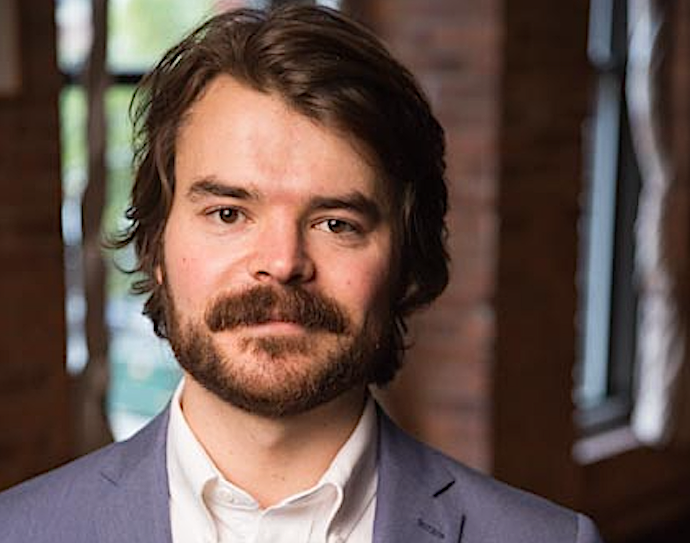
My conversation with the 2021 Nicholl Fellowships in Screenwriting winner.
Daniel Hanna wrote the original screenplay “Shelter Animal” which won a 2021 Nicholl Fellowship in Screenwriting. I had the opportunity to chat with Daniel about his creative background, his award-winning script, the craft of screenwriting, and what winning the Nicholl Award has meant to him.
Scott Myers: I did a little Google stalking on your background and I noticed some interesting geographical elements. There’s Canada, Arkansas, Ireland, so maybe we could start there. How did all those pieces fit together as part of your experience growing up?
Daniel Hanna: My parents and all my extended family is Northern Irish. My parents lived there until the late ’70s then moved to Canada, where I was born just outside Toronto, and grew up in Ontario. Every summer or every other summer we’d go back to Ireland. My mom would save up all of her time off, and we’d go for like two months in the summer.
When I was six, my dad got transferred down to Arkansas and I was there all the way through undergrad at University of Arkansas.
Scott: That’s quite a transition, I would think. That’s Toronto to Arkansas. What was that like? You’re six years old. Now you’re in basically the South.
Daniel: What’s funny is I didn’t realize until later how different it was, since I was so young. To me, it was like, “This is kind of similar. Everyone’s still speaking English. The accents aren’t even as extreme as they are going back and forth between Ireland. It’s just hotter and a lot more humid.”
It wasn’t until I got older that the differences became clear to me. We lived in Waterloo, Ontario from when I was two. It’s a smaller city, not like Toronto, but I realized later how many of our friends were immigrants. My parents were from Ireland. My best friend was Japanese. Her grandma only spoke Japanese. My mom’s best friend was German.
I didn’t realize until a few years after being in Arkansas, I was like, “Oh, really, everyone here is from this town, or from Arkansas, or somewhere nearby.” It’s rare that someone’s even from the Northeast or something like that. It is definitely an interesting place. I love Arkansas. It’s got a lot of variety in its own way, despite what people think.
Scott: I’m from the South, born in Texas. I lived in Alabama, Virginia, North Carolina. I understand that there’s a perception of the South, but it’s not a homogeneous at all. It’s very diverse.
I’m suspecting maybe you had a similar experience as myself, as I moved around a lot. That outsider kind of thing, does that at all figure into your mindset as a writer or storyteller?
Daniel: Absolutely. I felt a little like an outsider anywhere I went. Maybe not so much in Canada, but still, my parents weren’t from there. Then we live in Arkansas, but we’re Canadian. And it wasn’t until I moved to California that I felt like I was Southern. It’s this weird thing of playing catch up everywhere you go, you realize, “Wait, I am from the South.” I didn’t really think of it that way because I felt like an outsider there. Now that I’m here, I’m alien to some of these people because I have a little bit of the Southern vibe.
Scott: Eventually, you moved to California for the USC MFA program. Was that for film and TV?
Daniel: Yeah, so film production MFA, which is sort of everything. You can write, direct, produce, cinematography. It’s like a catch all there.
Scott: Did you have that background at University of Arkansas? What was your major there?
Daniel: I’ll take you through that a little bit. I always really loved writing. I wrote a novel when I was a kid, like a 250-page, typed, small font novel. I just got up and did it every day. I thought it was the most fun thing in the world to just create my own stories and do things the way I wanted to do them.
Especially coming from Arkansas, you feel very far away from the cultural centers or whatever you want to call them where people do that kind of thing for a job, even though obviously you can write anywhere. So at the U of A I focused on Economics. I studied Economics and English at first, and then switched to the business school, but I continued taking English classes.
I had a writing mentor, Molly Giles, who is an amazing person who had been nominated for a Pulitzer and won The Flannery O’Connor Award for fiction. She read my stuff after I was no longer in her class and encouraged me to keep writing. She was an aspirational audience, someone who was really talented and I wanted to be able to learn all I could from her.
That was primarily prose fiction, although they did have a screenwriting class there, which was a grad-undergrad combo. All these were as electives because I still just couldn’t quite commit to the idea of I’m going to be trying to make a career as an artist. That seemed far too impractical, but there I was writing and making little films.
I even made a super indie feature with some amazing MFA and undergrad acting students. They had a great acting program there at University of Arkansas. I’d go out for a day and shoot a couple of scenes and then edit them. Then, a couple of weeks later, shoot the next couple of scenes. It’s the kind of thing where you don’t know how big of a job you have ahead of you out of naivete, you’re doing it as you go and then realizing, “Oh, man. That first cut is awful. Now, I have to re-edit the entire thing and sound and music and all that.” Not knowing what I didn’t know kept me going forward with it.
It was through my time there and meeting other people who seemed braver than me because they were going to go to grad school for the arts that made me think, “OK, maybe I’ll do the same thing.” I noticed I was putting all my extracurricular time into making films, writing films, writing short stories, whereas my friends in the business schools were interning in their fields. I realized I wasn’t going to excel at this business thing the way I was going. It’s not actually the “safe choice” if I won’t put the time I need into it. So I decided that I might as well go all-in on this filmmaking thing because that was the only career I was going to put 110% into.
I got into USC grad school somehow, even though I didn’t have an arts background, loaded up my truck and drove out there with everything I owned. I got a little studio in South Central, a mile and a half south of campus, and jumped all in.
Scott: Maybe it’s the romantic in me, but you have that Irish blood, a legacy of storytellers and novelists. It’s almost like fate would have been coursing through your veins to say, “You need to be a storyteller.”
Daniel: I know. It’s funny because there’s not very many artists in my family or extended family, at least, not in a career sense. My dad went to a little school called Portora in Enniskillen, which is a small city in Northern Ireland. It’s like the advanced public school, basically. Samuel Beckett and Oscar Wilde both went to this little school. Sometimes you can’t help but think maybe there’s just something in the water over there.
Scott: You’ve got editing as a skill set as well. So, director, writer, and editor. I’m assuming going out and making a feature film when you’re a student and an undergraduate, you also got producing in there as well. Cinematography. You’re like the Steven Soderbergh, Robert Rodriguez type of thing, where it’s just I want to do all of it?
Daniel: That’s how I started out. I definitely did everything on my first movies, shooting too. When going to school, I realized, even though it probably wasn’t as pronounced as it seemed at the time, the other students that wanted to do cinematography were so much more knowledgeable, so much more experienced and had put years into that. I felt right out of the gate like I’m behind on this. And I realized that editing was more in line with what I wanted to do because it was more about storytelling to me, telling the whole story versus the pieces of it.
They’re smart about how they do it at USC. Everyone wants to write and direct when they come in, but they encourage us to study a technical skill as well. Editing was my technical skill. It was a great way to make ends meet. That’s what I’ve always done primarily for money is editing.
Scott: You’ve done a lot of documentary work as an editor?
Daniel: I have. That’s one of the best learning experiences, editing documentary. At USC, the advanced project I did was documentary editing. You have to figure out how to make a structure out of the material. You and your editing partner, with a director obviously. I happened to take it the same time I was taking Feature Writing Structure, which is a script analysis class. The two things together merged because I was taking them at the same time and understanding what a story is even if all you have are these disparate documentary pieces that don’t seem to add up a narrative story, but you find that story as you’re going.
Scott: You directed a feature film, Miss Virginia.
Daniel: Yes.
Scott: It was written by someone else, right?
Daniel: It was written by someone else, yeah.
Scott: How did you get involved in that?
Daniel: It shows in this industry, your jobs or career milestones or whatever will come out of some of the least expected places in a way, or a couple of years after you’ve worked with someone. Years ago I’d gone through a little writing workshop with “Shelter Animal.” I rewrote the whole thing during the pandemic more recently, but I’ve been kicking around the story for a long time. The woman who ran that writing workshop, Erin O’Connor, she was the mentor, like the screenwriting coach or story coach that guided everyone through the process of rewriting their script.
A couple years later, she reached out and asked if I would read a script that she had written that they were in the process of producing and raising money for, and to give my unfiltered opinion on things I thought could be issues from a production standpoint, story standpoint, anything like that.
I read that script. It’s based on a true story. I thought it was a great story, but maybe it was a little too bogged down in the specific details of A to B to C to D to E, and I gave my thoughts on how ways to tell the story in a more simplified way from A to Z, or whatever you want to say.
In the process of giving notes, they asked me a couple weeks later if I’d be interested in pitching to direct, which I never expected that they would ask. I thought maybe I could edit this movie if I played my cards right. That was how that came about.
I talked through what I would want to focus on and emphasize from an emotional standpoint, character standpoint, and eventually got the job. From there, it was trying to work with Erin as a director and the first person that she would give the new drafts to.
We talked through what we wanted to accomplish with each draft and the problem areas. It was a great experience because she would always try and think of how to get to the heart of the note and fix it. That was how that came about.
Scott: Miss Virginia starred Uzo Aduba, Matthew Modine, Vanessa Williams. You had quite a sizeable cast. How did the movie do in the indie circuit?
Daniel: We played festivals. We were going to play, even after our distribution, SXSW, they’ve got an education component now, because the movie is a story about education, but Covid shut that down. We got distribution. We were on BET, a cable premiere on BET and Netflix, and a very small theatrical…You know the way indies do them where you get up in a few theaters.
As far as our first feature goes, it was a huge success from that standpoint. I was the director. I was not producing. I was not the person that made sure it got out there in the world. It was great to not have to shoulder all of that.
Scott: Congratulations on that. Let’s jump to your 2021 Nicholl-winning feature film screenplay “Shelter Animal,” which as I said I read and quite enjoyed. Compelling story. Terrific characters.
Daniel: Thank you.
Scott: Plot summary:
“A fiery female prison trustee working at the county animal shelter finds purpose rehabilitating an abused pit bull, but her attempts to rally employees and the broader community for shelter reform puts her own freedom at risk.”
You mentioned that you did this thing with Erin O’Connor where you were workshopping this particular project, which you subsequently rewrote. That leads to the question what was the inspiration for the story?
Daniel: The inspiration was my girlfriend at the time and I, we had decided that we were going to do some animal fostering. We already had three cats, but we thought we’d throw some more animals in the mix, I guess.
What happened was she went to try and get this cat from a shelter maybe an hour, 90 minutes outside of LA. She was working with a rescue, and the shelter would not give her the cat because they had a beef with the rescue, who had been critical of them in the past. There was this bad blood there.
She had to leave without the cat and then go back later as an individual and get it even though she was still working with the rescue. I remember thinking, “What a crazy situation. Why would this shelter not give her the cat? This is a kill shelter. They’re full of animals. How would they not give a animal away to someone that wants to take it in?”
It was a realization that any organization is made up of people, and people are flawed and petty and political and all of these things. That was the impetus.
Then as we were fostering dogs over the couple few years, I learned more about how shelters work, how rescues work, how many shelters are really doing the best that they can with the resources they have.
Over the course of doing research, I came across the detail that some shelters take prison inmates as volunteers, in part because it’s a difficult environment that the public doesn’t always have the stomach for, and partly because prison inmates don’t really have a voice. They can’t back out or give much criticism.
Coming across that, that was something that happens in various shelters. It seemed like it was just a perfect synergy of a person who had been discarded from society, interacting with all of these animals that have been discarded from society.
Scott: Let’s talk about the Protagonist of the story, Petra, a fiery female prison trustee. How did this character come to be?
Daniel: In terms of her specifics, I was thinking very much in terms of coming from the research with how dogs are deemed unadoptable if they have aggressive tendencies, which might be based on fear, which might be based on past abuse, any number of things.
I initially thought of it from the human standpoint of that, like who is someone who has this past trauma that has manifested in anger, in violence and has landed her in jail because of that?
How does this person learn to become — trained is a weird way to put it — but to train herself to put those things behind her and heal from them and be able to be someone that can go out into the world and be free again. I was very much thinking of it from the sense that the human and dog were mirror images of each other.
The way I can get myself going on a script is I just have to start writing, writing what excites me, what seems interesting. Otherwise, the structuring phase is a little too dead to me, a little too intellectual maybe. I really want to get in there and start writing.
Generally before I really even know exactly how the story is going to all fit together, I’ve written maybe somewhere between 20 or 60 pages or something like that.
The characters come organically, in a way, in what I’m wanting to feel or accomplish in that moment of writing. Then later, rethinking and studying them and figuring out who they really are. It came from that initial germ.
In terms of writing her, it was asking how does this character evolve across the story as someone who is shut down and can’t really let all of herself be seen because she knows that she could be misinterpreted or she could be viewed in a negative light.
Scott: That’s interesting approach. With my students, I talk about that receptive writing where you’re just freewriting and letting the stuff come. Then you step outside and see what you’ve got. That’s the executive writing, and you need both. It sounds like you’ve got that.
Daniel: Definitely. Like I said, it’s in the sense of editing. With editing, you have the footage. You have the stuff. Then you’re figuring out what is it about this that can all fit together and work as a story. In documentary editing especially, you have to have this raw material to work with.
For me, a little bit of the initial writing stage is coming up with raw material that is exciting to me. If I were to structure everything from the get-go and force myself to do that, there’d be a lot of the things that wouldn’t fit.
Often my favorite scenes would be hard to fit in, and things would be too streamlined and not jagged or messy enough. Like in “Shelter Animal,” the scene where the family comes in, and their dog’s had been accidentally euthanized and the fallout from that. That was inspired by a real story I had read somewhere that was almost as wild and crazy. I was like, “I have to have this in a movie.”
Finding how that moment fits within an overall story, it can’t be this crazy thing that happens and then you move on from it. It has to, in some way, advance the character’s overall tensions, especially Petra’s tension with her primary manager, Molly, at the shelter.
That’s how that process works for me. I have the scene. I don’t want to lose it because I really like the scene. It’s a scene that people may talk about after they see the movie, but I have to figure out how it can be part of this overall story.
Scott: Let’s talk about Petra a little bit more. She’s got a lot of rage and a lot of anger. In fact, on page two, she’s in prison, and she’s taking an anger management class. Right there, you say we see this is going to be part of her journey.
I thought that was interesting that the title of this script is not animal shelter. It’s “Shelter Animal.” It’s almost like in a way, and correct me if I’m wrong, maybe I’m overthinking it, but it’s like a metaphor for her, where she’s trying to sequester her, shelter her anger or rage. Is that a fair take on that at all?
Daniel: Totally! Yeah, absolutely.
Scott: Two points for me…
[laughter]
Scott: …for being in alignment with you. She does have this anger.
Another key character, probably the most important character, there’s a lot of great characters, but there’s this dog, Midnight, that she discovers completely serendipitously. That dog is so prominent. Maybe you could talk about how the dog, Midnight, emerged and what you were thinking in terms of those two characters and that relationship.
Daniel: Most of the dogs are in some way based on elements of foster dogs that we had taken in. A lot of times, we had to learn how to get these dogs to not be afraid to be with us, not be afraid of the cats or aggressive towards the cats or anything like that. There was a socialization process we always had to go through, and there were always some bumps along the way. It came from that and research into how they handle more aggressive dogs, if you were to take what we had to do to a more extreme level.
Definitely, the dog is the mirror image of Petra in the sense of she’s closed off. She wants to protect herself. She’s a little bit aggressive towards anyone getting too close. That comes from past trauma you don’t exactly know the details of but you get hints of. So she’s Petra’s spirit animal in a way.
Scott: It’s like fate brought them together. The dog’s name is Midnight. Petra names the dog, right? The dog is unnamed when she meets the dog.
Daniel: Right.
Scott: She names him Midnight, which is an interesting choice. Again, if you think shelter animal, midnight, darkness, we associate that with the potential for fear, scary type stuff. It’s also, a minute after midnight, it’s a new day. I don’t know. Was any of that going on there with dog? Almost like redemptive story of some sort?
Daniel: There’s definitely an element of that. It’s a funny thing where…It comes from writing the way I mentioned too, writing instinctively and then later I go back and think, “What’s the dog’s real name?” Then you put your editing hat on. Sometimes in that process, you go, “Actually, there’s a reason why this is maybe the right name.”
To be honest, Petra is like “pet.” It’s almost too stupid to keep in the final script, but then it’s a harsh name. It’s a name that has strength and has a little bit of a punch to it too. It feels like her, and so you keep it.
Scott: I studied Greek when I was at graduate school. Petra is rock, stone.
Daniel: Exactly.
Scott: She’s got that stony personality at first. She’s going to be broken down. You’ve got to achieve a sense of realism. If this were a Disney movie, Petra and Midnight would bond pretty quickly, but their relationship is problematic. You said bumps on the road. It takes a long time for them to bond. That’s based on your own experience and whatnot.
Let me ask you, was it more like a feeling type thing? I’m going to feel my way through the relationship between these two characters. I suspect you’re going to say that it wasn’t like, “I needed to have this happen by 60 and this happen by 75,’ but more of a feeling type of approach?
Daniel: It is during the course of it, but I would say in that case that it’s a situation where probably everything up until — maybe it’s 80. I forget exactly what page it is — you are feeling the back and forth of how it works, and feeling it out and what seems right and what seems too fast.
That was an area where, in a big-picture way, you know Petra earning this dog’s trust is going to be a big moment for her. It’s going to be a moment that reinforces for her that things can work out and people can change, and animals can change, and that there can be a brighter future. There could be that minute after midnight, if you will.
There are different ways you could structure it. You could structure it so that her bonding with Midnight and Midnight being healed is the thing that sets her on her journey. “I healed this dog. What else can I do?” It could happen by 35 or 40. But that’s a different kind of story.
Scott: There’s a pairing there. I can’t remember exactly what the order of it is, but she does have that wonderful moment with the dog. They’re playing catch outside and everything. At some point, I think it’s after that if I’m not mistaken, where she does convey what happened, the specifics of the crime to someone.
It’s like she’s empowered at that point. If the dog can reveal this aspect of itself to me — that it can be a friendly, warm, beyond the fear-based thing that I…She’s not saying this consciously. This is all subconscious. She can do that. That’s how I took that. I don’t know if that was where you were going.
Daniel: Absolutely. It’s like both of them opening up, becoming more open. It is an organic process where they become comfortable with each other and feel safe with each other. That’s similar to her and Ruth. Petra is like the wounded dog in Ruth’s world too. Those relationships move in parallel.
Scott: Another thing is you’ve got a lot of great female characters in the story. What’s interesting about all the characters is they’re all right. None of them is totally bad and none of them is totally good. It’s like Molly’s got her worldview and it makes sense. Ruth’s got her worldview and it makes sense to her. Diana’s got her worldview. Maybe you could talk about those three characters and who they are and how they emerged in the process.
Daniel: I’m really glad you felt that because that was one of the biggest challenges in the story was finding that balance.
Molly is the one who runs the shelter like you said. She’s a little bit more of a political animal in a sense. She wants to shelter to improve and become a better place, but she has her parameters and her metrics that she considers to be the most important things to focus on. She’s accepted the problems and limitations of what the shelter can do and is not really interested or motivated enough to want to radically rethink the whole system so that they can try and move into a no-kill environment.
The thing is, in researching this and talking with lots of people, I was able to talk to shelter managers, not ones like Molly who are a bit more…I don’t want to say self-serving, I don’t want to be judgmental, but a little less passionate about the actual animal welfare and a little more bureaucratic, but they’re still dealing with bureaucratic issues.
And you do see a lot of rescues who all have the best intentions at heart, but they’re not the ones who have to deal with the unrelenting amount of animals that are coming in. They’re able to help in their own way, but they don’t know what the people who work at the shelter have to deal with all the time.
That’s the Diana character. She’s quirky and she’s an animal lover. She’s a bit more radical in her views on how things should go, but at the end of day, she can only do so much. She can’t fix all the problems.
She is a little bit judgmental of Molly, who is the face of the kill shelter and feels like she’s responsible for these deaths, when in reality, there’s not really a good solution that works all the time, every time. That was really something that I wanted to dig into.
I read books. I read a book on how to make every shelter a no-kill shelter. It was a great book that went through the whole process. It gave me a lot of insight into how these characters would do this if they went on this journey to transform the shelter.
Along with that, too, you see all of the hurdles and all of the pitfalls that come in because you can only hold so many animals in a shelter. If you incentivize not killing, then you might inadvertently also incentivize not picking up dogs that are stray, things like that, that can create other problems for animals and people in the society as a whole.
It’s all very complicated. It was for me this great little metaphor for everything in society that has to find some balance between enforcement and bureaucracy, and the public and solving a problem that everyone wants to solve without creating more problems that could perhaps be worse or simply different.
It was just a weird world for that to play out in that no one had really seen before, and that was something that really interested me.
Scott: You’ve got these three female characters. There’s Petra over here, but you’ve got Molly, who is the letter of the law. Not in an obnoxious, dictatorial way. She’s trying to do the best she can given the horrific situation where there’s the puppy mills and all this stuff, bad human behavior when it comes to animals.
Then you’ve got Diana, who is the spirit of the law, I guess you would say in some respects. Again, they both have legitimate worldviews. It’s not they’re bad or good. Then you got Ruth, who is in the middle, who has lived with this whole thing.
Petra comes in as an outsider immediately sees this is just not right. She identifies with the animals. She could see it, coming out of a prison environment, a similar emotional connection with the animals. It’s a really interesting mix of the characters that you’ve got. Anyhow, I guess I’ve just made that observation. Any thoughts on that?
Daniel: Absolutely. In a way — you said exactly right — Ruth is in between in the sense that she is invested in wanting to do everything she can for the animals, but she’s been defeated by the letter of the law in the sense where she feels like the only thing she can do…It sounds morbid, but it’s like she’s the executioner. She’s accepted that “The best thing I could do is execute them all humanely and not let these other incompetent people get involved,” because there is a bigger harm that she sees in that if I don’t do it, someone else is going to. At least if I do it, I can make sure it’s done right. She’s been defeated by that mentality, and it’s not a wrong mentality. It’s just she’s been beaten down.
It takes Petra coming in to get her outside of her bubble again and think, “This isn’t what we should be doing. We should be trying to do a little better.” You can also have pie-in-the-sky ideas, but ultimately, at the end of the day, you have to figure out a way to apply them and take steps to actually get to what you want. That’s what they’re all trying to figure out together, is how do we make things better without inadvertently making things worse.
Scott: I’ve got two more things to talk to you about the script, and that’s one of them is how you approached it thematically. There’s something I thought you did that was interesting from a structural standpoint. Again, if you think about conventional wisdom, whatever that means, about screenwriting, oftentimes more of a convention than wisdom.
There is this idea, end of Act Two, All Is Lost, a major reversal. You did something interesting. What happens at the end of Act Two is Petra does a confession, she tells the story of what happened to her. It’s not really a huge reversal.
It’s a reversal in the sense that she’s being honest about it, but it happened in the past. It’s not like it’s happening right now. That’s not your conventional All Is Lost. With what you’ve done or what the script is, at least, the way I interpret it, is you pushed that All Is Lost into the Final Struggle, the end of Act Three.
Where you’d having this present experiences horrific situation involving Midnight, and the past that are bouncing back and forth. I don’t know if A, that resonates with you. B, whether that was something that was intentional, or C, whether it was something you felt. You knew that ending all along, or how that emerged. Do you have any thoughts on that?
Daniel: That’s a great observation. I also love your statement “more convention than wisdom.” That’s a great way to put some of that formula stuff. Where it came from really is at one point, very early draft, I had a different ending. I had a much more tragic ending.
It was always still the same climax and reversal and low point because Petra is at a moment where she’s on the verge of blowing up everything that she’s done, everything she’s trying to achieve and completely regress. If that were to fully play out, she’d be a tragic character structurally in every sense. She’s going right up to the brink of that.
Because I had toyed with these different outcomes for her, the script has a little more of a tragic structure. In a way, where you would normally have the end of the second act and have the low point, you have the opposite, her achieving most of what she needs to achieve, because of the impending tragedy to come. She has to reach a high point so that when she gets hit with these new obstacles she can be thrown into a spiral again.
That makes it a bit of a structural hybrid, I guess. But your audience doesn’t know if your story is a tragedy or a comedy in the Shakespearean sense. If you reverse engineer everything and change everything based on changing the ending, that is putting convention over wisdom in the sense of you’re not taking people on this story’s own singular journey. It would make it too formulaic.
Scott: That’s what’s so impressive about it is that it does shift the convention for the character and her journey. It’s like let’s be character-driven here. The character drives. You don’t know how it’s going to end.
I have to ask you about this because this is where that ankle bracelet, the beep, beep, beep thing. I don’t know whether you were thinking this at all, but it reminded me of that crazy scene in Boogie Nights where the three guys show up to make a drug deal. The firecracker dude, the beeps were playing. Was that an homage, or were you thinking…
Daniel: It’s not an homage, but I love that. It’s like a nonstop escalation. I take that as a big compliment. That’s such a great scene.
Scott: When you’re at Cannes, and the French reporters ask you, “Was this moment an homage to Boogie Nights? You say, “Oh, yeah, I was thinking that all along.”
[laughter]
Daniel: All along.
Scott: The second thing I wanted to ask you about because this story could have so easily fallen into melodrama. It could have been such a theme heavy approach, we’re talking about abandoned animals and kill shops.
First of all, let me compliment you on how you avoided veering into melodrama. Second, how cognizant were you to avoid, “I’m going to hammer people over the head with we should take better care of our animals.”
Daniel: First of all, thank you. That’s always a fear in writing something like this definitely is that you don’t push it over. Some of it comes from rewriting, too. It comes down, I guess, to taste and a metaphorical gag reflex, so once it gets a little bit maudlin or a little bit preachy, you feel like you’re going to gag and you cut it back.
That’s why Molly was so challenging, too. It’s because, in order to try and justify her worldview, it was easy to go “let’s have Molly give a speech of the five reasons why having a no-kill shelter won’t work and will actually be worse for the community or for the animals” in order to try and justify who she is. But that’s preachy.
So it’s working it over and over and over, cutting it back too much, and then adding back one line, etc.
Scott: It’s very nuanced, even the very ending. The last image is nuanced. Anyhow, congratulations on that. Speaking about congratulations, let’s talk about the Nicholl experience. What was that like?
Daniel: It was fantastic. They are, first of all, the nicest people involved in that whole committee. One of the other fellow mentioned this, too. They tricked us twice because when they announced we were finalists, and then winners. Both times I thought I was going to be interviewing, justifying my script or defending my thesis, that kind of thing.
Both times we get on individually, and they would say, “Well, you are finalists,” or, “Oh, you won.” It surprised me every time. Obviously, I was so thrilled to just make the finalists. First of all, I couldn’t believe it because it’s so competitive. With this script specifically, getting to talk with the people that made the decisions and that thing, it really…
This was a hard script to write. It put a lot of wind in my sails and made me feel like it has some real value. Then, we had a week of conversations. Then Destin [Daniel Cretton] too. That was amazing. I watched Short Term 12 when it first came out, which was a Nicholl-winning script.
For me, that was the connection. This guy wrote the script, and he got the perfect platform. He got a little bit of money. He started his career, made a different feature first with the Nicholl winnings, as I understand it.
Scott: I Am Not a Hipster.
Daniel: Exactly. If you look at Short Term 12, too, it’s a tonal inspiration. It’s a drama in a difficult world that has a lot of humanity and interesting characters. It’s a different approach and different stories, obviously, but I thought this is a good balance that he struck and that shows that you can live in the real world, and you can still have some levity and still have some of that when dealing with a difficult subject matter.
Scott: What’s the status on “Shelter Animal”?
Daniel: I have a new manager now, Joel Millner, and we’re pitching it. We’re looking at companies and looking at people interested in dog or animal stories, especially, actresses and producers.
Now that we got the stamp from the Academy, we wanted to get it read. Like you mentioned, there’s some really strong female leads in this that I think could be a blast to have three and four amazing women duking it out in the story.
Scott: I know in the conversation you had with Destin, you said, “Let’s just assume you’re going to direct this.” Is that still the assumption here? You’ve gone out there, it’s like…
Daniel: For me, I very much want to direct it. I directed a short film version of it, too. I wasn’t sure if you knew about that.
Scott: No.
Daniel: That was a few years ago. For me, I really want to…
Scott: Is that on YouTube?
Daniel: It’s on Vimeo. I’ll send it to you.
Scott: Please do.
Daniel: I would love to direct it, but we’re aiming really high first. If some huge, amazing director, if Steven Soderbergh wants to shoot and edit and direct it as he does, then I would maybe turn it over. If not, then I want to.
Scott: Good luck with that. A few craft questions for you. How do you come up with story ideas?
Daniel: Usually, for me, there’s a little bit of a lightning bolt that comes between a world colliding with a genre, or a character colliding with a world. I’ve realized it’s hard to answer. I’ve had trouble always answering because I write in a lot of different genres. What is the unifying thing?
For me, what I really love is exploring a subculture. A subculture or a world, and then how people who I think are universal in their types and in their wants and needs and all these things, how they are wedged into this subculture or world, and how do they grow because of it. You definitely can see that in Shelter Animal.
And I love writing characters. I love inventing people, exploring people. That usually comes easily for me if I know these are the circumstances of the world and the challenges of it.
Scott: It brings to mind how Pixar is big on their whole subculture thing. Let’s do a movie about monsters. Although, they subvert the expectation.
Daniel: Totally.
Scott: It also sounds a little bit like that outsider dynamic we were talking about earlier. Outsider coming into that environment. I know you mentioned that you like different genres. You’ve got some horror movies like there’s a project “They Live on Skid Row,” and it’s a zombie thing in Skid Row, right?
Daniel: The impetus for where that came from was, in LA, as everyone knows, housing prices have gone through the roof. There are a lot more people living in tents and that kind of thing.
I had the little lightning bolt one day that we’ve gotten so good at ignoring it that if literally there was a zombie outbreak occurring in that community, we would not notice because we would be looking the other way. It was a darkly comic, horrifyingly funny idea to me. Absurd is a better word than funny. That was where that sparked.
Then I was thinking of an outsider character again in that world. A girl and her brother coming into that world and having to figure out how do they acclimate to and survive Skid Row as people not used to living on the street. Then that’s all combined with a horror zombie escalation across the night. That’s how that fits.
Scott: Reminds me a bit too of how Stephen King approaches it. He doesn’t like plot. He likes situations. What’s the situation? I get the character in there and then I just go. Does that resonate with you a little bit?
Daniel: It really does. Then the story and the plot comes organically in a way because you have a certain character and a certain situation, and something’s got to happen and something’s got to change. You see where they go with it, and that’s, for me, the fun part is seeing where it goes and then later figuring out, was that the best effect that we could do with it?
Scott: You mentioned that you love writing characters. You mentioned, too, you like to knock out 20 to 60 pages before you start getting into the story structure.
Is that freewriting, the primary form of how you access your characters? Is there some other character development technique or approach that you’re using? Is it also, once you’ve gotten the raw material you do that executive thinking, are there’s things that you do there in terms of shaping the character’s development?
Daniel: I would say it’s starting with the raw material. Obviously, you have something already that clicked into place for whatever reason that made you want to start writing, but usually, it’s vague. I will be writing, exploring to see how characters respond to situations, who are the other people in their lives, and how do they bump up against them.
I’ll write through and let them talk and see, are they quiet, are they loud, are they funny, are they shy, and let it play out. Then later you put on a different hat and you say, “OK, but what really is their greatest fear?” You’re looking at it and thinking these are the things we’ve developed here.
This is the part where they came alive, and I’m seeing their greatest fear is that something will happen to their little brother or sister or whatever it is. In a way, it’s a risky approach in that you can get locked into things, perhaps, or get too attached to something.
At the same time, you have to trust the process and trust your subconscious a little bit. That’s where things will come out that you never expected and the things that are somehow driving you to write it in the first place. You don’t want to miss the opportunity to do that from a place of freedom from structure, first, second, and third act breaks, and all that stuff.
Scott: All that stuff, yeah. People complain all the time like formulaic writing, and what better way to avoid that than by leaning into the characters. It’s like Ray Bradbury says, “Plot is nothing more than just following the footsteps of your characters in the snow.”
Daniel: Right. That’s great.
Scott: How about dialogue? I was so impressed with your dialogue. Molly is very different than Diana, is very different than Petra. How do you go about or do you even think about it? Is it just a natural thing? Have you gone about trying to develop your ability to writing dialogue?
Daniel: It’s a combination of both. It’s something that I always liked, and I think having the different backgrounds, seeing the different speech patterns of people in Arkansas versus Canada versus Ireland. Very specific speech patterns that I always liked and was interested in that. It’s something naturally that I’m always wanting to explore.
It’s like, “OK, now I get to write a new character. I get to give them a different voice and see who they are.” A lot of it is seeing what they say and what they want to say. For instance, Diana was a boring character in early drafts.
She was a little goofy or whatever, but on this rewrite I was like, “This is our opportunity to have fun with her. Let’s have her not mince any of her words and let it all fly.” She’s probably got a Southern vibe to her, too, at least in my mind. Some of it is because I want to make every character count and give them something fun to say and talk about and express themselves.
It’s just something I really enjoy in film, too. I love the Coen brothers and how they’ll do that. Every character has their little tics or nuances. I guess the more you write and the more you watch and see how other people write, you go, “Oh, I should do more. I should push myself further in that direction if I can.” Then take the opportunity when you have it.
Scott: How much do you pay attention to that in terms of the scene description?
Daniel: You are, first and foremost, in a script, trying to give people a good reading experience and take them on a journey. There’s the rules like “don’t say what people are thinking,” that kind of thing. Everyone knows you have to find your own way of where to draw that line.
For me, you know when you’re watching a movie if someone is silently feeling something, you know it. We have non-verbal cues that clue us into things like that, and so you need to take people on that journey, too, in the script. That’s how I try and approach it. I want to make people feel like they’re going to feel if they were watching the film.
Scott: One last question. What advice can you offer to an aspiring screenwriter or filmmaker about learning the craft, breaking into Hollywood?
Daniel: The first thing is you have to write, and you have to write a lot. I think I’ve probably written something like 10 scripts. Then this was a whole rewrite pass. I would say the most important thing is being true to why you want to write the story.
Finding a story you’re passionate and excited about. Then holding on to the aspects of it that excite you because it is easy to whittle them away either through putting it into a structured box that’s a little too rigid. I also think that we have to keep pushing it further, and further, and further, and not get too satisfied either.
It’s a weird balance between making it more formulaic and also not pushing yourself enough to make it as strong or tight or engaging as possible. There’s one book I like. It’s “The Anatomy of Story” by John Truby, which I’ve recommended to a lot of people because it’s very much not about trying to write a formula. It’s encouraging you to challenge yourself to write the best version of the story the way you want to write it. It can be a good exercise to challenge yourself with that and make sure you’re pushing yourself as far as you can.
Also, accountability in a writers’ group goes a long way because then you have to turn in pages. You’re getting feedback. Just so long you can stay true to what you want and not what other people want, then it’s a great part of the process. Then you have your first audience, and having an audience can be really motivating and inspiring.
For my interviews with every Nicholl Fellowships in Screenwriting winners since 2012, go here.