Go Into The Story Interview: Daniel Destin Cretton
In 2013, my favorite movie of the year was Short Term 12.
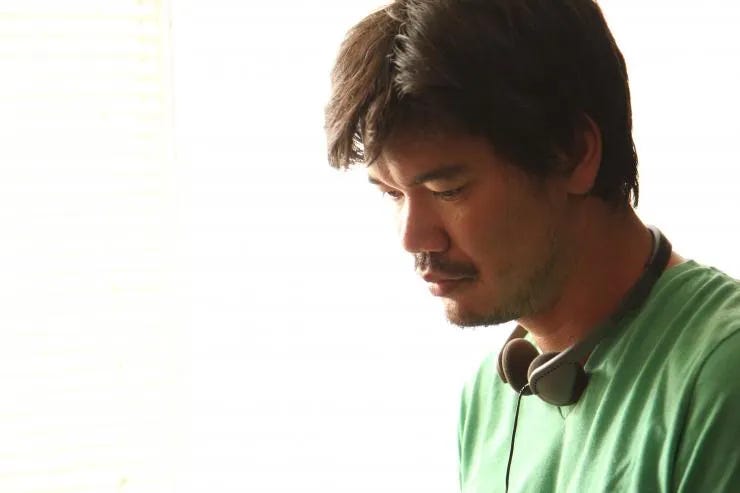
In 2013, my favorite movie of the year was Short Term 12.
The film was directed by Daniel Destin Cretton, based on his original screenplay. The script won a Nicholl Fellowship in Screenwriting in 2010. I contacted the film’s producers and managed to connect with Daniel for a fascinating conversation about the journey of Short Term 12 from screenplay to the big screen. Here is the interview in its entirety.
Scott Myers: I have your IMDb Pro credits and all the way down at the bottom, I see this short film in 2002 you did called Longbranch: A Suburban Parable. When did you catch the bug about film making?
Destin Daniel Cretton: I guess it depends on when you consider it a bug. I don’t know because I was one of six kids growing up on Maui in Hawaii. The first time I caught the bug was when my grandma loaned us her VHS camcorder when I was about ten. That was when we first started, my family and I, my brothers and sisters, we got addicted just making silly movies as kids and things when we were young.
I didn’t ever think that, “Oh, I want to be a film maker when I grow up.” But I did know that I loved it. I was always the guy who was, for summer camp, doing those videos. I’ve always loved the process of doing it.
But that film Longbranch was that the first actual film that I ever made that I submitted to festivals and things. I had a bet with a friend of mine, Lowell Frank, and shot it in around 2001.
It went to festivals including Tribeca. We got to travel around with it a little bit and just watching something on the screen you slaved away at, seeing people react to it and hearing them talk about it afterwards, I got hooked after that.
It wasn’t so much, I want to do this for living. It was more of, I want to figure out a way to continue to do this the rest of my life, even if I have years of not really doing it.
Scott: After college, you got a master’s at San Diego State in film?
Destin: Yeah. After I graduated from college, I worked at a group home for at‑risk teenagers for two years, very similar to Short Term 12. While there, I made Long Branch. I also got into San Diego State University. So I left to go to film school.
Scott: Short Term 12 won the 2013 South by Southwest audience award. Here’s a plot summary from IMDB. “Twenty‑something supervising staff member of a foster care facility navigates the troubled waters of that world alongside her coworker, a longtime boyfriend.” It was inspired by that job you had at that group home after you graduated from college. As a storyteller, what were some of the narrative elements you looked at or thought about from those experiences where you said, “This would make a good movie.”
Destin: The first thing I saw that was instantly inspiring, I was looking back through my journals during the time I was working there when I was trying to do my thesis project at San Diego State University. There was one story I had written down that was an experience I had with a young boy who, it was his birthday and his dad didn’t show up.
He was acting like he didn’t care and he held it in as long as he could, and then he disappeared down the hall, we heard his door slam. I was the closest one to him emotionally, so I was the one who was trying to push the door open. And he was holding it and then let it fly open and I fell in and then he took out his anger on my face and just started wailing on me. So we had to restrain him.
We fast‑forward about an hour later. The adrenaline had passed and this same young man was able to open up and have a very intimate conversation with me about all the stuff that he was dealing with that day.
Looking at that journal entry, it kind of encapsulated the complexities of that environment and also summed up just the general feel of what it felt like to go through the ups and downs of the emotions of that place.
Scott: That scene is actually in the movie. It happens to Grace and Jaden.
Destin: Yeah. That was one of the few scenes that was in the original short film, which we shot in 2008. Also a version of it carried into the feature.
Scott: There are three staff members key to the narrative. There’s Grace (Brie Larson), the protagonist, who’s deeply committed to her work and the well‑being of those around her. There’s Mason (John Gallagher Jr.), who’s Grace’s boyfriend, also committed to the job, but he seems to have a little more fun in life, and I suppose has less quote‑unquote “demons” than Grace does about her past. And then there’s Nate (Rami Malek), a newcomer to the facility, who provides an outsider‑coming‑in‑to‑this‑new‑world perspective.
Having worked in a foster care facility yourself, which of these three characters is most closely aligned to your own actual experiences there?
Destin: Well, in certain ways they all do. If I were to just break it down, the main character is very similar to who I was when I first started working there.
The first month I was extremely awkward, always terrified of both saying something wrong, doing something that might mess up a teenager more than he was, also just afraid of getting hit, because some of these teenagers were pretty big. But also underneath it all trying really hard, and sometimes trying too hard to do a good job.
I totally relate to that character, and I also completely relate to Grace and all of the things that she’s dealing with and her questions that she…her questions and her fears of becoming a parent and her fears of having that kind of responsibility with another human being and wondering if she might do something or mess up that human as much as these other kids that she’s working with and as much as she was messed up by somebody else.
All of those fears were things that bubbled up inside me while I was working there. That’s hard not to think about things like that. And the Mason character, honestly, is…when I look at the Mason character he just embodies in many ways the type of person that I wish I was more like.
Scott: Let’s talk about Jayden (Kaitlyn Dever), an adolescent who’s introduced as a newcomer to the facility. One of the issues is she cuts herself and later we discover that’s something Grace has a history with. They also share a connection due to their respective relationships with their fathers who are both abusive. Is it fair to say that Jayden represents to Grace maybe on a subconscious level a younger version of herself?
Destin: Yes, whether you think of it literally or not, but that’s definitely…on an emotional level that’s how the actors are playing it. That’s what our conversations were like.
Scott: In some ways that’s a bridge, isn’t it, for Grace, because she discovers she’s pregnant, and so she’s trying to deal with that, and in dealing with Jayden there seems like there might be some kind of psychological connection.
Destin: Yes, completely. There is a definite emotional connection between the two, because at different moments they both know exactly how the other person feels, and so there are certain moments they bounce back and force between being the one who is vulnerable and being the one who is feeling empathy for the other person.
They both have their own moments of that with each other. Yes, they see themselves when they look into each other, and they feel like if the other person makes it, they can, too.
Scott: I’m curious then, how conscious were you of that dynamic when you were writing the part? Was it like a thing where you said, “Well, I feel like I need to have a character like Jayden in order for Grace to experience this kind of a projection of herself,” or was it more of an organic thing? It just arose unconsciously during the creative process.
Destin: It was much more organic than something that I contrived as a tool. A lot of those dots began to connect toward the end of the writing process once I had all these ingredients laid out. Some of these emotional connections just naturally came out further on as the characters had developed and as that relationship between the two of them developed in the writing process.
Scott: One of the facility’s residents is an eighteen year-old named Marcus (Keith Stanfield), about to turn eighteen, who’s facing the prospects of having to leave the facility. And a key point in the movie he basically flips out, and Mason goes to talk to him, eventually getting Marcus to share a recent song he wrote.
First off, a song is a great way of delivering this exposition regarding this character, so my first question to you is how conscious of you were that he used music to convey back story?
Destin: Those scenes were very, very challenging for me. Exposition is always something that I’m terrified at, terrified about, because I typically spot it very easily when I watch movies, and it usually pulls me out, and especially when it’s a character who doesn’t want to talk about something, finding a ways for the them to reveal that information or make their initial confession about something that they’ve been avoiding talking about is really hard.
The inspiration came from different experience that I had with the teenagers at this facility where I thought that they were not processing any of the things they had gone through until I opened up their journal and saw the drawings that they were working on.
On one occasion one of the young men actually asked me if I wanted to hear lyrics of his, and he rapped to me, and they’re very revealing about things that he’s actually processing through about his life. And so that was the inspiration for that scene.
Scott: There’s a refrain to the song that has this line, “Look into my eyes so you know what it’s like, to live a life not knowing what a normal life’s like.” Did you write those lyrics?
Destin: Those lyrics, yes, I did write those lyrics, but the entire rap was a collaboration with Keith who is also a wonderful lyricist and writes his own raps. So I wrote the first draft of the rap, and then he took that and changed words and modernized the slang and things in the rap so it was a really fun collaboration.
Scott: There’s another instance which you use a similar device to convey exposition when Jaden shows a story she wrote to Grace about an octopus who develops a relationship with a shark. Do you remember what inspired you to write that story?
Destin: I don’t, really. It was just another one of those scenes that I struggled with for so long. I knew that this character did communicate through art. A lot of her drawings and things was one of her outlets. That story was one of those moments where it just feels like it came from somewhere else. I took a walk around the block at the coffee shop where I was writing and I was stressing out about it and trying to figure out how to get this character to talk that didn’t want to talk.
That story actually brought me to tears. I had fallen in love with that Jaden character so much.
Scott: There’s another thing you did that I found interesting. There’s that cardinal rule in film making, show it don’t say it, yet your story begins with Mason telling a story and ends with Mason telling a story. It’s almost curious what your instinct was there. Were you aware of this show it don’t say it conventional wisdom? What was your thought process on that?
Destin: I’m actually a huge believer in show don’t tell, but in this case those stories were directly inspired by interviews that I conducted with other supervisors and counselors who worked in places like this and who have worked in places like this much longer than I did. On a number of occasions, in those interviews I was just blown away by how incredible they were at telling stories. They were magicians and storytellers.
The stories that they were telling, one of them that I recorded was almost verbatim me just typing it straight into the script and that was the opening story of the movie. I did manipulate some things and added some crude jokes, of course, but for the most part it was the voice of a guy who had worked at a place like this for 16 years telling a similar story.
Anybody who works in a very intense environment uses storytelling as an outlet and a way to cope and also as a way to make sense of things. Sometimes there’s a little bit of fiction woven into it like the last story that he tells. He was implying certain things and there’s a little bit of his own hope for Marcus woven into his story.
If I had shown that story, then it becomes the reality of the director as opposed to the viewer deciding how they want to interpret what this story is coming from this character and how much of it they want to believe, how much of it they want to say that’s a Mason embellishment. That was part of the fun.
Scott: That’s interesting because when I watched the movie and heard both of those stories they work for me completely. One reason, of course, they’re entertaining. The second reason, particularly for that last story, because of the point you just made there, it actually ties back to this Marcus character. That’s an interesting result of the character, potentially.
The third thing, you just said something which is that it really is authentic to this story universe, these characters in this environment would use stories to process things and put things into perspective. Is that what I hear you saying?
Destin: Yeah. In a way, it’s what I was doing through the entire process of making this movie. This is a movie that is inspired by a lot of real events, but it’s a fictionalized story. My organization of it was, in some way, a way for me to organize those thoughts and questions that I had working there and that came up during the research process.
Scott: Let’s talk about that organization of the elements. Even though this is an indie film it feels like it has a three acts structure. I know you’ve said your writing process is “pretty mathematical.” What do you mean by mathematical? Is the overall structure of Short Term 12, the three acts, tied to that mathematical instinct?
Destin: There’s a certain looseness to it when I start writing. I try to map out where I think things are going to go, but I don’t try to map out exactly what’s going to happen in every scene. Usually once I get in the zone I’m often surprised by things that come out as I’m writing, which is a really fun part of the process to me.
There’s always a point in the writing process where, to me, it feels very mathematical or it feels very like I’m creating a grid of emotional cues. I don’t want things to get dark for too long, I don’t want things to get too sappy or too sad. I’m creating an emotional grid and trying to balance out some of the emotions that are happening throughout the movie, also with setups and payoffs and things like that. There’s a part of it that does feel like crunching numbers or something.
Scott: Could I assume you’re one of the writers who uses those three by five index cards and tacks them up on the wall and wants to see the story laid out that way?
Destin: I don’t use index cards but, yeah, I try to organize things with just colored grids with words and highlighting certain things, what they represent. When I was working with my composer, we had everything mapped out, every song mapped out and color coordinated with the instruments that we’re using and the scenes that they’re using.
That’s another part of it that also felt very, I don’t know if mathematical is the right word, but it feels like that. We were just organizing it in such a way that felt like the right emotional journey.
Scott: Speaking of story structure, Grace goes on something of a heroine’s journey, a combination of events happen to her. She’s pregnant. This character Jaden enters her world, some disturbing news about her father. That basically forces her out of her Old World into a New World where she confronts dark aspects of her past and psyche.
I’m curious, did you study the hero’s journey? Were you even thinking about that or is this more generally an expression of Grace’s psychological journey?
Destin: I never officially studied those Joseph Campbell or any of the screenwriting books. I have a general idea of three acts structure. I wasn’t trying to go for that in this movie, but it strangely just naturally happened. The mapping out initially of Grace’s journey just naturally fell into that structure and it just felt right for the story. I didn’t have the outline of that structure on my desk and I wasn’t trying to hit certain page number points or something like that.
Scott: How long did it take you to write the script from the time you wrote the first full feature length version of the script to the point where you were going into production?
Destin: I wrote the first draft in 2009 and it was off and on with other things I was working on. At the end of 2009 I did a giant rewrite of it for about two months and then March of 2010 was pretty close to the final script. That’s the screenplay that I submitted to the Nicholl Fellowship that won the Academy Nicholl Fellowship in 2010.
Scott: How did you go from there to getting into production?
Destin: With the Nicholl Fellowship money, I was able to actually write and direct my first feature which was I Am Not A Hipster in 2011. We were trying to get funding for Short Term 12, but I was also writing I Am Not A Hipster and when funding for Short Term 12, we just did I Am Not A Hipster with our own funds and our own money. That premiered at Sundance 2012 and that helped get us the funding for Short Term 12 that year.
Scott: I Am Not a Hipster is actually the script you had to write for the Nicholl when you won it?
Destin: Yeah. That was my Nicholl Fellowship year script.
Scott: You got a double dose of goodness out of that whole Nicholl experience.
Destin: Yeah, I know. I have a lot of gratitude to those folks.
Scott: Short Term 12 has come out and got incredible reviews. In fact, I saw an interview with you where the interviewer said it’s the only movie he’s ever reviewed where there’s not one person who has said a bad thing about the film, they’ve all said good things about it. As you sit here today thinking back on the process, what are you feeling about the movie Short Term 12?
Destin: Most filmmakers feel very different about their movies than other people do. For me, a lot of that has to do with just the memories that are wrapped up in it. When I watch the film it just brings back so many memories of all the people that worked on it. I see the costumes that my sister worked on, I see the music that my friend Paul worked on, every camera move is Brett’s instinct.
It’s almost like looking through a photo album for me. I love it. It’s captured a moment in my life that I’ll never forget and I’m really, really happy that people are connecting with it.
Scott: What do you have on your plate now?
Destin: I’m not sure. I’ve got a few things brewing, but I’m not sure where I’m going to land. I should have some direction in a few months. I am in the process of beginning to write another screenplay that I’m really excited about. I don’t think that’ll be the next thing I do. It might be the next, next thing I do.
Scott: Are you going to stay in the indie film world or do you have aspirations to move more into the studio mainstream type of arena?
Destin: It honestly depends on where the next story comes from. I really don’t have a preference. If it’s a great story that I connect to as much as I did with my first two movies I’m happy to do it in any realm. I don’t have kids and I can survive off of very little right now. My rent’s pretty low, I drive an old truck. Money is not really what I’m after at this point in my career. I’m just after doing something that I feel really passionate about.
Scott: A few craft questions for you, okay?
Destin: Yeah, sure.
Scott: How do you come up with story ideas?
Destin: Stories often pop into my head when I least expect it. It’s rarely a forced thing for me, and doesn’t usually happen the same way twice. They come from things that I hear or see or feel in my day to day experiences.
Scott: How much time do you spend in prep-writing (i.e., brainstorming, character development, plotting, research, outlining)? Which of the aspects of prep do you tend to devote the most time and focus to?
Destin: I spend a lot of time in my head before I sit down to write. I like to have a good idea of the structure of the story before I put fingers to the keys and see what else spills out. If I start writing too early, I find it hard to stay focused and can venture off on tangents.
Scott: What about dialogue? How do you go about finding your characters’ voices? How can a writer develop their ability writing dialogue?
Destin: I’m always wanting to get better with dialogue, and looking for ways to that. I love listening to people talk on buses and coffee shops. I also like modeling characters after people I know, or have met at some point. That usually helps me to see them as a multifaceted person and not just a caricature.
Scott: How would you define theme? How important is it? Do you start with themes or do they arise in the context of developing and writing the story?
Destin: For me, the themes grow from the questions that my characters are grappling with. I start with a character and find the theme from their point of view.
Scott: What do you think about when writing a scene? What are your goals?
Destin: Before, during, and after writing a scene, I ask myself if it’s interesting. If it’s not, I re-write it.
Scott: What is your single best excuse not to write?
Destin: I’m pretty good at finding any excuse not to write. A pretty common one is: I don’t feel like it.
Scott: What do you love most about writing?
Destin: I love that moment in a story’s development when the characters begin to feel like real people who I can’t wait to spend time with. At that point, it doesn’t really feel like writing anymore, just hanging out with friends.
Scott: Obviously the character work Short Term 2012 is great. How do you go about developing your characters?
Destin: It’s different for every character. Grace, the character really interested me on a number of levels. The first inspiration came from one of my supervisors, who was a young mid twenty year‑old individual and I was just impressed with how well she ran the floor. She had so much strength even though I don’t think that was her typical personality. It seemed a little bit more shy and more reserved, but when she came onto the floor she really took control and was one of the best supervisors I worked with.
Most of the characters in this movie are based on people that I know. That’s always the easiest way to talk about it. The Nathan character was created out of necessity, out of wondering what type of person Grace would allow into her life. Because she’s so guarded and because of the things she’s dealing with, she is probably fine being alone. She has a lot of reservations about being in a relationship with a male.
The person she would choose has to be extremely non‑threatening and also somebody who is extremely patient and empathetic to whatever she’s dealing with because she is a person who requires a lot of patience. Those are things that the Nathan character came from.
Scott: You mentioned a coffee shop earlier, so I’m curious what’s your actual writing process like?
Destin: I do a lot of writing in my head for a while and then I start outlining and just throwing ideas down on the notes in my iPhone or notes in my little book or whatever I have at the time. Everything that I do I stitch them to the world that I’m thinking of. I’ll just toss in stories that I hear or things that I see and try to work them into somewhat of an outline.
If I’m on a deadline, I’ll work everyday, at a coffee shop with bad phone reception and sporadic internet connection. I write, take walks, write more, take more walks, stretch, drink some tea, try to write again.
When I start writing I just have to keep reminding myself to make every scene interesting. That’s basically all I try to do.
Scott: Put that up on the wall. “Make every scene interesting.” Finally, what advice can you offer to aspiring screenwriters or filmmakers about learning the craft of working in the business as a filmmaker?
Destin: My motivation has never been to break into the business. Maybe that has allowed me to ignore a lot of the things. There’re a lot of people who like to tell you specific things that you need to do in order to make it in this industry. I was at the stage where I was trying a lot of those things and it was debilitating artistically because my natural personality didn’t really go along with that go get them mentality.
For me, personally, when I started to take the pressure off and was like if I can find a job that I can pay my rent with and I can make movies on the side for a hobby for the rest of my life I’ll be extremely happy. Once I told myself that I started writing things and chasing stories that I would tell, whether or not I would get paid for it, it was, for me, one of the best things I could have done.
I don’t know about for other people who want to break into Hollywood or whatever, maybe that wouldn’t be the best way to go, but for me personally it was the best thing for me. It took a lot of pressure off and it allowed me to create more honest art.
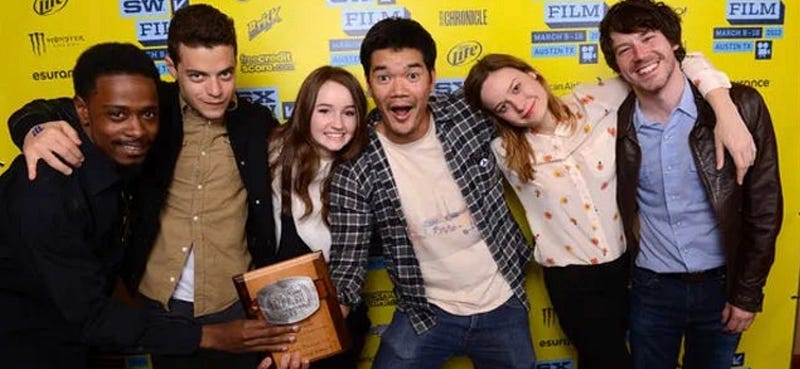
That’s an amazing group of actors for such a small budget film and each has gone onto to notable careers.
Destin has, too, directing movies such as The Glass Castle, Just Mercy, Shang-Chi and the Legend of the Ten Rings, and the upcoming Spider-Man: Brand New Day, as well as exec producing the TV series Tokyo Vice.
Funny thing about our 2013 interview. Even with the critical success of Short Term 12, Destin was working a day job as a teacher. He had to cut the conversation short to get back to class.
You can read Destin’s 2010 Nicholl-winning script here.
For my interviews with every Nicholl Fellowships in Screenwriting winner since 2012, go here.