Go Into The Story Interview: Craig Mazin
My in-depth interview with screenwriter and co-host (along with John August) of the popular podcast Scriptnotes.

My in-depth interview with screenwriter and co-host (along with John August) of the popular podcast Scriptnotes.
Craig Mazin is a successful screenwriter whose movie credits include RocketMan (1997), Scary Movie 3 (2003), Scary Movie 4 (2006), Superhero Movie (2008), The Hangover Part II (2011), Identity Thief (2013) and The Hangover Part III (2013). With fellow screenwriter Ted Elliott, he hosted the informative writing blog “The Artful Writer” from 2004–2011. Craig and screenwriter John August co-host the popular weekly podcast Scriptnotes. Craig’s most recent project is the HBO series The Last of Us which follows up his previous HBO mini-series Chernobyl.
Here is the entire one-hour conversation I had with Craig in August 2013.
Scott: Where did you grow up and how did you find your way into writing?
Craig: I grew up on Staten Island until I was about 13. Then my family moved to Central New Jersey. I went to the same high school as Bruce Springsteen. It’s a pretty blue collar town. Both my parents are public school teachers. It was a very middle class upbringing. Because of that, the notion of pursuing any kind of artistic career was just not really seen as tenable.
By the time I went to college I was on a pretty firm pre‑med path to become a doctor. But soon I realized that I didn’t want that as a career. I also recognized that I was in love with production and the making of media.
I started working on a radio program, a public affairs radio show… This was around 1991, 1990. We were editing this show, this interview program, on quarter-inch audio tape, splicing it with razor blades and blue tape, and I loved it.
Right after college, I had a little bit of money saved up, about $1,400. I had a Corolla, and I drove out to L.A. I didn’t know anybody. I had no connections. It was just me. I called up all the temp agencies and my first job was to type the employee manual at William Morris.
Some secretary had typed it up in the 50s and my job was to type it into Word Perfect. That was a two-day gig. Then the next job I got turned into working at an ad agency that made promos for CBS. I started basically as the file clerk and then worked my way up into being the copywriter.
That turned into a job at Disney working on copy lines for trailers and movie posters. It was at Disney — this was about 1995 — and they were making a ton of movies. They needed material. I had a writing partner at the time. We pitched an idea and we got hired. We wrote it. They made it, and I’ve been doing it ever since.
Scott: That was RocketMan, right?
Craig: RocketMan exactly. The screen classic, RocketMan. [laughter]
Scott: Let’s jump back a bit here. You go from thinking pre-med to I’m heading to L.A. — at some point it would seem you caught the entertainment bug. Were you a big fan of movies and TV when you were growing up?
Craig: For sure. I was a fan of what I was a fan of. I’ve never been obsessive about movies or TV. I look around me sometimes and I see people obsessing over movies and TV shows and I just shake my head, because there’s so much more to life. The things that I obsess over are my family. Frankly, I spend more of my time reading non‑fiction than I do watching TV or going to the movies. But the movies that I love mean a lot to me. The shows that I love mean a lot to me. It was never an obsession. I’ve always had a healthy relationship with movies and TV and music and all of that.
Scott: Can you remember some of the movies that inspired you early on?
Craig: Sure. When I was a kid I loved Airplane. That was a movie I saw in 1980. I was nine. I was at summer camp in Brooklyn, which let me tell you, is not a camp. It was summer, but it wasn’t a camp. [laughter] Regardless, the counselors took us all to see Airplane, which you couldn’t get away with today. And it blew my mind. I remember that was when the switch flipped. Prior to that, it was with Star Wars. I mean Star Wars certainly opened my mind to how much I could enjoy a movie. But Airplane was the first movie that made me truly love the idea of film comedy.
The first R-rated film I saw in the theater was Monty Python’s The Meaning of Life. I believe that was ’83 I want to say, or something like that. That blew my mind. So there were movies along the way.
Of course as I went on, all the movies that everybody sort of falls in love with I fell in love with. I saw The Godfather when I was 17, and that was, I think, the moment where I realized how tragic and profound film could be.
I was not a film nerd, I was never a film nerd. I’ve always given all movies a fair shake. But in truth, the reason that I have a career making movies is because I love making them. I love making them a lot more than I like seeing them.
Scott: So you come to L.A., you work for a couple days with William Morris. You get an ad agency gig. You’re at Disney doing some work. Where along the way did you learn the chops to write a screenplay?
Craig: I don’t know. I didn’t I guess. [laughs] I didn’t take any classes. I read half of a Syd Field book. I remember that Jon Glickman, who runs MGM now, but who then was my age and a fresh new executive at 24. He was an executive on RocketMan and he said, “You should read Christopher Vogler’s book, The Writer’s Journey, that’s good.” So I read that, and I thought, “OK.” Truthfully, I and my partner, we just wrote it within the rhythm of what we understood we wanted to see. We had an inherent understanding of roughly how the story should ebb and flow, and roughly how the characters should change. But we really didn’t know what we were doing. We learned on the job.
I remember we were in Houston where they shot the film, and we were at a table reading, and when the table reading was done, we were a bit shell shocked cause we realized we just needed to do a lot of work to make things better. And we must have written 60 pages in two days. That was a crazy couple of days in this weird hotel in Houston.
We learned on the job, and it’s a shame that’s there no opportunity to learn on the job anymore. It’s the only way to learn as far as I’m concerned, do it on the job. There’s so many fewer jobs now. It’s a tough business to break into now. It was always tough, but it seems much tougher now.

Scott: Disney was making a lot of movies back then in the late 90's.
Craig: A ton of movies. Between Disney, Touchstone, Hollywood Pictures, and Miramax, which they owned at the time, there was a year they put out more than a movie a week. And it was all fueled by home videos — VHS and DVD boomed. It was volume basically. If you could make a movie like “RocketMan,” I think for $20 million… if you could make a $20 million movie, you couldn’t lose. So they did.
Scott: You were writing with Greg Erb?
Craig: Yeah.
Scott: And you two did another movie after that — Senseless in 1998.
Craig: I remember we were very young still and the name of the game was just to keep going, going, going. And you come up with ideas, and our manager who represented the Wayans brothers said, “You should come up with idea for them.” So we came with this bunch of ideas and they picked that one and start writing it. I remember we were walking around Greg’s neighborhood, trying to figure the story out, and he said, “Do you think they’ll ever make this movie?”
And I said, “No way. This is the dumbest idea ever.” You know, over my time in the business, I’ve come to believe that there are certain movies that you can’t get made. Then there are other movies you simply can’t stop from being made. It doesn’t always connect to quality or rationality. That was a movie that we just couldn’t stop. It just kept going.
It actually got one of the best reviews that I’ve ever gotten in my life, and I haven’t gotten many good ones. The L.A. Times reviewer, I can’t remember who the guy was, but he loved it. I just remember reading that review, going, “No. No. This isn’t very good.”
Scott: One early project that jumps out at me, looking at your list of films, is The Specials, which you directed. Look at the cast in this movie — Rob Lowe, Jaime Kennedy, Thomas Haden Church — James Gunn wrote it. What was the background on that movie?
Craig: I became friends with Jaime Kennedy somewhere along the line. I can’t remember how, but I did. He had done Scream. I think probably because we were in the Dimension world together, because I had done the Wayans Bros., and Jaime Kennedy had done Scream. I’d been talking about maybe directing something, and he was friends with somebody, who was friends with somebody, who had got this script from this guy, James Gunn, who was living in New York. Basically, he had done a Troma movie, and I’m not sure what else.
I read the script, and I just thought it was hysterical. So I just called him up. We all got on the phone. I was like, “This would be great to do. We should do it.” So we all agreed to do it.
We did a stage reading. I put together a stage reading with everybody, and we got some good actors to show up to that. Then we found an independent financier who put up $1,000,000 — or at least I think it was $1,000,000. Then everything went bad, basically.
The tough part of it was, we had $1,000,000 and I think we needed a little bit more than that to make that movie. Even worse, because of the nature of the financing, for whatever reason, we basically had three or four weeks for prep, and then we had three weeks to shoot.
This was before digital video, so we’re shooting in film. We’re shooting short ends. I wanted to shoot it hand‑held. We couldn’t afford the camera that was light enough for our DP to hold, so we couldn’t shoot hand‑held.
We were shooting six to eight pages a day. But the thing that killed me more than anything was that we just didn’t have time to prep. I was trying to figure out what the costumes were for the next day. We had a huge cast. It was like every mistake you could make doing a little, cheapo independent film, we made it. I personally made a gazillion mistakes, God knows.
Still, there are little moments of that movie that are some of the nicest things I’ve been involved with. It looks like shit, and there’s chunks of terribleness in it, because I often didn’t have time to even shoot coverage right, and I often didn’t see the production design until the morning I was supposed to shoot in that location, but it wears it heart on its sleeve. There’s a lot of stuff in there that’s really sweet.
Scott: You directed another project, the 2008 movie Superhero, which you also wrote.
Craig: At the time, I had been writing some other things for Bob and Harvey [Weinstein]. I had adapted “Harvey,” the play that “Harvey,” the Jimmy Stewart film, had been based on. I was adapting a Philip Dick short story for Roberto Benigni, who was between Life is Beautiful and Pinocchio. I was working on this nice, elevated material. I felt very proud of myself, and happy, and then Bob called me up and said mockingly, “You’ve got to do this, blah, blah, blah.” I did it, and, on the one hand, it was awesome, and, on the other hand, it was terrible.
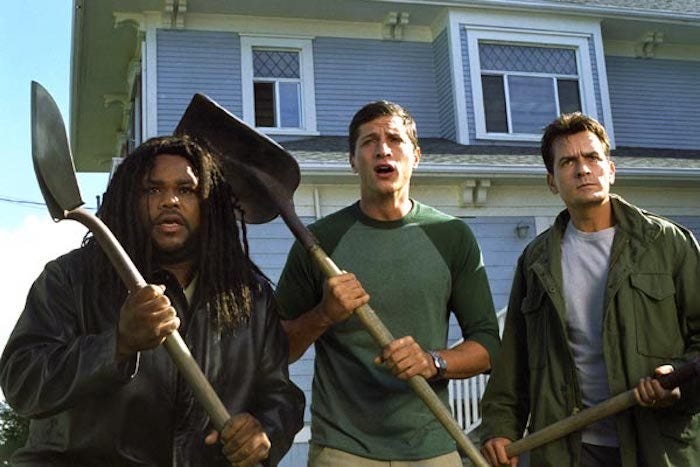
I mean, the awesome part was I got to work with David Zucker and Pat Proft and Jim Abrahams, and learn spoof and parody from the guys who invented it, from my heroes. I got to work with Anna Faris, who’s amazing, and Regina Hall, who’s terrific, and Charlie Sheen. Just really cool people.
The downside was, I got shoved into a spoof hole for years. The truth is that those movies are very, very hard to do. They’re really hard to do. They’re thankless.
By the time we got to Superhero, we were jammed because the Weinsteins, who had been owned by Disney and had all the benefits of the budgets which went along with that, were no longer there. The budget for Superhero was less than half of what it was for the Scary Movies. It showed.
My relationship with Bob was tumultuous, as is often the case with him. That was rough for me. Frankly, it just wasn’t a very good idea for a movie.
Again, there are sequences in that movie that I think are terrific, and there’s a lot of stuff in there that I sort of directed with a gun to my head, that I didn’t want to do. What can I say? It was a really unhappy experience for me.
Scott: Scary Movie 3, Scary Movie 4, Superhero Movie, you talk about going down the spoof hole. What do you think the status of spoof movies is nowadays?
Craig: It’s bad. It’s really bad. Scary Movie 3, there’s a ton of great stuff in that movie. I think Scary Movie 3 was the best movie that I did with David, Jim and Pat, and I think there’s some terrific stuff in there. Good jokes, good parody, some smart humor to go along with the stupidity… you know, for David Zucker and Jerry Zucker to say, “Scary Movie 3 is a terrific spoof movie” is something that makes me very proud, so I love that.
But spoof movies have drifted so far away from what they were when Jim and Jerry and David kicked off the ZAZ style with Kentucky Fried Movie and Airplane!
They just got really junky and really disposable. They became obsessed with pop culture and immediacy. The audience would sort of poo‑poo the fact that they’d just seen junky retreads of whatever movies just came out, but then we’d get angry if they weren’t there, and call the movie stale.
It’s still bad. I don’t think there’s much going on in the spoof world today that’s of any interest to me, or to anyone. Part of that, I think, is because spoof is now something that happens in the moment. Everyone spoofs and parodies everything on the internet, and it happens immediately, and then it’s over. There’s just no reason to see a movie.
I mean, Airplane! was a singular spoof of Zero Hour, a film from the ’50s that nobody had even heard of. The thought of doing something like that today is just impossible for the studios to comprehend.
So no high hopes for feature spoof films, unfortunately.
Scott: That’s a really interesting point. Just the immediacy and the universality of the internet, and all the YouTube videos. That’s probably one of the major reasons why that’s cut into the possibility for spoof movies nowadays.
Craig: Yeah. It’s been a perfect storm of that, plus a kind of flooding of the market of crap. I certainly was part of it, towards the end there. I don’t think Scary Movie 3 is crap, personally. I think on Scary Movie 4 we did a pretty good job. Superhero is half good, half crap. I could feel it, sitting in the theater, running Superhero, and the audience saying, “But where are all the other movies you were going to spoof?”
I’m thinking, “I don’t want to do that.” I just don’t want to do the, “Let’s spoof 1,200 movies, and not do jokes, but just repeat what was in them.” It’s a mess.
But, as David Zucker often remarks, he gave an interview in 1995 or something in which he announced that spoof movies were dead. A few years later, Scary Movie came out and made a gazillion dollars.
Scott: You did Scary Movie 3 and 4, then you did Hangover 2 and 3. Those are franchise movies. What are some of the challenges as a screenwriter working on a movie franchise as opposed to, say, an original movie like Identity Thief?
Craig: From an emotional point of view, you kind of have to compartmentalize and understand going in that there’s no personal victory for you. If the movie works well, you are drafting behind what started it all. If it doesn’t work, then you’re the guy that blew it all up. There’s no glory there. It’s not a glorious job, writing sequels. You push that aside, and you just say, “Let us try to make a good film as best we can, because a good film will be our only reward.” And of course, that’s really the only reward that matters anyway.
The challenges then are coming up with a story that isn’t the first story to tell, because the first story’s already been told.
I’ve had great success and limited success. Overall, the sequels that I’ve done have all been very well received by the audience. They’ve shown up in droves all over the world. For that I’m very grateful. It’s not easy to get people to show up for another episode of a thing they’ve already seen, particularly when it’s comedy.
Knowing that I’m not going to get any love from anybody else over it, I’d better take my love from the audience.
Scott: So, Hangover 2 comes out, big hit. How does that work for Hangover 3? The studio says, “OK, we want to do another sequel.” Do they come to you with that central idea about Alan’s situation, or do you come up with the concept, or is it something that Todd Phillips comes up with? How did that work where you generated that story idea that was similar but different than the previous ones?
Craig: That was Todd and me sitting there alone going, “What should we do? What kind of story do we want to tell, and how do we end this?” The studio, I have to say [Warner Brothers] is very respectful of Todd and his process. I think in a very smart way, they said, “You seem to know what you’re doing. We’ll be here to discuss how much this is all going to cost, but, creatively, we trust you.”
Scott: Let’s move on to Identity Thief which is very funny, and a hugely successful movie that came out this year. The logline, “Mild‑mannered business man Sandy Patterson travels from Denver to Miami to confront the deceptively harmless‑looking woman who’s been living it up after stealing Sandy’s identity.” That comes from IMDB, so…you know.
Craig: Yeah. That’s basically the idea.
Scott: How did you get involved in that project?
Craig: I had met Jason Bateman. At some point a mutual friend had put us together. There was an idea that he was developing and kind of noodling on. I was talking with him briefly about that, and then I pulled off, away from that, and I was working on — I can’t remember what it was — Hangover 2 or 3, but I got a script from him, basically for Identity Thief.
It was a spec script that had been written many, many years ago. Then another writer came and did his own version that was very, very different and very interesting, but not quite what the studio was looking for in terms of tone.
He basically said, “Look. There’s something I’ve been developing. It was for me and another guy, like Zach Galifianakis, but I just saw Bridesmaids, and I think it should be me and Melissa McCarthy. What I have is a log line. Add that, and add me and Melissa McCarthy.” The two of us sort of sat down and talked through the story. Then I wrote it, and Melissa signed on, and off we went.
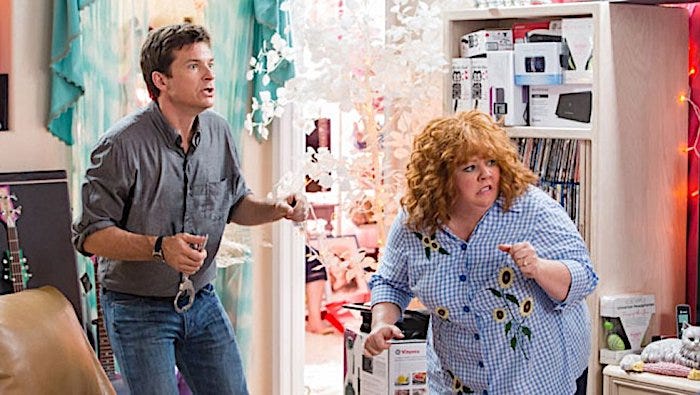
Scott: One of the things that’s actually quite interesting about the movie is that you’ve got Sandy, played by Jason Bateman, who is the story’s protagonist. He’s like the official character that you kind of tell the story through. Yet you treat Diana, Melissa McCarthy’s character almost like a dual protagonist. She’s almost on screen at least as much as Sandy is, plus the story spends a significant amount of time dealing with her own sort of emotional, psychological journey. I’m curious, what was your mindset when developing these two characters, in terms of that balance between the screen time?
Craig: It’s a good question. I don’t believe in co‑protagonists. I know sometimes people say that there are such things, and I don’t really believe in them. I think that there’s one protagonist, and then there’s somebody that you think is a protagonist, but isn’t. I’m always fascinated by movies where the non‑protagonist is kind of pushed into the limelight as if they were. I started thinking about that, actually, all the way back when I was adapting Harvey.
In Harvey, it’s easy to think of Elwood Dowd, the character that Jimmy Stewart played, the guy who sees the invisible rabbit, as the protagonist, but for me, it was his doctor. Because Elwood Dowd is a bit of a Christ figure, and it’s Man that changes, not Christ.
In this movie, I thought there was an opportunity to do the same thing. To make this larger-than-life character who was complicated, and messy, and emotional, and create her to be instructive to somebody else. For me, the protagonist is Sandy Patterson, Jason Bateman’s character.
The problem is very simple, he doesn’t think he’s good enough. In the end she, through all of her messiness and misery, is going to show him that he is… that what he views in his life as weakness, being a chump, being a loser, being a guy that gets passed over, is irrelevant in the context of his genuine goodness and what he provides in love for the people who love him back.
That’s how I approached it. I wanted to hide that a little bit, and not make it a big, big deal, because I wanted us to watch her. I mean, look, Melissa is a force of nature. I’m not going to shortchange her. I want to treat her like the protagonist, but I want the true dramatic change, ultimately, to be his.
Scott: Sandy does go on a hero’s journey. He starts off, as you say, not feeling like he’s good enough. Then there’s the fact he has his identity stolen — he’s a victim. Which steps right into that issue of not feel good enough about himself. He’s got to confront that. Hence, the necessity of his journey.
Craig: That’s exactly right. The movie is about a man who feels put‑upon by the world. He’s followed the rules, and everybody around him is breaking the rules, and so he suffers. At some point he thinks to himself, “Why should I? Why should I be suffering? I’m shortchanging my family.” Her life illustrates back to him, “They don’t want the shit you think they want. They want you. They want you, in all of your humility and meekness. That’s all that matters to them.”
In the end, the defining choice is merely, “Do I turn this woman in or not? Because if I turn her in, I am rewarded with the things I believe I need to be loved. If I don’t, I’m a chump. But a sweet, good chump.” And he’s rewarded for being himself, at last, in the end.
Scott: What’s so great about the movie on one level, is that it’s wonderful to have all the comedy set‑pieces and action, but you’ve really got to care about the characters. That’s a pretty universal thing. Everybody’s had a situation where they’ve felt like the victim. Everybody’s felt like they weren’t good enough. Sandy’s arc may not be huge, but it’s widely identifiable.
Craig: Yes. I like to think about a simple theme, but a dramatic argument. That is to say, brotherhood or jealousy is not a very valuable theme for an argument. Better to be yourself than be this, or that.
For me, I think that there are a lot of men in this country who feel “less than,” not good enough, because worth is determined externally by what you have, and what you drive, and what you look like. I think it’s unfair, and I also think it’s foolish, frankly. I think it’s a trap.
The thing that my kids look at me lovingly for has nothing do with anything other than me being there, just being present. I wanted to make a story with a simple lesson in it, for men: being present for your family is job number one.
If you’re doing that, you’re the man. You’ve done it. The rest of it is OK. There will be struggles and it will be tough and it may not always be fun, But you’ve done the most important thing. Here, in opposition is a character who can literally buy anything she wants, any time, and all she wants is to not be alone.
Scott: Let’s talk about Diana’s character. I’m curious about how that developed, this idea of identity thief. She’s so desperately trying to fill a void that she has, essentially a lack of a sense of self, with all of this stuff and these activities. It fits perfectly with the idea of identity thief. How soon did you come up with idea and how did that involve?
Craig: I think that was day one, really. The notion that somebody was going to go out and steal somebody’s identity and use it to buy stuff, to me, demands a character who’s tragically alone, doesn’t know who they are, and has to invent who they are because they’ve been deprived of an identity. Identity in and of itself is a pointless concept. Really, what we’re talking about is the parts of us that are loved and accepted. That’s what we think of as our identity. The rest of it is data. She was unloved and unaccepted, and thus had to construct love and acceptance through buying shit.
It seems so simple, but I see it around me all of the time. I wanted to pair her with a guy who needed to learn the same lessons she needed to learn. The truth is she already knows, she abused herself as a lost cause. She’s there like Jacob Marley rattling chains saying to Scrooge, “Don’t be like me.”
That’s where it all goes to in that scene in the restaurant towards the end of the second act and that’s what he needs to hear. The nice thing is that she kind of pulls herself out of a tailspin because he’s made a choice to be present for her.
That’s something that Melissa and I talked about from the start. We had this really cool idea. We couldn’t get… the movie is a Universal movie and Warner Brothers wouldn’t help us out in this, we really wanted her character to be obsessed with Wonder Woman. Really, the idea of this little girl who was abandoned and grew up in foster care who watched Wonder Woman and wanted to be Wonder Woman. Her hair was Wonder Woman‑y. It was such a sad, specific grasping at an identity. It was the first identity theft this character makes, trying to be Wonder Woman.
We just thought that was really interesting. Melissa is so good at finding the details to make a character like that come to life. That was her idea. I thought it was great, we just couldn’t get the rights.
Scott: It probably existed there in her reacting in the subtext and rehearsing of the character.
Craig: Yeah, if you look at her appearance, all of that stuff is specifically chosen in a Wonder Woman way. The big hair, makeup, fingernails, and all of that is aspiring toward something that isn’t her at all. That’s why I liked the notion that she could finally turn to some other people and say, “Help me” because she really doesn’t know what she’s doing. She’s just clambering around trying to create who she thinks she ought to be because she’s so scared of being rejected for who she actually is. You can read about all of this in Rex Reed’s review, he goes into this in depth.
Scott: I checked on Identity Thief today, and the movie’s done $173 million worldwide. It’s easy to say, “It’s a Melissa McCarthy movie. That’s why it’s a big success.” As a screenwriter, you spent a lot of time thinking about the characters, their underlying motivations, and the psychological nature of the story. How much do you think of the legs the movie’s had is somehow attributable to the viewers’ resonance with the emotional life of the story, not just the funny stuff?
Craig: Who knows? Listen, it matters to me and I think it matters to people who think like me about this sort of thing, but there are other people that just love laughing. I don’t know why people go. I’ve been repeatedly surprised by what people like and don’t like in these movies. Maybe that just speaks to the fact that I’ll always be lost to some extent. For me, what you call “the emotional life of the story” is everything. I want comedies to be about something. I want movies to be about something. I want them to have some sort of argument to make. I have to believe that on some level, even though the movie opened well, the fact that we kept holding and only dropping 30 percent or so week after week is because there was more than just laughs.
There was something that genuinely connected with people. Not just with Melissa’s character, but with Jason’s. I have to believe that. Otherwise, it’s all a crapshoot, I guess.
Scott: I want to ask you about three specific elements in Identity Thief in terms of how you went about developing them. Obviously, in comedies, set pieces are a big deal. There are some very funny physical, almost slapstick encounters between Sandy, Diana, and other characters. How important are set pieces in your writing process?
Craig: It depends on the movie. If you’re making a movie that exists to bring some laughter in this world, then sure, let’s get some laughter. It not enough to just get giggles here and there, let’s get the big one. Let’s get some rolling laughter. One of the things I learned working under David Zucker early on in my career was how gratifying it was to get an audience rolling and we did and it was fun. God knows I’ve seen it with the movies I’ve done with Todd Phillips. For example, that scene in Hangover 2 where Stu finds out what happened with Kimmy in the nightclub in Bangkok.
People are out of breath and it’s just exciting. It feels so good. That’s why we’re all there. You get in a sense in your mind like, “A certain amount of time has elapsed… it sure would be good to get a release and have some fun.” Those set pieces are like mini-movies. They need their own set ups, second acts, and climaxes.
The specifics of how it all happens, why things are funny and why sometimes they’re not funny, you go by instinct and try and not overthink it. I don’t overthink, I just do it. Sometimes it works and sometimes it doesn’t, but when it works, it’s awesome.
Scott: The second thing I wanted to talk to you about is that the set up of Identity Thief strikes me as a challenging process. There’s a lot of moving parts, you’ve got to introduce multiple characters, create a circumstance whereby they intersect with each other, and then Sandy and Diana realize they can’t go on an airplane and they’re going to drive back together while introducing two sets of the nemesis characters. How much of a challenge was that for you and how much time did you spend on that first act?
Craig: A lot and a lot. In addition to everything you just outlined, which is accurate, the other factor that comes into those sort of elements of the screenplay is that everyone around you can get involved in those. It’s harder for people who aren’t writers, directors, or actors to say, “Your instincts about a character, interior life of a character, or theme, we don’t like those. We want this and this.” Everyone can go, “This isn’t logical. Can you make this faster? Maybe it works here instead of here. Wouldn’t more bad guys be a good thing?”
There’s a lot of that stuff going on. I’ll tell you because I’ve said it before, when I look at what I intended to that movie initially… there’s not much in the movie that I didn’t intend, but the one area where I just disagreed and was overruled, ultimately, was how many villains were in the movie and the nature of them.
I wanted one guy chasing them and I got beat. [laughs] I just lost that fight. Those are areas where you can get a little jammed up.
Scott: Let’s jump to the other side of the film, the ending, where Diana does the right thing. The story has a rather bittersweet ending. It’s nice that the family is together, but she’s in prison. Did you or the studio consider other possible endings? Was there any pressure of “Let’s somehow make it so she doesn’t have to go to prison?”
Craig: No. In the beginning, when I said I wanted to do the movie, I said, “This is what happens in the end, he makes a choice to let her go, but she turns herself in because she knows he is going to let her go. She has to go to jail and that’s that. If we do anything else it’s going to be stupid. It’s going to be false.” Everybody was fine with that from the start. There was no variation from that all throughout. The third act of that movie — I love it. I just think it’s terrific. When they get back to his house, everything at the end of the movie is just great. Seth did a great job with it.
The cast was tremendous. I felt it. I felt the ending, and there’s great joy to it, so I’m very proud of that.
Scott: I’d like to talk about your social media life. You started a blog on screenwriting, “The Artful Writer” in 2004, which is pretty early on in the history of blogging and kept that up until about 2011. What was the impetus for that?
Craig: Around 2004, I became friendly with Ted Elliott, who’s a great screenwriter. Ted, in addition to having co‑written some of the biggest hits in film history, also possesses a remarkable mind. He taught me so much about the way our union works and the way unions work in general, contracts, and the like. He was very influential on me. Most writers at the time were moving around in a state of general ignorance about the forces that controlled so much of their business, their profession. When we created that blog, my job was to make things…how should I put it? It was to explain things. I started the blog to explain things to writers. How do residuals work, what are separated rights, what is a collective bargaining agreement, credits, everything. We just started explaining all of this stuff because the more we know, the more powerful we are and the less we know, the easier it is to manipulate us.
The blog motored along quite happily for quite some time. Then, the strike happened and it went nuts for a while.
Scott: Your original target was working writers?
Craig: Yeah, that’s right.
Scott: Then it expanded to aspiring writers.
Craig: Right, and I was surprised initially that anyone cared other than professional writers about how health and pension worked, but they did and I was happy to have them. Very occasionally I would talk about craft things. Mostly it was the business of writing. The intention was always for professional writers.
Scott: How did you intersect with John August?
Craig: John had his site, and it seems a little crazy to think of now in 2013 when everyone including toddlers has their own website. But at the time, in the mid 2000s if you wanted to read from a professional screenwriter’s blog, there weren’t too many of them. His was the most prominent, I would think. There was the “The Artful Writer” and a few others here and there, but we were basically the only games in town. We shared the same agent and we were friendly. Around the time I started running out of steam and not really wanting to write anymore for the blog he called me up and said, “Hey, do you want to do a podcast?”
And I was like “Oh my god, yes. Yes. Yes, I do. I don’t want to write about this stuff anymore. I would love to just talk about it.” And so it began.
Scott: That’s Scriptnotes. I think you’re coming up on your 100th episode of the podcast here soon.
Craig: We are. Right before this conversation, we recorded our 97th. Our 98th is already in the can, I believe, so we’re coming up on our 100th. I have to say, the response to it has been remarkable and wonderful. I get better reviews for my podcasting than I do for my screenplays, and I’m okay with that. I’m very happy with it and I think there’s a wonderful community that’s been built around it. I can’t wrap my mind around its popularity sometimes because John and I just do it. It’s like having a phone conversation just like this one.
We just have a phone conversation. Every now and then he calls me up and says, “Did you know that 200,000 people listen to that?” Then my heart starts to pound a little bit because that’s very nerve-wracking for me. I don’t like that, but I get over it.
He said that when the tickets went on sale for the 100th episode, they sold out in three minutes. So I feel like Bon Jovi today, very fabulous.
Scott: A couple of questions related to the state of screenwriting. Comedy and movies. Given the internationalization of Hollywood movies, there seems to be this conventional wisdom that comedies don’t travel as well as action, thriller, action‑thriller, or science fiction. What’s your take on that?
Craig: It’s not true. It’s just true sometimes. I can’t figure out exactly when it is true and when it isn’t. The scary movies traveled great, maybe because they were really physical, maybe because the movies they were spoofing had traveled. Horrible Bosses traveled great, Identity Thief did not. Hangover 2 and Hangover 3 traveled awesome. Talladega Nights, no. I can’t figure it out. Some movies just seem to grip people overseas and some not as much. And I don’t think that’s only true for comedy.
Scott: One thing that I’ve tracked in terms of spec sales is that comedy had always been number one for years and years, and now it’s fallen in the last two years. I think action and thriller are the two top, so it’s seemingly had an impact on the number of comedies they’ve been greenlighting.
Craig: They make many fewer movies now. I think that’s what that’s a function of. The business contracted. When home video, the DVD market essentially, began its 40-year collapse, the studios responded by cutting the amount of movies they made by a third. In doing so, they had choices to make about which genres they cut more, “Do we cut across the board, do we cut certain genres more?” It seems like they’ve been erring towards producing the spectacle movie, movies that they feel people are compelled to see in theaters. They’ve been erring towards these giant 200+ million dollar spectacles.
Some have been very profitable for them, some have been disasters for them. It always seems to me that in the end, you can’t avoid the fact that making movies is a dice roll. You just can’t avoid it. It’s been nice to see quite a few comedies doing really well, actually.
I think that you’ll be seeing more and more of them. Comedy appears to be holding up in the marketplace more robustly, at least in my perception, than a lot of other genres.
Scott: There does seem to be a renaissance of sorts or maybe the front edge of it. Especially with action‑comedies, which we haven’t seen as much of compared to the 80s and 90s. But do you think with the current success of The Heat we might see more?
Craig: I think it comes and goes. There’ve always been movies like that. In the 80s there were a ton of movies like The Heat. Kevin Smith recently made Cop Out with Bruce Willis and Tracy Morgan. That didn’t work. Sometimes it works and sometimes it doesn’t. The genre itself isn’t new or old, there’s just a magic in the casting and also just a well‑written script and a movie that looks funny to people. Obviously Melissa, she’s part of that. She’s a real movie star now. She’s awesome. I can’t think of anyone who deserves it more. She’s a terrific, terrific actor.
I would say that the modern audience seems far less married to genre than movie critics. Movie critics love talking about genre and they get really antsy when they feel like a movie is a fish with feathers. That used to be the case with the audience too. That they wanted to know, “What the hell is that I’m watching here. Is it a comedy? Is it a drama? Is it an action movie, is it not?”
Lately it seems like the audience has become far more flexible, and if anything they almost appreciate a certain audacity of genre bending. We’ll see if that holds true.
Craig: I struggle with that because I always feel like if you’re trying then it’s going to be terrible. I think if you’re trying to do something it just doesn’t work. Frankly, a lot of the things that I do are concepts that are handed to me. I’m better at figuring out how to make a concept work than I am at coming up with one. I did have one idea for Melissa that we’re talking about… that idea I like. And Scott: Some craft questions for you. How do you come up with story ideas?
Craig: I’m the worst. I’m the worst at it. You mean, like the big idea of a movie?
Scott: Yeah, like a story concept.
I was like “Oh man, that was my good idea. I get one every ten years.” You just settle into what you’re good at. Some people are starters. Some people are relievers. Some people are closers. I tend to do best when I’m given a concept and a blank slate to start fresh with it again, like with Identity Thief.
Scott: OK, so you get this concept and a blank slate on what to do with it. How much time do you spend on preparing and what do you in terms of brainstorming, character development, and plotting?
Craig: Usually, about a month of kind of breaking the story out into big pieces and little pieces, then scene by scene. I like to think about the theme and characters first, what their problem is and what they need, what they want, what’s wrong with them. What they believe in the start, and what they must believe in the end. I let those things indicate what should happen as best as I can.
Scott: How about developing characters? Are there any tools that you use regularly in terms of developing characters?
Craig: I like to think of characters as struggling with something philosophical. I think we’re all philosophical by nature. I think that we believe things because they’re comfortable and they work for us. Yet, there’s a price for that comfort. I like to think about people who have achieved some sort of state of acceptable imperfection. Their philosophy keeps them safe, but at a cost.
Then I ask, “How could I make them unsafe? How could I force them to confront the nature of their own personal philosophy and whether or not it’s true? What can I do to lead them, or instruct them into another possible way of living? What choice can I give them that would prove their faith in a new philosophy and a new way of living?”
If I can follow that sometimes, I start to see how this character can change. That’s all internal. The external, the things that we see, I really do take a lot from the actor. To me, everything is about casting, and so even if I don’t know who the actor is that I’m writing, I pick one.
Scott: Star‑casting, right?
Craig: Yeah. I want to know who my actor is. I need to see their face. I need to know, do they talk slow, fast? Are they tall, are they short? Are they wired, are they laconic? I need to get some sort of specificity from a person rather than just a name on a page.
Scott: I’ve talked to a lot of screenwriters this year, and several of them said the same thing. They cast it in their minds.
Craig: Yeah, because if you don’t, then when you’re writing the scene there’s just this weird blank‑spaced cipher in it. It’s funny; there’s not a face against which to hold the words accountable. I don’t know how else to put it.
Scott: And so riffing off that, what about dialogue? How do you go about finding your characters’ voices?
Craig: Again, I look at who they are. I think of the actual actor. And then I just listen to them. I think of the actor and I listen to how they talk and I find their rhythms. Hopefully, I can just get to know them. Just sitting in a room with an actor for five minutes will teach me a lot about their rhythms. You start to basically mimic in your mind as you’re writing for that person their rhythms. So I know how Zach Galifianakis talks. I know how he talks when the camera’s off and I know how he talks when the camera’s on. I know how he talks as Alan and how he talks as Zach, but it’s all very informative. And there is a connection. Ed Helms is not Stu Price. But there is a connection. It’s clear, when the camera’s off, and he’s just being Ed, there’s some Stu in there, because he is Stu. You know what I mean?
So I try and pick up on these little things, just little quirks and rhythms and inflections, pauses. Dialogue is a very auditory thing. It’s kind of a musical thing. You just try and get it as best you can, and trust that eventually the actor will deliver it. And if it’s not right when they read it, then we change it so it is.
Scott: You mentioned earlier, when you were very early on in the process of Identity Thief, you came up with a thematic hook in terms of Sandy’s character. How often does that happen, where you land on a central theme of a story early on, versus it emerges as you’re writing?
Craig: Well, I try to have something early on, because I’m not sure how to really begin without it. But I will grant that it evolves. And you just have to be open to it evolving. You have to be open to your story pointing you to a slightly different direction, or a completely different direction. You’re going to have to be open to it. The script that I’m writing right now, there’s a general dramatic argument there and it’s sort of stayed all the way through. It hasn’t changed. And I don’t think it will, at least not through this draft. And that’s the thing that I’d like to protect. If that’s the thing that the studio says, “Well, we don’t like that,” then I think, “Oh, well, I probably shouldn’t be working on this anymore.” Because that’s the “that” that made me do this. So I try and start with something.
Scott: What do you think about when you’re writing a scene? Do you have specific goals in mind?
Craig: There’s a point to each scene. There’s a takeaway. There’s a reason that scene exists. If there isn’t, then you shouldn’t be writing that scene. It doesn’t belong in the movie. So I want the scene to have a purpose. I want there to be a takeaway, and I want that scene to drive me to the next one inexorably. I think of the scene as its own little movie, with a beginning, middle, and end. I think of the scene as having a back‑and‑forth, a shift in the power dynamic. I think of the scene as something in which a character enters on one end thinking or believing or doing one kind of thing and leaving the other end of the scene changed somehow.
I think of a scene as finishing with “so then,” rather than “and then,” and in this way we keep moving through.
Now, scenes don’t always translate to the screen. Sometimes they do. I think about transitions a lot. Not every director is going to follow your choice.
Scott: You’re in a unique position in that you’re not writing spec scripts. Yet, in a way, aren’t you still writing a selling script, so therefore you have to pay attention to things like scene description and make that as entertaining as possible?
Craig: Always. Everything that you’re doing is designed to create a movie. If you write a screenplay that bores the people who decide whether it’s going to be a movie, then it’s not going to be a movie. I want people to enjoy reading the script. The screenplay exists to be converted into a movie. It doesn’t exist to be read by anybody other than the people who will be converting it into a movie. If they don’t enjoy it, then no movie.
Scott: What’s your actual writing process? Do you write every day or sporadic bursts? Do you work in private? Do you go to coffee shops?
Craig: All of the above. I have goals, and I just feel like it doesn’t matter how I get there. If I get there I get there. I have an office. Sometimes I write at home. Sometimes I go to the office. Sometimes if I’m feeling antsy I’ll go write in a public space. Sometimes I write at night, sometimes during the day. Sometimes I write hours at a time. Sometimes it’s 20 minutes. The one thing about me that’s been consistent in the 17 years I’ve been doing this is in eight weeks I’ll have a screenplay. I’m very good that way. I don’t dick around. Knowing that, I can say to myself, “Well, not happening today. Not writing,” Because I know that doesn’t mean the script is not going to get written. The script always gets written.
Scott: Here’s something for you. What’s your single best excuse not to write?
Craig: I don’t need one. That’s the truth. If I don’t feel like writing, then I’m not writing. I mean, there are things during the day that I kind of look forward to, like lunch with a friend. My son plays baseball. He has his baseball practices, and I go out there and I run around and get my exercise on the field, but also I’m avoiding writing. But then I do it. Then I write. For instance, today I haven’t written anything today, but I’m about to. I can just tell. It’s like one of those days where I just know this is like an evening thing where I’m going to sit outside, and I’m going to write four or five pages. I just know it.
Scott: What do you love most about writing?
Craig: Surprising myself. There is a certain strange thing where you are consciously creating something, but then sometimes you’re not. Sometimes just stuff happens. That’s fun, because it’s a surprise. It’s as much of a surprise as a dream. We all dream, and in our dreams things happen that surprise us. But it’s our minds that are creating those surprises. There’s nobody else in there. I like that part. I like the part where I kind of surprise myself with something. I always feel like if I can surprise myself, I have a decent chance of surprising an audience.
Scott: Where do you see yourself in five or ten years?
Craig: Oh man, I don’t know. I’m really enjoying what I’m doing right now. I’m enjoying this moment. I’m enjoying working with directors and meeting really interesting actors. I’m comfortable in the progression I’ve been making. I want to be better. I want to be a better writer. I want to do better work, and I want to make better movies. But I also like what I’ve been doing. In five years I’d like to be doing what I’m doing right now but maybe just a little bit better, or a lot a bit better, you know? But if I’m just the same, that would be okay too.
Scott: Finally, I’m sure you get asked this all the time, but I’d like to hear what you have to say on the record here. What advice can you offer to aspiring screenwriters about learning the craft and breaking into Hollywood?
Craig: One piece of advice I always give is don’t spend money on so‑called screenplay consultants and advisors. They’re all charlatans. If they knew how to write screenplays, they would. Read screenplays that you like. Watch movies that you like, and really think about them. Really, really think about them. Don’t be afraid to fail, because screenwriting is constant failure until you get something made, and even then it may turn to failure anyway. Get comfortable with the notion of failure, because it’s a part of our lives. Always remember that there is nothing of value in you other than what is unique to you. Don’t copy. Don’t chase. Just write what you want.
Here is Episode 403 of the Scriptnotes podcast. The subject? “How Craig Mazin writes a movie.”
For more Go Into The Story interviews with screenwriters, filmmakers, TV producers, and industry insiders, go here.