Go Into The Story Interview: Craig Borten
My interview with the co-writer of the Oscar nominated screenplay Dallas Buyers Club.
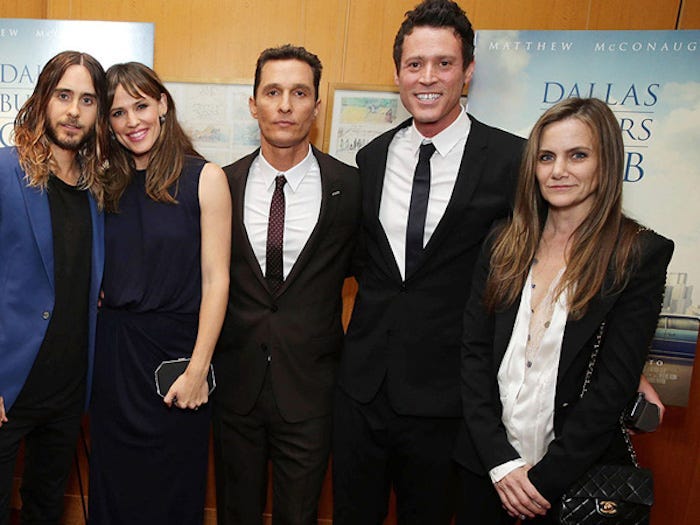
My interview with the co-writer of the Oscar nominated screenplay Dallas Buyers Club.
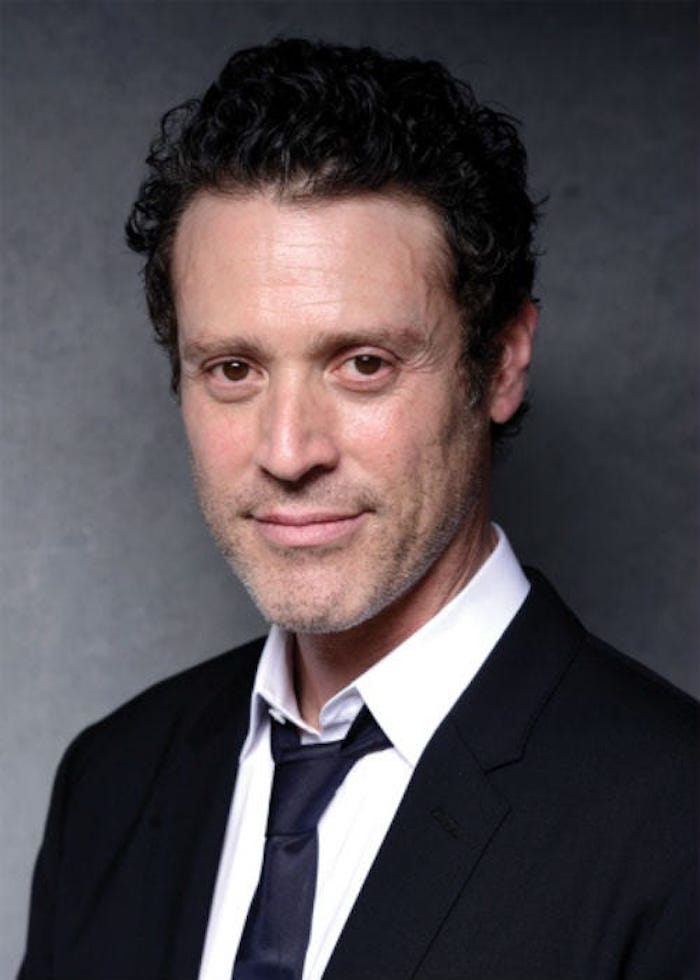
I first met Craig Borten at the 2014 Austin Film Festival where he was a panelist in a session I moderated. We discussed the movie he co-wrote and was nominated for an Academy Award: Dallas Buyers Club. Craig kindly agreed to an interview and we had an excellent 1-hour conversation.
Scott Myers: You grew up in Pennsylvania. Is that right?
Craig Borten: That’s correct.
Scott: Were you always a fan of movies?
Craig: Yeah, I love movies. My dad used to take me all the time.
Scott: What were some of the more memorable ones you remember from your childhood?
Craig: What are some of the ones my dad used to take me to? The Godfather, Some Like it Hot, all the Bond movies, stuff like that.
Scott: Do you remember the first time you ever thought, “Hey, there’s somebody who actually writes these things.”
Craig: Yeah. I thought about it a lot. Then as I was getting into college, a lot of my friends were in the film school at Syracuse, I started really following it a little bit more.
Scott: At Syracuse, did you study film there, or writing?
Craig: I did not. I studied Liberal Arts, but I was helping my friends make films. They were filmmakers or writers, so I was exposed to it then.
Scott: When did you actually start to think about writing screenplays?
Craig: When I was in school, I was thinking I wanted to get into the entertainment industry. I had a girlfriend at the time who was from Los Angeles who invited me to come out here for the summer. I came out and decided I was going to stay, and start taking classes.
I took some writing classes and some acting classes, AFI, UCLA, Robert McKee. That was when I decided I wanted to write. Then I got involved with the theater group and was writing some shorts for actors to perform in, and stuff like that.
Scott: What year is it we’re looking at when you moved out to LA?
Craig: I moved out to LA, then I was basically looking for something to write. I wrote a “Seinfeld” spec with a friend. Then another old girlfriend of mine sent me an article about Woodroof. That was around 1992.
Scott: That’s how you intersected with Ron Woodroof.
Craig: Yeah, and the Dallas Buyer’s Club. I thought it was a fantastic story. I related to it because my father had dealt with a terminal illness. He had lymphoma. Some of the things I learned during his illness were reflected in Ron Woodroof’s struggle for alternative medications, protocol, the protocols for getting access to alternative medications, the way the FDA worked, the NIH, stuff like that.
It spoke to my heart a little bit, his plight.
Scott: You get this article. You obviously don’t know Ron. How did you go about locating him and getting the approval from him to move forward with a screenplay adaptation?
Craig: I wrote him a letter. He didn’t respond, and then I called multiple times. One night, around seven or eight o’clock, he answered the phone.
We had a nice conversation, and he basically said, “If you can be here tomorrow, you can interview me.” I got in my car. I didn’t get there the next day, but I got there the following day. I drove to Texas.
I had no money. I slept in a AAA park in a tent. Then we spent three days together, and I tape recorded everything. He gave me the blessing to go write a movie about his life.
Scott: This is a script you co‑wrote, which in 2014 was nominated for Best Original Screenplay by both the Writer’s Guild of America and the Academy Awards, wins three Oscars including Best Actor for Matthew McConaughey and Best Supporting Actor for Jered Leto.
It’s about Ron Woodroof, from 1985, a Dallas electrician and hustler, had to work around the system to help AIDS patients get medication they needed after he himself was diagnosed with the disease.
You spent three days interviewing him, and you compile maybe 20 hours of taped interviews…
Craig: Maybe close to 30.
Scott: 30 hours. Ron didn’t survive much longer after you interviewed him.
Craig: Unfortunately he did not. We were going to go on a smuggling trip. He was going to take me to Mexico and I was going to go with him to smuggle some meds in, but unfortunately he died, I think October, November of ‘92.
Scott: You and I did a forum together at the Austin Film Festival last year. If memory serves me correct, did you make some sort of promise to him that you’d get the movie made?
Craig: I basically said something to him to the effect of, “I can’t really give you any money right now,” but I said, “I promise you I will get this film made.” I had no idea what I was promising, but I said to him, “I promise you I’ll get this story made. It’s so important.”
Because he said something to me that hit me on the deepest level. It spoke to me at the time, and it still speaks to me today. I asked him, “Why do you want a movie made about your life?” He said, “Because I think people should ask questions.”
I loved that.
Scott: Interesting.
Craig: Yeah.
Scott: Of all the answers he might come up with… “I think people should ask questions.”
Craig: Yeah. We take a lot for granted, we trust a lot of people, we trust our doctors, we trust our pharmacy, and we trust the medical industry, but until we’re hit with something, we don’t understand exactly how it works.
What we realize as we get older is that everything’s a business, fortunately or unfortunately, and you need to ask questions.
Scott: You said that you had this experience with your father. Didn’t you also have a stepfather who had died of a terminal illness as well?
Craig: I did, and they both went through the same horrible process.
Scott: And so a personal resonance to this material?
Craig: Yeah, very personal resonance to the material, having lost a father and a stepfather to cancer, and witnessing the medical industry up‑front. It’s a very personal movie.
Scott: In 1992 when you told Ron with that sort of youthful bravado, you’re going to get this movie made, I’m sure you had no idea the circuitous route it would take, 20 years, several stops and starts.
Could you walk us through some of the stages along the way? There were various casts, commitments and director packages, and close calls.
Craig: Sure. It took me a couple of years to write it. After that, I was in a basketball game with a producer named Chris Moore, and I gave him the script when I was done.
He read it, and he said, “I love it. I want to give you some money and option it, and let’s go try to get it done.” I forget how long our option was, but Ben Affleck and Matt Damon would sometimes play in that game.
I’d go to Chris’ office, and he had a big dry‑erase, or blackboard, and on one side it would say, “Dallas Buyers Club,” and on the other side was “Good Will Hunting.” That was kind of neat.
That option ran out, and then I connected with a couple of producers named Todd Black and Jason Blumenthal, and they were, at the time, I think working for Peter Guber, and we developed it. They gave me a little money.
Then we went out to the agencies, and I ended up getting an agent at CAA. They had given the script, I think at that time it was Tom Cruise, Brad Pitt and Woody Harrelson. Woody Harrelson took to it, and then we got Dennis Hopper attached to direct.
That was our package. We went out to the studios and we met with Columbia, Woody had a deal there at the time. Woody wanted to get it made. He didn’t want to get into a development deal.
We ended up not doing a deal with them, then we went to a small company called Banner Entertainment Brian Drummond started with Mickey Liddell, and we developed it there.
They dissolved a year later, year and a half later. Then I met this indie producer, David Bushell, who I developed it with, and right around that time I had met Melisa Wallack. Melissa and I worked on a book adaptation together, and I thought she was a fantastic writer. She read the script and had great ideas. Basically, I said, “Why don’t you dive in with me?”
At that time, I think it was 2001, there had been four options, and I needed some help. Melissa came in, and we worked on it together. At that point we got Brad Pitt. My friend Robbie Brenner, who had been a fan of the script from the first draft to the last, had gotten involved, and she went to NYU with Mark Forster, and she gave it to Mark.
We met with Mark, and then Mark said he was going to give Brad Pitt, and then we got Brad Pitt, and we sold it to Universal. Universal wanted to get a couple of other writers. They got a couple of other writers, and then Brad Pitt and Mark Forster dropped out. Ryan Gosling and Craig Gillespie got involved.
Then nothing really happened, and I got a call from Robbie one day. She said, “I’m going to get ‘Dallas Buyers Club’ out of Universal,” and I got Matthew McConaughey, and Jean‑Marc Valle. That was the beginning of another crazy journey that year of getting the film made.
That’s kind of a shorthand for 20 years. There’s many others in between, producers, studios, interests from actors and directors.
Scott: How did you handle yourself emotionally, all the ups and downs?
Craig: I think at a certain point, what people don’t realize is, Hollywood’s so tough. All anyone’s trying to do is get something made, and what people don’t realize is, it’s a town of ones. You need to have one real good success, and you can use that as a jumping off point.
The years go by, and in all honesty, I was like, “I don’t even know what else I’m going to do.” There were intermittent jobs in between, some writing gigs, nothing huge, although when we sold it to Universal, that was a nice sale, but there was gigs here and there. Just trying to get by and survive. It’s hard.
Scott: I remember once on a set of one of my movies, a producer was looking around at all the crew there and he said, “You know, Scott, it’s a miracle any movie gets made.”
Craig: It is.
Scott: The budget for Dallas Buyers Club was really tight. I believe I read somewhere how the all-in budget for the makeup department was something like $300.
Craig: I don’t know what the actual budget was, but I think we made the whole film for about five and a half million, give or take a few hundred grand here and there.
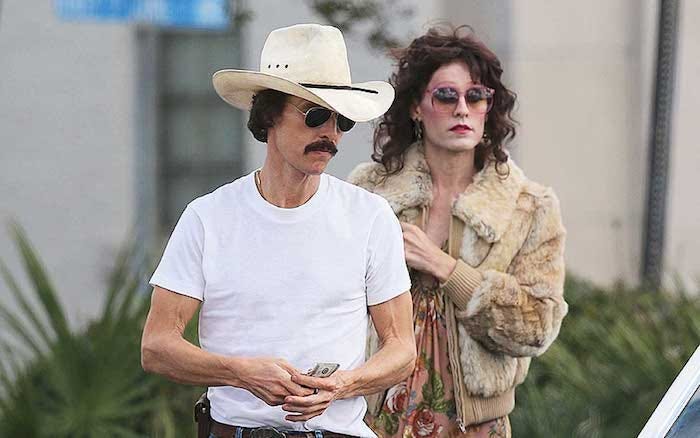
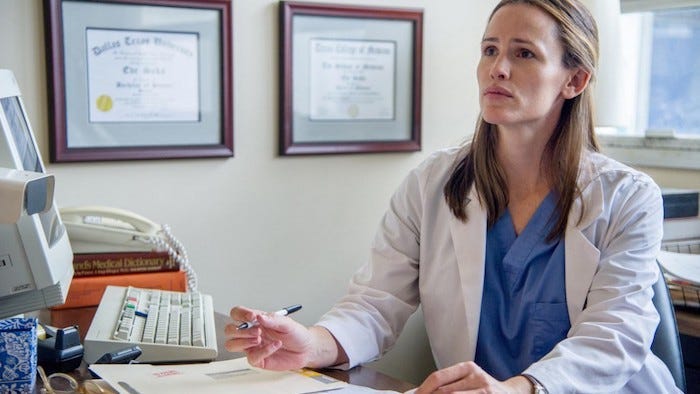
Scott: Thanks for that background, it’s amazing to see the route that took over 20 years for Dallas Buyers Club to get made. Let’s talk about the story. At the heart of the movie, you’ve got Ron, and he’s got two key relationships, Rayon, played by Jared Leto, and Eve, played by Jennifer Garner.
Both of those are fictional characters, is that right?
Craig: Yeah.
Scott: Could you get into how those characters evolved, and why you felt they were essential to the story?
Craig: Rayon, it was interesting because he played the great foil to Ron. If you think about it, who would be the ultimate outliers in Dallas Texas in 1985? Well, definitely some guy who’s a heterosexual, homophobic cowboy, who gets aids, but of course who is the ultimate outlier? That would be a transgender person in Dallas Texas in 1985.
The other thing that was interesting about this character was that Ron Woodroof was racist and a homophobe. There was something that was interesting about it. If he was a gay man, he could probably look away, but if she looked like Rayon, he couldn’t look away, and he would have to face his own bias.
He couldn’t look away, and so there was something very interesting about that. Eve was created because we were able to represent an alternate point of view with her, and use her as a conduit to show both sides of the coin.
Scott: Of the medical industry.
Craig: Yeah. Also, it is interesting because doctors at that time that I had interviewed, they were really thrown in. They didn’t have all the information. There was a lot of hysteria, and so they were learning as they went along, and people wanted anything, because people were dropping like flies. This is 1985.
Scott: I’d like to talk with you about some of the themes and story dynamics at work in the movie, and see which of those kind of resonated most with you.
For example, Ron is a classic movie underdog both in terms of his physical health, because he’s struggling to survive, but also when taking on the medical system.
Like you said, they didn’t know what was going on, and so he ran with this thing, “Let’s ask questions,” and so took on this whole sort of pessimistic dynamic around the HIV/AIDS situation. How important was that underdog idea?
Craig: Yeah, for sure. He’s an underdog, he’s also incredibly polarizing, he’s also an anti‑hero. There’s a lot to explore, but for sure any one person taking on the medical establishment, obviously they’re going to be the underdog. That was an interesting way to go.
It’s not so much that. It was more like this is a reluctant hero because selfishly that path, he was trying to stay alive. He wasn’t trying to be some crusader. The whole movie is about a guy trying to live, not about a guy dying.
Scott: Surviving.
Craig: It’s not even about surviving, he wants to thrive.
Scott: Actually I think I read in an interview with you that you said, the one thing that you were really struck by his character, was how passionate he was.
Craig: Yeah, he was so passionate. He was passionate, and I was lucky enough to meet him at the right time, because when people are…I don’t know if he knew he was going to die but I definitely think he was aware that he could. When people get to that point, they’re much more effusive. They talk about things they probably would never discuss, knowing that they might not be around.
Scott: We discussed the script on my blog for a whole week. Somebody came up with something I thought was an interesting way of interpreting the story. Basically, that one of the themes is knowledge equals power. That for example, the knowledge he gained in his quest to find appropriate medicine to help himself, that did actually did help him live longer.
Over a period of time, that stuff disseminated out into the larger community, the knowledge that he gained about the medical industry, and big pharma, and leading him to create the Dallas Buyers Club.
On a more personal level, the knowledge that he gained, and his personal relationships with the LGBT community, and most notably Rayon, that empowered him to move beyond his own personal bias, and then sort of discover a family that he may never have known in the first place.
Do you think that idea that he gained some power through knowledge, do you think there’s any resonance there thematically in the story?
Craig: 100 percent. I think he became a man in this dilemma, and I think he became a man he could respect in this. I think it’s a film about tolerance, and grace, and love, and humanity. He was able to tap into those things he never would have been able to see had he not have gotten sick.
Scott: You made a really interesting choice with the Ron‑Rayon relationship. It’s very powerful, but Rayon dies on page 119 of the script, and the story goes on for a whole other 29 pages. Since Rayon’s a fictional character, you weren’t bound by historical facts that he died then, and then Ron goes on and lives for longer.
I’m curious. What’s your thinking about the placement of that, to have Rayon die, and then essentially that last act is all Ron’s story?
Craig: I think we were looking to use it as a device, and to kind of maybe open his eyes a little more, and kick him a little bit more into action. Like you said, educate him a little more about how people are being treated, and what’s happening to people.
It gave us a moment to actually experience him experiencing a loss of a friend, and maybe in a sense, his only friend ever that really maybe unconditionally loved him.
It was kind of The Dark Night Of The Soul, in certain ways, and with the IRS and all that stuff, so it was used as a device. Unfortunately, this movie in certain ways, you’d like it to be longer, and there’s a more round story to tell. It had to be cut out, and we didn’t have the time.
Scott: It has an interesting structure to it. It doesn’t really fit into kind of a traditional, I suppose I should say, three‑act structure maybe?
Craig: Yeah. Jean‑Marc Valle, and Matthew McConaughey, didn’t want to do that type of film. They didn’t want to go through traditional three‑act structure. Jean‑Marc, even though he’s from Montreal, he has this European sensibility, and the directors that he loves.
Like a lot of directors that I’ve worked with, or have met, or have read about, they’re more interested in character, than traditional storytelling. That was a choice we made, we were making an independent film.
People were trying to tell us what to do, but we had no real studio we had to answer to. We decided to go through a little more untraditional route with this.
Scott: It does have kind of a European feel to it, doesn’t it?
Craig: It does, but the truth is, there is a three‑act structure in place, it’s the way it’s been cut and put together, we skewed it a little bit. The screenplay, if I were to break it down, I could show you it hits all the right marks.
Scott: You’re sitting here after the fact. I’m curious, after all the award ceremonies, and the acclamation for the movie, and this 20‑year journey, you promised this guy Ron you’d get this thing made. Is there some sort of object lesson, or one overriding feeling you come away with?
Craig: On a personal level for me, it helped me to evolve as a writer, and become prepared for the work, and what needs to be done, and how work within the system of Hollywood. I learned so much over those 20 years as a writer, and also as a human being.
It prepared me for what’s been going on the past couple of years, and what lies ahead. On an emotional level, it’s incredibly gratifying, because many people have either written to me, or come up to me, and have been truly affected by this film on the way that art can change lives, and affect people.
People with AIDS, survivors, from back in ’85, people with AIDS today, people with other diseases seeking out treatment. It speaks to a lot of different populace. It’s incredibly gratifying to have people come up to you and say, “That film really affected me. That was a really beautiful story.”
The coolest thing about it is it starts a conversation. You realize that for people to want to have a conversation about it, they must have been affected. That’s really gratifying. In certain ways, that’s one of the beautiful things about making film, and the way it can affect people. It has nothing to do with you.
Scott: So start conversations, maybe those will involve asking questions, which is what Ron was talking about.
Craig: That’s exactly what it did. We traveled all over with it, and people had some fantastic questions. By the way, my friends who brought their kids, they knew nothing about AIDS. They knew nothing about this time period, and they were asking questions, so that was really cool.
Scott: Younger generation of adolescents, or what not, they were not even aware of this period of time or the basic origin of the HIV-AIDS crisis?
Craig: Exactly.
Scott: You have success with Dallas Buyers Club, and now you’ve got a lot of other projects going on, including this very famous incident that happened several years back in South America, The 33.
This is based on the real life event, where a gold and copper mine collapsed, and trapped 33 miners underground for 69 days. What can you tell us about the movie and your involvement in that?
Craig: That one, there had been five writers when I’d come on board. They were close to getting the film off, but they couldn’t get their actors to commit. They had, I think Antonio, and maybe Juliette Binoche, and they couldn’t get them to commit to the script.
I had met with Patricia Riggen the director, and Mike Medavoy, and a few other producers. I came in and tried to come up with real, full, character acts for everyone. It was a really challenging film, because we were trying to cover the rescue, the men in the mine, and the families.
Really, it was almost an impossibility. I came in and rewrote the whole thing in three weeks, and they got their actors, and I went down to Santiago, Chile, and then to Bogota, Columbia, and worked with Patricia, and did some more writing for another five weeks.
Scott: While they were in production or…
Craig: Yeah, in production. Preproduction. That was a toughie.
Scott: How much research did you do?
Craig: I wasn’t allowed much time for research, because they were on such a crazy schedule. I really went in and watched the documentary, and I came up with these character acts for all the characters, and then went in and rewrote it. I didn’t really get to do a ton of research.
There was a book, but I didn’t have time. I read all the different scripts. This was really by the skin of my teeth.
Scott: It comes out November 13th.
Craig: Actually, it’s been playing. I think it played in Chile, and a few other territories in South America. I think it was released in a few territories internationally, about a month ago, and then it opens in a month.
Scott: Was the biggest challenge here trying to find the focus of which key characters you were going to…
Craig: Yeah. The challenge was that there’s 33 men, and it’s a true story. The challenge was really, “How do we cover all these stories? Whose story are we covering? Who’s the main focus?” I would have liked to have stayed in the mine most of the time. I really felt if people get invested in these characters who were underground for 69 days, and getting them out.
I felt that was most important, but [audio skips] challenge because the rescue operation is pretty incredible. It’s really incredible how they got them out. The families were very invested, you’ve the government, you have the owners of the mine. It was a very challenging story to tell.
Scott: Yeah, and different from Dallas Buyers Club. It’s real life, but that was over a period of years. The 33 is over a period of two and a half months.
Craig: It was only a period of two and a half months. The only thing is that you learn a lot. You learn what stories you should really be doing, or telling, and what’s a really monumental task like this, with so many characters.
Scott: Seems like you’ve sort of created a bit of a niche for yourself these biopics or non‑fiction type things because there’s a couple of other projects you’ve got. One is The Hunt for El Chapo. Could you maybe talk about that?
Craig: I’m very fascinated by the prison systems and also the cartels, the Mexican Mafia. I’ve read a lot of books about them, and I find Mexico to be fascinating. I had read an article in “The New Yorker” about the fight for Guadalajara, about the Guadalajara Cartel. Basically, they killed the first DEA agent on foreign soil.
It was the first murder of a DEA agent on foreign soil, and we went down there and took them out. From what I learned, the driver for the cartel was El Chapo. When that cartel [audio skips] took over and created Sinaloa. His story is fascinating.
I talked to William Finnegan at the New Yorker, and then I ended up talking to Patrick Radden Keefe, who did another article. Finnegan was like, “If you want to do a movie about the cartels, the most fascinating one is El Chapo. You should wait until he gets caught.” He hadn’t been caught yet.
So I started doing my research and came up with a take. Then, Patrick Radden Keefe came up with his article. I went out to pitch, and got Pete Berg, and we set it up at Universal.
Scott: Of course, El Chapo’s been in the news recently, hasn’t he?
Craig: Yes, he has. He’s escaped yet again. It’s unbelievable how he escapes, the politics of Mexico, how any of that is possible, and all that stuff.
Scott: And the craziness of the Drug Wars.
Craig: The Drug Wars. I went to DC. I met with the DEA for a day and really got a great overview of the Drug War, which is unwinnable.
Scott: There’s another project, a biopic about Janice Joplin. Can you talk about that project?
Craig: Janice is Jean‑Marc’s baby and Amy Adam’s baby. We’re trying to work through some of the crazy rights issues that surround these types of films. I hear we’re close. It’s been going on for over a year now, but I hear we’re close. Melissa and myself are going to write it, Jean‑Marc’s going to direct it, and Amy Adam’s going to star. TriStar is trying to sew up the right, so hopefully that will be done soon.
Scott: What’s 1 year when compared to 20, right?
Craig: Yeah, exactly. What’s a year? Janice is an incredible story. We have a pretty good take, and we’re really excited. Hopefully, it’ll happen soon.
Scott: Is the summation that I’ve read where it’s one day in the life, is that still the working framework?
Craig: No, I don’t think it’s one day in the life. We’ve played with a couple things, and I think Jean‑Marc wants to do a looser narrative. I definitely think there’s some really incredible periods of her life we want to cover. It’s not going to be a cradle‑to‑grave biopic, but we want to cover the seminal moments of her life.
Scott: And then there’s “Inherit the Earth,” a science‑fiction zombie thing.
Craig: Yeah. That’s with Andrew Adamson, which attracted me to the project. He’s kind of brilliant. He did all the “Narnia” movies. I love zombies. “Walking Dead’s” one of my favorite shows of all time.
There were a couple other writers before me, and it’s at Sony. I came in to really, again, do character sketches of this robot and this young, 13‑year‑old girl and their relationship. We literally just now handed it in, and it’s being read.
It was read last weekend, and now the big people, I guess, are reading it this weekend. Maybe next week we’ll hear something amazing.
Scott: Also, TV. You’ve got a couple projects. “51st State” at Syfy.
Craig: 51st State is a prison show in the future in Greenland, and there’s a sci‑fi twist to it which is nano technology. I can’t say much else. It dives into prison reform and what the future holds for a prison state, and I’m excited about it.
Scott: Then, “Sheriff”?
Craig: “Sheriff” is something I wrote on spec. It’s a multigenerational show about a family of corrupt sheriffs at Twin Towers Prison in downtown LA, and they run it with the help of the Mexican Mafia. It’s kind of a Greek tragedy. It’s about a grandfather, son, and a grandson. Jonas Pate is attached to direct.
Tomorrow Studios, they produce “Aquarius,” the David Duchovny show. They’re financing it. We’re hoping, fingers crossed, I have a meeting with Matthew Fox on Wednesday.
Scott: I assume you’re exciting about the possibility of working in TV?
Craig: Yeah, I love the medium. I love TV. There’s more control. You can do more. I’m doing both features and TV, but I really love TV. Most writers do, for the obvious reasons.
Scott: Let’s jump into some craft questions. You mentioned you wrote this “Sheriff” project on spec, so you generate your own ideas as well as adapting other things. How do you come up with story ideas?
Craig: I read a lot. I have this app called Longform, and it collates all the writers in the world and all the articles, magazines, all the publications. I love reading human interest stories. It’s usually a germ of an idea. “Sheriff” was based on the LA sheriff scandal, which happened about five or six years ago.
That was about this gang of sheriffs selling drugs and extreme violence against prisoners. The FBI put an inmate in there with a cell phone and conducted an undercover sting. That got my mind going. I love the world of sheriffs, the Mexican Mafia, and I wanted to create that world.
Scott: Is it fair to say that most of your ideas come from the stuff you read?
Craig: Yes, absolutely. I’m constantly consuming, reading everything.
Scott: How about prep writing, brainstorming, character development, plotting, research, outlining? Which of those aspects do you tend to spend your most time with?
Craig: For me, it’s the characters, breaking the characters. That’s what I spend most of my time with. Once I’ve done that, character will speak to plot and story. Once I know who they are and where they’re headed, then the other stuff’s a lot easier.
Scott: How do you develop your characters? Do you have some specific paths or tools?
Craig: I really don’t, but there’s one tool that I use for everyone, and that is a series of questions. What’s their Achilles’ heel, and how does that impede them from what their goal is, and how are they going to overcome their Achilles’ heel and rise above it?
Scott: There’s that theme again, ask questions.
Craig: Yeah, ask questions.
Scott: How about dialogue? How do you go about finding your characters’ voices?
Craig: Dialogue is more like an exploration in creativity. That’s trying things out, seeing what you feel fits, knowing your character, writing, rewriting, getting a feel for him. Getting his cadence, the way he talks, the way he walks, what he says without saying it.
Scott: Theme. Do you think about theme? Is that important to you?
Craig: For sure, themes are very important. For the “Sheriff” show, there’s this theme I was playing with everything that’s going on with all the police departments across the country, the corruption, and the violence, and a lot of the murders. Everything that’s going on in our country.
I thought, “What does it mean to be a cop today? What does the badge mean to anyone? What are they upholding?” I thought, “Right now, it’s a cycle of violence and corruption.” So I thought break the cycle. That’s an interesting theme. How do they break the cycle of corruption and violence?
Then, I thought, “How does that relate to my lead character? What is he up against? Does he want to break the cycle, and if he does, how does he want to break the cycle?” I’m always thinking about themes.
Scott: When you’re writing a scene, do you have specific goals in mind?
Craig: Usually when I write a scene, I write from the inside‑out. It’s basically what is the scene building to, what is the heart of the scene, what is that moment, and I’m usually trying to capture that moment. Then, I’ll build things around how I get there and how I get out of there.
Scott: That’s interesting. It’s like what Ray Bradbury says. “When you sit down to write, don’t think. Feel.”
Craig: Exactly.
Scott: How do you go about writing entertaining scene descriptions?
Craig: I really try not to. I don’t think. It’s all an economy of words, so I’m trying to make it somewhat interesting but not too interesting, not too flowery. Get to the point, get in, and get out. I don’t try to write really entertaining scene description. I try to use an economy of words.
Scott: When you finish a first draft, how do you approach the rewriting process?
Craig: Usually, people are giving me notes. You’re trying to see where you have to cut the fat. The simple thing is does every scene move this story forward? Does every scene move your character forward? Is everything scene speaking to your character? You have to go in there and look at it.
Scott: How about your actual writing process? Do you write every day or sporadic bursts? Do you work in private? Do you go to coffee shops? Do you listen to music? Does it have to be quiet? How do you write?
Craig: I have a big 10 foot by 6 foot cork board. I will put images up, and I will actually pick music that fits what this movie is. Then, I’ll play the music and continue to put images up, and then I’ll put index cards over those images that speak to different scenes that I think have to happen. I’ll build like a world on a cork board. While listening to music and looking at images.
Scott: It’s like a holistic thing. You’re feeding your visual and oral sensibilities?
Craig: 100 percent.
Scott: Here’s a fun question. What’s your single best excuse not to write?
Craig: Anything.
[laughter]
Anything. Really, I’ll be honest with you, for the last three years, I’ve written almost seven days a week. To be honest, the more I write, the easier it gets.
Scott: What do you love most about writing?
Craig: What do I love about writing? It’s when you find those great moments that bounce off the page. You’re in it, and it feels great, and you’re telling this beautiful story. You’re speaking to humanity, and you’re speaking to your own humanity, and you’re tapping into a deeper part of life that we all seek. You’re capturing that within a page or two. It feels great.
Scott: Finally what advice can you offer to aspiring screenwriters and TV writers about learning the craft and working in Hollywood?
Craig: I really think the best way to learn the craft is to go do it. I also think is to write something and actually go make it. It doesn’t matter if it’s good, it doesn’t matter if it’s bad. It matters that you went out, accomplished it, finished the screenplay, and then go make a movie. We live in an age where you can buy a camera and editing system and do it all on your phone or your computer. Form a group of other artists that want to write, direct, produce, and act and go make something.
That’s the best education, I think.
For more Go Into The Story interviews with screenwriters, filmmakers, TV producers, and industry insiders, go here.