Go Into The Story Interview: Colton Childs
My interview with the 2024 Nicholl Fellowships in Screenwriting winner.
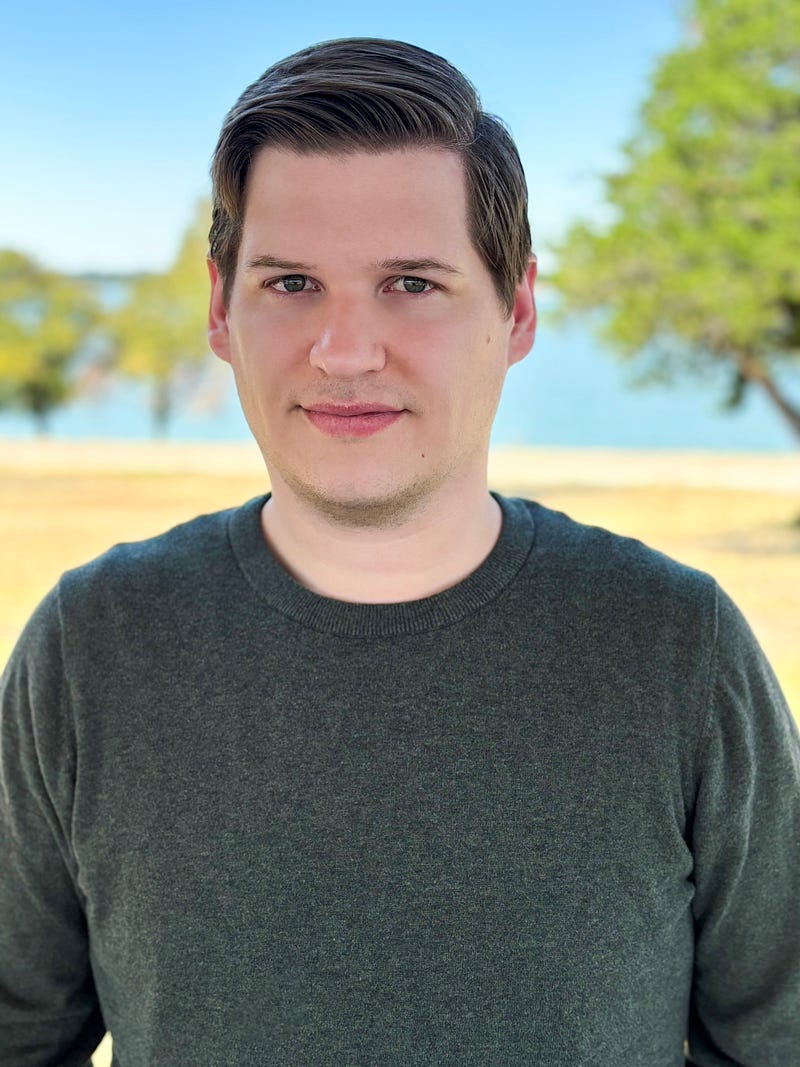
My interview with the 2024 Nicholl Fellowships in Screenwriting winner.
Colton Childs wrote the original screenplay “Fake-A-Wish” which won a 2024 Nicholl Fellowship in Screenwriting. Recently, I had the opportunity to chat with Colton about his creative background, his award-winning script, the craft of screenwriting, and what winning the Nicholl has meant to him.
Here is my complete interview with Colton.
Scott Myers: I’ve interviewed every Nicholl recipient since 2012, but this is a first. I’ve never interviewed a Nicholl recipient who was also selected for the Black List Feature Writers Lab. I think it’s safe to say 2024 has been quite a year for you. I’m just curious, where’s your head at after all those accolades?
Colton Childs: It’s been a whirlwind, for sure. When you’re emerging as a screenwriter it can feel like you’re writing into a void. So when your work is recognized, it’s incredibly affirming. Especially seeing how that work is resonating with people.
Scott: Congratulations on both fronts. Of course, I was very excited to work with you and your fellow writers in that Black List Lab in October as one of the mentors. I was quite familiar with the script (Fake-A-Wish). You knew then that you had won the Nicholl?
Colton: I did.
Scott: I’d like for the readers to get some background on you. As I recall, you grew up on a cattle ranch, is that right, in Texas? Is that where you started the whole journey?
Colton: Yes, in South Texas, north of Corpus Christi.
Scott: How long were you living on a cattle ranch?
Colton: Until I was 17. It’s a long story to get into, but my dad worked for a non-profit that provided childcare to kids in need. I lived with my biological family, but there were a series of foster homes on the land I grew up on.
Scott: How did you get into writing?
Colton: I always knew I wanted to write but didn’t have the tools. Initially, I gravitated to theater because it felt more accessible. I moved to New York for college and took some playwriting classes, but I still hadn’t found my voice. I felt like I didn’t have stories to tell yet. It wasn’t until my mid-twenties that I began to trust my voice as a writer.
Scott: You went to Pace.
Colton: I did.
Scott: You majored in theater arts and gender studies, correct?
Colton: With a minor in film.
Scott: And a minor in film. Did you do any screenwriting as part of that program?
Colton: There were only two screenwriting classes at the time, and I took both of those. I took a lot more playwriting classes, which were all great.
Scott: You’ve had some dramatic experiences later on, if you wouldn’t mind talking about that. You’re a cancer survivor.
Colton: I am.
Scott: It’s hard to ask you to unpack what that experience was like.
Colton: I don’t mind. To backtrack slightly, I lived in NYC for nearly 13 years before making the big, scary move to Los Angeles. Just a few weeks after I arrived, COVID-19 hit. I spent most of lockdown in Los Angeles, then I moved to Texas for what I thought would be a brief sabbatical from city life. Not long after, I was diagnosed with thyroid cancer. It was like an onslaught of terrible things happening in my life and in the world. I was lucky to be around family during that time, but it was a rough couple of years.
Scott: That’s fortuitous in a way then that you moved back and then found out this diagnosis, so that you did have that family support.
Colton: Yes. Definitely.
Scott: I went back and I reread your personal statement, the one you supplied for the Black List Lab, and I saw this quote.
“One day, when a friend was checking in on me,” this is when you were going through cancer treatment, “I made a joke about how sad it was that there was no Make-A-Wish for aging gay millennials. The next week, I was hard at work on my feature script for Fake-A-Wish.” That really was the origination of the idea?
Colton: For the most part, yeah. I always wanted to write a queer road trip movie, but I never really had the core idea for one. When I made that joke I started thinking about what my Make-A-Wish would be, which I found humorous. I followed the seed of that idea until I arrived at the concept.
Scott: What was it about the idea of writing a road movie that interested you?
Colton: When I was undergoing cancer treatment, I was longing to escape, but I couldn’t leave. I physically couldn’t go anywhere. I started wondering if there was a way to escape through a story. In an odd way, I was able to use the characters as avatars to make a run for it.
Not to mention, I just love a classic American road trip movie, and it’s rare to see a gay one.
Scott: That’s like a double layer of escape. One is you’re escaping to the story, but then you’re also on the road with your characters, too.
Colton: Exactly.
Scott: Here’s the logline as provided by the Black List.
“Despite their 40-year age gap and the cancer treatment confining them to their small Texas town, two gay men embark on a road trip to San Francisco to grant themselves the Make-A-Wish they’re too old to receive.”
After the title page and before page one, you include this quote, “Home is where you feel like home. I’m still looking.” Truman Capote. Why that quote?
Colton: I view the script as a love letter to the generations of gay men who came before me. Truman Capote is someone I deeply admire. Paying homage to him early on is a small way of expressing that.
A lot of the script is dealing with finding your place in the world and this idea of home, and that’s something I’ve always struggled with as a queer person. As I’ve gotten older, I’ve realized that home can be other people, which is a lesson these characters are discovering for themselves.
Scott: Let’s talk about those two characters. You’ve got Noah, who is essentially the protagonist of the story. Here’s how he’s introduced in the script, literally the very first image on page one.
“Noah, 32, exhausted and out of shape, lies staring up on the patient table of a CT scanner. A blinding white light illuminates a massive, gnarly surgical scar wrapping around the entirety of his neck.”
Did you always imagine that you were going to start the movie that way?
Colton: I had a lot of time to reflect on an opening image while sitting in hospitals and waiting rooms. I wanted the opening scene to accomplish a couple things: introduce Noah, establish that this is a “cancer movie,” and then immediately subvert those expectations by ending on a joke, as if to signal, “This is not your typical cancer movie.”
Scott: How would you describe Noah’s circumstance, his family situation, living with his mom and his grandma, how would you describe where he is at this point in time, beyond the fact that he’s dealing with cancer?
Colton: He’s grieving and idealizing the life he once had. Between the weight of a devastating breakup and his ongoing treatment, he feels trapped in the darkest phase of his life.
Scott: You have a postmodern meet cute in a way because he meets Cliff at the medical center. Let’s see how you introduce Cliff here.
“Sandwiched between two straight senior citizen couples is Cliff, 74, the chirpy, gay life of every party. He’s the only person in the lifeless waiting room who’s there alone, and he’s dressed far too formally for a doctor’s visit.”
Quite opposite Noah’s personality. What else should we know about Cliff at the beginning of the story?
Colton: I wanted him to feel like a complete juxtaposition to Noah and his energy, but it was clear to me from the beginning that Cliff is holding onto a similar type of shame and loneliness as Noah. It manifests in different ways for both of them.
Scott: Who came first? Was Noah the first character to pop into the story or Cliff?
Colton: I think Noah was technically first, but my initial vision for Cliff was clearer. It’s funny, people often assume Noah is based on me because of obvious similarities. But I feel just as connected to Cliff, if not more so, than to Noah.
Scott: We’ll get into their distinctive personalities as we go forward here. In your Black List personal statement, you wrote this. Writing Fake-A-Wish, quote, “Became a love letter to the generation of gay men who came before me.’” You mentioned this earlier. There’s 40 years difference between these two characters. Talk a little bit about why that was important for you to explore that previous generation.
Colton: I’m grateful for the moment we’re in because more LGBTQ+ stories are being told. With that said, I rarely see stories about queer people over fifty. When I think about the legacy and history of the generations that came before me, there are so many stories that remain untold or lost to time.
Without even realizing it, I often find myself writing older characters. They’re not always queer, but usually they are. I think it’s my own small way of trying to connect with the past so that we don’t lose it.
Scott: Before they go on this journey, they have their initial meeting. Then the narrative follows Noah spending time with his family. His mother is named Carrie. His father died couple of years ago. Then there’s Nana, who’s his grandmother. Describe these two characters and the nature of their relationship with Noah.
Colton: Carrie is trying desperately to connect with her son, but it’s not happening. Noah is much closer to his grandmother, Nana, who lives with them. It’s hard for Carrie to see how protective Noah is of Nana, because he doesn’t show her that same tenderness.
Scott: You have many themes or story dynamics at play in the script. Obviously, cancer being one of them, being queer in this day and age is another. Religion is an interesting dynamic here because at one point, she’s very faithful, Carrie, believing that God will cure, basically, be involved in curing her son. Noah says to her in a very frank moment on 14:
“I’m sure you believe that your church is what will somehow save me, but the irony is that being there makes me want to fucking die.”
Your family is Southern Baptist, am I correct?
Colton: Yes.
Scott: It’s almost like a state religion in Texas.
Colton: It really is.
Scott: What was that like for you to explore the relationship between Noah and Carrie in that Southern Baptist experience, and then your own experience growing up in the church?
Colton: I’ve always resented the way that faith feels so binary in our society, particularly in the South. Where I grew up, it felt like a certain group had ownership of it. If you deviated at all, even slightly, in terms of your own beliefs, it wasn’t accepted.
As a queer person, I’ve always been drawn to interrogating what I actually believe outside of the confines of organized religion. It’s an especially complicated thing to ponder when you’re going through cancer treatment and mortality is staring you in the face.
That’s something I wanted to explore in the script. What does it mean to question what you were taught, but more importantly, what does it mean to find your own way?
Scott: Later in Act One, Noah and Cliff meet up again, then they go out for margarita night. They’re talking about Make-A-Wish. What would be your wish? Cliff says, “My wish would be to see the Gay Men’s Chorus perform in San Francisco.”
He says, “You might not expect it, but I’m a bit of a singer myself.” That’s planting of seed because that’s a whole dynamic that goes on with Cliff.
Then Cliff says, “What’s your wish?” Noah says, “This is cheesy, but there’s this beach with a perfect view of the Golden Gate Bridge.” He talks about his dog Lulu who Noah lost when a romantic relationship he had fell apart and the ex-boyfriend took the dog. So Noah says about his wish, he wants to get his dog back.
“Lulu loves water. I always said I’d take her there, but I never did. That’d be my wish. A day at the beach with Lulu.” Both of them have their respective wishes which are located in California’s Bay Area. Convenient for you as a writer.
Colton: Yes, very.
Scott: You gave them a goal, and you know where we’re going. How early on in your story-crafting process did those wishes emerge? Did one come well before the other?
Colton: I think they came around the same time. Even before I knew it was tied to a wish, I wanted Cliff to have some connection to the Gay Men’s Chorus, from a place of longing. He’s the life of the party, but I was drawn to the idea that, despite his gregarious nature, his biggest fear is being truly seen.
As for Noah’s wish, I’m such an animal person. And I’ve always found the messiness of breakups involving pets intriguing. It’s complicated if you have kids, but it’s weirdly messier with pets, because there are no clear rules. At least with kids there are systems in place. I liked the idea that Noah still has something in San Francisco that he felt was truly his, and that it’s also a conduit to his old life.
Scott: By the end of Act One … by the way, just speaking with my screenwriter hat on, very efficiently, the story moves along.
Colton: Without wasting time.
Scott: Because you can’t. It’s limited real estate. I always appreciate that there’s a certain amount of creativity involved in that. By the end of Act One, Cliff, of course, who is the go-getter, “Let’s go. We’re going to San Francisco,” and off they head onto the road west.
There’s a Gay Men’s Chorus performance coming up, so they’ve got that to get to, a ticking clock. Also, the ex-boyfriend’s got a birthday party. They’re planning on crashing that and basically kidnapping Lulu. Again, you’ve got these goals. That gives you that endpoint with some twists.
One thing we talked about, remember, when we were in Ojai together was that the thing about a road picture is you can have that movement forward geographically, but that doesn’t necessarily translate into narrative drive where the story itself is going. Remember having that conversation?
Colton: I do.
Scott: This time around, I was reading your script with that particular point in mind. I was like, “OK. Each of these events that happen,” and there’s several of them along the way, obviously, as they’re heading toward San Francisco, “there’s got to be something that moves the story forward.” You accomplish that in each one of them.
Here’s a good example. They’re out on the road. They stop into a bar called the Wiggle Room Bar, described as, “‘90s dance music pulses as a blue light washes over the half-empty gay establishment.”
What happens here is they have their first rather frank talk about sex. That feels like you’re peeling away a certain amount of emotional distance between the two, particularly for Noah, getting into this conversation.
Maybe talk a bit about that because sex is another of the story’s dynamics.
Colton: One thing I love about gay men is that they don’t shy away from frank conversations about sexuality. [laughs] You can’t write a gay road trip movie without diving into that.
But I aimed to subvert that in a way. Noah is in his thirties, and you’d assume he’d be more forward sexually. But it’s actually Cliff who is more frank and unrestrained. Noah is still figuring out his…Not his sexuality, but his place when it comes to sex in the gay community.
Scott: Cliff offers some advice. He says to Noah, “By acquainting yourself to your own body and what it wants, you learn how to let go. Plus, you’ll never see these men again.” He’s talking about having sex with strangers. He says, “What is there to lose? You, sir, need to fuck some strangers.” It’s a bit of a mentor moment there.
Colton: It’s also convenient because, as we established a bit earlier, Cliff is holding on to a good bit of shame and uncertainty about his place in the gay community, as well. By establishing him as this sage, wise elder, we’re able to undercut that a bit later.
Scott: Yes. There’s a very nice twist, or not twist, a subversion of … You feel like he’s going to be the Gandalf mature figure throughout.
Colton: Exactly. A gay Gandalf.
Scott: A gay Gandalf. [laughs] But he’s got his own journey he needs to go on. Cliff does say something intriguing, though, also in that scene. He says, “I’m going to let you in on a little secret. You can be whoever you want to be.”
Noah actually tries that and is not successful. He says, “I can’t be other people.” This is in the motel room after he tries it at a bar. Cliff says, “Then maybe you should be less afraid of being yourself.” That really is a major point of Noah’s journey, self-identity and finding himself.
Colton: Absolutely. I relate to that in my own way.
Scott: On the road, they visit various places. There’s a bug museum, a Waffle House, they go to the Grand Canyon. And that’s where they have the aforementioned discussion about God. You can understand why Noah would be having a pretty negative attitude about religion in general.
Then Cliff, you’d think may be aligning with that, but he has some interesting ideas. On 53, he says, “Even if we’re all molecules and there’s no rhyme or reason to any of it, there’s something holy about simply being a person in the world.”
Could you describe what sort of theosophy, or philosophy, or theology that’s going on there in contrast to Noah?
Colton: I think for Noah, it’s hard to imagine a spiritual worldview beyond the confines of the religion that scarred him. Whereas, Cliff’s perspective has been shaped by a lifetime of experience. He’s not concerned with needing the answers. Believing in something is enough.
Scott: Up to this point, essentially the midpoint of the story, we do have the Cliff as Gandalf, the gay mentor guy. There’s a story that comes out about, I think it’s his dearest friend, Shelley …
Colton: Yes.
Scott: … who passed away. When you talk about shame, that seems to be a key point of where that is for Cliff. What was going on there with he and Shelley, and why there is some shame associated with that?
Colton: There’s a brief flashback where Cliff’s mother tries to silence him while he’s singing with the church choir. We’re witnessing the first time he sees himself not fitting into the world around him.
Decades later, his best friend Shelley, who was also undergoing cancer treatment, asked Cliff to sing at her memorial before she passed. He chose not to sing, and that decision still haunts him.
So there’s a connection to singing and being seen, as well as to a friendship marked by unkept promises, which makes his dynamic with Noah a bit tender. It’s not so much about Cliff rewriting history, but about getting another chance to get it right.
Scott: He’s in a bar on karaoke night. Signs up, but cannot bring himself to sing.
Colton: Not even in a room full of drunken people who won’t remember it.
Scott: That association with Shelley, and then that memory that he has from his mother quieting him when he’s singing. Meanwhile, Noah’s off with this guy that he’s met and having a very vibrant sexual experience. Jace, is that his name?
Colton: Jace.
Scott: Jace. There’s a really nice little crosscut you do there contrasting the moods. Soon thereafter, they end up at Noah’s ex-boyfriend’s party. I suppose I won’t give it away. But eventually Cliff does get to go and see the Gay Men’s Chorus. The description there is quite touching. Is it fair to say that by experiencing that, that enabled him to do what he does later, where he gets up and sings?
Colton: I think so. I wanted that scene to have a sweetness to it, because Cliff is finally seeing these men sing together. But I also wanted to capture the sadness. As fulfilling as it is, Cliff is watching other gay men live out his dream, knowing he’ll never have that. But you’re right — experiencing that concert and growing closer to Noah finally enables Cliff to sing on his own terms.
Scott: It turns out Noah has lied to his mother, not revealing the truth about the cancer. She’s been led to believe that he’s cancer-free. Close to the end of the journey, Noah has a phone conversation with his mother where he does tell her the truth. What was that like writing that scene when he’s sharing that with his mom?
Colton: There’s a line Noah has at one point, Cliff asks, “Why haven’t you told her?” Noah says something like, “I don’t want to be the reason she loses her faith.”
I was drawn to the idea of Noah harboring so much resentment for the religion he was raised in and his mom’s beliefs, yet still not wanting to be the reason she abandons them.
That scene with Carrie and Noah was one of the last scenes I wrote. It was tough, but also a relief for them to finally have a real, honest conversation. They’re the only two characters in the script who hadn’t had that, so writing that moment felt gratifying.
Scott: There’s this whole little subplot with the mom and cookies she’s baking …
Colton: I know. Those damn cookies.
Scott: Those cookies. After that conversation with Noah, she ends up sharing them with her mother after keeping them away up to that point.
Colton: Nana finally gets a cookie.
Scott: It’s symbolic of a little bit of movement forward on her part. Then there’s a wonderful setup and payoff we’ve reached. We referenced it earlier. The same bar where Cliff had not been able to perform at karaoke night, they stop there on the way back home.
It’s not karaoke night. Same bartender, very nice guy. That character is terrific. But Noah gets to see Jace again. As it turns out, Jace is a musician. The fates have aligned. This time, they do an ad hoc karaoke thing just for Cliff, and he gets up to sing.
I sure hope you can get the rights to “Dancing Queen” by ABBA because it’s such a perfect song in that moment. It’s just perfect. Could you talk about writing that and conceiving that whole scene, and how that’s a payoff for Cliff?
Colton: I always knew we were going to see Cliff sing, but I wasn’t sure where or how. I kept feeling drawn back to that bar, and I wanted to bring back Jace’s character, since he’s a regular there. It just felt right, and Cliff deserved his moment. Noah has his moment on the beach a few scenes prior, where he finally lets go of everything he’s been holding onto. It was always clear that Cliff needed a similar moment, in his own way.
Music plays an important role in the film, which I think will be even clearer if, and when, the film gets made. You can’t have a road trip movie without those needle drops. I don’t remember when exactly “Dancing Queen” clicked, but I was going through a bunch of seventies playlists and happened upon an ABBA track.
Scott: The crowd is applauding, Cliff is overcome with emotion. He finally feels seen, it says in the description:
“The cheering continues. Noah and Cliff’s tearful gaze finally meets and never breaks.” Underlined, “It feels like a goodbye.”
Then you move into what I’d call an extended denouement that’s wrapped around some voice-over that kicks off with this: “I’m quite envious of a ghost without a home,” which ties back in with your Truman Capote quote.
Colton: Indeed.
Scott: I’m not going to spoil the ending at all because it’s so beautifully, lyrically written. I’m going to encourage people to get on Reddit, find the script, and read it. That ending is just so lovely and so wonderfully resolves the story. Did you have that in mind all along?
Colton: As I was writing the script, the ending always felt a bit hazy. I knew how I wanted it to make me feel, but I wasn’t sure how to execute it. Then, about halfway through, I had a couple of flashes. I started writing a version of the ending and it flowed out of me. About ninety percent of what I wrote that day has remained unchanged.
I always knew I wanted to explore the passage of time in subtle ways. The ending itself isn’t exactly subtle, but the script called for it. I also wanted to play with memory. As I was writing the script, I often asked myself, “Does this moment feel like it could be a memory?” Years down the road, is there something about this exact moment in time that Noah or Cliff would look back on? That was my North Star in terms of whether or not a scene should stay or go.
As I continued to develop the story, memory and time became interlocked, and that’s how I ultimately arrived at that ending.
Scott: It’s lovely. When you said if or when the movie gets made, it’s going to be when the movie gets made. [laughs]
Colton: Absolutely.
Scott: Let’s talk about the Nicholl experience. You knew about the Nicholl, I’m assuming. Did you use the deadline as motivation for the script?
Colton: I had applied before, but honestly I wasn’t planning to apply this year for whatever reason. This was the first year, I think, that there wasn’t a deadline. Instead, they capped it at a number of applicants. I’d forgotten about it, to be honest.
When I checked, I assumed they’d already reached their limit, but they hadn’t. I’d hoped to do one more pass on the script, but didn’t want to miss out, so I went ahead and submitted. Thank God I did. [laughs]
Fellows Week was a whirlwind, but I met some incredible people. Each writer in my cohort has such a singular story and voice, and I felt honored to share such an unforgettable week with each of them.
Scott: Congratulations on that. Congratulations on the Black List. You’re part of two communities now, two extended families. The Nicholl family and the Black List family.
Colton: I’m thrilled to be a part of both.
Scott: Let’s ask a few craft questions. You talked about how you came up with the idea for Fake-A-Wish. I’m assuming you got other projects you want to write, and then in the past, you’ve written plays and whatnot. How do you come up with story ideas?
Colton: It always starts with a flash — a line of dialogue, a room or specific setting, or a new take on a familiar concept. It’s usually something I need to sit with for a bit. I can’t force it or rush through it. Over time, that flash will develop into character. It’s always character for me. Once that becomes clear, I can color in the world around them.
Scott: You know from my book, I’m very happy to hear that. [laughs]
Colton: I sure do!
Scott: Characters. What about your prep-writing process? I was interested to hear you say that you were about midway through this story writing this, and you still hadn’t quite nailed exactly where you were going with the ending.
Do you not do scene-by-scene outlines, or cards, or work everything out? What do you do when you’re writing, and how much do you need to get done before you start writing in terms of prep?
Colton: It’s different with every script. With a thriller, for instance, I’m more disciplined about structure and following outlines. But for a script like this, which is more meditative, I mapped out a series of scenes, knowing some would get cut and some would be added along the way.
It’s a mix of note cards, outlines, and multiple documents full of notes and random ideas. That’s usually how I work, and then it all somehow comes together.
Scott: Then you talk about characters and how important they are. Are there any techniques, or tactics, or approaches that you have in terms of developing characters, getting to know them?
Colton: A shortcut I sometimes use that might be helpful for emerging writers is to cast your characters, whether with an actor or someone you know. Sometimes it’s a mix of different people, but this immediately locks me into a distinct voice, which is vital. It gives me a clear sense of who the character is.
Then, as I outline and begin writing, I let the characters evolve. I don’t rush that process. I’ll sit with characters, journal, and ask myself questions about who they are. Going to theater school and taking acting classes definitely helped with that.
Edward Albee, one of my favorite playwrights, once said, “I don’t have ideas. I have people. They meet, things happen, they are changed. Find out why these people are in your head. Eventually, they’ll say, ‘Write me.’” That’s always been my approach.
Plot points, action, and endings mean nothing if you don’t know who your characters are. Getting to know them is one of my favorite parts of the process.
Scott: Given that, then, I’m assuming, in terms of writing dialogue, it’s like the more you get to know the characters, the more you start to hear their voices.
Colton: Exactly. Again, it’s a bit of a cheat code to have actors in mind, because the way Kathy Bates would say a line is very different from how Meryl Streep might say it. The way your brother would say something is different from how your uncle would say it.
That helps me differentiate voices early on. Then, as I spend more time with these characters, it stops being Kathy Bates, and instead, it becomes the character — someone unique in their own right.
Scott: What’s your general way of working with themes in your writing?
Colton: I was often taught to view theme as something definitive, but that’s never been how I work. I like to ask questions that I don’t have the answers to, or I’ll fixate on an idea.
The questions I grapple with are often so big that you’re never going to arrive at a definitive answer. When I started writing Fake-A-Wish, I was thinking a lot about coming of age later in life. I found it interesting to explore a character like Cliff, who might still be at the edge of his own becoming in many ways, which feels very queer to me.
Grief and mortality were also central themes I was eager to delve into. You mentioned faith, and I think that ties into those themes as well. “Is it possible to find a sense of spiritual fulfillment without a spiritual practice?”
I don’t have a clear answer to that, but I feel a little closer to one now that I’ve written this script. That’s how I approach theme. I don’t like it to be black and white. If that approach is useful for other writers, run with that. But for me, it’s always been more elusive.
Scott: When you’re writing a scene, what are your objectives? What are your goals? What are you thinking about when you’re writing a scene?
Colton: A question you posed in the lab is something I’m always thinking about: how is this scene moving the story forward? Whether it’s advancing the character’s arc or driving the plot, it has to serve a purpose.
For Fake-A-Wish, like I mentioned earlier, I wanted each scene to feel like it could be a memory. Is this scene definitive enough that it would be ingrained in this character’s brain in the future? I don’t ask that with every script, but for this one, it felt essential.
In simpler terms, is this scene revealing something new about the character? Is it telling me something meaningful about the world around them?
Scott: I really like what you just said. I may bring that to my students. One of my favorite quotes, Ann Beattie has this great quote. She says, “People forget years, but remember moments.”
Colton: Absolutely. When I think about my favorite movies, I rarely think back to plot points or twists. Those are important, and there should be thought put into them. But what I often return to is a moment where a character simply gazes at another. Those moments we’re able to see the world through their eyes in an unexpected way.
It’s usually subtle, but it feels monumental. With this script, I tried my best to create those moments. Sometimes they’re impossible to force, and it’s magic that happens the day of filming when you have a really good actor. But I wanted to lay the groundwork for moments like these to exist onscreen.
Scott: Last question. Do you have a single best piece of advice for screenwriters?
Colton: I forget who said it, but follow the headlights. Especially when you’re starting out. As a perfectionist, I found it terrifying writing scripts at first because I knew they were bad as I was writing them. Or I didn’t have the ending figured out, which kept me from even starting.
But if you know who your character is, that’s enough to get going. As you write, you’ll uncover what they’re going through and where they’re headed. Slowly, piece by piece, the story will take shape. If you keep at it, you’ll eventually reach one hundred pages.
And I’ll add that it takes writing many scripts for your skill to catch up with your taste. That’s one of the most frustrating parts when you’re starting out, because you know that your writing doesn’t live up to your expectations. But to get there, you have to keep following the headlights.
Scott: I think that quote may be E.L. Doctorow who said, “Writing is like driving in the fog.”
Colton: Exactly.
Scott: “You can only see as far as your headlights, but you could make the whole trip that way.”
Colton: That’s it.
Colton is repped by 42 Management & Production.
For my interviews with every Nicholl Fellowships in Screenwriting winner since 2012, go here.