Go Into The Story Interview: Charmaine Colina
My interview with the 2024 Nicholl Fellowships in Screenwriting winner.
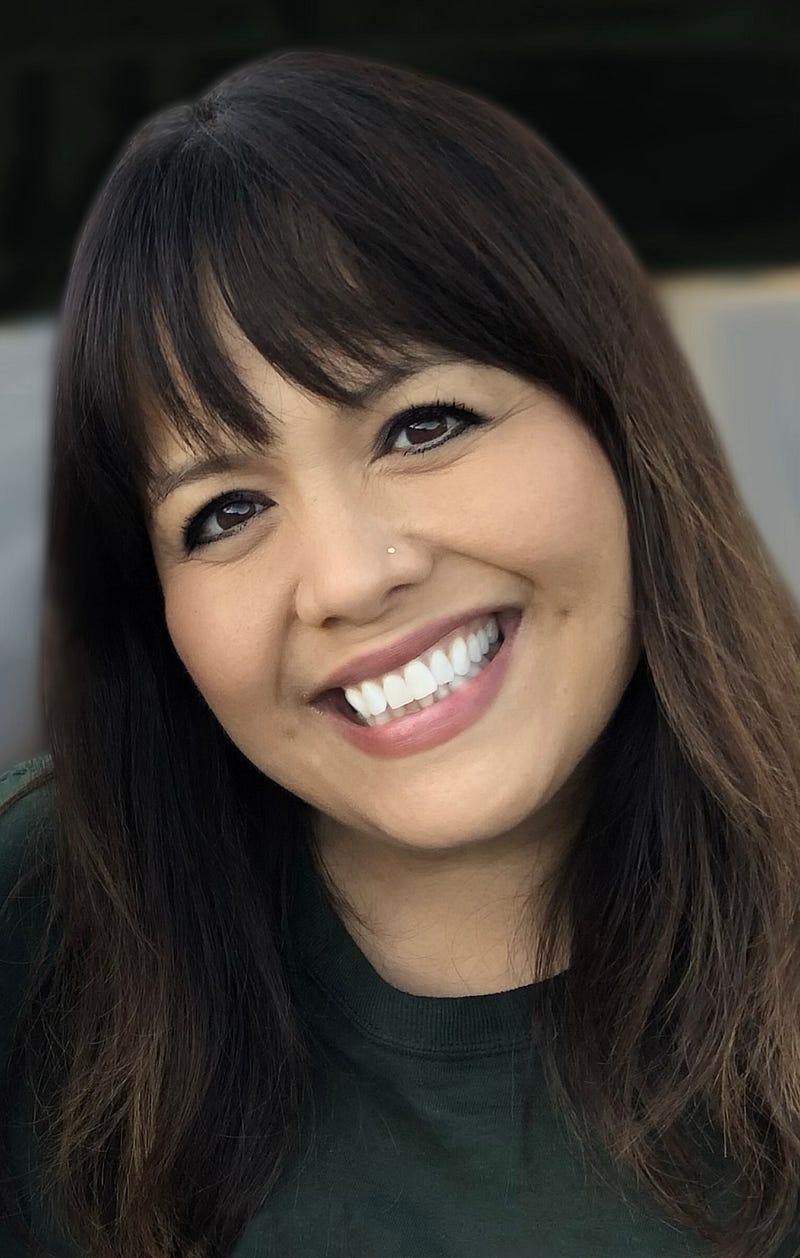
My interview with the 2024 Nicholl Fellowships in Screenwriting winner.
Charmaine Colina wrote the original screenplay “Gunslinger Bride” which won a 2024 Nicholl Fellowship in Screenwriting. Recently, I had the opportunity to chat with Charmaine about her creative background, her award-winning script, the craft of screenwriting, and what winning the Nicholl has meant to her.
Here is my complete interview with Charmaine.
Scott Myers: Charmaine, congratulations on winning the Nicholl Fellowship. That must have been quite exciting for you.
Charmaine Colina: Thank you. I’m still pinching myself. It’s like [laughs] it doesn’t feel real. Sometimes it feels very real and other times I feel like I’m in a dream, but thank you so much. Two and a half months in, I’m still super excited, and yeah, still trying to come down.
Scott: I’ve interviewed every Nicholl winner since 2012, and so the reactions are almost always the same, just a really great experience for them. Let’s get a little bit of a background here on you. I think originally you’re from the Philippines, is that right?
Charmaine: Yes, I was born there, and we moved here when I was a baby. I grew up in the San Gabriel Valley in a little town called San Gabriel. It’s just south of Pasadena. Yeah, that’s where my love for movies and TV all started.
Scott: When you were young, your bio mentions you liked Saturday morning cartoons.
Charmaine: Yes! Saturday morning cartoons definitely. Saturday was special. If it were like any other weekday, I didn’t want to get out of bed. Who wants to go to school? But on Saturday mornings, my sister and I would get up super early. This is back when they played the “Star‑Spangled Banner” in the morning before all the TV shows started. We’d eat Captain Crunch and watch Superfriends, Scooby-Doo, Josie and the Pussycats, and Bugs Bunny. We watched so much TV. We also watched a lot of TV with my grandma, who didn’t speak a lot of English. We bonded over “I Love Lucy.” That was her thing. I’ve seen every episode [laughs] of I Love Lucy, love them all. Watching TV with Grandma was how I got into Westerns too. We watched all the reruns of “Gunsmoke,” “Bonanza,” “The Rifleman,” “Big Valley,” “Wild Wild West,” you name it, I’ve seen them.
Scott: You got a BFA from UCLA and an MA from UCSB, but they’re different. One’s in art, one’s in education. Maybe talk a bit about your education.
Charmaine: I always had this creative part in me that wanted to make something, whether it was drawing or writing or building things. I was really leaning toward art in high school. And that was a challenge, trying to convince your immigrant parents, “Oh yeah, I’m going to go be an art major.”
It’s like immigrant children don’t do that, but somehow I convinced them, “All right, well, at least you’re at UCLA. You’ll probably change your mind when you’re there,” but I didn’t. I stuck with Art and was able to put my degree to use, post‑graduation. It was more of the creative thinking aspect of it.
I worked for a toy company and for children’s entertainment companies like Saban, creators of The Power Rangers, and Hanna‑Barbera and Cartoon Network and Universal. But it was more the consumer product side of entertainment. Brand management of licensed properties.
And I loved it. I had even thought about pursuing an MBA. But there was a period where I was laid off three times in less than seven years. Merger after merger after merger. It was so frustrating, and I thought, OK, I need something more stable, and so I considered teaching.
That’s when I decided to pursue a master’s degree in education and teaching credential. That was my solution to all the instability. [laughs]
Scott: You went to UCSB.
Charmaine: Yes.
Scott: Santa Barbara is so wonderful.
Charmaine: Amazingly beautiful. I lived in Carpinteria, two blocks from the beach. I miss it so much. Peaceful and quiet too. I didn’t realize how quiet it was in Carpinteria until I moved back to LA. Now, remember I grew up in LA, but having been gone for only four years for grad school, I became accustomed to the calm vibe of the Central Coast. I couldn’t even sleep when I moved back to LA. Every sound would keep me up at night. It took a while to get acclimated again.
Scott: I know that area pretty well, because I lived in Ventura for four years.
Charmaine: Oh, there you go!
Scott: “Carpinteria: The World’s Safest Beach.”
Charmaine: Exactly. That’s what they tout, the world’s safest beach and there are still no parking meters in the cute downtown area. But yeah, the Central Coast, oh my gosh, you get it, having lived in Ventura. The whole vibe, it’s just different from LA. Way more laid back. Even downtown Santa Barbara is mellow and relaxed. Coming back to LA was a shocker, even though I grew up here.
Scott: You were teaching for a while, but then you ended up at the UCLA Professional Program in Screenwriting. How did that transition happen?
Charmaine: It’s interesting how when something tragic happens in your life, you’ve got to just pick up your broken self and forge ahead. Can you take those broken pieces and turn them into something new? When my dad, Gerry, lost his battle with leukemia in 2007, my world fell apart. Dad was the one person in the world who “got” me — it was like we were cut from the same cloth. It was devastating for my family. And it was my responsibility as the eldest child to give his eulogy.
I knew this was the most important thing I was ever going to do with my life. I had to make the eulogy feel like him. He was smart, he was kind, he was generous. And so funny. Every day was April Fool’s Day growing up in our home. He was a jokester, and in my opinion, the inventor of the “dad joke.”
So, I put everything that I knew about love and kindness and humor into writing and giving Dad’s eulogy and it was amazing. It was beautiful. And transformational. After that experience, I realized that Dad had given me one last gift. I finally saw myself as a writer and a storyteller. It wasn’t just a side thing, like writing funny stories for my friends. There was more to this. There was something real here. This is something I could actually do.
Then a few years later, it still takes a while getting there because life happens, right? I thought, you know what? I’m going to take a screenwriting course. I love movies and TV, so screenwriting makes sense. I started at UCLA Extension by taking the first three basic screenwriting courses and I thought, wow, this is awesome. This format, this is different, but I love it!
I had so much to learn. Before starting those classes, I had barely even read a full screenplay, ever. But screenwriting was such a perfect fit. If I have stories to tell, the medium that I would want them to be brought to life in has to be movies or TV because that’s where my heart is. As a kid growing up in an immigrant family, the TV was always on. Always. Then on Friday and Saturday nights, we’d all pile into our old Plymouth and go to the drive-in movie. So many fun childhood memories at the San Gabriel Drive-in.
After the UCLA extension courses, I joined a writing group — ten years later, the group is still going. But I knew I needed to learn more. That’s when I entered the UCLA Professional Program in Screenwriting in 2019. I also needed real deadlines since procrastination has been my kryptonite since kindergarten — my mom will attest to that. During the eight-month program, you write two feature screenplays. The UCLA instructors are top‑notch and you’re with a small cohort of writers the whole time. Then COVID hit in March 2020, and we had to go online. I had just started Gunslinger Bride. I finished a rough first draft in August.
Scott: Didn’t you get into the Meryl Streep Writers Lab?
Charmaine: Yes. I also took the UCLA Professional Program in Writing for TV. They offer a comedy track and a drama track. I took the comedy one in 2022, and then the following year I took the drama track. Storytelling in a TV format was very different from feature. I didn’t know how to tell a story in half an hour or an hour.
It was really a shifting of mindset. How can you squeeze just enough of a good story into a pilot and then stretch it out over a season? One of my comedy pilots, Booked, I entered into the Meryl Streep Writers Lab and I was thrilled to be selected. The Writers Lab is all women over 40. So there we were, a dozen writers, for a whole week in the woods in upstate New York. Sounds like a horror film, right?
[laughter]
Charmaine: My mind immediately goes to the story: Twelve women stranded in the woods in upstate New York. What happens next? It’s like “Yellowjackets” or something. But it was really cool being with other women who are in a similar phase in our lives and the responsibilities that we have while also wanting to get our stories out there. And so that was an amazing experience. In the UCLA tv program, I developed pilots based on my features. That is a hard thing to do.
Scott: Did you try that with Gunslinger Bride?
Charmaine: I did. Yeah, it got some accolades in the program too. I called it Welcome to Salvation instead of Gunslinger Bride, and the pilot ends at a specific cliffhanger… because I want people to go to next episode. [laughs]
Scott: Let’s talk about Gunslinger because it is a Western. You mentioned you wanted to bring Asian American women to the forefront of that genre because it’s typically not there.
Charmaine: Yes. I grew up loving Westerns. As a child, I couldn’t get enough of them. But then as I got older, I learned that the West was a lot more diverse than what we see in films.
It’s a genre that tends to leave out the women and the people of color who were in the West, and so when I set out to write a Western, I would tell these untold stories. My character, Lou, is actually based on real women of the West. She’s a composite of trailblazing women I researched.
I was also inspired by John Ford’s, “The Searchers.” It’s a beautiful film, cinematic quality, just top‑notch. But I was so frustrated with the plight of the women characters in the film and it made me angry. I thought, “No, there are women who could take care of themselves. And who is that person?”
That’s when I started creating this character. How did she learn how to take care of herself? How did she learn the ways of survival? And that was, yeah, my lead character of Lou.
Scott: Here’s a logline for Gunslinger Bride.
“With a bounty on her head, a young Chinese American gunslinger poses as a mail‑order bride to hide from the law and seek revenge for her murdered family.”
Let’s talk about this Protagonist character. We meet her when she’s young, nine years old. Her family, her father Otto, I think he’s German, is that right?
Charmaine: Yes, she’s biracial.
Scott: Yeah, she’s biracial. Her mother Li and her older brother Erik, and they live in a homestead, I think it’s in Kansas, if I’m not mistaken, in like 1870s or so. How would you describe that situation at the beginning, kind of their lifestyle and relationships between these key characters?
Charmaine: They’re based on real life experiences. My mother, Janet, is biracial. She’s half White — Ashkenazi Jewish — and half Filipino. My dad is Filipino/Filipino-Chinese. So my sister, Lenore, and I are multiracial. There were many multiracial, biracial people in the West, but we rarely hear their stories. The thing about when you are biracial — or a child of immigrants — is that you have a foot in two worlds and you are not fully accepted by either. You’re sort of this thing that everybody rejects, this person that everybody rejects.
In my mind, the backstory for Lou’s family is her mother and father probably met in California because that was where the influx of Chinese immigrants was landing during the building of the railroads and the Gold Rush days. Being an interracial couple, Lou’s parents faced a lot of hate, and they had to keep moving and moving to escape it. Then they settled down in Kansas. They just wanted to be left alone.
Actually in this time period of Gunslinger Bride, this is right round the time of the Chinese Exclusion Act of 1882, limiting Chinese immigration. There was a lot animosity building against Asian people. Lou’s family, there’s just trying to make it in the world. They just want the “American dream”. Let’s have some land, let’s raise our kids, let’s have a family, but people can’t get past the fact that they’re different. Lou’s family faces racial hatred — sadly we’re still dealing Asian hate almost 150 years later.
Scott: You introduce Lou and she’s with her brother, and they’re out having a good time racing horses. But then there’s this tragedy, like literally within four pages, where her family is murdered. You make an interesting choice because that tragedy happens off screen.
Putting on our writer’s hats: Why that choice?
Charmaine: Lou has experienced horrible trauma and she’s trying to hold it in. We don’t know what exactly happened yet, but we know it’s extremely bad. I thought that by having it revealed little bit by little bit, this makes it more impactful than if were to see the tragedy happen in real‑time.
Lou is trying to be brave, yet there are these things that haunt her, that push her to seek revenge. So, in showing her memories bit by bit, this also plays into the question of what memories can we trust? Because it turns out later in the last scene of the story, she doesn’t remember the whole thing as it actually happened.
With trauma and parts of memories, Lou being so convinced this is the man she’s got to find, and then later more pieces are filled in. I thought it was a way to keep the story going, that we didn’t have all the answers yet, and to give it to the audience little bit by little bit. I want the reader to turn the page, find out.
If the audience knows everything that happened to Lou in the beginning, then there are no questions, no mystery, nothing to find out. But by revealing her family’s tragedy little by little, the audience seeks to find out the truth much in the way that Lou does. I’m a big fan of flashbacks. I know some people are not, but I think if they’re used effectively, they can work, and so I do incorporate them into Lou’s story.
Scott: So after that tragedy, Lou is alone. She’s out in the wilderness, then has a fortuitous intersection with a character named Jeb and his dog, Kusu,
Let’s talk about those two characters because they’re quite important in Lou’s life.
Charmaine: The way I thought about Lou, she is a misfit. And Jeb is half Pawnee and he’s half White, and he’s also a misfit in his own way. They’re sort of both rejected by society at the time. He is kind of a loner, and he finds this little girl and his whole thing is, “I just want to dump her at the orphanage. I can’t deal with this.” But as he gets to know her, she gets to know him, they form a bond.
And yeah, Jeb and Kusu. My dad loved dogs. We always had dogs when I was a kid and feel like they’re an integral part of the family. Kusu has a very important part in the story. He’s not just an add‑on, like oh, the old guy needs a dog. Kusu found Lou.
Had we not had Kusu there to find Lou, Jeb would have had to encounter her in a different way, but he’s nearly blind. So Kusu makes sense. Jeb and Kusu are gone halfway through the story, but they come back in Lou’s memories.
Scott: Yeah, I’d say he’s a mentor figure, Jeb.
Charmaine: Yes.
Scott: The story dips into moments over a period of 10 years, because we go from her to being 9 to 19, the three of them traveling about. He’s teaching her, including shooting a gun. That’s an important thing. There’s a horse that she gets, Arusa.
You’ve got three things set into motion. One, Lou wants to see the Pacific Ocean. So right there, I’m going, OK, so that’s going to probably come into play. As I recall, it was like she was interested in it because that water touches the United States, but also China. Is that right?
Charmaine: Yes. That actually comes from my personal experience. Moving from the Philippines to the United States, my mom’s family had been here for a long time. They came here in the ’50s. She met my dad in Philippines, but for him to move to the United States was a big thing. He left behind everybody, brothers, sisters, parents.
When I was little, my family would go down to the big fish market at King Harbor in Redondo Beach. Dad would take me and my sister to the shore and he’d say, “Wave to Lolo Pepe and Lola Deng on the other side of the of the ocean.” And so, that was a big part of me feeling like we were connected to my grandparents by this body of water.
How vast is the Pacific, and yet that same water landing on the beaches of the little village of Cavite, where I was born, that same water is also here in Los Angeles. That was kind of the inspiration behind the same water that touches China, touches California in Lou’s story.
Scott: Yeah, that’s a nice payoff at the very, very end of the script.
Charmaine: She finally gets to see it.
Scott: There’s a second element that’s set in motion by midpoint of Act One: A memory flash where she sees this figure quote from the script:
“He was bald with scars on the back of his head.”
So she has this identification of who this character is. Then that is what drives her toward wanting revenge.
Charmaine: Yes. I would say that from the time she was little, she wanted Jeb to teach her skills to avenge her family’s murder. And Jeb’s mindset is, “OK, she’s got to know how to protect herself so I must teach her these skills, but not for revenge.” And the memories, yes, they’re repressed. As she gets older though, they come back up in her nightmares. But they’ve been gone for a long time. So why are they coming back now?
She’s thinking, “Oh, because it’s time for me to go do this,” and Jeb’s thinking the opposite, “No it’s time for you to let go.” They have a big argument. And later, after Jeb is gone, we see the effects of Lou being without Jeb to keep her in check… SkiyIt’s sort of like when you go to college.
You have your parents when you’re in high school saying, no, don’t do this, you’re under my roof, this is how we behave. But once you leave the nest and you have freedom, you don’t always make the best choices. So once Jeb is gone, that’s when Lou actively hunts for the man who she thinks killed her family.
Scott: Yeah, Jeb even says on 18:
“I taught you skills only so you could protect yourself and do what’s right, not for revenge. If you go down this road, it won’t lead you to the ocean, it will destroy you.”
That’s like Mentor advice, it’s what you were just saying. It’s like the parent voice, and she’s struggling with this, because obviously, she’s got a lot of rage and anger about what happened to her family. That plays out throughout the rest of the story, that dynamic tension. Then there’s, as you mentioned, Jeb and Kusu, they died.
Charmaine: Yeah.
Scott: Did you know all along that was going to happen that they had to be there for a while and then they were going to be dispatched?
Charmaine: I’m a big “Star Wars” fan. Star Wars changed my life. As a kid, I saw it in the drive‑in, and life was never the same after that. As far as storytelling and the notion of heroes and villains and is there more backstory to this? What do we not know about the villains and what do we not know about the heroes?
The mentor figure of Obi‑Wan or Yoda strongly influenced me in the idea of Jeb. It’s like how Luke Skywalker is always wanting to do something else and it’s either Obi‑Wan or Yoda who tells him you’ve got to settle down. A Jedi craves not these things. You have to be chill about it. But Luke can’t because he’s young and he has this drive in him. Yoda dies in Empire Strikes Back, Obi‑Wan dies in Star Wars, but then we get pieces of them later on, in Luke’s memories. So I knew that Jeb and Kusu must eventually leave Lou.
Scott: Well, it’s interesting because Lucas has talked about how Westerns influenced him when he was coming up with Star Wars.
Charmaine: Yes, and the Kurosawa films …
Scott: Seven Samurai.
Charmaine: Yes! When I saw that Seven Samura and then watched Magnificent Seven, I thought, “Oh, my God, I see where he got the influence, how Magnificent Seven was influenced by Seven Samurai.
Scott: There’s another piece of wisdom that Jeb gives to her that I thought was quite touching and it is important: “Plant corn, harvest corn.” Where’d that come from?
Charmaine: I survived 12 years of Catholic school. And there were a lot of good things, a lot of bad things. It’s Catholic school. There was just a lot of Bible, Bible, Bible, and scripture, scripture, scripture. But one of the things that had always stuck with me, that made sense, was you reap what you sow.
If you act a certain way, that’s going to come back to you one of these days. And so, it was the idea of whatever you sow, you shall also reap, which comes back later when the Reverend is saying these verses.
I wanted there to be parity with what Jeb’s mother — who was Pawnee — had told him and what the King James version, or whatever translation of the Bible says, you reap what you sow. In other words, if you’re going to be a crappy person, crappy things are going to happen to you. But then, Lou counters with, “Yeah, but what about good people like my family? Bad things happened to them.”
Jeb tries to give her these pieces of wisdom. But Lou, she’s pretty clever, argumentative, and she’s stubborn. Just when you think she’s going to listen to some advice, there’s the, oh yeah, well, what about this? She’s not afraid to question things.
[laughter]
Scott: On the trail, she’s on her own now, and she does have revenge on her mind, but she has kind of this Robin Hood chapter of her life, where in these series of shots, she’s taking out train robbers and saving people from slick snake oil salesmen and facing off with gamblers and so forth, like an avenging angel almost in a way, but with this benefit to other people.
Where did that come from? Why is she doing this type of thing?
Charmaine: I think for Lou, the motivation is what she couldn’t do for her family, she will do for others. The voice of Jeb is always there in her brain, like do good, do good. I taught you these skills to do good, but she will do good on her own terms.
For her going through that tragedy of her family being murdered right in front of her, it’s like she’s determined to stop bad people. She will protect the weak and the defenseless. And so she does that, but then the last thing she does, which sort of sets us off on this new part is when she kills a corrupt judge.
She was getting away with things like stopping snake oil salesmen, train robbers, gamblers, but then there’s the big incident with killing the judge — out of self-defense — but now there’s the bounty on her head. It’s also a pride thing with her. In a way, she thinks she’s unstoppable.
Scott: The headstrong nature of youth. That judge was in Dodge City, so you got to even know why she “gets the hell out of Dodge” literally. At that point, she’s wanted dead or alive.
Now that introduces Lou’s adversary or Nemesis character on 25. Detective Mordecai Thorne is introduced:
“35, looms, slick suit, town hat, chin like a shovel blade, the silver badge and swagger of a Pinkerton agent, the 1880s private dick, emphasis on dick.”
You need a Nemesis. How did this character come into view?
Charmaine: I’m also a fan of Les Miserables and the character of Inspector Javert, whom I’ve always been intrigued by. He is obsessed with getting his man. And there are motivations for why Javert is the way he is, born in a prison to criminals, etc. and yet this lawman who had such a black and white view of justice, lets Valjean go in the end. That is so complex and interesting to me.
That was the idea behind Thorne’s mindset of hunting down the outlaw. He’s got to get this person who broke the law. It doesn’t matter if there was a noble purpose behind the crimes. A crime is a crime. Jean Valjean stole a loaf of bread so his sister’s children wouldn’t starve, and he was thrown in prison for that. But according to Javert, it doesn’t matter why the law was broken.
I wanted this Pinkerton man to be like a thorn in Lou’s side. That’s why he’s named Thorne. It’s like he’s always there just poking and prodding and just when you think maybe everything’s cool, there he is again. He pops up. I do like the idea of him being this super detective, and yet Lou’s right in front of him and he has no idea that it’s her.
Scott: How that happens is she dresses like a guy, primarily because I said she’s grown up with it. But then fate intervenes as stories will do. She ends up in this little town called Salvation. That was the name of your TV version of it, right?
Charmaine: Yes. Welcome to Salvation.
Scott: Of course, which seems pretty intentional, that choice of a name.
Charmaine: Yeah.
Scott: She’s in a hotel room and she finds a valise with the women’s clothing in it. And because there’s this pressure, and she’s seen this guy Thorne around, she dresses up as a woman. And that leads to a mistaken identity, a big twist in the story. Could you talk about that shift there.
Charmaine: Yeah, the yellow bonnet. She’s thinking she’s going to wear this outfit so no one will recognize her as Kiwa-ku, the wanted bandit. On her way to the farrier to get her horse, she bumps into none other than Thorne. And then here comes a farmer, “Oh, there you are in your yellow bonnet.”
It was one of those things where Lou just did what she had to do in the moment. She pretends to be Kate Reilly and then gets embroiled in this mail-order bride situation. Yeah, there is a lot of fate, or maybe a lot of chance there, but the older I get, the more I realize those things really do happen in life.
Scott: Absolutely. I have a question I always ask the very first time I work with students when they’re prepping a story, we work on the Protagonist. And the last question in this little treatment I have them work on is: Why does this story have to happen to this character at this time?
That gives you a little bit more understanding of how fate can intervene, because it’s like this is what’s got to happen, and so the story takes a big shift. You’ve been,” OK, I’m thinking, it’s John Wick or Unforgiven, a revenge story, but now all of a sudden, it also becomes Mistaken Identity.
She’s a mail‑order bride taken out to this guy who’s got his own homestead and he’s got, I think, three kids if I remember correctly. Is that right?
Charmaine: Yes.
Scott: Was that always in mind that you were going to have this rather domestic type of situation for a majority of Act Two?
Charmaine: I would say that I wanted her to be embroiled in the mail‑order bride situation. In history, we learn about the women who came out West for opportunities, men put ads in the newspaper. There’s a great story called “Sarah, Plain and Tall,” by Patricia Maclachlan, that most kids growing up in California read in fourth grade Social Studies about a mail‑order bride.
I wanted Lou to be put in a situation where as a woman, she would be expected to know how to do certain things, but because she was raised as a boy and lived on the trail, she has no clue.
At first there weren’t any kids, it was just her and Seth. But then I thought for her emotional journey, she needed to see herself in these children because her development was arrested pretty much at nine years old. That’s when she stops being a child.
Her family is killed, she’s taught how to shoot guns, she has to hide who she is, she’s always hiding who she is. Now Lou is in this situation where there’s this Pinkerton guy poking around town and she needs to get away quickly so she goes along with the mail-order ruse for what she thinks will be a few minutes. But that’s when she has the encounter with a man with scars on the back of his head.
She’s thinking she could go guns blazing, but then what would happen? Thorne would probably shoot her, it would end horribly. So she’s got to do this in a clever way, plus there’s the promise that she made to Jeb that she would never take the life of an innocent man. She’s got to scope out her leads and find out all she can before she takes someone’s life.
I think that’s where it differs in other Westerns where it’s like, oh, I think that’s the guy who shot my dog and then just kill that person. Lou has to be absolutely certain. So pretending to be Kate Reilly is a cover. It’s like, “I’ll lay low. I’ll just take care of these kids for a couple days, figure this thing out and move on,” but then it doesn’t happen that way. She gets stuck there and her heart starts to change.
Scott: That’s an interesting twist. I was comparing it to True Grit particularly. I love the book and then also the Coen brothers version of it.
Charmaine: I love that one.
Scott: Because it is a road picture. I mean, they’re on the road, but there is this domestic type of thing going on between she and Rooster Cogburn where he becomes a Mentor father figure. Lou’s got all that stuff going on here because the character who she thinks is a bad guy, Brooks Haney, actually turns out to be the mayor of the town.
Charmaine: Yes, and he’s a grandfather to Seth’s kids. Let’s just throw some more guilt on there. Is she really going to kill Grandpa?
Scott: Exactly. Father of this guy Seth, the groom to be. He had no knowledge of this. It’s something orchestrated by a character named Arnie.
Charmaine: His best friend, Arnie, sets the whole thing up. The whole town kind of knows, and he’s writing the letters to the mail-order bride, pretending he’s Seth. That’s when Arnie brings Lou to the farm. He tells Seth, “ Remember that girl I told you about?” And Seth says, “Yeah, one of your drunken ideas.” She’s here now.
You could just imagine a pair of best friend guys, one thinking this is what my best friend really needs and the other one’s like, no, I don’t need this. But then the best friend goes and does it behind his back. That’s how I see their relationship. Arnie has a heart of gold, but he does overstep his boundaries.
Scott: Yeah, and he suffered a loss himself.
Charmaine: Seth lost his wife, we find out later.
Scott: He’s got a drinking issue, that’s one of the ways that he’s been dealing with that too. So you’ve got this really interesting…they talk about post‑modern filmmaking. Tarantino does a lot of these mixing of genres.
You’ve got the Western, you got a classic sort of revenge type Western, but then you’ve also got this thing that if you just described it, a mail‑order bride and this was set up by somebody else, it’s almost like a romantic comedy.
Charmaine: Yes, it almost feels like a rom‑com in some ways. While I thought that this was a detriment to the script, like, oh, these are kind of like all these genres I’m mixing, the reaction that I’ve gotten is that’s what people like about it. We think it’s one thing, but then it’s also this, but it’s also something else.
It sort of kept the storytelling a little fresh because you think it’s going one way and then it doesn’t go that way. The story was influenced by so many things. There’s almost a little bit of an “Overboard” situation, the Goldie Hawn and Kurt Russell movie.
Now Lou’s got to deal with this guy who’s grumpy and who he treats women horribly, and yet he has a daughter himself, and a young son, and a toddler. And Lou sees her siblings — the ones she lost — and herself in Seth’s kids. I didn’t even realize this until after I had finished the first draft. It’s funny the things that you don’t see as you’re writing it.
It was like oh, oh my gosh, those three children, they are a parallel to her, her brother, and then the baby that was never born because her mother was pregnant when she was killed.
Scott: That’s one of those cases where probably your subconscious took you into an area of the story that only later you realized …
Charmaine: Yes, it was. I didn’t even see it until much later.
Scott: You got this little interchange on 42 where Seth indicates, “You take care of the house and the children, the cooking, the cleaning, the washing,” then she says, “Woman’s work.” Seth responds, “Well, you are a woman.”
That mistaken identity dynamic raises the question of Lou: “Who are you?” And my theory is that every story asks that existential question of the Protagonist, a question of self-identity.
Charmaine: Oh, yes. It’s also influenced by my struggle with identity as a child, as an immigrant from another country being in the United States. Lou, from the time she’s nine until the end of the story, she’s always hiding who she is, disguising as somebody else, pretending to be someone she’s not. It’s not until the end when she’s finally who she really is.
Scott: Yeah. She’s got to get in touch with aspects of her personality, which she has either repressed or just hadn’t had the opportunity to express. But then there is the complexity of her decision because as it turns out, she’s no longer just a killer seeking revenge. The mayor is the grandfather of these children. He’s also this nice guy. He’s handing out candy to kids and stuff like that.
Was that always a dynamic you wanted to play with, to add that level of complexity, that the bad guy is not like coming off as your stereotypical single dimensional Nemesis?
Charmaine: Yes, because I’ve always been intrigued by the idea that you might cross paths with a horrible person, but they love their dog. It’s like you can think someone is so bad, but then they could be somebody’s beloved grandpa. Somebody’s father. I like that complexity and also the struggle this causes for Lou.
It’s like, well, OK, she’s got to be super strong because she might have to kill this man who seems like a good person. Good people make very bad mistakes and try to make up for their wrongs. This begs the question, are we ever truly forgiven?
There are different themes at play. There’s grief, but there’s also forgiveness, and then who decides that? How many good deeds do you have to do to make up for something you did that was horrible? Are you ever truly forgiven, and who gets to decide that?
Scott: That brings up another key character, Reverend Walsh. Describe that character and how they play in the story.
Charmaine: This is where the PTSD of veterans of the Civil War comes into play. Many veterans were lost after the war was over. I see the backstory for Mayor Haney and Reverend Walsh as former soldiers who ran with a gang made up of Civil War veterans, like themselves, who felt lost in their lives after the war ended.
They committed horrible crimes. But later, they found God. They found salvation and tried to change their ways, lead a life of good. But when you’ve done so many bad things, can you ever truly make up for what you’ve done? That was Mayor Haney’s motivation. Make up for all the bad he had done by helping others by being a kind and generous person. For Reverend Walsh, God has forgiven all his sins, washed him clean. He gets lost in the idea of salvation. But then Lou shows up and ties him back to the sins of his past.
Scott: Now you’ve got the mistaken identity dynamic and it’s like a ticking bomb because we suspect at some point the real mail-order bride is going to show up. And that’s a character named Kate Reilly. Could you talk about that revelation and its impact on the plot.
Charmaine: Kate Reilly, yes, the real mail‑order bride. As we’re there at the party on the eve of Lou and Seth’s wedding, everything is happy and wonderful, so something bad has to happen. It can’t end there. In most movies that we see, it’s that, oh wow, this is great. This is amazing. Everybody’s happy. No, the other shoe’s going to drop, and then I thought, oh, of course, the real Kate has to come back.
At first in my mind, she doesn’t come back, she’s gone back to Tuckahoe, New Jersey, and that’s kind of it, but I thought, no. If we’re going to complicate this, because you always want to give your characters obstacles, what would be the worst thing that could happen right now?
Lou and Seth have found finally found love and happiness. The kids are happy. The whole town is celebrating, Seth and his father have reconciled. And Lou has finally let go of her anger and quest for revenge. Then Kate shows up and everything unravels.
Scott: You’ve got so many twists in the story, and I mean that in a good way, and there’s a lovely twist in the end, a melancholy, bittersweet resolution to the story. Did you always have that in mind?
Charmaine: I had always envisioned Lou eventually making it to the Pacific Ocean, but I wasn’t sure if she would be the only one who’s there at the end. I grappled with that. I had written different endings.
Then I said, you know what? If this is a movie I’m writing, a story I’m telling, I want a happy ending. Because you can have the bittersweet where she winds up alone, or you can have the alternative. Lou finds finally finds peace and happiness. She has gone through so much. Can she just have a little joy in her tragic life?
While things have come full circle with Lou finally reaching the Pacific Ocean, I felt it was very important for her to have that closure. But I also wanted this new chapter to open up for her.
Scott: As I recall from reading, it’s like you establish the Pacific Ocean as Lou’s goal and then there she is. You go, “Oh, OK, great. She got there, but then where’s Seth and kids?”
Charmaine: I know. I thought about The Shawshank Redemption — one of my favorite movies — and the Zihuatanejo ending. How did Andy get there? What will it be like for Red and Andy now? I wanted there to be questions at the end of Gunslinger Bride like, after Lou flees and gets to California, how did Seth know where to find her? I want people talking about that.
As a writer you think, “Am I going to show that? Are we going to have a little bit more? Is there going to be a montage of her sending a telegraph and Seth getting it and Arnie helping?” I thought, no. She goes and somehow the family has reunited with her. The audience can put that together in their brain, how it all happened. The important thing is that Lou and Seth were able to reunite.
Scott: It’s a wonderful read and well deserving the Nicholl award. Let’s talk a little bit about that. What was that like going from the time where you’re getting calls from the Nicholl committee and the rest of it.
Charmaine: As a writer, every year when you’re on a lot of these writing websites, you get the emails announcing and congratulating this year’s Nicholl Fellowship winners. You’re just thinking, “Amazing! I am so happy for these people,” because you know that was a longshot, even with a great script. What are the odds? Thousands of writers enter their scripts, and I was one of them.
I just wanted to see how far my story would get, never thinking this could be something that I would win. Around 5,500 scripts enter the competition. So, when I got an email about making the quarterfinals, I was thinking, “All right, I’m good. If I got to the quarterfinals, that’s an accomplishment.”
Then when I got the next email about the making the semi-finals, the top 150 or so scripts, I thought, OK, this is getting a little crazy, but awesome, wonderful. But it won’t go any further. So I thought!
Scott: The Nicholl committee does this little thing too, where it’s like, “We need to be on a Zoom call …”
Charmaine: Oh my God, the stress. I thought I was going to throw up. When I received the request to take part in a zoom call because the committee had questions about my script, I thought this can’t be good. My mind spirals. It just goes and goes and goes.
But when I found out I was actually a top ten finalist, it was like, oh, that just, [breaths]. OK, I’m a finalist! I’ve already “won”. Just being a Nicholl finalist is like winning. If I don’t go any further, I’m good. A couple of weeks later when I was called into another zoom and told I was a Nicholl Fellow, I burst into tears. And of course it was all recorded on the zoom. It was amazing but also surreal. I never thought this would happen. And then it did!
Scott: What about the Nicholl Week in LA?
Charmaine: Oh, that was incredible. The Nicholl team, oh my gosh, Joan Wai, Chris Kartje, and Vaughn Arterberry, they do such a wonderful job of planning and communicating with the Fellows for the different events. We had a big celebration at the Beverly Hills Hotel where the Nicholl Fellows all gave speeches. I was standing next to a giant gold Oscar statue. I had to pinch myself. It was like being in a dream. I met many Academy members, writers, producers, cinematographers. An incredible experience.
My mom, she’s 86, was there, my husband, my sister, some of my teacher friends. Even though I know my dad was there in spirit, it was one of those moments I just wish we could have shared.
Yeah, it felt like a dream. It was exciting. It was adrenaline. It felt like those big moments in life, like my wedding day — that goes by in the blink of an eye — and I want to hang on to the great memories. We have some fun photos of the night. It was truly an honor to be there.
Scott: Well, it’s nice that you’ve got your Fellow cohort from this group to help you remember.
Charmaine: Yes, wonderful group of people.
Scott: Again, congratulations on that wonderful experience. I hope you can parlay that into jumping forward in your career. I’d like to ask a few craft questions. People like to see how other writers do stuff. Here’s a pretty obvious one that I like to ask that often a little to stump people, how do you come up with story ideas?
Charmaine: That’s interesting because it’s almost like you can’t sit down and go, I need to come up with some story ideas. I feel like the ideas find you. That’s sort of what happened with Gunslinger Bride and with my other stories too.
But I always start with a character. I tried it the other way where I thought, ooh, wouldn’t this be cool idea for a story? And it would be all plot, and then I’d try writing that story and it would die at the end of act one because I didn’t bond with the main character.
I’ve found that my most successful screenplays, like Gunslinger Bride, start with a character. I bonded with Lou because I spent some serious time thinking about who she is, what had happened to her, what got her to this point, what are her greatest strengths, what are her weaknesses, what are her triggers, all that stuff. Then I was ready to put her into the story.
Scott: Do you find that by doing that work, you’re also developing a relationship or connection, an emotional connection with that character, which is helping to sustain and feed your writing process?
Charmaine: Yes, I think the stronger the connection you have with your protagonist, the more you know what they will do in a certain situation, and it doesn’t feel forced.
Like in the story, when someone’s asking them a question or they have a choice, if you really know who that character is and what they’ve gone through in their life because you’ve had to build that in your mind, it is so obvious. Like, “Oh, this is what she would definitely do,” because of X, Y, and Z that happened when she was a kid.
When I can see parts of myself in a character, that’s when I feel like I’ve created a successful character. When the story has been sitting for a while and I feel the characters calling to me, “Open up Final Draft, let’s go. What am I going to do next? Let’s get going,” When I feel like my characters are urging me to write the next scene, that’s then I know the story is gelling. [laughs]
Scott: Yeah, that’s that weird thing that we have as writers where we either believe or they do exist these characters somewhere in this parallel universe. When they come alive like that, that’s why I wrote this book on character‑driven storytelling was about that. Just the more you get to know them, then they drive the process.
Charmaine: Yes, and I’ve tried it the other way around and I have felt the difference. I have numerous stories where it just stopped in act one because I didn’t really understand the characters’ motivations. I just had a cool situation that I thought would make a good story.
Scott: Yep. OK. I hear that. What about your prep writing process? When you’re breaking a story, what do you do?
Charmaine: I wasn’t a big outliner when I first started writing screenplays and I feel twofold about outlining. It’s sort of like you can do your outline with your beats, but also let it be malleable. If I focus too much on hitting an outlined beat, it might not feel organic to what my character would actually do.
I try to be open. But I need my structure too. I need to know where the story starts and where it’s going to end. Then, of course, that middle act two, where all scripts go to die, [laughs] that’s the hardest part.
But if you’ve got a general sense of the big turning points, like those tent pole moments, then the things that happen in between, as long as it makes sense, how you get from one to the next, I feel like that’s a good roadmap. But I’m OK going off route to see where that takes me too. If it doesn’t work out, it’s a “save as”.
Scott: Let’s talk about dialogue because in this script, it’s set in the 1870s or 1880s by the time we get to when Lou is an adult, you’re dealing with jargon and slang of that era. Did you do some research on this front in terms of informing your approach of dialogue?
Charmaine: Yes, I did some research because I wanted it to feel like it could be of that time period, but I also wanted the dialogue to be relatable so we could bond with the characters because sometimes they sound like us. They might use words that sound kind of old‑timey, but at the same time, the situation that they’re in, maybe we can all relate to that.
Also, I didn’t know that much about horses, wagons, and farming equipment of that time. The amount of research that I had to do about firearms and harnesses and coaches and vehicles, you go down a rabbit hole in search of authenticity.
I learned a lot about horses and the transportation at the time. Yeah, I wanted the story to have a period-specific feel, but yet we can relate to the characters in a way that feels like they’re relevant to today. It was tricky. It was.
I do this thing one of my mentors taught me about dialogue. If you want to make characters sound distinct, read a few pages of dialogue without the characters’ names visible. If you can tell which character is which just by the words they’re using or the length of their sentences, that’s good. Like are they an entire paragraph response kind of person? Or are they a one-word response person? Or maybe they deflect by changing the subject? Or maybe it’s a nod or a gesture. For the character of Detective Thorne, the Pinkerton agent, I made it a point to have no contractions in his dialogue at all. I feel this gave him a distinct sound and feel.
Scott: Do you do that thing where you read the dialogue out loud, like for characters?
Charmaine: With my writing group, we do that on Zoom and we’ll assign characters. Of course, we’re not trained actors or anything, but you do get a better sense of a scene, does the joke land, or if the scene is too long.
I’ve also learned, and this is another one of the things that my mentors have taught me, is go in late, get out early. It’s like, you’ve got this scene. Can we go in a little bit later? Like maybe those first two things of dialogue aren’t necessary and the last bit, maybe you can leave a little bit earlier, and then you’ll find it actually works better.
Scott: Yeah, I think audiences nowadays, particularly younger people who’ve seen, read or heard exponentially more stories than my generation because there’s TikTok videos and YouTube videos and text conversations are all stories. They don’t need as much exposition. They just want to go. They’re very savvy. They pick up on stuff. So I think that’s good advice.
Charmaine: Another thing I do for scene transitions, whatever question is posited and the end of the scene is visually answered at the beginning of the next scene, and there doesn’t even have to be any dialogue. The question is answered by what we saw.
Scott: What about this writers group?
Charmaine: We’ve been off and on for about ten years, different people have come in and out; this writers group started in 2015. It was started by my friend and mentor, Philip Eisner. He wrote Event Horizon. Even with different writers coming in and out of the group over the years, there are still three of us who are part of the original six or seven. We used to meet in person on the weekends, but when COVID hit, we went on zoom. We’re still primarily on zoom because it’s easier for everyone’s schedules and some writers are located in other states now.
Being part of a writers group has been instrumental in my writing journey. I feel like I have grown so much as a writer by being part of a group that understands the highs and lows, the challenges, the frustrations, all of the stuff of writing. It helps to have people to bounce ideas off of too.
You can try to write in a vacuum, but I think you’ll eventually figure out that you need people. It’s sort of like the older I get, the more I can commiserate with the “Grinch.” It’s like he just wanted to live in a cave with his dog away from people. Far away from the noisy Whos in Whoville. But then he realized he needed the companionship and a sense of belonging and community. At the end, the Grinch’s heart grew three sizes.
You need a community of writers. Based on my personal experience, that would be my advice to beginning writers. Find a cohort of people who are writing. It doesn’t have to be all the same genre. Like in my writing group, we write all kinds of stories. Comedy, horror, rom-com, drama, sci-fi thriller. It’s all writing. Dialogue, scene description, pacing, character development. I know that I would not be the writer I am today without the group that I’ve been with for, yeah, it’s going on ten years. I can’t [laughs] believe it, a decade.
Scott: Speaking of 10 years, where do you see yourself in 10 years as a creative?
Charmaine: Wow. As a creative, well, I want…my movies are made, they’re out there. My dream is to take my mom to the movies but I don’t tell her what we’re going to go see. We’re in the theater, eating our popcorn, the house lights dim and the opening credits roll, and she sees “written by Charmaine Colina” on the big screen. I know what my mother will say, “Oh, they have the same name as you!”
[laughter]
Charmaine: But then there will be that moment when it clicks, and she realizes that her daughter wrote the movie we’re about to watch. That’s my dream. To share that special moment with her. That’s the short-term goal. Hopefully in the next couple of years I can make it happen.
But my long‑term goal, after establishing myself as a successful working screenwriter, I will find like‑minded individuals who share my passion for bringing amazing stories to life from underrepresented voices. So, in addition to writing, I’d like to produce.
Scott: One last question, do you have a final one piece of advice?
Charmaine: Don’t give up. Don’t give up five minutes before the miracle. You can apply that in so many ways, like before the breakthrough or before the dialogue finally works. Because there’s so many times you just want to give up but push through it. Don’t give up. Just don’t. It took me ten years of writing until I got my big break. Keep your head up and keep going. Be relentless.
For my interviews with every Nicholl Fellowships in Screenwriting winner since 2012, go here.