Go Into The Story Interview: Charlie Wachtel and David Rabinowitz
My entire interview with the co-writers of the movie BlacKkKlansman.
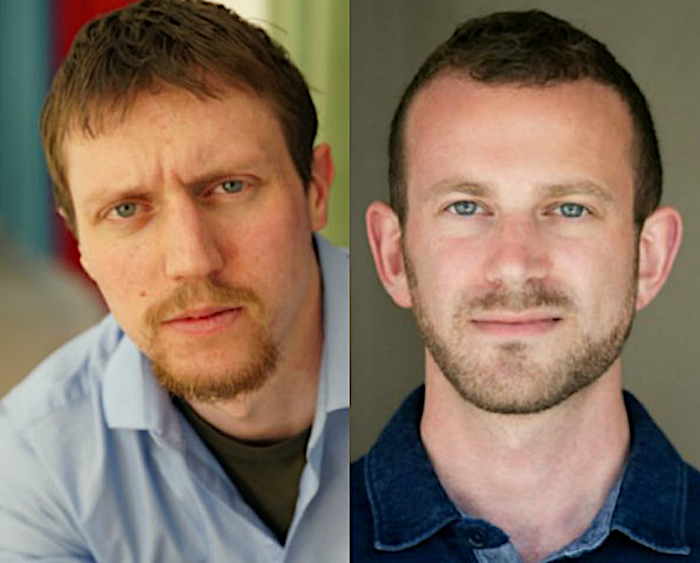
My entire interview with the co-writers of the movie BlacKkKlansman.
In late July, I interviewed David Rubenstein and Charlie Wachtel, co-writers of the movie BlacKkKlansman. They recently set up a true crime pitch “Thacher Island” at Fox 2000. Here is the entire interview with the writing duo.
Scott Myers: Both of you hail from East Brunswick, New Jersey, so I figured that’s where you intersected.
David Rabinowitz: Yes.
Scott: How’d that happen?
Charlie Wachtel: Yes. We’ve known each other since about the sixth grade. We’re childhood friends.
David: In high school, instead of doing reports, we would make videos together, learn about shooting, editing, writing stuff.
Scott: Did the school have a film program or were you just doing this on your own?
David: We were just doing it on our own. We would ask, “If everybody else is doing a paper on it, can we do a video instead?” They were exclusively like, “Yeah, sure.”
Charlie: We also did have a film appreciation class in high school that we both took…
David: That’s true.
Charlie: …which got us to see film in a different, more academic light.
Scott: When you were growing up, you met each other early on. You both had an interest in movies?
David: Yeah. In high school, I got super into movies and filmmaking and screenwriting, specifically. At about the time that we were making videos, I started writing scripts, some pretty bad feature scripts, but it was fun.
Scott: Where were you learning the craft from at that point? How were you picking it up?
David: Mostly, I was reading scripts and watching movies. There was some stuff online at that point, but it was mostly from reading scripts from people like Tarantino or the Coen Brothers, and just trying it myself and seeing that what I was doing wasn’t that good. I wanted it to be better.
Scott: These were all PDFs you downloaded from online?
David: Yeah. PDFs and web links.
Scott: Charlie, you attended American University and studied in Prague. Could you talk about that post-high school education and how that influenced things moving forward?
Charlie: Yeah, sure. I was at a crossroads when I graduated from high school because I was very heavily into political science and things like constitutional law and international relations.
I had to decide, do I want to continue to pursue this as much as I was in high school or do I want to just go for my creative passion and see what I can do with that. Obviously, that being the riskier path to take. American, I studied film production and I minored in cinema studies. I went for it and Prague was my study abroad session.
Then, of course, there was Netflix. Netflix was just starting and I was getting the three DVDs at a time. I would say that probably was where most of my film education came from because I was very aggressive in pursuing titles in genres that I was interested in. I wanted to know the space as well as I possibly could.
Scott: That’s a basic piece of advice that I think we give to any aspiring writer. Immerse yourself in whatever it is you’re interested in.
Charlie: For sure.
Scott: David, you went to Quinnipiac University. What’d you study there?
David: Correct. I studied…it wasn’t quite film. It was called media production at that point. It wasn’t film school, but there were some production classes. It was more of a practical education. Learned about shooting, editing, whatnot, but that was helpful in getting me my first job after college.
Scott: Where was that?
David: That was at the “Wall Street Journal” video department. I was working there in New York for three years after college.
Scott: So both of you have some production background?
David: Yeah. In that case, I was shooting interviews and editing interviews, doing studio work, working on the live shows that they had, learning all of those things. It was a lightly creative job, more technical than anything else.
Scott: Charlie, you went the more traditional route, you moved L.A. and became an assistant.
Charlie: That’s correct. Very traditional route.
Scott: What were some of those gigs?
Charlie: My first gig was an internship at Warner Brothers, Weed Road Pictures, which is Akiva Goldsman’s company. I got that from a friend of my older brother’s. He referred me.
The second internship I got, I got on my own. That was at Echo Lake Entertainment. At the time, they had represented John Carpenter, so that really excited me. I just cold emailed them and was able to get in the door that way.
I split the week at both of those companies and then eventually landed at a talent agency, where I was finally getting a paycheck, which was nice. I had wanted to go to a production company, but I had applied everywhere and it seemed, at that time, you had to get in the mailroom if you wanted to pursue jobs working for producers.
I worked there for, I want to say, a little over a year and a half. Then I got my first check job working for a producer. It was an independent producer and financier, Michael Benaroya. I was his assistant. He did movies like Margin Call, The Words.
I worked for him for a couple of years, and then I started working for a commercial director. That went on for about a couple years until I finally fell into advertising as a copywriter.
I worked in advertising for the last…I would say up until the fall, for four years. Then, all the while, independently I was writing, directing, and producing short-form content like short films, web series, spec commercials for contests, stuff like that.
Scott: David, were you back still on the East Coast, because you’re now in LA, is that right?
David: Correct. I moved out from New York to LA in 2012. When I moved out, I didn’t really do the Hollywood job route at all. I was doing freelance work, mostly video editing and motion graphics. But I was writing scripts on the side. That’s why I moved out to LA — to write.
Before I moved out I’d been sending my stuff to Charlie. He’d been sending his stuff to me. We’d give each other notes. Then, not long after I moved out, we decided we should join forces and write together.
Scott: How many scripts did you write before you landed on BlacKkKlansman?
Charlie: Together, we had only written one thing before. It was a TV pilot that had gotten us a couple meetings with managers. We thought we had a nice thing going together, so we’re like, “Let’s do it again.”
David: Then BlacKkKlansman is the second thing.
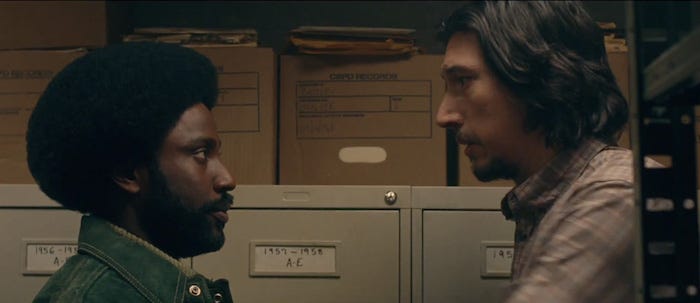
Scott: Let’s talk about your movie BlacKkKlansman which is scheduled to go wide in North America beginning August 10th, directed by Spike Lee, starring John David Washington, Adam Driver, Topher Grace, and Alec Baldwin.
Plot summary “It’s the early 1970s and Ron Stallworth is the first African American detective to serve in the Colorado Springs Police Department. Determined to make a name for himself, Stallworth bravely sets out on a dangerous mission infiltrate and expose the Ku Klux Klan. The young detective soon recruits a more seasoned colleague, Flip Zimmerman, into the undercover investigation of a lifetime.”
It’s currently sitting on a 96 rating on Rotten Tomatoes. It was a spec script which you two wrote. It’s a true story based on a book by Ron Stallworth. Is the book how you found out about it?
Charlie: Yes. It all started, we were looking for the next project to work on together. We were keeping our ears and our eyes open. I was doing the one thing that I shouldn’t have been doing at the time, which was I was on Facebook.
I was scrolling on feed and somebody had posted a story about Ron Stallworth. I read the article, I saw at the bottom of the article there was a link to the book on Kindle. Ordered the book, read the book, sent it to David, David read it and we both got excited about it. We thought like, “This probably has to be set up somewhere in development.” Sure enough, it wasn’t.
David: We contacted the author, Ron, his manager, and the publisher. We basically said, “Hey, if no one has the rights, we want the chance to adapt this.” We sent them a one sheet with our vision. We also sent them a piece of paper that said, “We have the right to adapt this on spec.” We never got the rights ourselves.
Charlie: We didn’t have an agent or a lawyer at this time.
David: Yeah, we didn’t have… It was a nonexclusive right to adapt this on spec. They were fine with it.
Charlie: The takeaway is we never secured the rights to this, which was scary.
Scott: I guess you must have assumed that if someone liked the script, they would then secure the rights.
David: That was the hope.
Scott: That one sheet you sent to Ron, what made you think it seems pretty obvious to me, but I’m just curious what made you think, “This is a movie”?
Charlie: First off, for practical reasons, we were trying to establish ourselves as genre writers. Thrillers was what we were looking to do. This is something that we saw and were immediately like, “We’re both fascinated with the KKK. There are not that many movies about the KKK.”
This is something while, on the surface, it does have a lot of comedy, we could make it mostly a thriller and that’s something we can execute.
David: It’s also just an automatically compelling thing. You see the title, BlacKkKlansman, that communicates so much in two words. That’s the title, that’s the main character, that’s the premise, that’s the hook, that’s the high concept.
Just those two words, they do a lot of heavy lifting. Then, when you talk about character, it’s like, “Who is this Ron Stallworth? What type of guy would do this and infiltrate the KKK?” Well, that’s a character worth hanging out with for a full movie.
Scott: I was going to ask, “How much research did you do?” Did you go up to Colorado? Did you meet with Ron?
Charlie: We met Ron in Newport Beach because he was in town for a book signing and I think he was also meeting with his publisher who lives out there. We drove down to meet with him and really to interview him and kind of pick his brain.
At this point, we had already been in outline mode and we wanted to be as accurate as possible. We wanted to also ingratiate ourselves with Ron and hear more about his story.
David: We did some research, but it was mostly the book and Ron… they were our two biggest resources that we kept coming back to over and over again.
Scott: What was your writing process like? First of all, do write together in the same room or you’re just swapping things off online or by distance?
David: We outline together generally and then write separate.
Charlie: We do very, very detailed outlines and then after those are done…For that, we sit in a room together and build. Once those are done, we divide it up. If we’re doing a feature film we’ll say, “OK, one person takes act one and act three, the other person takes act two. We write it and then we swap.
The rest of the process is pretty much we continue to swap until there’s a point where we’re either stuck on something, feel we need to go back to the drawing board, or something like that.
Scott: Do you remember what year it was when you discovered the book?
Charlie: Yes. It was…
David: July, 2015.
Charlie: Yes. July, 2015. From that date until the time we had an offer, it was only seven months.
Scott: Seven months, wow.
Charlie: That’s the discovery of the project until the offer on the script.
Scott: That’s actually a pretty quick turnaround. You’re talking about maybe writing the script in four or five months maybe, something like that?
David: Yeah.
Charlie: Yeah. If anything, I think maybe the outlining and the research took longer than the actual drafting.
David: The actual writing of the first draft went pretty quick because we had done so much research and such extensive outlining.
Charlie: Also, because we were terrified. We had a fire under us. We didn’t have the rights to this thing.
David: Yeah, it was a race against time.
Scott: It’s effectively an adaptation, based on a book which is based on a real life experience. In the adaptations I’ve written, I found it’s as important sometimes as what narrative elements you omit as to what you include. The sheer amount of storylines, did that pose a problem for you in deciding what to use and not to use?
David: It was all creative problems. There are huge portions of the book that we could not include and we had extensive conversations about, “Well, should we include this? Should we not include this?”
That was between us and Ron. Ultimately, it was like we knew there were certain things in the book that would be in the movie 100 percent. There were certain things that had to be in the movie to give it a cinematic structure. After that it was, “Does this work for us or does it not?”
Scott: I’ve seen the trailer, it’s great. It’s clear that this is an angry movie and it’s also got a lot of humor in it. Even the conceit. You mentioned high concept, the title. The conceit of a white guy impersonating a black guy who’s imitating a white guy feels like an ‘80’s high concept buddy comedy.
[laughter]
David: Sort of, yeah.
Scott: That had to be tough. You want to write it as a thriller. It’s got dramatic elements and yet it’s also funny. The subject matter, racism, is dead serious. How did you find that balance point?
Charlie: Early on it was important to us, and it was important to Ron as well, that this movie, while we preserve the comedic elements, it tips to the genre of a thriller more so because Ron especially wanted people to take this seriously.
He wanted people to be moved by this. He didn’t want it to be this throwaway piece of comedy, but more so a sophisticated satire that the audience would be really into and invested in.
David: There are absurdist elements to the story.
Charlie: It’s impossible to ignore them.
David: Our general thing was, as long as these characters are reacting to these absurdist elements in a grounded, believable way that’s not undercutting our character, then we’re good. If that leads to a funny moment, then great because it’s going to be grounded and real.
Scott: You’ve spent a lot of time breaking the script, breaking the story. You write the script. This is now early 2016, maybe January, February. How are you getting the script out there at this point? Are you represented or not?
Charlie: A few months after we discover it, I had a run-in with a producer named Shaun Redick, who I had met through my days as an assistant. He had just formed this company, QC Entertainment, with Sean McKittrick, Ray Mansfield, and Ed Hamm.
Scott: They were behind Get Out, too, right?
Charlie: Correct.
David: Yeah. That wasn’t really on anybody’s radar at that point. Shaun invited us in to pitch it to him and Ray Mansfield at QC. We were still in the middle of writing it. We pitched it. They had a very good reaction to it.
They said, “Hey, we’re in early pre-production on this thing called Get Out with Jordan Peele. This would be an easy conversation to have with Jordan. He might be interested.” Then, maybe two or three months later, we had a draft in to QC. Jordan had read it and he came on board as the producer.
Scott: At this point, do you have a manager or anything?
Charlie: We still don’t have a manager, actually. I reached into my Rolodex. Right when I got the offer, I was like, “Oh, crap. We need a lawyer. We need an agent.” I hired this lawyer who I had met on a golf course. Yeah, he gave me his business card once. I didn’t think I was ever going to need it.
Then I asked somebody over at the agency world, at UTA where I worked, if he wouldn’t mind making the deal. He said, “Sure, I’ll do your deal.” Now, we had at least the backing of serious people so that we wouldn’t get taken advantage of.
Scott: I’m thinking that this not the object lesson we want to give to aspiring screenwriters, that they should spend their time on Facebook and golf courses…
[laughter]
Charlie: Yeah, probably not.
Scott: …to augment their career.
Charlie: If they can get a gig at a talent agency, that’s a better place to start.
Scott: The script is acquired in 2016. You’re writing in 2015. 2016, of course, was a presidential election year in which race was emerging as a provocative issue.
Do you think that cultural context had any influence at all, apart from the fact that they wanted to do movies that were aimed at the black audience? Do you think that there was something about that particular thing bubbling up that may have influenced the decision to acquire the project?
Charlie: I think that definitely made them a little bit more confident in their decision, because all of the stuff that was going on. The conversation was evolving on a week by week basis.
We were lucky enough because, when we were ultimately hired to do the rewrite, that was towards the end of 2016 when, obviously, that conversation changed very much so and intensified. We had the opportunity to make things a little bit more political and tied a little bit closer to the conversation in our country at the time.
Scott: Yeah. You look at the trailer, and it’s like, “Oh, my God. This is like the perfect movie for right now,” where things are you might say cultural conversation, some might say scream fest about race relations and the rise of public racism. What are your thoughts on that with this movie coming out right now where we are culturally?
David: Well, it’s kind of crazy. We think that no matter what people’s reaction to the movie is, good or bad, we think there’s going to be a lot of just reactions in general, which is, overall, a good thing. People are going to be talking about it, hopefully.
Charlie: I think it’s going to be polarizing in a sense that it’s a Spike Lee movie. He has political leanings and a certain attitude about things which some people really like and some people, it rubs them the wrong way.
I personally think, in many ways this is not a controversial film at all because we’re not demanding so much of the audience when we say, “Hey, we’re gonna bring down the KKK. Can you side with us on this? If you can’t side with us on this, I don’t know what side you’re on.” [laughs] That’s the way I see it.
Scott: You mentioned Spike Lee. Of course, he did direct it. What was that collaboration like?
David: In September of 2016, we had a meeting with QC and Jordan. Jordan gave us notes. This was before Spike Lee was involved. Based on the notes that Jordan gave us, we did a rewrite. Then, five months later, Get Out came out.
Everything changed. Jordan’s on top of the world. QC’s on top of the world. Blumhouse ended up getting involved. Suddenly, they went out to a list of directors. Spike was among them. He said yes. Then when Spike came aboard, he and Kevin Willmott did their pass on the script.
Charlie: We
handed them the baton, and they took it from there.
Scott: There’s so many things that can go wrong in making a movie. With BlacKkKlansman, it seems like most things went right, as critics love it. Here are comments from two of my favorite critics. David Ehrlich at IndieWire says, “If the Birth of a Nation was history written with lightning, BlacKkKlansman is a roll of thunder we’ve been waiting for ever since.”
Bilge Ebiri at Village Voice says, “I don’t know that I’ve ever seen a movie exploit its total mismatches so voraciously and purposely.” What’s it like for you to hear reviews like that about a movie you originated and cowrote?
Charlie: It’s a little bit surreal. Every morning, I think we’re still pinching ourselves. When we were at the Cannes Film Festival, we started seeing the reviews roll in, in Rotten Tomatoes at the afterparty. One by one, they were just overwhelmingly positive. It’s a good feeling. [laughs]
David: Yeah, it’s pretty crazy. I’m trying not to read the reviews, but I am. I’m reading every single one. I probably shouldn’t, but I can’t help myself.
Scott: Well, when they’re almost universally positive…
David: It is helpful, yeah.
Scott: Let’s settle in that a little bit more just for purposes of the readers who are enjoying this. You have that moment at Cannes. You’re sitting there at the audience for the premiere, right?
David: Yes.
Scott: OK, so there’s that. Now, I want you to transport yourself back in time to that first conversation. Charlie, were you the one that discovered it on Facebook?
Charlie: Yes.
Scott: The first conversation you had with David, “Hey, I think this could be a movie,” the distance between those two moments, what does that make you think or feel?
Charlie: Whew. Combination of lucky and, I don’t know, speechless, I guess.
David: It’s just really insane. One thing I would like to say is that I don’t know if you always see this in reading interviews with writers who have had something good happen to them — I want to emphasize how crazy this is for us. We didn’t expect this to happen.
It hasn’t really sunk in yet. By the way, one of the first conversations we had about writing this, we joked that Spike Lee was going to direct it.
Scott: I think most people are saying it’s his most successful venture since Inside Job.
David: Yeah. We’ll see how it does when it comes out and what people’s reactions are, but that’s great.
Scott: Well, what’s next for you?
Charlie: Next for us? It’s funny. Since Cannes, and before Cannes even, but since Cannes especially, we’ve been taking so many meetings. Especially after Cannes because we were pitching something new. The new thing we were pitching is an adaptation of this book, “Animal” by Casey Sherman, who did “The Finest Hours.”
We pitched to 35 different companies. Then we just concluded our final rounds pitching to studios a couple weeks ago. We’re done. We’re finally done. Now, we’re ready to embark on the writing process again. We’re working on two things at once, one which is that adaptation.
Just to, I guess, give you some more context, it’s about a Boston mobster in 1960’s New England who decides to testify against the mob. He becomes the first person in American history to be put in witness protection, into a program.
David: In the modern Witness Protection Program. Our take on it is that it’s less of a biopic and more of an action-thriller take on a true story.
Charlie: The other thing we’re working on right now is a TV pilot through some independent producers and financiers which is about Operation Mongoose. In case you don’t know, it’s a CIA secret operation in 1959, once Fidel Castro seized power, which was to attempt to assassinate him. It lasted eight presidential administrations and 638 failed assassination attempts. We think there’s a show there.
Scott: Maybe 638 episodes?
Charlie: Yeah, right. That was the first thought.
[laughter]
Scott: I follow spec script deals and, generally, the acquisition and development scene in Hollywood. I’ve been at this since 1987 and been following it pretty much ever since. Dramas were never anywhere near the top of the charts for spec script deals, but the last three years, it’s been the number one genre. Also we see it on the annual Black List. Some of the top scripts there the last several years are historically based dramas. What do you think is going on there?
Charlie: I think IP has a lot to do with it. Everyone wants to get their hands on something that is either a true story or a known property. This allows executives in Hollywood to hedge risk and what better way to do that than through a piece of history?
David: It’s also a marketing angle, based on a true story. For some reason, with audiences, it feels like that carries more weight these days.
Scott: Yeah, I think you’re right. Those are both absolutely part of the thing. That prebranded entertainment that minimizes the risk level and maximizes the marketing component. I’m wondering, too, whether it’s a generational thing. We now have the first generation that’s grown up around so-called reality TV and they’re used to seeing real people on screen. Perhaps that has some sort of bleed-over effect.
David: That’s a good point. I haven’t really thought about that, but you might have something there.
Charlie: At the same time, I think also the expansion of the best picture nomination category to somewhere around between 8 and 10, I think it is, every year now, a lot of those films that are chosen are the so-called prestige films and films that are often rooted in history, especially the dramas. That’s always going to be a big target for the Academy.
Scott: If you mix the historical drama with this insane appetite for nostalgia that we see now, it’s not surprising to see scripts like “Bubbles,” the script about Michael Jackson told from the perspective of his monkey or the one about Madonna, “Blonde Ambition,” the more recent characters that millennials may relate to…
Charlie: Pixels or Wreck it Ralph.
Scott: Exactly. That’s my theory. There’s a new four quadrant theory working in Hollywood. I call it FINS Franchise, International, Nostalgia, and Spectacle. Okay, enough Hollywood navel-gazing. How about some screenwriting craft questions for you.
Charlie: Sure.
Scott: Apart from spending time on Facebook clicking away, how do you come up with story ideas?
Charlie: How do we come up with story ideas, Dave?
[laughter]
David: It’s funny. The position we’re in right now is we haven’t had to necessarily recently come up with story ideas because there’s been so much stuff sent our way. It’s more about figuring out how we would tackle things.
Charlie: At the same time, something we’ve also learned over the past year is our probability of either making a sale or convincing someone to develop a concept. The idea is going to usually have to be originating from ourselves. That’s our best bet.
A lot of these other things that are being thrown our way, they’re having trouble finding writers for a very specific reason. It’s usually because the story isn’t so fresh or it’s difficult to take a unique angle on the story. Any number of those things.
David: I would say that the stuff that we’ve done that’s originated from ourselves, it’s not like we sat around kicking around ideas one day. I think these things, you’re open to them. If something occurs to you, you just log it. For every one thing that we want to pursue, there’s 200 things that we had an idea about and one or both of us were like, “This is not worth pursuing.”
Scott: I always tell writers that they should be looking for, conscious of, at least have one track of the brain every day about story possibilities. It’s just like Linus Pauling, the only guy to win two Nobel prizes for science. He said, “The best way to come up with a good idea is to have a lot of ideas.”
David: Exactly.
Scott: Now, you mentioned, and I thought it was interesting when I asked you, what did you see in “BlacKkKlansman” the book, Ron’s life story there, that incident and period of time in his life that was a movie? I think it was David who was talking about how even the title itself, you should just see the marketing, the potential there. How important do you think it is, for a story concept, to have that kind of hook to it, that commercial viability?
David: Extremely, extremely important.
Charlie: Extremely important, yes.
David: We talk about this all the time, for better for worse, if we’re talking about pursuing any idea, we need to know what the marketing hook is going to be. That might be a little cynical, but it’s just the reality of working in this business.
Charlie: You’ve got to have a strong concept. It’s a necessity. You could be an incredible writer, but, if you pick the wrong concept…The goal is to get a movie made, isn’t it?
It’s better to spend the time coming up with a solid concept that is fresh and marketable than to just jump into a story that’s either been told before or it’s not a story that a commercial audience would have interest seeing.
Scott: I thank you both for saying this because I tell writers this all the time. That you can spend months, even years on a script and, if you don’t have a strong story concept, it’s likely a waste of time. Other than your learning experience in writing.
I’d be curious about your prep writing process, how you break a story. You say you do a very, very specific outline. What’s that process look like? Do you have an organized thing? Do you start with character development, research? Could you give us a book feel what you do there?
Charlie: Yeah. We start off with a character breakdown. We want to get a feel for how many characters are going to be in the story, who are the key characters, and what their roles are in the story. We’ll give them a full description, we’ll give them an age, and now we know the pieces that we can play with. Then we’ll go into the outline.
David: I would even say simultaneously and, honestly, it’s different, probably, a little different for every project, but simultaneously, we’re looking at the outline from in a very zoomed out macro sense, starting with the act breaks and the major incidents of the story, and, at the same time, working on that character list. One affects the other.
Charlie: Research. Maybe it’s the nature of the projects we’ve worked on, but everything that we’ve done, we’ve done extensive research for. We wrote a spec recently that, last year, we decided to go to Cuba for because a lot of the script took place in Cuba and we’re like, “We’ve researched so much about Cuba.
“Now, let’s actually find out how accurate all of our research is and get the experience of going there.”
David: Although I wouldn’t say that we spend a lot of time researching before writing. It’s still all a simultaneous process.
Scott: A couple things I’ll take away from there. One, I’m always grateful to hear when writers say character is the starting point. So much of the screenwriting gurus tend to focus on story structure as plot. Well, how do you get to the plot? It’s character in action.
The second thing is, I guess that writers should basically pick places like Cuba, Fiji, and Tahiti for a start to go do research.
[laughter]
David: Exactly.
Scott: Okay, another one. How do you go about developing characters? You say you do these character breakdowns. How do you do that?
Charlie: I think it starts by figuring out what you’re trying to say, what the themes of the story are, what do you want people to be talking about after they’ve seen your film? You have to then use these characters to represent different attitudes and different approaches to whatever subject matter you’re dealing with.
David: It’s also, you’re looking at the story and you’re like, “OK, what objectives are needed to drive this story forward and what character makes sense?” We’re looking at it from multiple angles simultaneously. What does the story need? What does the character need?
Charlie: Which characters are going to represent the obstacles that stand in the way of what the protagonist is trying to achieve?
Scott: Screenwriters put that hat on where we’re looking at the characters in terms of their narrative function.
Charlie: Absolutely.
David: Exactly.
Scott: There’s that, but then there’s dialogue. I guess with BlacKkKlansman, probably some of that may have just come from Ron and the book and whatnot, but more generally speaking do you both feel like you have an ear for it or are there ways you have developed your ability to write dialogue?
Charlie: I think we have a good ear for it. Dialogue is the one thing that you want to sound natural, of course, unless you’re trying to stylize it. Usually, for our preference, for our style, was to be as naturalistic as possible and whatever is best for that character. The dialogue can change a lot of times.
If the dialogue is hitting me or David the wrong way, we’ll have a discussion about it and we’ll try to get to the root of why it’s hitting us the wrong way. It’s usually a function.
David: Yeah. That reveals itself in the swapping process. If he writes something that works for me, I’m not going to touch it. If it doesn’t work for me, I’m going to change it until it works, and vice versa.
Charlie: Then, if we decide to go to war and we can’t make up our minds, we keep changing each other’s work, then we’re going to have to sit down together and have a state of the union.
David: Talk about it.
Charlie: Talk it out.
Scott: What about writing a scene? Screenwriting is fundamentally scene writing. What are your goals when you write a scene?
Charlie: I think starting off with what is the point of the scene and why is it necessary to tell the story that we’re trying to tell? Screenwriting is all about rewriting, paring down, taking out scenes that you don’t think is necessary. You have to find ways to justify the inclusion of a scene in the same way.
On a more fundamental level, it’s what characters, the focus of the scene, what is their goal, and what’s standing in the way of their goal?
David: It’s just like this thing with dialogue. If something’s hitting one of us the wrong way, then we’re going to change it, and we’re going to change it until we’re both satisfied.
Scott: Let’s wrap this up with the inevitable question. I’m sure you’ll be getting it now every time you go to any conference, festival, or whatever. What advice can you offer to aspiring screenwriters about learning the craft and breaking into Hollywood?
David: For me, it’s nothing fancy. It’s write. Write as much as you can. Quantity leads to quality. Show your work early and often, and embrace feedback.
Charlie: I’ll say what I’ve told others before, which is, try to know the space of what you want to write as best as possible, be it…If you want to be as focused on sci-fi, watch as many sci-fi movies as you can and figure out what’s possible in that genre and maybe what has even been done before.
The same goes with reading scripts. Read as many scripts as you can. Aesthetically, if you hold up one page and see that there’s a lot of white space and you hold up something that you’ve written and there isn’t a lot of white space, you probably want to write closer to the one that has white space.
That’s something I wish somebody told me and made a little bit more clear in college. It took me a few years to actually really learn that concept myself.
Scott: Here you are, the movie’s coming out and I guess it’s fair to say that despite all the odds against success in this business, you’re an example of people who can do it, who can be outside the business then break in, right?
David: Correct.
Charlie: Absolutely.
David and Charlie are repped by WME.
Twitter: @therealcwach.
For more Go Into The Story interviews with screenwriters, filmmakers, TV producers, and industry insiders, go here.