Go Into The Story Interview: Cesar Vitale
Cesar Vitale wrote the original screenplay “The Great Nothing” which won a 2017 Nicholl Fellowship in Screenwriting and made the 2017 Black…
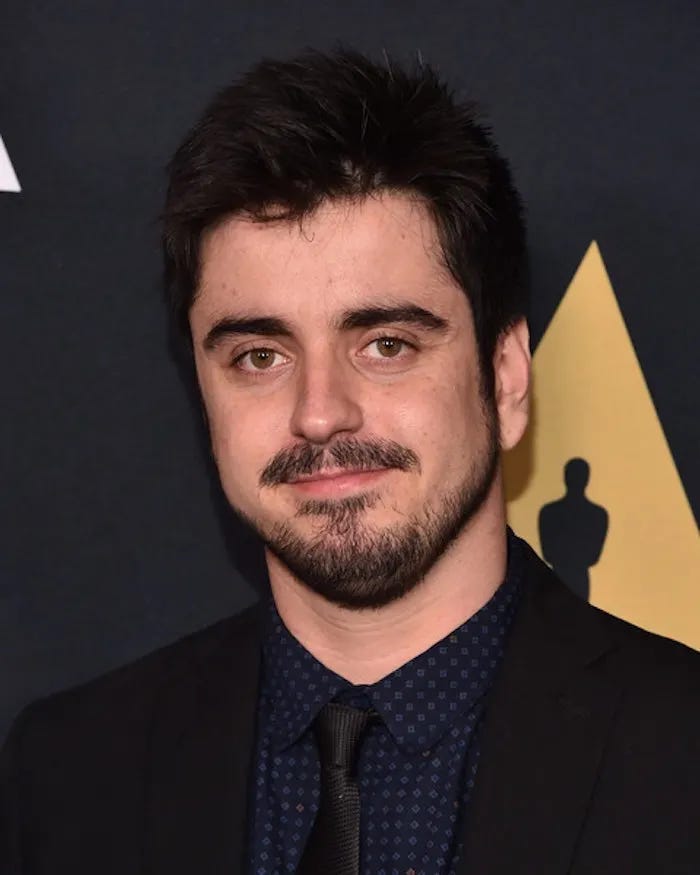
Cesar Vitale wrote the original screenplay “The Great Nothing” which won a 2017 Nicholl Fellowship in Screenwriting and made the 2017 Black List. I had a one-hour conversation with the Brazil-based writer about his background, his award-winning script, the craft of screenwriting, and what being on the Black List and winning the Nicholl has meant to him.
Scott Myers: You are from Brazil and live there now, right?
Cesar Vitale: Yeah. I was born and raised in Brazil. I lived in LA for a while, but now I’m back home.
Scott: What were you doing in Los Angeles?
Cesar: I moved to LA to study advertisement, actually. I majored in advertisement in Brazil then moved to LA to do an advertisement program. I ended up doing a screenwriting one right after that and things just took off from there.
Scott: In your Nicholl acceptance speech, you thanked your first screenwriter professor, Phillip Eisner. Was that that at UCLA?
Cesar: Yeah, that was at UCLA Extension.
Scott: Okay, let’s jump back a little bit. How did you get into screenwriting as an interest?
Cesar: I’ve always studied screenwriting on my own as a hobby. I think I might be the only person that read Syd Field for fun, growing up. [laughs] I never considered it a possible career path, though. The filmmaking market in Brazil is so small it doesn’t make much sense to try and make a living writing scripts here. Which is not to say that people don’t do it, but it’s very, very difficult.
I kept screenwriting and my love for filmmaking in general as a hobby for a long time, and studied it on my free time and wrote scripts in my free time. When I got in touch with the UCLA Extension people ‑‑ the Screenwriting Program ‑‑ that was an opportunity to see what would happen if I took this path a little more seriously.
Obviously the market in Los Angeles, and Hollywood in general, is much larger, so there are more opportunities. I took the chance, and then did the program, and started working on scripts in English. Things just happened from there.
Scott: That’s one of the advantages of living in LA. The upside is that it’s so concentrated there, the entertainment industry, that, if you come from some place where it’s not that big of a deal, you really realize, “Wait a minute, there are people that make a living doing this.”
Cesar: Exactly, yeah. [laughs]
Scott: The downside is every coffee shop you go into there’s someone writing a script, so it feels like…
Cesar: Yeah, because everyone has that same realization about LA. [laughs]
Scott: You took some classes through the UCLA Extension Writer’s Program. How important do you think it is for aspiring screenwriters to find teachers and mentors to facilitate their education in the craft?
Cesar: Oh, I think it’s essential. Maybe not for every writer, but, for me, certainly it was essential. The sense of…How do I put this? Just the fact that you have…First of all, you have to force yourself to write new pages every week, because otherwise you don’t have anything to show for in the next class. So you have people to hold you accountable and force you to write every day, or at the very least every week. That’s great if you’re not very organized, like me.
Also, you get some outside perspective on your work. I think a lot of amateur writers don’t realize how important feedback is and how it’s easy to get too close to your work to really analyze it objectively.
To have someone with experience and someone who has been produced and has been working with this for 20, 30, 40 years, however long, just read your work and give their feedback on it, it makes all the difference in the world. At least it did for me.
Scott: Jumping even further back, what were some of your most important or memorable movies from your youth?
Cesar: Oh, that’s always a hard question to answer, because I always leave some stuff out, but on a general list of favorites, I’d include probably Pulp Fiction… Casablanca was one that made an impact on me… A Clockwork Orange too, which I think might have been the first film that made me see movies as more than just entertainment, but an art form.
I’m leaving a bunch of films out, but those are three. Blade Runner is also one that I usually mention as one of my favorite films. These are by no means the only ones, but those are some of the films that inspired me while I was growing up.
Scott: It’s interesting that three out of those four ‑‑ Casablanca, let’s set that aside, but Pulp Fiction, Clockwork Orange, and Blade Runner ‑‑ they all veer toward the dark side of life. You mentioned in your Nicholl speech that Cormac McCarthy’s an inspiration, right? And he writes some pretty dark stuff.
Cesar: Oh yes, yes, Cormac definitely. Growing up, I was very interested in novels and short stories. I’ve always written, not just screenplays. Short stories, too, and even a couple of novels. In that realm, to me, Cormac McCarthy is probably the best living writer alive today.
Scott: His material, lots of death and whatnot in his stories.
Cesar: Yeah, yeah, yeah. I don’t think I’ve ever read a happy Cormac McCarthy book. [laughs] I don’t think there is such a thing.
Scott: That’s actually a nice segue into your script “The Great Nothing,” which deals quite directly with the phenomenon and the reality of death. Here’s a plot summary for the script.
“In order to sustain his heroin addiction, a terminally ill professor of nihilism takes on the job of doing homework assignments for a colleague’s daughter, who’s herself struggling with grief in the wake of her mother’s sudden death.”
There are two deaths at the center of this story directly affecting three characters and, indirectly, several others. I’m assuming you wanted to write a story about death. What was the specific inspiration to tell this particular story?
Cesar: I’ve always wanted to write something about death, as depressing as that sounds. It’s always been a subject that interested me in a morbid way, and I’ve always felt like I wanted to tell a story involving it, and try to understand the concept of death through that story. I didn’t know what that story was going to look like because there’s been so many stories about death already, both in novels and in films, and I didn’t want to do something that I’d seen before.
I think the tipping point for me when I decided to tell this story was Dan’s character. I’m sure there are similar stories, but I didn’t recall having ever seen a film that involves a terminally ill person that’s not a great person.
Usually when you have a film that involves someone that’s dying, you’re on their side from the very beginning. They’re great people and they’re just trying to do what’s best for their family when they’re gone, etc.
So I wanted to tell a story about a selfish person that’s dying that’s never done anything for anyone in his life, and he’s now coming to the terms with the fact that, if he doesn’t do something for someone else in the next three or four months, he’s going to die leaving the world in the exact same place he was born into.
Scott: Dan’s character was the starting point.
Cesar: Dan’s character was the starting point, and then June was just a natural reflection of that. What would be an interesting character to struggle with the concept of death, opposed to this character that spent his whole life studying death and is very knowledgeable about it, philosophically speaking?
The opposite of that would be someone that’s just now dealing with death for the first time, in the wake of a tragic family loss. So that was the starting point of June. Usually, when I start writing, I start with the characters, so that was where I started. With the relationship between Dan and June.
Scott: Let’s dig deeper into both Dan and June because they really are at the heart of this story. The central character, Dan Hopkins, who wrote a book called ‘The Great Nothing’, which is, of course, the title of your script.
You mentioned that he’s a professor of nihilism, this book is about nihilism. In fact, the first words we hear being read from the book by a college professor are these: “Loneliness in the face of death is the defining trait of humankind.”
Apart from Dan being terminally ill and having a background where he teaches nihilism, unpack his character a little bit more. What are other circumstances going on in his life, when we first meet him?
Cesar: I think he’s pretty much someone that’s given up the second we meet him. I think he’s someone that spent his whole life dealing with death every day as his job, but there was always this distance.
It was a hypothetical thing that he studied and he wrote about, but the second it became real was the second he realized that everything he preached about, the nihilism and the meaninglessness and whatnot, was all painfully accurate, much more so than he ever thought before. He realizes he was right. That there really is no point in him getting up in the morning, or shaving, or doing anything, because he is just waiting around to die.
So suddenly, all that hypothetical pessimism that he used to preach in his books becomes real in his life, when he is diagnoses as terminal. So by the start of the film, he has no idea how to deal with that. He just gives up.
Scott: He has some money, but he’s using it for a character that we’ll talking about later. He’s a drug addict, a heroin addict. At first, all we know is that he was a very successful author. In fact, there are requests for him to go speaking, and he deletes those emails, essentially a shut‑in.
He takes to watching videos of himself, and going to college to hear someone talk about his books, which is interesting. I want to talk to you about what that motivation was. Why do you think he is basically peering into his past?
Cesar: He doesn’t have kids. He doesn’t have a family. He doesn’t have a wife. He doesn’t have anyone in his life, so these last few months of his life he spends trying to relive the past, looking back on the days when he was popular, and when he was writing those books, and everyone was praising him for being this genius and whatnot.
I think it’s kind of pathetic when you’re looking at it objectively. He’s trying to recapture something that’s not coming back because he has nothing going for him in his present life. I think that’s why he does that.
Scott: This is a quote from one of the videos you have in the script. “Someday, we’ll all die alone under a godless sky. Humans revolt against meaninglessness. It’s our nature, and with good cause, too. It’s insulting that we live to die, that we get to know that we die as we live. It’s almost degrading.”
That’s a good example of how he understood it at a conceptual hypothetical level, but, in his real life experience, as the cancer is taking a toll on him both physically and…, it is degrading. He’s literally degrading in a physical sense at this point, isn’t he?
Cesar: Yeah, exactly. It’s the difference, like I mentioned earlier, between the hypothetical awareness of death that he had while writing his books, and that we all have, really ‑‑ we all know that we’re going to die ‑‑ but it’s that distant thing that’s waiting far, far ahead where you don’t exactly know what’s going to happen. Who knows? Maybe tomorrow they’re going to invent a pill that you don’t die. You don’t really think about it — you put it in the back of your mind. It’s the difference between that and actually having a date, like “you won’t make it to Christmas.”
He can’t give interviews about death anymore when he knows it’s coming and it’s coming really fast. That’s the discrepancy between pre‑cancer Dan and post‑cancer Dan. Death went from becoming a distant, almost hypothetical thing to a very real and inescapable reality of his life.
Scott: You start with the Dan character. Then you said it was like a natural instinct for this June Morgan character to emerge. She’s 13 years old. She’s experienced death, but in a way that’s different than Dan. How you would describe her and her life circumstances at the beginning of the story?
Cesar: Until the halfway point of the script, until the midpoint, she’s pretty much deflecting. There’s a whole persona to her ‑‑ the irony, and the jokes about her mother’s death, and a whole hyperactive personality — that is just not real. It’s just the way that she learned to cope with her mother’s death, because her father’s not there for her. She doesn’t have anyone to talk her through what’s going on, so her natural reaction is to just put on a face, put on a mask.
She starts off like that. Then, as the story goes on, the mask eventually falls off. We see that she’s in a lot of pain and she has no one to guide her through this and teach her what it means to lose someone.
Scott: Yeah. She’s deflecting, she’s hyperactive, running a mask, basically trying to busy herself so she doesn’t really have to go into the processing.
Cesar: Mm‑hmm, exactly.
Scott: We do see her…In fact, the script opens with her talking to someone, essentially her deceased mother’s grave. It makes sense from a character standpoint, but you also have a benefit as a writer in that, because she “talks” to her mother at the grave, you get a chance to reveal what’s going on in her inner thoughts and feelings.
Was that part of your thinking at least? Not only just that she would be seeking out her mom, but also that it gave you an advantage of letting us open up and see what she is inside?
Cesar: Oh, yeah, absolutely. I think half of a writer’s job is usually trying to come up with innovative ways of delivering an idea or an emotional beat. You want to avoid sentences like, “You know what I think about you?” and stuff like that, and try to get across how someone is feeling without having them state to another person how they are feeling.
When I came up with that first scene, I thought it was a nice way of doing that, to have a conversation that would be very natural and something that we’ve seen before a lot of times, with a character telling another one about their day and a dream they had, but then you have this little twist on this trope, which is that one of the characters is dead. So it’s really a monologue.
Scott: It also becomes a runner because she visits her mother’s grave pretty frequently through the story, so you get to track her emotional development in some respects by these monologues. It’s also a setup for another gravesite scene at the end of the movie, but I will talk about that later. What about June’s father, Bill?
Now, obviously, June’s mother died in this sudden senseless car crash, and that impacts Bill as well. What’s going on with him at the beginning of the story and how has that impacted his relationship with June?
Cesar: Bill was a tricky character to write because, in some sense, he’s an antagonist — and he’s certainly an antagonistic force to June. He’s the thing standing in the way of her getting over what happened…Well, maybe not standing in the way, but he’s not certainly not helping.
But the thing about him is that he can’t be such a bad character and such a negative influence on June that you just hate him, because he’s not a bad person. At the end, he finds redemption and it must feel earned. You can’t feel cheated that he found redemption because you hated him so much at the start, but he also can’t be too good for June because, otherwise, there’s no drama there.
So he needed to be trying his best and failing, to the point that he is posing a hazard. He’s doing damage, but not in an evil way. It’s just that he’s at a stage of depression where he can’t help but damaging his daughter by not being there for her.
Scott: He’s consumed with doing a book of photography. His wife was a photographer and that becomes his obsession. In the same way that June is deflecting by her hyperactivity and just busying herself and putting up that mask of defensiveness with his terrible comments, his way of deflecting from dealing with the grief is this book, right?
Cesar: Yeah, exactly. The longer he works on the book and the more he obsesses about it, the less he has to think about the fact that he lost his wife.
Scott: Obviously, in a story where you want a pair two people up, in this case Dan and June, you’ve got to figure out some way to do that. The way you achieved that I thought was very clever, which is that June is not doing very well in school. In fact, she’s in danger of having to repeat a grade.
There’s a character in the story who’s had to repeat the grade twice and has been socially ostracized, and so this becomes a really negative thought in June’s mind. Through a set of circumstances, Bill is a colleague or an ex‑colleague because Dan no longer teaches at the university.
Dan has this idea that he can tutor people to make money for his drug habit, and June finds this flier that Bill brought home. One thing leads to another, and she basically hires Dan to write papers for her at school. How did that whole mixture of locking these two characters together? Was that problematic, or was that easy figuring out, or how did you come up with that idea?
Cesar: That went through several changes and different drafts, and there were versions where she was already a fan of Dan’s work. She had read his book. There were versions I played around with where she was forced to take lessons with him because her father was like, “You’re not doing well in school, so you’re going to work at home with a private tutor.”
Ultimately, I think the version that ended up on the final draft, the version where June herself sees the flier and goes after Dan, was the most effective because she’s the driving force behind that decision. I think that’s very important, that she was the spark that ignited the relationship in the story, and the whole story that follows.
Scott: At first I was thinking, “Well, he’s an author. His creativity’s stymied,” so my mind was going to like movies like Finding Forester, Wonder Boys, or Field the Dreams where a younger character connects with, intersects with an older character who’s a creative, and the creative is having some sort of writer’s block.
There’s a bit of that going on here, but, really, I think a more interesting parallel from the movie standpoint is in the Pixar movie Up, where Carl is this guy who’s basically stringing out his days, and a young person comes and, in effect, revitalizes him.
This story doesn’t have quite that tone, but, in effect, June does at least create someone that Dan can focus on, and at least find some sense of meaning in that relationship. Is that fair to say?
Cesar: Yeah. I hadn’t thought about the comparison with Up before, but that’s interesting. I think that she’s the one that has the bigger arc, that she’s the one that changes for the better. That’s the clearest arc in the story. But Dan changes too, in the sense that he finally does something that’s not selfish.
At the end, he finally decides to go in and help someone for no other reason than he started to care about that person. That is growth, but I would say…Obviously it’s not just for me to say. Everyone that reads and, hopefully, one day watches the film can have their own interpretation, but I think that, to the very end, one thing that didn’t change about Dan was his fear of dying.
He starts the film terrified of the fact that he is going to go extinct, essentially, but the silver lining’s that, before that happened, he got to help someone who’s not dying, who has their whole life ahead of her, and I think there’s some beauty to that. But by the end he’s just as scared as he was at the start.
Scott: Yeah. Obviously, I think June does go through the larger arc. I didn’t mean to suggest that Dan doesn’t, he does have that selfish to selfless bit of business there.
Cesar: Absolutely. Yeah.
Scott: I went to Divinity School and studied religion, and I’ve always been fascinated with the meaning of life, and, as a result of that, how does death help define life, and how do we deal with that?
Then, later on in your script, you bring in Joseph Campbell, “The Hero with A Thousand Faces,” which is a huge influence on me, too. I was quite interested when one of the larger sequences in the story is when June gets an end‑of‑year assignment in school in which he’s going to have to be doing a 15‑minute video presentation on the afterlife.
When did that idea arise in the creative…? I mean, it’s natural. You’re dealing with the story of death so well. I hear people have come up with this concept of the afterlife. Well, why not take that on? When did that arise, and how did that arise in your thinking creatively?
Cesar: That was there from pretty early on. The essence of the story has always involved having these two characters explore the concept of — not necessarily the afterlife, but at least of death — and the two interviewing people who have very different views of what happens after they die was a cool way of exploring that, I thought.
So the interview with different religious figures, and people like Dan who believe in nothing, and people who are agnostic that don’t know or don’t think about it ‑‑ that was there from early on. That was the way that I found to explore those issues. Like you, I’m also personally very interested in them, and that was a way to bring that to story format.
Scott: You did a cool cross‑section of interviews. There’s Catholicism, Protestantism, Judaism, Islam, Buddhism, some weird unnamed…
[laughter]
Cesar: Some weird unnamed religion. Yeah.
Scott: How much research did you have to do on that front, or was this just stuff that you had accumulated and aggregated over your life of just reading?
Cesar: Some of it was stuff that I had accumulated, that I knew from my life. Some of it I did a little bit of research to make sure I wasn’t saying something that was blatantly wrong about this or that religion, because I’m not religious myself.
The scene doesn’t dive deep into any system of beliefs or any religion. It’s just very surface in a lighthearted way. So I didn’t go too deep on research to write that… just some reading to make sure that I wasn’t saying anything that was very, very, very wrong.
Scott: You talk about how, basically, for the first half of act two, June is resisting. Still trying to maintain those masks, the hyperactivity. Then, at some point in her relationship with Dan and things going on in her life, she begins to open up, and actually even asks Dan what it’s like to be dying. If you don’t mind, I’d like to read this one side, his response to that question because it’s starkly beautiful, I think, and just want to get your reaction to it.
“Dan replies to her: “Like standing on a very tall cliff with the city lights shining way down below your feet. And you look down at it all, and it slowly dawns on you that every one of those window lights shining down there is a life.
“‘A person with their own hopes, dreams, demons, thoughts, and quirks that you’ll never know about. And it’s so beautiful, and you realize you want nothing more than to jump down and dive into this ocean of light and life shimmering down there, but you can’t. You can’t, so you just watch them from far away, and it’s really lonely.
“‘Then you turn back, and there’s a guy standing right behind you in scrubs, and he’s like, ‘Hey Dan, guess what? You have cancer, you piece of shit.’’” When I read those words, I’m just curious what your thoughts and feelings are when you hear those words.
Cesar: That was a fun mini monologue to write. I think at the heart of it is what I think Dan is feeling at that moment and, I imagine, what a lot of people that are terminally ill must feel, which is a sense of detachment from society in general:
Everyone’s going around about life all around you, and making plans for the future, and, “What am I going to do next year,” etc, and if you’ dying you can’t really feel a part of any of that because society works under this misconception that we don’t die. That we live forever. Everyone goes around and lives and makes plans like they will live forever.
Thankfully I don’t know this from experience, but I imagine that, when you find out that you have a very limited window to live, you must feel a very strong sense of detachment, because you can’t play this game of pretending anymore. You can’t look away from death. So you feel a little bit like, “I’m not part of this society anymore. Everyone is carrying on and I just don’t matter. It’s just a matter of time until I literally stop existing.”
That was what was behind the whole serious part of the monologue. I didn’t want to end on such a depressive note, and I was afraid that to leave it there would be a little too dark. Hence, the joke at the end. [laughs]
Scott: That is a fascinating thing, isn’t it? I think that’s one of the reasons why I’m so interested in religion and philosophy. How is it we’re able to cope and co‑exist, and go about our lives knowing that each one of us is born with an expiration date?
There’s something that happens early on in life, as children, where we accommodate this into our thinking. Of course, I think you make a really good point. We don’t really think about death that much. It’s a sanitized thing. In most modern urban environments you don’t see cemeteries. We don’t live with our grandparents anymore who die.
Cesar: We make a very serious goal to try and get death away from our eyesight whenever we can and not think about it.
Scott: Then advertising does everything possible to promote the idea of, “Buy this product, and you’ll be young on forever,” right?
Cesar: Exactly. It’s interesting that you bring this up, and I don’t want to stir the discussion towards philosophy too much, but one of the books that I mention in the script is “Denial of Death” by Ernest Becker, which deals with precisely this notion that the reason society exists, and the reason we do pretty much everything we do as a society is as a coping tool, a way for us to deflect and not think about the fact that we’re all going to die.
From building highways to making music, everything is a project of immortality, like Becker says in the book, and I think that’s a very interesting concept. That society was developed as a defense mechanism against the horror of mortal existence.
Scott: Well, it brings to mind, not veer away too far from your script, but I remember reading an interview with Robert Towne, the screenwriter, and he said, “The very best question you can ask of a character to drill down into them, and find out what they’re about is, ‘What are you most afraid of?’” The characters build the entire structures of their psyche around trying to avoid pain and fear. Death would be, probably, at the heart of many people. Certainly in this story. There is that sense of detachment Dan has, when he’s talking in that monologue that I just read.
“You just watch them from far away, and it’s really lonely,” but he’s starting to develop a connection to June over time, right?
Cesar: Yeah, absolutely. I think it happens very slowly, and he even resists to that. There’s that scene where he goes to Bill, and he’s angry at Bill for not caring for June, and he says, “I don’t need a kid, Bill. I already have a tumor,” and all those nasty things he says.
I think it’s his way of also trying to deflect and putting on a face like, “I don’t care about her because I don’t care about anything, because that’s how I lived my life. And now I’m about to die. I’m not going to start caring about people now.”
Ultimately, in the end, he does help her. He does develop this tenderness for her, and this need to help her when he sees that Bill is not trying, that he’s screwing up her life.
Scott: Are you familiar with the five stages of grief? Denial, anger, bargaining, depression and finally, acceptance.
Cesar: Yeah.
Scott: In a way, I think when you’re talking about June’s arc, she goes through a compressed version of that. Not necessarily those particular stages, but her relationship with Dan and other circumstances do compel her to actually confront the grief she’s been repressing, don’t you think?
Cesar: Yeah, yeah. I didn’t write with the five stages specifically in mind, but certainly there’s an arc that goes from…That is the driving force behind June dropping her mask finally, and facing the fact that her mother’s dead. Definitely.
Scott: She even gets to the point where she’s able to really get in his face. At one time, just offhandedly he says, “Google solipsism.” And she blows up at Dan: “Yeah. I Googled solipsism. It’s bullshit. The world doesn’t stop existing when you die. Other people go on living, and they have to clean your mess after you’re gone.”
How important is it, do you think, for her character to be able to tap into that anger and focus it on Dan?
Cesar: Yeah, I think that that’s a pretty crucial moment because that’s when she finally realizes that Dan’s whole life philosophy is… well, it’s not bullshit, but it’s certainly mean. Dan is a solipsist and his view is pretty much that, “Nothing really matters after I die because the universe only exists inside my head.”
June disagrees, and she’s in a position to disagree, I think, because her mother died and she’s still here. Her father’s checked out and she’s having to deal with the aftermath of a death. She knows for a fact that people carry on even though someone died.
Scott: There are a couple other characters I want to talk about, one of whom very specifically I think exists in the story ‑‑ or at least my experience of her in the story ‑‑ was to make that point, that this shows you how far into his philosophy Dan is, and that’s Michelle, which is…I think you describe her as an ex‑hookup.
She’s very, very pregnant when we meet her, with Dan’s unborn daughter. How early in the story development process did this character come into existence?
Cesar: I don’t know exactly how early, but it was certainly early. She was an essential part of Dan’s arc from a very early stage, because I thought it was important to show that he was not following through with his responsibilities and that there were people suffering very real consequences from the fact that he checked out from the world and decided to just do heroin until the day he died.
She was there from pretty early on.
Scott: Yeah, well, she’s the physicalization of what June is saying. Other people go on living and they have to clean your mess after you’re gone.
Cesar: Exactly.
Scott: At the beginning, he’s saying, “I don’t want to see my daughter.” He’s literally deleting ultrasound photos.
Cesar: Yeah, and I think he feels very shortchanged by the universe — the fact that there’s going to be a daughter, his daughter, in the world soon and he’s not even going to get to meet her, or, if he meets her, it’s going to be very brief — that’s almost a sadist act of the universe.
He doesn’t want any kind of emotional relation with that child, because it’s kind of cruel. It’s just going to lead to pain. He’s going to meet her and then two months later he’s going to be dead.
It’s interesting that you mention June, because when she’s angry at Dan for abandoning Michelle, she’s really also angry at Bill for abandoning her, and she’s like, “You’re doing the same thing that my father is doing to me and it’s mean. Stop it.”
Scott: It’s almost ironic in the extreme, isn’t it? You got the contrast of death versus birth, new life, and then Dan’s going to basically miss out on this. He just chooses to absent himself from it entirely.
Cesar: Yeah, absolutely. That’s 100 percent why he steps away from that. He feels that there’s really no point in getting emotionally involved if he’s going to die soon anyway.
Scott: Yet, as a sign of his heart, and in large part due to his relationship with June, there is a very satisfying moment later on, very late in the script. Did you have that in mind, that moment where he sees the daughter for a glimpse?
Cesar: Yeah, that was always there early on. I didn’t want him to have a very happy ending in that regard, where it’s like he finally gets to see her and everything is fine and perfect.
I wanted that glimpse and then the webcam moment at the end where he sees his daughter and he cries. That’s really the thing, you don’t choose to get emotionally attached to someone or not. By its very definition, emotions are not rational, so you can’t just say “Nah, I’m not feeling these.”
If you’re feeling it, you’re feeling it. In the end, he does love his daughter and, yeah, it sucks. He’s going to die. But he can’t just say no to the love that he feels for his daughter.
Scott: One of the things I notice in really good scripts is when they handle secondary characters with care and creativity. You did that with the character, Crusty. Basically, Dan needs someone to deliver heroin to him, and so, functionally speaking, that’s Crusty’s job in the story, is to be his “drug dealer,” even though we discover later on that he’s just been a middle man.
You create in this guy, this young boy. He’s, I think, on the spectrum?
Cesar: Yeah, Asperger’s.
Scott: He’s got a love of literature, but a horrible family situation. His father doesn’t want him reading, but Dan serves as a kind of mentor for Crusty. What was the inspiration for that character?
Cesar: That was an interesting character. I love writing side characters. They’re usually the most fun for me because there’s not the pressure of the main character, so you’re freer to play around with different and interesting choices. So, for Crusty, I needed a character to deliver heroine to Dan.
The first type of character that comes to your mind when you have to write a drug dealer is that classic drug dealer character that’s like, say, Jesse Pinkman, from Breaking Bad. Which is an amazingly well-written character, don’t get me wrong. But that type of character — I didn’t want that. I felt like my script had this offbeat vibe that was strong enough that I could subvert this character and pull the rug on the reader. So I just tried to think, “What is the opposite of a drug dealer? What is the opposite of Jesse Pinkman?” What’s the person we would least expect to be on the other side of that door, delivering heroine to Dan?”
That’s how Crusty started. As the story progressed, there were all these new traits added to him, like his love of books and philosophy, and the relationship with his father. But it started with, “What’s the person that you least expect is going to sell heroine?”
Scott: The books that Dan gives Crusty, the last one is Joseph Campbell, “The Hero With a Thousand Faces”, which as I said has been a huge influence on me. Crusty even quotes something from the book to Dan.
He says, Campbell’s words, “The hero must put aside his pride, his virtue, beauty in life, and bow or submit to the absolute intolerable.” What is Crusty trying to do there, do you think, with Dan?
Cesar: It doesn’t go that far, but it’s almost an instance of breaking the fourth wall there. It’s the moment that Dan has to stand up and be a hero for the story. He’s an antihero the whole time and he’s reluctant. At that moment, he has a choice. And Like Joseph Campbell says, the choice of the hero is never easy.
He has to put aside everything and be willing to sacrifice himself for the greater good of whatever his quest is. In Dan’s case, that quest is helping June. Also, it’s facing up to his own death. I think Crusty’s also talking about that a little bit. That’s where that came from. That’s why I wanted to include that particular quote.
Scott: I was so struck in your script… Imagine a series of paths you took in writing. One path would be named Conventional Wisdom, what we would expect, just like what you did with Crusty where you said, “OK, well, here’s what would be a typical drug dealer. What could I do that would be different?” You do that in so many different respects there.
We expect Dan’s going to bond with Michelle and he’ll be there for the birth of her daughter. That would be kind of Hollywood approach, right?
Cesar: Mm‑hmm.
Scott: You said, no, not going to do that. Then Conventional Wisdom: June will befriend this dinosaur girl, Erica Staten, the one who’s been kept back two times. The two outsiders will connect with each other… No, not going to do that.
June will be present for Dan’s death in a dramatic scene. Nope, not going to do that. You veer down these unexpected paths. Is this an instinct that you have, a writerly instinct?
Cesar: Yeah, absolutely. Reading scripts and books, any kind of stories, it always annoys me when I can see something coming. I think it’s a mark of a poorly written story when you can tell what’s going to happen and then it happens. So I try to always surprise, to always be one step ahead of the reader. It’s very hard to balance that because you also don’t want random and unearned things to happen in your story.
A meteor can’t fall and kill Dan by page 90 because that doesn’t feel warranted. I think, to me, a lot of the fun and the challenge of writing is trying to find that balance where everything is pointing in the direction of this, and then that happens, but then it makes perfect sense in hindsight.
You’re like, “Jesus, yes, that’s good. I never saw it coming, but, now that I’ve read the whole story, I can see why it happened.” That’s what I try to go for in every scene, every character, and every moment. I think that’s what makes a story good, is when you’re surprised — when you don’t expect what’s coming.
Scott: You did a good job on that front. Several different points of the story just were, “Yep, that works, but it was not what I was expecting.”
Speaking of death, which is really right at the middle of the story, I was once writing a project about a young woman with terminal cancer. I wrote a good friend, Kurt Brown. Sadly, he died a few years ago. He was a poet and I asked him to recommend a good poem about death, just for some inspiration.
He emailed be back and he said, “Scott, all poems are about death.” I guess, if you think both literal and metaphorical, you may be able to say that about all stories. I was just curious. What’s your reaction to that idea, that basically all stories, in some respects, should or do deal with the subject of death?
Cesar: No, I love that. I’ve actually had the exact same thought about this. That every work of art is really, essentially, about death when you go deep enough. It’s weird to say because, actually, I think there was a line in one of my scripts where a character said something similar.
It wasn’t exactly that, but it was something like…A character is telling another character that’s a writer, “Why don’t you write a story about death?” and the other character says something like, “Because, every story I’ve ever read was about death,” so, yeah, I definitely agree.
It goes back to the other theory, Ernest Becker’s theory in “The Denial of Death,” which is that not only art, but everything we do, really deep down, is because we’re going to die and because we don’t want to have to face up to that fact. I definitely agree with that.
Scott: Let’s move to some life‑affirming moments.
[laughter]
Cesar: Yes, please.
Scott: You win the Nicholl. What was that like?
Cesar: That was surreal. I’m still not processing it. I’m still half expecting to wake up and be like, “Oh, it didn’t really happen. Of course it didn’t.” It was amazing. It was an amazing experience. It was an amazing week with the ceremony and all that.
I was born and raised in Brazil. It was never real to me, the possibility of being a screenwriter, of working in this business, even though I’ve always admired and loved it from a distance. It wasn’t real. To have been there, to have had the privilege of winning the award and having this become a reality is something that, honestly, it still doesn’t feel real.
Scott: Being named to the 2017 Black List, is that a little bit unreal as well?
Cesar: Yeah, absolutely. I've been following the Black List for a couple of years. I still open the list every now and then, just scrolling until I see my name. I'm like, "Come on, this is not real." [laughs] It's insane. It's insanely...I forget the English word for it, but I'm very humbled by it. It's a privilege. That's not exactly the word I was looking for, but it's a privilege.
Scott: You're represented.
Cesar: Yes, at Untitled Entertainment, and APA.
Scott: I'm assuming that once the new year rolls around ‑‑ because Hollywood shuts down right now, everybody goes to Aspen or wherever ‑‑ that you'll probably be generating a lot of buzz off the Nicholl and the Black List. Do you look forward to doing all those meetings and meeting everybody that wants to meet with you in Hollywood?
Cesar: Yeah. I love taking meetings. I've talked to writers who don't like it. For one reason or another, they're not very comfortable with it.
To me, like I said, to have the privilege of discussing film, and storytelling, and my stories, and other people's stories in a professional sense -- that has never been something that I thought would be possible in my life. I just love everything about it. It doesn't feel like work to me at all.
Scott: Congratulations again. A terrific script and wonderful news that you've made the Nicholl and the Black List. If we could segue into some craft questions, I'd like to pick your brain there, if you don't mind.
Cesar: Yeah, absolutely.
Scott: This is one that actually kind of flummoxes some writers when I ask it, but it seems pretty basic. How do you come up with story ideas?
Cesar: Oh, wow. [laughs] I have no idea. For "The Great Nothing," like I said, I wanted to write about death. It was a matter of finding what the story was. Usually, I don't remember where I was and what I was thinking about when a story occurs to me. More often than not, it will start with a character and then the story will happen around that character.
I think the best stories, at least the ones that resonate the most with me, are the ones where I might not remember anything that happens in the plot, but I remember every character. I think starting with a character is a good way of coming up with a story.
Scott: How much time do you spend on prep writing and what do you focus on? Brainstorming? Character development? Plotting? Research? Outlining?
Cesar: The early days, when I have an idea that I feel is worth exploring, I'll spend some time ‑‑ days, sometimes weeks ‑‑ with it in my head, just playing around with it until it gets to a point where I'm comfortable enough to write some stuff down.
Then I'll maybe start with a very basic outline and then just leave it at that for a couple more days and play around with the idea in my head for a little bit more. Usually, before I start writing a draft, I'll have a ton of notes that I'll write on my phone because I'm usually thinking about stories wherever I am, not just when I'm writing.
I'll be in line at the bank, or just in traffic, or walking and I'm thinking about the story. "Ooh, this character could meet this one," or, "This character can have this arc." I'll just write it down in my phone.
There comes a point where I have so many notes and random thoughts that I sit down and put them all together, and it forms an outline, or even I'll just start a draft and start from there.
Scott: Do you have any specific techniques or tools you use to develop your characters like interviews and biographies, or where you sit down with them and let them do monologues, or any of that kind of thing?
Cesar: Not really, no. I've never done those exercises like coming up with a character's past life, or a biography, or a family tree, or putting a character in a situation where he would never be -- like get Dan's character and put him on Star Wars: A New Hope and see what he would do there -- to try to develop the character more.
Which is not to say that I don't think it would work, but I just never tried it. I don't really know how, what the process is like. Sometimes I'm writing a character and, 20 pages in, I'm like, "This character is not good. His voice is not strong enough," and I'll just throw away the whole story sometimes.
Sometimes a voice that I like just comes through and I think, "This is a great character," and, as I write, and the character just gets stronger and stronger. Sometimes I have to change the plot, because this character that I really like now would never do that, which has to happen for the story to move forward, so the story will change because I prioritize the characters.
Scott: What about dialogue? Is that something that's pretty innate to you, or do you think about it, or actually work with the characters in trying to find their voice?
Cesar: Yeah. It's probably my favorite part of writing ‑‑ dialogue. I also don't have a specific way that I approach it. Usually, I think if you have characters that are well‑developed enough, dialogue almost comes through instinctively. You just know what that character is going to say if you know the character well enough. That's how I approach it.
Usually, I like stories that have humor in them, even if they're not comedy necessarily. I really like dialogue humor, so usually I'll try to include lots of characters that would say quirky, or ironic, or funny things because that's fun to me as a writer, which is how Dan and June are. They're both characters that are very prone to funny bits of dialogue.
Scott: How about the theme? Do you start with that? Do you find themes along the way? How important is that in your writing?
Cesar: To me, that's really important. I get really frustrated when I watch a film and I can't really tell what it's about, even if it's some vague sense of emotion. I have to feel like, "Oh, this film is about this," even if it's not a rational thing. For example a film that conveys the feeling of nostalgia, or the joys of youth. It can be subjective, but I still have to feel that the film has purpose, that it's not just shooting everywhere hoping to hit a target.
Sometimes I'll watch a film and it seems like the theme is going toward this or that direction, that it has intent, and then there's this one scene that kind of negates all that, and it's always frustrating. I'm a big fan of consistency.
So yeah, definitely, every scene that I'm writing, every character that I'm developing, they all work under the umbrella of the central theme that I'm trying to explore.
Scott: How about when you write a scene? Do you have any specific goals in mind?
Cesar: Not apart from the goals that are in the outline, like "In this scene, Dan's going to tell June about what it feels like to be dying." Sometimes my outlines are as simple as that. Just one line ‑‑ "This has to happen" ‑‑ and then I'll write the scene. A lot of other stuff might happen, too, but the essential thing to me is to hit the bit that's in the outline to move the story forward.
Scott: What about you finished your first draft and now you're faced with the inevitable rewriting process. Is there a specific approach that you have, or how do you go about rewriting your script?
Cesar: I'm not a big fan of rewriting. It's an essential part of writing, but I don't really like it. Usually, when I finish a first draft, it's not really a first draft because I rewrite as I write, which works for me. I've heard people say that they can't do that, but, to me, it works.
If I have 50 pages of a script and I go to bed, then the next day I'm going to continue working on it, I'll read the whole 50 pages again and I'm going to make changes to it and then continue. By the time I finish the first draft, it's really like more of a third draft, so usually there's not that much to change in it.
Scott: I don't know if you know. Eric Roth ‑‑ probably most famously wrote Forrest Gump ‑‑ he does the same thing. No matter where he is in the script, 75 or 90, he starts off on page one and rewrites it up to that point.
Cesar: Yeah, I do that.
Scott: What's your actual writing process?
Cesar: I usually write at home. A lot of my writing is done when I'm in public places, taking notes on my phone, like I said. I have ideas and write them down. When I get home, I put them in a script.
The actual writing process, I usually do at home and no music. I'm very easily distracted. If I have a cellphone near me with an Internet connection, I'm going to stop every five seconds to check Facebook and all that. If I'm in a coffee shop, I'm probably not going to be able to concentrate enough.
Scott: Two last things. One is an observation you made at the Nicholl ceremony, basically talking about how that life is rather random, and chaotic, and, in some ways, out of our control, but there is one thing we can control ‑‑ the stories we choose to write and tell. Could you amplify your thoughts on that a little bit?
Cesar: I think it pairs up with the themes of ‘The Great Nothing’ on how these two characters have events they could not control completely turn their lives upside down. Like I said in the speech, life is like that. You're doing something, then life gets in the way, and your life is turned upside down. That happens a lot.
It's scary to be alive, because you don't get to control the things that happen to you, or you do, but to a very small extent. A lot of things are beyond our control. But stories are completely within our control.
As a writer, anything that you want to happen in a story can happen. And as a reader or a film-goer, you can choose to only read happy stories if you want and only watch happy movies, or you can choose to watch movies about death and read books about death.
There's a sense of 'fiction is better than real life' a little bit in that, in that we have full control of the messages that we want to tell one another through our stories. I think there's some beauty to that.
Scott: Finally, what advice can you offer to aspiring screenwriters about learning the craft and breaking into the business?
Cesar: Read. Everyone says that, but there's a reason why everyone says it. Just read a lot and then keep reading some more. You're only as good as the stories that have inspired you.
If you don't like reading that much, chances are you're not going to be a very good writer. Just read as much as you can, watch as many movies as you can. Dissect the movies. Dissect the scripts and the books. What worked in that story? What didn't? What made me happy, or sad, or cry in this story? Do that a lot, then write your own story, and then write another one. And then another.
For my interviews with every Nicholl Fellowships in Screenwriting winners since 2012, go here.