Go Into The Story Interview: Cameron Fay
My interview with the 2024 Black List writer for his script Until You.
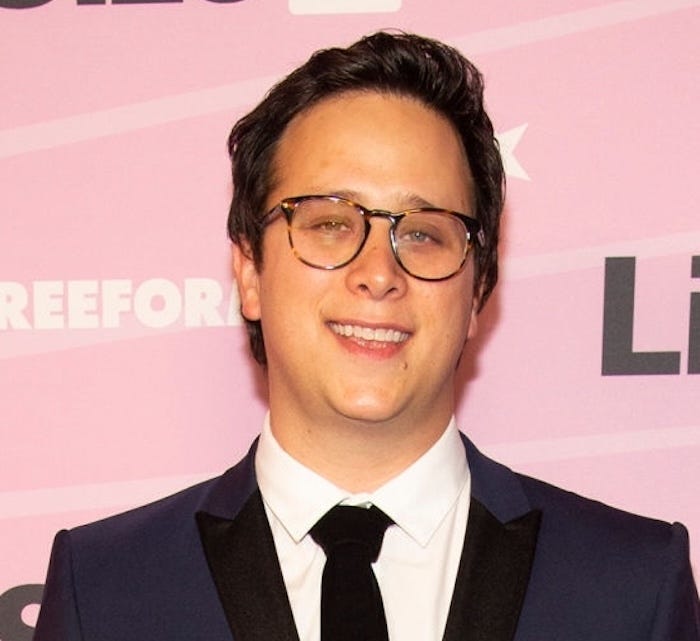
My interview with the 2024 Black List writer for his script Until You.
Cameron Fay wrote the screenplay Until You which landed on the 2024 Black List. Recently, I had the opportunity to do a deep dive with Cameron into his filmmaking background, writing his Black List script, and his approach to the craft of screenwriting.
Here is the complete interview with Cameron.
Scott Myers: Let’s start in your background here. I believe you were born in Virginia.
Cameron Fay: Yeah. I was born in Alexandria, Virginia. Then at 10, my mom moved to Fairfax, Virginia. My mom came here from Iran in 1978 and was a grad student at GW University in DC where she met my dad. They got married. Years later, you know how it goes, I was their only child. They got divorced when I was little.
I mainly lived with my mom. Her two brothers and sister moved here from Iran as well, so I had lots of cousins in the area.
Scott: Iran’s got a long history of cinema.
Cameron: Oh, yeah. Farhadi. Kiarostami. So many wonderful storytellers have come out of Iran. That said, I was a bit of the black sheep of the family as the only one wanting to get into the film and TV business. My grandfather worked for the government in Kerman, Iran, where my mom grew up, in a department similar to welfare here to help poor people. And my grandmother was a school teacher. My mom has a PhD in biochemistry. In general, they’re more science‑brained and lots of my cousins are doctors.
But growing up, I was like, “I’m writing stories!” My mom was ultimately supportive of it. She worked hard so I could follow my dreams. And I think my mom loves movies. Whenever there’s an Iranian filmmaker that has an interesting film out, she’ll definitely make sure I know about it.
Scott: Where did this “black sheep” interest in writing and particularly film and TV come from?
Cameron: When I was a freshman in high school, I thought I wanted to be an electrical engineer. They had a course, an elective course, that was basically an electrical engineering class. I realized what I actually liked doing was taking apart TVs and stuff and putting them back together, like a TV repairman, but electrical engineering is much more complicated than that.
So I ended up dropping the class, and my tennis coach at the school taught a class called “Film Study.” I was telling him about dropping this engineering class and he’s like, “You should come take film study with me. We watch great old movies,” and I just thought like, “Watch movies? In school? For real? That sounds amazing.”
Mr. Byrd was his name. He showed us “2001: A Space Odyssey,” “Butch Cassidy and the Sundance Kid,” “Cool Hand Luke,” “Crooklyn,” “Sleepless In Seattle” “Seven Samurai,” so many great filmmakers’ films, and we got to make a short film in the class. Everyone was given a role, and I got to be the writer‑director, I think mainly because no one else wanted to do it. Most kids had taken the class to just take a nap, and I was one of the only awake people, mesmerized by these films. I caught the bug. I actually kept taking the class every semester, because he would show new films each semester, and we got to make a short film each time.
It really made me fall in love with filmmakers and writing and directing, and then I applied to NYU film school.
Scott: Was it film and TV, or did you have a specific concentration?
Cameron: Yeah, it was Tisch, film and TV. I actually thought when I entered, I wanted to be a cinematographer. I took a lot of cinematography classes. I was a DP for a lot of short films. I was just trying to shoot anything. I would get these scripts, and I’d be like, “Oh, man. The script is so horrible, but I have to build a reel.”
I would shoot these scripts. And eventually, I was like, “I think I could write a better script than this.” So I started writing scripts and taking writing classes at NYU, and the professors were really encouraging and saying, “You should make some of these. These are good scripts.”
I thought, “OK. Well, who should direct it?” I already had a cinematography background, and so I thought maybe I’ll just direct them too. That’s how I got into writing and directing more and switched my focus.
Scott: You did take some screenwriting classes at NYU?
Cameron: Yeah. Many. I ended up switching junior year, I switched and solely focused on writing and directing.
Scott: How did you make that jump from NYU to the LA scene?
Cameron: I was interning for a director in New York named Brett Morgen who made “The Kid Stays in the Picture,” the Robert Evans documentary. I loved that documentary so much, and I applied to be his intern. Then he got a show in LA, and he said, “Hey, when you graduate, move out to LA, and I’ll give you a job on the show as an assistant.”
So I did. The show had already started. It was already going when I moved out. I got to tour the offices. I got an apartment in Sherman Oaks with two roommates. Eight days after I moved to LA, the show was canceled.
So I started temping to make money. I started working very random jobs. I worked as an assistant to a songwriter named Marty Panzer. I worked for a director, an older director, as an assistant. His name was Robert Ellis Miller. He directed “The Heart is a Lonely Hunter,” starring Alan Arkin in 1969.
Scott: That’s a heartbreaking film. I remember that movie. Wow.
Cameron: I mean, he was a brilliant director. I’ll tell you, he had the coolest picture on his wall in his office. It was him directing a TV episode in the mid ’50s. And the picture was signed, “To Bob, from Bob.” It was a shot of him directing the youngest version of Robert Redford you’ve ever seen. What a cool gift Redford gave him.
It was one of Redford’s first roles. Miller would say, “You know, I discovered Redford.” I don’t know if that’s true but… that’s what he would say. He was a great guy. I just took these random jobs to be able to pay the rent while I was writing. Eventually, I worked as a nanny for an A-list actress as well.
Meanwhile, I had met enough managers, about four managers in the business who would read something of mine and say, “Yeah. It’s pretty good. Send me the next one.” They weren’t going to sign me yet, but thought I had something.
Eventually, I sent them what was my seventh feature that I had written, it was a script called “Unnatural Selection,” which I got signed off of by a manager at Mosaic at the time, and I signed with UTA as well. They sold it to Universal. That was my big entry into the world of being a professional writer.
Scott: Well, I guess we’re soulmates because that’s how I broke in. I sold something to Universal.
Cameron: Oh, yeah? Great. Hey. Universal’s starting careers, man.
Scott: Spielberg, you, and me.
Cameron: Yeah! Three peas in a pod.
[laughter]
Scott: Now some of your credits. You got “Brother Nature,” “Life‑Size 2.” You’re directing projects, “Maybe It’s You.” Talk a bit about how you transitioned from the gig you set up at Universal and just how that you’ve navigated that out there.
Cameron: The Universal one was a preemptive buy, so that was really nice to get my career going. My agents at the time basically told Universal, “If you don’t pay a premium from this, we’re going to turn it into a bidding war.” So Universal upped their offer by a lot. I was a nanny at the time. I was like, “I’ll take anything,” but my reps were smart, that’s why you have reps, because I would’ve taken the first offer.
That led to me selling a pitch to Universal as well. Then, it’s snowballed into rewrite jobs and a few jobs that I don’t have my name on, but I got to do some work on them and they got made. Then, Brother Nature was a script I wrote on spec that Paramount bought for Lorne Michaels to produce.
I’d always wanted to be a writer‑director, but I got into this cycle of being a paid writer. I got away from directing. The Brother Nature experience, I was rewritten by the lead actor and his friend, who is a writer/actor, and they’re both super talented people, but I didn’t really end up loving that experience. I felt pushed aside. That experience was valuable though cause it got me back into focusing on being a director.
Life‑Size 2, I had never seen the original Life‑Size. I was building my first daughter’s crib and I got a call from an unknown number, and I answered it, and the person said, “Hey. This is Tyra Banks. Is this Cameron?” I was like, “Who is this?” [laughs] “Like really, who’s calling me right now pretending to be Tyra Banks?”
But it was Tyra. And she explained that she had read a script of mine and thought I was perfect to write Life‑Size 2. I honestly did not know what Life‑Size 1 was. I hadn’t seen it. I was literally about to have a baby, and I thought, “Gosh. This is a job, just falling in my lap.” So I took it. I loved working with her. I loved working with everyone there. I did my steps. I went off.
Stacey Harmen came on, did some work on it, and we shared the credit. It was just a fun paid gig, I guess. I was really still focusing on directing. I directed a short film with Jack Quaid and Nikohl Boosheri. That’s what got me the feature directing gig, “Maybe It’s You.” It was originally called Platonic, written by Sono Patel. But the studio had to change the title because of the TV show “Platonic,” which came out first.
Scott: Couple lessons there for people who are reading this or outside the business. One, features are primarily a director’s medium, so it’s not like TV where the writers rule. Two, if ever you want to land a gig where somebody just calls you on the phone, you need to be building a crib.
[laughter]
Cameron: Yes. If you’re in a place where you’re panicking about money because you’re about to bring a human into the world that costs money, then don’t sweat it. Tyra Banks will call you to give you money. That’s the moral.
Scott: Let’s talk about your script for the Black List, “Until You.” Here’s a logline:
“When a chance encounter thrusts two perpetually single people together, their undeniable connection leads to a romance unlike anything they’ve experience, while both hiding a secret that could tear it all down.”
Scott: Was this a spec?
Cameron: Yeah, it was a spec.
Scott: At the time you’re getting gigs, you’re working. You’re getting paid, writing, directing, and you’re also spec’ing at the same time?
Cameron: Yeah. I had directed “Maybe It’s You,” and I was taking meetings with people who liked it. And these people would ask me, “What do you want to do next?” I was realizing, “I don’t have the next thing I’m going to direct,” and that was kind of foolish of me.
So I started writing this on spec as a script for me to direct. By the summer of 2024, I had a draft that I gave to my manager, Josh Goldenberg at Kaplan/Perrone, and he gave me notes that really helped it get to the next level. After a few rounds with him, we sent it to my agents, Mark Ross and Ethan Neale at Paradigm, my other manager, Aaron Kaplan, and they all really liked it. They put together a strategy to send it out, and we got about, I think, five or so places interested. I got to meet with each of them. We picked a producer, Di Novi Pictures.
One of the reasons we picked them other than their passion was that they had a plan of packaging it with two lead actors before taking it to market. We spent, basically, from Labor Day to the end of the year attaching those two actors. Now we have two, in my opinion, really wonderful actors attached to the leads, and we are taking it literally, I think, right now, to financiers.
Scott: Is this Denise Di Novi?
Cameron: Yes. Denise Di Novi and Margaret French‑Isaac are producing it.
Scott: I know Margaret from way back when she worked for Wendy Finerman.
Cameron: Yeah Margaret’s wonderful. They made “Stepmom” together, I believe, right?
Scott: Yeah. This has a “Stepmom” kind of a vibe to it, right?
Cameron: Yeah. Margaret’s big pitch was, “I haven’t read a script I loved this much since Stepmom.” That’s obviously a nice thing to hear as a writer. I will say that Margaret and Denise’s passion — I’ve actually personally never experienced producers with such passion before. It’s really refreshing.
Scott: That’s wonderful. You’re still attached to direct?
Cameron: Yes. I’m directing it. We’re looking to shoot when they’re both actors are free later this year.
Scott: Well, very good. What was the inspiration for the story? Had this been an idea you’ve been noodling around for a while, or did it come out of nowhere?
Cameron: This is an idea that I had been thinking about since about 2021. My friend Megan got sick and unfortunately passed away. She was in her 30s. Had two kids. Just thinking about it now, it’s so sad.
I have two kids myself, and my wife and I are constantly talking about the idea that, “If something were to happen to us, who would take care of our kids?”
It’s not always an easy and obvious answer. That’s where the idea, the kernel of the idea for this script, came from. Obviously, everything in it is fictional, but the inspiration, that’s where it came from.
Scott: Let’s jump into it. The script right off the bat, you’re taking on this whole online screenwriting universe kerfuffle about so-called “unfilmables.” Right there on page one, you’ve got: Exterior. New York City. Night.
“Everyday life in New York City over a score will come to know quite well over the next hour and a half.” Already you’ve got this winking at the reader, “Oh, look. We’re going to go through this experience together.”
Then you say, “When I say New York City, I should be more specific, Greenwich Village, because The Village is the world’s best microcosm. Maybe The Latin Quarter in Paris, those two, but I don’t know Paris that well, so we’ll stick with The Village.”
Is this the way you’ve always written scripts, or is this a narrative voice you chose for this specific project, this air of familiarity with the scene description of the reader?
Cameron: I think it’s something that’s always been with me to an extent. If I do something like this, it’s usually in one of two places. It’s either in the first page because I’m saying “Hi.” I want to be able to connect to the reader. Or there’s a script I wrote that Paul Feig is producing and attached to direct that there’s a moment in the middle of the movie where I write, “OK. Let’s pause cause I have to explain something real quick,” in bold.
It’s like a, “Listen up. I’m going to talk to you for a second about something that’s going on here. From a production standpoint.” I’ve done that, and then little peppered moments here and there. I don’t know. I think it’s like, to me, you’re creating a relationship with the reader. It’s part of allowing them to connect with the tone and the feel of the film.
Not that you can film it, but, in this case, I know I’m directing it, and I know what I want the tone to be. I get so many more tools when I’m directing it. I don’t believe it’s cheating to give the reader a sense of that tone in the style of it because, otherwise, it’s too limiting in my opinion. I’m sure there are writers who would disagree with me. And that’s fair.
Scott: Let’s talk about these primary characters in the story, beginning with Mallory. Here’s how you introduce her. “Mallory Woodson, 34, shuffles out of the place with her date, Paul, shorter, balding, ‘George from Seinfeld vibe going on.’ Mallory’s put together in a way that’s confident and calculated. Makeup subtly accentuating her natural features, hair done up for a big date, dressed in fashion that feels modern yet borrowed from Annie Hall.”
How would you describe her situation or psychological state of being at the beginning of the story?
Cameron: I think she’s trying hard, but is exhausted. She’s been trying to find a partner for her life. She’s doing what she thinks she’s supposed to do. She’s supposed to look good and present well, but she’s getting rejected a lot. We’ll find out why, obviously, in a bit. But it’s exhausting. That’s why I think just a few lines later, she bucks up, pushes the pain down, and goes on.
I think there’s a lot going on in her brain that we don’t know, we don’t understand yet in this simple first scene of, “Why is this guy who is not a really beautiful guy rejecting this woman who is really done up and presents so well?” That’s the hope, at least.
Scott: I guess, if I’m not mistaken, it was her fifth time they’ve been out together or something. Is that right?
Cameron: Yeah. It’s the date that she reveals this secret she has.
Scott: The secret, the revelation. That makes sense. You drop us into the middle of that, which is an interesting choice. There’s something going on. You’re teasing the reader, which I always tell my students that’s the best thing you can do is just tease them, get them curious so you want to keep them reading. You do that with Mallory’s introduction there.
Tired, that’s an interesting observation there. She has to summon up that energy to forge ahead in life. She has two friends who help her. First, there’s Chloe. Here’s how you introduce her.
“Chloe’s in her tiny living room in sweats watching Netflix’s murder‑themed programming du jour with a bottle of Jack wedged between her legs.”
What about Chloe’s personality? How did that emerge, and what’s her narrative function in the story?
Cameron: Chloe is a perpetually single, young at heart, irresponsible person. I think you remember later, Mallory comes in where Chloe’s babysitting and the kitchen is partially on fire. She’s not an adult. That is the primary function, really, is that she’s a cool friend when you want to go have a drink, and she knows the best bars. But she’s not mature or responsible.
She can either be your wing woman or reject all the guys for you. You only have her babysit in a true pinch.
Scott: She’s more the someone to get Mallory out of her preconditioned stable life or funks and go out and have some fun. Whereas you do have another friend, Damon, who’s a neighbor, 20s.
“He’s a sweet gay teddy bear, lounging on the couch, also watching another one of Netflix’s robust selection of murder docs.”
That character can effectively babysit. Talk about Damon a bit.
Cameron: He’s more responsible. He’s there, and he can keep the kid alive and do all the things you need to do, but he’s really not interested in that kind of life beyond helping a neighbor and a friend. He has zero interest in having kids one day and values his minimal eight hours of sleep.
Scott: Then there’s the boy: Zachary Woodson. “He’s nine years old, small for his age. Looks like Janet from Three’s Company,” [laughs] which I thought was an interesting description because I remember Janet. “Beyond that, there’s not much to go on because he’s tucked into his bed under a Pokemon comforter.”
Let’s talk about Zachary. How did that character emerge, and what is that kid’s personality like?
Cameron: Zach is a little bit of me when I was a kid, and how I would perceive the people that my mom dated after she got divorced from my dad. He’s a little bit of the kid I was a nanny for back before I got into writing full‑time. He’s OK with it just being himself and his mom, just the two of them. He’s OK with that.
Obviously, he gets picked on. I think he secretly wants a male friendship of some kind, but he’s not going to put himself out there for it. He’s a bit guarded. He’s a bit of a loner, but I…
Scott: He’s got this interesting thing where he spells out words.
Cameron: Yeah, he’s like…
Scott: Where did that come from? Was that something you’ve observed in other kids, or did it just emerge from your subconscious writing process or whatever?
Cameron: It came from… I do spelling homework with my older daughter who’s in second grade, and it came from constantly doing spelling with her. I never thought much about spelling before I had a kid who has a spelling test every week. Literally, every Friday, she has a spelling test. We have a new group of words every week. She’s trying to memorize them. Sometimes, she’s spelling them out loud to herself. I just thought like, “Oh, that’s funny. The idea of a kid that spells out words all the time.” I don’t know. I just found it to be interesting.
Scott: It created a couple of subplots, which we’re going to talk about in just a bit. Then the really big information about Mallory is revealed when she goes to visit a doctor. I think it’s toward the middle maybe of act one, but she’s got a degenerative medical condition. I’ve never heard of it. It’s called Friedreich’s Ataxia.
You mentioned this person, a friend of yours, had a condition. This is different?
Cameron: Yeah. She didn’t have that. Just in doing research about what this character could have, I wanted it to be something that I hadn’t seen before on film. I learned a lot about the FA community. It felt like it was the type of thing that would just serve the story well.
We’ve seen a lot of cancer movies and shows. I just didn’t want it to be that. I think this is a little more visual and physical. I think it’s a very rare disease, but it was something that I thought we could go on the roller coaster with her as she tries to see if she going to be OK or not through the course of the film.
Scott: She’s going through some sort of experimental therapy that hopefully will slow the degeneration. I could see from putting my writer’s hat on how, this is crass in a way to think about it, but how convenient this particular condition is because there is a slow degenerative process that includes mobility issues, heart conditions, both of which come into play in the story.
Ironically, it’s that mobility issue, like tripping and falling and that leads to her meeting with the other key character of the story, Foster. You got two things going on there that lead to this. One is Chloe. “Let’s go out and drink. Let’s go do it.” They’re out there having a good time, and then there’s a conventional meet cute where she bashes into this guy Foster.
Here’s how he’s described after he’s fallen and is getting up. It says: “As he stands up and brushes himself off, he really takes her in for the first time, and he’s entranced. She does the same. He’s tall enough, handsome and naturally charming Jimmy Stewart, young Tom Hanks kind of way, wearing a simple outfit, not trying too hard, jeans, casual monotone sweater. This is Foster Keating.”
Did Mallory emerge first as the character in the story and then Foster, or did they emerge at the same time? Then, basically, how did Foster come into being in that specific nature of him?
Cameron: I think they essentially came to be in my brain at the same time in thinking about this character who I mean, I guess she came in slightly first in the sense that I was thinking about a character who has this disease and is trying to not only find love, as we all generally want to do, but find a partner if something were to happen.
Then I started thinking, “Well, who could that potential partner be?” That’s where Foster started coming together. My dad was not at all into visual storytelling or anything like that… I mean, he could tell a story, but he wasn’t in the film business or anything. But I remember him saying, “It’s important to name your characters in a way that’s meaningful for the story.” Mallory means someone with bad fortune, generally. You know, “Mal?”
Scott: Yeah.
Cameron: Foster obviously comes into play as someone who might take care of a child. It’s maybe too on the nose. I don’t know. I don’t think anyone will notice it, so maybe it’s hopefully not too on the nose. I like doing things like that when it makes sense.
Scott: She’s been dealing with her job and her medical condition all along. The fact she’s single and has been looking. He’s the one who gets pulled out of his…I mean, he’s like a millionaire. He sold some app or something. He’s rather a hedonist, I guess, at the beginning in some respects. Is that fair to say?
Cameron: Yeah.
Scott: In fact, you cut after him meeting her. Then there’s a post‑coital scene in his apartment where he’s next to this gorgeous woman. He then glances at her or this woman for a bit knowing nothing about her, looks around his immaculate yet sterile apartment devoid of any charm or life. You convey the sense that he’s seems like he’s got a great life, but it’s pretty empty.
Cameron: That’s also me giving a little direction to the actor and a little direction to the production designer. Again, maybe you can’t see that he doesn’t know anything about her, but a good actor can convey what needs to be conveyed there. He’s in a place that I think a lot of people would envy, but he’s not happy.
Scott: He, I want to say, pursues Mallory, but not in a stalking kind of way. He’s fascinated by her. She’s very honest. She’s also very intelligent. She’s got a keen wit about her. She’s different than the other women. I could see why he would be intrigued by her.
Over time, they develop a kinship, and she’s willing to go along with it and even see where it goes. You make a really interesting choice where you get to play with some dramatic irony.
We, your audience, know that Mallory has this medical condition. It’s not until I don’t believe in the midpoint of the story where Foster learns about that. I thought it was really smart.
It would have been so easy if you had laid in this medical condition revelation to him page 20, it would have just been hanging over everything. By him not knowing, allows you a chance for them to have this fun, frolicsome relationship emerge because he’s not weighed down by that. Is that a part of the thinking that you had by saving that revelation?
Cameron: Exactly. I think what it does is he’s having this fun, but we know there’s this impending doom on the horizon for their relationship. I think that keeps us engaged. That’s the hope at least.
With each draft, it was really finding that balance of when does the audience get the information, when does Foster get the information? I’ll tell you, I mean, I did not have it in the places that it is now in the first draft. I think it all got revealed way too late. If I remember correctly, in the first draft, we and Foster find out at the same time at the midpoint.
I remember reading through my first draft going, “What the hell is this movie about? I don’t know what the hell this movie is even about.” I’m like, “Page 50, and I don’t know. Come on.”
So then I had a thought, when she falls rollerblading, we think she’s going to the doctor for her knee. She fell. She hurt her knee, but she’s actually going to a different type of doctor. It’s for Friedreich’s Ataxia.
That felt like a natural way to let the audience in on this thing that she’s been struggling with, which will then make them go, “Oh, the date with Paul makes sense now. OK. This is falling into place.”
Scott: Right.
Cameron: Then, we still have a half of an act to follow this courtship and their love growing with him not knowing. There are few moments where she almost tells him and is debating telling him, but doesn’t.
Scott: It makes a lot of sense. That could play out as emotional subtext even though they’re skydiving, and they’re doing all this stuff. The courtship is like you’re talking about. It’s still there. The audience knows.
Cameron: Exactly.
Scott: She knows. He doesn’t know.
Cameron: It’s so fun to do that. I think with anything you’re writing, and you can’t do it forever, but I think giving the audience a piece of information that a lead character doesn’t know, it just makes people sit forward in their seats, I think. Even if for just a few scenes. Something.
Scott: I think you’re exactly right. At some point, the audience, they’ll get frustrated. Like, “Come on, man. You should know this.”
Cameron: Exactly. It’s a balancing act. You got to find the moment to let them know.
Scott: It’s like a love story with three different story lines. You got Mallory and Foster. You’ve got Mallory and Zachary, and then you got Foster and Zachary. I’m just curious how you handled it. Did you spend time individually with each storyline tracking the beginning, middle, and end, or did you just organically feel your way through the process of how these three storylines play out?
Cameron: I outlined it, but I don’t outline in too much detail. I know the main goalposts and the maybe a sentence or two with what this scene could be. Then, usually, by in the early part of writing the second act, I’ve abandoned the outline.
At the end of each day of writing, I’ll write what I think the next three or so scenes could be, based on what I just wrote. Then I’ll pick it up from there the next day.
Then, after I have a solid draft, not a perfect draft, but something where I’m like, “OK,” because, and I’ll be honest, the first draft of this, I was like, “Oh, this is a punt. I’m going to throw this away. This is horrible. I hate it. I can’t.” I remember telling my wife, I was like, “I don’t know what the hell I’m writing. This is a disaster. I’m going to scratch it and start on something else.” She was like, “You’re being hard on yourself. Just finish it and let me read it.” I got to a point where I was like, “OK. I can show it to someone, only my wife.”
She was encouraging as she usually is. She got me basically to the next draft. I usually have a system of, I start with the kindest people, [laughs] and I work my way to the harshest people. My wife is always the first and then my college roommate who I went to film school with. He’s pretty nice. Then it gets harder and harder and harder.
By the end, I’m giving it to people that I know are going to try to tear it down. By a certain point, I had something solid. I would do a pass with just a certain character in mind. I tend to do that with the lead characters at least.
Sometimes, it’s supporting too. I just go, “OK. What is the movie through their eyes only?” “Is everything more or less tracking?” “Is their perspective interesting and making sense?” I do it as if I’m the actor playing each role.
Scott: That’s interesting. I interviewed Ava DuVernay years ago, after her first two indie films. She said a similar thing. I think it was about that project, “Middle of Nowhere,” that she did, where she did a draft where she was doing like what you’re saying.
It was like, “I’m going to be rewriting this, but I’m going to be taking it with a special attention to this character.” I tell my students a similar thing. It’s like, “You can think of each character as their own protagonist because in their experience, they are their own protagonist.”
You can do a pass on each character to just make sure that there’s a plausibility, an authenticity, and then even more depth that you can discover. Speaking of depth, your dialogue is great.
Cameron: Oh, thank you.
Scott: I had that sense because Mallory, Foster and Zachary have a wit and verbal sophistication. How, just generally, do you find characters’ voices?
Cameron: I do a character bio for the leads, not usually so much for the supporting roles, but for the main characters, I’ll do a page of just where they came from, what they want, how they view the world. Then small things like how do they send food back when it’s wrong at a restaurant.
Some people are like, “I’ll just eat it.” Some people are like, “Excuse me, sir. This isn’t what I ordered.” I just get into their voice through everyday things that we all do. I don’t do this all the time. Sometimes, I’ll write a scene that I know won’t be in the movie just to get sense of what they could say.
A lot of times, it’s also finding it as I write and then going back and altering it as they start to emerge as characters through scenes. With this film, it’s a romantic movie, but we’re playing a little bit with some of the tropes of the romantic comedy in the first half of the movie. Then we realize, “Well, this is maybe not a comedy so much.”
I wanted a little bit of the pacing of the classic romantic comedy with the rat‑a‑tat between the male‑female leads. Just to play on those tropes a bit. Sometimes, I wanted the dialogue to be a little bit poppier and wittier, just to play with that a bit. Ultimately, it’s really just finding it as you go. [laughs]
Scott: I do want to mention one thing that I thought was, I smiled at quite a bit. Zachary has a spelling bee, where he’s been spelling. I think it’s the big word that he needs to spell, and it was “denouement.” I was like, “OK. That sounds like a screenwriter there.”
Cameron: That’s too on the nose.
[laughter]
Scott: No. I loved it. I was like, “Oh, that’s a little winking at the screenwriting community.”
Cameron: He’s spelling “denouement” during the denouement. I got to that point. I just didn’t know what he was supposed to spell. I just…
Scott: I loved it.
Cameron: Well, it’s a hard word to spell, for me at least.
Scott: The ending, I don’t want to get into the specifics of it, and I’ll just allow you to answer however you want. Did you always have that final resolution in mind for the various characters?
Cameron: I had the final image of the ending for sure. I knew that’s where I was headed. Leading up to that final moment, I had a much longer sequence written out in the outline. As I was writing the first draft of the ending though, where she’s hasn’t shown up at the spelling bee and he’s going back to the apartment, I realized I just wanted things to happen faster. I don’t know why. I think it’s the feeling of time slipping through your fingers and you can’t stop it.
I wanted it to feel like things were happening too fast for Foster. He couldn’t stop what was coming. That ending came about in just the writing of the first draft. It was very different from the outline.
Scott: You get this draft. I think you said that, it was in the fall or it’s summer maybe. It’s getting around town, and it eventually gets read by enough people and people respond positively. It makes the Black List. What does that mean for you getting a script on the annual Black List?
Cameron: It’s great. It’s so cool. Who called me first? I’m trying to remember now. Maybe the producer. Someone called me. No, I got an invite to the Black List party a couple days prior. I thought, “Oh, maybe I got on the Black List,” but they didn’t say that. I thought, “Well, I was on the Black List five years ago, so maybe they’re just inviting me to the party…”
I know sometimes alumni of the Black List get invited to the party. I thought, “I better not get my hopes up here because it might just be that I’m invited because I’m an alumni.” I love what all of you guys are doing there. It’s so helpful to screenwriters. I think it helps the script.
The actress playing Mallory had just attached before it got on the Black List, but I got a nice voicemail from her after she saw it made the list. She was so excited and supportive.
Then, when I was meeting the actor who is now attached to play Foster. He was like, “Oh, I heard this made the Black List, by the way. Congrats, man!” I think it really helped give some confidence to the actors. It’s a nice validation.
And it’s a nice feather in your cap. This town is all about validation. If someone else liked it, then you know? It’s just so nice. I felt really happy to be on it.
Scott: Well, congratulations, two‑time Black List writer. That’s wonderful.
Cameron: I know. I got on in 2019, and then the pandemic happened. I just thought, “Well, at least I got on once. I might never get on again,” so twice now is pretty nice, man.
Scott: Well, again, congratulations. Let’s ask a couple of craft questions here for you. How do you come up with story ideas?
Cameron: I think this is one of my biggest weaknesses. I’m not good at coming up with story ideas. I know there are so many great writers who just come up with these incredible log lines for movies. I go, “Oh, I wish I thought of that. That’s such a good idea for a movie.” I just toil away here thinking of ideas for the movies. And generally, they come from something in my life.
It’s usually based on something I’ve experienced, a friend experienced, something that I can connect to, that I can turn even the kernel of it into…It’s always something personal for me.
I wish I could write bigger blockbuster type of movies. My agents really wish I could do that too. [laughs] Maybe one day, we’ll see.
Scott: You outline. Talk a bit about that process because it sounds like you outline, but then there’s some flexibility. I know some writers say, “I don’t want to know everything about the story before I pipe it in. I like to discover things along the way.” Maybe talk about your philosophy of breaking story.
Cameron: I think I’m in the middle. There are some people that outline every single moment of a scene. They write a lot of dialogue in there, in the outline. One of my favorite screenwriters is this guy Steve Conrad. I’ve heard that, maybe he’s changed this, but I think I saw an interview or something where he said he doesn’t really outline. I love his scripts. I think his scripts are brilliant.
I’m too scared to do that. For me, I just need to know generally where it’s going. I usually just start with a document that says, “Open on,” and then I create a bunch of space and then “inciting incident,” and then a bunch of space, and then “end of first act,” then I write “beginning of second act,” “midpoint,” and then “end of second act,” “going into the third act,” and then the “ending.”
I fill in the broad strokes of it. Maybe some images like the opening shot, like the ending shot, maybe some dialogue. If there’s a piece of dialogue that I think is really great, funny or interesting, I’ll just write that so I don’t forget it. I just want to know that I have a safety net of where it’s going generally even though I usually throw out that document.
I never look at it at a certain point. I just like to have it, even if for the exercise of doing it. I’ve never written an outline and followed it strictly. I’ve always deviated from it.
Scott: You mentioned Steve Conrad. I think he’s from Chicago.
Cameron: He is. I think he lives there. He’s the best.
Scott: You mentioned you read his scripts. I’m assuming then that it’s fair to say that you do read scripts, you enjoy reading scripts, or you feel like it’s an important part of your gig?
Cameron: I think it’s a critical part, especially as you’re starting out as a screenwriter. It doesn’t mean you should ever stop, but what I’ll say is when I was working for that actress after moving out to LA, she was repped at CAA at the time. And she liked to read hard copy scripts. They would send her a package of scripts. Once or twice a week, they would throw it over her gate. I would usually go out and get it and she would let me read all of those scripts. Not that she cared about my opinion, [laughs] but just for me. I got to read all of these….
You know what was so valuable? This is something I tell grads coming out of NYU cause I mentor some of them. I always tell them, “To me, the most important thing, the most important film school for a writer is reading scripts that are set up, that the town is trying to make, but that haven’t been shot yet.”
“You can’t fill in the blanks with a trailer or with any casting. It’s just a script that people have bought and have said, “This is good.” You might think it’s not good. But I read, I would say, hundreds of screenplays at that job that I had to really use my imagination and visualize these scripts as movies. I couldn’t rely on anything.
I just thought that was so valuable. I started to see certain patterns and trends in these scripts. Ways to convey the story. “Oh, I’m getting a Steve Zaillian script. I’m getting a big writer’s script,” and I’m seeing certain ways that they convey things. I just started to emulate them and put my own spin on that.
Not that I’m anywhere as good as them. I just mean it helped me go from a person who wanted to be paid as a writer to someone who is getting paid as a writer. I was reading scripts, and every script, this writer had been paid for this.
I still read scripts now. But usually for different reasons. I read some Black List scripts because I met some of the other writers at the party. I’ll read things that are sent to me, of course, to either rewrite or direct. My friends, I have a group of friends and we give each other notes. That’s that tier system of starting at my wife and ending with the writers that look for every note.
I think being a writer, you have to be Jekyll and Hyde a little bit in the sense that I think you have to have a side of you that thinks you’re brilliant and that everything you’re writing is amazing because that’s the only way to keep going. Then you have to have a side that thinks you’re pathetic. You’re a failure. You’re never going to make it or you’re one and done or whatever and is trying to tear you down. Those two are battling each other to create, hopefully, something great. A great writer.
If you’re just like, “Oh, I’m great all the time,” you’re not challenging yourself. And if you’re like, “Oh, this is horrible,” all the time, then you’re never going to finish anything. I think you have to have both simultaneously.
Scott: That bifurcated nature of being a writer. That’s one of the reasons why the WGA has such great mental health insurance… therapy, right?
Cameron: Exactly. [laughs]
Scott: How about theme? Do you ever think about theme? If you do, how? Are you front‑loaded with theme, or does it emerge over the process?
Cameron: I start with characters. Theme and plot start to emerge after the characters. You’re saying, “OK. Why are these two characters or three characters or however many, why are these people interesting together?”
As you start to answer that why, why do these characters have to be the characters in this movie, and what their traits are and how do they combat each other and go against each other or complement each other. I think a theme will, usually for me at least, start to present itself.
It was probably in the back of my mind anyway, but I didn’t know how to articulate it even to myself yet until these characters started to come to be. The bits of the story started to come to be.
Then you start realizing, “Oh, this is what I’m exploring. This is what I’ve had in my brain, and I’m exploring it through these characters and these situations.” Occasionally, I’ve had a theme in mind upfront, but that’s pretty rare for me at least.
Scott: One last question for you. What’s the single best piece of advice? You already gave one, which is reading scripts, which I completely agree with. For someone trying to enter the business, learn the craft, that sort of thing, what’s the single most important piece of advice you could offer to them?
Cameron: I mean, this isn’t glamorous. It’s probably said a lot. My advice would be to focus on cultivating your voice. There are a lot of things that are out of your control as a writer.
To find your voice, reading and writing a lot is what you need to do. That actress that I worked for, as a birthday present, she bought me a writing class taught by this guy named Jack Grapes. It’s not a screenwriting class. But it is in LA. He teaches a class about writers finding their voice and bringing that out. It’s a class where you just write prose. It’s a focus on cathartic writing.
You’re writing pains and joys of your experiences. He’s making you find your voice. I found the class to be valuable, but I think really the idea of, “Your voice is your commodity. That is the thing that no one else can have, and that is what’s going to get me paid as a writer probably more than anything else.”
The only way you, I think, truly find your voice is by writing a lot. Reading too, of course. But you have to write endlessly to the point that you start to find your rhythms and your way of conveying ideas and images to the world. I think a lot of writers starting out, they focus on all these other things like the business, finding a manager, an agent, networking.
All that stuff is good and important enough, but the most important thing to me is just really focusing on finding that voice and showing why those people HAVE to work with you. That would be my advice.
Cameron is repped by Paradigm and Kaplan/Perrone Entertainment.
For my interviews with dozens of other Black List writers, go here.