Go Into The Story Interview: Brian Duffield
My conversation with the filmmaker whose writing credits include The Babysitter, Spontaneous, Love and Monsters, and No One Will Save You.
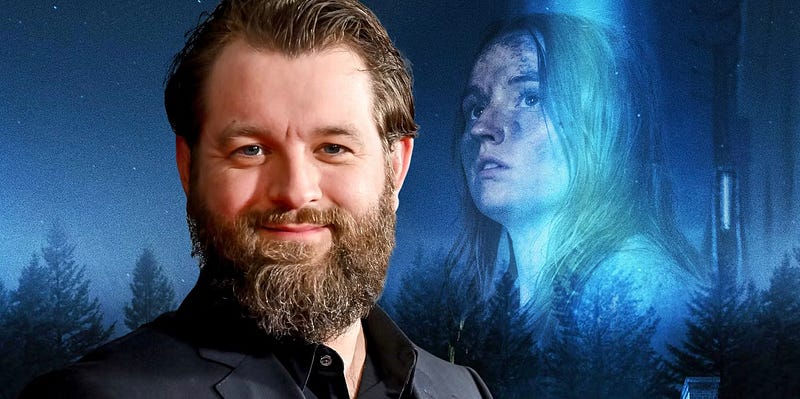
My conversation with the filmmaker whose writing credits include The Babysitter, Spontaneous, Love and Monsters, and No One Will Save You.
In Hollywood development circles, Brian is a popular figure. As evidence, three of his original screenplays have made the Black List: Your Bridesmaid is a Bitch (2010), Jane Got a Gun (2011), and The Babysitter (2014) putting him on the 10 Screenwriters to Watch in 2013 list. In addition, Brian has written and directed Spontaneous (2020) and No One Will Save You (2023).
I’ve known Brian for over a decade so in 2014, we sat down for an in-depth interview.
Scott Myers: Let’s start with your background. As I understand it, you have an interesting geographical thing going in that as a youth, you grew up in Pennsylvania, then you moved quite young to Ireland. Is that right?
Brian Duffield: Yeah, totally.
Scott: What was that like being a young person there? What memories do you have of that?
Brian: It was kind of miserable. In ’95, my parents decided to move to Ireland to be missionaries and so they took me and my two sisters along with them. We lived like an hour outside of Philadelphia growing up.
The transition to farm country Ireland, we were in County Kildare for a while, was pretty jarring. For instance, the school I went to there had three grades in one room with one teacher. So it was very much “Little House on the Prairie”-esque.
There was never a point where I wanted to stay in Ireland. I graduated high school and instantly moved back to the states the first chance that I got in 2004. I definitely had an unusual upbringing. I delivered lambs, which was crazy. At the time I did not enjoy it but thinking back on it, it was pretty interesting. I think it shaped me to be the person, writer, I am now.
Scott: I was going to ask you. Can you look back to specifically some ways in which that experience did affect the way that you think?
Brian: Yeah, absolutely, I think about it a lot. In terms of craft, I think what happened was when I was in Pennsylvania I was very much into pop culture, so I was a huge Jurassic Park nerd, a huge Star Trek: The Next Generation nerd, and then we moved to Ireland; both because of how conservative my parents were but also because it was Ireland, there was like a huge vacuum, in terms of pop culture that was getting to me or movies that were getting to me. I think there were at least four or five years between going to the movies when I was in Ireland just because there were so few theatres and I think what happened then was the school library, they had those junior novelization books and I would get those a lot.
That was kind of how we went to the movies, it was sneaking in those Junior Novelization books. I remember I snuck in Lost in Space. They had one for ET and Jurassic Park. Then eventually I began writing my own Jurassic Park sequels, and even if I wasn’t writing them, I was coming up with them.
It’s like learning the guitar, where you learn three or four chords, and you play Bob Dylan and Oasis songs. Then eventually start to realize that you can put your own chords together and make your own songs. That’s how I slipped into screenwriting.
So that’s how it kind of came about. I think most writers obviously are watching movies all the time, so I think I developed my voice by accident because I had nothing to mimic.
With regards to how Ireland effects my writing today, throughout all of my stuff there’s definitely a theme of loneliness. People have picked up on that. I think that has always stuck with me and I can see traces of that in everything that I write even if I don’t intend on it. Probably just because I’m a sloppy writer.
Scott: You know that’s interesting because you really do have a distinctive voice. Even the fact of the choices you make, or the spec scripts you’ve written, they’re such divergent genres. I wonder whether having grown up in that kind of petri dish over there, not like typical Americans living in suburbs that have access to movies all the time. Where that was allowed to emerge in its own unique way, just by virtue of you being over there.
Brian: Yeah, I think that’s true. I didn’t realize my genre hopping was a little unusual until after “Bridesmaid” sold. It was never something I was aware of. It was definitely an interesting moment when I realized that everyone just thought I was going to keep doing rom-coms. I think “Bridesmaid” is still the one and only romantic comedy I ever thought about writing. But you know, I love all different kinds of movies and books, and I’ll watch and read every genre. So it never really popped into my head that I couldn’t go from one genre to another.
I think how I start off writing from a scene or from a character, and then kind of figure out which genre best suits that. I’ve never thought of just writing a rom-com or a monster movie as a starting point. I think I’d be really bad at that.
Scott: So is it fair to say then that you have more of an instinctual approach in terms of the material you choose when you develop stories, as opposed to a more formulaic or hyper consciousness about the business?
Brian: Yeah, I definitely think about the business. I mean for me it’s a matter of… For instance, like for Monster Problems, the process of that was that I had been single for a three or four year stretch basically. It was like the three or four years where I just moved to L.A. It was like a Friday night and I was with my friends and it was like 9 p.m.
And they all started doing the “We’re tired, we’re going home” thing. I realized that they were all married and I was the one single guy, and it was 9 p.m. on a Friday night and I had no one to even hang out with.
So I was miserable in my own life and I thought that was a really interesting idea for a character and a movie. It was also a theme that I was living through. And being single can effect your self-worth a lot. I thought that was really interesting to write about.
So for a few weeks I was figuring out this character, but it was set in modern day L.A. It was basically an avatar for me trying to work out my single problems. I hated him so much as a character in modern times because I just wanted him to do all the things I was too scared of doing like online dating or going out and meeting people.
So while I was trying to figure out how I could get to like him more and make him fit in a genre where I wasn’t frustrated with him for not getting on the Internet, I quickly started trying to think about different worlds that don’t have the Internet and don’t have easy access to dating.
That’s how the world of Monster Problems came up. It’s the same kind of quest this guy had in the original, about a guy who is single who goes through this journey to get a girlfriend and then realized his self worth on his own.
Putting him in a world where there were giant monsters which gave him this ability to have these really physical obstacles to overcome instead of just overcoming things inwardly. Then I think I pitched it to my managers as a John Hughes movie with giant monsters. I remember I wanted to call it Raptorpocalypse just because.
That’s how all of my processes for spec have always been, just starting off with that theme and that character and figuring out what’s the best place to put them with the most dangerous obstacles.
I never learned how to do that. I think it’s just always how my brain has put things, for better or worse.
Scott: Let’s jump into Monster Problems as long as we’re talking about it. That’s really fascinating what you were just saying there, your process. How you went from that. It’s interesting because I remember reading a summary of it in the trades when it sold and it’s described as a post-apocalyptic road movie in the vein of Mad Max and Zombieland with a John Hughes-esque love story at it’s center.
Brian: I’ve still never seen Mad Max, so I don’t know what that’s about.
Scott: When I read it, I thought it’s “The Odyssey” meets Jurassic Park.
Brian: That’s cool!
Scott: Because he’s trying to get back to his Penelope, Odysseus, and he’s got this journey in which he has to face all these major obstacles including some, literally, monsters. Then for you, I know, I’m following on Twitter, that you are a huge Jurassic Park fan.
Brian: Yeah, definitely.
Scott: How much fun for you to physicalize those things that are inside himself outside himself in the form of a Cereberus Rex, right?
Brian: I can get really nerdy about how all the different monsters represent different dating obstacles. There are really specific reasons. I created like 20 or so monsters going in and then whittled it down by like 5.
Weird, nerdy teen stuff that I’ve never told anyone and that I probably never will tell anyone, but that’s how I came up with it. They’ll probably all get cut out just to hurt me.
Scott: You’re saying the actual monsters you came up with, Brian, where in some ways tied to dating experiences and whatnot? They sort of arose from that?
Brian: Yeah, yeah, in terms of either dating obstacles or the kind of people you wind up dating and trying to find relationships with and they’re not the right fit.
The biggest and most important thing about the monsters in Monster Problems was that all the monsters were single. It was an idea that I, well, it’s also a Jurassic Park idea to some extent, but it’s also something that I just wanted to build out thematically so he’s not just fighting what could just be cool monsters, but I wanted a reason as to why it was this kind of monster even if it’s never addressed or discussed. These creatures have made a lonely world a lonelier place, and it would be really boring if there were just packs of monsters hanging out. We’ve all seen that before. I thought it would just be funny, and hopefully a little meaningful, if Joel almost relates more to the monsters than he does to people.
I think that’s true to how I try to write, especially if I’m writing in genre. I definitely want it to reflect the character as much possible in whatever situation it is.
Scott: I think it’s one of those themes that you see in your writing which is, for lack of a better word, your stories are very personal. It’s like you go beyond this idea of we’ll create a sympathetic protagonist. You really ground the story in the life of the protagonist.
Just like what you’re talking about there. The very idea of creating a set of monsters that is somehow reflective of some of the psychological issues that the protagonist in Monster Problems, Joel, has had to face. That’s very character grounded. In fact, this idea, the basic premise that there is a post-apocalyptic world, these monsters have basically trashed our Earth so there are these pockets of humans that are living together.
Joel, the protagonist lives with this group, but he’s essentially a loner amongst these survivors, each of whom seems to be making out and he’s not, but there is this girl on a short wave radio that he knows in this other group that he essentially has a fantasy relationship with.
That sets the goal for him. Now he has to go find her, but, again, it’s grounding it in a very personal way. Does that idea of personal storytelling, does that resonate with you? Does that feel like something that you do?
Brian: Absolutely. I think for me that’s where my best work has always been, especially for Monster Problems. I think that for those things I was very much going through totally different experiences at the time.
I think song writers, Taylor Swift, well, not Taylor Swift, I think I’ve over used that example before, but song writers always sing about the crap they’re going through. I feel that for me as a screenwriter it’s no different except I’m really tone deaf at singing so that’s just been the avenue where I can deal with those issues and those fears, and it’s also how I make my living.
I can have fun with it and put giant monsters in it sometimes which is always a joy. I think if it’s not personal, I don’t really care, and if I don’t care about it I can’t expect anyone else to. I think it’s always come from that area. For me it has to be as personal as possible for it to work.
If it’s not that personal to me then I can’t expect it to connect. I can’t expect some reader to respond to it if I’m not responding to it on a personal level. I think probably why people like my writing is because they connect with it.
It’s funny, sometimes I’ll meet execs and they’ll assume things are way too true to life than they actually are. When Bridesmaid came out I had a couple of execs tried to set me up with people, which was hilarious. No one did. No one succeeded, at least, but it’s funny.
Scott: You know, it’s interesting. Let’s talk about that sort of personal screenwriting. In Monster Problems, basically at the end of a battle with a monster and you almost shift the perspective to the monster and realize that they’re about to die and it’s sad.
Even in the process, you yourself as a screenwriter can identify with these quote-unquote nemesis-like characters. Does that feel like something that you went through in your process?
Brian: Yeah, in Monster Problems especially, it was because I was single. My dog even gets lonely, so I tried to put that in all different monsters so even if they are trying to eat Joel or Boy, the dog, there is also this kind of excitement that they have, that there is someone else to spend a little bit of time with. Especially a couple of monsters in there where it seems really sad when they die and I think if you kind of go back, there’s no point where they’re actually harming or even intentionally harming Joel or Boy if they are, I think it is unintentional or Joel did something to piss them off. The different monsters along the way have this need for companionship and they interpret it poorly because they’re monsters. Just like most guys.
Scott: You also did this with Boy, the dog. At one point you go into the dog’s POV to see a memory of essentially why he, the dog is so lonely? You even said in scene description, “The saddest dog in the history of cinema.”
Brian: Maybe more than any character I have ever written, people talk to me the most about Boy. Up until days before I handed in my first draft of the Monster Problems, Boy was an anthropomorphic dog-boy. He was like a little child werewolf that just started following Joel around with two legs and the same characteristic and the same everything as the dog has in the final script. He didn’t talk or anything, but I never thought of him as a pet. I didn’t have my puppy at the time, so I was unfamiliar with pet obsession.
There’s a lot of world building in Monster Problems, and it felt like having a creature character took it a degree too far into nerd territory, where it takes away from Joel because suddenly you’re paying attention to a little CG dude all the time. It could have been cool but it kind of took away from Joel and now you are paying attention to this new creature beside him the whole movie where if it’s a normal dog, you kind of go with it. It was really just a matter of deleting two or three lines throughout script to turn him into a regular dog.
I wish I could take all the credit for being, like, “You’re really clever giving him like this great arc for a dog.” I totally backed into it by accident by starting him off as a mutant with a character arc and wound up editing it down to a dog. I really just backed into that one so it was just… It’s just how I like to write; kind of starting off from one place and figuring out the best route to go.
Scott: One way you that you keep the story focused on Joel is that you did voiceover narration. He’s writing a series of letters to this girl that he’s fantasized about. How is that using voiceover narration? Did you enjoy that?
Brian: No, it was really tough for me. I’d be thrilled to never use voice over again. I think the middle act of Monster Problems is the toughest act of anything I’ve ever had to write. It was really hard to have a character going through this kind of metamorphosis that he is going through while he’s only talking to a dog who can’t talk back to him. It was really hard to continue the tone that I wanted and so the letters came out of that. I thought about The Lord of the Rings a lot, where it’s kind of like Frodo and the ring. Every couple of minutes you get reminded about the ring and how it’s affecting Frodo and is pushing him forward on that quest.I actually kind of needed that where every few minutes you know he’s still going forward after surviving the previous monster attack. You kind of want that thing pushing it forward.
Scott: Yeah, to remind the reader and the audience.
Brian: It was miserable. I did not enjoy it. He’s a guy that doesn’t have any experience with girls so the letters he writes are really like sweet and innocent and cheesy. You really want to buy the idea that Joel is not after this girl to get laid but he really just wants to have a candlelight dinner and talk to a girl. It’s really hard too to have this guy writing realistic letters that aren’t coming across as really cheesy, in a bad way.
I had a really tough time, but I was really happy as how it turned out. I think I spent more time on that more than anything else I’ve ever written.
Scott: Well clearly it works.
Brian: I hope so. Thank you.
Scott: Let’s jump back a bit in time. As I understand it, when you sold your first spec script which is Your Bridesmaid is a Bitch, you were working in a clothing factory in Vernon, California.
Brian: Yeah, I was working at Lucky Brand Jeans. The script was probably over a year old at that point and I was onto other scripts, and other projects. I didn’t think anyone wanted it or even liked it. I sent it out to several agents and mangers and I couldn’t even get them to read it.
I was thinking of just going home to Pennsylvania and shooting it on a DV cam, super cheap. But even the idea of shooting that script basically in friend’s homes and with a really crappy camcorder was so unrealistic financially because I was so in debt after the economy died. I was temping at Lucky Brand Jeans, it was barely paying for my commute to get there and back. It was a tough time but it really worked out in a really strange way. It’s really cool.
Scott: The script made the Black List. Here is a plot summary: “After agreeing to do this at his sister’s wedding he said Noah Palmer realizes he may have made the mistake of his life after finding out that the woman who broke his heart is also part of the bridal party.” I know you are fan of Woody Allen…
Brian: Yeah.
Scott: Is this an homage to or perhaps inspired by Annie Hall?
Brian: I think it was a matter of… The exact situation didn’t happen to me at all but I feel like there are four or five pieces that happened to me that I glued together for the spec. It was the first romantic comedy that I had written and I think that was just because I knew that character so well because I was going through so many ridiculous things in my own life. I think everyone going to weddings has a dread of seeing an ex there, and you have to put on this really happy brave face, even when this person that destroyed you is right there doing the exact same thing.
At the time it was my worst fear in the universe and I wasn’t trying to make a comedy. I think breakups are really devastating when you’re in them and then a few years removed they’re often really, really funny and that is kind of how it happened. So it didn’t even start off as a comedy because it was just me like brokenhearted writing and then people started saying it was really funny and I don’t think I expected it to be funny necessarily. I think my voice errs on the comedic side of things and then as I rewrote it I leaned a little more into that.
Scott: It quickly sold after your managers at Circle of Confusion found it, in a matter of about a month or so…
Brian: I didn’t realize it was going sell. A college buddy of mine named Matt Downing was friends with my now-manager and gave him the script. He really liked it and he wanted to run with it. He told me he thought it could sell and I was like, that’s hilarious, but go for it.
I thought that’s just what they told all new clients. So they started sending it out and as soon as my shifts at the factory ended, I would drive across town for drinks or dinner or whatever with these different production companies. And whenever someone tells me they really liked the script, I just assume my managers called them and got them to buy me a drink as a favor. Like, have pity on this poor kid we just signed. I was taking it seriously because I was really nervous and really excited to be having some kind of forward momentum, and to have free drinks and food while making $9 an hour. I don’t think there was ever a point where I thought, “Oh yeah, this is going to sell”. I didn’t think anyone had even read it, I thought they were just lying to be nice.
Then when I met with Skydance, who ended up buying it, I had this moment mid-meeting, while I was talking about it, that I realized that this was a very real situation, and it scared the crap out of me. Then it sold the next day to them, which was incredible.
But it was like this very weird… I try to talk to my parents in Ireland every couple of weeks. There was one call where nothing was happening in my life, and I was really in debt and kind of miserable. Then by the next call I had sold a screenplay to Skydance.
Scott: Let’s talk about the script. When I read it, I was reminded of an interview I did with Scott Neustadter and Michael Weber about 500 Days of Summer, when they wrote that script, their attitude was they were going to break as many of the so-called screenwriting rules as possible. Your script has something of that feel, like you just weren’t concerned with convention. For example, at some point, the Protagonist Noah is in some deep emotional pain, and he goes on a wonderful tirade in a bathroom that’s nearly two pages long. It’s like something Paddy Chayefsky would admire. But a script reader would probably look at that monologue and say, This guy’s obviously an amateur, right?
Brian: Yeah, again. That’s a scene in The 25th Hour that I just stole. Ed Norton’s in the bathroom and on the mirror, someone’s scratched in “Fuck You” and Ed Norton just goes, fuck you! And he goes on this amazing, scathing, blistering tirade about New York.
It’s my favorite Spike Lee scene, ever. It just goes through everything he hates about New York and it’s so passionate, and it’s so ugly, and the more it goes on, you kind of start to understand this guy is a guy who really loves New York. Then at the end of it, it has I think the same scene very similar as in Bridesmaid where he kind of turns the subject back on himself. For me, that’s what Your Bridesmaid is a Bitch, that whole movie was in a nutshell.
Again, that came out of, I was cheated on, and the next day I watched The 25th Hour. But, I related to it so much. Even though our situations could obviously not be more different. That’s kind of where that scene came from.
It’s funny, because at the end, I think it’s classic, petty boyfriend complaints. But hopefully by the time he finished it, you kind of realize how much this person actually meant to him beyond all the pettiness and all of the ugly things that they did to each other. He wouldn’t be so broken and angry if she didn’t mean the world to him. That’s really where that scene came from. It wasn’t a matter of me thinking I could breaking any rules, it was just a matter of me thinking I could rip off David Benioff.
It’s funny, not enough people have seen The 25th Hour. I think a comedic version of that scene is exactly my sense of humor. I feel like nothing there’s funny about Noah in Bridesmaid. The guy is not having a great time.
So as I wrote it, I didn’t want it to be a miserable break-up movie. So I just started re-appropriating really dramatic scenes and sneaking them into a romantic-comedy. There’s a scene where all the dialogue is from Saving Private Ryan. Because for Noah, he’s living a really, really serious, R-rated drama. And everyone around him is living a Nora Ephron movie. So I thought the juxtaposition of the two would be really fun, and hopefully keep Noah from being a whiny hero, which is an oxymoron. He just wants to avoid his problems and go home and sleep, but he’s still man enough to put himself in this situation of hell for a few days for his family, if that makes sense.
Scott: It makes perfect sense. It’s like a hero’s journey. He has to go through this catharsis. Again, it’s like the same sort of process you went through with Monster Problems, where you physicalized something that he fears the most in order to confront it. Unless he does that, he’s going to be stuck for the rest of his life. He has to have this experience in order to move forward.
Brian: Yeah, it definitely helped me move forward in my life. It’s this really weird bizarro, thing where writing Noah really helped me get to something, because I thought, “Great, I like this character just for trying” and I wasn’t really trying in my own life. So I wanted to be a little more like Noah and a little less like me. He got a little bit of hope about the future. It was like “This guy made it, so I can make it too.” It was so funny. To this day, I’ll get Twitter messages from people, somehow got a hold of the script, and they pour their hearts out to me about how they’ve been cheated on. It’s sad that I’m the person that they can talk to about it. It’s also very neat.
Scott: I would be remiss if I didn’t talk to you about your unique approach to scene description. For example, on this whole subject of unfilmables, I’m sure you’ve heard about that.
One film description in “Your Bridesmaid Is A Bitch” is about Noah eating Taco Bell on the beach, “because he’s unemployed and, because he fucking can”. Or a scene description like, “They look like the Freewheelin’ Bob Dylan album cover, but at night, in costumes, and 40 years later, so not really.” Or, “Skylar hangs his head in shame and enters Noah’s box. (which will hopefully be the name of my next porno script).” I’m curious…
Brian: I got so much stuff into one line. There’s a weird habit of people writing reviews of your stuff and sending it to you, and sometimes, they’re really negative. Someone sent me a negative review of my spec that they wrote, which is sweet of them. That’s when I stopped reading them. But I agree that that last line is shit.
My writing has really calmed down since then. The reason why I think the script has that voice is because I wrote it in a really bizarre setting. Almost the entire movie, ugh, it’s really upsetting. I knew I was going to write this script. My sister and I were flying to Ireland to visit my family for Christmas. It was a 7 hour flight that turned into a 23 hour flight, and it was so hellish. I sat next to this drunk lunatic that was very handsy.
On the flight, this guy had a stroke, and we had to turn the plane around, and land in a blizzard in Nova Scotia. We were stuck there for like eight hours until the blizzard cleared.
I’m terrified of flying in general. I wrote probably 80 pages of that script, I knew where I was going, but I wrote it almost word for word for what it was when it went down.
You can see how anxious and loopy I am in the scene description, because I don’t know if I would have written in that way in general, if I had just been writing it in a normal setting. I was so stressed out, so miserable, and also heartbroken. I had this person grabbing my face next to me, and so I was just tapping away furiously for 20 hours straight. I feel a lot of these lines are definitely in my voice, but they also came out of a really stressful situation.
But anyway, in general, I try to write each script in the lead characters voice. It’s not first person, but the voice of the scene direction, as it were, in the script was very much in Noah’s voice, is very much in Joel’s voice. Vivien Hasn’t Been Herself Lately is probably the only exception to that rule, because writing the scene description in the character’s voice would have meant handwriting it in blood and mucus.
But the other scripts I’ve written have very much been writing in the character’s voices as much as it can be. That’s what I try to do to make it feel personal. You’re reading this person’s story, and this person is so invested that they’re bleeding out onto the scene directions. They were really passionate about it. Scene description is usually so boring to write (and read), but I’ve found if you try to write it in your lead’s voice, it becomes really enjoyable.
Scott: I definitely want to talk about Insurgent, which is a pretty unique situation. It’s a sequel to Divergent and that whole book series by Veronica Roth.
It’s interesting because it’s not only an adaptation, which has its own challenges, but also the fact that you’re writing a sequel to a movie that at the time hadn’t even come out yet.
Brian: Yeah, last year was a really a weird year. For a while, I was debating even sticking to screenwriting. I was really quite serious about either writing graphic novels or just pursuing a different career entirely because I had been in an incredibly awful film situation. It was just incredibly abusive, both to myself and other people on the project. I kind of fell out of love with screen writing.
So I was at home, trying to figure out what I wanted to do with my life and on queue, Red Wagon had sent me Divergent. I really liked Doug and Lucy at Red Wagon as people and also when you look at what they produce, they just have this humongous body of work with some of the greatest filmmakers that have ever lived. They’re real producers, and I really wanted to work with real producers for a change.
I always thought it would be fun to be part of a pop culture thing at some point in my life. As I was reading Divergent I was trying to imagine what the second book is going to be and you kind of get to the third act of Divergent and Veronica, the author, kind of blows up the world in this really fun and unique way and so the sequel becomes this… you have no idea where the story is going to go.
So I asked my team about it and they said, well, Neil Burger is directing the first one right now. Shailene Woodley is in it and Miles Teller is in it.
I had just seen The Spectacular Now a few months beforehand, and those two are just unbelievably talented. And then they were like, P.S., Kate Winslet’s the bad guy. And I was nowhere near arrogant enough to turn this kind of thing down because how often am I going to get asked to pitch on a “Kate Winslet is hunting Shailene Woodley” movie.
I was at a really low point in my life at the time because of the aforementioned incident, and the character of Tris, who at the end of Divergent, is in a very similar point in her life, so she’s really depressed, doesn’t know why she should go on or what she should be doing. I was like, “I can write the shit out of this. It’s exactly where I am in my life right now!” So I went in to pitch and basically, I was like, that’s how I feel right now.
Tris’ character is raised in a really conservative household, from the Abnegation faction. My parents are missionaries and I am a screenwriter known for a three page “fuck you” monologue. So I made the pitch as personal as possible, because that’s the way it was in my life at the time and it’s how I connected particularly to Tris.
It was a very surreal experience where I get to see trailers of my characters doing things before I’ve written things for them to do. I went to set and saw everyone in costume on set. It was bizarre.
Scott: You said there is something you want to be doing next as a director.
Brian: Yeah dude. I’m so excited. I wrote it over a year ago now, and I sat on it because I thought I was going to have this experience on a film set with this incredible director, so I worked with her as much as I could. Unfortunately that movie didn’t work out, but I still learned a ton from her and she was so encouraging to me to take a swing at things.
That situation really exploded, but in a way I felt ready to direct because I knew how I wanted to act on the set and how I wanted to shape a story of mine and protect the writing a little better than have it protected by other directors. I knew I wanted to have strong producers, and I knew I just wanted to surround myself with people that were kind, and good.
It’s something that I am really excited to get into. It is terrifying, but it’s really exciting at the same time. I wanted to make sure my first movie had a little bit of everything I’d ever want to do as a director, in case it’s my last movie too. I think it’s the best thing I’ve ever written on top of that. As you can tell, I’m really stoked, and excited and hope to find some actors crazy enough to go on that trip with me. We’ll see how it turns out.
Scott: Some craft questions for you. How do you come up with story ideas?
Brian: Ouija Boards. No, but honestly, I usually know what I want to write about first, and take it from there. Every now and again I’ll have a unique character or world that I’ll pocket and save them until I have the right theme to plant them into. I think world-building and character-quirking for the sake of it is like a flashy trailer for a crappy movie.
Scott: How important do you think the story concept is to the overall strength and commercial viability of a screenplay, specifically a spec script?
Brian: If it’s a spec script and you’re not thinking about how it fits into the market, then you’re not doing a huge chunk of your job. If it’s something you think will have a hard (if not impossible) time selling, you have to figure you’re spending however many months designing a really pretty business card, while the guy beside you is working on designing a really pretty movie. Now that doesn’t mean everything you write has to be a summer blockbuster, but you should be aware of what type of thing studios seem to drift towards.
Think of it like you’ve been dating this great girl, and she wants you to meet her dad. Some people can probably dress really strangely and talk about how they went to clown school for college and if they’re lucky one dad in a hundred will really click with that dude and see that beyond all that crazy shit, he’s actually a good boyfriend. But smart guys probably dress nice, don’t talk about stupid shit (even if it’s true), and try to convince that dad that they’re not an idiot and worthy of their daughter’s affection. You want to be impressive to studios because you’re a good writer, not because you wrote a really weird, attention-grabbing thing that no one will ever be able to make.
And I know there are dozens of exceptions to the rule every year. Those are almost always exceptions because those writers are just that good (and almost all of the time are built around really strong actor-baity characters, for what it’s worth). But as a former script reader, I can tell you it’s a very small percentage of “sample” scripts that go out and make that kind of splash, and as a reader, you stop reading the scripts that are clearly not commercially viable and not written by a genius much faster than you would a terribly written but very commercial spec.
I think if you’re writing something that’s not necessarily commercial, then don’t refer to it as a spec. That’s probably for you to direct, or your agents to bust their balls trying to package on the fringes of the industry. And of course those are often the best movies lately. I happily write both, and we would send that more easily commercial scripts out around the town, and try to package the others. It’s an increasingly tricky needle to thread.
Scott: How much time do you spend in prep-writing and which of the aspects of prep do you tend to devote the most time and focus to?
Brian: If it was a spec, or now just ideas that I hope to get a chance to direct, I’ll sit on them for as long as I can until they feel cooked. I loathe outlining and like to find my way once I start writing, but by the time I start writing I usually will have had a good six months plus of just thinking about these characters, where I assume they’ll end up and what obstacles they’ll find along the way. It’s really just an internal thought process. I almost never even mention something out loud to anyone until I actually start writing it after all that time.
Scott: How do you go about developing your characters?
Brian: I find that by starting with theme, you instantly gravitate towards a character who is almost at an opposite place to deal with that theme, and then throw them into the movie and see what happens. Just by doing that, you have an interesting character who has a big obstacle to overcome, and it becomes really fun fleshing them out and figuring out the nuts and bolts of why they’d be the way they are. Lately I’ve been really drawn towards pushing character as far as it can go, to the point where they’re barely recognizable as human, and figuring out how to relate and understand that character. I think I’m just hungrier as a writer to see what I can do, especially with character.
Scott: What about dialogue? How do you go about finding your characters’ voices?
Brian: I had a teacher in college that really hated my dialogue, and I think all my classmates did too, and I think they all did because it was crap. I can’t remember learning any tricks to writing better dialogue aside from just writing a lot of scripts and getting better at it. Besides structure, dialogue is probably the writing muscle that you can work out the most by writing as much as possible. Eventually you should understand, “would this character say that? And if they would, would they ever say it like that?” It doesn’t ever have to be flashy dialogue, but it does need to be truthful.
Scott: How would you define theme? How important is it? Do you start with themes or do they arise in the context of developing and writing the story?
Brian: I almost always start with the theme. I can’t even really think of a situation where I didn’t (if it was an original). Usually it’s a theme I want to explore because it’s really locked into my head as a person, as something I’m going through or struggling or interested with, so even if I throw out the characters or genre surrounding that theme a dozen times, the theme stays intact because it’s an itch I need to scratch. I think theme is deathly important. I read a lot of scripts and watch a lot of movies where I couldn’t tell you what it was really saying beyond a couple of interesting characters doing something interesting. Which is fine sometimes, but it always feels a little surface level to me. I just saw a movie that I’m sure is going to get nominated for a buttload of Oscars that I’m almost positive isn’t about anything thematically, so I’m probably definitely wrong.
Scott: What do you think about when writing a scene? What are your goals?
Brian: Not to be too blunt about it, but just that it’s not boring. If “Save the Cat” is a religion, then I’m an atheist. I don’t really believe that certain scenes need to be in certain places or last a certain amount of time. I think there are general areas where your acts should break down, and I think most of my scripts naturally have three distinct acts, be they location or event based. So for the scenes, I’ll let them last for as long or as short as I need based on really the boredom factor. If I’m getting bored writing it, it’s either not working or I’m over-doing and trying to be clever and impressive. Following my main character through the scene almost always helps, figuring out what he/she is either doing or what is being done to them and how they can get out of it, and then moving on.
Scott: What keys do you have to write entertaining scene description?
Brian: For some scripts, definitely trying to make it feel either in the main character’s voice, or at the very least part of their world. This is especially true of the more comedic scripts — the heavier dramas don’t really lend itself to it, so I strive for brevity there. The scene description probably sets the mood for the script faster than anything else — it’s really the first impression you give off after the title, so I try to be aware of that as much as possible.
Scott: When you finish a first draft, you are faced with the inevitable rewriting process. Are there some keys you have to rewriting your scripts and if so what are they?
Brian: When I used to write specs I usually had been sitting with and internalizing the idea for so long that the first draft was never exceedingly different from what went out. It’s usually tonal clarifications. So in BRIDESMAID it was figuring out that balance of comedy and heartache, and keeping Noah on the side of doing his best to not let his misery show and not of him being whiny or pathetic. Structurally, because I rewrite a lot as I go since I don’t outline (and really like short specs) they would never change too much. For the script I’m directing, a lot of the rewriting was very specific to the main character, and doing my best to give something so evil an arc, as well as separating her from being just a monster or so unappealing that she’d be unwatchable.
I’m a huge nerd for editing. I will spend gleeful hours at night figuring out how many words I can take out sentences to make the scripts shorter. I think I enjoy that part so much because it’s basically the victory lap. The hard work is done, and now you’re just dressing it up.
Scott: What is your actual writing process?
Brian: Typically Monday to Fridays, usually at the same spot. I should probably get an office. I even have a lot of dinosaurs and art for an office ready to go, but I’m afraid once I get the actual office I won’t be able to work there and it will all be for nought. For Insurgent, I actually wrote the majority of it at a food court in Sherman Oaks. It was pretty deserted during the day except for an elderly lady book & mahjong club, which was amazing. I thought about getting them copies of Divergent, but I never did because they have probably never noticed me, and I’m a cold, selfish man.
For some scripts I make playlists (here’s my Monster Problems one, which is all songs about being lonely) and for others I have a hard time finding the right sound for it so I just write quietly, or with the TV on. My fiance got our puppy DogTV for a month, and that entire soundtrack is carnival music mixed with people saying “I love you! Good boy!” over and over again, and I would not recommend writing to that.
Scott: What is your single best excuse not to write?
Brian: Last year, it has definitely been exhaustion, which is probably more of a medical thing than anything. I think I’m typically too neurotic to not write. When it’s an assignment, I’m always terrified they’ll hate me, so I work my ass off. And besides, they give you a deadline, so you literally can’t afford to dick around. It’s the one away where complete terror really pays off for me.
Scott: What do you love most about writing?
Brian: I don’t know, man. I’ve been thinking about that, and “why do I write?” a lot lately. It’s fun to create. I keep trying to come up with something more insightful and profound, but that’s all I got!
Scott: Let me round this out with that classic question, what’s your advice that you give to aspiring writers, aspiring film writers? How do they go about breaking in the business?
Brian: I certainly don’t know how to break in because I did it so much by accident. A college buddy of mine gave it to somebody else without telling me. Everything happened to me because of that. So I think part of the thing is obviously give your script to everybody possible. Even if they’re not necessarily in the industry or whatever. I think most, probably 99 percent of the people won’t read it and one person will hand it off to other people. That is exactly what happened to me on Bridesmaid.
The biggest piece of advice is really, if you are a writer, finding producers who are actually producers because there is nothing more damaging to you or your writing than producers that are only that in name. Find producers that will fight on your side. Don’t give your scripts to producers who back down from a fight for you, or who throw you under the bus in the name of “moving the project forward”. That’s basically like your spouse knocking up someone else to move your dream of having a kid forward.
Once you find those producers that love your material and you feel that they will protect your script, find directors that love the materials more than directors that just need jobs. The same goes for every aspect of the job and project. Surround yourself with good, kind people.
The thing that I have been really passionate about in recent months is encouraging writers in protecting and taking care of each other. I went through a really crappy film experience last year, but the most beautiful thing that came out of it were these writers that I was like huge fans of reached out to me on their own and they would take me out for drinks. They kind of kept their wings around me a little bit and it saved my life, literally, I think.
I’d love to encourage writers to reach out to me and ask me about my experiences with different companies if they’re thinking of working with them. I think there’s a lot of us on twitter right now that are more than happy to help each other out. Anyone who is a writer on twitter is probably open to answering any questions. For me, I definitely would not be a screenwriter right now if it not were for all these other screenwriters that kind of came out of nowhere and really protected me. And hopefully, I can do the same for other writers who are going through the same, awful situations.
Here is a trailer for Spontaneous.
Here is a trailer for No One Will Save You.
For more Go Into The Story interviews with screenwriters, filmmakers, TV producers, and industry insiders, go here.