Go Into The Story Interview: Brian Arnold
My interview with 2021 Black List writer.
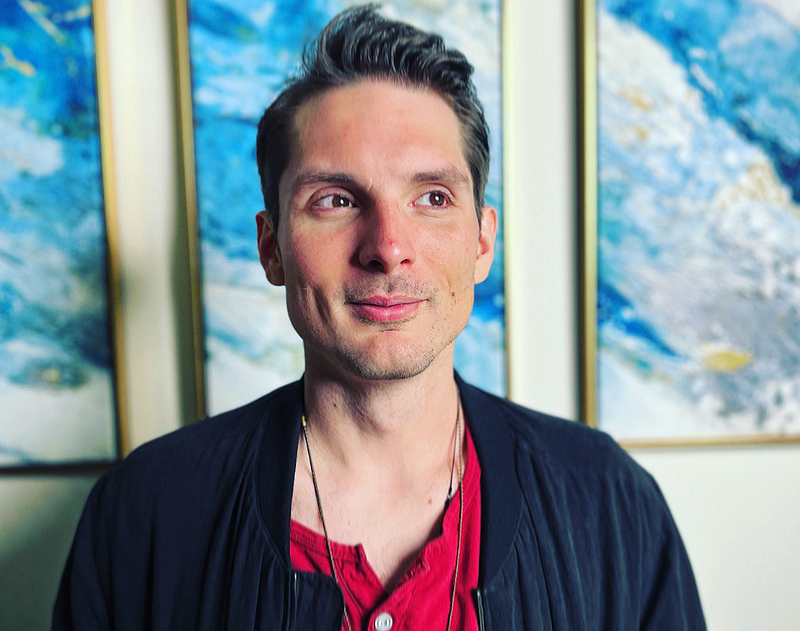
My interview with 2021 Black List writer.
Brian Arnold wrote the original screenplay “In the End” which landed on the 2021 Black List. I had the opportunity to chat with Brian about his creative background, his script, the craft of screenwriting, and what making the annual Black List has meant to him.
Here is my interview with Brian.
Scott Myers: First of all, congratulations on making the 2021 Black List.
Brian Arnold: Thank you.
Scott: Let’s start with your background. I believe you’re from West Virginia.
Brian: I am from West Virginia, yes, sir.
Scott: How did you develop an interest in writing?
Brian: I always loved movies and wanted to be involved in movies in some way, but living in a small town in West Virginia, you don’t really see a path to it. That doesn’t feel really feel like an option. But, the desire was always there.
Even as a kid, I remember in middle school entering a short story competition. The story I entered was a sequel to the “Naked Gun” movies. The first screenplay I ever tried to write, I was 14 or 15, I wrote a draft of “X-Men 2” and sent it into Fox. I printed it off, mailed it to the studio. Never heard back. Very rude.
[laughter]
Brian: It was a dream and a passion for a long time and then years and years of chasing. I did the practical thing and got a degree in broadcast journalism. At the time, I was like, “I don’t know how I’m going to ever do film. Film seems impossible. Maybe I can do this and it’ll be close enough and I’ll be happy enough.” I was not.
I’m glad I got the degree and met great people, but it just wasn’t the field for me. Eventually, finally, it was like, “I have to move to LA. I’m going to give this a real shot,” and I did, about ten years ago now.
Scott: I want to jump in on this 14- or 15-year-old version of Brian, who’s writing a screenplay and sending it off to 20th Century Fox. The first thing that comes to mind is how did you even know to write a screenplay?
Brian: If I found it, I’m 99 percent sure it wouldn’t be in the right format. If I remember right, it looked more like a stage play, with, I’m sure, long blocks of action, and then it’d have dialogue off to the left side.
But, when I was like 15 or 16, not long after that, I talked my parents into buying me my first screenwriting program. At that time, I think it was Movie Magic Screenwriter. That was my first, “Oh, this is what a script looks like.” I started reading scripts that you could find online, and just getting into it, and self-teaching.
Scott: I guess that explains it. The reason why Disney swallowed 20th Century Fox is due to the bad karma they generated by not getting back to you when you submitted your screenplay to them.
Brian: [laughs] Fox doesn’t exist anymore and I still do. I outlasted them. That’s my claim to fame. But if Marvel does want to call me about X-Men, I’m here. I’m ready to listen.
Scott: You worked in journalism for a while?
Brian: I was a morning producer for a local NBC affiliate back in West Virginia. That was for not that long. Probably, a year or maybe even a little less.
It was a very small station. I was morning producer, so I was working like 11:00 PM to 7:00 AM shifts. It was such a small, underfunded location that during the commercial breaks I’d have to run into the newsroom and change the camera angles and shots and stuff, and then run back and then keep producing. It was an experience.
Scott: Maybe that set you up for going off and doing the Robert Rodriguez, Steven Soderbergh directing, editing, writing, producing thing.
Brian: Maybe. [laughs]
Scott: You move to LA. Your bio says you were a tour guide, popsicle maker, movie-theater usher, background actor.
Brian: I’ve done a lot of jobs.
Scott: Popsicle maker?
Brian: [laughs] Yeah. I didn’t last too long at that. It was a fancy juice company, and they made their own popsicles in-house. I would be pouring the molds and freezing them and all that. It’s a more fun title than it was a job.
Scott: I guess popsicle maker segues nicely into your comedy background. You’ve been doing I.O., Upright Citizens Brigade, Second City. How did you get into the whole comedy thing?
Brian: My dad’s a big comedy guy. It was almost like a rite of passage thing of like, “OK, you’re old enough now. We can watch ‘Naked Gun.” “Now, you can watch ‘Airplane.’” “Now, you can watch ‘Animal House,’” etc. It was a weird milestone thing for me growing up.
And, my family would watch “Whose Line Is It Anyway?” together every week. That was my introduction to improv. Before I moved to LA, I lived in South Carolina for just a little bit. There was a new improv theater there, called Carolina improv Company. Their headlining show was “Whose Beach is it Anyway.” I actually took my first improv classes there.
It helped me realize that I was decent at this stuff, writing and performing. It gave me more courage to finally move to Los Angeles and give this career a shot. Within a month, I was like, “I don’t know anybody here. I don’t know what I’m doing here. I’ll just take an improv 101 class, have some fun, and maybe meet some other writers and actors and people like that.”
I ended up falling more and more in love with improv as an art form. Improv and sketch comedy were a huge part of my life for five or six years, at least. But, features are my first love, so I started doing sketch and improv a little less to really focus on writing for film and tv again.
Scott: After you become rich and famous, please feel free to relocate to Chicago, the home of improv comedy.
Brian: Absolutely.
Scott: Create a sketch TV show based out of Chicago, and we’ll be very happy about that.
Brian: I’ve never been to Chicago, so I would love that.
Scott: I want to jump to your script In the End which made the 2021 Black List. Here is a plot summary:
“In the near future, terminal patients are given the opportunity to go out with a bang with personalized VR perfect ‘endings.’ When the best transition specialist gets far too close to a patient, he finds himself questioning everything in his life.”
What was the inspiration for this story?
Brian: That story has been rattling around in my head for years, but I could never quite figure out what it was. When I was in high school, my family and I got into a car accident. Luckily, everybody was fine. A couple months later, my dad had a heart attack, again, luckily, everything was fine. He was okay. But, it was a really scary, emotional time.
My dad has a pretty dark sense of humor. I’m sure that’s where I got mine from. When he was feeling better, out of the hospital, my dad would joke about all the better, more exciting ways to die. He’d say, “When I do die, that’s not how I want to go out. I want it to be like this.” We’d come up with these jokey, wacky death scenarios of the funniest, coolest ways we could die. That running joke started eating away at me, that there was really something more to this idea.
There’s something so universal and human about the looming fear of death, which is the emotion I wanted to ground the movie in. People at the end of their lives, reflecting on what they did or didn’t do in their lives. Characters focused on helping their patients complete their stories. But, I also wanted to balance that out with these sort of “Choose Your Own Adventure” death experiences that can be funny, exciting, emotional, or hopefully a combination of all of the above.
Scott: You have a background in comedy, yet at the center of this story, you’re dealing with death. Was it much of a stretch for you to tackle such a serious subject matter?
Brian: Yes and no. Some of my favorite comedies when my sensibility was forming do such a good job balancing humor and emotion. A show that had a big influence on me was “Scrubs.” “Scrubs” was so good at being extremely zany, and then also making you cry by the end of this episode.
That was something that I always knew I wanted to try to capture. If you can get the heart and make people cry, but also make them laugh so they don’t even see this tears really coming, that’s the sweet spot I’m trying to aim for.
Scott: Could you describe what these “personalized VR perfect endings” are like?
Brian: Without giving too much away, our main character is this guy who works at an end-of-life-care company and whose job it is to meet with terminal patients and learn about their lives, learn about their regrets, learn about what they did, didn’t do in their lives. And from that, build them the perfect ending to their story with a virtual reality experience. It’s basically letting you go out in a way that’s closing the book on your life. That’s the way I like to think about it.
Scott: The company’s called Ascensions.
Brian: Its company’s called Ascensions, yes.
Scott: Of course, having worked in Hollywood as long as I have, I’m thinking, the movie the Mighty Ducks became the Anaheim Mighty Ducks. You may be looking at major profits because Baby Boomers are dying, all sorts of Ascensions franchise possibilities.
[laughter]
Brian: When I was writing it, I did start to see articles, and maybe this was already happening, but it was new to me, but I started seeing these articles. Companies were providing magic mushrooms or LSD for dying patients and other companies putting together end of life pods and that kind of thing. It’s weird how that works sometimes. Art and life blending together where the things you write start seeming to pop up in the real world. I’m not saying I’m a prophet, but I won’t rule it out.
Scott: If you tell me you wrote a script in 2012 about some COVID-type thing, then I’m going to say, “All right, you need to stop writing and go back to popsicle making.”
Brian: [laughs]
Scott: Let’s talk about your protagonist, Peter Grimsby. For him to be in his 30s, he’s a transition specialist. You mentioned these VR perfect endings, and he’s got a very specific function in terms, maybe could describe what his gig is.
Brian: I think of him like the ferryman of the ancient myths, but in a modern, digital way, which is such a weird sentence. But, he’s a person whose job is to guide people from this life to the other side through these virtual departures.
He’s almost a therapist in a way, getting to know these patients, learning their life stories, and then he and his team of engineers build this virtual reality perfect ending for these people. It’s definitely sci-fi in a lot of ways, but I always saw almost more of a magical realism to the technology and what Peter does.
I compare it to something like “Eternal Sunshine of the Spotless Mind,” where you get just enough of the science to understand it and the world, but it’s more focused on the characters, relationships, and story. His job is just to get to know these clients and end their lives in the best possible way.
Scott: In a way, he’s like a screenwriter. He’s doing research, and then creating a narrative, right?
Brian: There’s definitely an element of that. Peter is this creative person, and his art is making these endings for dying people. It’s an emotional job that kind of wears on him. But, he can’t help but put his everything into it, immerse himself in it, often at the expense of living his own life. And, without getting too heavy, I think that’s something a lot of writers probably can relate to. I know I do.
Scott: Of course, his last name is Grimsby, that’s appropriate for his line of work. The script’s got so many of these little details. For example in the Ascensions facility, there are two rooms. There’s the Jordan Room where the family members and friends hang out while they watch the client who’s going through this VR experience until the client passes away.
That room is called the Nirvana Room. The Jordan Room is like the River Jordan. Then, of course, Nirvana is the ultimate state in Buddhism, which is you no longer exist. I’m assuming that was intentional.
Brian: No, I just really like the band. [laughs] Yes, that was definitely intentional. I did do a lot of research on different religions and myths and stories that would… I like to sprinkle those things in and hopefully not in too much of a heavy-handed way, but definitely in a way that’s symbolic and meaningful to me, and hopefully others.
Scott: Peter is literally overseeing people passing over from life to death. Could you describe his rationale for why he does what he does?
Brian: I’m a little hesitant to give too much away, but he’s definitely somebody who has experienced loss in his life. Somebody he loved died suddenly and unexpectedly, with unfulfilled dreams and goals. So, he begins the story with the rationale of “that person died without experiencing so much that they wanted to experience, I want to help other people die without regrets.”
He’s trying to help people the only way that he relates to and knows how. He’s somebody who, because of that experience, really is focused on death, endings, and that kind of thing. That’s why he’s in this job. The right person to do this job, and also, probably a person who maybe shouldn’t be doing this job.
Scott: He lives in New Orleans. In fact, I think if I remember correctly, he said he lived in a house that was a block away from a cemetery for quite some time. Any other reason why New Orleans?
Brian: For sure. The whole movie is about impermanence and death. There’s a whole subplot about the house he’s living being threatened by a storms and floods. That’s something New Orleans has dealt with and continues to deal with.
Also, New Orleans has such an interesting relationship to death. Their funerals are often celebrations, with jazz bands and parades. For a movie all about death that’s hopefully joyous and funny and heartbreaking at the same time, New Orleans just felt like the right place to do it.
Scott: Your story has got a cast of interesting characters including Gale. Let’s talk about her. I grabbed a few sides just to give people a sense of this, sort of her Greatest Hits.
She says, talking about her life, “I saw a lot of shit, did a lot of shit, ran with the bulls, swam with the sharks, marched with penguins. I decided a long time ago to ride this thing till the wheels came off, which they eventually did, and I think I did a damn good job of it.”
That kind of gives you the spirit right there. Another line she has — she’s gettin’ into her car, a Mustang. “Just because I’m old, half blind, and prone to fits of violent rage doesn’t mean I can’t drive my own fucking car.”
Then the final one. They’re about to smoke some pot. She says, “Don’t worry. It’s not medicinal. I bought it off a guy who lives behind my building. I don’t know what it’s laced with, but whatever it is, I like it.”
Brian: Yeah. [laughs]
Scott: Where did Gale come from?
Brian: There are definitely elements of an amplified version of my own grandmother, who liked to make a lot of those off-color jokes, not to this degree. She wasn’t a big pothead or anything. Unfortunately. I think it would have mellowed her out.
It’s definitely a heightened version, but there would be times when my cousin and I were staying with her. And we were like, ”Hey, Nana, just come out to the bar with us. Let’s have fun tonight.”
She’d say, “Oh, no, no, no. Get out of here. As soon as you’re gone, I’m going to have an orgy.” She would always joke around like that, and I wanted to bring her energy to the character a little bit.
And, I think the script wears some of its influences on its sleeves. I always wanted to take that energy and write something that I sometimes describe as “What if ‘Harold and Maude’ was a ‘Black Mirror’ episode.”
Scott: I love that movie. You got the songs layered through there. I kept waiting. When’s the Cat Stevens song?
[laughter]
Scott: Your story can be seen to be an homage to “Harold and Maude.” You’ve got the older woman and the younger guy. Both of the younger people in the stories are connected to death. About Gale, she may talk a lot of shit, but she’s a mentor figure, isn’t she? She helps guide him to forge a path out of his current existence.
Brian: I think so, yes. We have a guy who’s very much focused on his job, building these experiences for people who have these regrets of things they haven’t done, and this woman who seems like she’s done everything you can do in life. What could she possibly regret? She’s done so many things that Peter wishes he could do with his life. These grand adventures.
But, she’s also this lonely woman counting down to the end of her life. And, she’s seeing in Peter a reflection of her own regrets. That he’s also lonely and needs to learn to let other people in and share his life, before it’s too late.
He sets off to help her on her journey to the end of her life, but he’s also learning through that experience what’s missing from his own.
Scott: He not only writes these things, he directs them and then inserts himself into these VR experiences. Imagine any of us could come up with whatever our final narrative could be. He’s participating in these things. World War II aerial battles, Broadway shows, and science fiction sagas.
The irony is that he’s living out these fantastical experiences in a virtual way, but himself, not living much of a life. He’s never even been outside of New Orleans, so he’s living a pretty isolated life.
Brian: Yes, absolutely. That’s the thing that I think about for myself. A lot of writers probably also struggle with. At least I hope I’m not the only one. Being so involved in your career, your projects, and managing different things that you realize you’re not taking enough time for yourself to live a full life.
That’s something that I think about and struggle with. A lot of that came out in Peter.
Scott: Let’s talk about another character who plays a prominent role in Peter’s psychological and physical journey. That’s Merrily, M-E-R-R-I-L-Y. She’s the daughter of one of Peter’s customers, who he leads through a departure. How would you describe Merrily’s character?
Brian: She’s definitely having a hard time. Like you said, her father has just passed away and chose to do that through this service. She didn’t totally understand the decision, didn’t support it. She’s coming into the movie and doesn’t trust Peter, doesn’t like what he does.
She grows to see how genuine he is and how much he really worked to give her dad this perfect last moment. She starts to see him as a human being.
Merrily also definitely represents hope, I think. A lot of people in this movie are resigned to, “Well, the world’s shit now. The world’s been shit for a while, and it’s going to continue to get shittier.” She’s one of the few people in his life who’s like, “No. We can still find good things. We can still make things better.”
Peter’s life is dealing completely with hopeless cases and death, so somebody who still believes in some sort of future is a breath of fresh air to be introduced into his life.
Scott: She’s an environmental lawyer who worked in California, then returns home when her dad was in failing health. In fact, there’s a scene where she and Peter go out on a date, where they’re cleaning up trash on the beach. That reflects the fact she’s fundamentally hopeful. In a way, it’s like you’ve got these countervailing female presences in the life of the Protagonist.
You’ve got this mentor figure, Gale, who’s been around and done everything, a rather caustic view of life. Then you’ve got what I would call an Attractor character. This is one who’s more involved with Peter’s emotional life because they actually do become emotionally connected.
Merrily says to him at a key point later on, “You have to stop using your job as an excuse because you’re so afraid of anything real,” which really speaks to that — I love that dichotomy that we were talking about earlier.
Brian: Yeah, I think one of the things I kind of realized early on when I was writing this was structurally, it’s, like you mentioned — Gale’s this mentor figure who helps Peter grow. He needs to grow in order to become somebody who can let himself love someone else.
A movie that I studied a little bit when I was writing that dynamic was a “Good Will Hunting,” just in terms of —
Scott: Skylar.
Brian: Yeah, exactly. The main A story is this mentor-mentee relationship, and that story needs to be there to make the B love story work.
In a lot of ways, Merrily represents for Peter hope for the future. Maybe you can love. Maybe you can let yourself not be so completely absorbed in your work, and maybe to take some time and see the world. Spend time with another person. You don’t have to torture yourself to do what you do.
Scott: And interestingly enough, her name, Merrily, comes from a song that her dad would sing. That’s a contrast to Grimsby. Merrily, Grimsby — that sort of hopefulness.
You made some interesting screenwriting choices. The conventional wisdom is you’ve got the Protagonist and the Nemesis, the Good Guys and the Bad Guys. There is a Nemesis in your story, Susan Ross character who runs this protest outfit that thinks what the Ascensions outfit is about is sinful. She’s in very few scenes and doesn’t really come much into play until Act III.
Was that a conscious thing, minimizing the role of the Nemesis?
Brian: I wouldn’t say I was going against conventional wisdom. I have nothing against a good antagonist. To me, biggest antagonist in this script is more of an internal thing.
These characters who are, even though they’re kind of working together and coming together, they are breaking down each other’s walls and blocks and are sort of each other’s antagonists a little bit throughout. It’s mostly this internal battle that these characters are having. Stagnate or grow.
Scott: I think you did something super-smart. I call it “baton-passing.” The Nemesis or Antagonist exists fundamentally to provide opposition to the Protagonist. You’ve got multiple characters who fill the void before Susan jumps in. Peter’s boss at times provides pushback on his internal issues. Gale definitely does…
Brian: Definitely.
Scott: Merrily has her moments, calling him on his shit. Kai, one of his co-workers… so you’ve got these characters who “pass the baton” of opposition, one to the other. Again, was that something you were just feeling your way through, or was that an intentional thing?
Brian: I would say probably closer to feeling my way through, but I mean, I knew that the main relationship, the Peter-Gale relationship, while not traditionally protagonist-antagonist — there’s so much conflict between them until they’re kind of growing and coming together.
I wanted to do this sci-fi concept and still mostly focus on the relationships in that world. I kind of tried to put Richard Linklater movie in the middle of a sci-fi movie, which was a fun experiment for me.
Scott: I was going to mention this. You have this moment in the middle, and I won’t give it away, but there’s this revelation which is underlined about what Peter’s goal is. You go, “Uh-oh. Okay. That’s interesting.” Big reveal. Then there’s like 15 pages of him hanging out with Gale driving around, and then four or five pages with him and Merrily just walking on the beach and talking. There’s your Richard Linklater sequence.
You sort of slipped that in there. You set the groundwork for “OK, we got some fireworks coming up here” with the Big Reveal, but no. Was that was a conscious thing?
Brian: Yeah. It was definitely a conscious thing. The revelation that you’re talking about is — to me, it’s the midpoint, but it’s not a traditional midpoint in a lot of ways. I think that a lot of people think about a midpoint as this giant moment that moves the story in a new direction. I wanted to use the midpoint to not necessarily change directions, but to reveal something that changes our understanding of the path the character is already on.
That’s kind of the way I thought about it. This is a reveal, but this reveal is not going to mean, oh, suddenly we have to amp up the tension and the drama for the next half of the movie. It just gives us a new understanding of this character, of his own personal stakes, and we want to see how he’s going to deal with it or not deal with it. But, to have that new information underwriting every scene that we’re seeing after that.
Scott: See, I’m glad you wrote the script, Brian, just for purposes of my being able to teach with my students because for no other reason — I hope it gets made and you make a zillion dollars and whatever.
I keep telling them, “Look. I could sit here and tell you all day long all these different conventions, like ‘A plot point should be something that happens in the external world, and it’s a big thing that changes the…’”
Well, this plot point is a really — it’s an internal revelation.
Brian: Right. It’s not a new piece of information to anybody but the audience. I know that’s not a traditional midpoint to a lot of people, but to me, that’s definitely the whole story flips right there, even if it externally doesn’t as much.
Scott: Another thing that goes against the supposed “conventional wisdom” in Hollywood, the Protagonist has got to have a goal and they’re moving forward toward that goal. For about the first 50 pages, 60 pages of your script, for a long period of time, he’s wandering around or we’re wondering what that is. Not in a bad way at all, but it doesn’t fit that mold. Was that something you were thinking about or concerned about at all?
Brian: That one I was a little concerned about because when you’re doing this sci-fi world-building thing, and you’re trying to start the story in media res, you’re trying to establish the concept and the characters, and the protagonist’s big want, or at least what they think their big want is. And I think Peter, at least believes, that his big want is to solve Gale’s ending.
That doesn’t get established until I’d say right at the end of Act One. For the first part of the first act, we’re meeting Gale, and we’re setting the table a little bit. We see a couple of other departures to establish this world and establish this job and establish these characters.
Yeah, I was a little bit concerned because Peter’s, and I think this is true of a lot of scripts, but his main want is not actually the thing he really needs. His want is an important thing for him, but what he needs is not about Gale, it’s about his own life, and it ties into the midpoint revelation you talked about.
Scott: Yeah, you don’t want to give that away.
Brian: You don’t want to give that away, exactly. The midpoint cements what his main want is even though… If you watch it again or read it again, you can see that in the first half, but we don’t solidify until the midpoint.
Scott: The language is always amorphous, but it seems to me as one of those situations that need transplants want.
Brian: I think so. Right, yes.
Scott: By the way, Peter does construct a lovely, wonderful narrative for Gale. It is quite touching, and not just emotionally, but the way you structure it with the setups and the payoffs and the callbacks, it’s terrific. Then it’s got a twist, too.
We will get into that. I do want to note these little grace notes in your script.. At one point, Gale gets Peter stoned and takes him to a cemetery where people are watching a movie. The movie they just happen to be watching, is called The Ballad of Narayama. And I’m like, “OK, so this is not going to be just random. I never heard of it.”
I looked this thing up. 1958 Japanese movie, which explores the legendary practice of — I don’t know if I’m pronouncing this right. I’m sure I’m butchering it — obasute, in which elderly people were carried to a mountain and abandoned to die. Now, come on.
Brian: [laughs]
Scott: Was this a movie that you knew about or what? How did you find that thing?
Brian: This was a movie I found in research and much, much Googling. Movies about facing death or that kind of thing. I watched it, and it’s a very beautiful movie about a son who’s carrying his mother up a mountain, which is where the elders in that village are left to die. And that just felt thematically right to include.
Scott: It’s lovely. There’s another lovely bit of business, another grace note: holding hands. It’s like its own min-subplot. It begin with a flashback where Peter is with this girl on the beach, and they’re both naked. Now they’re in the water, and she’s reaching out to him with her hand, like, “Come on. Join me.” But he’s too afraid, he can’t do that, and so he pulls away.
Then there’s a scene where — again, the movie is in New Orleans — and there’s a band in the street, part of a funeral procession. The second line’s coming through. And Merrily is with Peter, she reaches out to him and says, “Come on, let’s dance.” She puts out her hand.
I think there’s another one in a fantasy, but the most impactful one beat in this hand subplot is with Gale later on.
Was that intentional from the beginning or something that emerged in the story-crafting process?
Brian: Yeah, that kind of arose as it was coming out. Yeah, because the beach scene is a flashback, and I think it might be the only flashback — well, one of very few flashbacks in the movie.
I sort of added that flashback in because I had that story already that Peter was telling Gale about this time this happened to him on the beach.
Then I’d already written the scene with Merrily beckoning him to dance. Then I realized both those scenes are kind of similar in terms of, what’s Peter going to do? Is he going to accept this and go to this person, or is he not?
I went back and wrote that beach scene as a flashback so you could visually do both. Once I had those two, I think, is when I added that third one in with Gale at the end.
The movie’s about connection, I think, in a lot of ways, and love, and letting yourself love people before it’s too late. I think the act of someone offering you their hand is such a — I don’t know. It’s an invitation, and it’s an intimate act. I felt like it was just a motif to keep going with.
Scott: To any of my film school students who are reading this, that hand subplot is an example of visual storytelling, where we can track a character’s growth using images which is what it does in relation to Peter’s transformation.
In fact, you’ve got a lot of great images in the story.
Brian: Thank you.
Scott: With the waters rising and flooding out of Peter’s house, he looks outside, and a bunch of coffins float by. Where did that come from?
Brian: That’s another thing that I read that actually happened in New Orleans during a flood. Caskets would come unmoored from the ground and float down the street.
I thought that was such a thematically beautiful thing. Peter’s trying to bury all this trauma in his work. And somebody — I think it’s Merrily — has a line like “Nothing can stay buried forever.”
As he’s been hit by that, and his house is being hit by this flood, and then caskets just kind of float by, and it was a continuation on that motif of, these things that he’s buried are not going to stay that way.
Scott: Of course, my mind went to “O Brother, Where Art Thou?” and the flood.
Brian: Oh, yeah, yeah, yeah. I forgot about that. [laughs]
Scott: You mentioned the story’s thematically about connection, and of course, obviously, it’s about death.
Brian: Right.
Scott: There’s all sorts of other layers at work. One is about being alone. Loneliness, grief, regret. What were you thinking there thematically?
Brian: I feel like I’ve always been an anxious person. And, I think I mentioned earlier, the car accident and my dad’s heart attack and all those things, really brought that out more. I became somebody who was very fixated on how things could go wrong. On death. I probably thought about that more than a person should, and still do sometimes.
That’s one of the places that this script came from. I think I’ve missed out on experiences in my life of “Oh, I could’ve done that. That would have been fun,” but I was too in my head about how it could go wrong. Like, I remember having this ex-girlfriend who was like, “Hey, we should go down to the Cayman Islands and get on a tiny little plane.”
I’m was like, “Those are the planes that crash. Absolutely, we’re not going to do that.” And, I didn’t go.
It’s a movie about not letting your fears and anxieties control you. That death is going to happen to us all, and we have less control over it than we like to think we do. So, we should try to let go of that idea of control and live life while we can.
It’s something that I have dealt with and struggled with, and continue to deal with and struggle with. I think we’re all feeling more and more in the last couple years, that balance of how do I stay safe, versus how can I live any kind of life? All of that was very front of my mind when I was writing it.
Scott: That goes back to that line from Merrily, “You have to stop using your job as an excuse because you’re so afraid of anything.” You could just substitute. “You have to stop using your trauma from the past, from basically keeping you from experiencing the present.”
A couple of other things I want to touch on. I love this so much about the script, in that it reaches a point in Act III where you go, “I don’t know where this is going to go. I honestly don’t know where this is going.” Yet, when it all plays out, it’s got this beautiful symmetry, where it’s both inevitable and surprising.
Brian: Oh, that’s nice to hear. Thank you.
Scott: Let’s talk about that ending. Did you have that in mind, the way that it shakes out now or that is something that came along in the 14th draft or whatever?
Brian: I would say when I start writing a script, I usually…I’m not a huge outliner, but I do some. The main thing I will have is four or five key moments. I know what the beginning is. I know what the mid-point is. I know where that second culmination is. I know the inciting incident is. I know what the ending is. I think that was out of order, but yeah.
I’m sure the ending changed here and there based on what happened as I wrote it out. But the way it ended was always… The intention of how it came together, was always there.
Scott: One last thing. I mentioned how the script has so many setups and payoffs. This tiny little one is great. With every one of the Ascensions departures, when the client, that final moment of death, you end those scenes with a word in the script: Blip. Signifying a final sound when the life of a person ends. And the last word in the script is not Fade Out… it’s not The End… it’s Blip. Loved it. Was that always there?
Brian: No, I don’t think so. I wanted an ending that was a little bit ambiguous. I wanted it to be a clear ending to the story, but also give people an opportunity to be like, “What exactly did you think that last moment meant?”
When you’re doing a movie about creating these seamless virtual realities, a little ambiguity at the end has never hurt anybody.
Scott: Yeah, It’s not exactly the spinning top in “Inception.”
Brian: Not exactly, but I would say it came to mind when I wrote this. [laughs]
Scott: All right, let’s talk about the history of writing the script. You had this idea talking to your dad, but the point where you’re saying, “All right, I’m going to sit down and write this thing,” to the point where you’re handing it out to your managers and agents. How long was that process?
Brian: This was a unique process. I started developing it, probably be 2019 or so, and I had different reps at that time. We just didn’t see eye to eye on this script. We just weren’t on the same page about this script or my career. By 2020, they were like, “Hey, this script, I know you spend a lot of time on it. I don’t see the movie in this. I don’t see how this will work.”
Rather than putting away or committing to a page one rewrite that, I felt, would change the script completely from what I wanted it to be, I decided to part ways with them. It was scary to start over, but I really thought I had something with this script, and I wanted it to have an honest shot as it was. I decided to roll the dice on it.
I entered it into a contest to see if anything came of it. At least get some notes that I could use to get it where it needed to be. And, it ended up winning Best Drama in that contest. This was the 2020 Script Pipeline First Look Competition.
Then, at the beginning of 2021, Script Pipeline introduced me to my now managers at Bellevue, and then Bellevue introduced me to APA shortly after.
Looking back, it was a weirdly fast process. In December, the Script Pipeline Award was announced. By March, I had these new managers. April, I had new agents, and then I would say the script was optioned by July. It was very fast once the pieces came together, but the writing process itself was kind of long and disjointed.
Scott: I could totally see that meeting with your former reps, “Can you make this a little more sci-fi and more commercial, less emotional.”
Brian: Yeah, more commercial, more happy, a little more of sci-fi. I was just like, “I don’t think you see the script the same way I do and that’s okay. I wish y’all the best but I don’t think this is the right situation for me and what I like to write.”
Scott: Nothing wrong with that, but that’s that conventional wisdom thing. The fact that you stuck to your guns, good for you.
Scott: Let’s talk about the morning of December 13th, 2021. That’s when the Black List rolled out. Where were you?
Brian: I got up and watched the announcements on YouTube like a lot of us. Yeah, it was a treat and a thrill. My script went out wide to the town in May or June, so I wasn’t sure people would remember it come voting time. I didn’t want to get my hopes up too high.
I told myself, the script’s been optioned. It’s in active development. The Black List would be great, but whatever happens, I’m in a good spot.
But, yeah, seeing my name announced was still so exciting. I think every writer coming up has so much respect and admiration for the Black List. We all want to see our names on there. I feel very honored to be part of it.
Scott: I think you mentioned that the production company Sister optioned your script?
Brian: Yes, Sister optioned it. They’re great, I love them.
Scott: That’s Elisabeth Murdoch and Stacy Snider.
Brian: They’re fantastic and they have such a great reputation in this industry. When Stacey and I first started talking, she was naming all these movies that — I would name “Eternal Sunshine” as an influence, and she’d be like, “Oh, yeah, yeah. When we were producing that and we were making that…”
I was like, “Okay, yup. I’m with the people who not only love the same movies I love, but got those movies made.” They’re very supportive and great, and it’s been very exciting to develop it with them.
Scott: Well, that’s great. Congratulations again. Terrific script. I’m having my students in my current MFA thesis group at DePaul — we’re reading Black List scripts, one a week.
Brian: Oh, wow.
Scott: They’re going to read your script.
Brian: That’s so weird to me.
Scott: That’s more important than the Black List, dude. You’re getting read by DePaul film school students.
[laughter]
Brian: No, it’s really neat. I took one screenwriting class in college, and the teacher’s one rule was, “No comedies allowed. Comedy’s too hard. Nobody can do it.” I love the man, but getting on the Black List for a comedy and hearing a class will be reading it — it’s wild.
Scott: Let’s jump to some craft questions. Apart from hanging out in West Virginia with your father reminiscing about near-death car crashes and whatnot, how do you come up with story ideas?
Brian: Oh, man, it’s a good question. I wish I had a great answer for it other than, I think we’re all just sort of a collection of our influences and experiences.
Coming from a news background, studying broadcast journalism and working briefly in news, I really stay up on current events and what’s happening in the world. Most of what I write has some degree of either “relevant now” or a “5–10-minutes-from-now” kind of feel.
I would say personal experience, watching movies, TV shows, the news, reading books — it all kind of congeals in my brain, and sometimes ideas come out, and sometimes they don’t.
Scott: You mentioned that you’re not much of an outliner…
Brian: A little bit. More than I used to be.
Scott: I was going to say, because I’ve talked to other writers who worked with Bellevue, and John…
Brian: John [Zaozirny] loves an outline.
[laughter]
Scott: What’s your current process like?
Brian: I’m more of an outliner now. That’s definitely a Bellevue thing, which is great. At this point, now I have a good writers’ group that I like a lot. Actually, two writers have been on Black List, which is a wild… I had to join them. So, it’s nice to have a group to bring outlines to and hear if it sounds like a movie or not before I dig in.
John’s process is very, “Let’s develop this together and figure this out.” Which is new to me, but I think it will definitely help improve my process.
One of the reasons I historically have not been a big outliner is I have a lot of experience with improv. I know that’s a weird thing to say, but there are times when I’ll have an outline and I’ll be writing and be like, “That character wouldn’t say that. That feels so fake. I’m only having the character do that because this thing is supposed to happen next.”
I like to give characters freedom to surprise me and take over the plot themselves. I’m trying to write a lot of these scenes as improvisation, in that: there’s a game to the scene. There’s a reason this scene exists, and this is where it needs to go. Let’s let these characters talk to each other and see what comes out of it. Improv has been such a big part of my process that I was always nervous to outline too deeply.
When I signed with John, I asked him, “I know you mentioned how much you really value outlines, but historically, I like to have a little bit of freedom to surprise myself. What if I’m writing something and it doesn’t mesh with the outline?”
He said, “Then just email me and tell me that it doesn’t work anymore.” I was like, “Okay great, that works.” It’s that simple.
Scott: That speaks character development. I’m assuming you want to get into the actual writing of the characters as soon as possible to get to know them. Is that a fair take?
Brian: Yeah, that’s fair. My process is concept and theme are the first things and then like, “Okay, what characters really fit in there and what characters are best suited to tell that story? What kind of person really needs to be hit over the head with this theme?”
I try to write little character bios, but it doesn’t totally come together for me until I’m actually writing the characters and hearing their voices, and seeing how they bounce off each other.
Scott: Similarly for dialogue, same thing, just getting…
Brian: I would say, probably a lot of people do this, but one of my tricks I talk about is I always cast the movie in my head as I’m writing it because I can hear the dialogue more clearly if I know like, “Oh, yeah, this sounds like something that this person would say. I can hear it in their voice, in their cadence.”
Scott: They call it “star casting.” Have you starred cast “In the End” yet or no?
Brian: I have, but we’re going out to actors right now, so I don’t want to say. [laughs]
Scott: Okay, so let’s say you’re sitting down, you’re going to write a scene. What are your goals when you sit down to write a scene?
Brian: I try not to have too many expectations for a particular day in terms of page count. I’ve written a first draft in a week, and I’ve written a first draft in six months. I am trying to be more of a “write every day” writer than I have been historically, though.
I think, in my opinion, a lot of people put too much value on speed. There is obviously importance to that when it comes to deadlines, but in my mind, scripts take as long as they take. Within reason, of course. I don’t think anyone wants to wait two years for your next script or anything like that.
I like to take my time, feeling scenes out. I don’t like to really dive into a scene until I know why it needs to exist. I remember an improv class I had. We were doing a scene and the teacher stopped us. He said something like, “Why are we watching this right now? Is this the first time this has ever happened? Or is this the last time this will happen?”
He said those were the only two scenes we should be performing, “Oh, shit, this has never happened before,” or “This is the last freaking time this thing is going to happen.”
I go into every scene with, “Why is this here? Why am I watching this?” If I don’t have a good answer, then I either need to change the scene or just lose it.
Scott: Oh, I like that, because I always tell my students, “First thing you need to ask is what’s the point of the scene? Why does it exist?”
Brian: Yeah, for sure.
Scott: I like this language. It’s never happened before or it’s the last time it’s happened. It really puts a point on it.
Brian: I think so.
Scott: You mentioned right up front that you love movies and then you mentioned at one point how “Scrubs” was an influence on you. I’m curious whether you’re thinking in terms of TV, because if you are, then outlining is going to become your best friend.
Brian: Oh, sure, absolutely. I’d definitely have to adjust my process in a writer’s room.
[laughter]
Scott: You got the comedy background, are you thinking TV here?
Brian: I’m definitely open to TV. I love TV. The idea of spending eight seasons with characters scares me a little bit. I love telling one story and getting out of there, but that’s a whole different muscle I’d love to try.
If there were something I created or something that really called my name, I’d for sure be into the opportunity. Coming from sketch comedy, I really enjoy being surrounded by all these other people, working together, creating together.
Scott: One last question here for you. Now that you’re over APA and Bellevue, you had a script optioned and you’ve got on the 2021 Black List, what advice can you offer to aspiring screenwriters about how to learn the craft and break into the business?
Brian: It’s a good question. First, I’d say find a writer’s group. Not only is it helpful to get notes that make your script better, but writing can be lonely work. It’s so much better when you have a community to lean on.
In terms of learning the craft, my love for it started young, but it doesn’t really matter when you fall in love with it. Whenever you do come to it, study the things that you love, the things that you hit you in the emotions. Study those movies, study those scripts.
The screenwriting books. There’s a lot of good wisdom in those things, especially in terms of structure. Once you’ve learned the structure of the three acts, the midpoint, the nadir and all these things, re-watch the things you love and pinpoint the structure. A lot of people fight back against structure, but once you realize you can do anything inside that box, there’s so much fun and freedom in that.
There’s an Ira Glass quote that I’m going to get wrong, but he talks about how it takes a lot of time for your taste to match your abilities. You fall in love with this thing that you want to do and the first few times you do it, you’re really bad at it, and that’s fine. You’re supposed to be. The reason you love these things is your taste and eventually your abilities creep toward that taste. And eventually, they hopefully come together.
So, I would say, “Don’t get discouraged if your first two, three, four, five, six scripts don’t go anywhere. It’s not a get rich quick scheme by any means. The first script that I wrote was an X-Men 2 spec when I was 14. I’m 34. It took me 20 years to be a working writer. Ten years in LA.
Just keep writing. If you love it, keep going.
For my interviews with dozens of other Black List writers, go here.