Go Into The Story Interview: Bill Holderman and Erin Simms
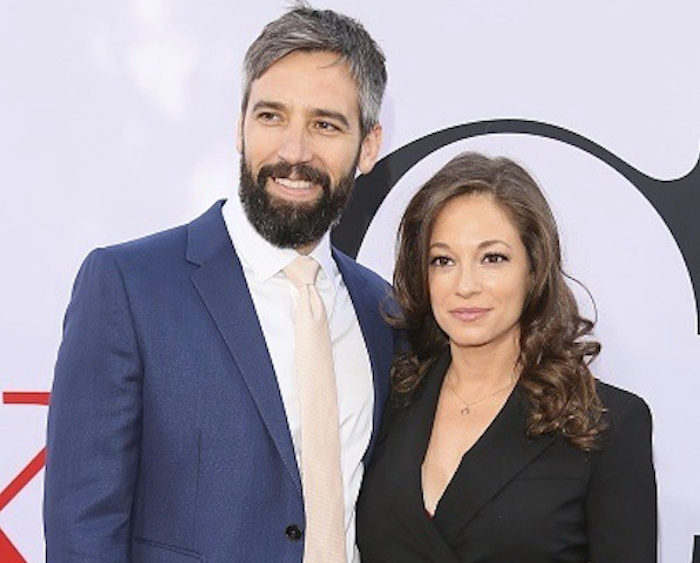
My conversation with the co-writers (Holderman and Simms) and director (Holderman) of the comedy Book Club.
My conversation with the co-writers (Holderman and Simms) and director (Holderman) of the comedy Book Club.
“Four lifelong friends have their lives forever changed after reading ’50 Shades of Grey’ in their monthly book club.” That’s the logline of the hit Paramount comedy Book Club.
I had an extended conversation with the movie’s co-writers Bill Holderman and Erin Simms. Bill also made his directing debut with the film.
Scott Myers: Erin, let’s start with you. I think your background in the film and TV business has been mostly acting. Could you walk us through your journey from growing up in Montreal to becoming an actress?
Erin Simms: I started acting in high school, got an agent real young, and started working at around 14, 15. Then I ended up on a show called “Student Bodies” as one of the series leads. It was a Fox show, we were shooting in Montreal, and it was a pretty big deal back then, like 20 years ago.
On one of the hiatuses, I moved to LA and got a role on the “Power Rangers.” I decided not to go back to Canada, so I stayed here.
Then slowly, I realized I wasn’t enjoying being an actress. In my trailer, bored out of my mind, it was like the opposite of everything an actress is supposed to feel. Was not excited about it. I spent a few years confused about what I really wanted to do, and so I started to be an assistant to producers, working in offices, reading scripts, and doing coverage.
Then I moved to Vancouver and decided I was going to be on set and assist directors. That was when it all came crystal clear that this is actually something I love to do. Being on set and not caring to be in front of the camera at all… that put the final nail in that coffin.
I eventually got the job to be Robert Redford’s assistant in his production company [Wildwood] where Bill [Holderman] was writer-producer, and they actually were hiring a development executive. Over the course of those four months, I said, “Anything you guys have to read, I’ve done development before. I’ve done a lot of script coverage.” I just took advantage of that four‑month period of being an assistant.
I guess they saw something and they offered me a job to come to LA to be the development executive at Wildwood, which was unbelievable. That’s where I really got my training.
To come to Hollywood and to jump into a company that was operating on that level, you really had to get your act together quickly. I pretty much had my head in scripts for three years. Bill’s an incredible writer. We realized we connected very well on story because I was usually supporting him in developing things. Eventually, we came up with the idea for Book Club.
Scott: I was looking at some shared credits… A Walk in the Woods, All Is Lost. That would explain that connection there?
Erin: Yeah, exactly. They really mentored me, Bill and Redford. They really did. They changed my life by giving me that job.
Scott: Bill, how about you? How did you wind your way into becoming writer, producer, and now director?
Bill Holderman: I started out, like so many people, not really knowing what I wanted to do. I’d graduated with an economics degree. I came out West and I was doing internships. It was right around the time when the Internet was exploding and there was all sorts of opportunities. Then the Internet crashed and all those opportunities were gone. I thought, “Boy, I need to go do something much more traditional and safe.”
What is safe and traditional? I thought, “Film,” which, by the way, is ridiculous. It’s so not safe and not traditional.
I ended up getting a job at Redford’s company in 2001 as an assistant to his producer. You go through a series of interviews. In the last interview, they asked me, “Will you give us a one year commitment?” I said, “Absolutely not. There’s no way I will be here for a year. Being an assistant is not my ambition.”
Then, I was there for…
Erin: 14 years. [laughs]
Bill: …yeah, almost 14 years.
[laughter]
Bill: The company kept evolving and changing, and my role kept evolving and changing, too. I had already wanted to write and be a writer. I was really interested in writing for television. Again, it was at a moment when TV was much less in vogue than it is now. It was really hard to get jobs writing for TV because there just weren’t any.
I went through the Warner Bros. Writers workshop in a year when… It used to be that most people got staffed out of that program. The year I went, only one person got a staff job out of the group, which was incredibly rare.
So I stayed in film and started writing doing, believe it or not, rewrites for Redford. Then doing on‑set rewrites for Redford. Then eventually doing bigger rewrites for Redford and for the company.
Erin: He rewrote A Walk in the Woods, rewrote The Company You Keep, and rewrote… can we talk about Pete’s Dragon?
Bill: Yeah, I did a rewrite for Pete’s Dragon. Before that, I had rewritten The Company You Keep, I was uncredited, but I did pretty much a page‑one rewrite of that script. Before that as a development executive, I was at a company where WE self‑generated a lot of ideas, so I was writing a lot of treatments, ideas and…
Erin: A small unknown fact. Bill did so much research on Jackie Robinson and wrote the original treatment for 42. The movie was actually at Wildwood. Redford was going to be playing Branch Rickey, then as movies do, it moved in another direction, but that was Bill’s original development piece.
Bill: Yeah, that was one of the projects I was developing. After that and A Walk in the Woods, I just wanted to keep writing and producing. Eventually, that translated into adding the third of those hyphens, so I directed this (Book Club).
Erin: For A Walk in the Woods, Bill wrote the script, but we were working very closely on that it together. I think that’s when we realized that we had the same style…
Bill: Sensibility.
Erin: Same sensibility. When we went to actually produce A Walk in the Woods, I felt Bill was ready to direct. You could just see it. He was so deeply involved in every part of prep, development, production. It just seemed like the obvious next move. When the opportunity came up on Book Club, I thought, “Well, let’s put our money where our mouth is.”
Scott: Let’s jump into Book Club. I’m guessing this is the first thing you actually wrote together.
Erin: Yes.
Bill: It is.
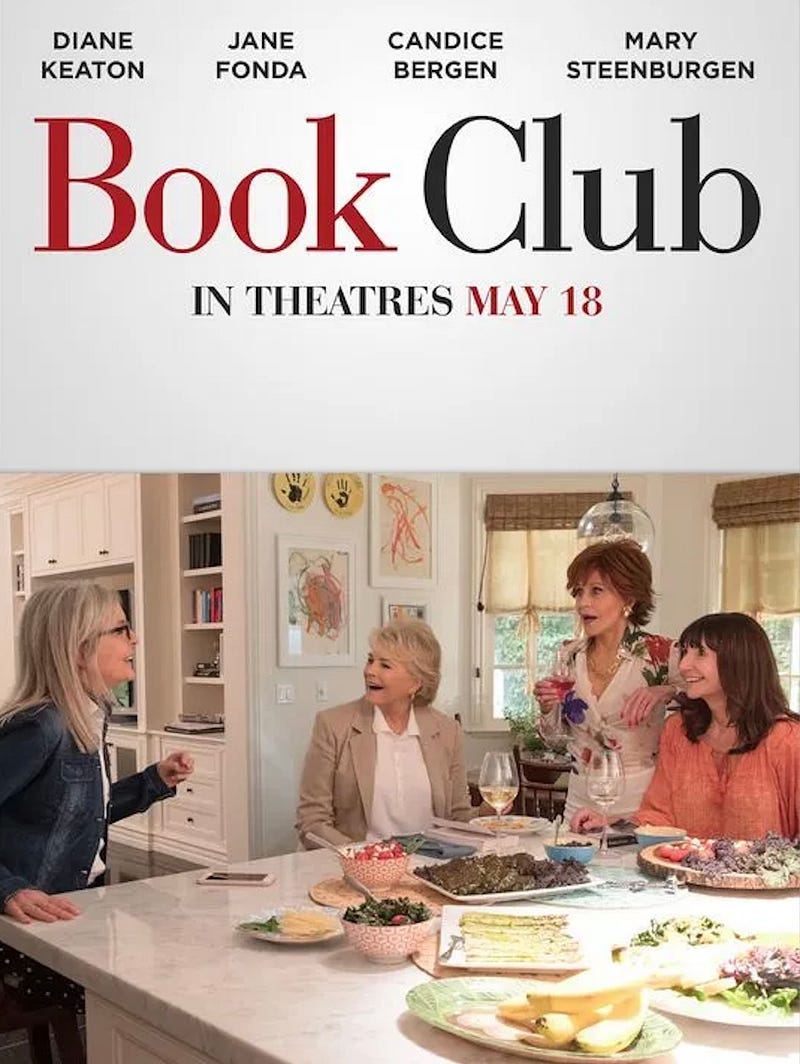
Scott: I saw the trailer when it came out some weeks ago. It’s great, you just get what the movie is when you see the trailer. It rolls out in theaters across North America starting May 18th. Premise: “Four old friends played by Jane Fonda, Diane Keaton, Candice Bergen, and Mary Steenburgen decide to spice up their adult book club by reading ‘Fifty Shades of Gray.’” What was the genesis of this story?
Bill: When the “Fifty Shades” books came out in 2012 and started to get a lot of attention, they were these risqué, sexy books. I, as any good son would do, thought, “You know what? I’m going to send the trilogy of books to my mother for Mother’s Day.”
[laughter]
Bill: Which I did. Erin and I were working together at the time, and she saw that I was FedExing these books to my mother for Mother’s Day. She thought that was absolutely ridiculous, which it is. After talking a little bit about who my mother is, we talked a little bit about who Erin’s mother is, and she decided to send the books to her mother and her stepmother as well.
Erin: We ended up getting into a conversation about how different our mothers are. We won’t go into too much detail, but sending “Fifty Shades” to Bill’s mother, she would find that to be…
Bill: Very amusing.
Erin: …And she loves it. My mother would think that was insane, more like me. I just thought it was hysterical. Basically, the next day we got together at work and said, “What about a book club?” The idea just came to us.
Scott: When was this?
Bill: It was 2012. Whenever Mother’s Day is.
Erin: First draft was summer 2012 and there were five women, not four in that draft of Book Club.
Bill: We wrote that first draft on‑and‑off and had a first draft done by December of 2012.
Erin: Yeah, it’s been a long journey.
Bill: We wrote it and sat on it for a while. We developed other projects and were trying to make other movies, but it was a story we really wanted to tell and we just kept coming back to it when we had free time.
Erin: Yes, and we sold the script in… The first time, when was it?
Bill: 2014.
Erin: But that person didn’t do anything with it for 18‑months. It was kidnapped for that period of time. During that phase, the first [Fifty Shades] movie came out. Then the second movie came out. We were feeling like, “Oh my God, we’re running out of time here.”
Bill: Our window was passing us by.
Erin: Somehow, miraculously, we made the movie, sold it to Paramount, and they rushed our trailer to get on the final Fifty Shades release, which we thought was pretty poetic.
Scott: For years, on my blog, I’ve been preaching about making movies for the baby‑boomer and senior set because those people grew up with movies. They love movies. They don’t have all the distractions of social media that young people do.
How much of your inspiration for Book Club had that in mind as a business opportunity and how much of it was simply you wanted to tell an entertaining story?
Bill: What’s interesting is, when we were coming up with it and writing it, we’d been in the mindset because I’d been working for Redford’s company for so long, and I was so entrenched mentally in the idea of coming up with ideas for that demographic and for those actors to play in.
At that moment, it was less like, “Ooh, here’s this audience that doesn’t get served enough and let’s go tap into that.” I think it was more about, “There’s great actors in this age range that don’t get service in terms of great stories being written for them.”
It felt like a really exciting opportunity to do something that has a real commercial angle to it, but with a demographic that doesn’t really get that style of movie written for them, for the actors and for that audience.
Erin: We were definitely not coming at it from a business angle.
Bill: In hindsight we could say, “Oh, look at how smart we were to write for this demographic that’s so underserved,” but I think the truth is the process was much more pure than that. Although, maybe in a couple weeks, we’ll shift and be like, “Hey, we planned this the whole time.”
Erin: I’m a huge fan of “Golden Girls.” I don’t know what it is about this age group, but I just completely love those kinds of stories. Best Exotic Marigold Hotel had come out… I guess we were in that frame of mind.
Scott: The movie’s likely to spawn some discussion in media about the subject of seniors having sex. Is there some cultural takeaway you were hoping that may come about as a result of the movie Book Club?
Bill: Making a movie is so hard that, for me, it always has to have some deeper meaning or relevance, the thing that makes you want to have started writing it and then go through the torture of making it. It just has to be more than what it is.
For me, the themes of this movie are ageless, they are timeless, and they do, hopefully beyond just that demographic, inspire people to take back control of their lives and believe that there is that next chapter, not just your tagline.
To know that your life still has worth and value, and, even though culturally sometimes people of any age get set out to pasture, you can take control back and make life as rich, full, and satisfying as you’re willing to put the effort in to making it.
For this, that’s what we wanted to do. Hopefully, it will inspire people to believe there are opportunities out there, whether it’s to find companionship, love, sex, friendship, or anything. Whatever it is that people are desiring, hopefully this will give them a little inspiration.
Scott: You had five women characters in your first draft, you end up with four. Let’s talk about these four characters and start with Diane, played by Diane Keaton. How would you describe her character? What’s the nature of the journey that she goes through?
Erin: The Diane Keaton character, named Diane, was written for her, so it was pretty incredible to get her in our movie. For me, originally, the concept was what happens when you’re in a really long marriage that pretty much has been over for a while?
This woman’s journey is that she was going to accept that as her life. She would have been with this man until the end. It was interesting to us to think about that, these commitments that we make, and what it means.
Bill: Really, it’s for a lot of marriages. It’s till “death do us part”. What happens after one person dies, where does that leave the other person? If there’s still life in that other person, what then? What is the possibility? How do you take claim to your future now?
I think for Diane, that was the journey. It was to tackle that story line of what happens for a woman that age who no longer is married and the husband’s no longer around? The character never really thought about it and never thought that there was going to be anything beyond this marriage.
Her daughters certainly think there’s nothing left for her. Dad is gone and now they’re waiting it out for mom. I think she’s very much someone who finds a way to breathe new life into her existence.
Erin: What I loved about her character is that she’s dealing with a lot of guilt because she meets somebody pretty quickly after her husband’s death. That guilt also leads her to question herself and the decisions that she made.
It’s coming to terms with the fact that, yes, she actually was going to stay in this marriage for the rest of her life. What does that say about her? What does that say about the way she sees herself? For her, it was about honesty. She was not being her true self.
She either has to stand up for herself and tell the truth or she’s moving into her kid’s basement. I just like the idea that, at any point in your life, you can hit the reset button and be your best self.
Scott: I think Andy Garcia’s her new beau…
Erin: Yes.
Scott: That’s a nice pairing. How about Jane Fonda’s character, Vivian? Did you have her in mind for that part?
Bill: In the original draft of the script, there were two characters named after the actors they were written for. It was Diane and it was Jane. Then we changed Jane’s name to Vivian closer to production.
Her journey, the journey of that character in the original draft versus who she became really evolved later in the writing process. Initially, she was just the character that brought the idea of the “Fifty Shades” books to the group and to her friends, an overly simplified, very sexually free woman.
Through the process and through casting, Jane Fonda helped to make her a much more whole human. It was a really interesting part of the writing process rebuilding her from some of those foundational pieces and making her someone that an actor of that caliber would want to play.
Erin: That role is really just dealing with her own vulnerability. After you spend so many years being strong and taking care of yourself… I know a lot of people like her who equate love to weakness, feelings to weakness.
Throughout the story, she eventually has to break down that wall that’s been built for 40 years. I feel like I understand that character the most, in a way. I feel like a lot of people are like that.
Scott: Fortuitous or planned that Don Johnson, who’s the father of Dakota Johnson, star of the Fifty Shades trilogies. Was that planned or just the stars aligning?
Bill: Yeah, that was the stars aligning. There’s a few parts of this that feel like the stars aligned. We could claim that we had some master plan, but the truth is we didn’t.
Don Johnson was someone who had gotten his hands on the script himself through his agents. He was personally friends with Jane Fonda and they’d been friends for 40‑plus years, both growing up in the business.
Erin: He reached out to Jane and said, “I really want to play this part.” Jane went for it.
Scott: How about Candice Bergen’s character, Sharon, who climbs back into the dating game, I think with Richard Dreyfuss?
Bill: Candice’s character, Sharon, is a federal judge. She’s been divorced for 18 years and has basically sworn off having relationships, or sex, or pretty much anything other than her group of friends and her career.
Slowly but surely, the book reignites something in her. Her friends encourage her and she gets herself back online and out in the world.
I think she’s one of those characters that, hopefully, there’s a lot of people out there that find it really daunting to go do just that, which is put yourself back out there after having an absence. I think it works out for her in a really fun and exciting way. Hopefully, that will be inspirational for people as well.
Erin: I think that a lot of women, as they get older, sadly become more and more insecure about their bodies and about the naked sexual aspect of finding someone new.
It takes so much guts to just accept that you’re not 20 anymore, but that doesn’t mean that you’re not attractive. It doesn’t mean that you’re not still interesting and that people don’t want to know you. She really has to take that leap because she’s built up this big wall that nobody would ever want to… that she’s not sexually viable anymore.
She’s also stuck in the past. She entertains herself by thinking about her ex‑husband and the drama. For her, she finally lets go. She realizes that she doesn’t even want to be with her ex‑husband anymore. She’s actually happy for him and it’s time for her to take control of her own life.
Scott: Finally, there’s Mary Steenburgen’s character, Carol, who I think hues more closely to the inspiration from the “Fifty Shades” books. Trying to add some spark into her life with Bruce, played by Craig T. Nelson.
Bill: The Mary Steenburgen character, Carol, is someone who’s been happily married for 35 years and the sexual side of the marriage, that flame has gone down if not out. Again, she gets reignited by these books and wants to reclaim that part of her relationship with her husband.
Bruce, played by Craig T. Nelson, has just retired and is going through his own existential crisis as men do at certain ages. This was a moment for them to really revisit something. The big takeaway for that relationship is it’s all about communication and needing to talk about things, but she certainly draws inspiration from the book and tries to spice things up in their relationship.
Erin: We read a lot about how retirement is one of the hardest times in a couple’s relationship because, if you don’t talk about it in advance, you could realize you’ve been together for 40 years and suddenly neither one of you have a job and you don’t agree on how you want to spend your time.
One person thinks, “OK, good. We’re going to go travel and we’re going to have this exciting lifestyle,” and the other person’s ready to finally sit down on the couch and watch every show on Netflix.
It actually breaks up a lot of marriages, so the Carol character, realizing that she still feels those feelings and still wants to have this fulfilling existence with her husband, it’s just scary to ask for that. There’s still the possibility of getting rejected as much as if you’re going out and just trying to find a new person. Carol has to realize that, “I’m going to have to ask for what I want and I’m going to live with the consequences.”
Bill: And overcome the complacency that happens in long‑term relationships and challenge the status quo that’s been developed. I think, for her and for Bruce, there’s two paths they could take. Watch the movie to see which one they end up on, but they definitely go through the rocky times of trying to bring that part of a relationship back to the forefront.
Scott: Bill, Book Club is your first feature film directing gig and this is the roster of talent you were overseeing: Diane Keaton, Jane Fonda, Candice Bergen, Mary Steenburgen, Richard Dreyfuss, Andy Garcia, Craig T. Nelson, Don Johnson, Alicia Silverstone, Wallace Shawn. Your basic star‑studded line‑up. What was that like working with these famous, even iconic actors?
Bill: It’s a dream come true. They’re icons for a reason. Their careers speak for themselves and I think it was just an incredible opportunity and one that I will forever cherish. Even just hearing you list the names I’m like… I don’t know how that happened, [laughs] truthfully.
Erin: Bill has an incredible ability to talk to people, understand people, be sensitive. He’s very intuitive and he goes on his instincts. He just has a way of connecting with people one‑on‑one. Each one of the actors demanded to meet with him before they said yes to the movie. One by one in those meetings, they realized that they could trust him. They realized how thoughtful he was being about the process, how much he understood these characters, and was going to support them. I just think he won them over one‑by‑one.
Scott: How much work did you do with the actors on the characters? Was there much give and take there?
Bill: It depends on which ones. Yes, in those first meetings and because of my background of doing re‑writes, working with actors, and fine‑tuning things specifically for actors, I really loved that part of the process. I think it’s an incredibly undervalued part and very important.
To me, with all of them, I loved to sit down and talk to them about their take on the character, or their take on the story globally and how their character fits in. Then Erin and I would go back and fine‑tune based on those collaborations. Again, it’s one of my great joys in the whole process.
Erin: We re‑wrote for all of the characters except for Candice because she called us and we said, “OK, well, the other women have notes.” She said, “I’m good. I’m ready to go. Just tell me when to show up.”
Bill: Her character was also probably the most well‑developed from the get‑go. There was good, healthy collaboration with all of them and all the actors across the board. It’s part of the process and I think it’s a part of the process that I will, hopefully, maintain on every project that we ever do because it’s great. You continue to evolve.
The reality is, these are the actors that have to go say the words. You want that to be as honest, true, and easy as you can. The more you can work with them and get them to a place where the words feel really natural and reflective of their own deep connection to their characters, the better off the process is going to be.
Erin: Yeah, but it should be mentioned, you also find yourself sometimes getting notes that you don’t agree with, and it’s a very tricky balance, because there has to be a give and take. Sometimes you have to address notes that may not make sense to you, but make sense to them. You hope for the best.
Bill: One of the things that I think’s really key is when you get notes or when you have those types of conversations, a lot of times people will try to give you the solution and sometimes that is the thing that’s sort of scary to “Ooh. That does not sound like the direction we want to go.”
I think the heart of where notes come from, what the genesis is of the note, you have to look at why that note is being given, and then go back to the drawing board of, “All right, how do we solve this that still works for us as writers and for the story, but also services the concern?”
I think sometimes people get caught in the surface of, “Well, I don’t want to do that because that note is dumb.” It may not be the right solution, but the note is coming from a place of substance. You just have to go deep enough to find the place where there’s shared connection of why that note might make sense to them and how you can satisfy it in a way that makes sense for you.
Scott: The note beneath the note.
Bill: Indeed.
Erin: Yes.
Scott: If you look back, Bill, you directed it, co‑wrote this. Erin, you co‑wrote this, produced it. What did you learn as screenwriters through this process?
Bill: I think one of the things this process has taught, and it’s a lesson you learn over and over again, it’s to stay nimble, stay fluid, and don’t get caught up in not wanting to change things just because you don’t want to change them.
Even through the post process, sometimes when it looks like an insurmountable hurdle or an obstacle, sometimes that reveals something even better. It’s just a matter of taking the time and absorbing those moments when you get notes where you’re just like, “Oh, this is the end.”
Taking the breath and saying, “All right. Well, how can we address this and improve on where we were as opposed to have this somehow hurt us”? Luckily the foundation of those ‑‑ the note beneath the note ‑‑ have been really helpful and have continued to make the script, and then the movie, better.
Erin: Really, what I noticed is it’s when you are stuck, the only thing that actually worked was just stopping and going to read a book or do something completely different. Bill and I did a lot of walk‑and‑talks where we get off the computer, take a super‑long walk, and just talk things through.
It’s amazing how ideas come to you when you do something completely different. I’d pick up a magazine or watch an awful reality show. Something about cleansing the palate, cleansing your brain a little bit was very helpful.
Bill: That’s Erin’s process. Mine was to go to a coffee shop and just drink coffee and stare at the computer until something happened.
Erin: I really have to sidetrack on something else. The other thing is that I’m sure there’ll be scripts sometimes that are easier. This happened to have been a pretty hard one. It’s a lot of characters. There was a lot of stuff happening.
It’s not for the faint of heart. You’re going to feel like you cannot keep doing this so many times. You actually really can. It’s amazing to me that we even made it. It’s the same thing as making a movie. Producing a movie is absolutely nuts.
Bill: Not only can you, you have no choice. If you want to get to the end zone you have to keep marching forward.
Erin: You have to keep going. It’s the same thing in life. It’s the same thing with this movie, the theme of this movie. You’ve got to keep going.
Scott: Do you plan to keep writing together?
Erin: I’m retired now.
Bill: Yeah, we’re about to retire.
[laughter]
Bill: Yeah, I think so. We haven’t really thought about what’s next necessarily. I think we’re still very much deep in the final stages of battle of this movie.
Erin: We’re still in the editing room, so it’s hard to think about the next thing.
Bill: It was a productive collaboration and it’s one that we’d love to replicate again if we find the right material.
Erin: We support each other. We don’t necessarily have to write together. Bill might find something he wants to write on his own. We both love to produce movies. It’ll be shapeshifting according to whatever the project is.
Scott: Here you are, mere weeks away. I know you’re still in post, but the movie’s going to open wide. I’m assuming it’s tracking big, because it’s got a lot of theaters. It’s going to open wide on May 18th in North America. Could you describe what you’re feeling? Can you project out to what you may be feeling when you’re walking down the carpet for the premiere?
Erin: We’re opposites on this one. I cried every day of production, literally. I just was so excited and seeing these actors, my favorite actors in the world, saying our lines was the trippiest, most amazing thing. I was always bursting into tears.
Every time I see our poster or our billboard just went up on the side of Paramount, I just can’t believe the whole thing. Could not be more grateful. We love this movie so much. It could have died so many times. It’s kind of hard to digest, but it’s happening. I keep saying to Bill, “Look, we can’t miss this now.” Because we’ve been working so hard, time just flies by.
I don’t want to miss this phase. I want to be on the red carpet and I want to really remind myself to just stop and enjoy this moment. It’s the first time and that only happens once. For me, I’m very happy. That’s why I’m crying. I’m very happy.
Bill: That is the right, pure, and beautiful answer. I think I’ll be worried about the projector, make sure the sound is going to be OK in the theater, and troubleshooting all the things that could possibly go wrong because that’s just my personality.
Erin: We’re still producers at the end of the day.
Scott: You’ve dealt with screenwriting in an interesting way. You’ve been on the development side of things, directing, producing, and screenwriting as well. Any advice you offer to aspiring screenwriters about learning the craft and breaking into the business?
Bill: I would say, having worked with and been on both sides of those meetings, I think it’s really important for writers to not be defensive and to be open to the collaboration, whether you think the notes from development executives, from studio executives, or from actors, wherever you’re getting notes, do not be defensive about them. Find the truth in the note that works for you and go for it. If you’re hearing the same note over and over again, it probably means you have to really do something and go take a hard look at it.
Writing is a solitary craft, but the way that the film business works is there’s a solitary part of it, then there’s a very collaborative part of it. You have to fine‑tune the skills in both of those arenas because, ultimately, you want people to want to work with you. It’s a really important component to having a long career.
Erin: I have lots of advice, but I can think of two things. One is, I find people don’t read enough scripts. Read as many scripts as you possibly can.
Bill: Oh, that’s so true. Even still.
Erin: I learned more reading bad scripts than, probably, I did good scripts. You can really start to see what’s going wrong and it’s really, really helpful. I would say read all scripts, good and bad.
The other thing is I find people are not willing to start at the bottom. As a writer, go be an assistant. Go be in the mix. Be a development executive. Get yourself in there. You can have a job and still write on the side. We both did it. It’s so good to immerse yourself. Take that crappy job wherever. Just get in the mix. Learn the language.
Bill: Building on that, Erin had an acting background and then we were both producing. It’s just all of those other aspects that make up the moviemaking community and the moviemaking family. If you have a connection and can understand all of those other jobs, you will be a better writer. You just will.
If you understand moviemaking and filmmaking, if you understand all of the components that go into it, your scripts will be better.
The last thing I will say, which is something that I really, really strongly believe. I think, from a development side, you can make a script that will make a great movie, and you can make that same script be really fun to read or just so‑so fun to read. Make your script fun to read. Make it a page‑turner.
If that means finding a way, if it’s a comedy, to put in humor into the action lines, not in an obnoxious way, if you can get your script to a place where it’s a page‑turner, you will get it made. I think everyone should go back and read their scripts and then read scripts that do get made.
Oftentimes, even at that level, even though it’s a blueprint for the movie-making process, it is its own finished product in its own right and it should be incredibly enjoyable and easy for development people to read.
For more Go Into The Story interviews with screenwriters, filmmakers, TV producers, and industry insiders, go here.