Go Into The Story Interview: Ava DuVernay
My in-depth interview with filmmaker whose credits include the movie Selma, the documentary 13th, and the TV series “Queen Sugar”.
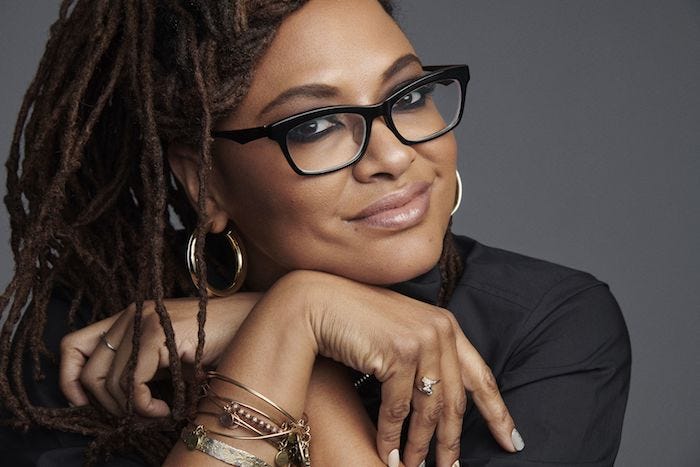
My in-depth interview with filmmaker whose credits include the movie Selma, the documentary 13th, and the TV series “Queen Sugar”.
Little did I know when I interviewed Ava DuVernay in 2013, she would become one of the most important voices in many of the cultural conversations gripping America today. At the time of our conversation, Ava had recently made history as the first African-American woman to win the Best Director Prize at Sundance, honored with the 2013 John Cassavetes Spirit Award, and the Tribeca Film Institute’s Affinity Award for her second feature film Middle of Nowhere.
In 2010, she wrote, produced and directed her first narrative feature, I Will Follow. Released theatrically in 2011, the family drama was hailed by critic Roger Ebert as “… one of the best films I’ve seen about the loss of a loved one.”
Subsequently, Ava went on to direct the 2014 movie Selma and the 2017 film A Wrinkle in Time. In addition, she directed, produced, and wrote the must-see documentary 13th. If that’s not enough, she has been a writer and producer of the hit OWN series Queen Sugar and the acclaimed mini-series When They See Us. Her most recent film is Origin.
In our hour-plus conversation, Ava and I discussed her professional background, her two indie films I Will Follow and Middle of Nowhere, and her thoughts on the craft of screenwriting.
Scott: First of all, how you came to be a screenwriter, a director, a producer. That’s a compelling story. When and how did movies become an integral part of your life?
Ava: I grew up in the Compton/Lynwood area of Los Angeles. My family has no connection with the entertainment industry at all except that I had a very beloved aunt named Denise who was a lover of the arts, of film and music and theater and literature. She gifted me with an appreciation for it all. But she was truly a ferocious movie watcher and fan with an encyclopedic knowledge of film. How she got it is really just through the atmosphere, because there was no one ahead of her to introduce her to the arts, but luckily she was there for me. I spent many an afternoon, getting picked up from school going straight to a movie. Long conversations about film and books and art. It was really all a gift from my aunt to me.
Scott: Are there some movies you remember from those experiences with your aunt that had a particularly strong impact on you?
Ava: Yeah, I always talk about West Side Story which is a film that I remember she showed me. It was actually on television at our local KTLA here. I remember it was a rainy day, and she was a nurse who worked at night, and I was at her house during the day probably bugging her as she was trying to get some sleep. I remember her flicking through the channels and being relieved that there was something that would probably hold my attention. She put it on and said, “Watch this. You’re going to love it.” She went into her bedroom and went to sleep, and I watched West Side Story and was just really captivated and mesmerized by all the color and the brown people and the dancing and the music and the love story. That’s an early memory of one of my first favorites.
Scott: You received a B.A. from UCLA, majoring in African‑American Studies and English. Did you take any cinema or film classes there as well?
Ava: No, not at all. I had no inclination or intention to become a filmmaker. Film at that point was purely for pleasure and fun. I was a double major — English and African-American Studies at UCLA — and never even ventured into the film school while there. I had no idea that this would be what I would be doing. I knew I loved film. That was all. Soon after graduating, I found myself working in film publicity and really embracing it and loving it. It was as close to film as I ever thought I’d get. But yeah, no film school, no classes at that time.
Scott: Let’s talk about that, getting into film publicity, public relations. You’ve been doing that for many years. On IMDB, you’ve got something like 100 movie titles that you’ve been associated with. How did you end up getting into that line of work?
Ava: Well, I’ve been working in publicity since 1995, when I graduated from UCLA. I worked at FOX and a couple of big PR firms for about four years. Was good at it, had a certain point of view about the way the publicity could be done differently than how it had been done, especially with projects steeped in youth culture and with people of color. I started my agency when I was 27 years old in 1999, but I actually started practicing PR in 1995. The PR expanded to marketing, which expanded to overall distribution consultation, and a bunch of other stuff that my agency eventually did. I kept the agency open full blast until right before I made Middle of Nowhere. Through my first theatrical release, through my first few documentaries, I was also running the agency full time. My last film that I consulted on through the agency was The Help, before I shut it down and stopped offering full execution. Now I do consultation only, here and there for studio friends who need a little advice, but not in the same way that I did before. All of my marketing and PR experience is fully and only truly for the benefit of AFFRM filmmakers now. AFFRM is our distribution company dedicated to black independent films.
Scott: Given your experience with public relations, does your marketing instinct come into play when developing one of your own movies?
Ava: I can’t say that actually comes into play when I’m working on my own films. I don’t think I think about it, but I’m sure it’s there somewhere. My only example that I can give is with Middle of Nowhere. I cast a complete unknown as the lead in the wonderful Emayatzy Corinealdi. I guess that my knowledge of the fact that you don’t actually need a known actress to create an effective publicity campaign came into play. The experience of knowing how to build a campaign around an ingénue kicked in. I knew that if this woman could give a great performance, which I believed she was capable of, that she would be the centerpiece of a great PR campaign, which she was. So, I guess the marketing instinct is there somewhere in the background, but certainly it’s not at the forefront of my decisions as a filmmaker.
Scott: You’ve got this successful PR firm, and doing all this consulting. When did the idea hit you, “I could be making movies myself”?
Ava: I was on the set of a film that Michael Mann was directing called Collateral, and we were in downtown LA shooting on a frigid night. We were in Los Angeles and we were on practical locations on the streets of LA. I had an experience myself on a street nearby a few years before, and thought, “He’s here telling this story on this street, why am I not telling my stories about these streets?” I started writing Middle of Nowhere, and just trying my hand at telling a story from those streets.
Scott: That was in 2004?
Ava: Yeah, 2003, 2004. 2003, I think.
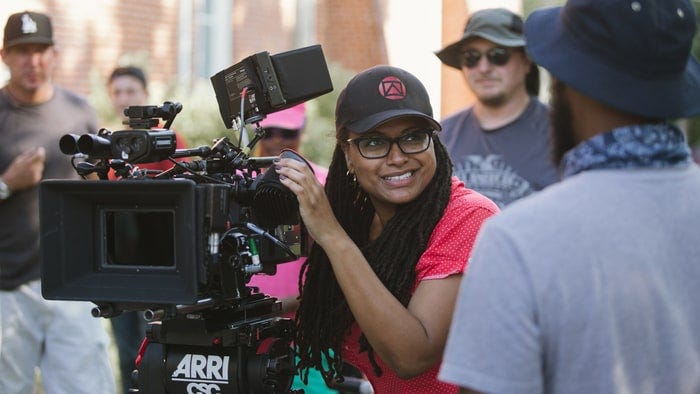
Scott: You write the script for Middle of Nowhere, but then as I understand it you set it aside for a while, and moved on to do some documentaries. What led to that choice, and what key lessons have you learned about storytelling from doing documentaries?
Ava: Well, not having financing led to that choice. [laughs] We couldn’t get the film made for what we were asking to do it for at the time. At that time, I was not at all in the indie frame of mind. In 2003, all I knew was really the studio world so I couldn’t get that film made. They’re not knocking down doors to make nuanced stories about the interior lives of black women. That didn’t get done, so it had to be put aside. I continued doing movie marketing, but I desperately wanted to direct and just make something, anything. So I started to make a documentary about a close‑knit group of artists out of South Central who I knew personally, a whole music movement that had happened in Los Angeles post‑riot, pre‑riot. I made a documentary about that movement, the social context of that music, and went through the festival circuit and really enjoyed it. I was working full time. I was managing big campaigns from clients while traveling the country with my little, independent documentary and really loved everything about it. That film led to being hired by BET to make their first commissioned documentary on the history of women in hip‑hop. We called that My Mic Sounds Nice. That did really well and just emboldened me to actually direct a narrative.
Scott: You wrote the screenplays for both of the scripted films you have produced and directed so far, I Will Follow and Middle of Nowhere. You didn’t go to film school. You just love movies. How did you learn to write a screenplay? What were the resources you used?
Ava: I read screenplays. I’d worked in the industry for 15 years, as a film publicist, a marketer for films. A big part of writing is reading. I had read almost every screenplay of all the 100 films and TV episodes you see on IMDB and more, and just got a real clear sense of structure. Then also I started to study. I went the route that everyone says you should go, took the Robert McKee “Story” classes and didn’t learn much. Read the books. I had to find my way to my own methods. But yeah, I read a lot of screenwriting books and read a lot of screenplays. That’s basically how to do it.
Scott: Are there any screenplays that you especially remember that influenced you or impacted you?
Ava: No, I can’t say there was one particular screenplay. It was a cumulative effect of reading so many scripts. I always love when I read a script and I see a structural break or just, “This is the way you do this.” When the technicalities of format are broken, or the way that something is explained is a little off‑kilter or off‑color, not as formal as it’s taught in the books. I can’t remember what they were. But over the years, when I would read that, it would open a whole world of possibly in terms of the way that one can communicate what’s in your head, on paper. I think we get locked down into things sometimes. It’s always fun to read when the traditional way is broken or when something is put in a way that’s not so screenplay‑formal.
Scott: I was so impressed with both scripts. I thought they were incredibly well‑written and the characters so richly drawn. Is that where you start your writing process, pretty much, with the characters?
Ava: Absolutely. The first thing that came to my head is, “Where else would you start from?” But I guess there are people that start in other places. For me, it’s definitely about who the film is about. Not just the central characters, but the supporting characters. Just really trying to flesh out people, even if they’re only in the picture for a couple of minutes. Trying to give everyone their own beginning, middle and end. So yeah, character would be the starting point.
Scott: I was struck by your narrative voice. Stylistically, your words in both of those scripts, create an intimate feel with the characters. You have a lot of personal asides in scene description that convey a sense of what the characters are experiencing in their interior world. Yet, movies are primarily a visual medium. I was wondering how you struck a balance between that writer side of yourself, wanting to get across what characters are feeling in those quiet moments, when there’s no dialogue, and then translating those moments onto the screen?
Ava: When I write a screenplay — I’ve only written five — I’m writing for myself. [laughs] I’m the director and I need to create an emotional map. Not just plot, but a map of where these characters are, where they’re going and where they’ve been. A map from which I can direct the actor, direct the action, direct the production designer, direct the cinematographer. It helps me to have an emotional map and know what’s going on in between the lines. I put that in there. There are pieces and nuances, of course, as we know, as filmmakers, that will never see it to the screen or will never be spelled out visually. Yet knowing that it’s there and knowing what the thing is about, helps the actor in an unspoken moment that may never make it to the theater. It helps me. It’s a guide. I never fear putting that stuff in there. I never think twice about including some description of a quiet moment or internal thought. I know that, eventually, through osmosis, that does come out in the final product whether it’s through me and the direction. Whether it’s through production design that gets the essence of what a place should look like based on how a person sits on the couch that I put in another scene. All that stuff is a stew that eventually adds to the flavor of what you’re doing, I believe.
Scott: I read an interview with you where you were talking about the writing process for Middle of Nowhere. You said you wrote seven versions of the script, one from each perspective of the major characters. I’m curious, what exactly do you mean by ‘version’? Do you literally have a different draft from the perspective of each character?
Ava: Yeah, not a full draft, but mini‑scripts. I have small script for the mother, her take on the scenes that she’s in. Maybe a scene or two, a pre‑scene beat or something that might inform why she is the way she is in the scene that we’ll actually see in the film. That’s just my own…It’s really director work, more than script work. The main script is done. So, I might go off and explore a character to figure out why they say something they say or behave some certain way in the main scene. It helps! Character work that most writers do when they’re writing their character outlines. I just do it in script form. A lot of screenwriters will outline who their people are. I just write it in screenplay format.
Scott: It makes a lot of sense. Every character thinks they are the protagonist of their own story.
Ava: You’re the hero of your own life. Everyone’s the main character in some way. I don’t know if you saw the film, even though you read the script. But in the Middle of Nowhere, there’s a scene where Ruby’s on the beach with her sister and she sees, Brian, this new man, this bus driver who’s entering her life. They meet on the beach for the first time. In the scene, as it’s filmed, you see the little boy looking up at these adults above him. In the film, we cut away to him a couple times. It usually gets a few laughs, because he’s wide‑eyed looking at this exchange between adults. But I have a script for what he was thinking and what he was feeling in that moment. A boy being raised by women and this man comes and shakes his hand like a man for the first time and asks him his name. He says ‘Nick’ and his mom says ‘Nickie,’ but he wants to be ‘Nick.’ Why he wants to be ‘Nick.’ There’s a whole script for him. [laughs] Just so that I am fully fleshing out that character. It’s definitely more of a tool for me. I never share those with the actors. It’s a part of my work. But as I learn more about what other screenwriters do and I go back to the initial books that everyone’s read, it’s really just character outline work in a different format.
Scott: It’s a great idea. Whatever version of it, essentially, immerses you in each character, so that you experience their story universe through their eyes.
Ava: For sure.
Scott: In another interview, there’s a quote where you say, “So often, when I see African‑American performances on screen, it’s in the voice of spectacle. I don’t feel like race is spectacle. Race is me. I’m a black woman. We are black people. If we move around our daily lives, it is not a spectacle. It is the norm.” Can you talk a bit about how that attitude informs your creative process and shapes these stories you choose to tell?
Ava: It doesn’t inform it. I am just writing. It’s not like I’m saying, “This is not going to be spectacle.” I’m just writing what’s in my mind. It’s when other people try to write what’s in my mind, as a black woman, when other people try to write my body, what I would do in this situation, how I wear my hair, what I say to men, what I say to my friends, what I say to my mother. They are not me. They are not us. And most of the time, sadly, they don’t care to really know who we are. That becomes spectacle. The way that I think of you is spectacle if I don’t know your life, don’t care to learn and just start telling stories that I deem appropriate about you. The crazy thing is that so many people — industry, journalists, moviegoers — think that’s okay. Stories that are heightened and colored by assumptions of who we are. Not informed by knowledge, or study, or research. Strictly informed by privilege. That that’s okay, that it’s celebrated, is wild to me. Unfortunately, most people writing black characters don’t take the time to gain the knowledge to get past spectacle. Now, don’t get my wrong, there are some beautiful, caring, thoughtful portrayals of black people that have been done over the years by folks who aren’t black. But it’s rare. More often, we’re seeing very frivolous, uninformed, privileged views of black women and girls. The idea of spectacle comes when our personhood is being interpreted through lenses of privilege, without a lot of thought or meaning, in my view.
Scott: Let’s talk about I Will Follow, your debut feature‑length narrative film, in 2011. Here’s the movie’s log line, from IMDB: “It chronicles a day in the life of a grieving woman, Maye, and the 12 visitors who help her move forward.” What was the genesis of that story?
Ava: Personal story, as a lot of first films are. Based on my Aunt Denise, who I told you about, and her passing. We lived together in the last couple years of her life and I was her primary caregiver. The film was trying to deconstruct that in some ways. The story took the form of the aftermath of the passing of a loved one and what we do to move on. We had a very limited budget. It was self‑financed from my bank account. I had $50,000 and I had to make it all in for that amount. The first rule of low‑budget filmmaking is, don’t move. I had to think of something that was all in one location. This idea of a post‑grief story fit really nicely into the one location that was so meaningful for me, at the time, which was the house we lived in together. That’s how it started.
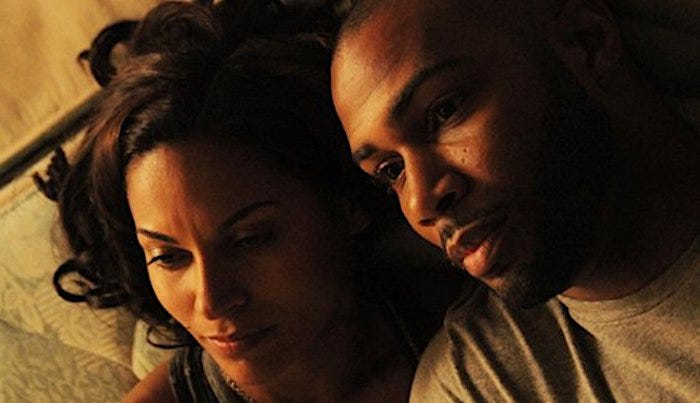
Scott: That was exactly the next question I had for you, about the value of shooting a movie in one location, and whether that was more driven by you as producer, knowing you can minimize costs that way, or whether that was driven by you as screenwriter, about how interesting to tell a story in a contained environment. Or maybe it was just a nice marriage of both.
Ava: No, definitely it was all dictated by and driven by low budget, ultra‑low budget, and wanting to tell a story that was set in one location. That was how it started. I knew I wanted to move from documentary filmmaking into making my first narrative feature. I knew I didn’t have enough money to make Middle of Nowhere, which was the script I’d written first. I knew I could do a one‑location film for about 50 and a skeleton crew. I started asking friends for one‑location ideas. I got, “Do a black 12 Angry Men. Do a black Breakfast Club. Do a black…” Every one-location film that’s ever been done, but black, was what was suggested to me. (laughs) I was this close to thinking of a black Breakfast Club script, when my mother said, “Always do something that means something to you. Don’t make a film just to make a film.”
I had to think, “What do I want to say?” I was getting through the loss of my loved one. It was right there. I was like, “Wow, it was that house.” That’s when I had actually been in one location, felt immobile and felt all the things I wanted to share about that time in my life. Getting to that point came from the question, “How do I make a one‑location movie and that was all predicated on budget.”
Scott: That’s such a great object lesson. Here you are kicking around all of these different possibilities, but that advice your Mom gave, make it’s something you really care about, something with emotional resonance. That’s hugely important.
Ava: Yeah. Massive advice. Could have easily just got caught up in the, “I’m going to make a movie!” I think that happens. I see that happening to colleagues. Doing something that you don’t really even care about, just to be making something. Or just to be making money, or whatever. I find things are best when I listen to Mom. I do better when I listen to her. (laughs)
Scott: The central conceit of the story I Will Follow is Maye dealing with the death of her aunt, Amanda, who Maye had been taking care of during her last days. As I was reading the script, I was reminded how, several years back when I was writing a story about someone facing their own death, I emailed a friend who’s a poet. I said, “Could you give me a poem dealing with the subject of death for inspiration?” He emailed me back and simply wrote, “Scott, all poems are about death.”
I’m just curious, when you think about it, whether metaphorical or literal, stories do tend to have some sort of connection with the death of dreams or actual, physical death. I was curious what your experience was and what you discovered about that subject matter, mortality, grief, regret, when you were making I Will Follow?
Ava: The screenplay process for that film was definitely re‑living of it. What I learned from that is there is another season, beyond the moment of despair. In taking myself back to those dark days, shortly after her death and then being on the set of a film about those days, I knew that I was a different person from the time when the actual events occurred. I had been changed by it, I was in a different season. That was a lesson that’s helped me, in the years after. When it’s dark, it’s just a season. When it’s sunny, it’s just a season. And the knowledge that another one will come is, I’ve found, very important. This is a fabulous season for me, right now. As we went through Gotham Awards and Spirit Awards and Oscar buzz and all that stuff, just the recognition that that, too, is a season, makes everything sweeter and more meaningful. That was the big lesson of I Will Follow and I’m really glad I had it.
Scott: One of the smartest decisions I thought you made in I Will Follow is you created that ticking clock, where the landlord says, “You’ve got to be out of that house by 9AM the next day.” So throughout this story, you’ve got this constant time pressure. Do you remember how you hit on that idea?
Ava: I don’t remember, actually. A ticking clock is a good thing, narratively. [laughs] I picked that up somewhere. I remember, in writing that film, I was really nervous about it getting boring in the one place. I know that I was looking for narrative techniques to keep it fresh. One of the things was to put a ticking clock. Another thing was to have variation of character. She’s in the same place, but you’re always getting fresh faces and voices coming in and out. I do remember deliberately trying to figure out the tools to keep a one location situation feeling fresh. That was just probably something I stumbled upon. I don’t remember exactly. But it’s such a part of the narrative. That’s the story. “You’ve got to move.” The end of the story will be, “You’re done with this move.” There’s no action happening. The action is the move. The dark night of the soul, or whatever, is when you can’t find the dolly to move. (laughs) I don’t know what it was. I just remember the move was the plot, in a lot of ways. That was the spine of what we were driving towards. Once I figured that part out, the nuances of the characters and their relationships to each other…I felt more free to let that be what it was as opposed to trying to get action out of the relationship.
Scott: It’s interesting. Maye has got to go through all these physical objects that have emotional or symbolic meaning, because they remind her of Amanda. The story is like a testament to the power of talismans, these objects that have meaning. In a sense, by clearing them all away and cleaning out the house, she’s symbolically closing one chapter of her life and moving on.
Ava: Absolutely. I just moved into a new place a few months ago. Definitely a move is always a big change of season, but certainly when you’re packing up a life, which is something that a lot of people haven’t experienced. It’s tough. You’re looking at these things that are left behind. That’s all you have left, these things. I still, in this new place, was just yesterday looking at a box of her stuff that I can’t get rid of. Where do I put that? I can’t give that away. I’ll never use it, but it’s her stuff. That just goes into my garage again. [laughs] Three garages later. All of that’s in that screenplay. It was a real big form of therapy for me, I think.
Scott: Let’s move on to Middle of Nowhere. Here’s a logline I found on IMDB: “When her husband is sentenced to eight years in prison, Ruby drops out of med school in order to focus on her husband’s well‑being while he’s incarcerated. Leading her on a journey of self‑discovery in the process.” The script begins with this young couple, Ruby and Derek. They’re cooking dinner. Perfectly ordinary, typical wife, obviously in love, when boom, in come the police and Ruby’s being handcuffed. Derek’s being arrested. The next thing we see Ruby getting on a bus to go visit Derek in prison for the first time. It’s a great way to start a movie. You hook the viewer, right away. Not only with this dramatic event, but you’re also posing a what‑if, aren’t you? To the viewer, which is like, “What if this happened to me? What if my life was suddenly uprooted?”
Ava: Yes. Especially for women, the possibility of not truly knowing who you’re with and who you married and what he does when he’s not with you. I heard that quite a bit in the screening process for the film. That’s always a question for any of us. How well do you ever know anyone? So definitely, the early scenes play on that question. As to how close can we really be to each other? What do we hide from each other? We try to make it really clear, in the early scenes, that she’s completely taken aback and absolutely did not know what was going on. That was definitely a hook that I tried to use, early on.
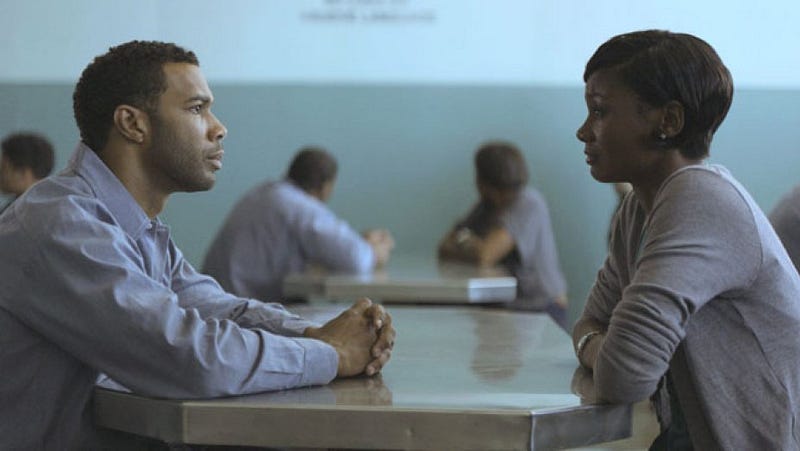
Scott: And then building off that, the next scene, the first scene when she visits Derek in the prison, it’s a really subtle one. It establishes not only the facts of the situation ‑‑ his prison term is eight years, five years with good behavior ‑‑ but also where the two are emotionally. With regard to Derek, it feels like he’s pretty much feeling ashamed. Essentially, he tries to suggest that Ruby move on with her life. Is that right?
Ava: That’s exactly right. I know I really wanted to establish that this was love. I was playing with expectations of what this young black man character would be like because he’s incarcerated. Automatically, you think that he’s sinister, or think that he is a bad guy. Of course he is — he’s in jail, right? Early on, in that first scene, the real goal was to get across that he loves her and he made a mistake. Every black man that’s in prison is not evil or the hardened, hard‑core criminal that you think. They’re people. With wives, daughters and sisters and mothers who they love, and who they’ve let down. I definitely played with a lot of that in there. It was a hard scene to calibrate and get right. Because the goal of that was to make certain you don’t leave that scene thinking she was stupid, completely dumb, for staying with him. You had to, in some way, be able to see why she would try to save him, try to stay with him, try to make it work. He had to be a good enough of a guy that you didn’t think she was a complete moron for fighting for their relationship. That was a careful dance, in that scene, both on the page and certainly when we filmed it and edited it, to make sure that, when you leave that visiting room with her, you may not agree with her, but you don’t think she’s insane. Because you’ve just seen him and you know he loves her. He made a mistake and doesn’t he deserve a chance? OK, maybe she’s going to give it a try. Let’s see how this goes. That was a big scene. I think the whole film hinged on that scene, if you were willing to go on the ride with her.
Scott: Absolutely. From her perspective, in that scene, he’s trying to intimate, “You can just go on with your life. Go back and do the med school thing.” She’s not willing to move on without him. She keeps reminding him about them being a couple. In fact, there’s a line of scene description I thought was quite telling where it says, “She is not going to fail at this.” Isn’t that an apt way of thinking about where she starts her journey? She’s refusing to give up her dreams of the life she and Derek used to have and she must believe that they still can have, in some way?
Ava: Yeah, absolutely. I haven’t read it in a long time, but you’re bringing back the memories of writing. There is a lot of pressure on that scene. I need to tell you who she is. I need to tell you who he is. I need to tell you who they are together. I need to tell you who they would be if they weren’t together. Ultimately, I need to get across that she’s an overachiever, that she is not used to things not going well. She has this innate belief in herself. It’s important to get all of that, so that you can watch how it unravels and builds up again. But ultimately, there were some real goals. I don’t usually write that way. I don’t write saying, “This is the goal of this scene.” Certainly, in the rewrite process, as you’re tightening and examining what is happening in each scene, yes. But as I’m writing that first pass, I’m not writing in a goal‑oriented way. Like, “I have to achieve this here.” But in that scene, I did. Because nothing else would work if you weren’t super clear on why she’s moving forward in the way that she does.
Scott: There are other key characters in the story. There is Rosie, Ruby’s sister, a single mom, constantly in search of a potential mate. Rosie’s young son, Nickie, who’s being shrouded from the truth about what happened to his uncle. There’s Ruby and Rosie’s mother, Ruth, who is a really interesting character. She’s very acerbic but, at times, tells the truth in a very honest and meaningful way. And then, Brian, this bus driver, with whom Ruby becomes involved. This may be a really difficult question for you to answer, because I feel like you’re pretty instinctive in your writing. But could you describe how that cast of characters emerged? Was it just from an organic process? Was there some intentionality in picking this character type or that character?
Ava: I knew I wanted to place Ruby in a family of women. Unfortunately, largely due to mass incarceration in black and brown communities, you have a lot of families of black and brown women. Families that are lead by matriarchs. There are very few men there. So trying to get that across, through illustrating how Nickie is without that father figure and wanting that. Then also just in this close‑knit family of women, I was truly trying to create complex portraits of what is usually and lazily “the sassy black mama” and the “love‑struck black woman.” Really, the goal was to deconstruct those stereotypes. Those lazy characterizations.
In thinking of a mother who might be a matriarch, to re‑imagine what that looks like and to get under her skin. She’s not gray‑haired in a house dress. She’s a woman with a job and a car loan and kids she loves. Her life hasn’t passed her by. She’s in the middle of it. She’s attractive. She’s concerned about her girls and she wants them to learn from her mistakes. That’s a deconstruction of “black mama.” As a black woman, we get a lot of black mamas on screen that I actually do not recognize. They’re always super‑noble or super‑slapstick “honey child” and not much in between. Very rare that you get those portraits of the between. Like the great role Dee Rees gave Kim Wayans in “Pariah.” A woman juggling her own relationship, sexuality, and that of her child. I mean, c’mon that’s good stuff. The stuff we want to see just as much as the dominant culture gets to see those kinds of complex looks of people like them. So, our mother character “Ruth” was very deliberate, as was the “Rosie” character.
Beyond that, I always knew that this was a romance that was in turmoil, a love story in turmoil. Brian was the foil to Derek.
Scott: Let’s talk about that triad dynamic of Ruby, her commitment to Derek and those dreams tethered to her past, contrasted to Brian who’s set up to, in some ways, represent possibilities for the future. But there’s an interesting moment where Rosie, who goes along in the story and you feel like she’s almost there for comedic relief… But she has a moment with her sister where she says, “Why can’t you do you?” Which is really, I think, a very interesting and compelling question. What’s holding you back from being you? Isn’t that, in some ways, the underlying philosophical question in this story, about Ruby and her journey? Why can’t you do you?
Ava: Absolutely. Ruby is really at the center of two triangles. Her mother and her sister, and Brian and Derek. In both contexts, she is a supporter of everyone else’s world. And not living her own life fully, sacrificing for everyone around her. We lose ourselves if we aren’t careful. the core of it.
Scott: Pointing out that other triad, Ruby, her sister and her mom. But that makes the ending so much more resonant. She makes a decision that’s not ultimately about Derek, nor ultimately about Brian. It’s about Ruby and her own destiny, as opposed to trying to save Derek or whatnot. She makes a decision based on herself.
Ava: Absolutely. The great thing about independent film is that you can have an ending like that. That ending wouldn’t fly in the studio system. She’d have to pick one, driving off into the sunset with one. Derek would have to come back or Brian would have to be at the altar with her. That’s not what this film was about. I think that’s why it was never financed [laughs] because I always refused to make it the studio happy ending. To me, it’s a beautiful ending and a happy one. It’s a woman who’s stepping into herself and being in a relationship with herself for the first time in a long time.
Scott: When I got to the end of this script, I was reminded of a Joseph Campbell quote: “We’re not on our journey to save the world, but to save ourselves.” Would you consider Ruby’s story and her metamorphosis to be a heroine’s journey?
Ava: Sure. If that’s how you see it. People see it in many different ways and I like that. The film, when you strip away the incarceration issues and the skin color and the geography and all the architecture around the film, ultimately, it’s the hero’s journey. Aren’t they all? It’s a woman trying to get to herself. The core of it is the classic tale. It’s just got different DNA. Or the same DNA, different skin maybe. So yeah, I would agree with that.
Scott: You won the 2012 Sundance Film Festival Award for Best Director. Being a woman and the first African‑American to win the award, what does that mean?
Ava: It’s lovely. Really what it meant was more spot light on our film. It’s such a small film. The biggest thing that it did was boost that film. For me, career‑wise, it hasn’t done much other than create more awareness of what I’m doing. But I can’t say it’s translated into the kind of career opportunities that it has for my white male counterparts who won it before me. That’s fine. I never thought that it would. I never expected to even win it in the first place. It was a lovely thing to commemorate this film. We definitely benefited from the Sundance light that was shown on the film. It helped us get to the finish line and get it out there. Ultimately, what it means? Any award means a lot for that particular project. When you take it out of that context and start to internalize it, you get into a dangerous place. But with that said, I know it’s been a source of pride within parts of my community. There was a huge wave of press and love and support. Social media and…I just went to a Q&A the other day, two Sundances later, I’m still introduced as the 2012 Best Director Sundance winner.[laughs] I don’t know long that will last. But it’s lovely. I don’t make it bigger than it is. It was a great thing that happened for our little movie. Hopefully, we can continue making more. That’s my bottom line. It’s about a canon of material. I really can’t stop at one film or two films, can’t stop at one award, can’t stop. It’s about sustaining these images and creating architecture around them. But the Sundance experience was wonderful. For sure.
Scott: That last point, I think I remember seeing something with you where you said you aspire to something like Woody Allen does, where he makes a movie a year. Is that right?
Ava: Since the first film, I’ve been able to make a film a year, whether it be doc or narrative. Spike made 20 films in 20 years. If we’re filmmakers, I think we should be making films. Everyone has a different process. Some people’s process is seven years in between. Some people go, go, go. For me, I feel in the thick of things right now. I feel like I want to make them back to back. As long as I have that desire, I don’t want to be held back from doing that. I certainly know that I’m not going to be given $50 million scripts. I’m not going to have the opportunity to make everything that I want to make. But I need to be making something. I need to be moving it forward. So that’s definitely a huge goal for me.
Scott: You’re in the editing room, not literally, but as in the process of post-production. Is that a scripted project?
Ava: No, this is a documentary project. I’m making a documentary on Venus Williams for ESPN films. After I won Sundance, they approached me about these “30 For 30” documentaries that they commission and asked if I had any ideas. I had an idea about this very specific time in Venus Williams’ career where she fought for equal pay at Wimbledon and was the spearhead for this whole fair pay fight. UNESCO got involved. Tony Blair got involved. It was very little known in the United States. It was a big deal in the UK, but it never really made it here. The documentary is about her evolution as an activist around this feminist issue. In addition to her just being a badass on the court. I’m in my second cut right now and that’ll be debuting on ESPN in July.
Scott: That may have had some special resonance for you. Because aren’t the Williams sisters from LA?
Ava: Yeah, from Compton.
Scott: You cofounded AFFRM, The African American Film Festival Releasing Movement. What is that, and what are your long‑term goals with that?
Ava: AFFRM is a distribution collaborative of like‑minded black arts organizations around the country that come together to distribute black films, black independent films. We’re right now in the midst of our fifth theatrical release, a beautiful Jamaican gem called, “Better Mus’ Come.” We’ve announced our sixth release, a cool Slamdamce acquisition we made called “Big Words.” AFFRM released both of my films, I Will Follow and Middle of Nowhere. Released the Sundance 2011 Audience Award Winner ‘Kinyarwanda.” We also release Andrew Dosunmu’s beautiful Sundance favorite “Restless City.” This is the beginning of our third year. Small releases but films that we feel should be seen in a theatrical space, and that shouldn’t be in the drawers of their creators just because they may not be on the nose for what big distributors want. We are distributing films that we feel need to see the light of day, and we open them simultaneously on big screens in LA and New York and then do platform releases around the country in between. My goal for it is for it to just continue. I’d love to be five years from now saying we released 20 black independent films that otherwise wouldn’t have been released. That’s a big goal and something we’re proud to be working towards.
Scott: That’s a terrific goal. Are you working on another scripted project, another feature length film?
Ava: The next script is finished and on target to be shooting this year. I don’t like to announce until I’m, like, practically on the set because so many things change. [laughs] I keep a good thought and keep moving towards it. But yes, I pray that everything goes as it should be and I will be on the set this year shooting the third feature.
Scott: I wanted to ask you some questions about screenwriting and storytelling, if you don’t mind. How do you come up with story ideas?
Ava: Gosh, lots of ideas always brewing. Observation mostly. I’m not a big ripped from the headlines, based on a book kind of gal. It’s really just based on people that I meet, that I’ve known, things that I see. Specifically that I see in communities of color, that I haven’t seen on screen before. This next film is really dealing with the black and brown communities that live together in a lot of the inner cities around the country. There’s a black and a brown…African‑American and Latino main characters, and it deals with the relationship between two families that live in the same area, but from different cultures. That just came from observation, from growing up in Lynwood and Compton, growing up with a lot of Latino comrades, a lot of Filipino, a lot of black, and never really seeing that melding of cultures in a film. It’s usually a Latino film, or a black film, or a mainstream film, or there’s a token from one or the other. As opposed to a real integration of the way that people really live in major cities, which is together, mostly. That creates its own relationships and problems and positives.
Scott: How much time do you spend in prep writing, and what do you seem to focus on?
Ava: I do a lot of outlining, in terms of, I like to know the end before I start writing. The prep work is basically the outlining and then the first pass, then drilling down into character more, with my mini scripts, and then just coming back with what I’ve learned from that process, back into the main draft, and just continuing to tighten and tighten until you get there. It’s weird talking to screenwriters about this process because everyone’s got their different way now. They’re different, what’s OK and what’s not OK. There are different rules or superstitions about it. It’s a weird thing. I’m sure you’ve heard lots of craziness in talking to folks about being a writer.
Scott: Here’s the funniest thing I’ve ever heard. Steve Zaillian, one of the most successful screenwriters and producers around, said something once about how his writing process is a complete mystery to him, how he does what he does. So whenever he’s in a bookstore, and he happens down an aisle, and sees all those screenwriting guru and how to screenplay books, he immediately turns away because he doesn’t even want to look at their titles, almost like a superstition. I thought that was pretty funny.
Ava: Yeah, me, too.
Scott: You talked about developing your characters and dividing it up into these mini scripts. Are there any other tips or techniques, like monologues, biographies, or anything like that you use to develop your characters?
Ava: No, not so much, I think my main things are those small scripts and allowing your mind to roam with the characters into directions that bring you back to your main action. Beyond that, music and creating some kind of soundscape around a film overall, that really helps me in writing.
Scott: Finally, looking at your own life, you didn’t go to film school, and you have this job in public relations, you took this leap of faith and plunged into film writing and directing, and directing documentaries, then this other leap of faith in co‑founding a firm. Is there a lesson there for aspiring screenwriters and filmmakers, like, don’t wait, do it, take the plunge?
Ava: Yeah. I think so. I think my main lesson is for folks, especially folks that are working in a different field, or have a day job. For so long I felt like, “I’m never going to be able to be a screenwriter, because I have this other job, or I have this other thing that I’m doing to make a living.” Really, my lesson was — and it’s helped me in a lot of other ways — that to do something, to be something, you don’t have to be all in right away. Writing at night, writing on the weekends, dipping your toe into something is okay! You go on a hike and you explore, doesn’t mean you have to build a house there. You’re just going and walking around. Do that with your dreams. I think that for me if there’s any lesson, especially for folks that are looking to maybe switch from one career to another, or to dip their toe in directing, writing or film making, is that it’s not all or nothing. That you can explore, that you can figure out if it works for you, that you can take risks that are not as risky. You don’t need to walk away from your life in order to follow your dream right away. That was something that was a big, big lesson. For so long, I felt really trapped in publicity, or “This is my job,” or “I can’t risk not having my health insurance,” or “How am I going to live”? My mind immediately went to an all or nothing scenario to pursue a dream. It doesn’t necessarily have to be that way. You can dream a bit at a time.
For more Go Into The Story interviews with screenwriters, filmmakers, TV producers, and industry insiders, go here.