Go Into The Story Interview: Amy Berg
My conversation with a top Hollywood TV showrunner.
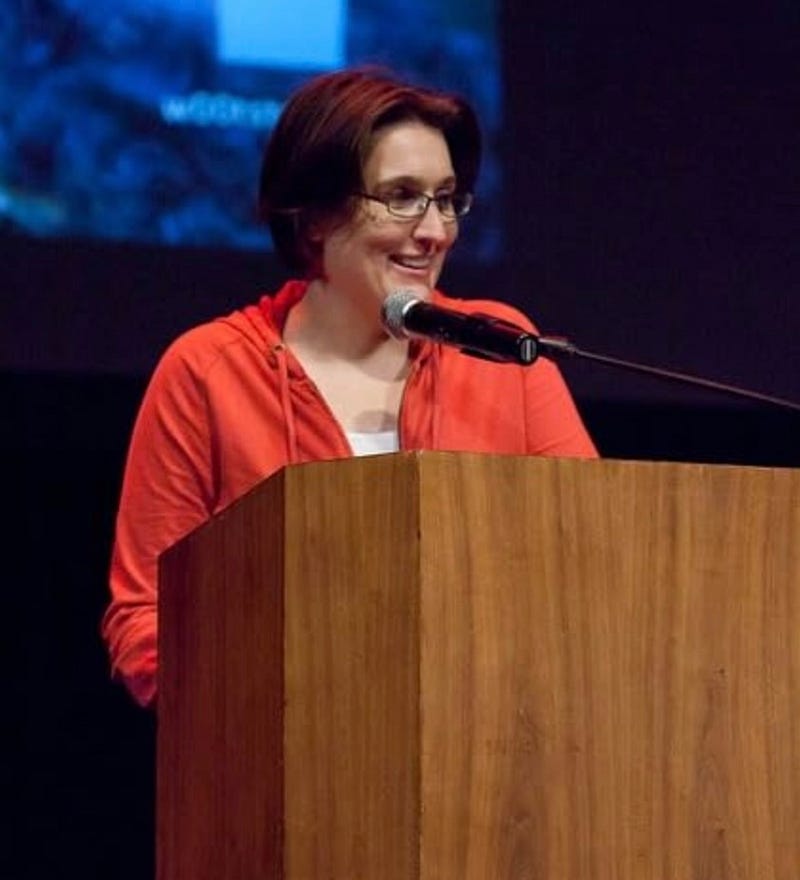
My conversation with a top Hollywood TV showrunner.
Amy Berg is a writer and TV producer whose credits include Leverage, Person of Interest, Eureka, Caper, Da Vinci’s Demons, and Counterpart. I crossed paths with Amy several years ago the way many writers do nowadays: via Twitter. I reached out to Amy to do an interview and she agreed. Here is that conversation.
Scott Myers: Looking at your writing and producing career in Hollywood, it’s a challenge to know where to begin because you’ve written so many different types of content: kiddie comedy, crime dramas, sci-fi, soap operas, historical fiction, comic books. So why not start at the beginning. I believe you grew up in Northern California. How and when did you develop an interest in writing? Were television and movies a big influence on you in your youth?
Amy Berg: I lived in my head when I was a kid. I wasn’t a loner, but certainly I never minded being alone. There was nothing better than being punished and sent to my room. Reading was my thing. I consumed books. I was always at the library looking to upgrade the material we were given in school.
The first movie I ever remember seeing was Empire Strikes Back. I was way too young to be in that theater, but my cousin was babysitting and wanted to see it. Holy shit, my mind was blown.
My passion for TV wasn’t really unearthed until middle school when I fell madly in love with Star Trek: The Next Generation. I was in the official fan club and everything. Massively obsessed. And now I’m good friends with half that cast and most of the writers, which never ceases to amuse my inner nerd.
When my family’s house was robbed in the late ’80s, we lost basically everything. I had a big coin collection that was passed down over generations that was taken, but the insurance forms put a cap on the total of certain things. My mom was determined to get our money back somehow, so she came to my brother and I and asked, “What do you want?” It was like Christmas. We could pick anything we wanted, something that we didn’t have before. I asked for a video camera. Everything changed that day. I started looking at the world from a storytelling perspective. But not for a second did I think I would do this for a living. I had no family connections. I didn’t know a single person in the city of Los Angeles, for that matter. Even when I went off to college, I was undeclared and totally clueless. Just a big fan of words and the things you could do with them.
It wasn’t until an English professor pulled me aside one day that my worldview changed. She’d assigned us to write a paper exploring character motivations in Hamlet. Out of boredom, I decided to frame the paper as though I was a theater director staging a performance of it. She made me read it aloud to the class and then afterwards asked me if I’d ever considered going to film school.
Scott: I was going to go directly to “How did you break into Hollywood,” but your personal backstory gave me a jolt! Three key events: Empire Strikes Back which blew your mind; a robbery which led to you getting a video camera; a paper you wrote for an English class which led to the idea of film school. Before we jump into your professional life as a writer and producer, I’d like to take those key events in your personal history and get a bit metaphysical, if you don’t mind. Do you look back on those ‘plot points’ in your own life as Fate? Obviously you made choices and worked really hard to get where you are today, but do you also think Destiny plays a role in a writer’s life or for that matter any of our lives? Or is it all just about hard work, learning the craft, and networking?
Amy: Many moons ago I worked with Peter Dinklage, who has a very practical take on the idea of destiny and luck. He hates those words because he feels like they cheapen the hard work people do to put themselves into position for success, not to mention the physical and psychological toll required to get there. I think he’s absolutely right about that.
For me, it took a while to figure out my path and I can’t help but think that the universe somehow directed me towards it. I’m the daughter of a grocery store manager and a stay-at-home mom from a relatively small town in Northern California. Entertainment was a distraction. The idea that it could be an occupation wasn’t in the cards. I didn’t know anyone who worked in film or television and I was hundreds of miles from the nearest studio. Growing up, I wrote specs of Star Trek: The Next Generation in my head…. I mary sue-d the shit out of that show. Of course, I didn’t realize that this was writing. I was just a kid with an overactive imagination.
Once writing became the endgame, it really was all systems go. I wrote my first episode of television when I was less than a year out of school.
Scott: Located so far away from L.A. and not going to film school, how did you go about learning the craft to the point where you were able to write those early TV scripts? And how did you go from script to breaking into the business?
Amy: Well, as it turns out, I’m actually a pretty good listener.
When my professor told me to consider film school, I started looking around. My parents didn’t know what to do with the idea and I didn’t want to start over from scratch, so I only looked at places that were inexpensive where I could wrap up a degree in two years. There was really only one option and that was San Diego State. The film program there was impacted and you had to have at least 3.5 GPA to even be considered for admission. Basically it was a really intensive program for really serious students, but we were surrounded by a party school atmosphere. I fucking loved it. And I met some amazing people, many of whom I’m still friends with today. In fact, my BFF, the guy who helped me produce CAPER, is someone I made movies with back in San Diego.
It was guerrilla filmmaking at its best at SDSU. Digital had already arrived, but the department couldn’t afford the technology upgrade so when I got there they were still shooting on 16mm. It was an extraordinary experience. Film school must be so easy for folks starting out now… I mean, you can really do it all on your phone.
As much as I enjoyed my time there, nothing can prepare you for being on a real soundstage or in an actual writers room. I think the most important takeaway from film school was learning how to work with other people. Especially in an environment with a hundred other students who all want to direct. Someone is gonna have to hold the boom. You learn how to work with other egos and how to stifle yours when it’s your turn to wrangle cable.
In my last year, I applied for the DGA Training Program. Solely out of fear. I didn’t want to be an assistant director, but I also didn’t want to move to LA without a job of some sort. I don’t know what the process is these days, but back then there were multiple stages: IQ tests, group interviews, individual interviews. It took two months and I made it all the way to the final interview and it was me sitting across from a dozen DGA members peppering me with a thousand questions. It got to the point where I stood up and said, “Sorry, but I don’t think this is for me.” And I walked out of the room.
I moved to LA after graduation without a job and without knowing anyone aside from my roommate who was getting a degree in social work at USC. Needless to say, I was cursing that professor’s name. What the hell was I getting into?
I applied to be a producer’s assistant from an ad in one of the trades and wound up with a job working for some EPs writing for Nickelodeon live action shows. A few months later, I was working alongside them as a writer myself. But that is its own crazy story.
Scott: So after all of that, you wind up as a P.A. in Hollywood, which is pretty standard advice nowadays: “Move to L.A. and try to get a gig as an assistant.” Maybe you could describe what a P.A. does, specifically what your responsibilities were, and why is that such a good entry level position. And, of course, we’ve got to hear your “crazy story” about how you went from P.A. to writing for a Nickelodeon TV series.
Amy: I was a producer’s assistant. Which, in the traditional sense, usually involves a lot of answering phones and taking notes. I didn’t do any of that. I was never at my desk. The showrunner I worked for was a bit of a ball-buster. On my first day, he gave me a list of all the things his former assistant was unable to accomplish for him. He’s a guy who liked to test you, and one who had a lot of hobbies that had me running all over town to accommodate. What was great is that I knew nothing about Los Angeles and I had to figure it out real quick. Not just the city itself but also its people. It was on-the-job training to be a super independent and resourceful human. I should have kept better track of all the things I had to do for this guy, I could write a book about it… I remember buying bullets for him, tracking down odd toys from the 1970’s he was still obsessed with, cutting wood at a lumber yard, taking polaroids of every item in every box in his garage so he’d know what was in them. That’s just for starters. But I did all of it, with accuracy and expediency. And he loved me. But thankfully he moved on to a different show on a different network and I decided to stay at Nickelodeon.
Meanwhile, during my first few months in town, a friend and I wrote a spec for Buffy. I didn’t even know what a spec was at the time. All I knew is that I loved the show and wanted to write for it. Naturally I didn’t have a agent or even know how to go about getting one, so I thought it best to just send the script directly to Joss Whedon. Fortunately, the writers on the Nickelodeon show laughed lovingly at my naïveté and explained that he couldn’t read a spec of his own show for legal reasons. They also explained that I was nuts… it’s not that easy to get read by anyone, let alone Joss.
So I wrote a one-act play to send him instead. It featured Joss and the Buffy actors as characters sharing stories of the script’s epic awesomeness. The prop guys on the Nickelodeon show whittled some vampire stakes and I bought some fake vampire teeth and I tossed those in a box along with the one-act and sent it off to Joss Whedon’s office. Two days later his office called to say they wanted to meet. So there I was at 22 years old, sitting in the Buffy writers room pitching ideas.
Although I came close, I didn’t end up getting the gig. But the escapade did manage to get the attention of my bosses at Nickelodeon. They were also huge fans of Buffy and figured if Joss wanted to hear what I had to say, so should they. So I pitched some ideas for the show, they bought a few and ultimately brought me onto the staff.
This story scares people when I tell it. Nowadays what I did to break in could be modestly described using words like “stalker” or “creepy as fuck”. Which is why I can’t recommend that people take the same tact that I did. But I reject the notion that what went down was just dumb luck. It was my one-act that got Whedon’s attention, and it was the Buffy spec, which the Nickelodeon producers read, that ultimately landed me the job writing for them. Not to mention a ridiculous amount of gumption and the fact that I killed it as their assistant.
There are some people, especially those who are coming from other fields or out of film schools with industry connections, who might think they’re too accomplished to make coffee or, you know, go bullet shopping. Maybe they won some student awards for their films or what have you and they’re waiting for the phone call from a studio to tell them there’s a feature script they want them to direct. Does that happen on occasion? Sure. By and large, though, this is an industry where you have to earn everything through blood, sweat, and tears. Especially if you’re not privileged in the ways of being male and white. You have to write things and shoot stuff and work your ass off running errands that make you feel shitty about yourself. But I guarantee that the harder you work to get there, the more joyful and accomplished you feel once you do. And you’re less likely to take it for granted
Scott: So in between being an assistant, writing plays and spec “Buffys”, and corralling vampire stakes for a pitch package, what were you doing back then to learn more about the craft? Reading any writing books? Breaking down TV scripts? Analyzing TV episodes? Participate in writing groups? What were some of the keys you found to help elevate your writing?
Amy: I read Syd Field like everyone else because it was assigned in school, but really the only way to learn is by watching films and shows and reading scripts then writing your own.
My whole life I’ve been more of a listener than a talker and I credit my ability to write dialogue to the practice of people watching. Since high school I’ve carried a little notebook around everywhere I go and jot things down that inspire me. Things I see or hear. Ideas, chunks of dialogue, that sort of thing. I’d imagine backstories for strangers and use it as comic relief when I was uncomfortable in group situations. Being funny was always a cover for my own social awkwardness.
I was never in a writing group. I was more into independent study, breaking down episodes of TV into scenes to better understand act structure and learn how to build tension. I would track down scripts for shows I really liked, and then watch the episodes with the scripts in hand. Just following along on the page was incredibly instructive.
Scott: Okay, let’s talk about your writing-producing career and I think it could be instructive for people to delve into the hierarchy of writers and producers on TV series. Let’s go all the way back to when you were a writer’s assistant. Could you chart your progress from writer’s assistant to writer to supervising producer and so on?
Amy: For my first three years in town, I wrote for two live-action shows on Nickelodeon where I started out as an assistant. I advanced quickly, within months instead of years, but the hard reality of Hollywood set in once those shows ended.
I didn’t want to write kids shows… it was never really an endgame. But I had no idea how difficult it was going to be to make the transition. No one took me seriously. It was like those credits didn’t exist. I needed to start from scratch all over again, but first I needed to buy some time to build up my specs. So I took a couple of temp jobs to learn more about the business. Nickelodeon was such an insular place to work, I really didn’t know much about the industry as a whole. I worked at a talent agency, then a production company. Wrote a pretty good West Wing spec and ended up on the Fox summer drama North Shore.
While there I had time to churn out another spec. It was the first season of Lost and I was really into it. They started out doing POVs of each character on the island and I had an idea to do the dog. So I wrote a spec of the show entirely from the dog’s perspective and it ended up making a bit of a splash in town. I landed on a CBS show calked Threshold that was about the government’s response to an alien invasion. That didn’t last, and I bounced over to a show called The 4400 on the USA Network. I was there for the last two seasons before it was cancelled unceremoniously during the writers strike.
From there I wrote my first spec pilot. It was about an FBI agent tracking a con man that turns out to be her father. Still one of the best things I’ve ever written. And I would never say my spec inspired a certain show with a similar plotline, but I won’t stop anyone else if they want to go there.
The pilot was only on the market for a hot second before I had to take a job to make some cash after the strike. That show was Leverage, where I started as a co-producer for the first season then was double-bumped to supervising producer for season two.
I left after season two to join one of my BFFs who was taking over as showrunner on Eureka. I joined as a co-executive producer and stayed for three wonderful seasons, finishing out the show’s run. I loved that show and loved the people even more.
From there, Syfy hired me to write a miniseries for them. After some infighting at the network about the tone of the project, I let them know I was jumping ship. The next day I joined season one of Person of Interest, which was already in progress. The studio tasked me with helping to breathe a little more life into the characters by infusing the show with a little humor. My first day I was assigned the next script, which was prepping the following week. So I put my head down on went to work. I asked out after the first season. Honestly, I don’t have the stamina anymore for 22-episode seasons. Maybe I never did. That shit is rough.
After that I shot a pilot for TNT starring Geena Davis and Scott Bakula which should have made it to air. And probably would have if we shot the draft I originally wrote. Bygones. But the annoyance of that experience is what led to my creating my own series called Caper for Hulu and YouTube, which I wrote with my good buddy Mike Atherton. We had a budget to shoot nine episodes and it was the most joyous experience of my life. I was both the studio and the showrunner. There was no interference. It was a great reminder of why I wanted to do this for a living. And as a bonus we won top prize at a bunch of festivals and were nominated for a Writers Guild Award.
But after that I needed to work again and so I interviewed to be the showrunner for season three of Da Vinci’s Demons, which had just gone through a creative purge after the second season. I’d been the #2 on a bunch of shows before elevating to showrunner on the Syfy miniseries, the TNT pilot, and then Caper. I didn’t get the gig on Da Vinci’s Demons, but I needed the money so I accepted the job as the #2. The talented gentleman they did hire to run it already had a project in development with the network, so from the beginning I ended up in a quasi co-showrunner position with him and was elevated to full executive producer. By the time we finished shooting, he was already gone and I was running it solo.
And then Counterpart came along…
Scott: Yes, let’s talk about ‘Counterpart’, the Starz series starring J.K. Simmons which debuted this year. Since I follow both you and ‘Counterpart’ creator Justin Marks on Twitter, it was interesting to track the genesis that show’s writer’s room via social media. In fact, I seem to recall one of your tweets about how you had read three pilot scripts for which you had the chance to come on as a producer, and that one of them in particular you hoped would be the one you ended up on. And that turned out to be ‘Counterpart’. So first, did I get that right? And second, how did the series come together? Next, how unusual is it to go from pilot script to a 2-season commitment? Finally, what has your experience been working on that series?
Amy: Starz knew they weren’t going to pick up Da Vinci’s Demons for a fourth season before season three even started because of the high cost and little return for them… they weren’t the studio on it and had none of the foreign rights, which is where the show got its ratings and made its money. So as I was finishing up the show, Starz offered me a couple of their existing series but I declined. I had two different projects in development and didn’t want to hop on anything else right away. At the same time my agents sent over a bunch of scripts to read so I knew what else was out there. I was making my way through the stack, kind of bored, when I got to the script Counterpart. It wasn’t perfect, but it was smart and complicated and didn’t talk down to the audience. It checked a lot of boxes for me. And the arena was similar to something else I’d been toying with. It felt weirdly kismet. So I sent my agents an email saying, “I know I got a lot of other stuff going on, but I kind of want this.” They wrote back, “You know that’s set up at Starz, right?” I had no idea. The cover page only had the title and author.
Justin and I were friendly on Twitter, but we’d never met until the studio bought us lunch. Coming from features he was new to the TV, so they were looking to pair him with an established showrunner. He and I hit it off creatively and that was that.
We got a small writers room together and started breaking stories. At that point the two-season order hadn’t yet been secured. That we earned with two more finished scripts and a pitch meeting in which Justin and I took everyone at Starz and MRC through a season’s worth of character arcs and story ideas. I’d also had the staff help me put together a bound employee handbook for the Office of Interchange, which is the agency where the majority of our characters work. More than just a fun prop, it also showed the network how much thought we’d put into the rules of our world(s). They loved what we’d come up with, so we got the order. Without having shot a single frame, which is pretty remarkable.
Scott: That is a remarkable story. I remember Justin tweeting as he started working with you and the other ‘Counterpart’ writers something along the lines of: Why don’t all writers have this arrangement? In other words, feature writers slogging along, alone. But the TV writers room = heaven. What are your thoughts about the solo feature writer vs. the TV writers room dynamic?
Amy: Well, you’re starting to see writers rooms on the feature side these days but really only for the big franchises. And it’s usually a revolving door of the same small group of sought-after screenwriters.
I think the simple fact is that television is a totally different beast. It requires you to exercise different muscle groups that aren’t needed when you’re doing independent study. It’s all about collaboration, and let’s face it… collaboration isn’t for everyone. And not just in the room. In television, a writer’s responsibilities don’t start and stop at the page, particularly if you’re the showrunner. Showrunning is only 20% writing. The other 80% is managing people, places, and things. It’s casting, scheduling, budgeting, giving notes, getting notes, making calls, recruiting and hiring the right personnel… and that’s just preproduction.
I’ve been on my fair share of shows now and I’ve worked with people who are cut out for it and those who are not. Managing people is the toughest bit, because it’s instinctual. Your job is to simultaneously protect and inspire. Yes, you’re the teacher and you need to give instruction, but you’re not going to get good work if you view everyone else from a pedestal. You literally cannot make a television show alone. In fact, you can’t make it with any fewer than a hundred people. In the case of Counterpart, it was closer to three hundred in two countries and I worked my butt off to make sure they were looked after
Scott: You mention how there’s been a kind of evolution on the feature side with some of the franchise projects having writers room like Transformers at Paramount and Universal’s attempts to launch a ‘monsters’ universe. It seems to me that’s emblematic of more and more crossover between movies and TV. Here’s another one: Limited series like ‘Godless’ and anthology series like ‘Fargo’ where the creatives (Scott Frank and Noah Hawley) say publicly that they look at those stories as “long movies”. What’s your take on the emergence of limited series and anthology series, and do you envision more crossover and even convergence between movies and TV in the future?
Amy: Oh, absolutely. And I think it has a lot to do with the emergence of new platforms, particularly services like Netflix, Amazon, Hulu, YouTube Red, Crackle, and now even Apple joining the fray. In the world of streaming and digital downloads, how people view film and television is all the same to them so it’s not surprising to see the content itself starting to lend itself to that model as well.
Although I think there’s still an element of fear when it comes to folks tackling television for the first time, particularly if you’re bringing auteur-like talent to the table. Everyone has seen or heard enough horror stories to know it’s probably best they not try their hand at large episodic orders of a continuing series.
Right now there are more shows than there are skilled conductors capable of keeping the train on the tracks, but thanks to short orders and limited series you’re not noticing a drop in quality. If anything, since those shows usually offer longer writing periods, what you’re seeing is actually an uptick. I don’t think you can argue that television offers better storytelling than film these days.
Scott: The changing landscape of technology and new platforms appears to be altering the way writers get hired onto TV staffs. For example, I saw Jenji Kohan at the Austin Film Festival a few years back and she was asked what type of material they looked for when considering writers for Orange is the New Black, and she said basically anything other than the traditional spec script of an existing series. Original TV pilot scripts, movie scripts, plays, short stories, they considered everything. She said the main thing they were looking for was writers with a unique voice which she and her fellow producers felt could provide something distinctive yet also complimentary to the series.
So my questions to you are: What type of material did you and Justin Marks consider when hiring staff for Counterpart? What would you recommend a person wanting to break in as a TV writer focus on in their own writing?
Amy: Personally, I think specs of existing series still have a place. An original pilot might tell you about someone’s imaginative abilities in a room environment, but the goal on the page for a working TV writer is still to mimic the voice of your boss.
At the end of a long day, the last thing I want as a showrunner is to sit down with a draft from one of my writers and not have it be a workable product. There will always be something that needs to be adjusted, but if it’s not even in the wheelhouse I’m not going to be happy. Which is why when I’m staffing I still like to read one of each. But hardly anyone is writing specs of existing shows anymore because all the advice that’s out there tells them they don’t need one. So you make due with what you’re given and hope for the best.
What I look for in the samples I’m sent is scene structure. I look at the bones. I can rewrite a script in a day if it’s just a dialogue pass, but if I need to go back in and rebuild scenes from scratch that’s a much longer process. I also really want to be surprised. Whether it’s a story turn or a character choice or something even smaller, I want to know that you’re going to be a person I can count on in the room for a left turn when everyone else is looking right.
Specifically, for Counterpart, all the scripts we read were pilots. Unfortunately I had to leave town for a family emergency while we were staffing, so Justin was the one who made it through all the stacks of scripts. He’d send me the ones he liked and we went from there.
Scott: Let’s delve a bit more into Counterpart. What stood out about that pilot script which got you excited to come aboard as a key part of the writing-producing team?
Amy: For starters, I liked that it wasn’t a pilot. It didn’t have any of those paint-by-numbers characteristics you usually see with how the world is set up and how the characters are introduced. It was written as the first act of a movie, or at least that’s how it read. It didn’t give you any answers as to what’s going on. It didn’t explain the science. It didn’t tell you who were the good guys or the bad guys. There was no talk of “parallel dimensions” or any of that. You had to figure it out for yourself.
If course, that was also part of the challenge of turning it into something people wouldn’t turn off. If you watch that first episode, there’s actually a lot more explanation in there that we added that wasn’t in that early draft. There was even a scene I wrote in the car between Howard and Quayle as they’re driving back to the office at the end. We added detail not to codify anyone at the studio or network by offering more exposition but because we thought the details were so juicy they’d even further tease the audience about what they didn’t know. At the same time, it was enough to show them we had the answers even if we weren’t going to give it to them right away.
Scott: The way Counterpart got set up at Starz was somewhat unusual, at least in the way it was reported in the trades, in that the network gave a two season order based on the pilot script. Could you provide some background on how and why that worked out the way it did? What elements about the pilot script and series pitch do you think enticed Starz to make such a strong commitment?
Amy: Starz picked up the show based on a pilot script with JK attached to star and Morten Tyldum attached to direct. The two-season order wasn’t confirmed until after the writers room was convened and Justin and I were able to pitch out the story and character arcs for the first season. We also had two more scripts for them to read and evaluate. Based on the pitch and the additional material, the two season order was a go. At that point we hadn’t shot a single frame.
Scott: While you work primarily in television, if I’m not mistaken, you’ve also written some feature length screenplays. What are some of the chief differences you have discovered in your own writing between writing a script for TV and writing a movie script?
Amy: I’ve done rewrites and polishes on features as a fixer for hire, but I’ve only recently written my first original screenplay. We’re going out with it this spring. It’s definitely a different beast. There’s more rising and falling tension in a television show versus a film where it tends to be a more steady build to the climax. That might be too sexy an explanation, but it’s the best I got.
A way to look at it might be that film is a complete novel whereas episodes of television are individual chapters and the series finale is what completes the story. Every chapter has to have some kind of interesting development or revelation in character or plot to keep the television viewer engaged week to week, whereas in film the audience’s butts are in the seats for the duration so it doesn’t need to be paced in quite the same way.
Scott: Could you describe the process of how a episodic script for a TV series goes from concept to finished draft, from breaking the story to final edit?
Amy: For me the process starts on day one of the writers room. Before a single story card goes up, we start with character. We build what I call a character grid. It’s something I’ve done for every room I’ve run, including Counterpart. The grid usually takes up an entire wall of the writers room and consists of a vertical column with the names of all your characters and then a row at the top with the episode numbers. This allows you to track each character’s arc for the season and it serves as a constant reminder that the entire goal of plot is to service character.
Initially I have my rooms talk in broad strokes about the characters and their trajectories and we usually end up filling up about a third of the grid before we start breaking a single episode.
When we start a story break, we consult the grid to see where our characters are coming from and where they’re going. Then once we’re done breaking an episode, the writer assigned goes off to write an outline and then a draft of the script while the rest of the staff continues onto the next episode’s story break.
I like to have my staff heavily involved in the prep and production of their individual episodes. Not only does it make my life easier, it makes them better producers at the end of the day. They’re in every meeting and running the department-specific meetings that normally I cannot attend. Rarely do they sit with the editors without me in the room, but I welcome their involvement if they want to come along for the learning experience.
Scott: Okay, a few craft questions. How do you come up with story ideas?
Amy: For me, there’s no set formula but you always want your characters to lead the plot rather than plot leading your characters. The way to generate story ideas organically is to think about what challenges to put in front of your characters to get them to make choices that reveal something about them.
Scott: How do you go about developing your characters? Any specific tips or tools you find yourself using regularly?
Amy: At the end of the day, the only thing that really defines a person is the choices they make. The characters in your scripts should be no different. And not just protagonists and antagonists. Every character. If you go through your script and find characters populating it who don’t make any choices for themselves… they’re not characters, they’re window dressing.
You have to take your characters through obstacle courses. If you’re relying on dialogue alone to distinguish them, that’s not going to work. The way to create characters who are their own person is to force them into situations that require them to be opinionated and make choices… then having them make different ones.
Scott: What about dialogue? How do you go about finding your characters’ voices? How can a writer develop their ability writing dialogue?
Amy: The question I get most from the writers I mentor or from folks I meet at events and festivals is how to create voices that are unique to each character. I tell them not to rely on personality quirks. That’s cheating. Voice has to come from the inner life of the character. Where to they come from and where are they going? Are there things they find annoying or endearing that other people don’t because of who they are?
The last thing you want to do is study scripts to learn how to write dialogue. Studying scripts is good for learning about scene and act structure and building tension, but please do not use that as your book learning for writing dialogue. Dialogue in any script is already a heightened version of reality, so if you’re using that as your model your own dialogue is going to be even more heightened and thus inauthentic.
The best thing to do is be a listener in life. Study the world and the people around you. Be a fly on the wall and absorb the reality we’re in, not the representation of it in film and TV. There is so much to out there still to be mined. So many unique voices yet to be discovered.
Scott: How would you define theme? How important is it? Do you start with themes or do they arise in the context of developing and writing the story?
Amy: Theme is what gives your story coherence. It is the unifying idea. At its core, what is the film or TV series about? If it’s an original idea, I usually start from character. But if I’m adapting something, I usually start with theme. Why is this a story I personally want to tell, and why is it a story that needs telling?
Most people think there is only one “why now?” question and it’s the question as to why are we coming into this story at this exact moment in time. What’s the thing that’s happened to make this the perfect jumping off point for your plot. But there’s a larger “why now?” question I think we all need to ask. And that’s why the hell are we telling this story in the first place, and why that matters in relation to what’s going on in the world right now. Obviously not all stories are meant to have a societal impact, but we need to find something however small to attach our theme to… even in the raunchiest of comedies.
Scott: What do you think about when writing a scene? What are your goals?
Amy: Efficiency, for starters. It shouldn’t be any longer than what it needs to be. But more importantly, if your scene doesn’t reveal something new about one of your characters there’s no need for it to exist. That’s really the only barometer that matters.
Scott: Finally, what advice can you offer to aspiring screenwriters and TV writers about the learning the craft and breaking into Hollywood?
Amy: It’s not easy, but nothing worthwhile ever is.
For 100s of Go Into The Story interviews with screenwriters, filmmakers, and Hollywood insiders, go here.