Go Into The Story Interview: Alysha Chan and David Zarif
My interview with the 2024 Nicholl Fellowships in Screenwriting winners.
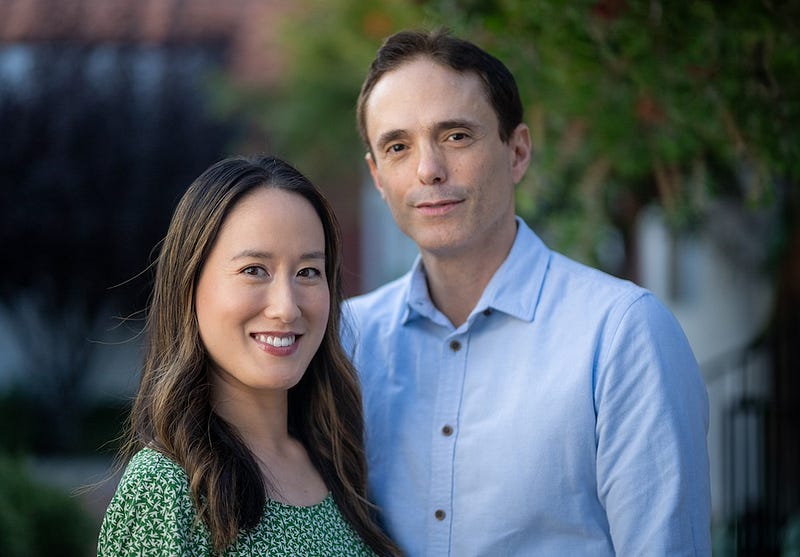
My interview with the 2024 Nicholl Fellowships in Screenwriting winners.
Alysha Chan and David Zarif wrote the original screenplay “Miss Chinatown” which won a 2024 Nicholl Fellowship in Screenwriting. Recently, I had the opportunity to chat with the couple about their creative background, their award-winning script, the craft of screenwriting, and what winning the Nicholl has meant to them.
Here is my complete interview with Alysha and David.
Scott Myers: Welcome. Congratulations on winning the 2024 Nicholl.
Alysha Chan: Thank you so much.
Scott: Let’s start with Alysha. How did you find your way into writing as an interest and then eventually screenwriting?
Alysha: Writing has always been a part of my life in some form. In college, I wrote a couple of novel-length works, and I’ve written short stories for fun from time to time. However, Miss Chinatown was my first foray into screenwriting. I was in search of a creative outlet and David suggested we give it a try. In preparation, I read “Save the Cat” as well as a ton of Blacklist scripts to get a feel for the craft.
Scott: Where’d you go to college?
Alysha: I first went to Scripps, one of the Claremont Colleges, then studied environmental engineering at Columbia University.
Scott: I’ve talked to a few screenwriters who have an engineering background. Is there some applicability there for you in terms of how you think about writing?
Alysha: I think so. I’m very analytical and detail-oriented, and that’s helped keep our writing grounded and structured.
David Zarif: She’ll wake up in the dead of the night and be like, “It doesn’t make sense that Sally went to the supermarket to buy ingredients for lentil soup and then made the soup that same night when lentils need 2–4 hours to soak.” And I’m like, “Look, if that’s the biggest problem in our script, we have the most airtight narrative in the history of modern cinema.” Kidding aside, her critical analysis has really saved us in some tricky moments. It’s all about spotting those little inconsistencies that might slip through the cracks.
Scott: David, how about you? How did you get into screenwriting?
David: I took a screenwriting class in college, and we were supposed to write a script over the course of the semester, which is really ambitious now that I think of it. Anyway, I ended up turning in like 20 pages. I remember my professor sitting across from me at his desk, holding my very light script in his hands. And the only words out of his mouth were, “What is this?” Which is not the sort of inspirational feedback you wanna hear from your first attempt at screenwriting. I was like, “Sir, this writing thing… it’s not as easy as I thought.” He started laughing. I think he ended up giving me a B. After moving out to LA, I thought, “Hey, I’m gonna give screenwriting another shot.” And so I started writing again, this time with the goal of getting past page 20.
Scott: Where’d you go to college?
David: University of Michigan.
Scott: Oh, yeah, they have a strong screenwriting program. I know Jim Bernstein who heads it up.
David: Yeah, big screenwriting program. I never took a class with him, unfortunately. Like I said, I was 20 pages-and-out. But I think Adam Hertz wrote American Pie while he was at Michigan, for a class with Jim.
Scott: The original title of the script was “Untitled Teenage Sex Comedy That Can Be Made For Under $10 Million” or something like that.
Alysha: Ooo catchy.
Scott: That was the original title that they went out with, yes. Sold in a bidding war, as I recall. Ah, the 90s spec script market.
[laughter]
Scott: Okay, back to you two. How did you meet?
Alysha: First off, we are a married couple. We actually got married the day before Nicholl Week started, which was crazy.
David: We were married in Big Sur on a Sunday, packed up all our things that night, and left early the next morning. We made a pit stop at a library along the way to hop on the first two Nicholl Zoom meetings that kicked off the week, then kept driving home to LA.
Alysha: Then the next night was the Nicholl ceremony.
David: On the drive home, we worked on our acceptance speech.
Scott: So the Nicholl week was like your honeymoon.
David: Yeah, it was like a trip to Hawaii, but instead of leis we got to meet Destin Daniel Cretton… who is from Hawaii, now that I think about it. Hmm.
Scott: Fun story.
Alysha: To answer your question, we met as background extras on the set of a TV show. I had recently signed up with a casting company, and the day I met David was the only day I ever worked as an extra.
David: We were in a wedding scene, we were paired together.
Alysha: As a bridesmaid and a groomsman.
Scott: Oh, my God. That’s totally like a ‘meet-cute’ for a rom-com.
Alysha: Oh, I know. It’s like 20% of the reason I married him — for the story.
David: We’re trying to incorporate it into our next idea. So, yeah, a seemingly scripted encounter.
Scott: That’s an amazing story. You don’t necessarily know when it’s happening that it’s like fate is involved. Alysha, the only day you’re an extra on set, and you’re both in a wedding party …
Alysha: I called in sick from my day job to do it, too. My mom was excited for me. She thought I’d be “discovered.” She was like, “Miss work, just do this.”
David: I’m sure she was second guessing her enthusiasm after I showed up.
Scott: Doesn’t sound like there was much in the way of formal educational training in terms of screenwriting. David, you had that one class where you wrote twenty pages. Were there any other ways that you went about learning the craft?
David: I worked as a reader for a few years, so I’ve probably read about a thousand scripts in my life. Just reading scripts is a great education.
Scott: Absolutely. The fact you wrote Miss Chinatown, the first script Alysha was involved in, and did such an incredible job of writing it, speaks to the value of reading scripts. Let’s talk about this Nicholl-winning script. Here’s the logline:
“Jackie Yee, a lifelong tomboy, follows in her mother’s footsteps on her quest to win the Los Angeles Miss Chinatown pageant.”
I did a little research. This is like a thing.
Alysha: It’s most definitely a thing.
Scott: It’s totally real. Tell me about that.
David: Alysha ran for Miss Chinatown.
Alysha: The real-life one has a winner and a court with princesses, or runner-ups. I was one of the princesses. It was such a unique experience.
David: When we first started dating, she told me, in no uncertain terms, that I was in the presence of a princess. I remember thinking, “Man, dating in LA really is different…” Then she explained Miss Chinatown to me, and, like most non-Chinese people, I had never heard of it. As time went on, I saw that she remained close with her Miss Chinatown class — still hanging out and participating in events together even years later.
Alysha: There’s a tight-knit alumni network. It’s like a sorority.
Scott: You probably know that Hollywood has this business ethos they’ve had for generations, which is this: “similar but different.” They like things that are similar to successful movies, but different enough to stand on their own. Miss Chinatown brings to mind Little Miss Sunshine because of the pageant element. Similarly, it recalls Miss Congeniality. Even the teen comedy Bring It On. But your story is distinctive and unique in its own way.
I want to talk about the four key familial characters, starting with your protagonist, Jackie. At the beginning of the story, what do we need to know about this young woman?
Alysha: Jackie’s 18 and full of teenage angst, struggling to forge her own path in life while facing the pressure of overbearing parents, specifically her mother. It’s a common experience for many Chinese kids, growing up with strict parents who try to dictate their future.
She’s also grappling with her identity — trying to find a balance between being Chinese and American — which I’ve definitely dealt with as well. Jackie ultimately learns that it’s possible to honor both her own desires and her parents’ wishes. Being true to herself doesn’t mean abandoning her roots — it’s about finding harmony between the two.
Scott: Yeah. I think what’s at the core of most every Protagonist’s story is this question of self-identity and that relates to Jackie’s journey in the script.
You mention her overbearing mother, Annie. David, how would you describe her character?
David: Annie wants the best for her kids but doesn’t always go about it the right way. That’s the crux of our story — strong-willed tiger mom versus free-spirited daughter.
Scott: Annie was a winner of the Miss Chinatown pageant in the past, so there is a legacy dynamic.
Alysha: Annie’s Miss Chinatown experience left such a positive imprint on her life that she wants the same for her daughter, without considering what Jackie wants for herself — which I think is a common dynamic between parents and their children.
Scott: What about Edwin, the dad? He’s a fun character. He’s sort of background early on, but then he has some really big moments later on in the story. How would you describe him?
David: I feel like Edwin is based on her dad.
Alysha: It’s a very personal script. [laughs]
David: Edwin’s a sweet guy. He doesn’t have a bad bone in his body. He loves his family, misses his wife, and wants to do the best he can for his daughters.
Scott: Then there’s Jade, the younger sister. She’s a hoot.
David: Jade is like your [Alysha] alter ego or something. What do you think?
Alysha: Sure. [laughs]
Scott: Where did that voice come from? She’s got a very contemporary social media-speak.
David: It’s hard for me to pinpoint where voices come from. Creating characters feels so amorphous and fluid — ideas just appear and then evolve as you write. She’s kind of our nod to Gen Z and their social media savvy and lingo.
Scott: Well, that’s great that you can have the characters speaking to you that clearly.
David: I make it sound like writing is easy. It’s not. It’s so, so not. But Jade came easy to us.
Scott: I’d like to do a breakdown of Act One, because I was so impressed how efficient the writing is. By the time I got done with your story set-up, I was like, “Wow, these writers really did a great job of moving this thing along and setting up these characters.”
You start off with essentially a prologue. It’s about a five-page voiceover narrative sequence from Jackie where we’re seeing her as a child. Was that something you had in mind originally?
Alysha: I think we had that from the get-go.
David: We wanted to get into our story as quickly as possible. Readers have a razor thin attention span. And as a writer, you have to ask yourself, “Why would someone spend time reading your script as opposed to, say, doing literally anything else?” And I know a lot of people dislike voiceover, but it’s an effective way to pull the reader straight into the world you’ve built.
Scott: It’s a testament to efficient writing. I mean that as high praise because, in five pages, you establish the youngest version of Jackie with that Little Miss Sunshine thing where she’s watching pageant videos. She says via voiceover:
“To me, she [my mom] was an Asian Michelle Obama, a lesser-bootied Kim Kardashian, and an equally badass Michelle Yeoh all rolled into one.”
And you feel that. But by the end of that prologue, Jackie is pulling back, not wanting to pursue the Miss Chinatown route. There’s a literal arc that happens in five pages. The prologue sets up the tension where the mom is hoping for Jackie to be one way, but she’s starting to carve a path of her own. She says:
“And as time passed, what was once a tight bond with my mother was broken.”
Did you know when writing the prologue that you wanted to get to that point of brokenness?
David: Yes. We wanted to establish their conflict as quickly as possible. We must have rewritten that prologue twenty times. We wanted to keep it short and because of that, every word was–
Alysha: Real estate.
David: We thought about and rethought about every word. What if we take this out? How will this change that?
Alysha: Is the spacing of the voiceover segments too far apart from each other?
David: We probably worked on that more than anything else in the script.
Scott: So you come out of that prologue and boom: Jackie’s eighteen years old and she’s a skateboarder. That’s a great juxtaposition. Did you know that you were going to go right to that?
David: I think so. I think that’s always been in the script. Neither of us have ever stepped foot on a skateboard, but we thought it was the perfect symbol of youthful rebellion.
Alysha: It’s also very Southern Californian.
David: Plus, you don’t really see a lot of Asian American skateboarders. So,we thought it was an interesting choice.
Scott: What is that aside that the mom keeps saying, “Skaters all high school dropouts who live in vans”?
[laughter]
Alysha: Pretty typical of how older generations view skateboarding.
Scott: Annie calls Jackie “Day Day” and that’s a growing source of tension because Jackie repeatedly says, “No, don’t call me that.” Again, self-identity. And there’s a big dramatic moment on pages 13 and 14, about the middle of Act One, where Jackie’s been injured.
She succeeded in a particular skateboard trick but fell and hurt herself. And of course, this is exactly what Annie’s been harping about, the dangers of skateboarding.
They have an altercation. The mother uses a Chinese salve on Jackie’s wound, and Jackie says, “I want Neosporin instead.” Then Annie says, “Why do you have to skate? Why you don’t play piano or tennis like normal Chinese girl?” and Jackie says, “Because that’s not who I am.”
Once again, identity, right? “Day Day, you’re too young to know who you are,” Mom says, and Jackie, in all caps in the script, explodes on her, “FOR THE LAST TIME, STOP CALLING ME THAT,” and then the mother leaves the room, leaving Jackie alone.
That ends up being the last conversation they have. On page 15, the mom drives off to pick up some Neosporin and dies in a car crash. Did you plan that to happen by the Act One midpoint?
David: Yeah, that’s been a constant in our drafts.
Scott: You have this argument, the last exchange Jackie has with her mother. So there’s a lot of guilt built into this at that point, right?
David: Guilt really drives Jackie’s journey. In most “competition” or “sports” movies — and Miss Chinatown fits that mold to an extent — the protagonist is typically chasing a cash prize. But that’s become such a tired trope. We wanted it to feel more personal, deeper, so we made guilt the central motivator.
Scott: Yeah, because by the end of Act One, the family’s dealing with the grief in different ways. Jade seemingly is ignoring it. Edwin is kind of lost and adrift emotionally, and Jackie doesn’t know what to do. But at some point, she gets rid of her skateboard stuff and says, “I’m gonna win Miss Chinatown.” Literally on page 25. Was hitting that page count a target for you?
David: Absolutely. Our goal was to keep the first act around 25 pages, so we were really intentional with every line, every word. We kept asking ourselves, “Do we really need this?” If the answer wasn’t a resounding “yes,” even if we liked it or thought it was funny, it got cut. We were determined to make the first act as fast-paced and engaging as possible.
Scott: A good read. I tell my students that when you’re going through a script, doing an edit, ask yourself about every scene, every line: “Is it essential? If you extract the scene or that line, does it impact the story?” If not, you probably can cut it.
Alysha: Definitely. It’s like Busta Rhymes says, “Keepin’ it tight.”
Scott: Okay, moving into Act Two, Jackie’s got this determination that she’s going to win the Miss Chinatown competition. But she’s just not at all, I guess, you’d call it “girly girl.” She’s an underdog due to her lifestyle of years rebelling against her mother and the pageant mindset.
There’s some other characters that Jackie meets along the way. How about the Ivan character?
Alysha: He’s her best friend, her only friend we see outside of the Miss Chinatown competition. He’s also a skater.
David: He understands her.
Scott: He films her skateboarding
David: He’s her gateway to skater culture, representing everything Jackie’s mother opposes.
Scott: Later on in the script, she ignores his texts while she’s going through the Miss Chinatown process, but then there’s an important part where she finally does reach out and they reconnect — it’s a wonderful little arc between them.
You have this clever construction determining who goes forward in the Miss Chinatown contest: 20 people, cut down to 10, and so on, that helps with the structure of Act Two. Then there are other pageant contestants she meets: Coco, Kim, Fiona, and Mei.
Alysha: One thing I really wanted to emphasize was that beauty shouldn’t be the sole focus of this pageant. When I ran for Miss Chinatown, we were all regular people, and winning wasn’t about being the prettiest — which of course I was. [laughter] I’m kidding. It was about how we performed in various segments, which we tried to portray in the script.
We wanted a hodgepodge group of contestants to show that anyone can try out, so we made them quirky and unique. Kim is Jackie’s best friend in the competition. She’s pure, upbeat, and the glue of any friendship. Conversely, Mei is very shy and softspoken. Then we have Fiona, a bit of a goth girl.
David: We also have the de facto villain, Coco — a career pageant queen, who’s practically unbeatable. She’s Jackie’s nemesis.
Alysha: In addition, I wanted to show that Miss Chinatown is not just about a pageant but also about building camaraderie and learning about the culture.
Scott: It comes across quite well. These characters are all individuals. I love the thing at the end where they all confess the different reasons why they tried out for the Miss Chinatown pageant. Each of the characters is distinct, and the combination of them is quite funny.
I’ve got to talk about someone who isn’t a contestant and that’s Bobby Pan because he’s such a fun character. Was this a guy from your experience, Alysha?
[laughter]
Alysha: No, I wish! When we were writing him, I always envisioned Bowen Yang, who unfortunately isn’t part of my life… yet.
David: He was born out of a need for comic relief, and because this story is set in Los Angeles, we’d be remiss if we didn’t have someone trying to break into the entertainment industry.
Scott: He’s like, “I’ll be here unless I get this next gig,” that LA desperate actor thing, but he’s really quite funny. And again, another character with his own arc. There’s a moment where Jackie says, “I’m kind of glad you didn’t get those gigs because it turns out you’re a pretty good teacher.” Again, I was so impressed with the way you handle each of those individual storylines.
Now let’s talk story structure. I’m imagining if it were me, I’m saying, “Oh, Miss Chinatown, the advantages of this is that you’ve got a time-frame, you’ve got certain things they have to do, you’ve got cutoffs where people are getting eliminated.” That speaks directly to how you can structure Act Two and Act Three. That must have been helpful for you.
David: The competition certainly provides a nice framework with regards to our structure — there’s the training for Miss Chinatown, the desire to improve, and then, of course, the actual pageant at the end.
Scott: I was going to say, because at some point, Jackie’s like, “Oh my God, I can’t just show up. I’ve got to get my act together.” So who does she go to? Her sister Jade because Jade has a YouTube channel where she talks about makeup and fashion.
That’s a great way to bring those two characters together because at first, they’re at sixes and sevens, just significantly different personalities. Could you talk about that makeover sequence and how Jade helps out Jackie?
David: Jade is essential to Jackie’s success, but their relationship is strained by the differing ways they process their mother’s death. Jackie needs to mend their relationship, and in doing so, Jade becomes instrumental in getting Jackie pageant-ready.
Alysha: We wanted to show that Jackie initially struggled with the Miss Chinatown pageant segments, but through the help of her loved ones — Jade, Edwin, and Ivan — she improved and became a serious contender.
Scott: So there’s the makeover sequence with Jade, but then Jackie needs to learn a traditional Chinese dance for the pageant competition. And that leads her back to her father Edwin. He’s been hanging out in the story’s background, caught up in his private grieving about his wife’s death. Could you talk about the subplot of Jackie and Edwin?
Alysha: In earlier drafts, the focus was mostly on Jackie and Annie, but as Jade’s role grew, we realized the story needed to center on the entire family. We gave Edwin a bigger role, including the scene where he teaches Jackie the dance while reminiscing about meeting Annie. That scene always makes me feel both emotional and tickled, imagining him doing those dance moves. It’s what we strive for in our writing: a blend of humor and heart.
Scott: Well, speaking of family, you make a huge story decision: Annie returns after she dies. It’s sort of like The Sixth Sense, Play It Again Sam, or Harvey, movies where there’s a character the Protagonist sees, but nobody else does. What was the thinking behind this choice?
Alysha: We felt it would be really hard for the reader to care about Annie if she died after just 15 or so pages, never to be seen again. ‘Ghost Annie’ was essentially a way to help the audience connect with her since we had so little page space to develop her as a living character.
Scott: What I’m hearing you say, “How are we going to possibly get the audience to feel an emotional connection to Annie and, consequently, to Jackie’s journey?” Then you hit on this idea: “Annie’s going to come back.” Was that a challenge for either of you?
Alysha: It was. Having it fit tonally and making sure it didn’t feel gimmicky.
Scott: There’s this one reference in the script where Ghost Annie says, “I could fly over to this person’s house,” but that was the only reference to sort of the metaphysical. Otherwise it’s just Annie being Annie, but I thought that was really clever. I enjoyed it a lot.
I do want to mention this thing that was set up earlier, Edwin, the father, talking with Jackie about their shared grief related to Annie’s death. He says simply, “Tomorrow … better day.” Cut to the last line of the script where Jackie says: “It’s finally tomorrow.” I love that line, it just rounds out Jackie’s arc. Could you talk about that runner involving the word “tomorrow” in dealing with the experience of grief?
Alysha: I think I asked a family member about a Chinese saying that conveyed a similar sentiment, and we adapted it from there. We included it to provide a shared expression of grief between Jackie and Edwin.
Scott: It’s a terrific last line and a fitting way to cap off a wonderful screenplay.
Let’s switch gears from tomorrow to yesterday and talk about your Nicholl experience. We’ve already talked about the honeymoon, but let’s go back even before that, to how you knew about the Nicholl.
Clearly, David, you’ve been in the business, and Alysha, I’m sure you’re aware of it. Was that a target, like, “OK, we’re going to get this script done and get it in by May 1st?”
David: No, not at all. We submitted to the fellowship as an afterthought. For us, it was testing the waters. We figured if we made the quarterfinals, then we’ve got something, we should keep writing. And then we did make the quarterfinals, and then the semi-finals. I remember saying to Alysha, “This is it for us. This is as good as it gets. Let’s celebrate.”
Alysha: We had a nice dinner and ordered wine. About a week later, we got a very cryptic email from the Nicholl committee that said, “We have some questions for you. Will you please be available for a Zoom at this time?”
David: I said, “OK, this can’t be bad news. Hollywood does not give you bad news to your face.”
Scott: That’s right.
David: Then we celebrated a little more. But in short, it was never our lodestar. We felt we wrote a fairly non-Nicholl-type script. Early on, someone told us this could be something for The Disney Channel. And I guess that stayed with me.
Scott: Oh, I don’t know. It’s in the spirit of The Farewell which was a big hit at the Sundance Film Festival, I believe, back in 2018 or 2019. This [Miss Chinatown] is, I think, perhaps more mainstream or commercial or whatever those terms mean. What’s the status of the script at this point? I think you mentioned you got representation out of all this?
David: We did. We found representation before submitting to the fellowship.
Scott: Based on this script or something else?
Alysha: This script.
David: We’ve had a manager for a few months now, but we’ve only just recently started sending the script to production companies. So… fingers crossed.
Scott: Well, this seems like a no-brainer to me, but unfortunately, I think a lot of the people that run studios don’t really have brains.
[laughter]
Scott: Anyhow, congratulations. I really enjoyed reading the script. I’d like to ask you a few craft questions. I’m assuming you’ve got other projects you’re now developing.
David: We do.
Scott: Do you generate ideas largely from your own personal experience or are you coming up with story ideas out of your imagination?
Alysha: Well, the next idea that we’re really excited about is inspired by something that happened to us, a very specific snafu that occurred early on in the dating process.
Scott: Is that a comedy or a drama?
David: It’s a Christmas movie. A Christmas dramedy.
Scott: Dramedy, all right. OK, so you’re not the kind of people that intentionally say, “Hey, let’s come up with a story idea today.” It’s more like something that emerges from your own personal experience.
Alysha: Yeah, but also, we’re always reading — articles, books, even the labels on snacks. It might sound cheesy, but inspiration can hit anywhere. You could be on a walk, and suddenly, an idea just clicks. Oh, and by the way, stay away from veggie crisps — they seem healthy, but they’re packed with simple carbs and sugar.
[laughter]
Scott: Let’s move into prep writing. How did you all break story on Miss Chinatown? What’s your process like?
David: Well, so far, our process is we get a big cork board and a bunch of index cards, and we lay out the story beats then fill in the details.
Alysha: Then we sit with our laptops and use Final Draft’s Collaboration feature and very painstakingly go through the writing process. It really is chipping away at an iceberg with a toothpick.
Scott: Are you showing the script to anybody or is this just you assessing it, like stepping back and assessing what you’ve got?
David: I have some close reader friends who are very generous with their time. They helped guide us through drafts.
Scott: As I mentioned several times, I’m impressed how you handle characters. Are there any specific exercises you do to generate or to develop characters?
David: I don’t know. I’ve always been horrible at character development.
Alysha: It must be me then.
[laughter]
Alysha: I try to make our characters feel authentic and lived in. It didn’t hurt that we drew a lot of inspiration from real people in our lives.
Scott: Well, it’s hugely important. Along with entertainment, I mean, you want the audience to come away feeling something, having emotions, and so the best way to do that is through characters.
I do want to ask, there are these little bits of business in your script I really appreciate. Like the father, Edwin. Early on, he’s looking at a news article about a new product called the iPad. He critiques it: “That seems just like a bigger phone.” Later, he’s looking at another news article on the Apple Watch. He says, “That’s like a smaller iPad.” His assessments on new technology are always off. He’s like the anti-Steve Jobs.
But then much later on, he ends up actually becoming pretty good at running the camera, taking videos of Jackie and Jade. I mean, those are like little grace notes which speak to the specificity of the characters and it’s just wonderful. Did you plan that or did it just happen working with the characters?
David: I think it started as a one-off joke. And then we were like, “Oh, this is interesting. How can we expand on this, make it part of who he is?”
Scott: You know what? It’s like you think, “Oh, he’s just this sort of fumbling guy that his instincts are always wrong,” and then you have that dance thing and he’s got this wisdom to him. It’s just, I don’t know. That character stuff is just the stuff for me that makes me love movies.
David: Thank you.
Scott: OK, let me ask you about this. Alysha, you work full-time as an engineer. How do you find time to write with David?
Alysha: We write for about an hour and a half every weekday after I get home from work. On weekends, we dedicate most of the day to writing. It probably takes us longer than most to write since we can’t commit as much time, but that’s our process at the moment.
Scott: Now, if this becomes a thing and hopefully it will, where it’s like you’re, even pitching stuff, landing assignments. What do you imagine that looking like? Are you still doing the engineering thing, or do you think you’re both fully into the screenwriting thing?
Alysha: This industry is so fickle, and nothing is guaranteed. You could have a flash of success then radio silence for years. So I’m going to keep my day job for as long as possible until something life-changing happens.
David: Plus, she has good benefits. I’m on her health insurance. So unless something crazy happens — or we decide to bubble wrap ourselves for the rest of our lives — we’ll continue writing like this.
Alysha: I’ll just have to suffer. [laughter]
Scott: Let’s wrap this up with a final question: Is there a single piece of advice you could convey to people aspiring to write a script which could win a Nicholl fellowship?
David: When it comes to feedback, try not to take it personally. I used to come up with elaborate excuses for why someone didn’t like something I wrote — telling myself they were just bitter and jealous. But the reality is simpler: they didn’t like it because it just wasn’t quite ready yet. Notes are intended to help, not attack. Unless you’re getting notes from this one guy, Todd — he actually is bitter and jealous.
Scott: Anything to add there, Alysha?
Alysha: If you have any desire to write, go for it. Don’t let any insecurities or self-doubt hold you back. The beauty of screenwriting is that anyone can do it — you don’t need formal training or a degree. I’m living proof of that. I started writing on a whim, and here we are as Nicholl Fellows. As the saying goes, you miss 100% of the shots you don’t take… so take the shot.
For my interviews with every Nicholl Fellowships in Screenwriting winner since 2012, go here.