Go Into The Story Interview: Adam Best
My interview with 2023 Black List writer for his script The Wolf in Chiefs Clothing.
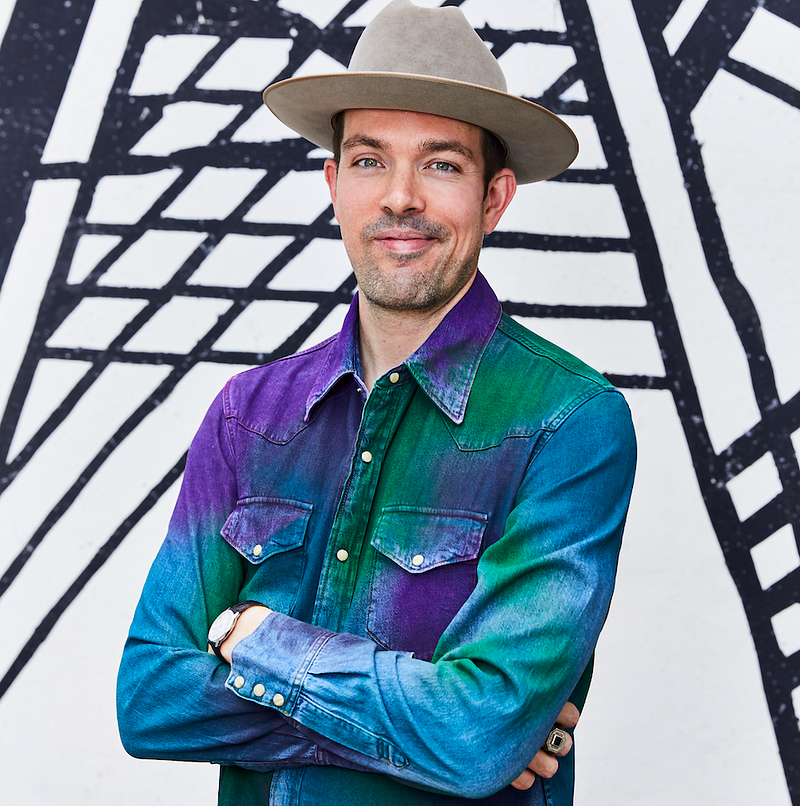
My interview with 2023 Black List writer for his script The Wolf in Chiefs Clothing.
Here is the complete interview with Adam.
Scott Myers: Congratulations on making the Black List in 2023.
Adam Best: Thank you! It was an exciting development that happened fast. The version of “The Wolf in Chiefs Clothing” that made the list was a first draft I finished on September 30. My manager, Nadya Panfilov of Writ Large, signed me three weeks later. Then on December 11th, the script had enough steam to crack the list. Quite the 10-week ride. I’ve long been a huge fan of how the Black List amplifies fresh voices and voices from outside of LA. I currently live in Huntsville, Alabama.
Scott: I went to your website (adambest.com). It describes you as screenwriter, podcaster, entrepreneur. I’d like to ask you about those three parts of your creative life, but in reverse order, starting with entrepreneur. You were co-founder and former CEO of FanSided. Could you tell us the history of that?
Adam: Yeah. I fell into it, actually. It started with a website called arrowheadaddict.com, which we’ll come back to when we talk about the subject of the script — the “Kansas City Chiefs.” We launched a niche website with a voice that was unabashedly from the fans’ perspective. It’s more common now to have a voice in news, journalism and all that kind of stuff.
But back then, it was the dawn of the blogging era. So it was a relatively new idea. It went so well, we thought we could expand to every fan base. Not just in sports but also entertainment, music, what have you. Everything from the New York Yankees to Game of Thrones.
Over a period of years, we expanded our network. Eventually, I was able to help engineer an acquisition to “Sports Illustrated” and Time Inc. Stuck around for a bit, hit my goals and made sure the company had solid footing. It’s still thriving, but I moved on to other challenges.
Scott: What time-frame are we looking at here?
Adam: We’re looking at 2007 to 2017, a decade.
Scott: This started from a passion that you had for sports, football in particular.
Adam: Yeah. My brother and I had wanted to work on something together for a while. Business background on his side, plus web design. He is a talented, smart guy. I actually was trying to be a screenwriter at the time, but I made this online sports writing contest that Fox Sports was doing called the Next Great Sports Writer.
I was one of 10 finalists. I didn’t win, but my brother and I started discussing a joint venture. We were looking for Kansas City Chiefs coverage that didn’t exist, so we decided to team up and create it. The idea just worked. We came up with a formula. I know that’s a dirty word in this business. We had a lot of fun and created quite a few jobs, so it was a great ride.
Scott: You actually had a preceding interest in screenwriting, so let’s talk a bit about that. When did you discover it? How did you start learning the craft?
Adam: Way back when — late ’90s, early 2000s, when I first went to college — I basically went there to play football. Then I hurt my knee again. Injuries piled up. I was practically sleeping in the training room trying to get my body right. I had to face the harsh reality that, due to injuries, I probably wasn’t going to be able to perform well in college, let alone go pro.
So I started looking at other things. I’ve always been a huge movie buff. I thought, yeah, maybe there’s something there. I started taking theater courses because that’s the closest thing they had in Kansas, where I went to college. My mom bought me Movie Magic Screenwriter software and a screenwriting magazine in 1999. She gave me the initial push. The Long Kiss Goodnight by Shane Black was the first script I read. Forget how I hunted it down. Back then it was a long, arduous process. Also remember reading Eternal Sunshine of a Spotless Mind over and over, trying to figure out how the hell Charlie Kaufman pulled that off.
I studied playwriting and eventually went to film school, but then fell into being an entrepreneur. The plan was to keep the screenwriter fire lit, but also go out and make some money, find some security. Then come back to it later. It took longer than I thought, but that was because it was never my primary focus. Hard to crack such a competitive industry that way.
At some point I had to say, “OK, screenwriting has to be my plan, not my backup plan.” It was roughly a 20-year journey to get there.
Scott: You went to film school. Did the FanSided thing happen after that or during that?
Adam: After. I went to Full Sail in 2002–2003. Post-graduation, I was a bartender/server during the day, then wrote at night. I moved out to LA for a couple years. Nothing was happening for me. Just wasn’t coming together. So I jumped at the chance to do this other thing. A decade later, I look up, I’m older and not running out of time, but starting to think eventually I got to do this.
Scott: You’re also now back to the Arrowhead Addict Podcast.
Adam: Yeah. A couple years ago, they asked if I’d want to come back to AA, do a podcast and help build their new YouTube channel. I jumped at the chance.
When I covered the Chiefs back in the late 2000s, not to be harsh but they kinda sucked. So it was a different experience. I never dreamed they’d become what they are now. My whole life growing up, they never had a franchise quarterback. They went 21 years without winning a playoff game. So to cover them in this golden era of Chiefs football was something I jumped at.
Scott: Beyond golden era, they’re heading to the Super Bowl next week. They’ve become this phenomenon in part because of the romance between Travis Kelce and Taylor Swift. That must be a mind-blowing experience to cover the Chiefs with all that going on.
Adam: Chiefs Kingdom always knew Travis Kelce had superstar potential that transcended the football field. A charismatic, talented, bright guy. That said, this level of fame, dating perhaps the most famous person on Earth, is something none of us could have predicted.
The Chiefs always felt like this small market team from the Midwest nobody paid attention to. A second-class franchise. Hadn’t been to the Super Bowl in 50 years. There’s East Coast bias and all that. Now, I feel like we’re a marquee franchise. The Swifties coming on board is wild. For this project, in particular, “The Wolf in Chiefs Clothing,” it was a perfect storm that I wrote it with Travis Kelce as a character in the script.
I saw Uncut Gems. Ex-NBA star Kevin Garnett plays himself and is fantastic. I thought Travis Kelce would be terrific doing that same thing. That was after he hosted —
Scott: Saturday Night Live.
Adam: Yeah. I immediately thought, look, he’s got the acting itch. But no one could have predicted that he would end up dating Taylor Swift in a whirlwind romance.
Scott: I want to get to your script, but I’ve got to ask you this because you’re inside the Chiefs Kingdom here. There’s all these conspiracy theories, I’m sure you’ve seen these things. It’s so crazy.
Some people are claiming it’s like a psyops thing with the Biden Administration. Taylor Swift is going to announce her support of Biden and/or Kelce is going to propose to her in the Super Bowl. It’s just mind-boggling. Do you have any inside scoop on any of that?
Adam: I think there’s a much better chance of him proposing at some point soon-ish than him being involved in some vast Illuminati conspiracy. I’m not really buying that. Travis is fairly straightforward. It’s farfetched that a hard-partying tight end would be the epicenter of some vast conspiracy. I don’t think there’s much merit to it.
Scott: I don’t think so either. It’s just we live in crazy times, man. [laughs] All right, so let’s talk about your 2023 Black List script, “The Wolf in Chief’s Clothing.” Here’s a logline.
“A lovable loser from a family of criminals becomes the Kansas City Chiefs’ most famous superfan. This newfound status is expensive, so he teams up with his imaginary friend, an anthropomorphic version of the team’s wolf mascot, and goes on a bank robbing spree.” Now, you come from a football family, your grandfather played in the NFL, right?
Adam: Yeah, he did. Elmer ‘Beno” Best. He played for the Chicago Cardinals back when that was a team and the Green Bay Packers. Which comes in handy because I married into a Packers family. There’s still only one team for me, but I did marry into a Packers family.
Scott: Do you have any favorite football movies?
Adam: I feel like there’s a glaring hole with pro football movies. There’s not enough great ones. Which is weird given how much money the NFL generates. I enjoy Brian’s Song and Heaven Can Wait, but they are pretty old. Any Given Sunday, I think is highly entertaining; half a classic movie, half a disaster.
Maybe you can’t do one entirely about pro football? Hard to compete with the real on-field action. Jerry Maguire succeeded. Silver Linings Playbook had a dash of the NFL in it too. Maybe the way to do it is another genre, like a crime movie with the backdrop of football. Similar to how Point Break is a crime movie with the backdrop of surfing.
Scott: There was another Black List script, Draft Day which got made in 2014 with Kevin Costner. That’s interesting that there’s been a couple of Black List scripts featuring football.
Adam: Yeah, there was also “GOAT” and “Madden” in recent years. I think both of those, last I heard, are getting made. Football is maybe the most untouchable entity in American entertainment so it makes sense.
Scott: You have this conceit in the story, this imaginary mascot friend. How did you come up with that concept?
Adam: First off, I didn’t want to do another straightforward bank-robbing movie because there are so many classics: Dog Day Afternoon, Heat, Hell or High Water, Out of Sight, the list just goes on and on. I made the early decision to come at this from a different angle.
Another challenge I faced was that you have this lone-wolf bank robber. So how can I express his inner turmoil, the plotting to rob these banks, his metamorphosis? In between these fun action set pieces, we need to crank up stakes and tension.
I looked at Black Swan for inspiration, doing a more comedic version of something like that. Where the protagonist had to snap to reach their goal, plus more of a tragic arc. Since my character dresses up as a wolf mascot, I had the idea of his wolf pack being him and a heightened version of the mascot. Out of necessity, he invents both who he wants to be and the sounding board he needs. Kinda Tyler Durden-ish. Seemed to click with the lone-wolf aspect.
Scott: Let’s talk about your story’s protagonist, Gage LaFrentz. Here’s how he’s introduced in your script. “Gage LaFrentz, late 20s, has a dirty mop on his head and another one in his hand. He’s a janitor pulling graveyard. He’s weary from a lack of sleep, but also from a lack of living. He has dark circles under his eyes and soul.”
A really effective introduction. How did this character come into existence?
Adam: It’s very loosely based on a true story. There was a superfan who was robbing banks to afford traveling with the Chiefs and dressing up like a wolf. Not like in the same bus, plane, or anything. But so he could appear on TV and be visible in the front row.
That’s a true story, but it seemed more like a situation. We didn’t know a lot about him at the time. I wasn’t seeing the full arc or anything. So I used that loose concept as a springboard and went totally in my own direction, disassociated from the real story. I was watching… damn, what’s that movie with Drew Barrymore, the Red Sox movie?
Scott: Fever Pitch?
Adam: Fever Pitch, yeah. That had a nice long championship drought. The Curse of the Bambino for the Boston Red Sox. Almost 90 years. That drought gave credibility to the protagonist’s actions in a way. There is a desperation behind it that die-hard fans, of anything, can grasp. The Chiefs had a 50-year drought between Super Bowl wins. Great round number.
I thought that was the perfect year to move this story to. They say write what you know. I probably know more about the Kansas City Chiefs and being a Chiefs fan than anything else. It’s how the men in my family bond. I wanted to transmit this experience. I actually went to that Super Bowl with my family. I was very fortunate.
My dad promised me and my siblings that if they ever went back, he’d take us. He did, and they won. So I combined these two things: the magical 2019–20 season with the story that was inspired by something ripped from the headlines. Everything fell into place when I added the imaginary friend character as the antagonist.
Scott: Let’s talk about your Protagonist’s family, Gage’s family. There’s a mom and a sister and they are criminals. How did that emerge? You knew about the bank robbery, so did you do some reverse engineering when you were fleshing out the family?
Adam: Yeah. I came up with what I thought would be an interesting twist. A reluctant criminal. This kid from a family of criminals who actually didn’t want to become one. Unfortunately, the only way he knew how to come up with the money — the means to become this superfan and hold on to his small chunk of fame — was crime.
I liked the irony of him resisting that urge his entire life, but succumbing to it once he finally got his opportunity to be somebody. I’m a huge fan of the lovable loser archetype. Enjoy writing misfits and underdogs.
As for his family, usually, crime is a man’s world. Most of these characters are men. Not just the stars in these kinds of movies, but the supporting characters. I thought it’d be a fun twist to have a mother and sister be the key characters in his life. That felt like a fresh direction.
Scott: The mother literally had him take gymnastics in order to facilitate his bank-robbing skills, which, of course, comes in handy later on, for him being a mascot, a fan favorite. One of the benefits of that is that it takes some of the responsibility off his shoulders.
Both the mother and the sister, the sister is schooling him on how to rob banks, which is interesting because you had a challenge. How am I going to take a character who is a robber, a thief, stealing stuff, and make him a sympathetic character? Could you maybe talk a bit about that challenge?
Adam: There are a couple things I did. One, I actually talked to a real bank robber, a guy named Joe Loya, who was a bank robber in the ’80s and ’90s in California, and wrote a book. I had him on our podcast a couple times, got to know him. Felt like I started to understand what could drive a person to do this. It was actually just for my podcasting job but it gave me incredible insights.
He had a phrase. Something along the lines of “poverty mocks you.” He told me that once, and it stuck with me. I thought, that has to be what drives this. That sentiment is something anybody can relate to. Or anybody who isn’t an out-of-touch plutocrat or something.
Also, surrounding a flawed character with worse people is a good trick to make us more sympathetic. So I used that strategy. Succession is masterful at this. You like Cousin Greg because even though he has some nasty qualities, he is the wimpiest viper in the viper’s nest.
Additionally, having a protagonist who really, really wants a goal and is filled with passion helps. We all have goals and passions. For all his flaws, Gage is deeply invested in the Kansas City Chiefs. His fandom is pure.
Even though it goes back to his dad, who was also a bank robber before he died, it’s the one pure thing in Gage’s life. Sure, he’s doing illegal things to chase that purity, but regardless that purity is one of the reasons he’s still somewhat likable in the end.
Scott: There’s like these three drivers, it seems like, one is poverty and you establish that. The poor guy’s got a really shitty life at the beginning and this lousy apartment. He’s got bills and all that sort of thing. That would be a driver, and the Chiefs, his love for the team, but fame.
I have a theory that one of the reasons that reality TV has been so popular the last 20, 30 years is that people say, “God, I could be that person.” It’s like everybody wants to have their fame. Maybe you could talk a little bit about that aspect of it, that he gets caught up in that fame cycle.
Adam: Yeah, it’s a little bit of a commentary on that aspect of our society, whether it’s reality TV or social media. This whole influencer phenomenon, people can get caught up in it. The guy this was very loosely inspired by, I think was really caught up in his persona.
It can give people meaning. Sometimes it’s hollow, and sometimes it’s not. I don’t know. I thought that was an interesting aspect to explore. You mentioned three drivers, but there’s a fourth driver too, and that’s the love interest, Emerald Green.
She comes along and shows Gage a different path. Because his operating thesis throughout life is, nobody likes me for who I am, and they never will. Society has conditioned him to think that way. Same with his family. Then a person shows up who genuinely likes him.
The tragic thing — even more tragic than him going to prison or making a giant fool of himself — is rejecting that love. Rejecting someone who actually loves him for who he is. Emerald cares about Gage; not the Chiefsaholic figure, the bank robber, or anything else. She simply cares about who he is inside and he can’t accept that.
Scott: We haven’t talked about one of the more influential characters, and that’s the imaginary Wolfie. You’ve got the good angel over here in Emerald, and you got the devil dude over here, Wolfie. You had this idea, an imaginary friend or imaginary character. Let’s talk about this character. How did that character evolve in your writing process?
Adam: In a previous script, I created a character named Ocho, who was a telepathic octopus. Had a lot of fun doing it. Didn’t know if I quite nailed it, but I always want to challenge myself. I have this theory that screenwriters are indeterminate growers. Like snakes, goldfish, tomato plants or whatever. The environment we place ourselves in encourages or restricts growth.
When I start writing a script, I want to be slightly terrified. “I don’t know if I can do this.” I think that’s actually a good feeling to have. “Leap and the net will appear” is a famous quote for a reason. I was feeling that with the Wolfie character, but I had seen some other scripts try something like this. I knew it was possible.
I always felt like they didn’t push that imaginary character’s voice far enough. It’s an imaginary friend! You can do whatever the hell you want with this character. You can really push the envelope and make them a super original character.
I just leaned into it. Wolfie’s dialogue is the most fun I’ve ever had with dialogue. Because there’s no line he won’t cross in these imaginary conversations. It was a blast to write and it also took a little while. It took a little while for me to figure out how Wolfie sounded and the rules of when he would appear. Eventually I got that down, but it took trial and error.
There was this album by rapper DMX, “It’s Dark and Hell is Hot,” that was a huge inspiration. Kind of the “Dante’s Inferno” of hip-hop. The whole thing is about being immersed in poverty and the repercussions, how the situation can lead to crime. On that album there’s this song called “Damien.” DMX has a dark friend who gives him fame and fortune in exchange for committing crimes. That was an unexpected spark. Especially when I needed to take it to a darker place.
Scott: Do I remember correctly, but didn’t you mention the word “shadow” in relation to that character?
Adam: I’m pretty sure that’s in there. My mom’s a therapist, so I was thinking along those lines, and always have a pipeline to ask about mental health. I do like to take the mental health of my characters, especially the characters who have issues there, pretty seriously. But also, it’s a story and it needs to be fun.
Scott: Wolfie does strike me as being like a Trickster character. Ostensibly an ally, but he is leading Gage down this path, his inner desire for fame, that’s that shadow dynamic. You’re right, at some point it, you become emotionally involved with like, “God, don’t you see, there’s this woman, Emerald right over here. That’s a path you could go down.” You have a feeling, “No, that’s not going to pan out,” because of the shadow personified by Wolfie, the voice of that self-destructive aspect inside Gage’s psyche.
Adam: There’s a Faustian bargain there. He needs Wolfie to become the person he can’t on his own. There’s some dramatic irony too, because he wants Emerald. He wants to become the person he thinks Emerald wants to be with. However, he can’t do that without Wolfie, who is eventually the side of him that blocks this relationship.
It’s complex in a way, but also pretty simple. It’s Gage’s worst side manifesting itself until he becomes only that. There’s this tug of war. You see an innocent character at the start become corrupted throughout the script. I dig that kind of story. Like The Godfather. Some of our greatest films have this arc.
Scott: It’s like Wolfie is a second cousin of Darth Vader in The Empire Strikes Back. [Darth Vader voice] “Come to the dark side.”
[laughter]
Adam: An extremely sarcastic version of Darth Vader.
Scott: You introduce him on 33: “Wolfie is the Big Bad Wolf and your fucked-up uncle tossed in a blender. A seven-foot tall fuzzball with a sardonic streak.” [laughs] You even say, “Upon seeing this Faustian figment of his imagination, Gage freaks the eff out, attempts to open the passenger door.” By the way, you have a lot of fun with your scene description. In fact, the script overall is quite funny. Any stand-up comedy in your background?
Adam: When I was in LA, I explored writing jokes for comedians. I thought, that’s how Woody Allen, Albert Brooks, Judd Apatow and all these guys started out. Maybe it could be a path for me too. Maybe I’d even grow accustomed to going on stage. But I’m probably too introverted.
That didn’t pan out, but interestingly enough, a random little tangent here, I met Jon Lovitz and asked him for advice. He said, “Don’t have a backup plan,” and that has stuck with me. Doubt he remembers me, but I definitely remember that advice. So thank you, Jon.
During COVID, I thought of that advice because I had never gone all in on screenwriting. It was always my backup plan. I thought, “Man, I gotta listen to that dude.” That’s the way to do it. Just throw yourself at it and find out if you’re good enough or not.
Scott: You have to go all in.
Adam: Yep! As for comedy, it evolves organically. For a long time, I set out to make my scripts more serious than they ended up being. At this point, I’ve embraced comedy and acknowledged that I’m probably never going to write Christopher Nolan style scripts. Humor is very much a part of my process. Things can get a little goofy.
When writers are having fun on the page, the audience is having fun too. So I try to have a blast writing. Whether it’s dialogue, descriptions, formatting, onomatopoeias, whatever.
Scott: That first script you read, Long Kiss Goodnight by Shane Black, there is definitely some echoes there because Shane has a lot of fun with his scene description. His dialogue is obviously great and the action he writes, but his scene description is super entertaining and has a specific narrative voice. Yours does, too, in your script.
Adam: One of our main jobs — especially if you’re writing spec scripts or trying to break out as a writer — is to be a stack buster.
These readers, executives, managers, whoever, they dread reading a pile of scripts. So you want your script to be the one they can’t put down because it’s so fun, it’s so entertaining, it’s so unique, all those things.
A dash of flavor often beats the straightforward route. It’s like that Smiths song. Instead of saying he doesn’t have anything to wear, Morrissey sings, “I haven’t got a stitch to wear.” Using “stitch” brings everything to life. Much more evocative. So I try to spend extra time evaluating if the words chosen can pop more.
It’s weird. When I first started writing, I was probably too voicey, and most scripts weren’t as voicey as they are now. But the rules have loosened, and I’ve learned to pick my spots. For instance, if I’m in a really emotional beat, I have to be careful about stepping on that moment with too much voice, or even humor.
Scott: I also thought it was interesting, but your secondary characters, like Knox is a drug dealer, but he knits, and then one of these FBI agents, I think his name is McCrae, he does performance art, stand-up comedy.
This is one thing I think is a sign of a really good screenwriter, is they care about all their characters, evidenced by how the secondary characters also have some specificity and vibrancy to them. Were you intentional about that or was it just you got to know the characters and these things filtered up.
Adam: It’s intentional. I’m a big fan of the Coen brothers. Watching them over the years, they don’t have empty-calorie characters. Every single character is an opportunity to express something. Some part of the world, or some point of view. The other thing I try to do is you always hear familiar but different in terms of how we should design our plots.
I try to keep that in mind for every beat, every line of dialogue, every character. If I think somebody is a little too trope-ish, I’ll think about, “How can I take this 20 degrees to the left to give us something we’ve never seen before?” There’s a lot of intention to subvert cliches, use misdirection, and give us characters or lines we haven’t exactly seen before.
Scott: Yeah, you had a great phrase in there, “stack buster.” I never heard that one before, but I get it. I tell my students, I say, “You have to imagine that the person who’s reading your script, whether it’s a lowly assistant or a studio. It’s Sunday night, they’ve already read three or four scripts over the weekend. They’re ready to go out and have a drink, and then, ding. Email. ‘You’ve got to read one more script’. That’s your script, so they already hate you. You’ve got to do something that entertains them right from the get-go, page one.”
What you’ve been saying, I think there’s a lot of truth to it.
Adam: I’ve done different things to make my scripts more readable. I learn new tricks each time. Being a voracious reader of scripts can help you achieve that. Over the years, I’ve slimmed down my descriptions. In this particular script, my rule was no descriptions longer than two lines. I wanted a shit ton of white space. I wanted each description to feel like one shot. I wanted it to read super fast. To have the feel of a movie on TNT that you catch channel-surfing and get stuck watching. Breezy.
It’s challenging to condense things. It’s funny, where I learned to do that was stuff like social media, writing ad copy, doing pitches in business. Skills from my previous careers, where you must traffic in brevity to get your message across, have suited me well.
Part of the reason I condense so much is I’m a bit of a maximalist. You can probably still tell by reading my script, but I have some rules to protect me from myself.
Scott: Let’s talk about the ending of the script. On an emotional level, it’s a tragedy. You mentioned the Coen brothers. In Inside Llewyn Davis, where he’s driving back from Chicago and he sees the off ramp where the woman… Did you see Inside Llewyn Davis?
Adam: Yeah, I did.
Scott: Llewyn’s driving past the off ramp where the woman who has had his baby, he could go that way. But he doesn’t turn off, he just keeps going. It is a tragedy on an emotional level. just like Emerald represents in your story. “Gage, go have a normal life with a woman you can love and who loves you.” Did you always have that ending in mind?
Adam: I always had it in mind. I had an early chat with my old teacher, Jill Chamberlain, who’s fantastic. She came up with the Nutshell Method. I often consult with her early on in my story process. I have a writing group, too, that I lean on. Early on, those conversations made it apparent that this had to be a tragic arc.
It could be comedic in tone. You could like the protagonist, but we romanticize bank-robbing to a great degree. During my discussions with Joe, that bank robber, I discovered this is not a victimless crime. They shove guns in people’s faces. That creates PTSD. People have to quit their jobs. People are looking over their shoulders nonstop after that happens to them. A lot of them are women.
So I felt like, sure, he can go on this fun ride and almost make it. But it felt false, emotionally false and societally false, to take this in a happy-ending direction.
Scott: From a pragmatic standpoint, you have a series of football games. I was thinking that’s helpful in terms of the structure of the story.
Adam: Yeah, I thought the 2019 Chiefs schedule would give me a backbone to set this up structurally. Then weave in the local bank robberies close to places where they have road games. The challenge there was how much football versus how many bank robberies versus how much personal stuff. I made the decision to join the season in progress. That was a real balancing act because I think people definitely want the football. If he’s a superfan, you have to include that.
Again, I wanted to capture the experience of being a Chiefs fan, being a die-hard fan. I felt like the audience had to become intoxicated too. That thing that Scorsese does with the Wolf of Wall Street or Goodfellas, where you almost get caught up in it. That’s why Kelce is a supporting character and Mahomes shows up a few times too. To sell getting dazzled by star power.
You can see how someone could lose themselves in this thing that’s detestable, because the lifestyle has so much allure. That’s what I was trying to accomplish. Football is such a big cultural force and it’s so exciting, that was my mechanism. I stuck to that season and everything sort of fell into place.
Scott: You have Mahomes as the voice-over character. He is at the beginning and the end. What was that choice about?
Adam: It simply felt right. From day one. I wanted to very quickly, in two pages in the opening, capture the golden age of this franchise. What it’s like to be a superfan. I thought he’s got such an interesting voice too. I say in the script, he sounds like Kermit the Frog.
Mahomes is the most talented football player I’ve ever seen. He seems like a great person, but he does have a very interesting voice. A funny voice at times. I just thought he would be a great gateway into this Chiefs fan character. He’s also pretty funny in his State Farm commercials. Has a good sense of humor.
Scott: This must be crazy for you, having watched the Chiefs progress, I mean the actual Kansas City Chiefs progress through the playoffs, mirroring what you’ve got in the script.
Adam: When we were setting up this interview, I remember that somewhat skeptically, I said, “Well, I better not book it on the day of the AFC Conference Championship because they’re there every year.” They seem like they’re having a down year, but maybe they’ll make it.
Lo and behold, they’re back in the Super Bowl for what, the fourth time in five years. I could never have imagined this as a kid in my wildest dreams. I only wanted us to get one Super Bowl in my lifetime, another Super Bowl while my dad was still around. Honestly, it’s surreal.
It’s also surreal how these big developments in my life are spawned by the Chiefs. My company that I was at for 10 years started with the Chiefs. Me getting my manager and making the Black List started with the Chiefs. What that tells me is passion in terms of creating content, whether it’s a website or a screenplay, that really shines through and can be a force in your writing.
Scott: Of course, if the Chiefs win, I would imagine everybody in Hollywood would be sitting around, going, “Hey, we need to do a football movie…”
[laughter]
Adam: Yeah, I hope so. I am praying that they win. I always want them to win, but this year it’s a little different because it’d be very helpful to the project. Going back to back would be a big deal. There are producers circling. There has been interest from talent. I’m taking meetings. My brilliant manager Nadya has been awesome in engineering buzz. Very thankful to her. There’s also been an organic quality to the spread that is simply good fortune.
We’re feeling super optimistic about it. At a time when, is it fair to say franchises are failing a little bit in Hollywood? Some of the superhero stuff and some of the IP stuff that was so bankable in the past fell apart.
My hope, our hope, is that this is de facto IP between how hot the Chiefs are, the Swifties and everything. That this would get butts in seats and do numbers. The NFL, we see that they dominate TV ratings. We’re pumped, and we’re going to keep taking meetings and pushing until this thing happens.
Scott: Good luck to you on that. It’s a terrific script. Really enjoyed reading it. Let’s check out a few craft questions starting with: How do you come up with story ideas?
Adam: There’s no consistent method. Sometimes I am going through my days, throwing index cards with ideas on them into a shoe box. I have this idea shoe box thing that I try to fill up as the year goes along. I learned that from Woody Allen. I heard about him doing that around 20 years ago and it stuck.
Most are junk, but when an idea sticks with me I know it’s worth exploring. Sometimes I’ll have a kernel of a concept and believe it’s not good enough. I’ll just let it go, and it’ll come back later.
Sometimes I’m watching a movie and inspiration hits. Like my most recent idea that I liked. I was watching a movie, and there was a character I really dig in that movie. There aren’t very many characters like her. I was asking myself, why don’t we have a movie about a character like her? I’ve never seen that before. It’s a scene-stealing supporting character in this great flick.
How could I explore that and make it something fresh and fun? I’m just always throwing ideas out there. I feel like I’m an idea person. Having formerly been in a business where we were constantly trying to spin up new websites, new products, etc.
Also, being a blogger helped. I feel like sometimes, as screenwriters, we get a little too dependent on the magic arriving and giving us a gift. The Chiefs script I wrote definitely was a gift that landed in my lap. But I had been trying to figure out a Chiefs script for 3–4 years. Brainstorming is a habit. You have to exercise those muscles so they don’t atrophy.
Scott: By the way, bringing up Shane Black again, I remember reading an interview with him. He has a shoe box.
Adam: Does he?
Scott: Yeah, same thing. Let’s talk about prep writing. What’s your process for it like? Do you card? How do you break your story?
Adam: You hear the phrase, “Writing is rewriting.” For me, it’s “Writing is pre-writing.” I do exhaustive work beforehand. It often starts with a little bit of discovery pages. Which is simply me exploring how I would open into this world, and trying to find characters and tone.
Like the project I’m working on now, I did the first half of Act One a bunch of different times and completely threw it all out. But it was a process of elimination. Usually my treatments are around 15 to 25 pages. Sometimes longer. I’ll have many drafts. I’m constantly iterating my outlines.
I try to do as much major surgery there as I can, because when I get into the draft, I like to have fun. I like to focus on making it an engaging literary piece, making it cinematic. Executing my vision. I don’t want to be too logical while it all comes to life.
I find that if I do as much on the front-end as I can, that when I do get to the rewrite phase — which I also feel is important — that those efforts can be targeted. I can get out the scalpel instead of a chainsaw. I know not everyone’s like this, but the thought of a vomit draft, which I have tried, gives me the heebie-jeebies. I’m pretty OCD when it comes to figuring things out in advance.
Scott: How do you go about developing your characters? Are there some specific exercises or techniques?
Adam: Yeah. I subscribe to the Syd Field thing of doing very brief character biographies sometimes. I don’t want them to be too exhaustive. I’m pretty plot-driven, and want to have the liberty to tweak characters, if necessary, to accommodate the plot.
That’s a little bit of a dance, where I don’t want to go in blind, with no knowledge of who these people are. I want to know them on a general level and get what makes them tick. How they’re flawed, what they want in life, maybe a little bit about their past. I wouldn’t say that part of my prep work is exhaustive.
Scott: You mentioned 25-page treatments, and you mentioned a writer’s group. Are you submitting the treatment to the writer’s group for their feedback?
Adam: Yeah, I do. Now that I have a manager, we go back and forth too. I try to condense stuff or focus on certain elements so I’m not handing them the same thing over and over again. But yeah, when I finish my treatments, I show them to my writers’ group, aka The Antagonists. They’re five talented people that I respect. One of them recently won Page.
Basically, everybody in that writers’ group does some form of beat sheet. Some of my writing group mates are more like 10 pages. And there’s been some exploration of just jumping into the rough draft. What’s the phrase? A pantser, flying by the seat of your pants.
It’s nice to have different kinds of writers to bounce things off of. I’m very fortunate that people will read my treatment. But also, I actually find it’s easier and quicker to get people to read a 20-page treatment than it is to get them to read your script. Sad as that sounds.
Scott: The treatment is like you’re writing it as prose. It’s not a beat sheet or an outline, right?
Adam: Yeah. I enjoy writing in prose because I always want to be excited about the project. I always want my stuff to read well and get other people excited. It comes back to having fun when I’m writing. That means the person reading it might have fun too.
If it’s only a nuts and bolts outline, that feels like homework. Maybe you do a quick one of those, but I don’t dwell there. The other thing this longer treatment permits me to do is experiment, to take left turns I wasn’t expecting.
It’s a big enough format that I can inhibit the characters. “Oh, now that I’m in it, this character would actually do this.” I tend to follow that path, and there’s a lot of diversions. It’s very much a literary document versus an outline.
Scott: I would add that, too, it enables you to explore tone, writer’s voice, narrative voice.
Adam: It does. There are lines of dialogue, sometimes even descriptions, from the treatment that I copy and paste. Really, it’s a guide, but sometimes treatment stuff does end up in the script.
Scott: That’s that data value of what you call pre-writing. One last question for you, actually two. One is, where are you going to be on Sunday for the Super Bowl? Where are you watching it?
Adam: I’m watching it from here in Alabama where I live, and I’m doing the postgame show on our YouTube channel. Tickets are too expensive to go again. I crossed that off my bucket list. Also, I get pretty nervous. I love Super Bowl parties, but when the Chiefs are playing, that’s the last place I want to be.
Scott: That way, if you’re at home, you can be muttering epithets, throwing things around the room…
Adam: Exactly! No, I’ve mellowed with age, and covering the team, you have to be a little bit more level-headed. So I think that’s helped. Also, they’ve won so damn much that if I’m throwing tantrums when they lose, come on, that’s kind of ridiculous. Every other NFL fan base would trade places with us. We’re kind of the new Patriots. You don’t want to be too spoiled, right?
Scott: Yeah, and no deflate gate for the Chiefs.
Adam: No deflate gate, no spygate, no player scandals yet, no cheating, even though people bring up —
Scott: The refs?
Adam: Yeah. People bring up the refs a lrot.
Scott: Who cares about the refs when you’ve got Taylor Swift as your Number One fan, so you got that going for you. One last question. What advice do you or can you offer to aspiring screenwriters about learning the craft, breaking into the business?
Adam: Don’t think of screenwriting as a normal 9–5 job. Think like an entrepreneur. Plan out the future you envision. Hone your voice and vibe to create a brand. You are the brand and your spec screenplays are the product. Like Apple, Call of Duty, Lululemon, whatever. You want folks to see a clear vision and anticipate a steady stream of releases.
That’s how you stay relevant and top of mind. My professional screenwriting journey is still in the early stages, just getting started. So I definitely don’t have all the answers. Nobody does! But this mindset got me repped and on the Black List. Drawing from my entrepreneurial past is how I eventually discovered “The Wolf in Chiefs Clothing.” It’s how I’m going back to market soon with another script that feels fresh.
Also, I got sick of the contest circuit, so I decided to become more proactive. Thought back to how FanSided got in good with Sports Illustrated and Time. Remembered that we made that partnership happen from our side — it didn’t land in our lap. We chased it down.
I found my manager through a Roadmap Writers mentorship program. My gut said I was ready, but contests are a crapshoot. So I researched every single manager Roadmap listed as an option, found one I thought was a great match and spent some coin. It was assertive. Which is why it worked. That and some luck. But Roadmap is great at helping writers.
Lastly, I wasn’t brainstorming or soul-searching enough. There was always a rush to move on to the next spec script idea. Before “The Wolf in Chiefs Clothing,” I really challenged myself to write something nobody else could write. And chased the center of the Venn diagram between my interests and the interests of audiences. Just being brutally honest about choosing something unique yet marketable. Challenge yourself. What is your specific lane and is that lane wide enough? That’s how to find the right product.
After this year’s Super Bowl, I followed up with Adam.
Scott: So, your Kansas City Chiefs did it! Won the Super Bowl and in dramatic fashion. What was that experience like for you?
Adam: As a fan, it’s pure ecstasy. Going back to back rarely ever happens. Now the Chiefs can become the first NFL team ever to three-peat. If they do that it’s arguably the greatest run in league history.
As a writer, it confirms my hunch that the Mahomes Chiefs are a once-in-a-generation “holy shit” kinda team. It’s football Michael Jordan and his even more famous running mate. So I’m super excited and believe the world needs “The Wolf in Chiefs Clothing” to capture the zeitgeist. We’ll keep pushing!
For my interviews with dozens of other Black List writers, go here.