Go Into The Story at the 2020 Sundance Film Festival: January 25
Notes, reflections, and screenwriting takeaways from Park City, Utah.

Notes, reflections, and screenwriting takeaways from Park City, Utah.
Another day jam-packed with movies, four to be precise. My first screening of the day was at The Ray Theater: Dream Horse, written by Neil McKay, directed by Euros Lyn.
Plot: Jan, a cleaner and bartender, decides to breed a race horse in her Welsh village. As the horse rises through the ranks, Jan and the townspeople are pitted against the racing elite in a race for the national championship.

This has the narrative structure of an old-style 80s or 90s Disney animal movie a la Black Stallion and Spirit: Stallion of the Cimarron. Underdog story, transformative impact of animal upon human(s), victorious challenge in the end. Cross that with the comedic spirit of some U.K.-based movies featuring quirky villagers such as Waking Ned Devine and Local Hero, and that gives you a good sense of Dream Horse. There’s an earnestness to it which some may find off-putting, however the performances are strong, especially Toni Colette as the Protagonist (Jan), and the movie provides an interesting dip into the subculture of Wales.
Screenwriting Takeaway: You can almost never go wrong with an underdog dynamic. If you create a solid connection between the audience and the Protagonist, it’s almost impossible not to get caught up in improbable journey.
Then I shifted locales to the Eccles Center for the rest of the day. The next movie was Uncle Frank, written and directed by Alan Ball (American Beauty, Six Feet Under).
Plot: In 1973, when Frank Bledsoe and his 18-year-old niece Beth take a road trip from Manhattan to Creekville, South Carolina for the family patriarch’s funeral, they’re unexpectedly joined by Frank’s lover Walid.
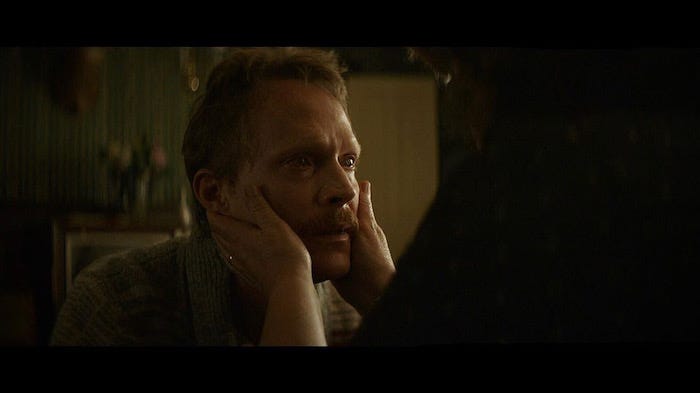
The audience really liked this movie as did I, one of the stronger films I have seen at this year’s Sundance Festival. Granted, I could forecast where the plot was going — Frank’s backstory (the character played wonderfully by Paul Bettany), Frank’s secret life, the resolution of Frank’s character arc — but there is an authenticity to the characters which wins the day.
Two special notes: (1) Actress Sophia Lillis who played Beth, the narrator of the story, is riveting on stage, her face camera-friendly. (2) Although the story is told through Beth’s perspective and she undergoes an innocence-to-experience arc, I would argue the Protagonist is Frank as it’s his story which creates the Plotline and he goes through the most substantial metamorphosis.
Screenwriting Takeaway: The movie uses flashbacks to good effect demonstrating yet again that the supposed ‘rule’ of no flashbacks is a flawed position to take.
The third screening of the day was Four Good Days, written by Rodrigo García and Eli Saslow, directed by García.
Plot: A mother helps her daughter work through four crucial days of recovery from substance abuse.

Actress Mila Kunis may have been dubbed The Sexiest Woman Alive by Esquire magazine in 2012, but you sure wouldn’t know it in her performance as the heroin addict Molly. Similarly with Glenn Close’s character Deb who puts the rump in frumpy. The subject matter is compelling and relevant to addiction issues in contemporary society.
At its heart, it is a mother-daughter story which starts with Molly showing up on Deb’s doorstep seeking a place to stay and Deb shutting the door in her daughter’s face. Their relationship is a rocky, emotionally brutal one and while we safely conjecture where the story is headed, the pathway there takes some surprising turns making for a solid family drama.
In the post-screening Q&A, one man stood up and said he didn’t have a question so much as a comment. Thanking the filmmakers, he made special note of the portrayal of the ups and downs of addiction recovery, noting that his son had been in rehab 24 times over the last two decades. This speaks to the story’s authenticity.
Screenwriting Takeaway: Never forget this simple truism: Conflict equals drama. Every scene in Four Good Days has overt conflict scaling down to seething tension… and it works.
The final movie of the day was Kajillionaire, written and directed by Miranda July.
Plot: A woman’s life is turned upside down when her criminal parents invite an outsider to join them on a major heist they’re planning.
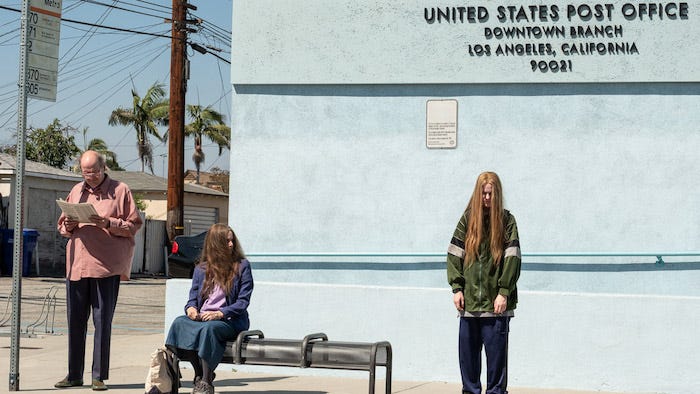
This is one strange movie and based upon the comments I heard from audience members on the way out and waiting for their various ride shares was decidedly mixed. The parents Robert (Richard Jenkins) and Theresa (Debra Winger) are quirky characters, but despicable. The effects of their lifestyle is dramatically in view with the behavior of their daughter Old Dolio (Evan Rachel Wood), a seriously fucked-up young woman courtesy of the parenting style of dear ol’ Mom and Dad. And that’s where I dialed into the movie: My desire to see Old Dolio get in touch with something inside and create her own path separate from the one her parents have forced on her.
Fortunately, Melanie (Gina Rodriguez) intersects with Old Dolio and precipitates Old Dolio’s psychological metamorphosis. That relationship as it contributed to the Protagonist’s journey engaged me, but that still didn’t keep me from shaking my head on the way out of the theater wondering what I’d just seen.
Screenwriting Takeaway: My reaction notwithstanding, do not underestimate the importance of developing and manifesting your writer’s voice on the page. And if your voice is quirky… weird… and/or befuddling… but you’ve got an interesting story and compelling characters, don’t pull your punches. Go all in. Miranda July is testament to the fact her unique voice combined with authentic creativity is a pathway to potential success.
Three more movies today!
Go Into The Story at the 2020 Sundance Film Festival: January 24