Go Into The Story at the 2019 Sundance Film Festival: January 29
Notes and reflections from Park City, Utah.
Notes and reflections from Park City, Utah.
I am part of a group from the DePaul University School of Cinematic Arts participating in the 2019 Sundance Film Festival. You can read about our Day One experience here.
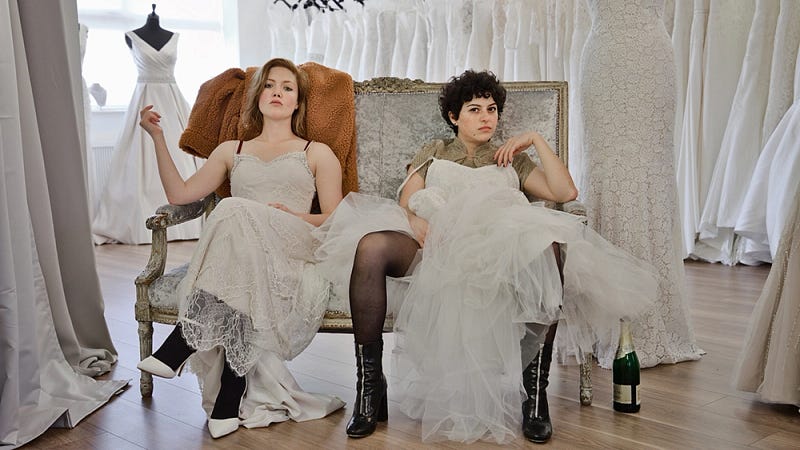
My second day at Sundance actually began with a late night screening of Animals, screenplay by Emma Jane Unsworth which she adapted from her own novel; directed by Sophie Hyde. The two leads — Holliday Grainger as Laura and Alia Shawkat as Tyler — portray longtime friends who have spent ten years doing their best to revel in life as one never-ending party. Enter Jim (Fra Fee) who upsets the balance when he and Laura develop feelings for each other. Hyde was attracted to the material to “explore the complexities of female relationships” and the movie certainly does that.
The next morning, the DePaul crew attended two Windrider filmmaker discussions. The first was with Irene Taylor Brodsky who directed the long-form documentary Moonlight Sonata: Deafness in Three Movements (HBO).
Plot: Moonlight Sonata is a deeply personal memoir about a deaf boy growing up, his deaf grandfather growing old, and Beethoven the year he was blindsided by deafness and wrote his iconic sonata. Their lives weave a story about what we discover when we push beyond loss.
Brodsky talked about how “my parents’ vulnerability made me feel comfortable with my own creative vulnerabilities.” Indeed, she said, “ Our mistakes become our music,” a point underscored by the year-long struggle of Brodsky’s eleven year-old son Jonas to learn “Moonlight Sonata” on the piano.
The next session featured actor Chiwetel Ejiofar who adapted the novel, directed, and stars in the feature length movie The Boy Who Harnessed the Wind (Netflix). Plot: A boy in Malawi helps his village by building a wind turbine after reading about them in a library book.
Ejiofar talked about a Malawi saying which ends the movie: “God is as the wind which touches everything.” He said, “The idea of an infused spiritual awakening lies at the heart of the story.” The plot is about a boy building a wind turbine, but Ejiofar said it is about “something much deeper which happens to him… this presence around him… to gain the potential to live to the fullness of his experience. I was keen to allow that energy to allow that to be part of the story.”
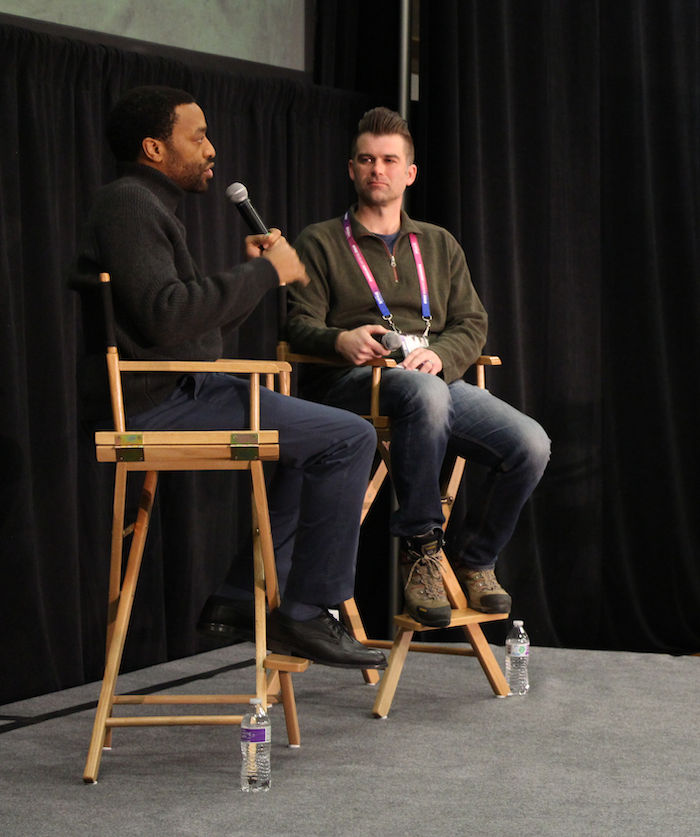
The movie debuts on Netflix on March 1, 2019.
Then we were off to the Eccles Center for two screenings. The first was Clemency a taut prison drama which stars Alfre Woodard and Aldis Hodge, written and directed by Chinonye Chukwu. Plot: Years of carrying out death row executions have taken a toll on prison warden Bernadine Williams. As she prepares to execute another inmate, Bernadine must confront the psychological and emotional demons her job creates, ultimately connecting her to the man she is sanctioned to kill.
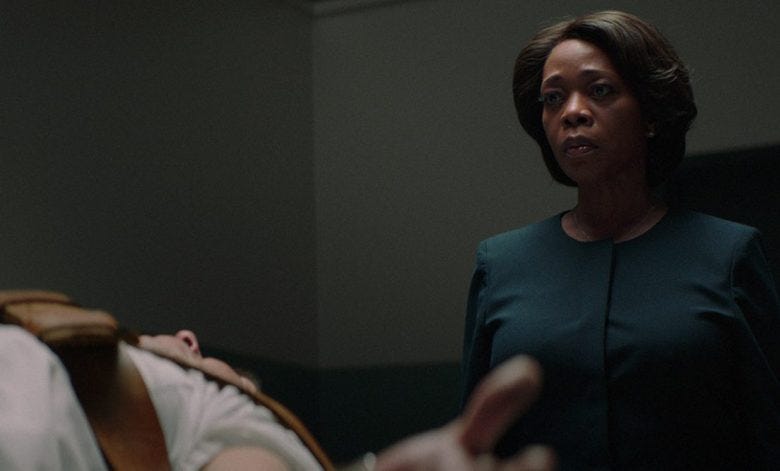
This is a powerful movie which explores terrain covered in movies like Dead Man Walking and The Green Mile, only here the story is told through the eyes of the warden (Woodard) and the prison staff, exploring the challenges and personal complications arising in the lives of those who are in charge in putting human beings to death.
The next film was Luce directed by Julius Onah who also co-adapted the screenplay with J.C. Lee from his stage play. Plot: A married couple is forced to reckon with their idealized image of their son, adopted from war-torn Eritrea, after an alarming discovery by a devoted high school teacher threatens his status as an all-star student. The movie stars Octavia Spencer, Naomi Watts, Tim Roth, and Kelvin Harrison Jr. as Luce Edgar.
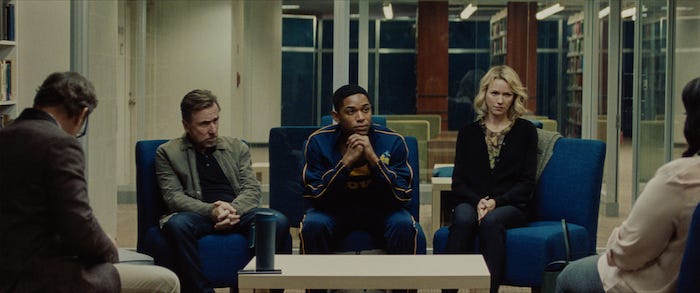
Opinion among our group was decidedly split on Luce and I’m not entirely convinced the movie is best looked at as a social satire about liberalism and race.
Each day, I’ve asked our pair of DePaul students to share reflections of their Sundance experience. Here are today’s observations:
Today’s conversation gravitated around the question: “How do you figure out the boundaries of what you can direct based on research versus what should be represented based on true experiences within that culture?”. The answer to this question is not straightforward. Throughout the day, I brought up this question with various filmmakers including Sylvia Le Fanu, director of Abu Adnan. In Le Fanu’s short film, she illustrates the struggle of a Syrian refugee father attempting to make means for him and his son in Denmark. When I asked Le Fanu (a Caucasian director) this question about moral obligation in filmmaking, she gave a great response. She said that engaging those from the culture, race or ethnicity in the creation of the story is key. We can’t build these stories without the good intentions to support other cultures and the main way to do this is to bring those from the culture into the creation process. The overall quality of the film is more likely to succeed if we incorporate those who the story relates personally to.
Moonlight Sonata: Deafness in Three Movements is a stunning documentary that builds an overlap in stories between Jonas, a deaf child, his grandparents who are both deaf and the famous pianist, Beethoven. Irene Taylor Brodsky, the director of the film, brought forth the theme that your mistakes become your music as she watched her child, Jonas, discover himself through the piano piece, Moonlight Sonata. Brodsky documents this phenomenal story of deafness over generations as she introduces her own parents’ stories into the mix. The documentary is an incredibly vulnerable film with a spectacular array of emotions.
My other favorite so far has been the film, Clemency. Not only is the film stunning, but the research that director, Chinonye Chukwu, did in order to develop the story is incredible. Chukwu spent four years diving deep into the prison systems and working with female wardens in order to add the utmost detail and accuracy to her film. She brought death-row guards on set to show the cast proper protocol when conducting cell searches and when strapping the inmate to the execution bed. The magnitude of her work is shown within the film. It is a breathtaking piece about a death-row prison warden, Bernadine Williams, preparing inmate, Anthony Woods, for his execution. I was completely encapsulated by the emotion of this film. It has very little dialogue, leaving the emotions and expressions of the actors to guide the audience through the story. Chukwu did a phenomenal job portraying the deep emotion of not only the inmate on death-row but the warden forced to comply with the toughest part of her job. — Emily Holland
I was recently asked a pressing question by a young filmmaker: “Can I write a movie about a culture that is not my own?” Many storytellers yearn to explore ideas that stretch beyond their immediate experience. Rightfully so, she was worried that she did not have the right to tell that story. Concerns about appropriation, misrepresentation and exploitation are important, and we should always be wary not to cross those lines. However, now it is more critical than ever to feature diverse perspectives in cinema,especially through compelling, authentic characters that don’t look like you.
You can, and should, stretch beyond your boundaries — but approaching these subjects with sensitivity and sincerity is key. if you want to embark on that journey, here are some key tips to keep in mind:
Intention
This is the first, and potentially most important step. Ask yourself — why do you want to tell this story? If your answer is “It’s cool!” “It’s cinematic!” “It will crush the box office!” “People will love it!” or something along those lines — turn away. Do some soul searching, and find a different story that you can connect with on a deeper level.
But if you have a personal connection with the characters, and are sincerely striving to generate empathy for their struggle — go forward.
A great example is the short film Abu Adnan by Danish filmmaker Sylvia Le Fanu. Growing up in Denmark, she was far removed from the struggles of Syrian refugees. But, as a daughter of immigrants, she was able to connect with the conflict assimilation generates between parents and their children. She saw herself in Syrian children finding themselves in Denmark, and from there she was able to set out to tell a moving story from an authentic point of connection. — Akram Shibly
Here is the wonderful short film Abu Adnan:
It’s safe to say our group, myself included, have been inspired by the movies we’ve seen and the conversations we’ve had, among ourselves and the dozens of Sundance festival-goers with whom we’ve interacted.
On a personal note, I’d forgotten how aesthetically stimulating mountain living can be. I lived in Aspen, Colorado from 1978–1980 and tramping around Park City activated my muscle and brain memories. Plus, it’s wonderful to hear passionate film fans everywhere you go.
Much more to come!
Twitter: @depaulcinema, @sundancefest.