George R.R. Martin weighs in on the Writers Guild strike
“I want to say a few words about what I think is THE most important issue in the current writers’ strike.”
“I want to say a few words about what I think is THE most important issue in the current writers’ strike.”
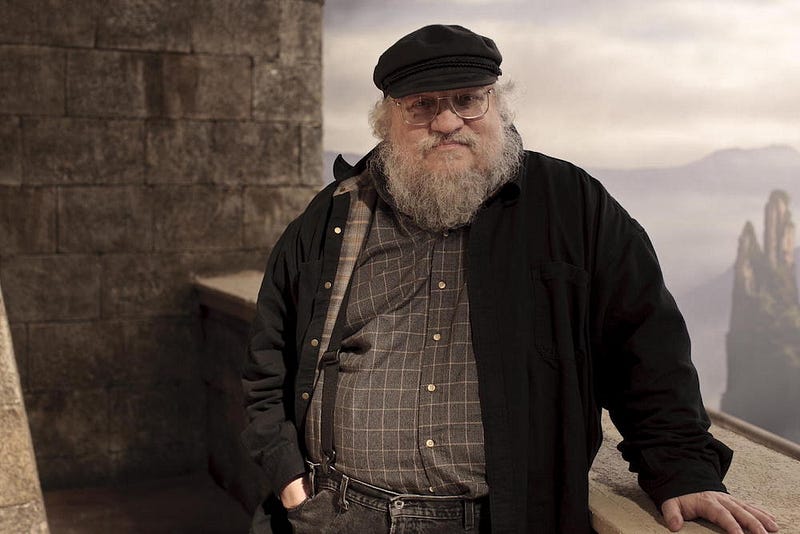
The author of the Game of Thrones novels George R.R. Martin has a blog which he calls Not a Blog. The other day, Martin weighed in on the WGA strike and zeroed in on what he calls “THE most important issue.” Here are some excerpts from that blog entry.
For the first fourteen years of my career, I wrote only prose; a few novels, and lots of stories for ANALOG, ASIMOV’S, and various other SF magazines and anthologies. Much as I enjoyed television, I never dreamt of writing for it until 1985, when CBS decided to launch a new version of THE TWLIGHT ZONE, and executive producer Phil DeGuere invited me to write an episode for them. A freelance script; that was how you began back then. I decided to give it a shot… and Phil and his team liked what I did. So much so that within days of delivery, I got an offer to come on staff. Before I quite knew what had happened, I was on my way to LA with a six-week deal as a Staff Writer, at the Guild minimum salary, scripts against. (In the 80s, Staff Writer was the lowest rung on the ladder. You could tell, because it was the only job with “writer” in the title).
What I knew about television production when I got off that plane at Burbank was… well, so minimal I can’t think of a pithy analogy. But I learned. I learned in the writers’ room from Phil himself and the amazing staff he had assembled for TZ: Jim Crocker, Rockne S. O’Bannon, the incredible Alan Brennert, Michael Cassutt, and a bevy of fantastic freelancers. And not just about dialogue and structure and the language of scriptwriting. I learned about production as well. The moment I arrived, Phil threw me into the deep end. I wrote five scripts during my season and a half on TZ, and I was deeply involved in every aspect of every one of them. I did not just write my script, turn it in, and go away. I sat in on the casting sessions. I worked with the directors. I was present at the table reads. “The Last Defender of Camelot” was the first of my scripts to go into production, and I was on set every day. I watched the stuntmen rehearse the climactic sword fight (in the lobby of the ST ELSEWHERE set, as it turned out), and I was present when they shot that scene and someone zigged when he should have zagged and a stuntman’s nose was cut off… a visceral lesson as to the kind of thing that can go wrong. With Phil and Jim and Harvey Frand (our line producer, another great guy who taught me a lot), I watched dailies every day. After the episode was in the can, I sat in on some post-production, and watched the editors work their magic. I learned from them too.
There is no film school in the world that could have taught me as much about television production as I learned on TWILIGHT ZONE during that season and a half.
— —
NONE OF IT would have been possible, if not for the things I learned on TWILIGHT ZONE as a Staff Writer and Story Editor. I was the most junior of junior writers, maybe a hot(ish) young writer in the world of SF, but in TV I was so green that I would have been invisible against a green screen. And that, in my opinion, is the most important of the things that the Guild is fighting for. The right to have that kind of career path. To enable new writers, young writers, and yes, prose writers, to climb the same ladder.
— —
Mini-rooms are abominations, and the refusal of the AMPTP to pay writers to stay with their shows through production — as part of the JOB, for which they need to be paid, not as a tourist — is not only wrong, it is incredibly short sighted. If the Story Editors of 2023 are not allowed to get any production experience, where do the studios think the Showrunners of 2033 are going to come from?
If nothing else, the WGA needs to win that on that issue. No matter how long it may take.
The article got plenty of attention: Forbes, Variety, IndieWire, Deadline. In addition, the Game of Thrones spinoff series A Knight Of The Seven Kingdoms: The Hedge Knight has shut down for the duration of the strike.
To see a list of TV productions which have been shut down, go here.
To read the rest of Martin’s article, go here.