Five Stages of Screenplay Structure
In writing a screenplay, we go into the story. That’s critical in order to connect with the characters and immerse ourselves in the story…
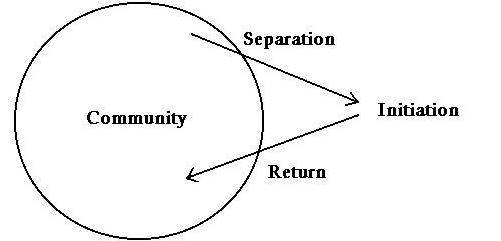
In writing a screenplay, we go into the story. That’s critical in order to connect with the characters and immerse ourselves in the story universe. But we also need to balance that by stepping outside the story universe and take a meta view of the narrative.
I like to do that by thinking of five passages, broad movements in the Protagonist’s or key characters’ experience. Those are:
- Life before Fade In
- Separation
- Initiation
- Return
- Life after Fade Out
The middle three come straight from Joseph Campbell and his articulation of the Hero’s Journey:
“The standard path of the mythological adventure of the hero is a magnification of the formula represented in the rites of passage: separation-initiation-return: which might be named the nuclear unit to the monomyth.” — Joseph Campbell
The monomyth is another term for the Hero’s Journey. The comparison to a rite of passage is instructive. Campbell claimed the whole point, symbolically and psychologically, of the Hero’s Journey is transformation. The person passes through the “test of fire” and in that process is made “new.”
The other two derive from the experience of writing screenplays. Let’s take a look at each of these five passages.
Life before Fade In
You, as a writer, have to believe something. Something quite specific. That your story universe exists. Your story’s characters exist.
As most movies deal with the journey of a Protagonist figure, let’s work with that.
Your Protagonist has been alive their entire life. They have had a lifetime of what we call backstory. All those events and experience have influenced who they are and what they’ve become.
As a result, your Protagonist has developed, among other aspects of their psyche:
- Beliefs
- Behaviors
- Coping skills
- Defense mechanisms
In their life up to FADE IN, they have managed to cobble together a survivable existence. In fact, they may even think they are living the good life.
But in almost every case, they exist in a state of Disunity.
They have an Authentic Self, a True Self, aspects of their psyche they are unaware of, avoiding, or suppressing. In one way of looking at your story, the very reason why the Protagonist’s adventure emerges is precisely to compel them to engage their True Self, even if they resist it at first [Reluctant Hero].

Their life leading up to Fade In has been one in which they have settled for how they exist. Heroes don’t settle. Heroes go for the gold and in most instances that means tapping into their Core Of Being and transforming into a New Person, the persona they were meant to be.
In their lives leading up to Fade In, the Protagonist has been making do. But they have a sense of discomfort, whether they are conscious of it or not.
That discomfort is their Authentic Self pressing upward into their consciousness, striving to see the light of day.
The Protagonist can never discover their Core Of Being unless they leave the comfort of their Ordinary World and venture forth into their personal Hero’s Journey.
Joseph Campbell called that Separation.
Separation
So what is separation? For a screenwriter, it involves three macro components:
The Old World: Providing a sense of place, time, mood, and environment for the Protagonist’s ordinary world. This is critical to set a touchstone against which to measure the character’s metamorphosis. Moreover the Old World helps us to understand why the character is the they are. This is the distillation of key narrative elements and dynamics arising from Life Before FADE IN and laid out as part of the Act One setup.

The Call to Adventure: Something happens. That is common to all movies. The Protagonist is going about their business in the Old World when something happens. A Herald arrives with important news. An event occurs which inspires or forces the Protagonist to make a decision, take action.
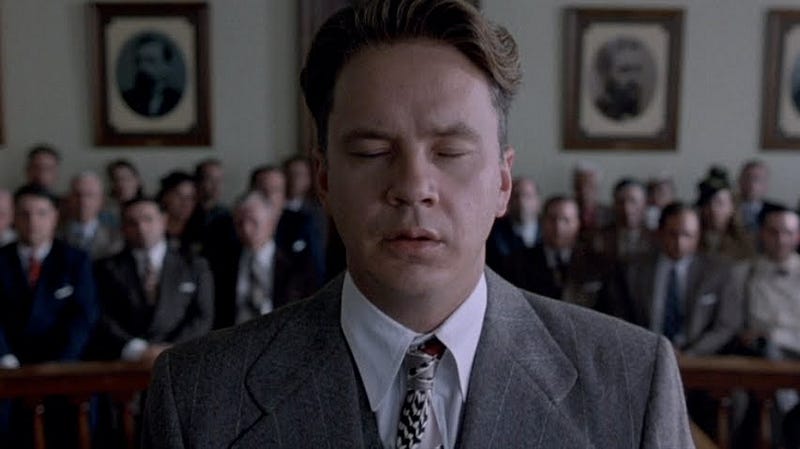
The New World: Whether it’s geographical, psychological, or symbolic, the Protagonist leaves the Old World behind and enters the New World.

This last point represents the essence of separation, a severing of a character’s presence in and connection to the Old World. Why is this important?
- To rattle the Protagonist’s cage: Beliefs, behaviors, defense mechanisms, coping skills, the psychological armor the Protagonist has cobbled together in their life leading up to FADE IN, their shift into the New World calls everything into question, shaking things up.
- To expose the Protagonist to their True Self: As long as the psyche dynamics of their life leading up to FADE IN are locked in place, the Protagonist has no hope of accessing let alone embracing their Core Essence. But being a Fish-Out-Of-Water / Stranger -In-A Strange-Land can cause the Protagonist to see the flaws in their Old Ways.
- To begin to build on their True Self: Not fully or perfectly, but a start. Shedding the Old Ways allows the New Self to emerge. That becomes the foundation of who the Protagonist will eventually become.
“The herald’s summons may be to live…or…to die. It may sound the call to some high historical undertaking. Or it may mark the dawn of religious illumination. As apprehended by the mystic, it marks what has been termed “the awakening of the self.”…whether small or great, and no matter what the stage or grade of life, the call rings up the curtain, always on a mystery of transformation-a rite, or moment, of spiritual passage, which, when complete, amounts to a dying and a birth.” — Joseph Campbell
The result is a transformed character who has “passed through the test of fire” and is made new. That process begins with Separation.
Initiation
In an increasingly secular world, more and more removed from nature and the ‘tribe,’ the very idea of initiation may seem arcane, even ridiculous. But strip away what we may typically associate with a rite of initiation and look at it from a strictly psychological perspective, and the concept comes alive because each of us goes through initiations multiple times in our lives.
Birth. Childhood. School. Adolescence. Sex. Drugs. College. Sports. Cliques. Hobbies. Job. Clubs. Relationships. Broken Relationships. Travel. Marriage. Parenting. Divorce. Relocation. And so on…
Each one of these represents a life-passage. And along with that passage, we find ourselves ‘initiated’ into a club.

When you lose your virginity, you are no longer a virgin. Welcome to a new club!
When you join a religious group, you are no longer an unbeliever. Welcome to a new club!
Likewise when you drop out of a religious group, you are no longer a believer. Welcome to a new club!
When you become a parent, you are no longer a non-parent. Welcome to a new club!
During our lives, each of us is ‘initiated’ into dozens of new ‘clubs.’

In a movie, whether the scope of the story is big or small, a Protagonist goes through an initiation which is in effect a powerful experience. Their unconscious presses up and out into consciousness. Secrets of the past, present and future get revealed. Destiny made known.
“The agony of breaking through personal limitations is the agony of spiritual growth… As he crosses threshold after threshold, conquering dragon after dragon, the stature of the divinity that he summons to his highest wish increases, until it subsumes the cosmos. Finally, the mind breaks the bounding sphere of the cosmos to a realization transcending all experiences of form-all symbolizations, all divinities: a realization of the ineluctable void.” — Joseph Campbell
Per screenwriting, thresholds are complications, roadblocks, and reversals. Dragons are characters and situations which most profoundly represent a projection of the Protagonist’s fears and/or shadow. Divinity is the True Self. The void is the All Is Lost moment where the Protagonist has come so far and is near their goal, but they have a major setback. Do they go forward or turn back? It is the height of their existential journey. They have nothing to rely upon except their connection to their emerging Need and what they’ve learned from Mentors, Attractors, Tricksters, all the characters with whom the Protagonist intersects.

This is the stuff of initiation. It works with big hero epics and broad comedies, chaotic road trips and intimate character studies. The language may sound sprawling, but the narrative scope can be quite constrained. And yet initiation, no matter how big or small, is a powerful experience. It lies at the heart of a Protagonist’s metamorphosis.
Return
In order to return home, the Protagonist must endure a Final Struggle, one almost always tied to the resolution of Want and Need.

Before Ripley could return home, she had a final showdown with the creature in ‘Alien’
In taking on the Final Struggle, the Protagonist’s only chance of success is to be fully united, Want and Need, Body and Soul, and through their success mark the full emergence of the New Self.

Simba confronts his Nemesis Scar in ‘The Lion King’
Then and only then can they return home. Oftentimes victors. Sometimes not. And sometimes the Unity state they achieve derives only through physical death.

Maximus is reunited with his wife and son after he dies in ‘Gladiator’
The Protagonist has passed through fire and emerged a transformed individual, now freed from the shackles of their Old Self:
“Freedom to pass back and forth across the world division, from the perspective of the apparitions of time to that of the causal deep and back — not contaminating the principles of the one with those of the other, yet permitting the mind to know the one by virtue of the other — is the talent of the master. The Cosmic Dancer…” — Joseph Campbell
To be a Cosmic Dancer is an expression of a fully realized self. Speaking psychologically, the Protagonist begins their journey as a child, then separates from that stage, and their initiation marks a shift into adolescence, then their return is symbolic of their emergence as an adult.
We see this pattern over and over and over again in movies, multiple, even endless variations, reflective of the ubiquitous nature the Hero’s Journey.
Life after Fade Out
The Hero returns home with some booty, an elixir, the source of power from the Other World, i.e., treasure, Holy Grail, knowledge, gold, love, wisdom, humility.
In the end, the Hero is a transformed individual.
— Joseph Campbell
Part of this movement is about celebration, a confirmation of the Protagonist’s victory and metamorphosis.

Part of it can be about the sharing of wisdom by the Protagonist to characters on the home front.

And part of it is directly for the moviegoer’s benefit: To know everything is going to be all right.
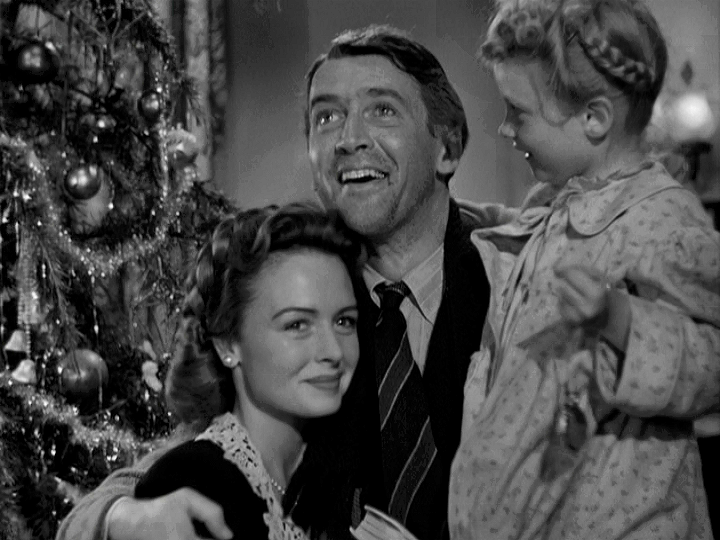
So when the movie hits The End, credits roll, and the viewer exits the theater, they have a sense of how the character’s lives will be after Fade Out.
In this series, we have taken a meta view of the screenwriting process. It’s one way to think about the Protagonist’s journey, especially helpful in the prep-writing process to wrangle narrative elements into a coherent whole… and throughout writing and rewriting a touchstone for the psychological and symbolic meaning of the story.