Film 50 2017: Chicago’s Screen Gems
Honoring the city’s burgeoning movie, TV, and creative community.
Honoring the city’s burgeoning movie, TV, and creative community.
Now entering my second year of residency in Chicago, I’ve had the opportunity to intersect with a number of locals involved in the city’s filmmaking community. It’s an exciting time to be here: long and short form movies, documentaries, web series, original TV series, and home to Cinespace, the largest studio facilities in the United States outside of Los Angeles.
For those who may be unaware of what’s going on with filmmaking in the city, check out this list just released yesterday by New City Film — Film 50 2017: Chicago’s Screen Gems.
Some of the names on previous Film 50 lists include Dick Wolf (“Chicago Fire,“ “Chicago P.D.,” “Chicago Med” and “Chicago Justice”), Joe Swanberg (Drinking Buddies, Digging for Fire), Steve Conrad (The Pursuit of Happyness, The Secret Life Of Walter Mitty), Lana and Lilly Wachowski (The Matrix, Cloud Atlas, Jupiter Ascending).
This year’s list is a fascinating one spanning the spectrum of story formats and jobs related to the entertainment industry.
I am especially pleased to see several of my DePaul University School of Cinematic Arts colleagues make this year’s list:
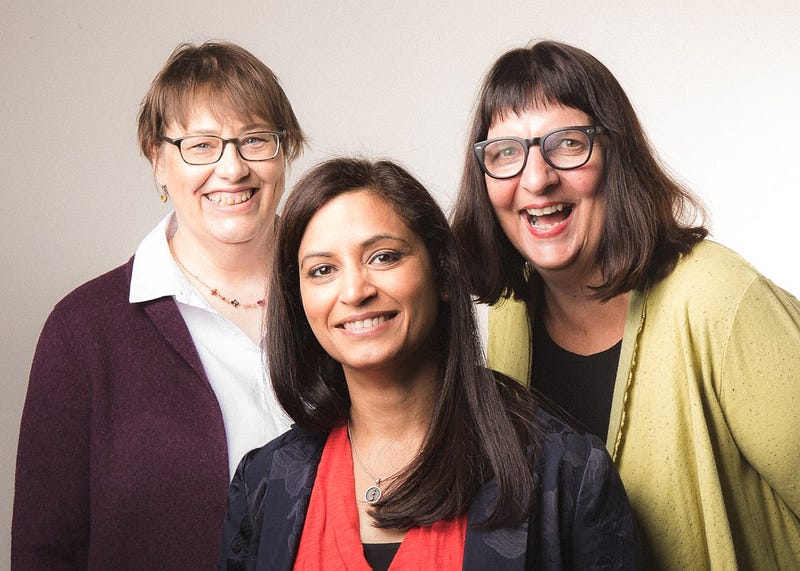
Anuradha Rana with Dana Kupper and Susanne Suffredin
Chair, Documentary Program Committee with Lecturers and Filmmakers, DePaul Documentary Program
Three years after its documentary concentration was developed, DePaul University’s School of Cinematic Arts has added degrees in the School of Cinematic Arts for documentary work, including an MFA in documentary filmmaking and a documentary concentration in the BFA in film and television, and are aimed at students who intend to balance a creative personal voice with larger social goals. “We aim to educate ethical documentarians who can develop, produce and distribute nonfiction content that has an impact on an audience,” chair Anuradha Rana says. “The program is intimate and flexible, allowing the documentary cohort opportunities to interact and collaborate with students in other fields including screenwriting, producing, directing, animation and design.” Rana, a native of New Delhi who worked as a journalist and producer, moved to Chicago in 2002, joined DePaul five years ago and slowly developed the documentary program. “Dana Kupper and Susanne Suffredin joined the faculty last year and I am excited to see the documentary program grow with their support.” Rana also joined Kartemquin Films last year as the program coordinator for their Diverse Voices in Docs Fellowship, organized by KTQ and Community Film Workshop of Chicago. She is also in production on “Language of Opportunity,” a feature documentary exploring the role that English plays in the lives, hopes and dreams of a new generation of Indians. In her second year as a full-time faculty member, Kupper, who has shot many projects for Kartemquin, teaches documentary cinematography and beginning cinematography. Kupper recently shot Rachel Pikelny’s short doc “Grace,” about a breast-cancer survivor who gets tattoos on her scars and the series “Street Soldiers,” about people working to influence Chicago’s street violence. “I have deep roots in Chicago’s filmmaking community,” Suffredin says, “starting with studying with Jim Taylor at the Community Film Workshop to being a longtime associate at Kartemquin Films, as post-production supervisor of ‘Hoop Dreams,’ among many other credits, and working as a director and editor with Kindling Group.” The opportunity to be a part of DePaul’s College of Digital Media felt tailor-made, she says. DePaul was looking for someone to expand the post production and documentary programs, “my two strongest passions!” Suffredin is also working with longtime collaborator Peter Gilbert and producing partner Chris Webber on a feature-length documentary about Webber’s NBA basketball career.
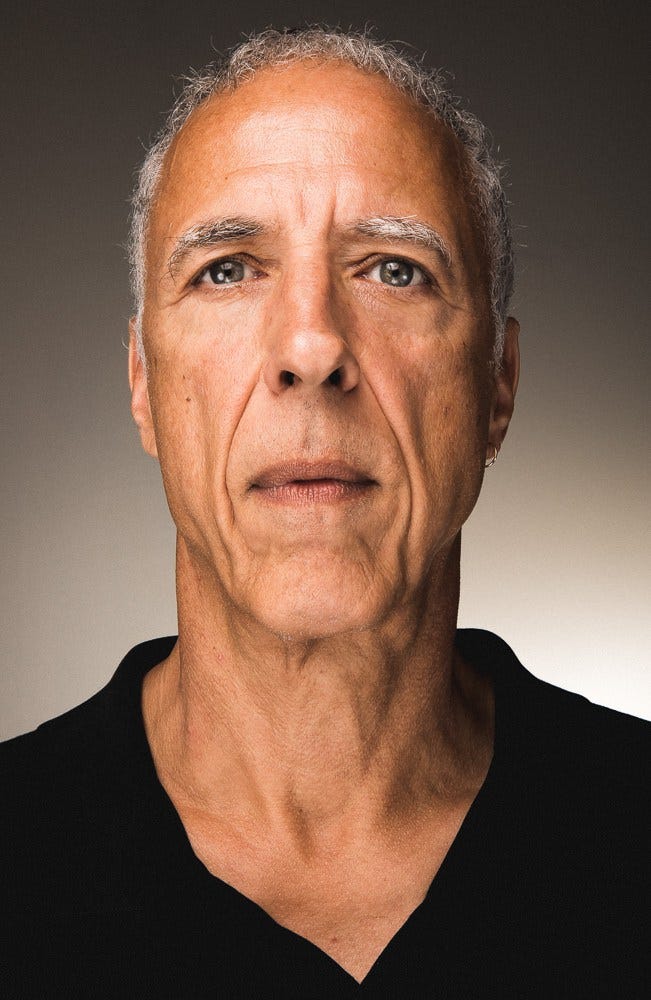
Steven A. Jones
Producer and Producer in Residence in Cinema Production, Post Production, Animation at DePaul University School of Cinematic Arts
Steve Jones remains a highly active producer despite recent droughts in the way independent films, like his work with John McNaughton (“Henry: Portrait of a Serial Killer,” “The Harvest”), are financed and produced. McNaughton has a long-in-the-dreaming “Carny Kill,” and Jones is also developing an adaptation of Irvine Welsh’s “The Sex Lives of Siamese Twins” with McNaughton directing, and an adaptation of Alice Munro’s “Passion” written and to be directed by Chicago filmmaker Maria Finitzo. (Jones is quick to note he also recently directed the music video “Gone, Gone, Gone” for Styx.) But an intriguing new role for the always-cheery raconteur is his post as a “producer-in-residence.” “At DePaul I try to use my experiences on the films I’ve done as cautionary tales! A producer has to deal with creative, financial, logistical and personality issues. Often I have to stop and remind the producing students, after some particularly harrowing recollection, that there is no benefit to them hearing me describe things that went smoothly, because the job of producer is almost entirely about problem solving.”

Wendy Roderweiss
Producer, DePaul University School of Cinematic Arts Visiting Artists Series
Chicago-raised, USC School of Cinematic Arts-trained filmmaker and DePaul instructor Wendy Roderweiss has produced DePaul’s School of Cinematic Arts Visiting Artists Series since 2013, an invaluable educational and community outreach program that brings innovative filmmakers and industry leaders in film, television and animation to DePaul students, but also the community. “Nearly all of our events are open to the public,” Roderweiss relates, “and with the uptick in Chicago’s film and television production, the series is a great cultural complement to the growing local industry. We stream and record all of our events as the equivalent of a four-camera live television show, which I produce, and are crewed entirely by DePaul students.” The excitement comes, she says, in multiple ways. “Because we run the events as an actual television show, the students get the hands-on, experiential learning that is critical to the field of film and television. Students have been hired onto professional sets right from their experience crewing Visiting Artists Series. And the series provides in-depth conversations with artists in an intimate setting. We try to strike a balance between local artists and those from Los Angeles and New York, which gives our audiences a greater sense of the growing Chicago film culture as well as bringing guests to them that they would not ordinarily have access to. Some of our guests have decades of experience, and others are just starting out, but all are willing to share their insights and stories. Because of our format, we are able to have honest discussions, delving into the nitty-gritty of working in this industry. The series is film school-centered, knowing that our audience is looking for takeaway points that will help them advance their careers. And because we bring in such varied guests, I feel like I always walk away learning something new, or with a new perspective. “
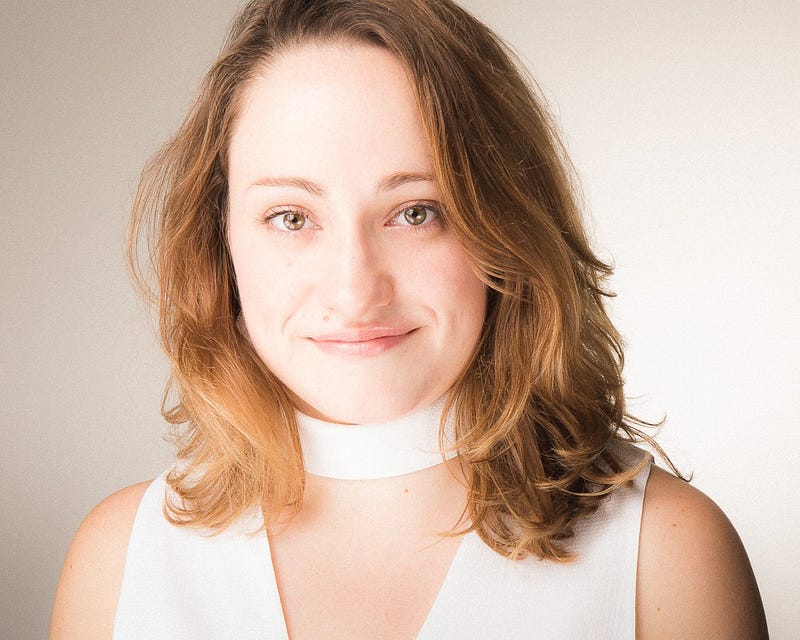
Angie Gaffney (DePaul University alum)
Producer, Black Apple Media and Executive Director, Stage 18
Angie Gaffney remains a force in multiple streams of the Chicago film scene, including increasing the scale of independent project incubator and shared workspace Stage 18, located on the lot of Cinespace Chicago Film Studios. (Gaffney cofounded the effort in 2015 alongside Cinespace’s Alex Pissos.) The goal is to produce regular programming from its members, as well as working to provide learning opportunities and affordable resources to their filmmakers. As a producer under the Black Apple Media umbrella, Gaffney co-created the “Public Housing Unit” pilot with Patrick Wimp and Ted Reilly, the first larger-scale project to be developed, funded and produced out of Stage 18. She is developing other indie films, and helped produce Hugh Schulze’s “Dream Detective” short films as well as working as line producer on “Signature Move.” Gaffney is also an adjunct faculty member at Harold Ramis Film School, and teaches at DePaul University, while serving on the board of IFP Chicago and the Midwest Independent Film Festival.
And about Cinespace Chicago Film Studios with 30 sound stages on over 60 acres of property in the heart of the city, the DePaul School of Cinematic Arts leases 3 of the sound stages for its students to use for their film projects. In fact, I just met with a DePaul freshman yesterday who having been in school here for not yet one month is already involved in a student film project.
That’s one thing I’ve noticed about filmmakers here in Chicago: They don’t just talk about movies. They go out and make them!
For the rest of the Film 50 2017: Chicago’s Screen Gems article, go here.