Different Protagonist Arcs
Three approaches to this central character’s transformation.
Three approaches to this central character’s transformation.
Metamorphosis is the single most universal theme of all stories, a message we crave to read, see, and hear in part because we want to believe that we, too, can change. Typically, movies feature a Protagonist with a positive arc going from a state of Disunity to Unity. However, not all stories — and Protagonist’s arc — are the same. Today, we consider three different approaches to metamorphosis.
Negative Metamorphosis: Citizen Kane
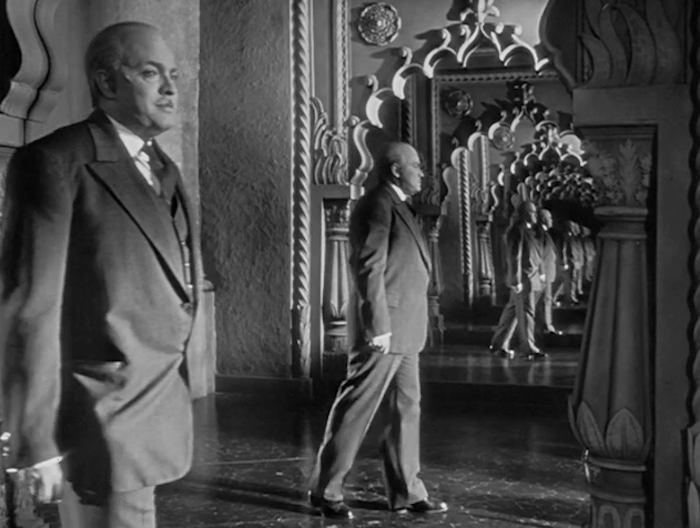
This 1941 classic film starts at Charles Foster Kane’s end point:
Note all the images associated with Disunity: The first words — “No Trespassing.” Opulence contrasted with disrepair. The property’s enormous expanse, yet no people — except one, the Protagonist himself in his bedroom, curiously with a snow globe in hand. Then perhaps the most famous line of dialogue to begin a movie: “Rosebud.”
In the end, we learn Rosebud refers to a sled Kane was seen playing with when he was a boy living in Colorado. Mother. Father. Home. Snow. Sled. In the script, Kane as a boy is described this way: Charles, deliriously happy in the snow.That was his Unity state. Then fate intervenes with his mother sending Kane away to boarding school back East.
The look on young Charles’ face at the end of that scene? Rage. And that plays out in all Kane does for the rest of his life — rage that he was yanked away from all he loved. From his Unity state.
When we meet Kane again as an adult, although he is wealthy, young, full of piss and vinegar, he is a divided soul. As a rich stockholder, he is part of The Haves. As the publisher of The Inquirer, he is voice of the Have Nots. Kane admits this in dialogue:
KANE
The trouble is, Mr. Thatcher, you
don't realize you're talking to
two people.
So he begins his first try to create a unified self: He marries the President’s niece, but his attempt to live life as a member of the elite fails:
Then he tries another tack: To be a progressive politician, a reformer. That ends in failure, too. Next, he seeks to find public redemption through the opera ‘career’ of his wife Susan. Fails miserably. Finally, he is left to try simply being a husband. That results in failure as well. In the end, Kane has everything (wealth) — but nothing (despair). Disunity personified.
As the seeds of Unity exist in a character’s Disunity state, so too the seeds of Disunity within a Unity state if the arc is a negative metamorphosis.
Protagonist as Change Agent: Ferris Bueller’s Day Off
In this 1986 John Hughes comedy, the Protagonist Ferris Bueller does not change. Neither does his ostensible girl friend Sloane. But Cameron does.

Saddled with a dark world view and a dysfunctional relationship with a distant, judgmental, and materialistic father, Cameron moves from a state of fear to getting in touch with his anger to a determination to confront his father.
As Ferris says, breaking the fourth wall of the movie to let us in on his armchair analysis of Cameron:
FERRIS
If anybody needs a day off, it's
Cameron. He has alot of things to
sort out before he graduates. He
can't be wound this tight and go
to college. His roommate'll kill
him. I've come close myself. But I
like him. He's a little easier to
take when you know why he's like he
is. The boy cannot relax. Pardon
by French but Cameron is so tight
that if you stuck a lump of coal up
his ass, in two weeks you'd have a
diamond.
(after-thought)
And Cameron would worry that he'd
owe taxes on it.
This metamorphosis arc is played out in Cameron’s ‘relationship’ with his father’s car (the father is never visualized, only physicalized in the form of his beloved sports car).
- Disunity: Cameron resists Ferris’ pleas to use Cameron’s father’s car for the trio’s trek to downtown Chicago (fear).
- Deconstruction: Reluctantly convinced by Ferris, Cameron is desperately concerned about the safety of his father’s car, but willing to go along for the ride (fighting fear).
- Reconstruction: After returning from their journey in the ‘extraordinary’ world (their day off), Cameron attacks his father’s car (anger).
- Unity: Once the car crashes out of the garage and gets destroyed, Cameron resists Ferris’ offer to take the blame for the accident, instead wanting to face his father once and for all — “I’ll handle it” (determination).
And at the root of Cameron’s change? The character who instigates the trip downtown? Who cajoles Cameron into letting them use his father’s car? The merry prankster who forces Cameron to have a good time despite Cameron’s best Eeyore impersonation? Ferris Bueller — Change Agent.
Refusal to Change: Life is Beautiful
In this 1997 World War II drama, Guido is a romantic, a dreamer, and a storyteller. He uses those traits to woo and marry Dora. Years later when German soldiers whisk away Guido and his five year-old son Giosué to a concentration camp, accompanied by the non-Jew Dora, Guido is forced to use those same personality traits for a far different reason: To save the life of his son..
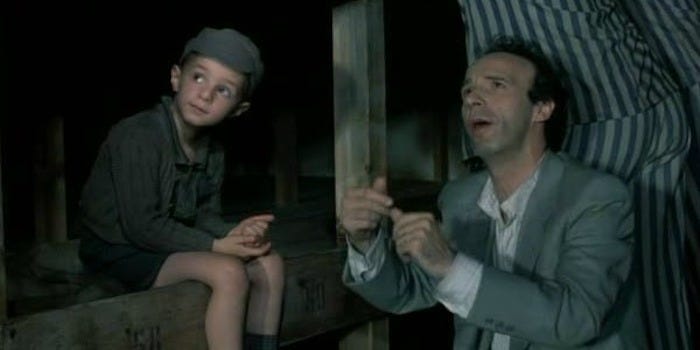
Guido: [being shipped to a concentration camp] You’ve never ridden on a train, have you? They’re fantastic! Everybody stands up, close together, and there are no seats!
Giosué: There aren’t any seats?
Guido: Seats? On a train? It’s obvious you’ve never ridden one! No, everybody’s packed in, standing up. Look at this line to get on! Hey, we’ve got tickets, save room for us!
Guido: What kind of place is this? It’s beautiful: Pigeons fly, women fall from the sky! I’m moving here!
Guido: [pretending to translate] The game starts now. You have to score one thousand points. If you do that, you take home a tank with a big gun. Each day we will announce the scores from that loudspeaker. The one who has the fewest points will have to wear a sign that says “Jackass” on his back. There are three ways to lose points. One, turning into a big crybaby. Two, telling us you want to see your mommy. Three, saying you’re hungry and want something to eat.
At one level we can look at Guido’s story as being about steadfastness, clinging to the game as a means to protect his son from the awful truth surrounding them and to keep him hidden. Once he has initiated the game, Guido has a choice every step of the way: To continue with the lie in order to protect his son or tell the truth and risk his son’s life. Guido persists with the lie, each time a selfless act including his end point:
The fact he stays the course with such purposefulness throughout is one of the narrative’s main themes: In the face of eventual annihilation, Guido persists. And so one could say his lack of an arc — his refusal to change — is central to his character’s story.
Takeaway: While most mainstream Hollywood movies have a traditional Disunity-to-Unity metamorphosis arc, there are other narrative archetypes we can explore including Negative Arc, Change Agent, and Refusal to Change.