Deep Work vs. Shallow Work
As writers, we need to protect time for the former from the encroachment of the latter. Here are four strategies to do precisely that.
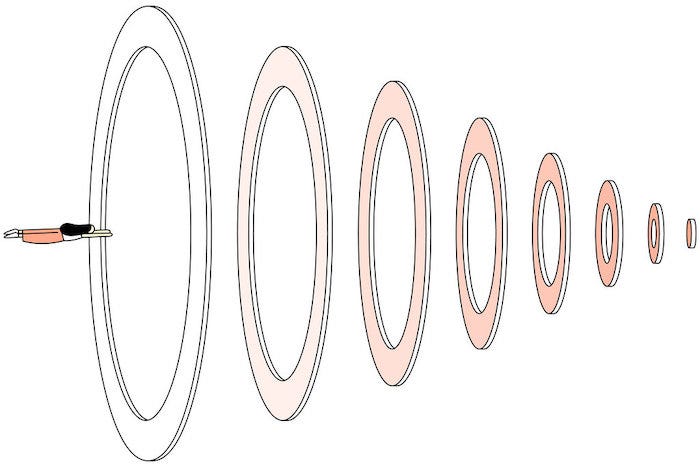
As writers, we need to protect time for the former from the encroachment of the latter. Here are four strategies to do precisely that.
When I reflect back on the twenty-one month sojourn of writing The Protagonist’s Journey: An Introduction to Character-Driven Screenwriting and Storytelling, I am struck how it was a totally different experience than working on a screenplay.
Sitting down to write a scene? Easy. Characters. Setting. Goals. A mini-story with a Beginning-Middle-End.
Sitting down to write a extensive analysis and comparison of numerous film and television series?
What a struggle.
I had the analysis, I knew what I wanted to write, but how to do it in a way that conveyed those ideas, yet be entertaining.
I slaved over each sentence to fulfill both goals: Provide substance to the reader and create an enjoyable read.
One aspect of the process remains the same as all these other forms of writing: Time to immerse myself in the subject matter and give myself over fully to the writing process.
I wrote my first screenplay in 1986 on Apple IIc computer with a dot matrix printer and 5 1/4 inch floppy discs. It was easy to slide into long writing sessions that would morph from day to night, time slipping by as timelessness. Technology was my ally. No distractions.
Cut to 2021 when I began writing The Protagonist’s Journey. Like all modern consumers, I had it all tech-wise. Two MacBook computers, one iPhone, two iPads, social media accounts. I have access to THE WORLD at any moment I choose.
Or perhaps it chooses ME.
It is so easy to get caught up in the details and busy work of day-to-day life. Tweets. Texts. Email. Clickhole hell.
How to protect time for the deep immersive work a writer needs to do on their creative projects?
I was pondering this and remembered I had flagged a NYT article on this very subject. Sure enough, there it was in my Instapaper file: How to Actually, Truly Focus on What You’re Doing by Tim Herrera who writes:
Here’s what my browser generally looks like: work email in the left-most tab, always open. TweetDeck in the next one, always open. A few Google Docs tabs with projects I’m working on, followed by my calendar, Facebook, YouTube, this publication’s website and about 10 stories I want to read — along with whatever random shiny thing comes across my desktop. (Not to mention my iPhone constantly nagging me, though I’ve mostly fixed that problem.)
This is no way to work! It’s awful, and my attention is divided across a dozen different things. My situation is far from unique, and most people who do most of their work on a computer know it all too well.
Enter “deep work,” a concept coined by one of my favorite thinkers in this space, Cal Newport. He published a book in 2016 by that name, and in it he details his philosophy and strategy for actually focusing on the things we can do and accomplish.
Tim interviewed Cal Newport who talks about the concept of deep work which he describes as “the activity of focusing without distraction on a cognitively demanding task.” This in contrast to shallow work which suffers from attention residue: “Every time you switch your attention from one target to another and then back again, there’s a cost. This switching creates an effect that psychologists call attention residue, which can reduce your cognitive capacity for a non-trivial amount of time before it clears.”
Newport points out four rules for deep work and they are:
- Work deeply: “ The idea here is that if you want to successfully integrate more deep work into your professional life, you cannot just wait until you find yourself with lots of free time and in the mood to concentrate. You have to actively fight to incorporate this into your schedule.”
In writing The Protagonist’s Journey, I carved up my day into specific work sessions with my time for writing the book two hours in the afternoon.
- Embrace boredom: “The broader point here is that the ability to concentrate is a skill that you have to train if you expect to do it well. A simple way to get started training this ability is to frequently expose yourself to boredom.”
I am especially sensitive to this because I see its effect on my university students in every course I teach. My class sessions run three-hours long and even knowing they have a a ten minute break in the middle, I can see my students’ hands drifting over to their cellphones although they know they are not supposed to use them during our time together. Whether it’s FOBO (Fear Of Being Offline) or just an habitual need to ‘tune in,’ this is an insidious influence on writers. Fortunately for me, my alma mater’s men’s basketball team, the National Champion University of Virginia, doesn’t begin their season until November, so I don’t have to worry about my own itchy cellphone finger.
- Quit social media: “The basic idea is that people need to be way more intentional and selective about what apps and services they allow into their digital lives. If you only focus on possible advantages, you’ll end up, like so many of us today, with a digital life that’s so cluttered with thrumming, shiny knots of distraction pulling at our attention and manipulating our moods that we end up a shell of our potential.”
This is a challenge because even though Twitter can veer toward being a social media cesspool, it’s also a favorite medium for screenwriters, movie and TV lovers, so I have gotten into the habit of tracking it every day. However, as I have delved more deeply into writing my book, I have just naturally gotten away from checking into Twitter every hour or so. Instead, I do one pass per day, typically at night, and that’s it. This has not only freed up more time for deep focus writing, it’s also helped elevate my mood. Less time spent with crazy tweeters!
- Drain the shallows: “‘Shallow work’ is my term for anything that doesn’t require uninterrupted concentration. This includes, for example, most administrative tasks like answering email or scheduling meetings. If you allow your schedule to become dominated by shallow work, you’ll never find time to do the deep efforts that really move the needle. It’s really important, therefore, that you work to aggressively minimize optional shallow work and then be very organized and productive about how you execute what remains.”
I am a university professor. Teach through my own online educational resource ScreenwritingMasterClass.com. Blog daily at GoIntoTheStory.com. And because of all that, I receive on average 100 emails and social media direct messages per day. That is an easy psychic sinkhole. I tend to handle most of those during the morning which when I think about it is a pretty lame brain way to go about my day. Why waste that morning energy on administrative details?
Therefore, I have gone back to a habit I had for many years: Begin each day writing in my journal, reading a poem, then fifteen minutes meditating. Feed the soul before I engage the world.
It is interesting that Cal Newport, the subject of the article’s interview, has no social media accounts. Recently, I talked with a writer who gave up his cellphone. It raises a compelling point: It’s entirely possible to live a life WITHOUT all that “stuff.”
Whether we go full-on Luddite and give up trappings of modern life or we try to survive with current technologies, it’s critical we develop habits which allow us to pass through shallow work and engage ourselves in deep work.
How do you do that? Hit me up in comments with your suggestions.
For the rest of the NYT article, go here.