Death Spiral of Hollywood Monopolies
“Without regulation of these monopolies, Hollywood will succumb to a death spiral, planting a stake in the heart of the entertainment…
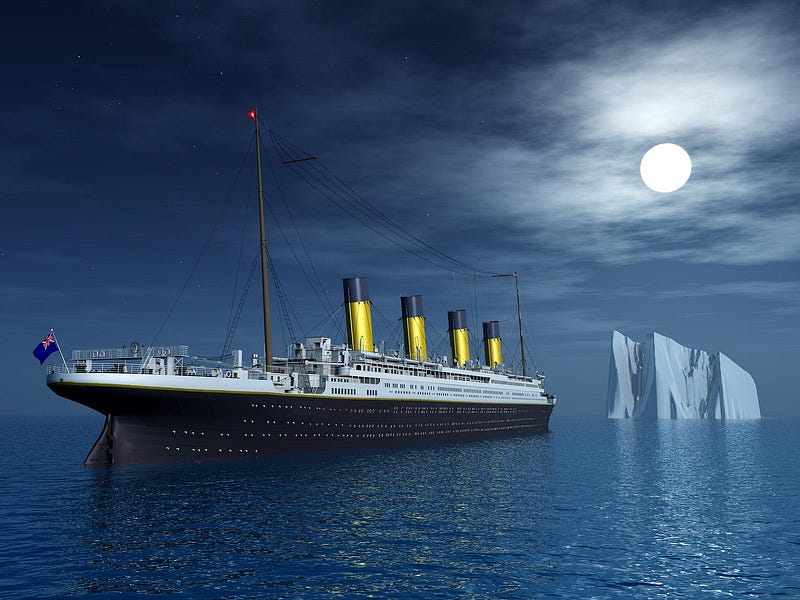
“Without regulation of these monopolies, Hollywood will succumb to a death spiral, planting a stake in the heart of the entertainment industry.”
Alena Smith is a writer, director, playwright, and showrunner. She is the creator of the Peabody Award-winning series Dickinson on Apple TV+. Yesterday, The Ankler featured a guest column Smith wrote: Death Spirals of Hollywood Monopolies. It is one of the best pieces I’ve read at putting into context the muck-mire that is the current state of the film and television business … and why the current strike is in effect an effort by actors and writers to save Hollywood from destroying itself.
Here are some excerpts from that column:
Hollywood is broken. More than half a trillion dollars has been wiped off the market value of the world’s biggest media companies this year, while, on the streets, hundreds of thousands of writers and actors are on strike, bringing the industry to a grinding halt at the moment when it most needs to prove its resilience. As the oddly mismatched mega-companies who currently produce, own, and distribute TV shows and movies fumble to align themselves on basic issues of minimum compensation and worker protection, along with the looming technological shifts of A.I., it has become clear that the only goal these corporations have in common is to gain market power and then exploit it; that is, to monopolize. This monopoly power, once grabbed, is used to lower costs and hedge risk for Wall Street investors, primarily by reducing or eliminating the bargaining leverage of artists and independent producers; by continuing to consolidate or vertically integrate along different and conflicting lines of the business; and by raising prices for the consumer — all while the entertainment they sell continues to decline in cultural relevance. Without regulation of these monopolies, Hollywood will succumb to a death spiral, planting a stake in the heart of the entertainment industry — one of America’s most lucrative exports, whose stories and stars have defined our culture for the past century or more.
The story of the streaming wars has been widely told by now, but I’ll provide a short recap. In the pilot episode of this limited series (so to speak), TV and film’s “great disruption” was kicked off by Netflix, who came raging into the business with a firehose of speculative cash, unleashing the biggest spending spree in the history of the industry. Netflix did so while deploying the classic Silicon Valley strategies of predatory pricing, vertical integration and hoarding of data in order to grab market share and make it impossible for the so-called “legacy media” companies (translation: those dinosaurs who still needed to make a profit off of entertainment) to compete. Netflix — like Uber, and yes, like WeWork — was selling a story: a story of unlimited growth and infinite scale; of monopolistic market domination. As long as interest rates remained at zero and subscription numbers kept going up, Wall Street bought the story. And so did the old guard of legacy media, who, tossing aside a century’s worth of experience and relationships in the notoriously unpredictable entertainment business, one by one threw their hats in the streaming ring, seduced by the promise of unwavering growth, each starting their own (often amusingly-named) direct-to-consumer subscription “content” platforms.
Read the rest of the column for Smith actually suggests a way out of this morass: “We need a political coalition to break up the studio-streamers, or we will lose the ability to sustain the TV and film industry that has been the beating heart of our culture for over a hundred years.”
So there’s that. I was intrigued by Alena Smith, so I looked up her IMDb credits, then discovered her website. A fellow Yalie! And that led me to an essay Smith wrote in May for Vanity Fair, the first week of the writers strike. The article’s title: The AI Apocalypse Is Coming for Hollywood, but Don’t Robots Rule Us Already?
Smith delves into growing presence of AI in our creative universe (“…it seems there’s nothing any of us can do to prevent this oncoming flood of digital spew”). I’ve covered this terrain several times on the blog, for example, here, here, here, and here, and most notably with my series ChatGPT is a Terrible Screenwriter.
I get it. We all get it. AI is here, there, and everywhere. The current rumor floating around is that the AMPTP is not going to negotiate a deal with writers or actors for another six months because there is some massive AI breakthrough on the horizon which will render talent useless.
Smith’s Vanity Fair piece doesn’t end with the tragic demise of human writers, tossed aside by the companies and their AI allies blathering out machine learning based “content” dressed up as a “movie” or a “TV series.” Instead, Smith writes this:
And robots, as executives know, are so much easier to work with than people. Robots don’t need COVID protection on set. Robots won’t be heartbroken when you throw out an entire series they shot in exchange for a tax break. Robots would never ask for an intimacy coordinator.
But there’s something in that word — intimacy — that catches me here, makes me pause. (Could an AI have a moment like this, while “generating”?) Is it possible that this one word might capture the whole reason we tell stories — and listen to them — in the first place? Couldn’t you say that we need stories because they help us coordinate our intimacies: They allow us to explore, alone in the dark or at home on the couch, at a sleepover or on a first date, who we are with each other. Stories, about families, coworkers, criminals, spies, even — yes! — robots, are made of and necessitated by human relationships. Through stories, we, first as children, then as adolescents and adults, learn how to treat each other. We learn how to care. This capacity for empathy is what gives stories their stakes: What’s fundamentally at stake in every story is the tender, vulnerable human heart. Stephen Sondheim — surely one of the greatest non-algorithmic intelligences ever to practice the craft — said, “The only reason to write is from love.” Robots, as far as I know, can’t love. So how can they write — or, more to the point — why would we listen to what they have to say?
— —
But maybe this fundamental truth about stories is what robotically generated text and images will help us clarify. Maybe the AI revolution will turn out to have an upside, which is that by churning out so much bullshit, it will inadvertently raise the bar. In a world of AI-scripted content, the truly scarce commodity will be a show or film that reminds us of what we truly value, what we actually need in order to survive. Which is to have a conversation. To be touched. To go into the woods of our human feelings, as Sondheim might say, and return transformed by a magical gift that only another all-too-real person can give us.
Smith’s words remind me why I teach character-driven storytelling. My undergraduate and graduate film school students may futz around with ChatGPT and its robotic cousins, but that’s not what matters. What matters is each writer finding their own unique voice, embracing their distinct me-ness, because no one else can reproduce that specific life experience.
I encourage my students to bring that sensibility to the characters who emerge from their creative subconscious. Explore their inner lives and relationships. Using the word from Smith’s piece, the intimacy of how a character reacts to the events of the plot and the “family of characters” they meet along the way … how all of that drives the Protagonist into the most intimate journey of them all, to answer the question, “Who am I?”
I tell my students, that is what we have to separate ourselves from machine-thought: Our individual life-experience and our shared humanity.
This strike feels different than ’88 and ‘07–08. It’s not just about financials. This is existential. And when pondering the AMPTP overlords, how they apparently have lost their soul in their worship of profit and power, it’s easy to slip into depression.
But as Smith reminds us, no one can take away our humanity. And humans by nature are social creatures. We crave connection … intimacy … with other humans. Stories have a way of doing that like no other.
So, thank you, Alena Smith, from one human writer to another. Your words have fanned the flames of hope, at least in the heart of this old soul.
To read Smith’s piece in The Ankler, go here.
To read Smith’s Vanity Fair article, go here.
Twitter: @internetalena
For the latest updates on the strike and news resources, go here.
Please consider contributing to the Entertainment Community Fund.