“Conversations With Wilder”: Part 15
Billy Wilder. Cameron Crowe. Conversation and creative insight.
Billy Wilder. Cameron Crowe. Conversation and creative insight.
Billy Wilder is my all-time favorite filmmaker. Consider just some of his movies: Double Indemnity (1944), Sunset Blvd. (1950), Ace in the Hole (1951), Stalag 17 (1953), Witness for the Prosecution (1957), Some Like It Hot (1959), The Apartment (1960), an oeuvre that demonstrates an incredible range in a filmmaking career that went from 1929 to 1981.
One of the best books on filmmaking and storytelling is “Conversations With Wilder” in which Cameron Crowe, a fantastic filmmaker in his own right (Say Anything, Singles, Jerry Maguire, Almost Famous) sat down with Wilder for multiple hours and they talked movies.
Every Monday through Friday for the next several weeks, I’m going to post excerpts from the book, add a few thoughts, and invite your comments. I trust this will be a good learning experience for each of us. And while we’re at it, why don’t watch some Wilder movies to remind ourselves what a great writer and director he was.
Today’s excerpt comes from P. 106–108 in which Wilder gives his thoughts on voice-over narration:
CC: Another aspect of your movies are the great voice-overs, from Holden in Sunset Boulevard to Lemmon in The Apartment. How much did you direct the voice-overs?
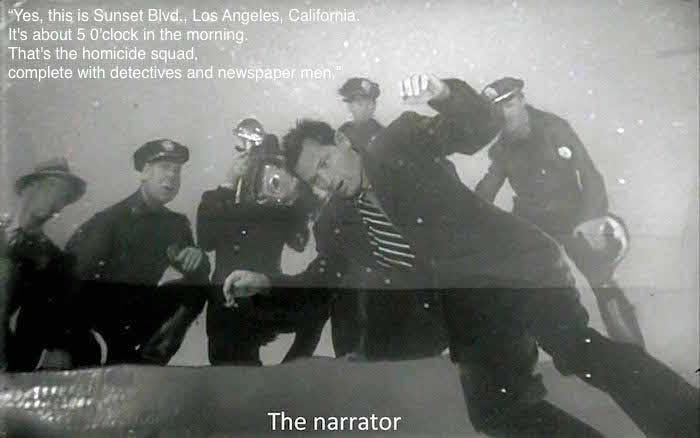
BW: I directed it all. The thing about voice-overs — you have to be very careful there that you don’t show what they’re already seeing. Add to what they’re seeing. I think that you can, within seconds, really seconds, you can tell things that are much better to hear than to see, because it’s an unimportant scene. I made my first voice-over in Double Indemnity. I did a voice-over in Stalag 17. I did a voice-over in Sunset Boulevard, where a dead man was speaking — why not? [Laughs] Why not? We just did it. Nobody got up and said, “Now wait a minute, a dead man speaking, rum-rum-rum-rah, I don’t want to see that…” They listened.
CC: The voice-over opening of The Apartment breaks the rules of screenwriting, but it works. The opening narration is told from Lemmon’s point of view, yet the movie is told from an omniscient point of view.
BW: Who wrote the rules? There are no rules. But I kind of think that in every picture, there is something which would take six to twelve pages to explain, and I can do it in six or twelve seconds by having a voice-over. There’s nothing to be ashamed of.
CC: No, particularly if you’ve shot specifically for a voice-over. Like the beginning of Love in the Afternoon, where you’re giving us a leisurely tour of Paris.
BW: Paris. The people kissing.
CC: Is that Maurice Chevalier doing the opening narration?
BW: No, that was Louis Jordan. He did it, he had a little French accent, and it was very good. That’s fine, but later on I just let it go. There’s no more narration at the end of The Apartment, either.
CC: And the same in One Two Three.
BW: Voice-over is good as long as you are not describing what the audience is already seeing. you don’t have to tell them what they’re already looking at. Show, don’t tell.
Takeaways:
- “Voice-over is good as long as you are not describing what the audience is already seeing.” I did a whole series of posts analyzing how voice-over narration was used effectively in several movies — The Shawshank Redemption, Double Indemnity, Fight Club, American Beauty, and A Christmas Story — and one of the points we discussed is precisely what Wilder said: If you choose to use voice-over narration, make sure it adds something to the story experience.
- “There are no rules.” Sounds like someone else I know. If your story compels you to defy convention, like having a dead man doing voice-over or doing voice-over from a character’s perspective when the story is told from the omniscient point of view or saying it instead of showing it, then you have the freedom to do that, even if you’re not Billy Wilder.
Tomorrow: More “Conversations with Wilder. If you have any observations or thoughts, please head to comments.
For the entire series, go here.