Conscious Goal, Unconscious Goal
A deeper examination of a character’s Want and Need.

A deeper examination of a character’s Want and Need.
In one of my recent Screenwriting Master Class courses on character development, a class member posted this:
I understand the ‘want’ (external goal) element. What is more tricky for me is the ‘need’.
I’m unsure in determining it.
In Die Hard, the external goal of McClane is at the beginning to settle things with his wife. Afterward, to save his wife and the other hostages from the terrorists. But what is his need? To take responsibility for his marital situation? To admit he acted like a jerk? to rejoin his wife?
And why actually does Annie in Bridesmaids need to renounce her romantic childish wants? Because this is the story determination?
Since the Protagonist is not conscious of his needs, who determines it for him? is it me, the screenwriter? and according to what? according to the story?
I’m a bit confused here. Hope I succeeded in explaining my thoughts.
My response:
Before trying to explain things a bit more, let me begin with anecdote. Among the twelve Black List workshops for which I have been a mentor, one was in New York City and featured Beau Willimon (House of Cards) as another mentor. With each writer, he did the same thing in their hour-long session. He took them for a walk in Greenwich Village and simply asked the same question of their story’s Protagonist: “What do they need?” And he kept pushing and pushing that point, forcing the writers to dig deeper and deeper into the Protagonist, down to their core Need.
That demonstrates how important this question is.
As you suggest, the Protagonist often doesn’t know what they need (Dorothy in The Wizard of Oz, Carl in Up). Indeed, sometimes they don’t believe they need anything (Michael in Tootsie, he WANTS a job as an actor, but I don’t believe he thinks he NEEDS to change). Or they believe what they want is what they need (Annie in Bridesmaids, Zuckerberg in The Social Network).
As you suggest, it’s really more about the writer recognizing the Protagonist’s Disunity — and Want and Need are almost always distinct at the beginning of the story, thus part of the character’s Disunity — then as other characters and events emerge in the story development process, see how they tie into and facilitate the Protagonist’s arc toward discovering their need and embracing it.
[This assumes the character has a positive arc.]
So Annie in Bridesmaids has an infantile view of romance and will never have a healthy, authentic relationship with a guy as long as she’s straddled by her sense that what she needs is what she wants: A Prince Charming type guy. Go 180 degrees from there: What she needs is to grow up, go from innocence to experience and realize that when somebody loves you, warts and all, and *that* love is real and genuine, someone who will embrace Annie for who she is, not anybody else but her messed up self, how to best service that arc? Hm. Let’s make her a Maid of Honor and show her the dark underbelly of ‘romantic’ love.

One of the questions you can ask early on in story development is: What is the resolution of the Protagonist’s Want and Need. Sometimes Need completely replaces Want. Other times it transforms Want. Or Want and Need can merge. But invariably, Need is the prime mover in the Protaonist’s transformation.
It’s there at the beginning of the story. “The seeds of change lie within” says Ovid, who wrote “Metamorphoses”. Carl Jung: “Become who you are.” Joseph Campbell: “The Hero’s Journey is not one of attainment as it is reattainment.”
What they’re all talking about from a writing POV is the Protagonist’s Need. The experiences they have in the narraive breaks down their Old Ways of Being, allowing their Need — or Authentic Self — to emerge from the Unconscious into the Conscious. The Protagonist begins to embrace and rely on that True Nature which eventually takes them toward Unity.
This is a description of a majority of Protagonist stories in movies.
So the key thing to do is assess your Protagonist’s Disunity. Really dig down into them. See if that brings to the surface their most fundamental Need. That should steer you toward the end point of the story via the P’s psychological arc.
In my Prep workshop, as part of the story development process, I have writers drill down into their perception of a Protagonist’s Want and Need at the beginning of the story to the Conscious Goal (Want Defined) and Unconscious Goal (Need Defined) by the end of Act One.
So the Conscious Goal is almost always a specific object of desire, a goal toward which the Protagonist moves. This is important because it provides a sense of narrative drive and creates an end point for the story.
With regard to Unconscious Goal, when you boil it all down, this is why the story happens. The Protagonist has a specific NEED within which is pushing to emerge into the light of consciousness. The fact the Call To Adventure or Inciting Incident occurs is — in a way — an activation of that NEED emerging, the core of the Protagonist psychological metamorphosis.
As noted above, the Protagonist may not, indeed, generally does not know their Need (Unconscious Goal) at the beginning and only becomes aware of it as they go through their metamorphosis journey. They may never become self-aware of this Unconscious Goal, instead just react to events and characters with which they interact in the plot, and embrace what emerges from within, but the writer must absolutely know it. It is perhaps the key to the story-crafting process.
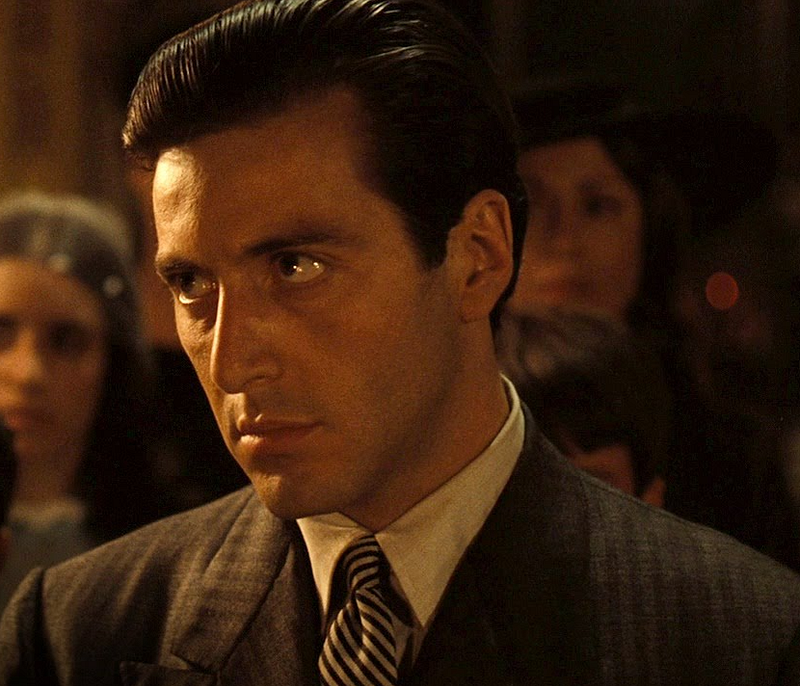
For example in The Godfather, everything that happens to Michael services his Unconscious Goal: To take over as Mafia don. He had that potential within him all along, it just needed to emerge and he needed to embrace it — which he did. The baptism-assassination scene? That is the high point of Michael embracing his inner Godfather and the potential for that moment resided within his psyche from the very beginning of the story.
This concept of Need as Unconscious Goal — by the way, the latter is my own language system — is hugely important and something every writer ought to spend ample time contemplating with regard to their Protagonist as it speaks to the very nature of the story’s structure.
This is a subject I delve into to great depth in my book The Protagonist’s Journey: An Introduction to Character-Driven Screenwriting and Storytelling, an Amazon #1 Best Seller in Film and Television.