Character Type: Destroyer
“Rampaging and hell-bent on destruction. There is no negotiating. No resolution with these kind of Destroyers. They themselves must be…
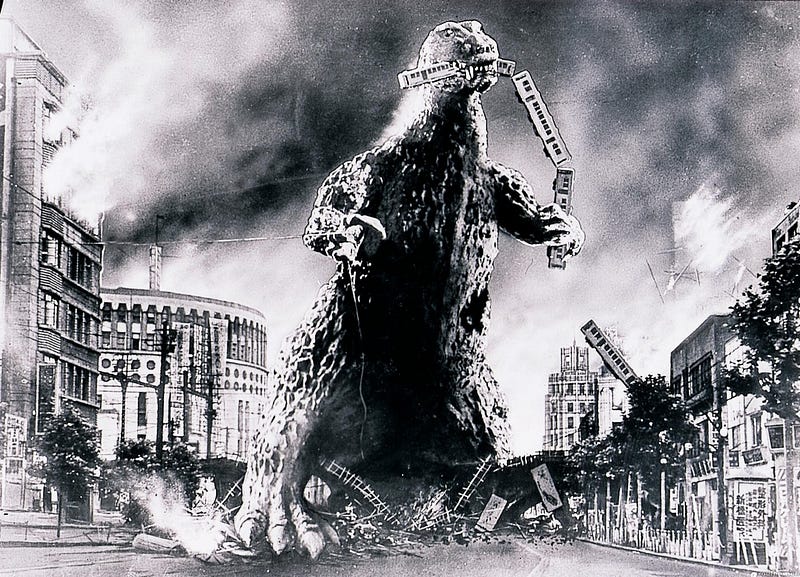
“Rampaging and hell-bent on destruction. There is no negotiating. No resolution with these kind of Destroyers. They themselves must be destroyed to stop the carnage.”
Those of you who have followed my blog for some time or taken courses with me through Screenwriting Master Class know how fascinated I am with character archetypes, specifically how there are five — Protagonist, Nemesis, Attractor, Mentor, Trickster — which recur in movies over and over and over.
Some might see archetypes as a sort of reductionist approach to writing when in my experience, it is precisely the opposite.
By working with these five Primary Character Archetypes, we can identify the core narrative function of every key character, then use that knowledge as a guide as we build them out in a limitless number of ways.
One approach is to use an extensive array of Character Types available to us. Therefore, I am running a series in which we will explore 20 Character Types, and consider how writers can use them to create unique, compelling figures in our stories.
Today: Destroyer.
From serial killers to tyrants, mad scientists to evil geniuses, Destroyers have carved a deadly, yet noteworthy path through the history of movies. Let’s start at the big end of the spectrum: Monsters including the the Shark in Jaws (1975), the Alien in Alien (1979), and Godzilla in many cinematic iterations.
Rampaging and hell-bent on destruction. There is no negotiating. No resolution with these kind of Destroyers. They themselves must be destroyed to stop the carnage. We see this same type of slaughterous behavior at work on a smaller scale with Destroyer characters such as Freddy Krueger in A Nightmare on Elm Street (1984), Jason in Friday the 13th (1980), and Michael Myers in Halloween (1978).

The fact that each of these movies spawned numerous sequels speaks to the allure of Destroyers and this specific iteration: The Boogeyman. But unlike the shark in Jaws, with these characters, we get a small glimpse into the psychology behind their madness. This speaks to one of the draws of Destroyers, how they provide a window into the shadow, the dark aspects of the human psyche. Consider the psychopathology of characters such as Amon Goeth in Schindler’s List (1993), Patrick Bateman in American Psycho (2000), and John Doe in Se7en (1995).
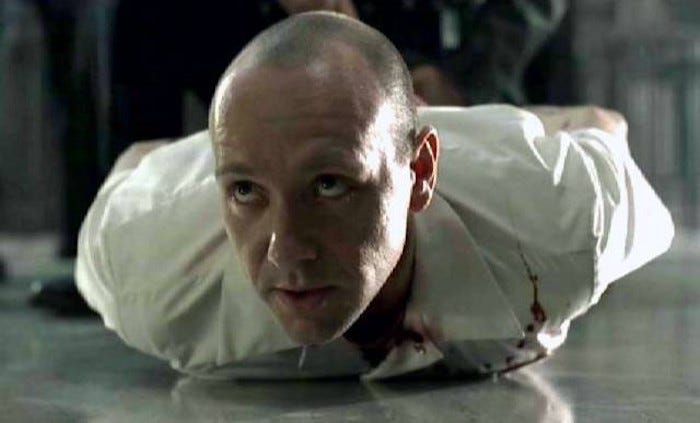
Even psychopaths have a world view which makes sense to them. In some cases, Destroyers are more consistent in their allegiance to their code than the humans they destroy like Terminator in The Terminator (1984), Joker in The Dark Knight (2008), and Anton Chigurh in No Country for Old Men (2007).
Chigurh lives according to a strict set of rules. People make their choices. If they choose wrong, they become victims. In a way, he is quite legalistic. And there’s the rub: The trick is to make this type of Destroyer’s world view at least understandable to a script reader because in doing so, that pulls the character closer to the reader’s experience… which makes for a much more interesting psychological dynamic wherein we can actually relate to the killer.
What brainstorming can you do with a Destroyer character type?
The Destroyer character type is a natural in providing the Nemesis function, but what if we imagined a Mentor as Destroyer? What if the end point for the Protagonist was for him/herself to destroy Evil? How to learn that? How to embrace destruction if it’s not part of your natural order? Enter the Destroyer Mentor.
How about an Attractor whose function is not to slay the Protagonist, but to seduce him to destroy others? This takes us into Femme Fatale territory, but what if instead of manipulating the Protagonist to do violence on her behalf, this iteration of the Attractor is seeking a soulmate to go off on a destructive path together like Bonnie and Clyde (1967) or Natural Born Killers (1994).

Just as with all character types, there are endless possibilities. All we need to add to the mix is our own imaginations.
For more Character Type articles, go here.