Character archetypes
Analysis of five primary character archetypes: Protagonist, Nemesis, Attractor, Mentor, Trickster.
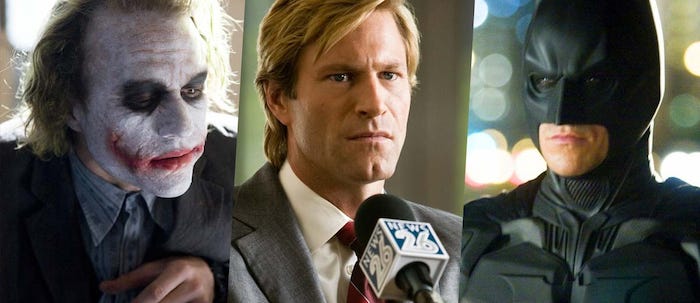
Analysis of five primary character archetypes: Protagonist, Nemesis, Attractor, Mentor, Trickster.
Note: I posted this on the blog all the way back in 2008 just a few months after I had launched the site.
When I posted this analysis of a scene from Casablanca, my use of character archetypes sparked some interesting feedback, people wanting to hear more. Without going into my whole rap involving Joseph Campbell and Carl Jung, let’s see if I can bottom line this as it relates to screenwriting.
First off, William Goldman famously said, “Screenplays are structure.” Set aside novels, short stories, graphic novels or comic books, a screenplay is a unique literary form in that it is a blueprint specifically for the ‘construction’ of a movie. Therefore, one principle I teach students is:
“Plot = Structure”
Anyone who has studied 3-act structure or any of the screenplay paradigms courtesy of Syd Field, John Truby, or other screenwriting ‘gurus’ would likely accept that tenet. I think there is a concomitant principle re characters and screenplays:
“Character = Function”
If a screenplay is unique as a blueprint to make a movie, then I would argue that it is also unique in that the characters create a psychological ‘map’ of the story, each character playing a core narrative function — which leads us to the subject of archetypes.
Simply put, an archetype is a model of a person or personality. Generally, it’s possible to assess the characters in a screenplay and ‘assign’ an archetype to them. There are literally hundreds of archetypes in stories and literature, but I contend there are five primary character archetypes that appear in most movies:
Protagonist
Nemesis
Attractor
Mentor
Trickster
At first blush, you may think these are artificial categories, however, I contend that they are natural extensions from a story’s central character: the Protagonist. How? By asking seven basic questions tied directly to the Protagonist:
- Who is the story’s Protagonist?
The first, most basic question of any story. - What does the Protagonist want?
This is the Protagonist’s Conscious Goal and is tied to the plot’s end point. - What does the Protagonist need?
This is the Protagonist’s Unconscious goal and is tied to their transformation end point. - Who is trying to keep the Protagonist from their goal?
This is the story’s Nemesis who functions in opposition to the Protagonist. - Who is connected to the Protagonist’s emotional growth?
This is the story’s Attractor who functions in connection with the Protagonist’s ‘heart.’ - Who is connected to the Protagonist’s intellectual growth?
This is the story’s Mentor who functions in connection with the Protagonist’s ‘head.’ - Who tests the Protagonist to deepen to challenge their will?
This is the story’s Trickster who functions sometimes as Protgonists’s ally, sometimes as Protagonist’s enemy.
These five are Primary Character Archetypes, present in most movies, and they function as integral parts, both in the plot and in the Protagonist’s psychological journey, what can be called the ‘transformation arc.’
Now there are a lot of caveats — no, not every movie has all these character archetypes; and variations — instead of ‘head,’ how about left-brain, instead of ‘heart,’ how about right-brain. But even a cursory look at some of the most popular movies of all time suggests there’s something of value here:
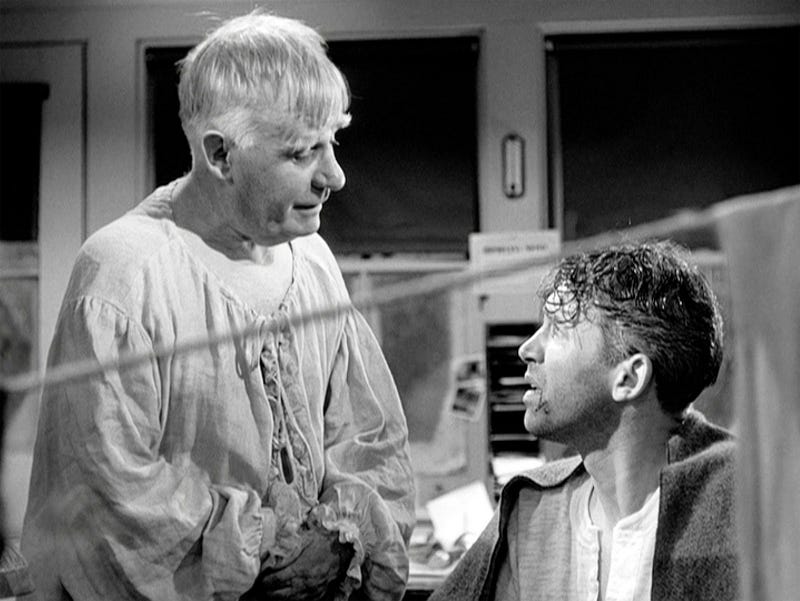
It’s A Wonderful Life
Protagonist— George Bailey
Nemesis — Mr. Potter
Attractor — Mary Bailey
M enter— Clarence the angel
Trickster — Uncle Billy
Witness
Protagonist — John Book
Nemesis — Chief Paul Schaeffer
A ttractor— Rachel Lapp
Mentor— Eli Lapp
T rickster— Samuel Lapp
The Silence of the Lambs
Protagonist — Clarice Starling
N emesis— Buffalo Bill
Atrractor — Catherine Martin
Mentor — Hannibal Lecter
Trickster — Jack Crawford, Dr. Frederick Chilton

What about more contemporary movies which have been released in 2008?
The Dark Knight
Protagonist — Bruce Wayne
Nemesis — The Joker
Attractor — Rachel Dawes
Mentor — Alfred, Lucius Fox
Trickster — Harvey Dent, Reese
Slumdog Millionaire
Protagonist — Jamal Malik
Nemesis — Maman, Javed
Attractor — Latika
Mentor — Jamal’s Life (Fate)
Trickster — Salim Malik, Police Inspector

Again, this group of archetypes may not work for every story or movie, but I think these ideas are worth considering, if only because they offer a different way of coming at story development: As opposed to the ‘traditional’ linear / 3-act structure / plot point approach, this represents a character-driven approach, using archetypes to dig more deeply into the characters, so they can lead the writer into and through the story-crafting process.