Black List writers on the craft: Story Prep (Part 3)
“I’ve found that I’m a terrible outliner. Whenever I outline a story, it invariably changes while I’m writing the script. That’s just the…
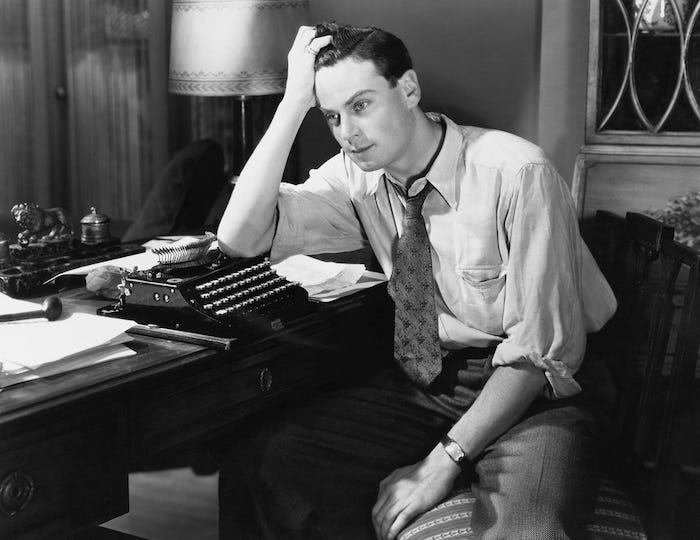
“I’ve found that I’m a terrible outliner. Whenever I outline a story, it invariably changes while I’m writing the script. That’s just the way it goes with characters.”
Over the years, I have interviewed 50+ Black List screenwriters. Over the next four weeks, I am running a series featuring one topic per week related to the craft of writing.
This week: What aspects of story prep do you devote the most time and focus to?
I often say this: There’s no right way to write. Every writer is different. Every story is different. Going through these interviews, I doubt there is an area of the story-crafting process where this statement is more apt than in relation to story prep. As we will see this week, there is a big divide between Black List writers who embrace working up a comprehensive outline and those who take a considerably less formalized approach.
Over the next few days, I’m going to present an array of takes from Black List writers about outlines. Today we will explore the thoughts of writers who do not work up outlines as part of their prep process:
Nikole Beckwith: “I’ll take little notes here and there, but I’ve never written an outline or anything like that. I envision my mind as the rock tumbler. I throw these little rocks in and these ideas and I tumble them around and every once in awhile, one of them will get shiny enough for me to take out and really look at. When it’s ready to really look at, that’s when I start writing and I write in sequence from beginning to end. I don’t write out of order. If I’m stuck on a scene, I don’t move on to the next scene. I wait until that scene reveals itself.”
Brian Duffield: “If it was a spec, or now just ideas that I hope to get a chance to direct, I’ll sit on them for as long as I can until they feel cooked. I loathe outlining and like to find my way once I start writing, but by the time I start writing I usually will have had a good six months plus of just thinking about these characters, where I assume they’ll end up and what obstacles they’ll find along the way. It’s really just an internal thought process. I almost never even mention something out loud to anyone until I actually start writing it after all that time.”
Geoff LaTulippe: “Generally, I just start with some scribbled-down notes and a general idea of where I want the story to go and how I want it to end up. Then I just go. I generate my best ideas (or at least the ideas I like the most) on the fly. If I pre-plan too much of a script, I start to feel constricted by what I’ve predetermined and my creativity suffers. Most of the fun of writing, for me, is discovering MYSELF where the story is going to go. Hell, that’s ALL the fun of writing. Getting to be party to that surprise. If I outline, I deprive myself of that. And then writing becomes a job, and it’s less fun and I’m just not as good at it.
Seth Lochhead: “I tend not to write shit down unless it’s requested (and for a job, it’s always requested). I do a lot of my work on the page, within the script, scene by scene. It’s the only way I can ‘see’ it and ‘hear’ it and ‘feel’ it… Research, character… that comes as I move.”
Elijah Bynum: “The problem with me is when I have an idea and I have a character, I get really excited. At first, I go, ‘Well, I’m going to do it right this time. I’m going to outline. I’m going to know exactly what’s going to happen on each page. I’m not going down that path that I did on my other script’. Then I just get too excited and I start writing… I don’t front load everything. I think there are two kinds of people who can know their entire story up front — geniuses and hacks — I don’t think I’m either one. I’m sure there will be a project some point in the future where I really need to delve into the research and the outlining before I even think about writing one word of the script. But so far it hasn’t been that way.”
Brad Ingelsby: “I’m not really an outline guy. I typically have an idea, a central character, a few secondary characters and a few set pieces in mind. Then I usually just dive into the script. Sometimes that works and sometimes it backfires. I’ve written some god-awful scripts this way. But I’ve found that I’m a terrible outliner. Whenever I outline a story, it invariably changes while I’m writing the script. That’s just the way it goes with characters. They have to be unpredictable. And you have to be open to them pushing back, to them telling you that the direction you thought they would go isn’t really the direction they want to go. They need room and time to grow and change. And you have to listen to them. They don’t always want to say what you want them to say… Outlining makes me feel like a slave to an outline rather than a writer searching and following and listening to a set of characters I want to spend time with.”
Kyle Killen: “I’m really a mess when it comes to process. TV was the first time that something structured and rigorous was demanded of me, and I still tended to start writing before I really knew what I was writing about. I’ve never done outlines because I’m never sure what a scene really is until I try to write it. The flip side of that is that a lot of what I write turns out to be overwritten and unnecessary, to make the same point multiple times, and generally read like I’m working it out as I go, which I am. I hope I’m getting better through the sheer volume of things being asked of me, but only time will tell.”
Kelly Marcel: “Much to some people’s chagrin, I don’t outline, and it drives them nutso. But I don’t. I cause myself a lot more work by doing it the way I do it, but I often let the story tell me what it’s going to do. I am sort of coming round to the idea that outlining might be helpful, and I think I may have to do it on one of my next projects because I am going to write it with someone else and they are a stickler for outlines (because they are boring and anally retentive), but yeah, I’m gonna cave.”

Some takeaways:
- Some writers don’t outline because they “loathe” the process. Some because they aren’t any good at it. Some because their excitement for the story propels them into the writing. But what seems to unify the anti-outline writers is outlines inhibit their creativity. They want to have fun in the writing process and outlining runs counter to that. They want their characters to surprise them and outlines detract from that.
- Notice how some of these writers acknowledge it takes more time and effort to write without an outline. Getting stuck on scenes. Pages which are “overwritten and unnecessary.” Creating a “lot more work” sans outline.
Then there’s this complicating factor:
Brad Ingelsby: “It’s a problem for me actually because when you go up for a studio assignment you’re always asked to write a treatment or an outline and often times when I get to the script, it changes in some ways. Sometimes the story changes in very small ways and sometimes it changes in larger ways. And sometimes people aren’t happy when it changes. And I totally get that. They paid for a certain story and you’re now handing them something a bit different. The frustration is understandable.”
With studios increasingly demanding outlines and treatments before sending writers to draft, it’s becoming more of a challenge for those disinclined to break their story in prep to survive in Hollywood.
However, one message is loud and clear: Each of us has to figure out our own way to craft and write stories. If outlining does not facilitate our creative process, indeed, gets in its way, then we have to listen to our gut.
How about you? Are you one of those writers who just cannot outline? If so, how do you go about the prep process?
For Part 1 of the series on story prep, go here.
Part 2, here.
Tomorrow we’ll hear from Black List writers who have adopted a kind of “preliminary” outline approach to their prep-writing.